

Unleashing Cosmic Fury (Image Credits: Unsplash)
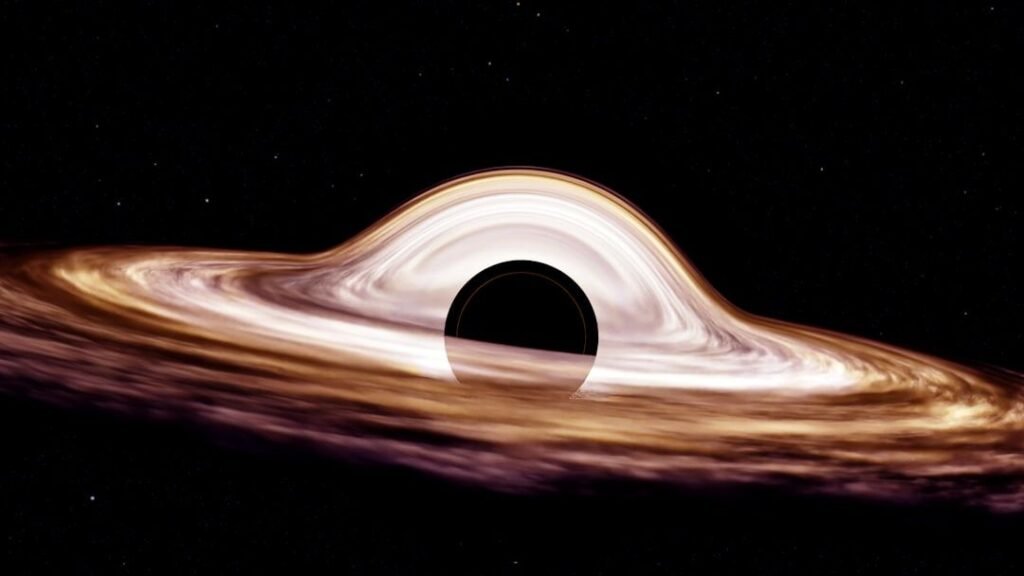
Astronomers uncovered a dramatic cosmic event where a supermassive black hole unleashes torrents of scorching gas, reshaping the fate of its host galaxy.
Unleashing Cosmic Fury
The energy released in this galactic eruption rivals the detonation of 10 quintillion hydrogen bombs every second, marking one of the most violent outflows observed in the universe. Researchers at the University of California, Irvine, detected this phenomenon using data from NASA’s James Webb Space Telescope. The black hole at the galaxy’s core powers twin jets that extend beyond the galaxy’s boundaries, twisting into a spiral configuration never documented before. This discovery highlights the raw power hidden within galactic centers.
Such events demonstrate how black holes can dominate their environments. The super-hot gas, reaching temperatures in the millions of degrees, surges outward at incredible speeds. Scientists reported the findings in early January 2026, emphasizing the eruption’s scale. This outflow not only illuminates the black hole’s activity but also reveals its profound influence on surrounding space.
Piercing the Cosmic Veil
The James Webb Space Telescope’s advanced infrared capabilities allowed astronomers to peer through dense clouds of dust that obscure visible light observations. Traditional telescopes struggled with this blockage, but JWST’s instruments captured clear views of the heated gas streams. The galaxy, located relatively close in astronomical terms, provided an ideal subject for detailed study. This breakthrough came from combining data across multiple wavelengths, offering a comprehensive picture of the event.
Experts noted that the spiral pattern in the jets suggests complex interactions between the black hole’s accretion disk and the interstellar medium. The telescope’s sensitivity to mid-infrared emissions proved crucial in mapping the gas’s trajectory. Without JWST, this intricate structure might have remained hidden for decades. The observation underscores the instrument’s role in transforming astrophysics.
Mechanics Behind the Mayhem
At the heart of the eruption lies a supermassive black hole actively feeding on surrounding material. As matter spirals inward, it heats up and ejects powerful jets along the black hole’s rotational axis. These streams carve through the galaxy, creating elongated nebulae on either side. The process involves magnetic fields that channel the plasma into focused beams, amplifying their reach.
The jets’ unusual spiral form indicates possible precession or environmental influences warping their path. This configuration spans farther than the galaxy’s visible disk, affecting intergalactic space. Astronomers believe the black hole’s spin contributes to the twisting motion observed. Such dynamics provide clues to how these cosmic engines operate over billions of years.
Starvation on a Galactic Scale
The relentless outflow strips away vast quantities of molecular gas, the essential fuel for new stars. This depletion occurs at a rate that could halt star formation within the galaxy for generations. The super-hot jets heat and disperse the cool gas clouds, preventing them from collapsing into stellar nurseries. Over time, this feedback mechanism regulates galactic growth and evolution.
Similar processes likely shaped many galaxies throughout cosmic history. By robbing the reservoir of star-forming material, the black hole enforces a balance in the ecosystem. Researchers estimate the lost gas mass rivals that of entire star clusters. This event serves as a stark example of black holes’ dual role as destroyers and stabilizers.
Implications for Galactic Evolution
Observations like this one refine models of how black holes influence their hosts. The discovery challenges assumptions about outflow patterns and their efficiency in gas expulsion. Future studies may target similar systems to understand if spirals are common in certain galaxy types. JWST’s ongoing mission promises more revelations in this domain.
Astronomers anticipate that tracking these eruptions could predict a galaxy’s future trajectory. The event’s proximity allows for repeated observations, potentially revealing changes over time. This finding enriches our grasp of the universe’s violent undercurrents.
Key Takeaways
- The eruption’s energy output equals 10 quintillion hydrogen bombs per second, driven by a central supermassive black hole.
- Jets extend beyond the galaxy in a unique spiral pattern, visible thanks to JWST’s infrared penetration of dust.
- The outflow rapidly depletes star-forming gas, potentially quenching future stellar birth in the galaxy.
This galactic eruption reminds us of the universe’s untamed forces, where black holes dictate the pace of creation and destruction. As JWST continues to unveil such spectacles, our understanding of cosmic architecture deepens. What aspects of this discovery intrigue you most? Share your thoughts in the comments.