
There’s a quietly unsettling question sitting at the heart of modern science: if everything is just matter in motion, how do you explain the vivid feeling of being you? You do not just process light waves and sound vibrations like a camera or a microphone; you experience color, pain, joy, embarrassment, love. That inner movie of your life, with its private thoughts and raw emotions, seems to float above brain chemistry in a way that feels almost impossible to pin down.
Some physicists and philosophers argue that consciousness is just a fancy side effect of neurons firing, nothing mystical needed. Others suspect that our awareness might be a clue that the universe is deeper than the picture painted by pure materialism. I still remember walking home one night after a neuroscience lecture, staring at streetlights and asking myself whether the glow I saw “out there” existed only because something inside was awake to see it. Once you start asking if consciousness points to more than matter, it is very hard to stop.
The “Hard Problem”: Why Consciousness Is So Weird
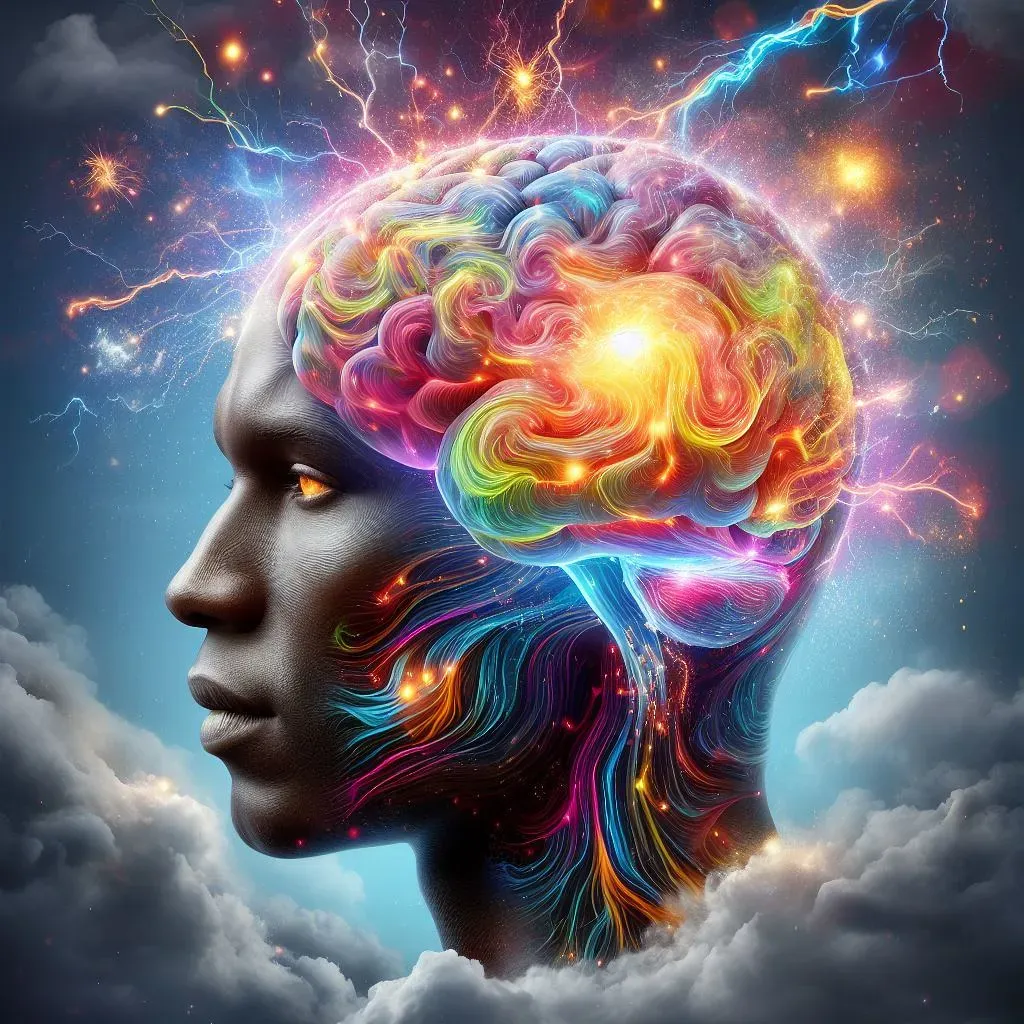
One of the most shocking facts in philosophy of mind is that we still have no widely accepted explanation for why brain processes should feel like anything from the inside. We can map which brain regions light up when you see red, remember your first kiss, or feel jealous, but that only shows correlations. It does not explain why those physical events are accompanied by a rich inner experience instead of happening in the dark, like a computer silently crunching numbers.
This gap between brain activity and felt experience is often called the “hard problem” of consciousness. The easy problems are about functions: how you focus attention, store memories, or recognize faces. The hard problem is about why any of that is accompanied by a subjective point of view. If materialism were fully satisfying, we would expect a smooth bridge from neurons to experience. Instead, we hit a wall: measuring the brain tells us a lot about mechanisms but nothing about what it is like to be you.
Materialism’s Strongest Case: Brains Matter, A Lot
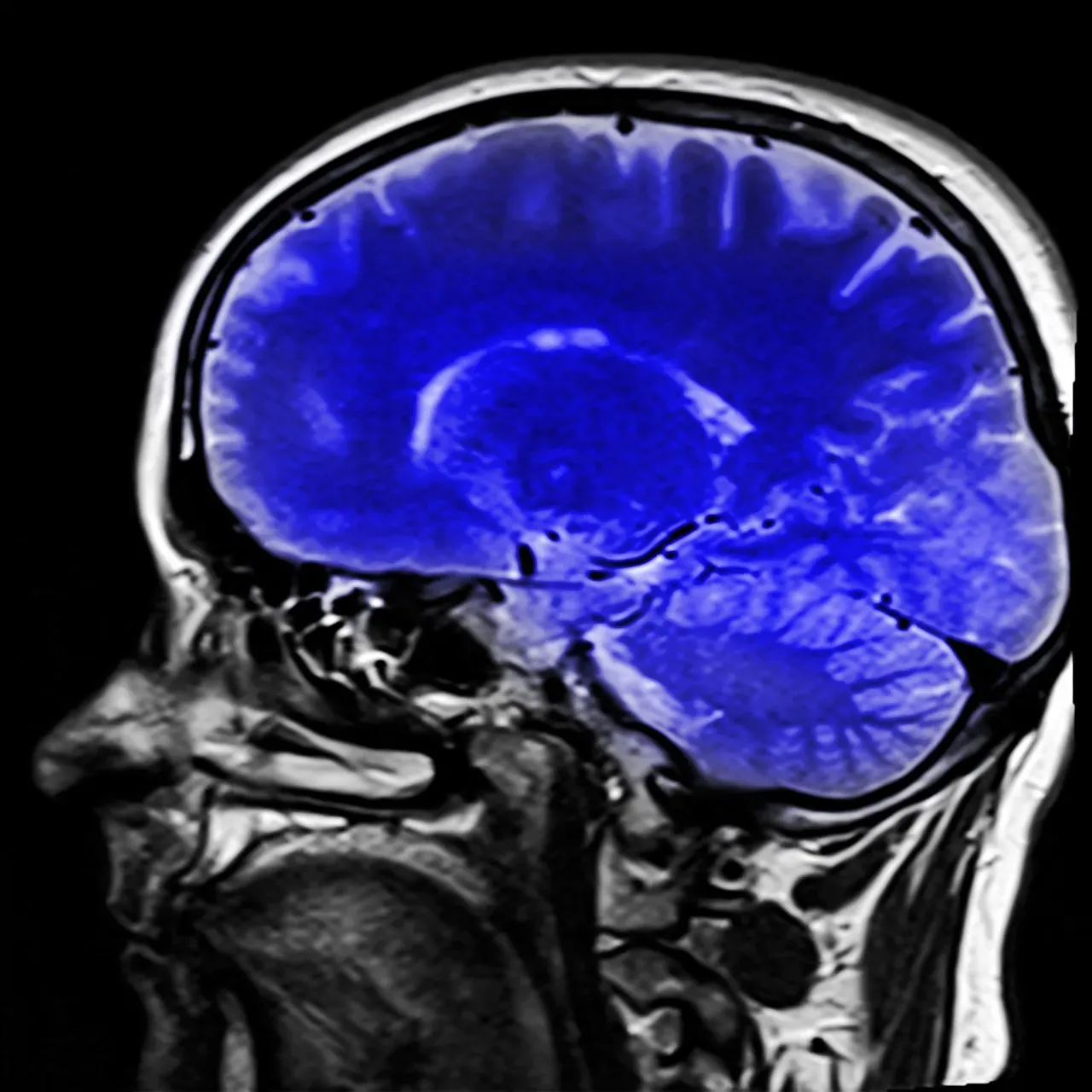
To be fair, the materialist picture has some very powerful evidence on its side. Change the brain, and you change the mind. A tiny blood clot, a tumor, or a dose of anesthesia can erase consciousness, alter personality, or distort perception in brutally specific ways. Cases of brain injury show that damaging certain areas can wipe out the ability to recognize faces, feel certain emotions, or even form new memories, while leaving other abilities almost untouched.
Modern brain imaging backs this up by revealing patterns that track with conscious states. When people report vivid experiences, particular networks show characteristic activity; when they are under general anesthesia or in deep, dreamless sleep, those patterns flatten or fragment. On the surface, this looks like strong support for the idea that consciousness arises from physical processes. The question, though, is whether this tight link between brain states and experience proves that awareness is nothing but matter, or whether it just proves that matter is the medium through which something deeper shows up.
Is Correlation Enough? The Guitar and the Music

One way to see the limits of the materialist argument is to think about a musical instrument. Every note from a guitar depends on the shape of the wood, the tension of the strings, and the way the body resonates. Damage the guitar, and the music changes or stops altogether. But no one concludes that the music is nothing but wood; we say the wood is the structure that lets the music emerge, not the entire story about what music is.
Brains might be similar: exquisitely tuned instruments that allow consciousness to manifest in complex ways. The close correlation between brain states and experiences would then make perfect sense, without forcing us to say that experiences are identical to those brain states. In this view, neuroscience is like luthier work for the mind: it can tell us how to build or repair the instrument, but not fully explain why there is something it is like to play and hear the music in the first place.
Panpsychism: Consciousness All the Way Down?
One increasingly popular idea in philosophy is that we hit so many paradoxes because we started from the wrong assumption about matter. Instead of thinking of the universe as dead stuff that somehow, somewhere, gives rise to awareness, panpsychism suggests that very simple forms of “proto-experience” might be built into the fabric of reality itself. On this view, electrons are not little minds, but they may have incredibly primitive, internal aspects that are the seeds of what we call consciousness in complex systems like brains.
This does not mean that rocks and tables have inner lives like humans, but that the basic ingredients of experience might be as fundamental as mass or charge. Many find this idea strange or even ridiculous at first, yet it neatly avoids the jump from non-experiential matter to sudden rich awareness. If some kind of experiential quality is baked into the universe from the start, then consciousness stops being an embarrassing exception and becomes part of the basic furniture of reality.
Information, Computation, and the Digital Soul
Another route people take is to think of consciousness through the lens of information rather than just particles. Some theories in neuroscience and physics describe conscious states as particular patterns of information integration: what matters is not the hardware, but the way information is organized and processed. In that sense, a human brain, a future advanced AI, or even an exotic physical system could, in principle, host consciousness if the right kind of structure and dynamics were present.
This information-based view has a strange consequence: it blurs the line between material and non-material. Information is always encoded in something physical, but its patterns and relationships are not reducible to the medium alone, the same way a novel is more than ink on paper. If consciousness is fundamentally about certain informational structures, then it sits at an abstract level that is supported by matter but not exhausted by it. That does not prove the universe is spiritual, but it does hint that mind and matter might be two sides of a deeper informational reality.
From my own perspective, this is where the conversation gets most interesting. If your awareness can in principle be realized in different substrates, what exactly are you: the meat, the pattern, or both at once? Walking past rows of servers humming in a data center, it is hard not to wonder if future machines might house something faintly like our own flicker of awareness, raising uncomfortable questions about what kind of universe could allow that.
Quantum Mysteries: Tempting but Treacherous
Whenever consciousness comes up, someone will eventually mention quantum mechanics. It is true that at very small scales, the universe behaves in ways that defy classical common sense, with probabilities, entanglement, and measurement playing central roles. A few speculative theories suggest that conscious observation helps “choose” outcomes or that quantum effects in the brain are crucial for awareness, but the evidence for those claims is thin and hotly debated.
At the same time, quantum theory does put pressure on a naive, clockwork view of matter as solid, mindless stuff. Particles behave like waves, fields fluctuate in and out of existence, and reality seems to be, at its core, about possibilities and relationships rather than tiny billiard balls. While it is risky to lean too hard on quantum ideas to “explain” consciousness, the fact that the fundamental level of physics already looks strange and non-intuitive leaves open the possibility that mind fits more naturally into that picture than into the old mechanical one.
Spiritual and Lived Intuitions: Why People Sense “More”

Outside of labs and lecture halls, most people do not experience themselves as biological machines. In moments of grief, awe, deep meditation, or even just while listening to music that moves you to tears, awareness feels like something luminous that cannot be captured by brain talk alone. Many religious and spiritual traditions lean into this intuition, treating consciousness as primary and matter as something that arises within it, rather than the other way around.
These experiences are not scientific proofs, but they are data of a different kind: reports from the inside of being conscious. It is worth being honest that materialism often asks people to treat their most intense inner experiences as illusions or by-products. For some, that trade-off in meaning is acceptable in exchange for a tidy, physical theory. For others, it feels like flattening human life into a thin diagram, leaving out the thick, messy, sacred feeling of actually being alive.
So, Does Consciousness Prove

If you are looking for a clean, courtroom-style proof that consciousness shows the universe is more than matter, we do not have it. What we have are competing pictures, each with trade-offs. Strict materialism explains a huge amount about the dependence of mind on the brain, but struggles with why there is any inner life at all. Views that treat consciousness as fundamental or universal make room for our lived experience but raise hard questions about how to test them and avoid vague mysticism.
My own opinion is that consciousness is not a glitch in an otherwise simple physical story; it is a clue that our story about the physical is incomplete. The way experience stubbornly refuses to be reduced to brain chemistry suggests that mind and matter are two aspects of a deeper reality we do not yet fully understand. That does not force us into supernatural territory, but it does nudge us beyond a flat, nothing-but-atoms narrative. Maybe the real shift ahead is not from matter to spirit, but from a shallow picture of matter to a richer universe where matter, mind, and information are all woven into the same mysterious fabric. When you stop and feel what it is like to be you, does it really seem like just an accident of atoms, or like the tip of something far stranger?