Every once in a while, a question sneaks up on you that feels almost dangerous to ask. One of those questions is this: is awareness just something happening in our skulls, or is it a basic feature of the universe itself, like space, time, or energy? The idea sounds wild at first, like something you might hear in a late-night dorm-room debate, but it keeps popping up in serious scientific and philosophical circles for a reason. We keep running into puzzles that refuse to be solved if we treat consciousness as a meaningless side effect.
At the same time, it is incredibly easy to get carried away here. Talk of a conscious universe can quickly slide into wishful thinking or mystical slogans that feel good but explain nothing. The hard part is to walk a narrow path: to ask whether awareness is fundamental without abandoning rigor, and to stay open-minded without abandoning common sense. That is what we will try to do: look at the science, the philosophy, and the strange clues from modern physics, and ask honestly how far the evidence really goes.
The Hard Problem: Why Consciousness Is So Weird

Here is the first shocking fact: nobody knows, in a truly satisfying way, how physical processes in the brain give rise to lived experience. We can measure brain activity, map neural circuits, and even predict what someone is looking at from scans, yet the leap from firing neurons to the feeling of pain, the taste of coffee, or the color red remains mysterious. This gap is often called the “hard problem” of consciousness, and it has stubbornly resisted decades of effort from neuroscience and philosophy. In some ways, we are still stuck with the same riddle that puzzled people centuries ago, just with better imaging machines.
Because of this, many researchers have started to suspect that our basic starting point might be off. Maybe consciousness is not something that magically appears once matter is arranged in a complicated enough way. Instead, some argue that consciousness could be a fundamental property, like charge or spin, that shows up in different degrees of complexity. That does not mean rocks are thinking about their life choices, but it does suggest awareness might not be a late-stage accident of evolution. If that sounds unsettling, it is partly because it flips our usual story about mind and matter completely upside down.
Brains, Neurons, and the Limits of the “Meat Computer” View
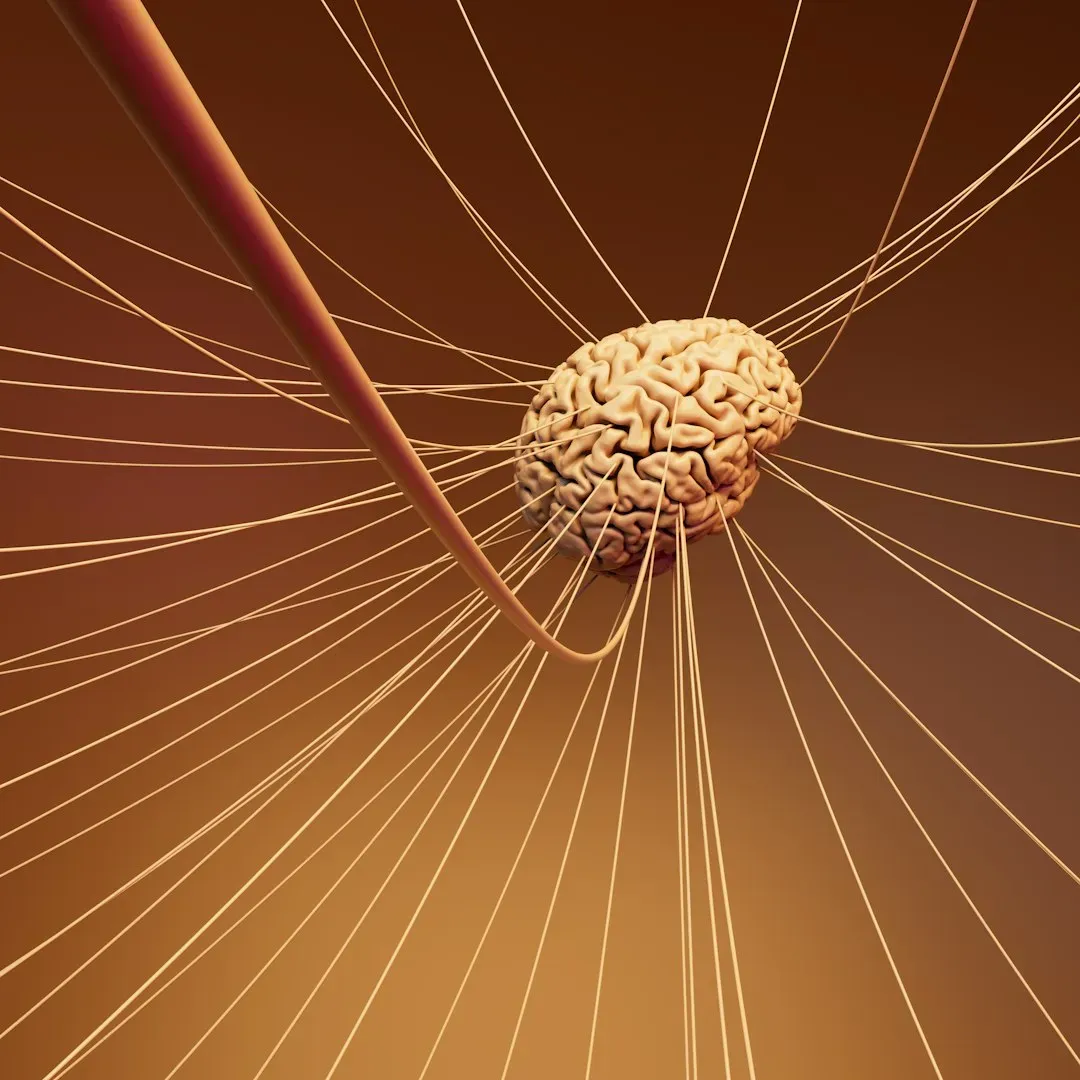
On the face of it, the standard scientific story seems simple: the brain is a physical system, so consciousness must just be what the brain does. Billions of interconnected neurons send electrical signals, chemicals adjust their activity, and out of this intricate dance emerges the sense of self and experience. A lot of evidence supports this: damage the brain and specific parts of consciousness get disrupted, from memory to vision to mood. Drugs, sleep cycles, and brain stimulation can all dramatically reshape subjective experience. If you only looked at this data, you might feel confident that awareness is fully explained by brain activity.
But this “meat computer” picture starts to crack when you ask deeper questions. Explaining how neurons correlate with experiences is not the same as explaining why such experiences exist in the first place. You can model a storm on a computer, but no one thinks there is real rain inside the hardware; yet our models of brain activity seem to be tied directly to real, felt experiences. Some theorists argue that no matter how detailed our brain science becomes, it will always stop at describing functions and behaviors, not the raw feeling of being. That tension is what pushes some people toward the idea that awareness is not fully captured by treating the brain as just a clever machine.
Panpsychism: A Conscious Universe, or Just Clever Semantics?

One of the boldest ideas getting attention is panpsychism, the view that some form of awareness is present, in a very basic way, throughout the physical world. Instead of consciousness suddenly popping into existence when brains evolve, the story goes, reality has tiny “atoms” of experience all the way down. Complex beings like humans would then be intricate patterns built from simple proto-experiences, just as complex objects are built from atoms and molecules. This does not mean your phone or a spoon is “conscious” in any familiar sense, but it does suggest that the raw materials of awareness might be everywhere.
Critics push back hard here, and not without reason. If every particle has some flicker of experience, what does that really explain? How do tiny, primitive “bits of awareness” combine into the rich, unified consciousness you feel reading these words? This is sometimes called the combination problem, and it is no small hurdle. Supporters of panpsychism respond that, while the view sounds strange, it at least takes consciousness seriously rather than pretending it is a trick of language or an illusion. In a sense, panpsychism trades intuitive comfort for a shot at solving the hardest puzzle on the table.
Quantum Mechanics, Observation, and the Temptation to Say “Mind Did It”
Quantum physics adds more fuel to these debates, though often in misunderstood ways. In quantum experiments, particles do not have definite properties until they interact in certain ways, and measurement plays a central role in how we talk about what is “real.” Famous setups like the double-slit experiment show particles behaving like probabilities that “collapse” into concrete outcomes when observed. It is incredibly tempting to say that human consciousness reaches into the quantum world and forces reality to take a stand. That story is dramatic, intuitive, and widely shared in pop culture.
The actual situation is more sober. Most working physicists interpret “observation” in quantum theory as any interaction with a measuring device or environment, not a conscious mind swooping in. Different interpretations of quantum mechanics disagree about what is really happening, and none of them has definitively proven that awareness shapes physical outcomes. Still, the language of measurement and observation makes people wonder whether our mental lives are deeply entangled with the way reality unfolds. Even if that link turns out to be purely mathematical, the fact that our best physical theory forces us to talk in terms of probabilities, observers, and information keeps the door open to more radical ideas.
Information as the New Bedrock of Reality
In the last few decades, a quiet shift has taken place: many scientists now talk about information as more fundamental than matter itself. In some cutting-edge theories, the universe is described in terms of bits, entanglement patterns, and information flows rather than solid particles bumping into each other. Black hole physics, quantum computing, and even attempts at quantum gravity all lean heavily on information-theoretic language. If you think of the universe as an unimaginable cosmic “computer,” then matter and energy might be the outputs of a much deeper informational structure.
Where does awareness enter this picture? Some thinkers suggest that consciousness might be what it feels like for certain information-processing structures to exist from the inside. In that sense, awareness could be a built-in “perspective” that arises whenever information flows in complex, integrated ways. This does not automatically mean the universe is a mind, but it does place consciousness and information closer together than the old picture of brute matter. Personally, I find it oddly intuitive to imagine reality as a vast informational web, with conscious experiences as bright knots where the web twists into self-awareness.
Integrated Information and the Measure of Experience

One specific scientific attempt to link information and consciousness is Integrated Information Theory, often shortened to IIT. The core idea is that consciousness corresponds to how much information a system generates as a whole, beyond the sum of its parts. In this view, a brain is conscious because its internal states are deeply interconnected and cannot be broken down into independent pieces without losing something essential. The theory even proposes a numerical measure for this, sometimes called phi, that in principle could quantify how conscious a given system is. It is an ambitious approach that tries to bridge subjective experience and objective structure.
IIT has a provocative implication: if any system with integrated information has some level of experience, then consciousness might be far more widespread than we usually think. Simple networks, certain types of computers, maybe even some exotic physical systems could all possess a faint glimmer of awareness. Critics argue that IIT risks labeling too many things as conscious, or that its mathematics might not match what people actually experience. Yet it remains one of the few theories that takes the structure of experience seriously while staying rooted in physics and information. Whether or not it is ultimately right, it keeps alive the possibility that awareness is not an accident but a natural product of how reality organizes itself.
Life, Evolution, and Why Awareness Might Be Useful

Another way to ask whether awareness is woven into reality is to look at life itself. Across the history of evolution, organisms have developed increasingly sophisticated ways of sensing, predicting, and responding to their environments. From simple bacteria that move toward nutrients to animals that navigate social hierarchies, being able to model the world seems to offer a huge survival advantage. Consciousness might be the most advanced version of this capacity: an internal stage where possible actions are rehearsed, values are weighed, and outcomes are imagined before they happen. In that sense, awareness could be nature’s way of turning raw information into flexible behavior.
But if consciousness is just a useful biological trick, does that mean it is not fundamental? Not necessarily. It could be that the universe has basic tendencies toward information processing and complexity, and that life and awareness are how those tendencies manifest in certain conditions. When I watch a sunrise or feel a surge of empathy for someone struggling, it is hard not to feel that awareness is tapping into something real and profound about existence, not just running a survival algorithm. That feeling is not proof, of course, but it is a data point that many people quietly carry with them: experience itself feels like more than a computational shortcut.
Meaning, Mystery, and an Opinionated Conclusion
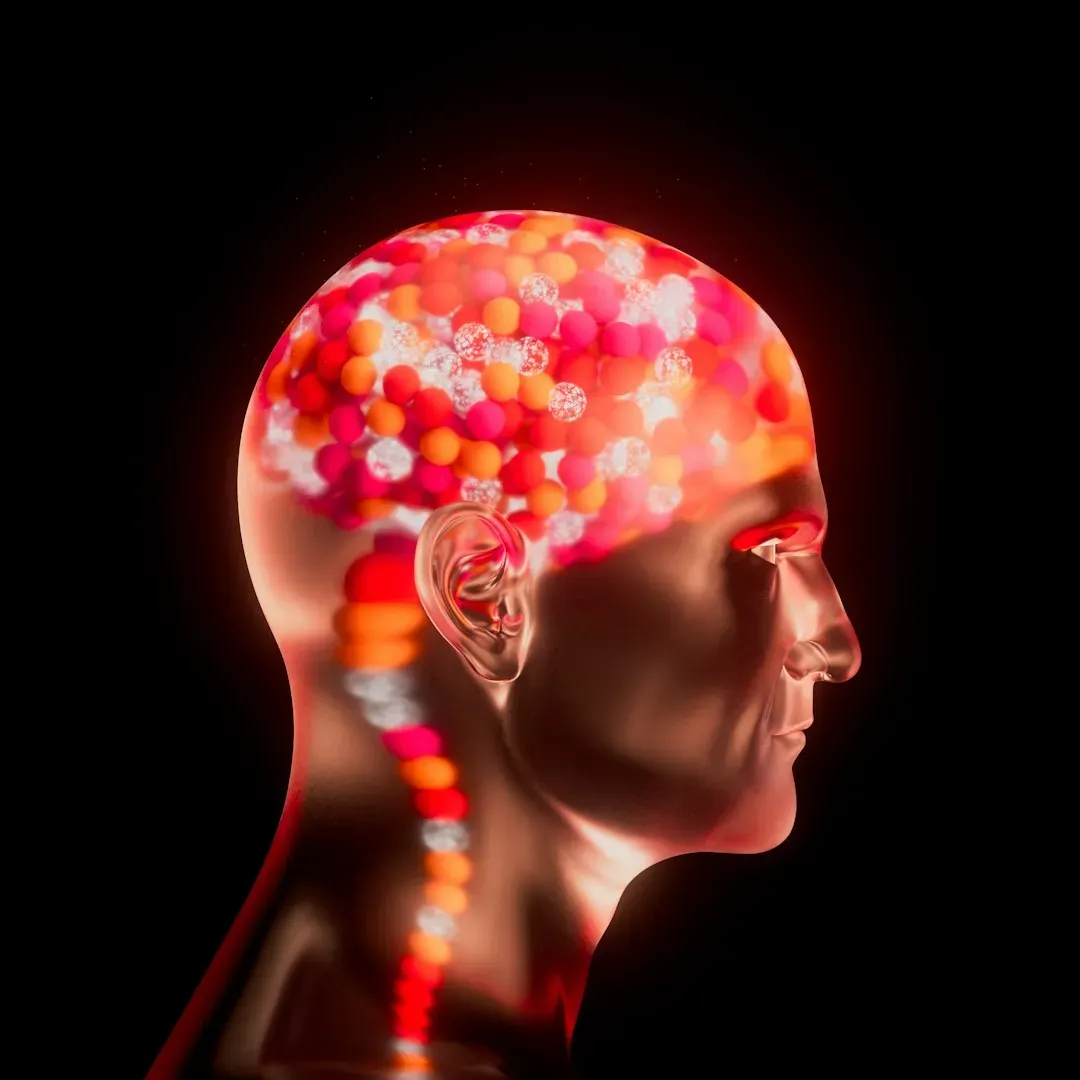
So, Strictly speaking, the honest scientific answer right now is that we do not know. We have powerful theories that treat consciousness as emerging from complex information processing, intriguing ideas that extend experience down to the level of fundamental physics, and quantum puzzles that keep dragging observers back into the picture. None of these has delivered a final, decisive verdict. If you are looking for a neatly wrapped conclusion, the universe is not offering one yet. The evidence is suggestive in many directions but conclusive in none.
My own view, for what it is worth, leans toward a cautious yes. I suspect that when we finally understand consciousness more deeply, we will discover that awareness is not a trivial by-product but an expression of something woven into reality’s basic grammar. That does not mean the universe secretly revolves around human minds, or that wishing can bend physics. It means that wherever the cosmos allows rich, integrated information to form, a spark of “being from the inside” appears, as natural as gravity or light. If that is even roughly right, then each moment of awareness you have is not an accidental glitch but a local unveiling of what the universe can do. And that raises a quietly radical question: if awareness is part of reality’s fabric, what responsibility do we carry for how we use the small patch of it we have been given?