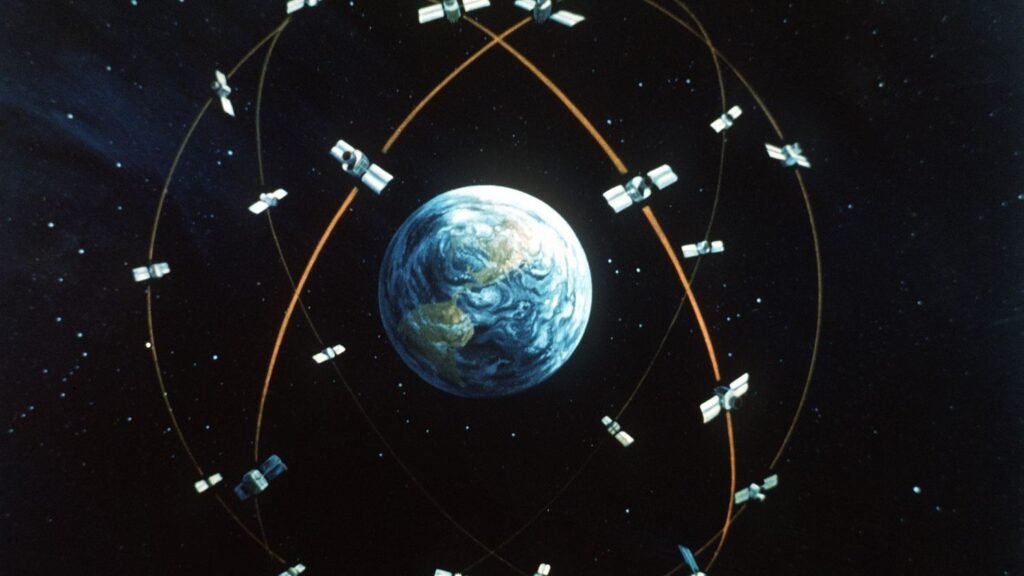

You can’t see them. You can’t touch them. Yet right now, invisible forces are pulling, pushing, and guiding every single moment of your life. Think about that for a second. While you’re reading this, gravity holds you firmly to your chair, electromagnetic fields buzz around your devices, and unseen social pressures quietly shape what you think and how you behave.
Let’s be real, we walk through life believing we’re in control, making independent choices, living authentically. Wrong. The forces that truly govern our existence operate beneath the surface, silent and relentless. They dictate everything from how we move through space to what we decide to buy at the grocery store, yet most of us never stop to consider their profound influence.
These invisible architects of reality range from fundamental physical forces to subtle psychological currents. Together they create the texture of human experience. So let’s dive in.
Gravity: The Silent Conductor of Our Every Movement

Every step you take is a negotiation with gravity. Gravity keeps us grounded while friction enables us to walk without slipping. Without this constant downward pull, you’d float away into the atmosphere along with everything else on Earth. Honestly, it’s hard to imagine a life without gravity because we’ve never experienced anything different.
Gravity is the force of fundamental attraction between all things that have mass or energy. It feels powerful to us in our daily lives, but it is by far the weakest of the four known forces in nature. That’s the paradox. Despite being the weakest fundamental force, gravity shapes galaxies, keeps planets in orbit, and ensures your coffee stays in its cup rather than floating around the room.
During the life-forming procedure, all parameters can be held variable, yet one physical quantity was constant, and that was gravity. Despite all terra-forming events, gravity was the constant factor. Therefore, it is plausible to assume that gravity has been a major force in shaping life in our planet. We evolved under its relentless pressure, and our bodies bear its mark in ways we rarely acknowledge.
Electromagnetic Fields: The Invisible Web Connecting Modern Life
Look around you. Your phone, your laptop, the Wi-Fi signal streaming through the air. All of it depends on electromagnetic fields you’ll never see. Electromagnetic waves, such as radio signals, Wi-Fi, and microwaves, are equally invisible, yet they power global communication and modern technology. Without these forces, our digital world would cease to exist.
The earth’s natural electromagnetic fields influence the circadian rhythm in humans. These aren’t just technological artifacts. Natural electromagnetic phenomena affect our sleep patterns, our biological clocks, and potentially even our moods. Natural and man-made electromagnetic fields influence the mood and behavior of healthy and sick people. Considerable evidence suggests that electromagnetic fields affect sleep.
The really fascinating part? Studies with ELF fields have suggested that behavior can be influenced by exposure to either magnetic or electric fields. We’re swimming in these invisible currents constantly, and while most exposure levels are considered safe, the question of long-term subtle effects remains an area of active research. It’s a reminder that what we can’t perceive still exerts influence.
Social Influence: The Hidden Puppet Master of Human Behavior
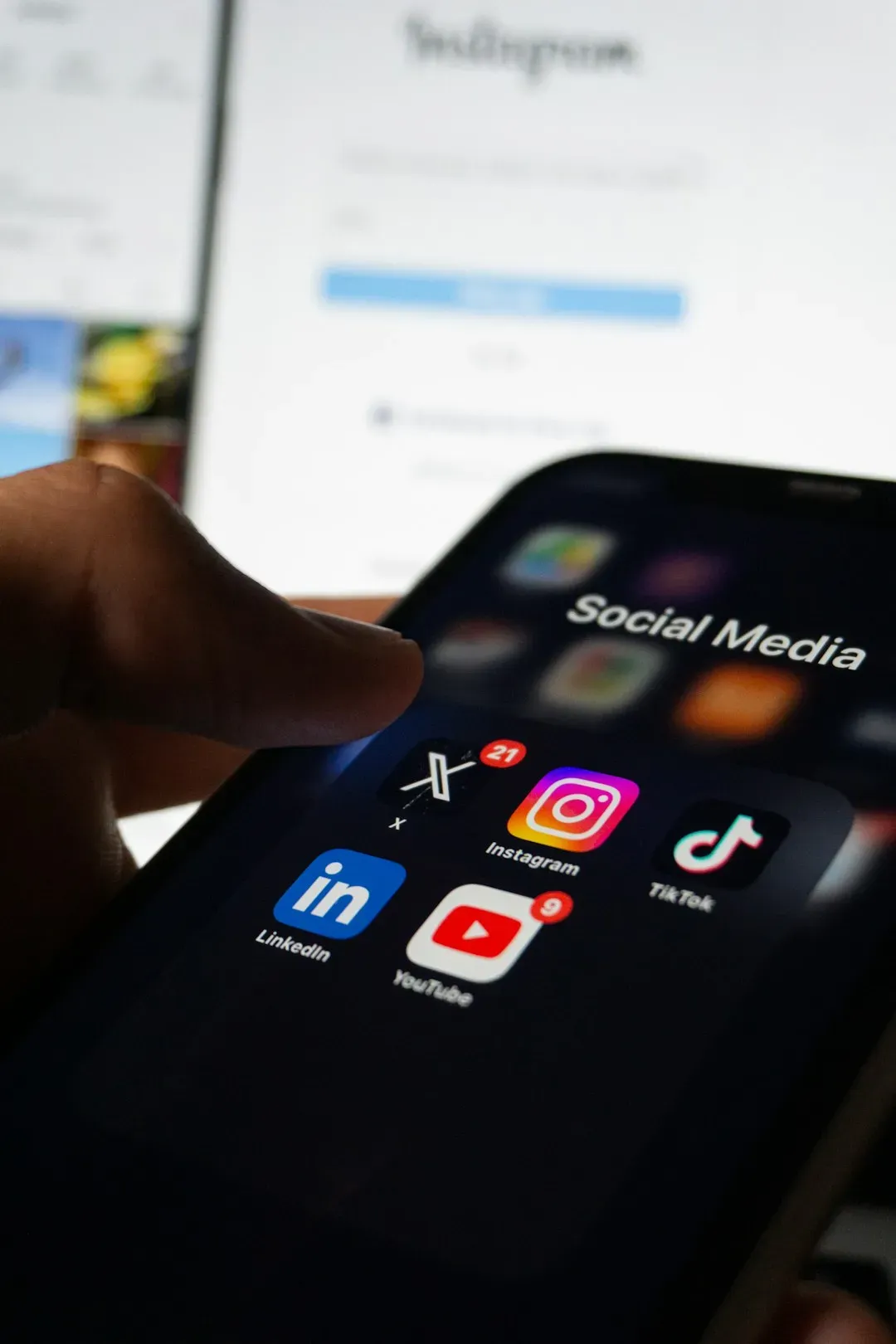
Here’s where it gets uncomfortable. You think you’re making your own decisions. You chose that jacket because you liked it, right? Not quite. Other people’s behavior has a huge influence on everything we do at every moment of our lives, from the mundane to the momentous. This is the truth most of us don’t want to admit.
Ninety-nine percent of all decisions are shaped by others, yet we’re often woefully unaware of when influence happens and how it works. Think about that statistic. Nearly every choice you make carries the fingerprints of social influence, from what you wear to what career you pursue. We see it all the time. You know, my neighbor bought this thing because someone else bought it. That idea – resistance is futile – is important.
Even strangers have an impact on our judgments and decisions: our attitudes toward a welfare policy shift if we’re told it is supported by Democrats versus Republicans (even though the policy is the same). We like to think we’re rational actors, but the data tells a different story. Social context, peer behavior, and cultural norms operate like invisible currents, guiding us in directions we never consciously chose.
The mechanisms are subtle. Sometimes we imitate others, sometimes we deliberately differentiate ourselves to maintain individuality. There’s lots of research on something called social facilitation. Merely biking with someone else, for example, makes you bike faster. Even the presence of others changes our performance, motivation, and effort levels in ways we don’t notice.
The Subconscious Mind: Your Brain’s Secret Operating System

Your conscious mind is just the tip of the iceberg. Beneath the surface, invisible psychological processes churn away, making decisions before your conscious awareness even kicks in. Even in psychology, the subconscious mind – invisible to both the world and often ourselves – steers many of our actions and decisions. It’s humbling and a bit unsettling.
Consider habits, biases, and automatic responses. These invisible forces shape how you react to situations, what you remember, what catches your attention. The subconscious filters reality before it reaches your conscious mind, deciding what’s important and what gets ignored. You’re experiencing a curated version of reality without even knowing it.
I think this is where we often underestimate our own complexity. We assume that because we’re thinking creatures, we understand our own motivations. Research in behavioral economics and psychology consistently shows otherwise. Our decisions are influenced by priming effects, framing, anchoring, and countless other cognitive biases operating entirely outside conscious awareness. The invisible architecture of the mind is far more influential than the conscious thoughts we notice.
Quantum Phenomena: Reality’s Deepest Mystery

Now we venture into territory that sounds like science fiction yet underpins all of reality. It is widely accepted that consciousness or, more generally, mental activity is in some way correlated to the behavior of the material brain. Since quantum theory is the most fundamental theory of matter that is currently available, it is a legitimate question to ask whether quantum theory can help us to understand consciousness. The relationship between quantum mechanics and conscious experience remains one of science’s most profound puzzles.
Some scientists speculate that the strange happenings in this microscopic realm may hold the key to understanding consciousness. But scant evidence has left the majority skeptical. Still, the quantum world operates by rules that defy common sense. Particles exist in superposition, in multiple states simultaneously, until observed. Entanglement allows particles to influence each other instantaneously across vast distances.
Quantum mechanics is science’s most precise, powerful theory of reality. It has predicted countless experiments, spawned countless applications. The trouble is, physicists and philosophers disagree over what it means, that is, what it says about how the world works. The mathematics works flawlessly, but the interpretation? That’s where things get murky. Over fifteen different interpretations exist, many contradicting each other entirely. This isn’t a sign of failure but rather indicates how deeply mysterious the quantum foundation of reality truly is.
The Interplay: When Multiple Forces Converge

We may believe we know why we think, feel, and act as we do, but various forces influence us in ways that are largely invisible to our senses. Similarly, a host of forces have emerged over the course of human evolution to influence our thoughts, emotions, and behaviors. Physical forces like gravity and electromagnetism combine with psychological and social forces to create the rich tapestry of human experience.
Though invisible, these forces are far from imaginary. They’re the silent scaffolding of existence. Every step, sound, and spark depends on them. The universe operates through layers of invisible influence, from the quantum scale to the cosmic, from neural networks to social networks. Each layer interacts with the others in ways we’re only beginning to understand.
But invisible forces remind us that the most important things – love, hope, faith, creativity, even life itself – are not things we can hold in our hands. They exist beyond the limits of sight and touch, yet they shape who we are, how we live, and what our future holds. That’s the paradox of existence. The most powerful forces shaping our reality remain fundamentally invisible, operating through mechanisms both physical and metaphysical.
The convergence of these forces creates emergence, the phenomenon where complex patterns arise from simple rules. Your consciousness itself might be an emergent property arising from the interaction of quantum processes, neural activity, and social context. We’re learning that reality is not a collection of separate phenomena but an interconnected web where invisible forces at every level shape the whole.
Conclusion

We navigate life largely blind to the forces that govern it. From gravity anchoring our bodies to the earth, to electromagnetic fields powering our technology, to social influences shaping our choices, to quantum mysteries underlying all physical reality – invisible forces are the true architects . They operate continuously, silently, shaping every moment in ways we rarely acknowledge.
Understanding these forces doesn’t diminish their power. If anything, recognizing the invisible scaffolding of reality deepens our appreciation for the complexity of existence. We’re not isolated individuals making completely independent choices in a purely mechanical universe. Instead, we’re embedded in multiple layers of invisible influence, physical and psychological, individual and collective, microscopic and cosmic.
The next time you take a step, make a decision, or simply exist in the present moment, remember: you’re dancing with invisible partners. Gravity guides your movement. Social forces shape your thoughts. Quantum phenomena underlie the matter of your body. The subconscious drives your reactions. These unseen forces don’t limit you – they make you possible. They are the hidden symphony playing constantly beneath the surface of awareness, composing the music of existence itself.
What invisible force in your life do you think has the strongest hold on you? Tell us in the comments.