
For more than a century, we have treated the brain like a sophisticated biological computer, confident that enough wiring diagrams and firing patterns would one day explain every thought, memory, and feeling. Yet in the shadows of this neat picture, quantum physics has been quietly raising awkward questions about what matter, causality, and even reality really are. As physicists probe ever smaller scales and stranger regimes, their findings sit uneasily beside our everyday assumptions about a tidy, classical brain generating a tidy, classical mind. Some researchers argue we can safely ignore the quantum weirdness, while others insist it may be central to understanding consciousness itself. The debate is forcing science to confront a deeper mystery than anyone expected: if reality is quantum through and through, can a purely classical theory of mind ever really be enough?
The Classical Brain Meets a Quantum World
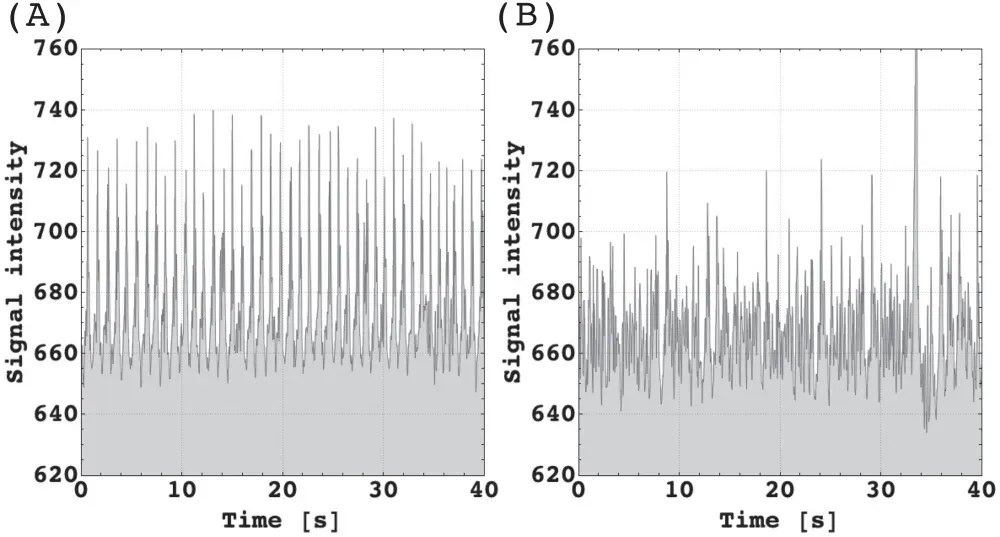
For decades, neuroscience has relied on a comforting analogy: the brain as a wet computer, with neurons as wires and electrical spikes as bits. In this view, thoughts emerge from billions of neurons exchanging signals in a mostly predictable, classical way, much like a vast, analogue circuit. This framework has powered extraordinary progress, from brain–machine interfaces to detailed maps of sensory areas, and it feels intuitively right for many scientists and engineers. The catch is that, underneath this apparent stability, every atom in those neurons is governed by the rules of quantum mechanics, not the tidy logic of everyday machines. The idea that we can simply ignore this deeper layer and still fully explain the mind is starting to look less like a sober assumption and more like a leap of faith.
When you zoom in far enough, the brain is built from particles that can exist in superpositions, become entangled, and behave in ways that defy classical intuition. In many systems, random thermal noise washes out these delicate quantum effects, making the larger object behave classically, and this is often assumed to be the case for the warm, wet brain. But we now know that some biological systems, such as photosynthetic complexes and possibly bird navigation mechanisms, can preserve quantum coherence long enough to matter functionally. That raises an unsettling question: if evolution can harness quantum effects elsewhere in biology, why should the brain be exempt, especially when it is the organ most deeply tied to information processing and awareness?
Entanglement and the Puzzle of Unified Experience
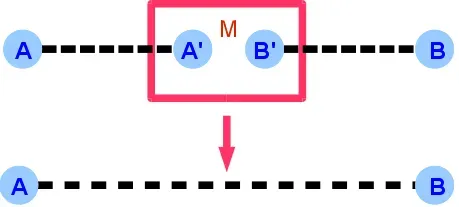
One of the strangest lessons of quantum physics is entanglement, the way particles can become linked so that measurements on one instantaneously affect the state of another, regardless of distance. Philosophers of mind have long struggled with the so‑called binding problem: how the brain stitches together color, sound, touch, and emotion into a single, seamless moment of experience. Traditional neuroscience treats this as a matter of synchronized firing or information integration across networks, but the subjective unity of experience still feels curiously underexplained. Entanglement offers a radically different kind of unity: not spatial integration through wiring, but holistic correlations that cannot be reduced to their parts. Some theorists have wondered whether similar patterns of nonclassical unity could, in principle, play a role in the way conscious moments emerge.
Most working neuroscientists remain deeply skeptical of linking entanglement directly to consciousness, and they point out that established models already explain a great deal of perception without invoking quantum magic. Still, the existence of a physical phenomenon that naturally binds distant elements into a single, indivisible state does undermine the assumption that any unified experience must be explainable solely by local, classical connections. At the very least, it warns us that our intuitions about what kinds of physical organization are possible are shaped by a pre‑quantum worldview. When we insist that consciousness must be built from purely classical, separable parts, we might be projecting our engineering habits onto a reality that does not fully cooperate.
Quantum Uncertainty and the Illusion of Mental Determinism
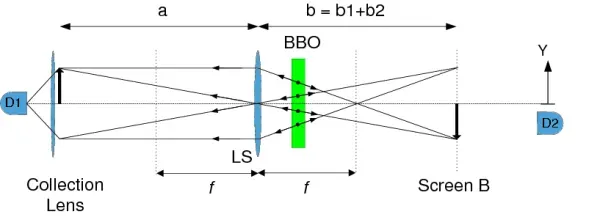
In everyday neuroscience, there is a powerful, often unspoken belief that if we knew every detail of a brain at a given instant, we could, in principle, predict its future states with arbitrary precision. This assumption fits neatly with the classical physics of the nineteenth century, where the universe was imagined as a vast clockwork running forward from perfectly specified initial conditions. Quantum mechanics shattered that dream, replacing sharp predictability with probabilistic outcomes and fundamental uncertainty built into the fabric of reality. If the matter making up the brain obeys these rules, then even a maximally detailed snapshot of its physical state cannot guarantee a single, algorithmically determined future. That alone complicates the idea that mental states are entirely fixed by microphysical conditions in a strictly deterministic way.
Of course, randomness alone does not equal freedom, and quantum uncertainty is not a simple escape hatch for free will. Yet it does erode the neat story in which every future thought and choice is rigidly encoded in the present configuration of atoms, waiting to unfold like a movie already filmed. In practice, neural dynamics may average out many microscopic fluctuations, leaving us with effective laws that look mostly classical at the scales we can measure. Still, the deeper reality is not that of a perfectly scripted machine, but of a probabilistic process where outcomes are constrained, not strictly dictated. That shift undercuts an older, mechanistic picture of the mind and invites fresh conversations about responsibility, agency, and what it means for a choice to be “up to us.”
Biology’s Quiet Quantum Experiments
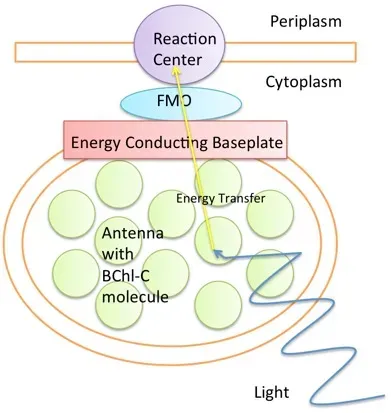
For a long time, any attempt to link quantum physics and the mind lived in the same mental folder as speculative metaphysics and wishful thinking. That attitude began to soften as evidence accumulated that other biological systems can and do exploit quantum effects in ways that matter for their function. In photosynthesis, for example, experiments suggest that energy can move through molecular complexes in a way that resembles quantum superposition, finding efficient paths that classical hopping alone would struggle to explain. There is also growing evidence that some migratory birds may sense Earth’s magnetic field using quantum properties of molecules in their retinas, effectively turning a quantum process into a biological compass. These examples act as proof‑of‑concept demonstrations that life is not always content to ignore quantum weirdness.
The brain may be a harsher environment for coherence than a leaf or a specialized receptor, but evolution is remarkably good at building nanoscale structures that defy our expectations. The idea that neural microstructures, such as ion channels, synaptic proteins, or cytoskeletal elements, might host useful quantum processes no longer sounds as outlandish as it once did. Even if these effects only slightly bias the behavior of larger networks, they could, over evolutionary time, become tuned and amplified in ways we do not yet understand. At minimum, the success of quantum biology elsewhere makes it harder to claim that quantum processes are automatically irrelevant to mental life. The brain may not be a quantum computer in any straightforward engineering sense, but ruling out quantum influences without looking has become a much riskier scientific bet.
Why It Matters: Rethinking Mind, Machines, and Measurement
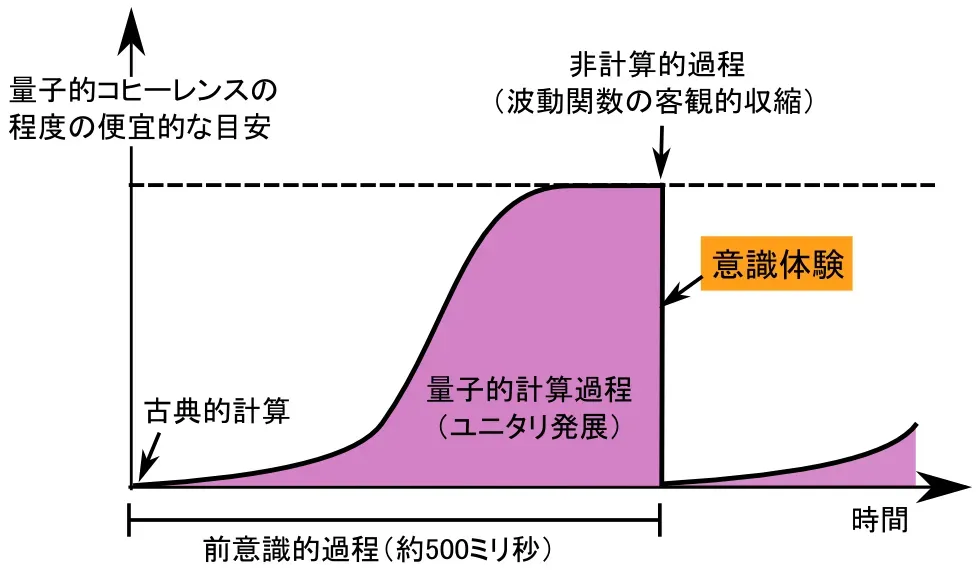
The question of whether quantum physics plays a meaningful role in the mind is not just an academic curiosity; it shapes how we build technology, treat mental illness, and even define what it means to be conscious. If the mind turns out to be fully describable in classical terms, then in principle there is no barrier to building machines that replicate human‑like awareness by copying the right patterns of computation. On the other hand, if conscious experience depends on subtle quantum structures or processes, then simply scaling up classical computation may never fully reproduce what it feels like to be a subject. That possibility matters for debates about artificial intelligence, the moral status of digital minds, and the limits of current approaches in cognitive science. It also challenges the comfortable assumption that more data and bigger models alone will eventually crack the mystery of consciousness.
There are also practical implications for how we measure and intervene in the brain. Modern neuroscience relies on tools that average signals over space and time, and these methods are exquisitely tuned to classical patterns of activity. If important aspects of mental dynamics involve fleeting, nonclassical correlations at very small scales, they may be effectively invisible to our current instruments. This does not mean we should abandon established models that work, but it does mean we should stay open to the idea that our present picture could be radically incomplete. In that sense, quantum physics acts like a quiet skeptic in the corner of the lab, reminding us that our instruments and theories are built on assumptions from a world that is, at its core, far stranger than we once believed.
From Thought Experiments to Testable Theories
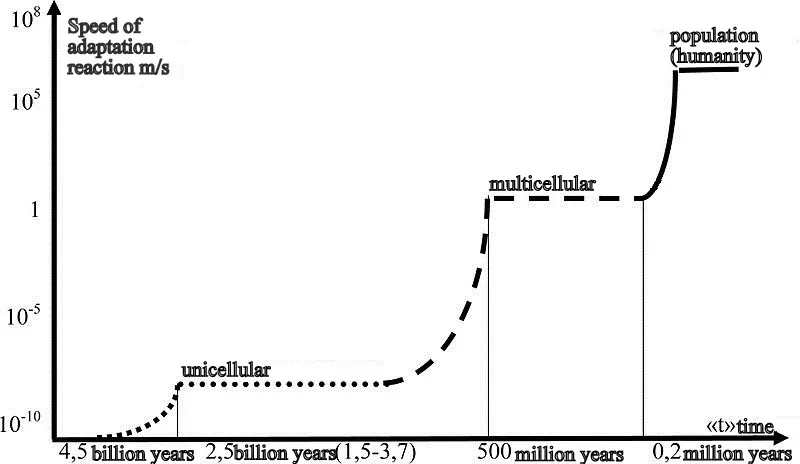
For years, discussions of quantum mind theories were dominated by thought experiments, philosophical musings, and a few highly controversial proposals. That landscape is slowly changing as more researchers ask what, exactly, would count as empirical evidence that quantum processes matter for consciousness. Some projects focus on searching for signatures of nonclassical correlations in neural activity, looking for patterns that cannot easily be reproduced by purely classical models. Others aim to test whether artificially engineered quantum systems, such as specialized processors or entangled networks, can exhibit features that resemble basic aspects of perception or decision‑making. The goal is to move from hand‑waving analogies to concrete hypotheses that can be supported or ruled out by data.
This shift toward testability is crucial, because without it, the conversation risks becoming a philosophical stalemate. By designing experiments that can actually fail, researchers force their favorite ideas to confront reality instead of living in speculative isolation. It is possible, perhaps even likely, that many early models will turn out to be wrong or incomplete, just as early classical theories of the brain were. Yet even negative results can help clarify where quantum effects are negligible and where we might need to look deeper. In this way, the mind becomes another frontier where physics and biology meet, each discipline pushing the other to refine its assumptions about what counts as an explanation.
The Future Landscape: Quantum Technologies and the Next Mind Revolution
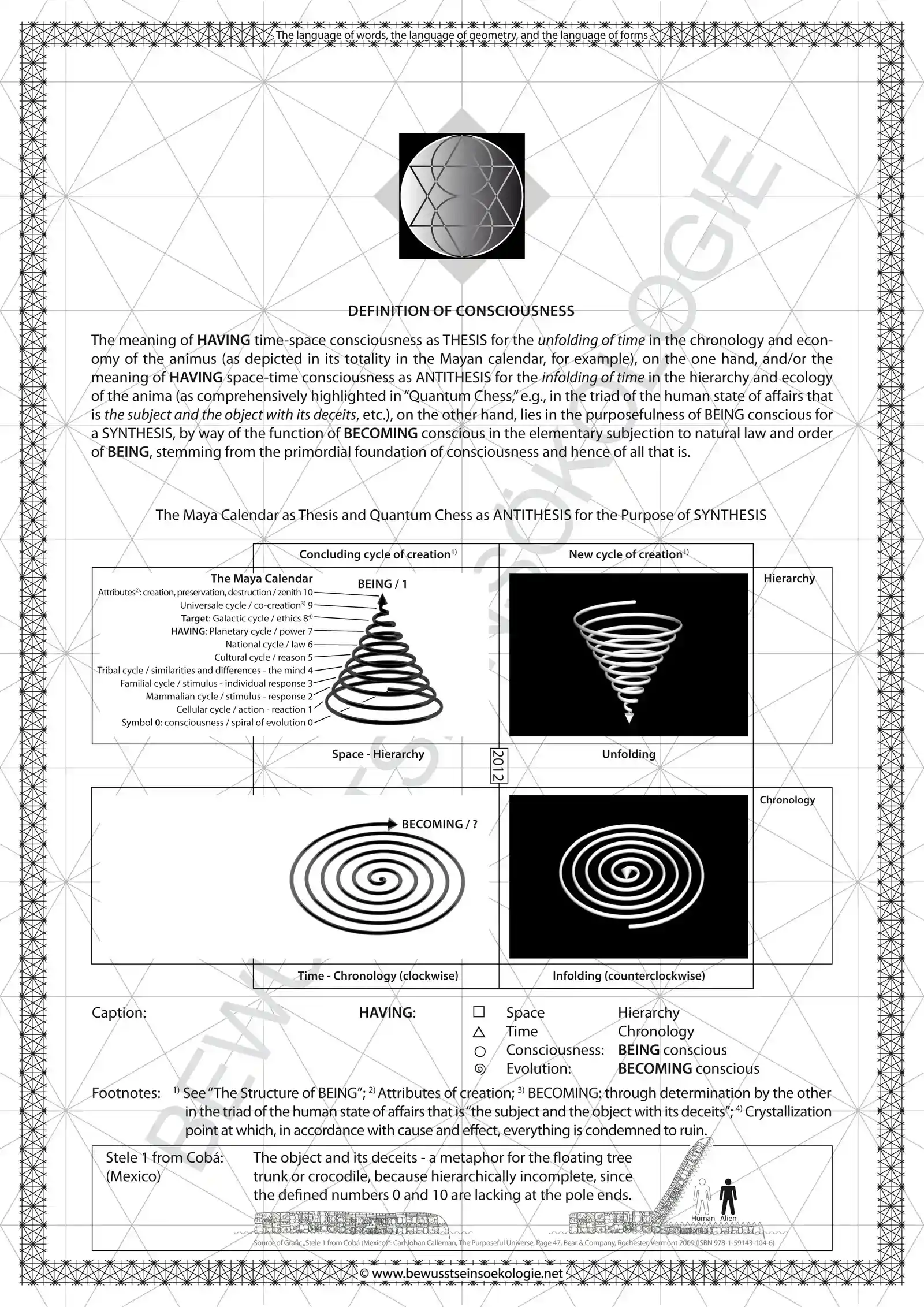
The rise of quantum technologies is set to transform how we probe and simulate complex systems, and the brain is near the top of that list. As quantum computers and sensors mature, they could, in principle, model aspects of neural dynamics that are intractable for classical machines, especially when many‑body quantum interactions are involved. Highly sensitive quantum sensors might allow us to detect faint magnetic or electric fields with unprecedented resolution, opening windows onto brain activity that are currently closed. At the same time, experiments with engineered quantum networks could reveal new ways in which information can be processed, integrated, or stabilized in noisy environments. Each of these advances could reshape our understanding of what kinds of physical substrates are capable of supporting something like a mind.
There are also daunting challenges ahead, from ethical questions to technical barriers. If quantum processes turn out to be important for consciousness, then attempts to replicate or alter them in machines or therapies will raise profound questions about identity, consent, and the nature of subjective experience. On the practical side, the complexity of both quantum systems and living brains means that progress is likely to be uneven, with sudden breakthroughs punctuating long periods of slow refinement. Nonetheless, the convergence of quantum engineering, neuroscience, and philosophy is creating a fertile space for ideas that would have seemed wildly speculative a generation ago. Whether or not quantum physics ultimately sits at the heart of consciousness, it is already undermining the assumption that the mind can be safely walled off from the deepest questions in physics.
How Readers Can Engage With the Quantum Mind Debate
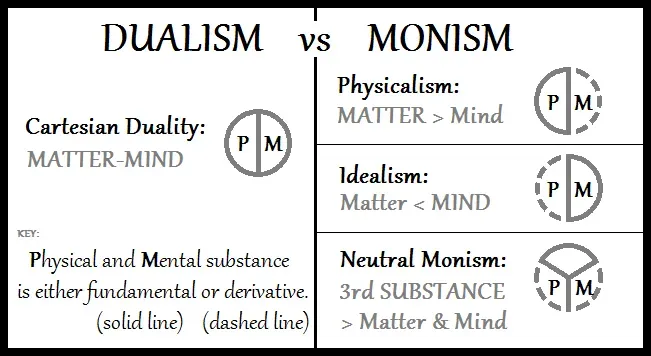
For non‑specialists, it can be tempting to dismiss discussions of quantum and consciousness as either mystical hype or impenetrable math best left to experts. Yet the issues at stake touch everyday concerns, from how we think about mental health to how we judge the claims of emerging technologies and AI systems. One simple way to engage is to pay attention to how popular accounts describe the brain: do they quietly assume a purely classical machine, or do they acknowledge the open questions raised by modern physics? Reading widely, including skeptical and enthusiastic perspectives, helps build a more nuanced sense of where the real debates lie. Supporting public science communication that treats these questions with both rigor and imagination can also shift the conversation away from shallow slogans and toward genuine understanding.
On a more personal level, reflecting on your own assumptions about mind and matter can be surprisingly powerful. Do you instinctively picture your thoughts as deterministic outputs of a fixed mechanism, or as something less easily captured by that metaphor? Being aware of these background stories can make it easier to spot when arguments lean more on intuition than on evidence. You do not need a degree in physics or neuroscience to ask sharp questions about what claims actually follow from the data. In a field where certainty is in short supply, an informed, curious public may be one of the strongest checks against both overhyped promises and overly rigid dogmas.
Suhail Ahmed is a passionate digital professional and nature enthusiast with over 8 years of experience in content strategy, SEO, web development, and digital operations. Alongside his freelance journey, Suhail actively contributes to nature and wildlife platforms like Discover Wildlife, where he channels his curiosity for the planet into engaging, educational storytelling.
With a strong background in managing digital ecosystems — from ecommerce stores and WordPress websites to social media and automation — Suhail merges technical precision with creative insight. His content reflects a rare balance: SEO-friendly yet deeply human, data-informed yet emotionally resonant.
Driven by a love for discovery and storytelling, Suhail believes in using digital platforms to amplify causes that matter — especially those protecting Earth’s biodiversity and inspiring sustainable living. Whether he’s managing online projects or crafting wildlife content, his goal remains the same: to inform, inspire, and leave a positive digital footprint.