Look around you for a second. The colors of your walls, the glow of your screen, the sense that objects sit solidly in space and stay put even when you blink all feel utterly obvious, almost boring. But that comforting stability is a magic trick: your eyes are sending a noisy, incomplete stream of electrical signals, and your brain is turning that chaos into a convincing world. Scientists are now uncovering just how much of what you “see” is actually guessed, edited, and in some cases completely invented by the brain. The mystery is not that we sometimes misperceive, but that we ever perceive correctly at all. Understanding how this quiet illusion works is changing how we think about consciousness, mental health, and even the future of immersive technologies.
The Hidden Clues Your Brain Uses To Build a World
It is tempting to imagine vision as a camera: light goes in, an image comes out. In reality, what hits your eyes is more like a fog of fragments – edges, flickers, differences in brightness, and tiny variations in color. Your brain has to stitch those fragments into something meaningful fast enough for you to duck a flying ball or read a passing sign. To pull this off, it grabs every clue it can: shadows to infer depth, motion to infer distance, context to guess what an object is supposed to be. That is why the same gray square can look lighter or darker depending on the background around it, or why you swear a dress is blue while your friend insists it is white.
Neuroscientists studying visual illusions have realized those “mistakes” are not glitches; they are windows into the rules the brain uses to interpret clues. Edges and contrast, for example, are often more important than absolute brightness, because they usually signal where one object ends and another begins. Motion and perspective let your brain estimate three-dimensional layout from a flat image in milliseconds. The result is that your visual experience is less a neutral recording and more an interpretive story, written on the fly, every moment you are awake.
From Eye to Cortex: A Lightning-Fast Assembly Line
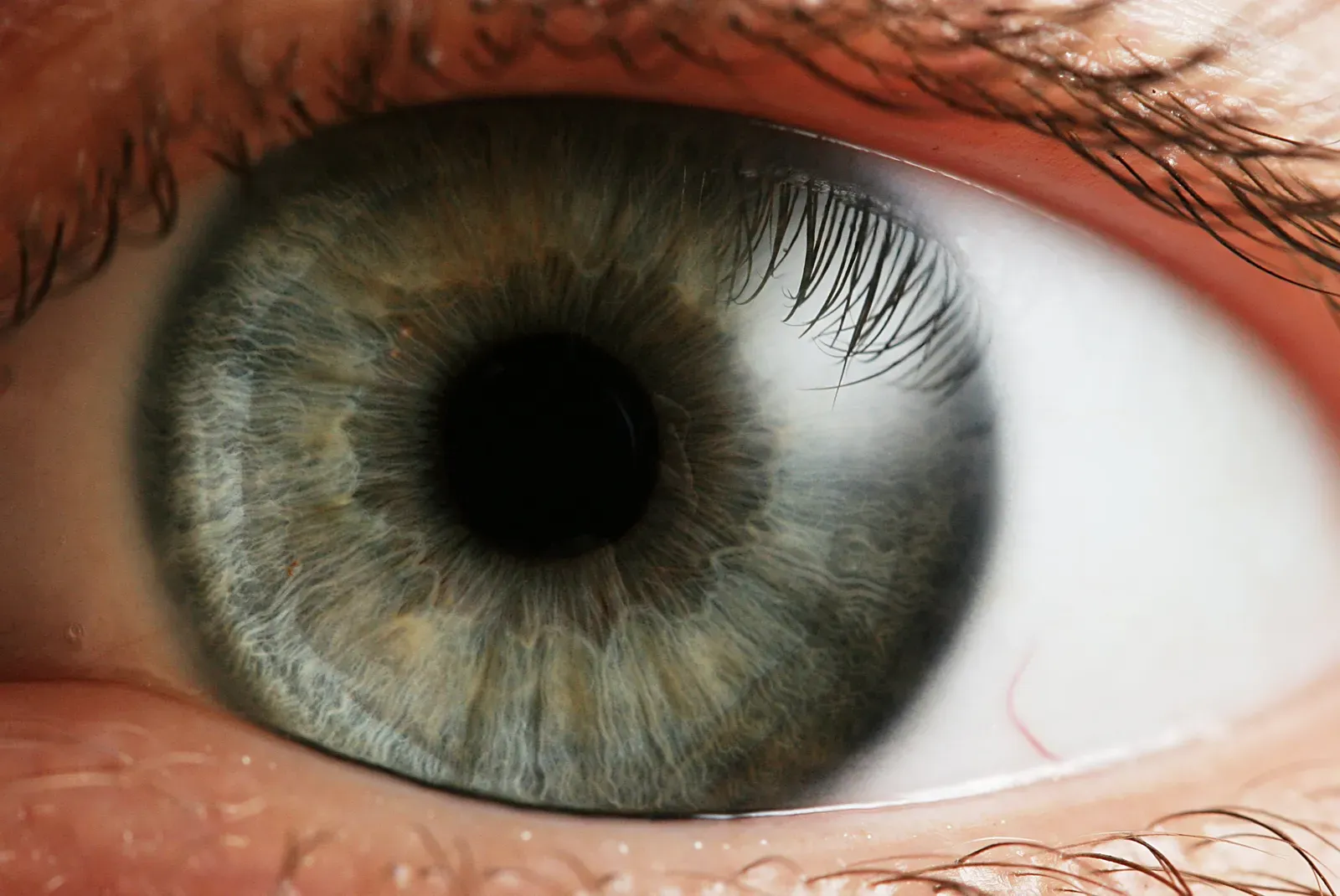
Every scene you see begins with photons hitting the light-sensitive cells at the back of your eyeball. These cells, called rods and cones, convert light into electrical impulses, but even at this first stage the raw signal is heavily edited. Some signals are amplified, others suppressed, and patterns like edges or motion are emphasized before anything even leaves the eye. The optic nerve then acts like a high-speed data cable, sending bundled signals back toward the brain at a pace far beyond what we consciously feel.
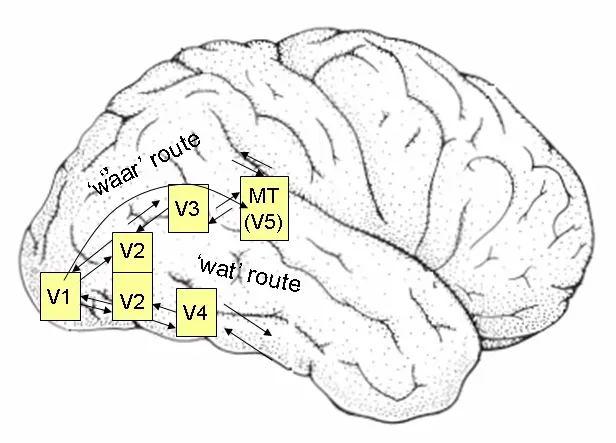
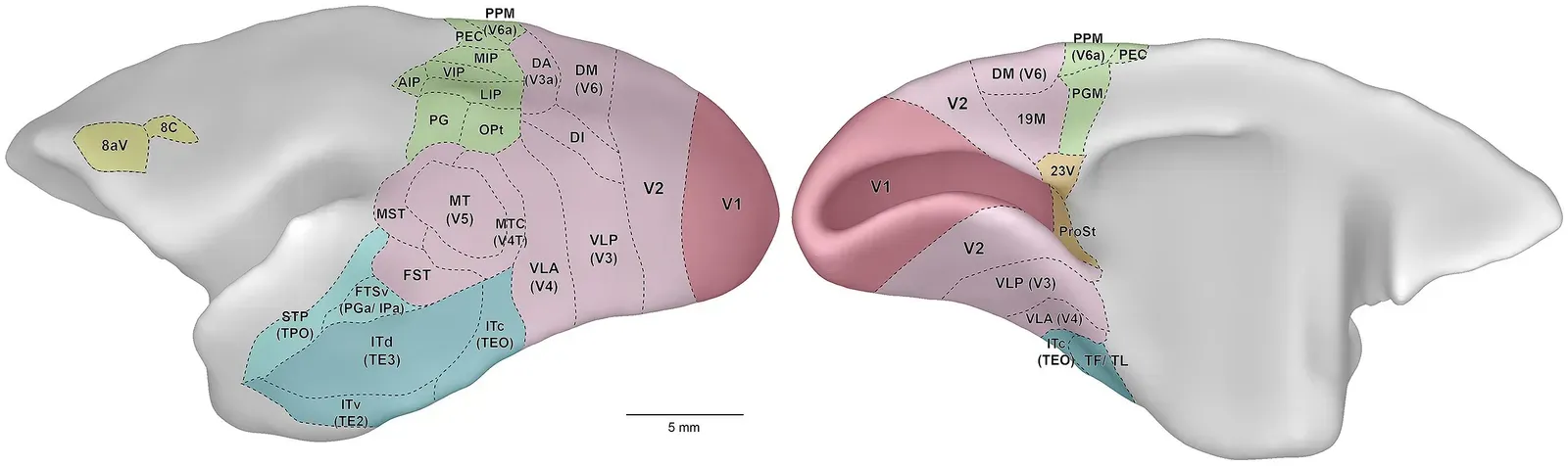
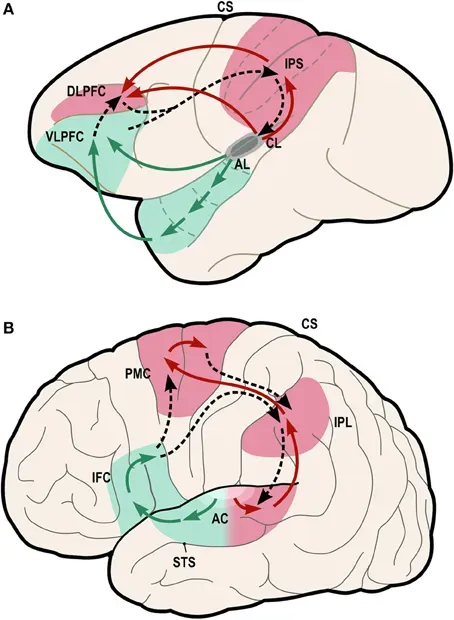
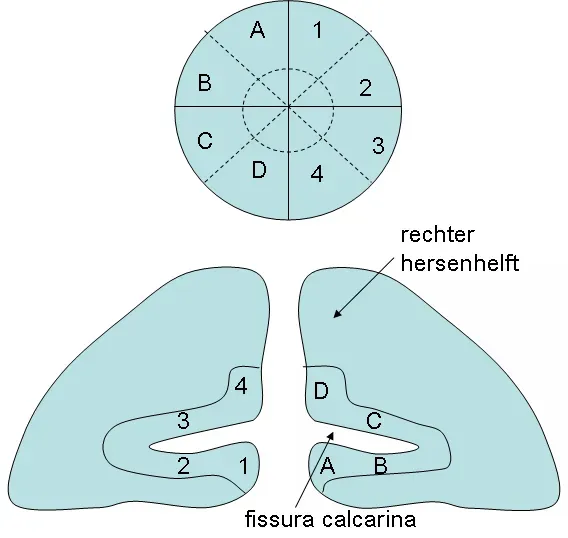
Once those signals reach the brain, they fan out across a broad network rather than heading to a single “seeing center.” The primary visual cortex, buried at the back of your head, responds first, detecting simple features like lines and orientations. From there, information streams along multiple paths: one pathway focuses on shape and color and is crucial for recognizing objects and faces, while another tracks movement and location so you can navigate space. By the time you feel that a scene has “popped” into awareness, dozens of specialized regions have already contributed their part, more like an orchestra than a soloist.
The Brain’s Bold Guess: Vision as Controlled Hallucination
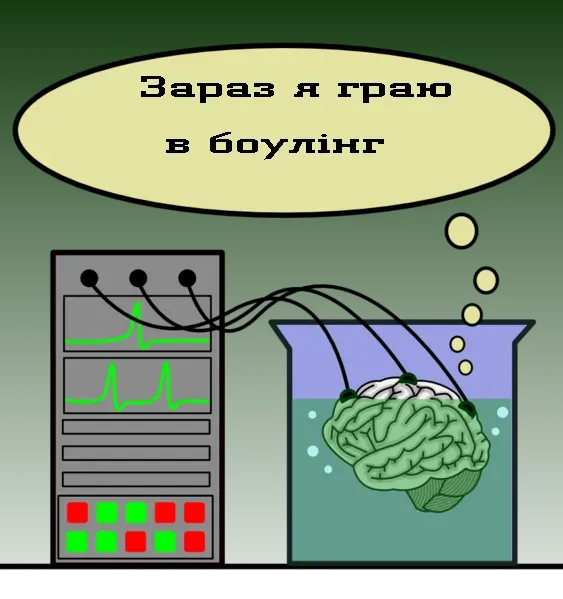
One of the most provocative ideas in modern neuroscience is that perception is a kind of controlled hallucination. In this view, the brain is constantly predicting what the world should look like and using incoming signals from the eyes mainly to correct its own guesses. That might sound far-fetched, but it solves a practical problem: signals from the outside world are slow and noisy, while your need to react is immediate. So the brain leans heavily on its expectations, shaped by a lifetime of experience, culture, and recent context, to fill in the gaps.
Simple everyday experiences reveal this prediction machinery at work. You can effortlessly read text even when some letters are smudged or missing because your brain predicts what should be there from the surrounding words. In a dim room, you may briefly “see” a coat as a lurking figure until more light forces the brain to revise its guess. In labs, researchers show that when what you expect to see clashes with what appears, brain activity changes not just in higher reasoning areas but in early visual regions as well. In other words, your expectations do not just color your interpretation; they can reshape what you consciously see in the first place.
When Reality Glitches: Illusions, Blind Spots, and Brain Bugs
Perhaps the most shocking proof that our visual world is constructed comes from its failures. Each of your eyes has a literal blind spot where the optic nerve exits the retina, with no light-sensitive cells at all. Yet you never notice a black hole floating in your vision. Instead, your brain quietly fills in the missing patch based on surrounding patterns, like an overzealous photo-editing tool, and serves you a smoothed, continuous scene. You experience a clean picture, but a small region of it is, quite literally, made up.
Other glitches are more dramatic. Some stroke patients develop a condition called neglect, where they ignore half of space, shaving only one side of their face or eating from just one half of a plate, even though their eyes work normally. Others lose the ability to recognize faces while still seeing objects just fine, revealing that different aspects of vision depend on distinct brain circuits. Visual hallucinations in certain neurological conditions can mix realistic and impossible imagery, hinting at what happens when the predictive machinery runs without proper checks. These “brain bugs” are devastating for the people who live with them, but they are also invaluable clues to how normal vision is assembled.
Why It Matters: Perception, Bias, and Everyday Life
All this may sound like a neat scientific curiosity – until you realize how deeply it touches daily life. If what we see is partly a prediction, then our beliefs, fears, and cultural backgrounds can influence visual perception in subtle but real ways. Experiments show that people may be quicker to perceive a neutral object as threatening if they are already anxious or primed to expect danger. In ambiguous situations, our brains lean on prior assumptions, which can reinforce stereotypes without our awareness. The world we think we see can quietly echo the world we have learned to expect.
This matters far beyond the lab. In eyewitness testimony, for example, the confidence of a witness often does not match the reliability of their perception, especially under stress or poor lighting. In driving, sports, or policing, split-second decisions rest on visual judgments that are less objective than they feel from the inside. On a more hopeful note, understanding the brain’s flexibility also underpins rehabilitation strategies after injury and therapies for conditions like amblyopia, sometimes called “lazy eye.” When we recognize that the brain is a dynamic storyteller rather than a fixed camera, we gain both humility about our own certainty and new tools to help when perception goes wrong.
Rewriting the Senses: Prosthetic Vision and Mixed Realities
There is a surprisingly personal twist to this story: your visual reality is not entirely fixed by biology anymore. Researchers are developing bionic eyes and retinal implants that can restore a rudimentary kind of sight for some people with degenerative eye diseases. These devices do not recreate normal vision; early recipients often describe flickering shapes or patterns that require extensive training for the brain to interpret. Over time, however, many users report that the world feels more stable and meaningful as their brains learn to decode the new signals, a live demonstration of neural plasticity at work.
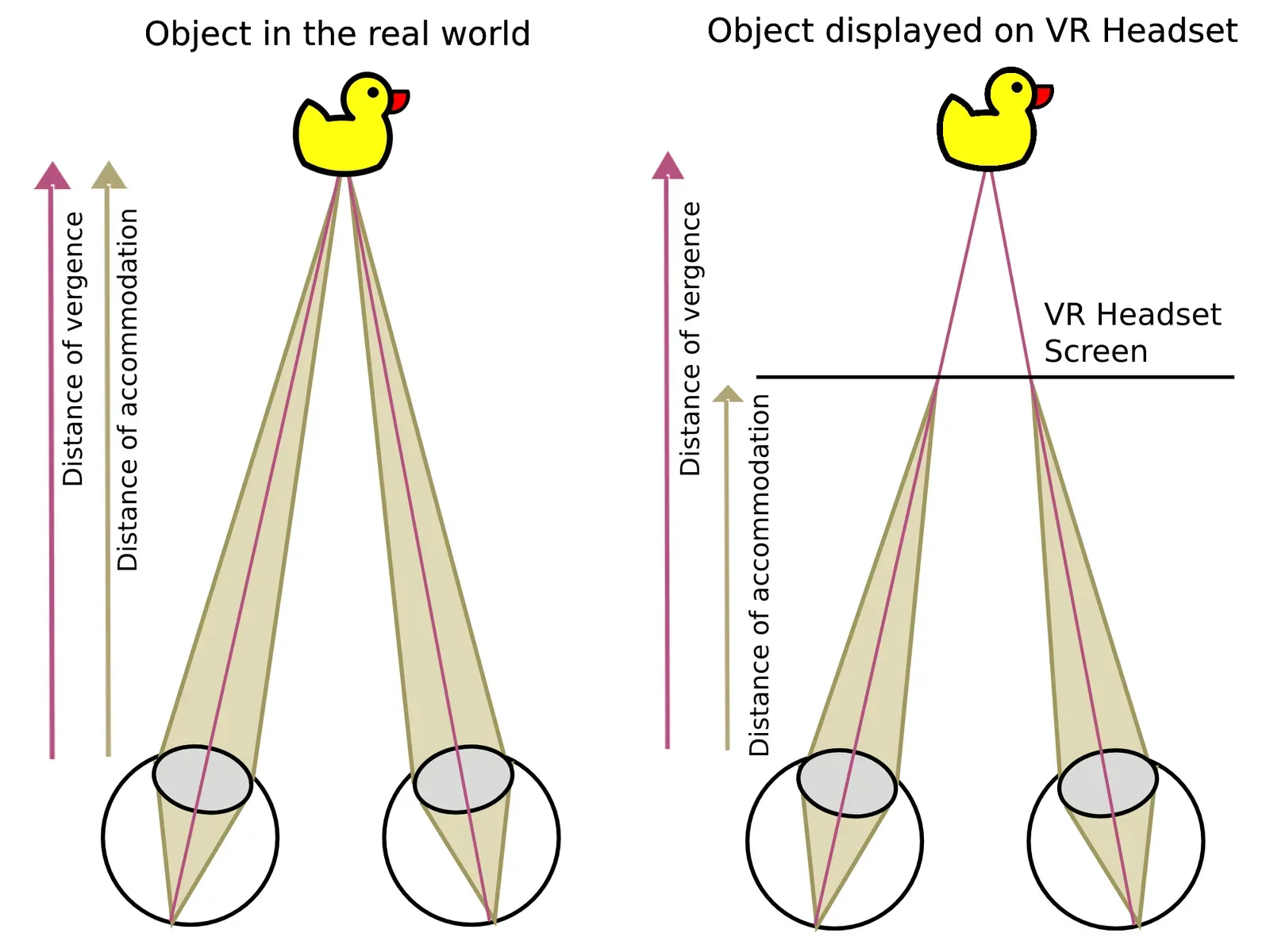
At the same time, virtual and augmented reality systems are getting better at hijacking the brain’s visual shortcuts. By carefully manipulating depth cues, motion, and timing, engineers can make a flat screen feel like a three-dimensional world, or blend digital objects seamlessly into real environments. This comes with promise and risk. Well-designed VR may help treat phobias or train surgeons in lifelike simulations without real-world consequences. But the more convincing these artificial realities become, the more urgent it is to understand how prolonged exposure might shape perception, attention, and even our sense of what counts as “real.”
The Future Landscape: Decoding Conscious Vision

Looking ahead, scientists are racing to link the mechanics of vision with the deeper puzzle of conscious experience. Advanced brain imaging and invasive recordings in volunteer patients have started to map which patterns of neural activity track with the vividness of a visual experience, not just the presence of a stimulus. Some teams are attempting to reconstruct rough images from patterns of brain activity alone, translating neural signals back into pictures. So far, the results are blurry and limited, but they hint at a future where we can literally see what someone else’s brain is seeing, at least in outline.
There are also big unanswered questions hanging over the field. Why does some visual processing happen without reaching awareness at all, as in blindsight, where people guess correctly about objects they insist they cannot see? How does the brain bind color, shape, and motion into a single coherent object instead of a jumbled mess of features? As artificial intelligence systems become better at recognizing images, researchers are using them both as tools and as philosophical foils, comparing machine vision with human perception. The coming decades will not just fine-tune the details of the visual system; they may reshape our understanding of consciousness itself.
Seeing With New Eyes: How You Can Engage With Your Own Perception
You do not need a lab coat or a brain scanner to start exploring how your own visual reality is built. Spend a few minutes with classic optical illusions and watch how colors seem to shift, lines appear to bend, or static images feel like they are moving. Notice how your brain stubbornly clings to the illusion even after you understand how it works. The goal is not to “beat” the illusion but to catch your brain in the act of interpreting, filling in, and sometimes distorting. That simple act of noticing can be surprisingly unsettling and oddly thrilling.
If you want to go a step further, you can support organizations that fund vision research, eye health, and neurological studies, since many breakthroughs in understanding perception arise from clinical work. Talk with friends or family about times when you disagreed about what you saw – a sports replay, a surprising event, a vague shadow in the night – and treat those moments as experiments rather than arguments. In a world where images are constantly shared, filtered, and manipulated, learning to doubt your own visual certainty just a little is a quiet act of scientific skepticism. The next time you glance around your room, you might ask yourself: how much of what I see is really out there, and how much is my brain’s best guess?
Suhail Ahmed is a passionate digital professional and nature enthusiast with over 8 years of experience in content strategy, SEO, web development, and digital operations. Alongside his freelance journey, Suhail actively contributes to nature and wildlife platforms like Discover Wildlife, where he channels his curiosity for the planet into engaging, educational storytelling.
With a strong background in managing digital ecosystems — from ecommerce stores and WordPress websites to social media and automation — Suhail merges technical precision with creative insight. His content reflects a rare balance: SEO-friendly yet deeply human, data-informed yet emotionally resonant.
Driven by a love for discovery and storytelling, Suhail believes in using digital platforms to amplify causes that matter — especially those protecting Earth’s biodiversity and inspiring sustainable living. Whether he’s managing online projects or crafting wildlife content, his goal remains the same: to inform, inspire, and leave a positive digital footprint.