
When you picture dying, you might imagine a simple “lights out” moment, where you are awake one second and gone the next. But your brain does not usually switch off like a lamp. Instead, it goes through a series of strange, sometimes surprisingly organized changes, and your conscious experience can shift in ways that are only now starting to be understood. You hear about people seeing tunnels of light, reliving memories, or feeling at peace, and it raises a haunting question: what actually happens in your mind as your brain begins to fail?
As unsettling as it sounds, understanding this process can be oddly comforting. When you look at what science has found so far, you do not just see a body breaking down; you also see the brain trying to stay online, to make sense of chaos for as long as it can. In this article, you will walk step by step through what may happen to your awareness in those final stages: from subtle changes in perception to deep internal experiences and the fading of self. It is not about drama or horror; it is about clarity, honesty, and a little bit of awe at what your brain is capable of, right up to the edge.
The First Subtle Shifts: When Your Brain Starts Losing Its Grip
You do not usually go from fully alert to completely unconscious in an instant. As your – whether from severe illness, lack of oxygen, or trauma – one of the first things to change is how clearly you can focus. You might feel unusually tired, confused, or detached from what is happening around you, like you are watching your life through frosted glass. Your brain is still trying to operate, but parts of it are struggling to get enough oxygen and energy, so attention and short-term memory are often the first to slip.
If you have ever fainted, had a bad drop in blood pressure, or come out of heavy anesthesia, you have tasted a tiny version of this. The world feels slightly unreal, sounds may seem distant, and time can stretch or compress in odd ways. In early shutdown, your consciousness is not gone, but it becomes patchy and unstable. You might drift in and out, losing track of conversations or forgetting where you are for a moment, as if your brain is flickering instead of shining steadily.
Perception on the Edge: Distorted Senses, Tunnels, and Bright Lights

As your brain becomes more stressed – especially if blood flow and oxygen drop sharply – your sensory systems can start misfiring. Vision is particularly vulnerable, which is why you sometimes hear about tunnels of darkness, narrowed fields of view, or bright central lights. This is not necessarily something mystical; your visual cortex and retina are extremely sensitive to oxygen levels. When they begin to fail, you may lose peripheral vision first, making what you see feel like a tunnel.
Along with visual effects, you could experience odd distortions in sound, touch, and body awareness. Voices may sound echoey or far away, and your own body might feel extremely heavy, light, or not quite your own. Think about the way a dream can bend your senses and still feel real while it is happening. In these moments of brain shutdown, you are in a similar in-between state: not fully awake in the normal sense, but not fully unconscious either, with perception slipping into unusual patterns that your mind tries to stitch into a story.
Time and Self Start to Warp: When Minutes Stop Feeling Like Minutes

One of the strangest shifts you may experience as the brain degrades is a change in how you feel time. When parts of your brain that help you track sequences and order begin to falter, seconds can feel stretched into long moments, or entire experiences can feel strangely compressed. This is one reason some people report that a whole series of events, or even a lifetime of memories, seemed to appear in what could only have been a few real-world seconds.
Your sense of self can shift along with this time distortion. You may feel less like a person moving through time and more like a point of awareness watching scattered scenes. In extreme cases, your usual boundaries – where you end and the world begins – can loosen, making you feel merged with your surroundings or with a feeling of vastness. You can get brief glimpses of what meditators describe after years of deliberate practice: the fading of the solid, everyday “you,” only here it is driven by a failing brain rather than training.
Near-Death Experiences: Intense and Real, but Not Fully Understood

As your brain gets closer to a critical threshold, you may enter what people commonly call a near-death experience, especially if your heart stops and is restarted. Many report a striking sense of clarity, calm, or detachment even when their body is in crisis. You might feel as if you are outside your body, watching medical staff work on you, or moving through a space that feels more real than ordinary life. These experiences are often deeply meaningful, reshaping how people think about death, even when they later accept that the brain was driving them.
From a scientific point of view, your brain in this state is under extreme stress. It can produce intense bursts of activity, especially in networks tied to vision, memory, and body awareness. That burst may explain why the experience can feel hyper-real and emotionally powerful. You are not just drifting; your brain is firing in a last, desperate attempt to organize chaos. You feel it as vivid imagery, powerful emotions, and sometimes profound insight, even if the underlying mechanics are oxygen loss, chemical surges, and unstable networks.
Memories and Meaning: Why Your Life Might Flash Before Your Eyes
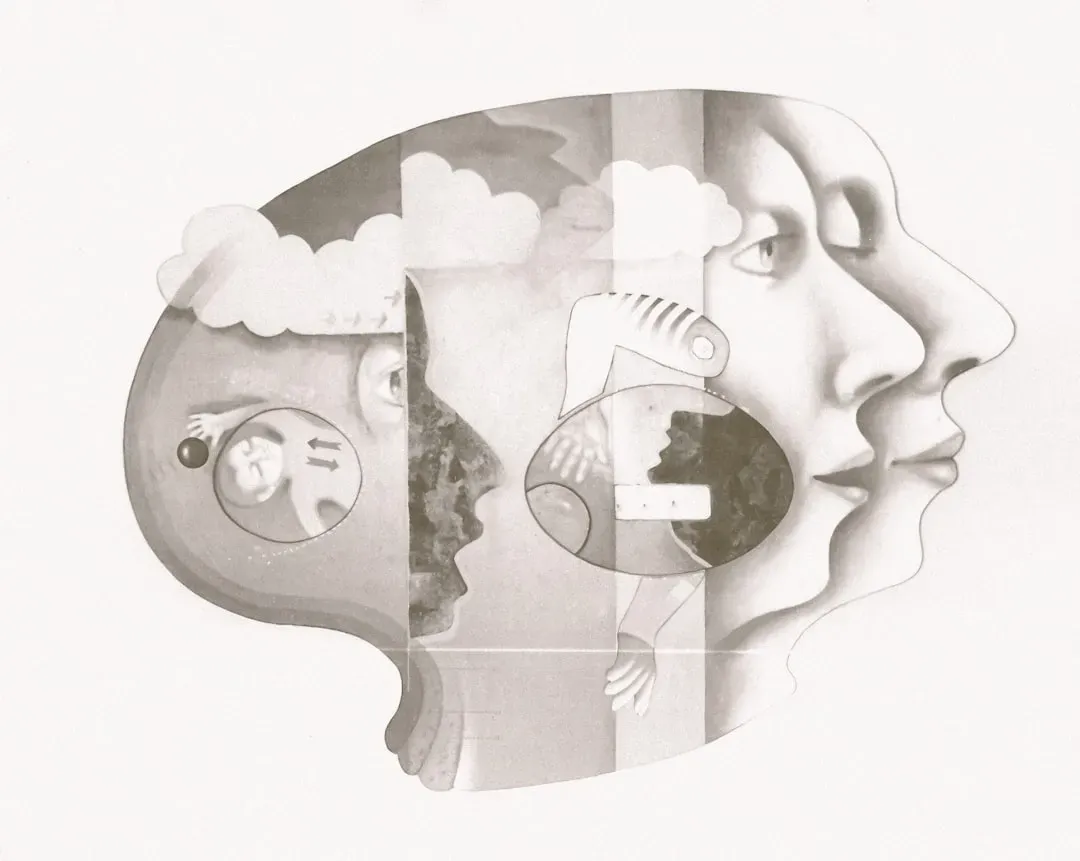
When you hear people say that their life flashed before their eyes, it is easy to dismiss it as exaggeration, but something like this can genuinely happen as the brain shuts down. Regions involved in memory and emotion can light up together under extreme stress. If your memory networks are suddenly activated in a sweeping, disorganized way, you might experience a rapid stream of scenes from your past. It does not have to be a neat, chronological slideshow; it may be more like a flood of emotionally charged moments that stand out in your personal story.
What is especially striking is how often people say these memories are bathed in a strong sense of meaning. You are not just recalling events; you are feeling what they meant to you, almost as if your mind is rapidly summing up who you were and what mattered. In that sense, your brain could be performing one last, intense act of self-reflection, even if it is happening automatically. You might find old regrets softened, old joys highlighted, or relationships suddenly feeling like the core of everything, as though your brain is putting together your final personal narrative.
The Gradual Unraveling: From Confusion to Deep Unconsciousness
If the shutdown process continues and your brain cannot regain stable function, your consciousness usually does not snap off; it fades. Confusion tends to deepen, responsiveness drops, and you may move through states that look like heavy sleep, delirium, or coma. From the outside, this can be hard to watch, but from the inside, awareness is often less and less organized. You might have fragments of thought, disjointed images, or dreamlike snippets that do not fully connect.
Eventually, the communication between different brain regions becomes so disrupted that you can no longer maintain a stable sense of being awake. At that point, you slip into full unconsciousness, where experience – at least as you normally understand it – no longer seems to arise. Pain perception can drop significantly as the cortex, which helps you consciously feel and interpret signals, goes offline. This is why people at the very end of life often appear peaceful, even if their body is very sick: the systems that would make that suffering fully felt are no longer working in the usual way.
Culture, Belief, and How You Interpret the Edge of Consciousness

While the underlying brain processes are biological, how you interpret what you experience at the edge of consciousness is deeply colored by your beliefs, culture, and personal history. If you were raised with a particular religious or spiritual framework, you may naturally describe tunnels, lights, presences, or feelings of peace in those terms. Someone else with a different background might use the language of energy, nature, or simply “strange dreams.” Your brain provides the raw experience, but your mind wraps it in your own symbols and stories.
This does not mean your experience is fake or meaningless; it just means you are doing what you always do: making sense of your world using the concepts you already know. Even if science eventually explains every neural step involved in these states, that does not erase their emotional or personal impact. You might come away from a brush with death feeling less afraid, more grateful, or more focused on relationships, regardless of whether you think it was a glimpse of an afterlife or a powerful brain event. Either way, your interpretation becomes part of how you live afterward.
What This Means for How You Live Now

Knowing that your consciousness can shift, distort, and even surge with surprising intensity as your brain shuts down can change how you think about dying, but it can also change how you think about living. If your mind at the edge often returns to relationships, regrets, and meaning, it is a quiet nudge to pay attention to those things while you still have plenty of time. You do not control the moment your brain begins to fail, but you do influence the story it will have to work with: how you treated people, what you pursued, what you cared about.
It can also soften some fear. Instead of imagining death as a sheer drop into nothingness, you can picture it as a winding path through altered awareness: first confusion, then unusual perceptions, maybe intense inner experiences, and finally a gentle fading. That does not make death easy or pretty, but it makes it less like a jump scare and more like a process your brain is strangely prepared to handle. When you know that, you might feel just a bit freer to focus on the part you are living right now. If your final moments are, in a way, your mind’s last attempt to make sense of your life, what kind of life do you want it to remember?
In the end, consciousness does not simply vanish in one clean instant; it bends, stretches, and slowly lets go as the brain loses its power. Along the way, you may encounter distorted senses, warped time, intense inner worlds, and a deep pull toward meaning. You do not need to romanticize or dramatize that to feel its weight. The real question is not just what happens when your brain shuts down, but what you will have filled it with by the time it does. When you imagine that final inner flicker, what do you hope your mind will be looking back on?