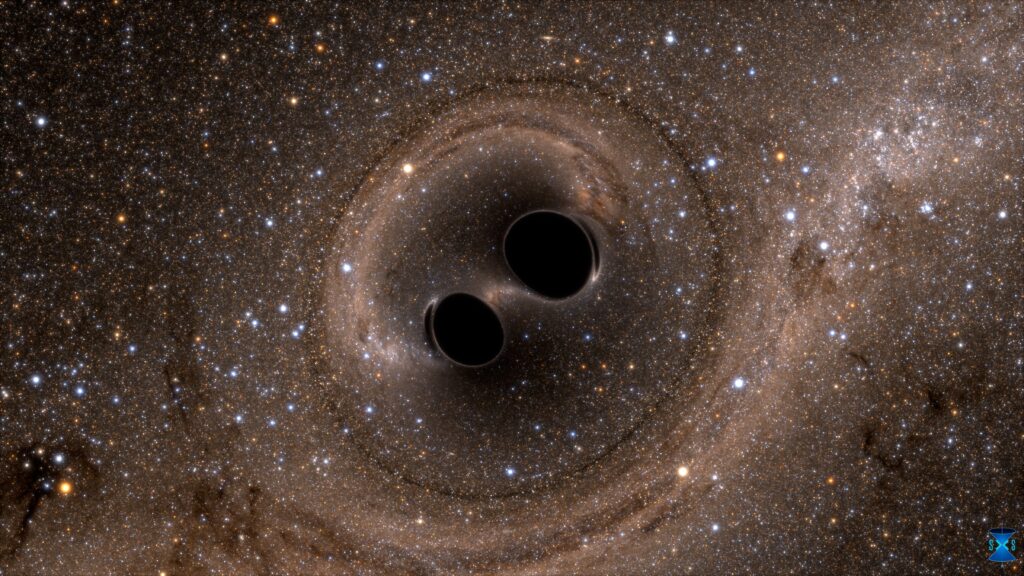

If you could somehow press pause on the universe and zoom in on a pair of black holes spiraling together, you’d be watching one of the most violent but strangely elegant processes in nature. Two invisible monsters dance, crash, and fuse into one heavier, spinning remnant that literally reshapes spacetime around it. What sounds like pure science fiction is now something you can describe with real physics and real data.
In the last decade, astronomers have gone from guessing about black hole mergers to actually listening to them through ripples in spacetime. You now live in a moment where you can say, with a straight face, that you’ve heard black holes “eating” each other. Once you understand the basic rules – gravity, orbits, energy loss, and a bit of relativity – the idea of black holes growing by cannibalism stops being mystical and becomes a surprisingly logical story the universe has been telling for billions of years.
What a Black Hole Really Is (So You Don’t Picture a Cosmic Vacuum Cleaner)
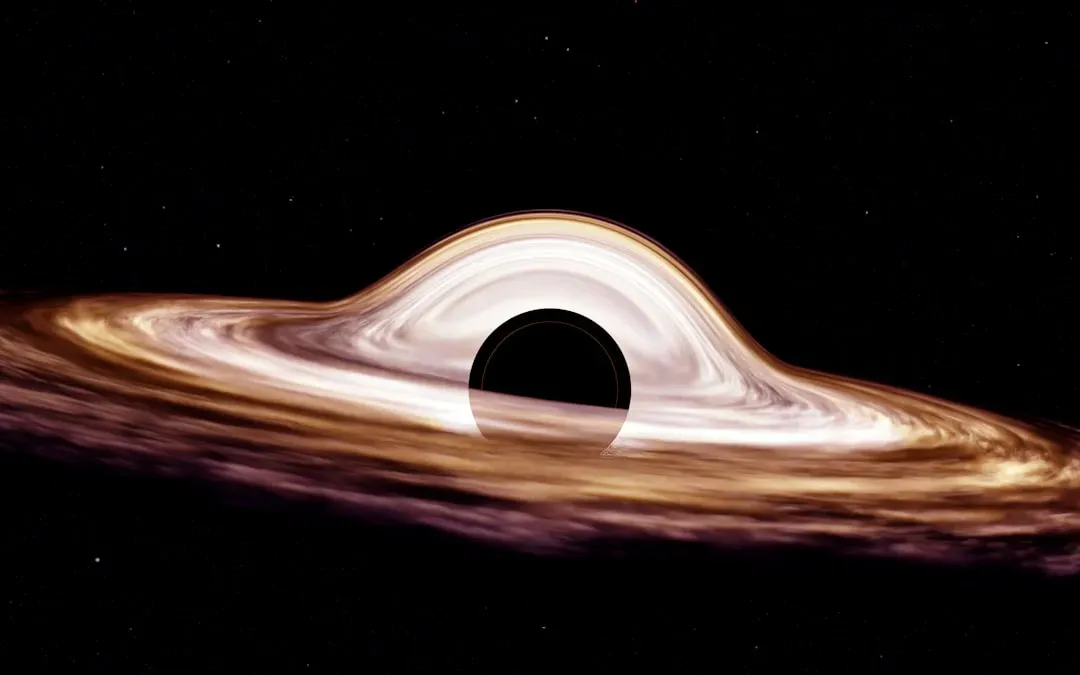
Before you can understand how black holes eat each other, you need a clear picture of what a black hole actually is. It’s not a giant space drain sucking everything from afar; it’s a region where matter has been crammed so tightly that gravity wins against everything else, even light. Around it there’s a boundary called the event horizon: cross that line and, as far as physics tells you, you never come back out.
You can think of a black hole less like an object and more like a warped patch of spacetime with a mass, a spin, and often an electric charge (though the charge is usually tiny in astrophysical cases). If you replaced the Sun with a black hole of the same mass, Earth would still orbit in almost the same way; it wouldn’t suddenly get yanked in. That detail is crucial: black holes do not magically pull harder just because they are black holes – their gravity at a distance is still about mass. They grow when mass actually falls in, and one of the most efficient ways that happens is when another black hole gets close enough to be swallowed whole.
Why Two Black Holes Start Orbiting Each Other in the First Place
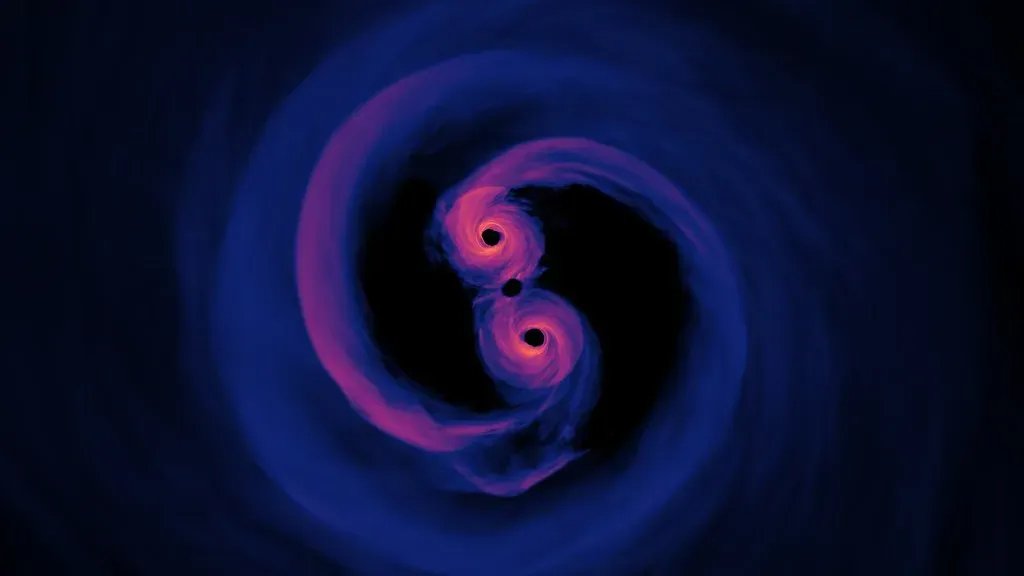
For black holes to merge, they first have to become a bound pair, and that story usually starts long before either one even exists. You often begin with two massive stars orbiting each other, burning hot and bright, shedding gas, and living out short, dramatic lives. Each of those stars eventually collapses under its own weight, often after a supernova, leaving behind a black hole where a star once shone.
If those two stars were already orbiting each other closely enough, their black hole remnants stay paired, now circling as an invisible binary system. In dense stellar neighborhoods like globular clusters or the crowded cores of galaxies, encounters are frequent, so even black holes that start out single can capture partners through gravitational interactions. Either way, once you have two black holes gravitationally bound to each other, you’ve loaded the universe’s favorite gun: a slow, spiraling process that, given enough time, almost always ends in a merger.
The Slow Dance: How Gravity Waves Away Their Energy
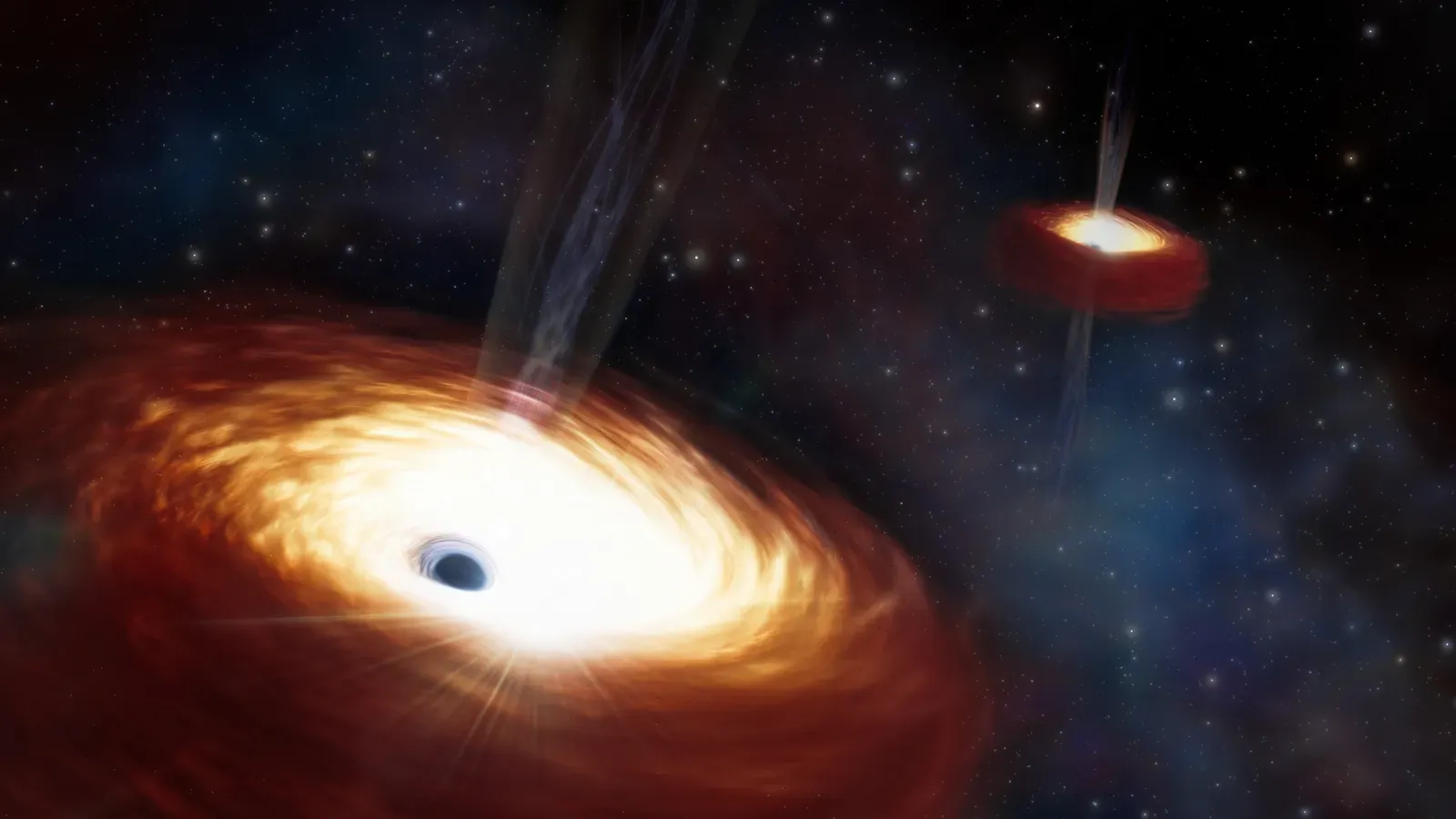
At first, two black holes can happily orbit each other for millions or even billions of years, just circling like two ice skaters on a frozen lake. But general relativity adds a twist that Newton never considered: when massive objects accelerate, they can send out ripples in spacetime itself, called gravitational waves. Those waves carry away energy and angular momentum, and that loss gently robs the orbit of its support.
You can picture it as if the orbit is paying a tax in the form of gravitational radiation every time the black holes swing around. As they lose energy, they spiral closer, their orbital speed increases, and they radiate even more strongly. It’s a runaway process: closer means faster, faster means stronger waves, stronger waves mean faster decay. By the time the orbit shrinks enough, the final few seconds turn into an explosive, high-frequency crescendo that ends with the two horizons merging into one larger black hole.
What Really Happens in the Final Crash and Merger
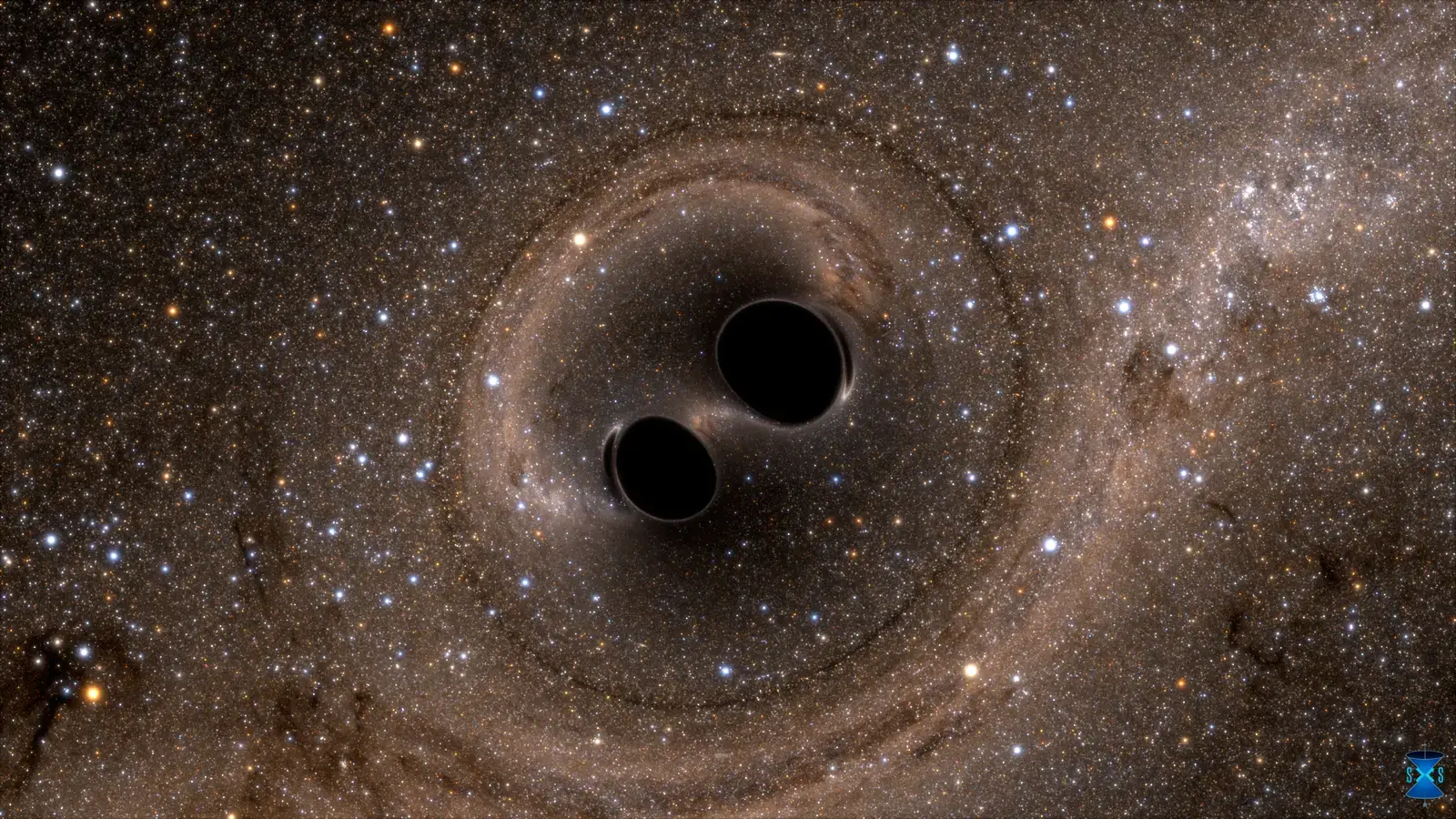
If you could somehow ride along in a safe bubble of physics during the final orbits, you’d watch the black holes whipping around at a significant fraction of the speed of light. Their individual event horizons distort, stretch, and start to overlap, like two drops of ink merging on paper. At the moment of coalescence, there is no surface collision like you’d see with stars or planets – there’s just spacetime reshaping so that what used to be two separate trapped regions becomes one.
Right after the merger, the remnant black hole is often a bit deformed and ringing like a cosmic bell. It quickly settles down, radiating away those distortions as a clean gravitational wave signal that fades in a characteristic pattern. When all of this is done, you’re left with a single black hole whose mass is slightly less than the sum of the original two, because part of that mass has been converted into pure gravitational wave energy that escaped into the universe. In some events we’ve detected, that lost mass corresponds to more energy released in a moment than all the stars in the observable universe emit as light at the same time.
How Much Bigger the New Black Hole Really Gets
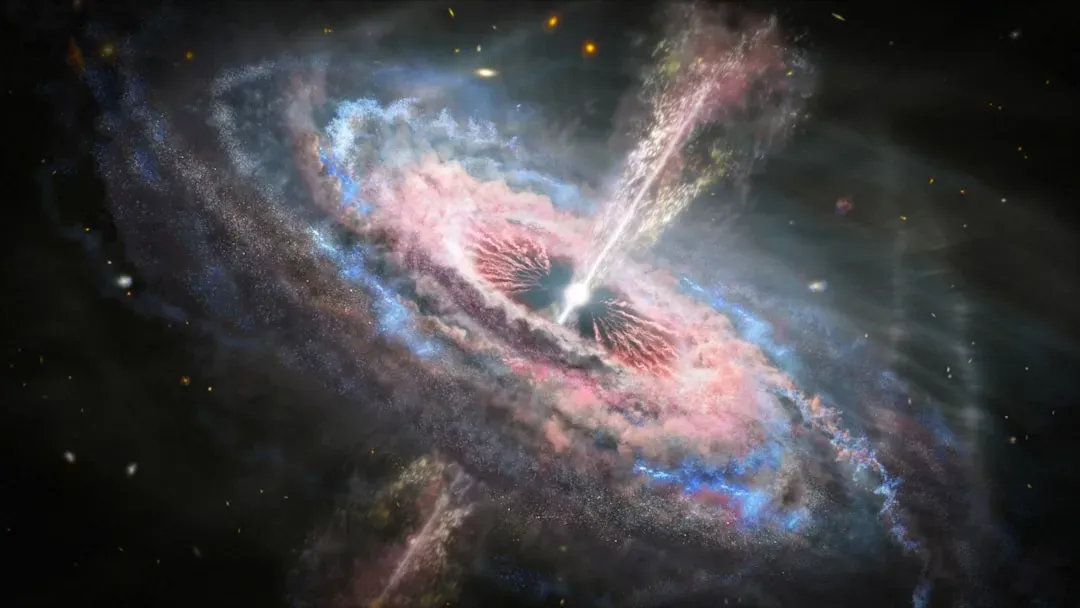
When you hear that black holes eat each other to grow, you might imagine that the final mass is just one plus the other, as if you added two rocks together. In reality, the new black hole is a bit lighter than that simple sum. A noticeable chunk of mass goes into the gravitational waves that roar out during the merger. So if you start with two black holes that each have, say, dozens of times the mass of the Sun, the final one will have a bit less than their total combined mass.
The key point, though, is that the survivor is still significantly heavier than either of its parents, and this process can repeat. A black hole that has already grown through one merger can find another partner later and merge again. Over cosmic timescales, especially in dense environments, you get a hierarchy: small black holes merge to form medium ones, medium ones combine into larger ones, and so on. This staircase of mergers is one of the ways you can build up the surprisingly massive black holes we now see in the distant universe much earlier than you used to think possible.
Listening to Black Holes Eating Each Other from Earth
For most of human history, the idea of confirming black hole mergers would have sounded like fantasy. Yet you now have detectors on Earth that can feel the tiny stretching and squeezing of spacetime when a distant merger happens. Facilities like LIGO and Virgo use long, L-shaped vacuum tunnels and lasers to measure changes in length thousands of times smaller than a proton’s width. When a gravitational wave from a merger passes through, it slightly alters the distances in the arms, and the instrument turns that microscopic jiggle into a measurable signal.
What you get is a kind of chirp: a rising frequency and amplitude as the black holes spiral closer, then a sharp cutoff after the merger and a brief ringdown as the remnant settles. By matching that pattern to the predictions of general relativity, you can infer the masses of the black holes, their distance, and even how fast the final black hole is spinning. In other words, you are not just theorizing about black holes eating each other; you are recording the after-dinner burp in spacetime and decoding what was on the menu.
From Stellar Black Holes to Giants: How Mergers Build the Biggest Beasts
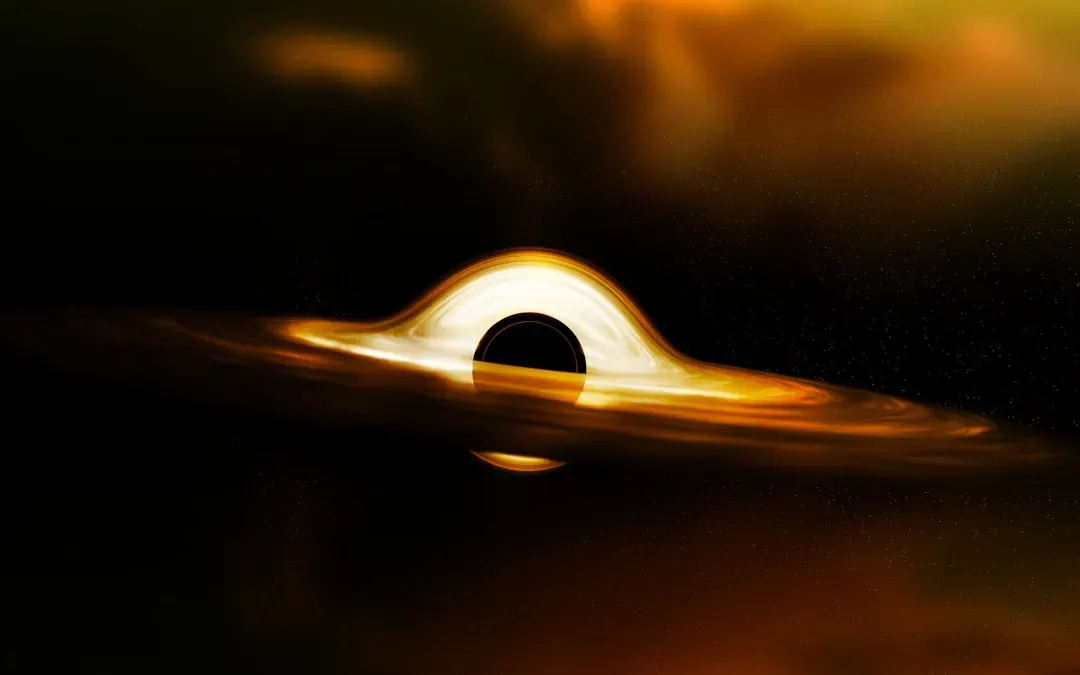
When you look at the centers of galaxies, including your own Milky Way, you find supermassive black holes with millions to billions of solar masses. One of the open questions in astrophysics is how those giants got so massive in the limited time since the universe began. Mergers give you one plausible route: if smaller black holes and intermediate-mass black holes keep colliding and combining in crowded galactic centers, you can steadily climb the mass ladder.
You can think of it like building a snowman: you start with small snowballs and keep rolling them together until you have something huge. Gas flows feeding the central regions of galaxies provide additional fuel, but mergers help speed things up and explain some of the most massive black holes you see surprisingly early in cosmic history. Ongoing and future observations of gravitational waves from merging black holes at different distances will help you trace this growth process over time, almost like watching a time-lapse of black hole evolution across the universe.
Black Hole Kicks: When Eating Each Other Gives Them a Recoil
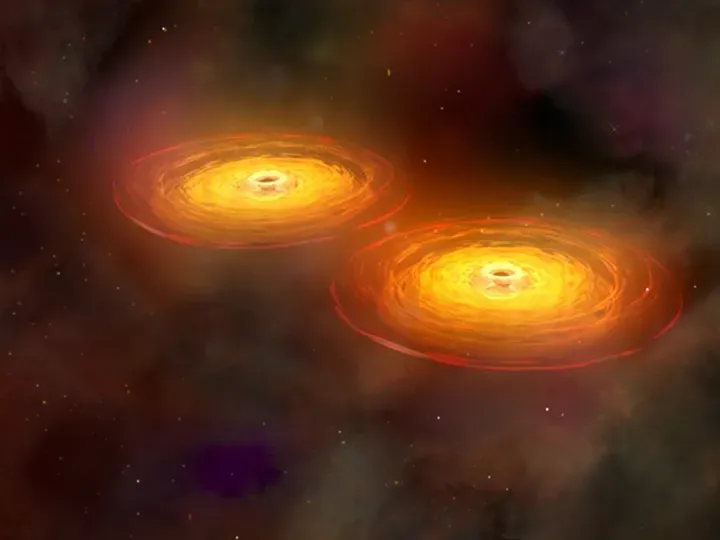
There’s a surprising twist to black hole mergers that you might not expect: sometimes the final black hole gets kicked like a cosmic soccer ball. If the two original black holes have unequal masses or their spins are misaligned, the gravitational waves they emit are not perfectly symmetric. That imbalance means the remnant can receive a recoil, shooting off at speeds that can reach thousands of kilometers per second in extreme cases.
In some situations, that recoil might be strong enough to eject the newly formed black hole from the star cluster or even from the host galaxy’s core. Imagine a supermassive black hole that just merged and then gets booted out into intergalactic space, leaving behind a galaxy with a missing central monster. While these dramatic kicks are likely rare in their most extreme form, the possibility reminds you that growth by mergers is not always a calm, orderly process. Sometimes, when black holes eat each other, they pay the price by getting flung into the cosmic wilderness.
What This Means for You: A Universe That Builds Itself Through Collisions
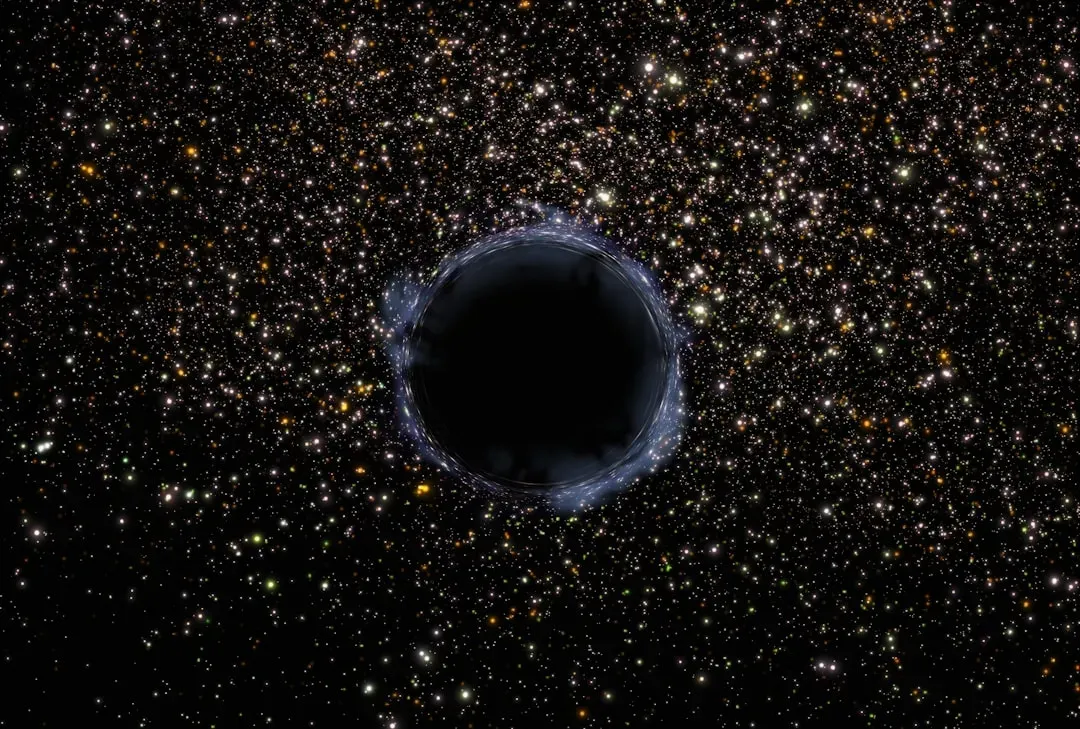
When you zoom out from all the technical details, the story of black holes growing by eating each other is really a story about how the universe builds structure. Stars live and die, some leave behind black holes, and those black holes don’t just sit quietly. They move, they meet, they orbit, and eventually they merge, using gravity and relativity as their tools. Every merger you detect is a snapshot in that long, restless process of cosmic construction.
Even though these events happen unimaginably far away and pose no threat to you, they still shape the galaxies you live in. By studying them, you get clues about how stars formed in the past, how galaxies assembled, and how the most extreme objects in nature came to be. In a way, every time you listen to two black holes colliding, you’re eavesdropping on the universe teaching you its own rules: growth through gravity, change through collision, and order slowly emerging from violent, invisible encounters.
Conclusion: Cannibalism as a Cosmic Growth Strategy
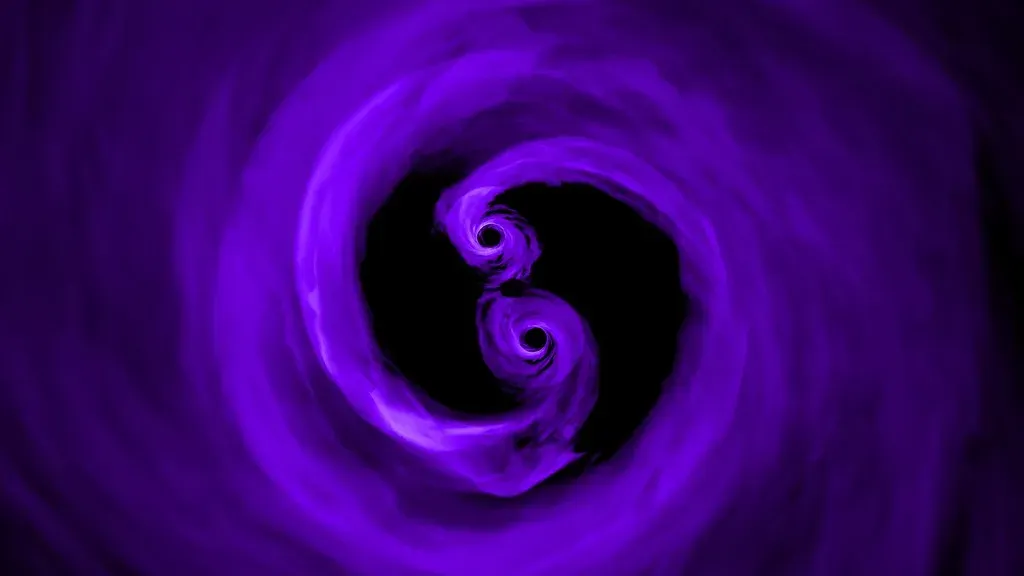
When you put it all together, black holes growing by eating each other stops being a strange headline and becomes a logical outcome of how gravity and spacetime work. You start with pairs of massive stars, end up with binary black holes, let them slowly radiate away orbital energy in gravitational waves, and watch them finally crash into a heavier remnant. Along the way you get kicks, ringdowns, missing mass turned into pure wave energy, and a universe that constantly reinvents itself through these mergers.
For you, the coolest part is that this is no longer just theory scribbled in notebooks; it’s something your species now measures, catalogs, and uses to map the hidden life of the cosmos. The next time you hear about a new gravitational wave detection, you can picture two black holes finishing a billion-year dance in a final, furious embrace and leaving behind a bigger, faster-spinning survivor. In a universe with no referee and no reset button, maybe it makes sense that even black holes grow the same way galaxies and ideas do – by colliding, merging, and coming out transformed. Did you ever imagine that cosmic cannibalism could be such a precise and elegant science?