
Hayabusa2’s Precious Cargo (Image Credits: Unsplash)
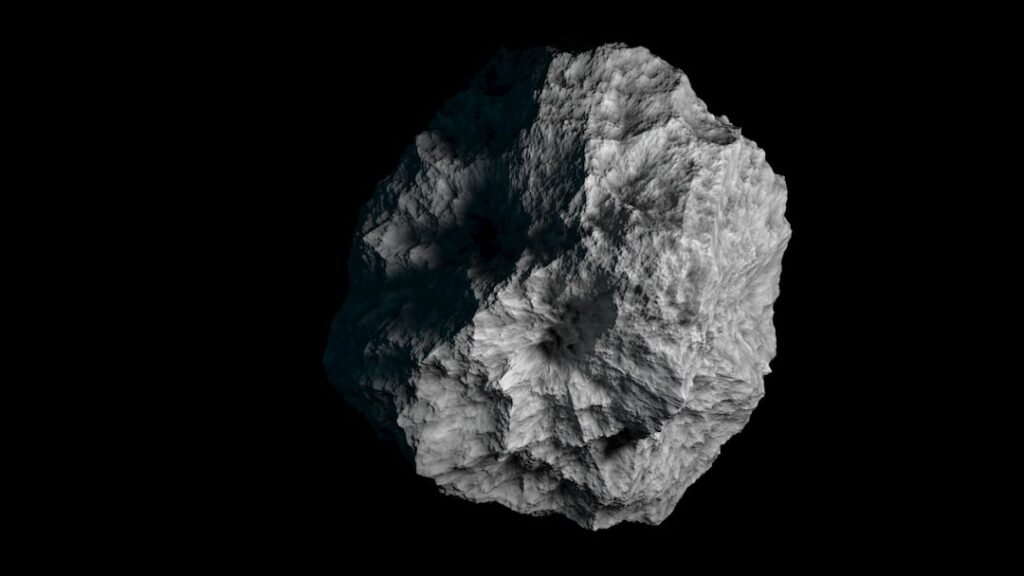
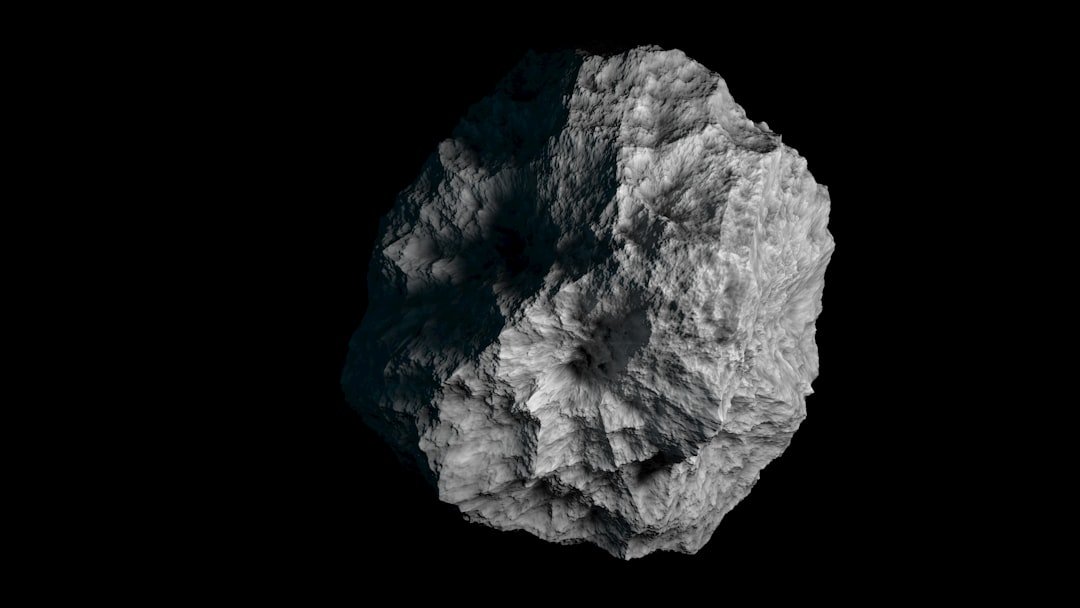
Asteroid Ryugu, the spinning-top-shaped near-Earth object explored by Japan’s Hayabusa2 spacecraft, holds fresh evidence of a violent encounter with space debris. Samples returned to Earth in 2020 revealed a stark contrast between the asteroid’s battered surface and its more pristine interior. Scientists now link this disparity to an intense barrage of micrometeoroids that struck the asteroid relatively recently in cosmic terms.[1][2]
Hayabusa2’s Precious Cargo
The Hayabusa2 mission achieved a milestone by collecting material from both the surface and subsurface of Ryugu. Launched in 2014, the spacecraft arrived at the asteroid in 2018, conducted surveys, and executed two daring sample collections. One touchdown gathered surface regolith, while a second involved firing a projectile to expose and sample subsurface material.[1]
These samples, totaling about 5.4 grams, landed safely in Australia in late 2020. Initial analyses confirmed Ryugu’s carbonaceous composition, rich in organics and hydrated minerals, offering clues to the solar system’s early history. Further scrutiny, however, uncovered subtle differences that pointed to ongoing processes shaping the asteroid’s exterior.[1]
Unveiling Surface Secrets
Detailed elemental mapping showed the surface particles carried five times more sodium than their subsurface counterparts. This enrichment appeared in an ultrathin layer, roughly 10 nanometers thick, also laden with iron sulfides and sulfur. The surface material displayed additional signs of alteration: glassy textures, tiny craters, and grid-like patterns etched by solar wind ions.[1]
Subsurface grains, by contrast, remained more primitive, lacking these modifications. Researchers attributed the surface changes to space weathering, a combination of solar radiation, cosmic rays, and micrometeoroid impacts. Yet the sodium surplus puzzled teams, as solar wind typically strips away such volatiles from exposed rock within centuries.[1]
“These differences have already been observed in the literature when comparing samples collected on the surface with those from underground. Our work confirms this trend, highlighting significantly greater processing for the surface particle, in line with the expected models,” said lead author Ernesto Palomba of the Italian National Institute of Physics & Astrophysics.[1]
A Recent Cosmic Onslaught
The sodium-rich veneer suggests Ryugu crossed paths with a concentrated stream of micrometeoroids around 1,000 years ago. These tiny impactors, likely smaller than grains of sand, vaporized on contact, depositing sodium and other elements while creating the observed melt features. The event’s recency explains why the layer persists despite ongoing solar wind erosion.[1]
Modeling based on prior observations of asteroid Eros informed loss rates for sodium and sulfur. The calculations indicate the bombardment must have occurred within the last millennium to account for the current enrichment. While the exact source of the micrometeoroids remains speculative, possibilities include a young dust trail from a disrupted comet or asteroid.[1]
Implications for Asteroid Dynamics
This discovery challenges assumptions about steady space weathering on airless bodies. Near-Earth asteroids like Ryugu routinely intersect meteoroid streams, much like Earth encounters about 1,200 annually. The findings underscore how brief, intense events can dominate surface evolution over longer, gradual processes.[1]
Future experiments with Ryugu-like materials will refine volatile loss models. The study, published in The Astrophysical Journal Letters, highlights the value of paired surface-subsurface samples in decoding an asteroid’s history.[1]
Ryugu’s story reminds scientists that cosmic neighborhoods remain active arenas of collision and change.