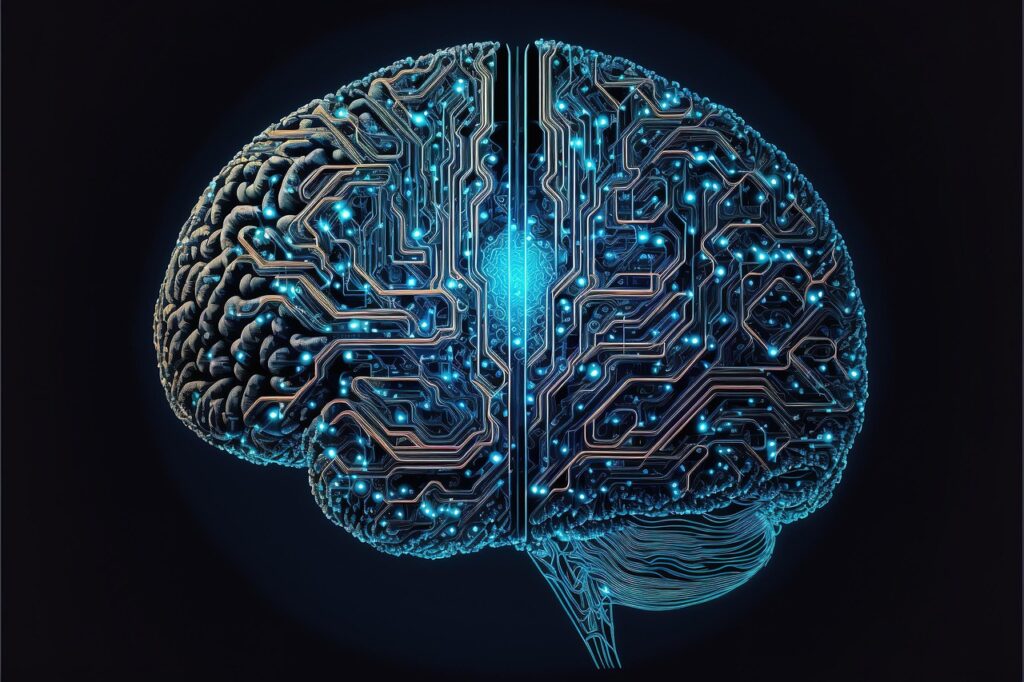


A Student’s Deep Dive Shakes Foundations (Image Credits: Unsplash)
Traditional views held that death struck instantly when the heart ceased beating and oxygen flow halted. Yet, a comprehensive review of scientific literature challenges this notion, pointing to persistent brain function during cardiac arrest. Presented recently at a prominent conference, the findings indicate that organized electrical surges in the brain can continue long after clinical death, hinting at death as a gradual process rather than a sudden switch.
A Student’s Deep Dive Shakes Foundations
Anna Fowler, a researcher at Arizona State University, ignited discussion with her analysis of more than 20 peer-reviewed studies.[1]
Her work, overseen by faculty members Marjon Forouzeshyekta and Abigail Gómez-Morales, drew from research on cardiac arrest survivors, resuscitation techniques, hypothermia effects, and coma patients. Fowler shared these insights at the American Association for the Advancement of Science Annual Meeting. Previously, experts assumed brain cells died immediately without circulation and oxygen. Fowler noted, “We once thought death was an instantaneous event where if circulation and oxygen stops there is no brain function. The brain cells die and this is the end of life.”[1]
This perspective shift stemmed partly from personal connections, including family experiences with atrial fibrillation. Her review highlighted similarities between near-death experiences and brain patterns in dying patients.
Persistent Signals in the Dying Brain
Studies captured organized surges of electrical activity during cardiac arrest, even as hearts lay still.[1]
Electroencephalogram (EEG) readings flatlined first, but deeper electrocorticography (ECoG) detected spreading depolarization signaling advanced shutdown stages. In coma patients, such activity persisted up to 102.5 minutes before terminal death. Fowler emphasized, “In both human and animal studies, we now know brain activity can continue for quite some time.”[1]
Neurons fired despite halted circulation, though no isolated study pinpointed the exact mechanism. Animal research showed organs viable for revival hours post-death and some brain cells regenerating, albeit without restoring full pre-death electrical levels.
- EEG activity halts initially in cardiac arrest.
- ECoG reveals depolarization waves next.
- Terminal shutdown follows, but surges precede it.
- Low-level activity endures in comas for over 100 minutes.
Survivors’ Accounts Align with Data
Nearly 40 percent of cardiac arrest survivors whose brains flatlined reported awareness during the episode.[1]
A 2023 study in the journal Resuscitation documented these recollections, with 20 percent describing death-like encounters and 11 percent noting dreamlike visions. Such awareness surfaced as late as 35 to 60 minutes into CPR efforts. Patients recounted life replays, profound meaning, or overwhelming love – hallmarks of near-death narratives.
These reports mirrored brain patterns in comas, suggesting genuine consciousness rather than mere hallucination. Fowler observed, “Knowing that electrons can fire after circulation in the body stops is a huge thing that should be researched more.”[1]
Redefining Death’s Boundaries
The research blurs lines between life and death, portraying it as phased rather than binary.[1]
Clinical death hinges on irreversible vital organ failure, yet modern resuscitation muddies “irreversibility.” Fowler stated, “The term ‘irreversibility’ was always a factor regarding death declaration. With newer technologies and methods in resuscitation there is a gray line with what irreversibility truly means.”
Ethical concerns loom large, particularly for organ donation. Harvesting organs too soon risks interrupting potential consciousness. This prompts calls to refine protocols and timelines.
| Stage | Brain Observation | Duration Example |
|---|---|---|
| Clinical Death | EEG flatline | Immediate |
| Depolarization | ECoG surges | Minutes to hours |
| Terminal | Full cessation | Up to 102.5 min prior |
Key Takeaways
- Organized brain surges occur post-heart stop, supporting staged death.
- 40% of survivors recall awareness during flatline periods.
- Advances challenge organ donation ethics and death definitions.
These revelations, though from an unpublished review, urge deeper investigation into death’s hidden layers. They compel medicine to confront ambiguities in revival and finality. What implications do persistent brain signals hold for how we view the end of life? Share your thoughts in the comments.