
A Monumental Structure Rises in Isolation (Image Credits: Cdn.mos.cms.futurecdn.net)
Chile’s Atacama Desert – Workers have made striking progress on a colossal metal dome destined to shelter the primary mirror of the Extremely Large Telescope, one of astronomy’s most ambitious projects.[1]
A Monumental Structure Rises in Isolation
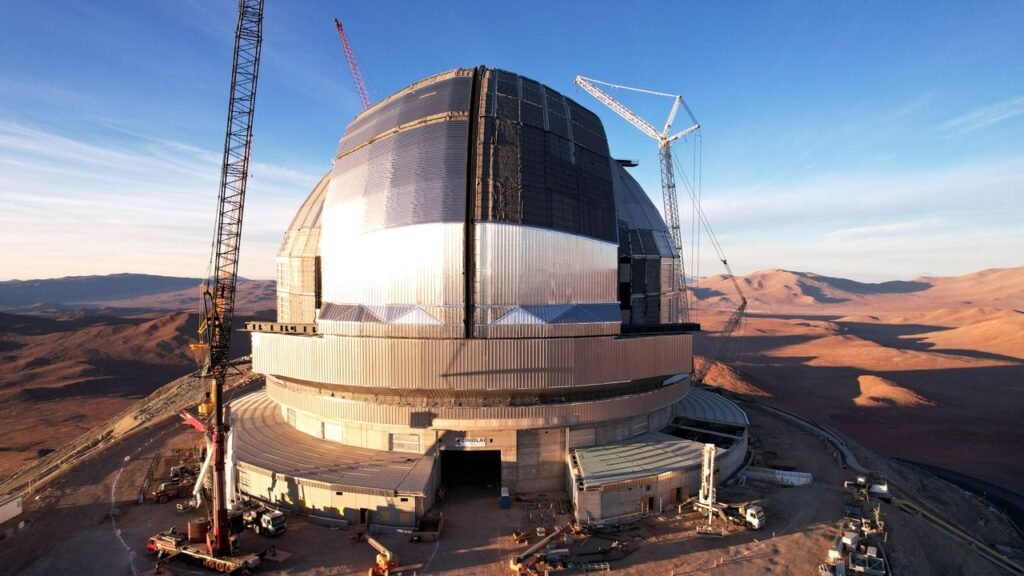
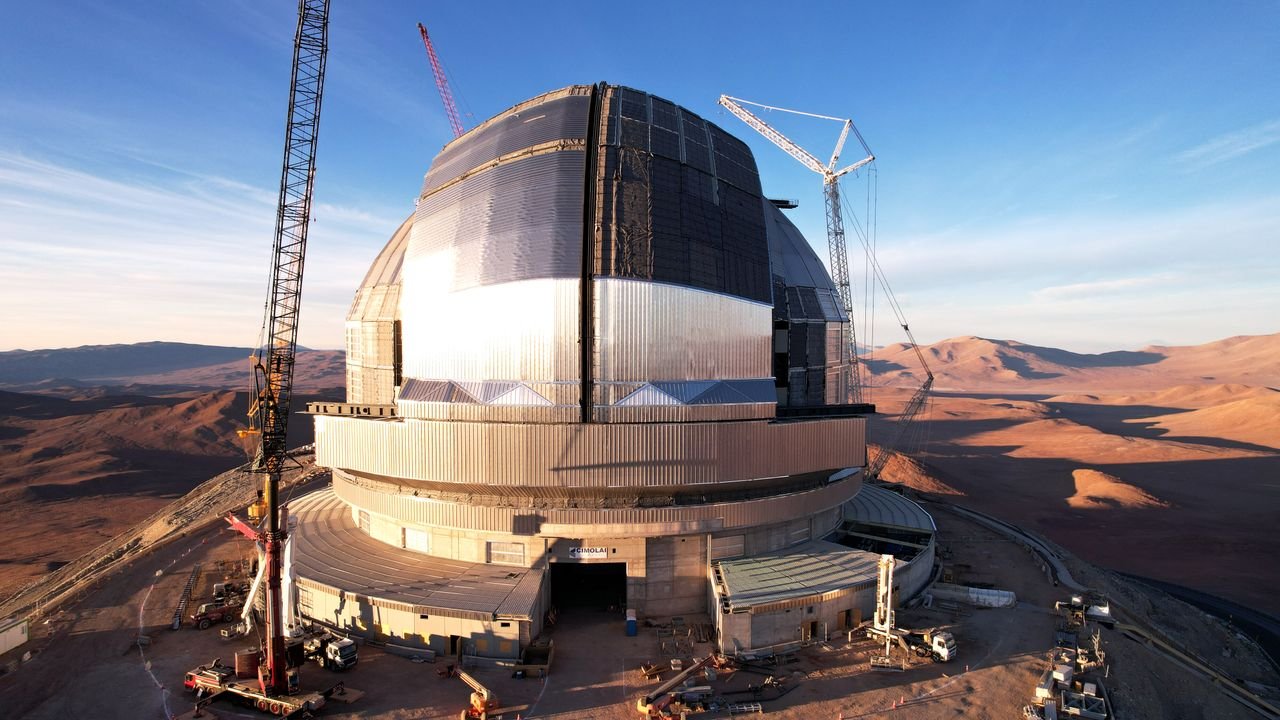
The Extremely Large Telescope, or ELT, takes shape atop Cerro Armazones, a remote peak in Chile’s bone-dry Atacama Desert. Construction teams captured the dome’s near-complete form in late December 2025, revealing a gleaming metallic shell that dominates the barren landscape.[1] This protective enclosure stands roughly 74 meters tall and spans about 90 meters across, designed to shield sensitive equipment from harsh winds and extreme temperatures.
Engineers hoisted the final sections into place amid challenging conditions, marking a key milestone since groundbreaking in 2014. The European Southern Observatory oversees the build, coordinating international efforts to push observational boundaries.[2]
Engineering Feats Behind the Giant Mirror
The dome conceals what will become the largest optical telescope mirror ever built, measuring 39 meters in diameter. This behemoth consists of 798 hexagonal segments, each adjustable to maintain perfect curvature despite environmental shifts.[3] Specialized pistons and sensors on every panel ensure pinpoint accuracy, collecting light ten times more effectively than current leaders like the Gran Telescopio Canarias.
Inside, a secondary mirror measuring 4.25 meters adds further precision. Recent advances included coating the first primary mirror segments in early 2026, a process vital for reflectivity.[4]
From Foundation to Cosmic Frontier
Project leaders achieved several breakthroughs leading to the dome’s status. They completed the main structure’s frame by early 2025 and installed the mirror’s base later that year. By February 2026, overall progress reached about 60 percent.[5]
- 2014: Construction officially began.
- January 2024: First mirror segments arrived in Chile.
- January 2025: Dome frame finished.
- December 2025: Dome cladding advanced significantly.
- February 2026: Internal railings and mirror supports installed.
Unlocking Universe’s Deepest Secrets
Astronomers anticipate the ELT will transform fields from exoplanet detection to galaxy formation studies. Its light-gathering power promises detailed images of Earth-like worlds and chemical signatures in distant atmospheres.[6] Researchers also expect breakthroughs in probing the universe’s first stars and dark matter influences.
The facility joins ESO’s Paranal Observatory nearby, enhancing a world-class site. First observations could occur by the late 2020s, pending final integrations.
| Telescope | Mirror Diameter | Location |
|---|---|---|
| ELT | 39 meters | Cerro Armazones, Chile |
| Giant Magellan Telescope | 24.5 meters | Chile |
| Thirty Meter Telescope | 30 meters | Hawaii (planned) |
Key Takeaways:
- The ELT dome, now nearly complete, protects a 39-meter segmented mirror.
- Construction hit 60% completion by early 2026.
- Expected to deliver unprecedented views of exoplanets and the early universe.
As the dome seals shut on this engineering marvel, it signals a new chapter for ground-based astronomy. The ELT stands ready to redefine our cosmic understanding. What discoveries do you hope it uncovers? Share in the comments.