
A Celestial Mirror Over the Seas (Image Credits: Cdn.mos.cms.futurecdn.net)
An astronaut orbiting Earth aboard the International Space Station recently documented a mesmerizing nighttime scene where moonlight gleams across the waters separating Florida from Cuba, revealing the vibrant pulse of human activity below.
A Celestial Mirror Over the Seas
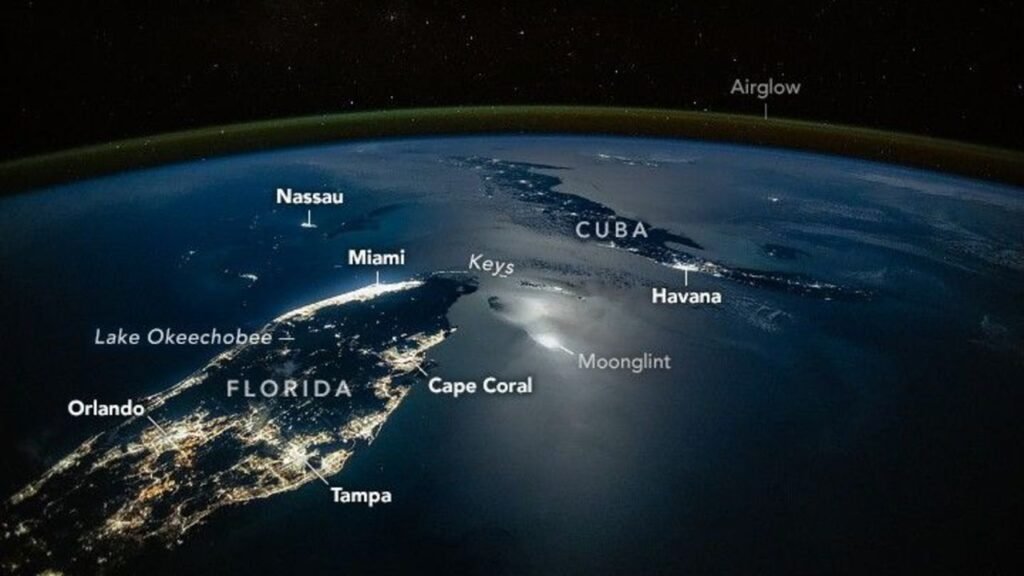
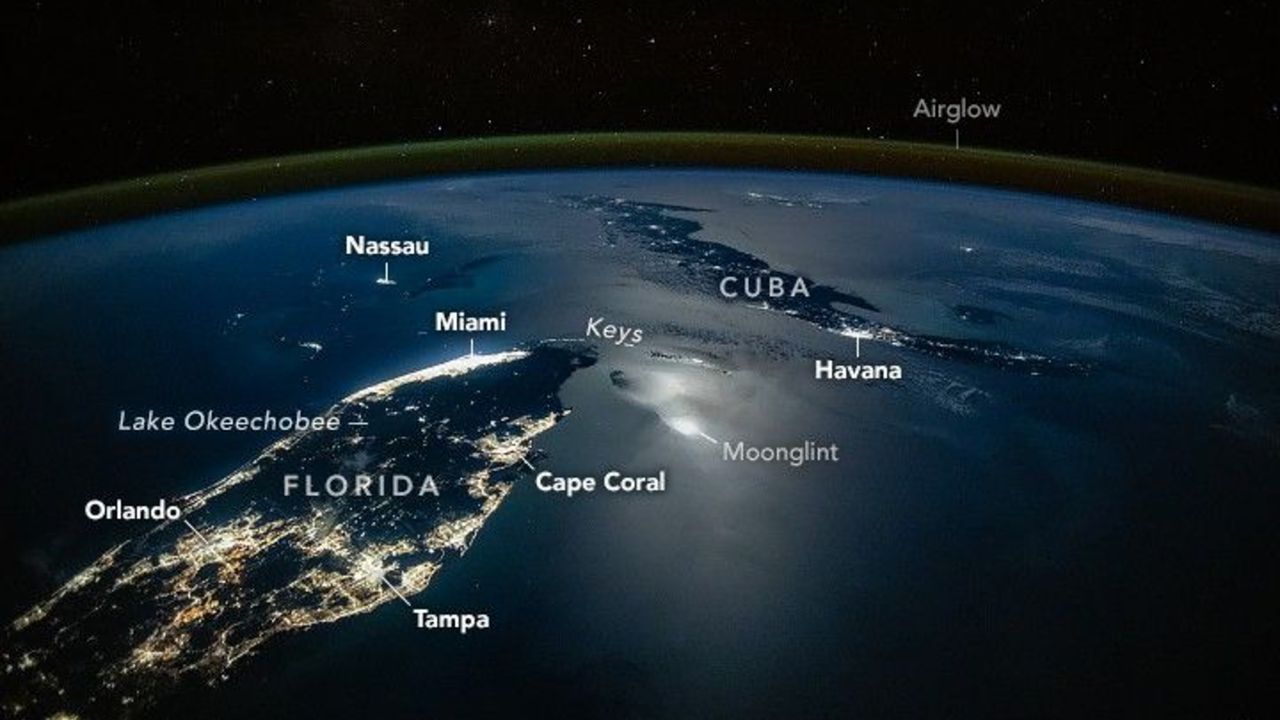
From more than 250 miles above the planet, the photograph seized a moment shortly after sunset, showcasing how moonlight reflects off the ocean in a phenomenon known as moonglint. This rare effect created a silvery path across the dark waters of the Caribbean, contrasting sharply with the scattered glow of coastal cities. The image, taken in the early morning hours, highlighted the interplay between Earth’s surface and its atmosphere, offering viewers a unique perspective on our planet’s nighttime beauty.
Astronomers and space enthusiasts alike marveled at the clarity of the view, which extended from the Florida Peninsula southward to Cuba and beyond into parts of Central America. The moonglint not only accentuated the watery expanses but also framed the landmasses in a soft, ethereal light. Such captures remind observers of the delicate balance in our environment, visible only from the vantage point of space.
City Lights Tracing Human Footprints
The Florida Peninsula emerged as a beacon in the darkness, with dense clusters of lights marking major urban hubs. Along the southeastern coast, the corridor from Miami to Fort Lauderdale shone brightly, reflecting the region’s bustling energy even at night. Further inland, the Orlando metropolitan area formed a distinct glow, while the Tampa-St. Petersburg region on the Gulf Coast added another luminous patch to the tapestry.
Smaller settlements contributed their own subtle illuminations, painting a detailed map of habitation. The Florida Keys appeared as a string of faint dots stretching into the sea, and Nassau in the Bahamas flickered nearby. Across the Straits of Florida, Havana and other Cuban cities dotted the landscape, underscoring the proximity of these neighboring regions. This visual inventory illustrated how artificial light reveals patterns of population and development from orbit.
- Miami-Fort Lauderdale: A continuous bright strip signaling high-density urban life.
- Orlando: Central hub radiating outward like a starburst.
- Tampa-St. Petersburg: Prominent glow on the western shore.
- Florida Keys: Linear chain of isolated lights.
- Havana: Key urban center in Cuba, standing out amid surrounding darkness.
- Nassau: Isolated cluster representing island habitation.
Unveiling Atmospheric Wonders
Beyond the earthly lights, the image captured subtle atmospheric features that add depth to the scene. A greenish layer, identified as airglow, hovered near the horizon, resulting from the excitation of atoms in the upper atmosphere by solar radiation. This natural luminescence provided a serene backdrop, blending seamlessly with the moonglint to create a layered visual experience.
Experts noted that such photographs serve as valuable tools for studying environmental interactions. The reflection of moonlight on water surfaces helps scientists analyze ocean currents and surface conditions indirectly. Meanwhile, the presence of airglow offers insights into atmospheric chemistry, contributing to broader research on climate and space weather. These elements combined to make the image not just aesthetically striking but scientifically informative.
Insights from Space Observation
Photographs like this one underscore the International Space Station’s role in ongoing Earth observation efforts. Astronauts routinely document such views, aiding in the monitoring of urban expansion and coastal changes over time. The station’s orbit allows for repeated passes over the same areas, building a dynamic record of planetary shifts.
While the image celebrated natural beauty, it also prompted reflections on light pollution’s impact on dark skies. Brighter urban areas can obscure stargazing for ground-based observers, yet from space, they become a testament to human ingenuity. Researchers use these visuals to correlate light patterns with energy use and population growth, informing sustainable development strategies.
Key Takeaways
- Moonglint reveals ocean surfaces in ways sunlight cannot, highlighting nighttime geography.
- City lights from Florida and Cuba illustrate urban density and regional connectivity.
- Airglow adds a scientific layer, demonstrating atmospheric processes visible from orbit.
This orbital perspective invites a deeper appreciation for Earth’s fragile glow, bridging the vastness of space with the intimacy of home. As we gaze at such images, they challenge us to consider our place in the cosmos and the legacy we leave illuminated below. What strikes you most about this view from above? Share your thoughts in the comments.