
The idea that your thoughts might be surfing on the froth of the quantum vacuum sounds like science fiction, and yet serious physicists and neuroscientists occasionally flirt with the possibility. As we learn more about how strange the quantum world really is, and how weirdly efficient and resilient brains can be, the question refuses to go away: could consciousness draw on the seething energy of so‑called zero-point fields? This article explores what zero-point fields actually are, what we really know about the brain’s electrical ballet, and why linking the two is both tantalizing and deeply controversial. Along the way, we’ll look at how extreme life and extreme physics sometimes meet in ways that force us to rethink what “normal” even means. And we’ll land in an uncomfortable but honest place: somewhere between daring curiosity and hard experimental limits.
What Zero-Point Quantum Fields Really Are (Minus the Hype)
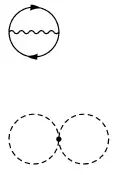
If every atom in the universe suddenly froze, quantum theory says the vacuum would still be buzzing with activity. That restless background is what physicists call zero-point energy: the lowest possible energy state of a quantum field, which still isn’t truly zero. It shows up not as glowing beams or handy power you can plug into, but as subtle effects such as shifts in atomic energy levels and tiny forces between metal plates brought very close together. In other words, it behaves more like an invisible tension in the fabric of space than like a secret battery pack.
Over the years, zero-point energy has attracted plenty of pseudoscience, from free-energy machines to wild healing claims, which muddies genuine scientific discussions. In mainstream physics, however, it is a well-established part of quantum field theory and plays a role in topics ranging from particle physics to cosmology. Still, the vast energy density that some theoretical calculations assign to the vacuum is not something we can just access at will, and in practical terms, it mostly remains locked away. Any serious conversation about the brain tapping into zero-point fields has to start with that sobering reality, not with fantasy technology.
The Brain’s Electric Storm: Classical Circuits or Quantum Playground?
The human brain is both brutally physical and strangely elusive. At one level, it is a warm, wet organ powered by ordinary electrochemistry, with neurons firing in patterns that neuroscientists can increasingly map and nudge using electrodes, drugs, and light. Brain imaging technologies show that specific regions light up when you recognize a face, feel pain, or recall a memory, suggesting that much of our mental life can be traced to large-scale, classical electrical activity. That is the picture that underpins most of modern neurology and psychiatry.
But zoom in further, and you hit the realm of ion channels only a few atoms wide, proteins flexing and twisting, and electrons tunneling across tiny gaps. At these scales, quantum effects like superposition and tunneling are not exotic add‑ons; they can influence how molecules behave. Some researchers argue that this quantum underbelly could, in principle, feed into how neurons fire and how networks process information. The challenge is that the brain runs hot, noisy, and messy compared with the ultra-cold, carefully isolated systems used in quantum labs, so any delicate quantum coherence might vanish in a flash.
Quantum Brain Proposals: From Microtubules to Vacuum Fields
Attempts to link quantum physics and consciousness have a long and messy history. One of the best-known is the idea that tiny structural components inside neurons, called microtubules, might sustain quantum coherent states that contribute to conscious experience. This proposal sparked intense debate, and critics pointed out that thermal noise in the brain should destroy such coherence astonishingly quickly. Experiments on biological molecules have since shown that some quantum effects can persist longer than expected, but nothing has come close to confirming a dedicated quantum computer running inside neurons.
Ideas involving zero-point fields push even further. Some theorists have suggested that brain activity might resonate with vacuum fluctuations, or that consciousness could arise from a kind of dynamic coupling between neural processes and quantum fields that fill space. These models are highly speculative and remain far outside mainstream neuroscience, largely because they lack clear, testable predictions that would distinguish them from standard brain theories. They do, however, force us to confront a deep question: if consciousness depends on information processing at its most fundamental level, is it enough to talk about neurons, or do we eventually have to talk about fields and the vacuum itself?
When Biology Already Uses Quantum Tricks
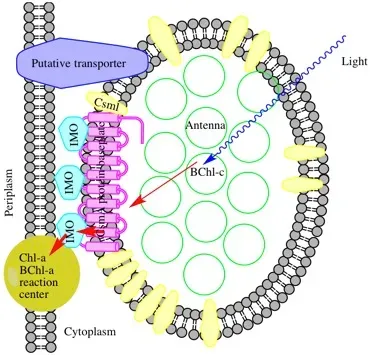
Before dismissing quantum-brain ideas as impossible, it is worth remembering that nature has surprised us before. Certain photosynthetic bacteria and plants, for example, seem to exploit quantum coherence to move energy efficiently through their light-harvesting complexes. Some migratory birds appear to sense Earth’s magnetic field through a quantum process involving entangled electrons inside proteins in their eyes, letting them navigate vast distances with uncanny accuracy. These are not fringe claims; they are the result of careful experiments and models built up over years.
What these examples show is not that consciousness is quantum, but that life can evolve ways to harness fragile quantum phenomena even in warm, wet, noisy environments. The key seems to be special structures that protect or guide quantum behavior on just the right timescales to be useful. If evolution can sculpt proteins and pigments into nanoscale quantum devices, it is not absurd to ask whether neural tissue could, in principle, do something similarly clever. Still, these quantum tricks are tightly constrained and serve highly specific functions; there is no sign yet that they connect to the sweeping, subjective richness we call consciousness.
Vacuum Fluctuations in the Brain: Physics of a Bold Claim
For the brain to “tap into” zero-point fields, something very specific would have to happen at the interface between neural matter and the quantum vacuum. It would require identifiable structures or processes in the brain that couple strongly and coherently to vacuum fluctuations in a way that influences neural firing patterns. In laboratory physics, similar couplings can be engineered in devices like superconducting circuits, where quantum fields are carefully manipulated and measured. Those systems demand extreme cooling, isolation from noise, and fine-tuned control that brains simply do not have, at least as far as we currently know.
There is also a thorny energy bookkeeping problem. If neural processes were drawing usable energy from zero-point fields, we would need to see anomalies in the brain’s energy balance that cannot be explained by metabolism alone. So far, measurements of brain energy consumption line up well with standard biochemical models, from the fuel neurons burn to the heat they produce. Without a clear physical mechanism and measurable signatures that deviate from classical expectations, claims about vacuum energy feeding consciousness remain more like provocative stories than working science. That does not make them worthless, but it does put them firmly on the speculative fringe for now.
What Consciousness Science Actually Knows (and What It Doesn’t)
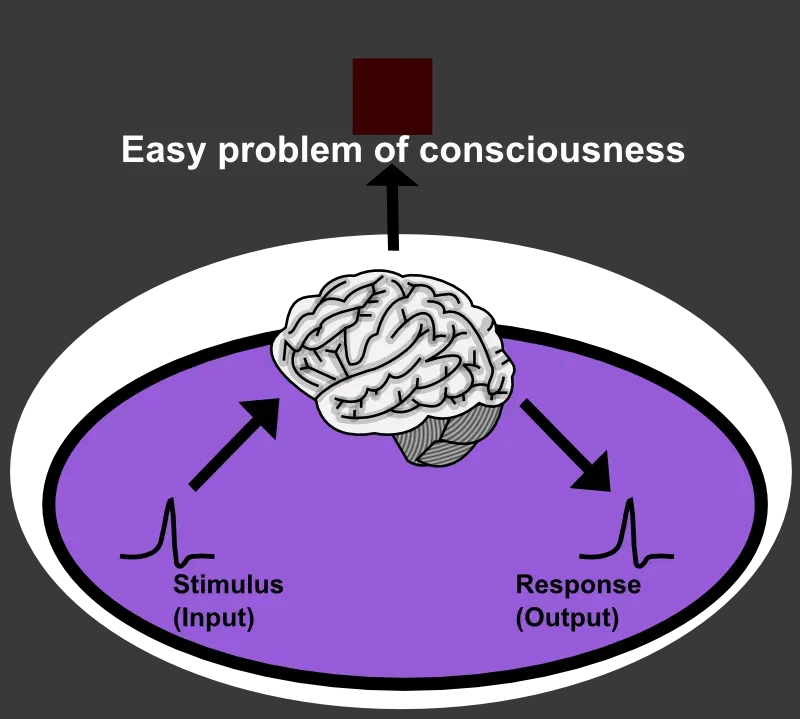
Over the last few decades, researchers have made real progress in understanding how patterns of brain activity line up with conscious states. Competing frameworks, such as global workspace-style theories and integrated information approaches, try to explain how information becomes globally available in the brain and why certain patterns feel like something from the inside. None of these theories rely on quantum fields; they live squarely in the world of neurons, synapses, and network dynamics. They also make specific predictions about which brain signatures track with awareness and which do not, and those predictions are being tested in labs and clinics.
Yet even as this work advances, a stubborn gap remains between describing information processing and explaining subjective experience. Why does a certain pattern of neural firing correspond to the feeling of red, or to the ache of grief, instead of to nothing at all? Some philosophers argue that no purely classical account will ever close that gap, and that something fundamentally new may be needed. Quantum proposals, including those invoking zero-point fields, often step into this space as bold attempts to bridge physics and phenomenology. The catch is that they must still respect everything we already know about the brain, or else they simply replace one mystery with another.
The Deeper Stakes: Physics, Mind, and Where We Draw the Line
The question of whether the brain can tap into zero-point fields is really a proxy for a larger, more unsettling debate about how deeply physics must penetrate our theories of mind. On one side are those who argue that classical neurobiology, given enough detail and computation, is sufficient to explain consciousness, leaving quantum fields as background scenery. On the other side are those who suspect that consciousness may be rooted in the same fundamental structures that underlie spacetime, fields, and the vacuum itself. The clash is not just about equations; it is about where we locate the boundary between the familiar and the ultimate.
From a cultural standpoint, ideas that tie consciousness to the quantum vacuum resonate because they promise a kind of hidden unity between mind and cosmos. They can inspire awe and creativity, but they can also blur the line between rigorous theory and metaphysical storytelling. For working scientists, the real value lies in whether such ideas generate testable hypotheses and new experiments, not just poetic language. Comparing these proposals with traditional neuroscience reminds us that progress often comes from tension: bold speculation sharpened by unforgiving data. That friction, rather than any particular theory, is what keeps the field honest.
Unfinished Business: How Could We Ever Test Quantum-Vacuum Consciousness?
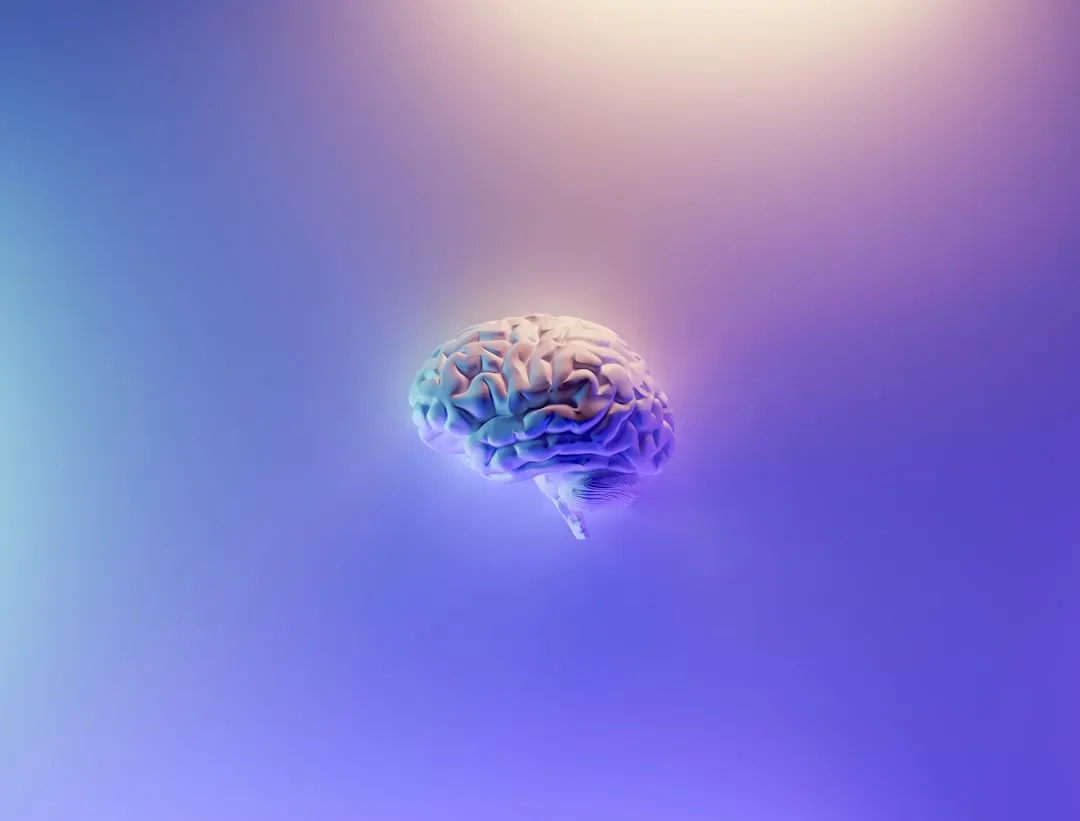
If zero-point fields play a role in consciousness, there should, in principle, be traces of that role in measurable brain activity or in carefully designed physical experiments. One might look for tiny deviations in electromagnetic noise around neural tissue that cannot be explained by known biophysics, or for unusual correlations between brain signals and engineered quantum systems nearby. Another route could involve building artificial neural networks on quantum hardware and probing whether they display any signatures of consciousness-related dynamics that differ from classical counterparts. All of these ideas are technically daunting and would require rigorous controls to avoid being fooled by mundane artifacts.
For now, the practical frontier is more modest: tightening the constraints on how much quantum coherence can realistically survive in neural structures and for how long. As experimental techniques improve, scientists can test whether microtubules or other candidates support nontrivial quantum states under brain-like conditions. Negative results would not disprove every quantum-consciousness idea, but they would close off some of the most concrete pathways to coupling with zero-point fields. Positive results, if they ever arrive, would not automatically vindicate vacuum-based theories either, but they would force a profound rethinking of how physics and neuroscience intersect.
Staying Curious Without Falling for Magic
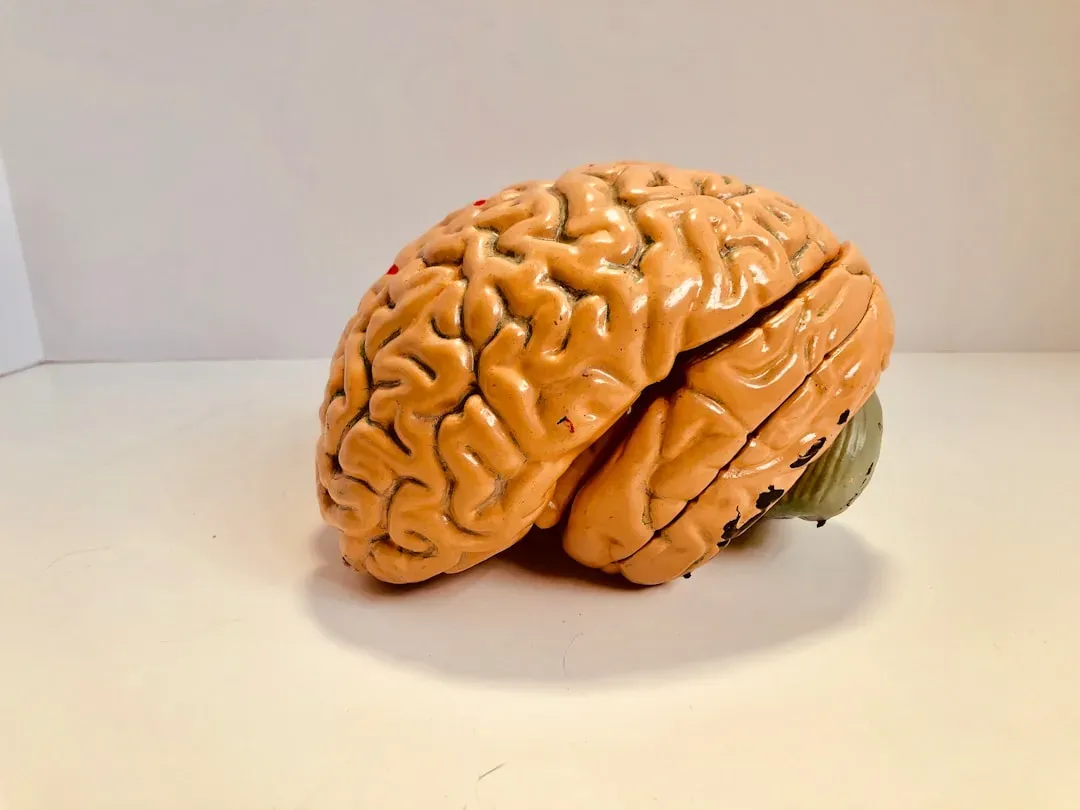
For anyone fascinated by mind and matter, it is tempting to grab onto the most dramatic explanation and run with it, especially when it comes wrapped in phrases like zero-point fields and quantum vacuum. A more grounded approach is to treat these ideas as provocative questions that sit alongside, not above, the hard-earned progress of classical neuroscience. Readers can engage by following reputable research on quantum biology, keeping an eye on consciousness studies that publish clear methods and reproducible results, and learning enough basic physics to spot when language is being stretched past what the data support. Even simple habits, like asking what a theory predicts that others do not, can help sift insight from illusion.
In the end, wondering whether your brain might brush against the restless energy of the vacuum is less about finding a mystical shortcut and more about respecting how deep both physics and consciousness really go. Our current best evidence says the brain works astonishingly well with the tools of ordinary biochemistry, yet the possibility that deeper layers of reality might play a part keeps the scientific story alive and unfinished. The mystery is still with us, and the most honest response is not to deny it or decorate it, but to keep asking sharper questions. What kind of evidence would you need to be convinced either way?
Suhail Ahmed is a passionate digital professional and nature enthusiast with over 8 years of experience in content strategy, SEO, web development, and digital operations. Alongside his freelance journey, Suhail actively contributes to nature and wildlife platforms like Discover Wildlife, where he channels his curiosity for the planet into engaging, educational storytelling.
With a strong background in managing digital ecosystems — from ecommerce stores and WordPress websites to social media and automation — Suhail merges technical precision with creative insight. His content reflects a rare balance: SEO-friendly yet deeply human, data-informed yet emotionally resonant.
Driven by a love for discovery and storytelling, Suhail believes in using digital platforms to amplify causes that matter — especially those protecting Earth’s biodiversity and inspiring sustainable living. Whether he’s managing online projects or crafting wildlife content, his goal remains the same: to inform, inspire, and leave a positive digital footprint.