
If you could rewind the universe like a movie, frame by frame, you’d eventually hit a final still image: the moment cosmology calls the beginning of time. That sounds dramatic, but it is more than just poetry. Modern physics really does suggest that time, as far as the laws we know are concerned, has a starting line. And here’s the twist that bothers people (and honestly, bothered me the first time I learned it): the popular question of what happened “before” that beginning might not just be unknown – it might be meaningless in a strict physical sense.
This feels deeply unsatisfying, almost like the universe is dodging the question. Our brains rebel, because everyday experience is soaked in before-and-after. You were younger yesterday, dinner happens after lunch, your phone battery was full before you watched those videos. So when cosmologists say time itself had a beginning, and that asking what came before is like asking what is north of the North Pole, it sounds like a trick. Let’s unpack what science actually says here, where it stops, and why some of our most natural questions might be the kind physics simply cannot answer the way we want.
The Big Bang: A Beginning of Time, Not Just of Stuff
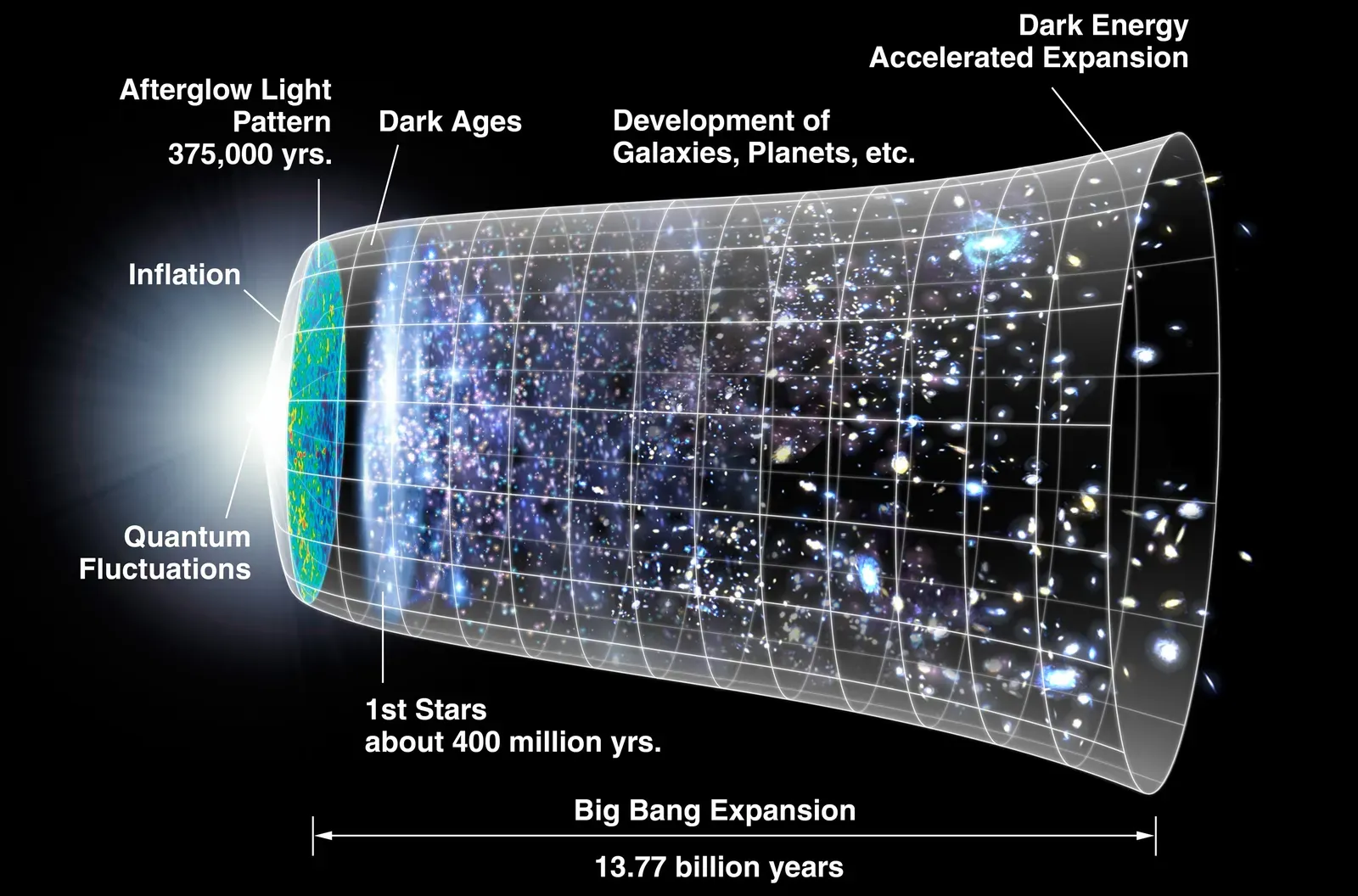
Most people imagine the Big Bang as an explosion of matter into empty space, like a bomb going off in a dark room. That mental picture is intuitive and completely wrong. The Big Bang is better understood as the rapid expansion of space itself, with matter and energy already woven into it. On large scales, the universe today is still expanding, and when we run the equations backward, space gets denser, hotter, and more compressed, culminating in an initial state where our familiar notions of time and space seem to break down.
Einstein’s general relativity tells us that spacetime is dynamic: matter and energy curve it, and spacetime in turn tells matter how to move. When cosmologists use this framework and assume a universe that is roughly uniform in every direction, they get models that all seem to converge on a finite past age. In these models, time itself has a finite duration since the Big Bang, something on the order of many billions of years, not an infinite stretch. That is why cosmology textbooks confidently talk about the “age of the universe” instead of shrugging and saying it has always been there.
Why Asking “Before Time” Breaks the Rules of the Game
To a physicist, a question only makes sense if it can, at least in principle, be framed in terms of measurable quantities and the laws that govern them. Time in physics is a parameter that orders events: you describe what happens at one moment, then at another, and so on. If time itself starts at some boundary, then talking about “earlier than the first moment” is a bit like trying to write a page number zero in a book whose first page is numbered one. It’s not that page zero is mysterious; it’s that it simply is not part of the book.
This is where the phrase “physics requires time to ask the question” becomes more than a philosophical slogan. To say something “existed before” implicitly assumes a temporal framework, a timeline along which “before” and “after” can be placed. If the timeline itself has no extension beyond a certain point, then the word “before” loses its anchor. You can still say it in ordinary language, but within our current physical models, there is literally no earlier time coordinate to refer to. The rules of the game are defined on the board; outside the board, the rules do not apply.
Singularities, Breakdowns, and the Limits of General Relativity
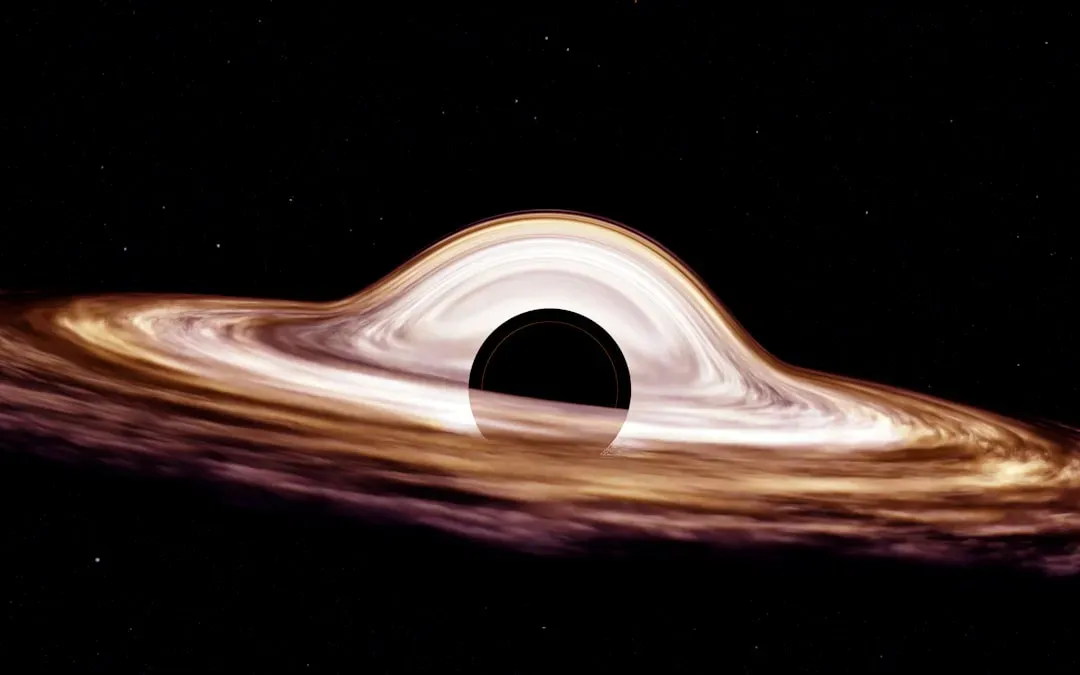
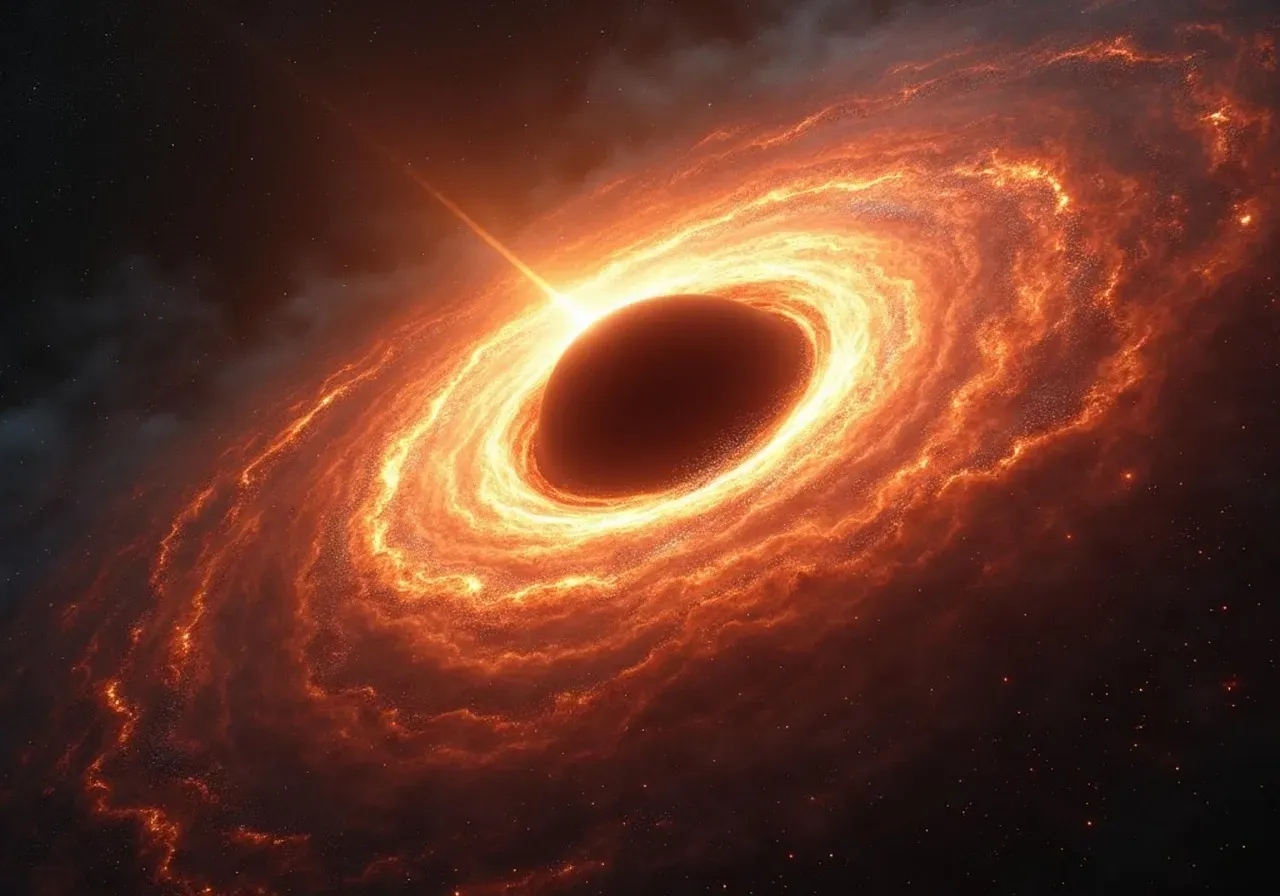
When cosmologists track the universe back in time using general relativity, they encounter what is called a singularity: a region where density and curvature go to extremes and the equations spit out infinities. A mathematical infinity in physics is often a warning sign, not a final answer. It usually signals that the theory we’re using is being pushed beyond the regime where it is reliable, like using a simple map designed for city streets to navigate the ocean. The map is not necessarily wrong; it just was never meant for that territory.
This is a crucial nuance. Saying that time began at the Big Bang in the context of general relativity is not quite the same as saying we have a complete description of that beginning. It might be that very close to that initial moment, quantum effects of gravity become dominant, and our classical theory ceases to apply. That means that our current equations might correctly indicate that there is no extension of classical time beyond a certain boundary, yet they still leave open what a more fundamental theory of quantum gravity could say about that earliest phase – if it can say anything at all in terms that resemble our familiar sense of time.
Quantum Gravity and “Before” the Big Bang: Speculation with Seatbelts
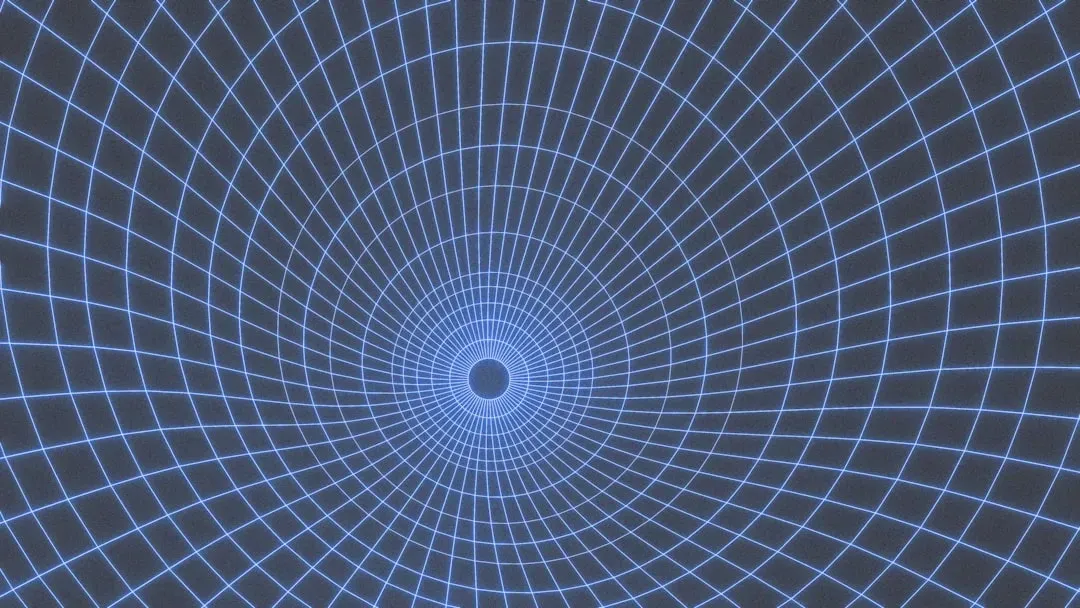
Because general relativity breaks down at extremely small scales and high energies, many researchers believe a quantum theory of gravity is needed to describe the very first instants of the universe. Various approaches, such as loop quantum cosmology or certain inflationary or bouncing models, suggest that the Big Bang might not be a one-time absolute beginning but a transition from an earlier phase. In some of these ideas, the universe could have gone through a prior contraction, a bounce, and then the expansion we observe today.
But here’s where we need intellectual seatbelts. These models are not yet established facts; they are serious attempts to extend our reach, grounded in solid mathematics and physical reasoning, but still short on clear, decisive observational evidence. Even when they talk about an earlier phase, it is not always obvious that “time” in that phase behaves like time as we experience it. Some frameworks suggest that time itself might be emergent, arising out of more basic timeless ingredients. In that case, even the phrase “before the Big Bang” might still be misleading, because we would be trying to stretch human language over structures that do not fit our everyday temporal intuition.
Philosophy, Metaphors, and Why Our Intuition Keeps Getting in the Way
Part of the unease here is psychological. Our minds evolved to track causes and effects in a world where time already exists, not to reason about the origin of time itself. When you ask what existed before time, you are stretching a mental tool built for cooking schedules and sports games into a domain where it was never meant to operate. It’s like asking your phone’s calculator app to compose a song; it can do a lot, but that task lies outside its design.
Philosophers have wrestled with this tension for centuries: does everything need a cause, and if so, what caused time and the universe? Physics sidesteps part of this by focusing on patterns within the universe rather than ultimate metaphysical explanations. That can feel emotionally unsatisfying, even frustrating, because it does not answer the deep why in the way many of us crave. Yet there is also a certain honesty in recognizing that our intuitive craving for a cause behind every beginning might simply not map neatly onto the structure of reality at its most fundamental level.
What Cosmology Actually Tells Us – and What It Honestly Does Not
Despite headlines that sound grand and definitive, cosmology is surprisingly humble when you look closely. What it does tell us with strong confidence is that our observable universe has been expanding and cooling from a denser, hotter state, and that this process has a finite past duration according to well-tested physical laws. It also tells us that, when those laws are run backward, they point to a boundary of applicability – a region where our current tools stop giving sensible answers and announce their own limits.
What cosmology does not yet give us is a universally accepted, empirically confirmed story of what, if anything, it means to speak of a “before” that boundary. We have tempting ideas, mathematical models, and sketches of scenarios, but not the kind of hard, converging evidence we would demand for, say, the existence of a new particle. In that sense, the most scientifically honest thing to say is that physics, as it currently stands, cannot answer the question of what existed “before” time, not just because we lack data, but because the very structure of our theories ties the notion of “existence” and “before” to the presence of time itself.
Living with a Beginning You Cannot Look Beyond
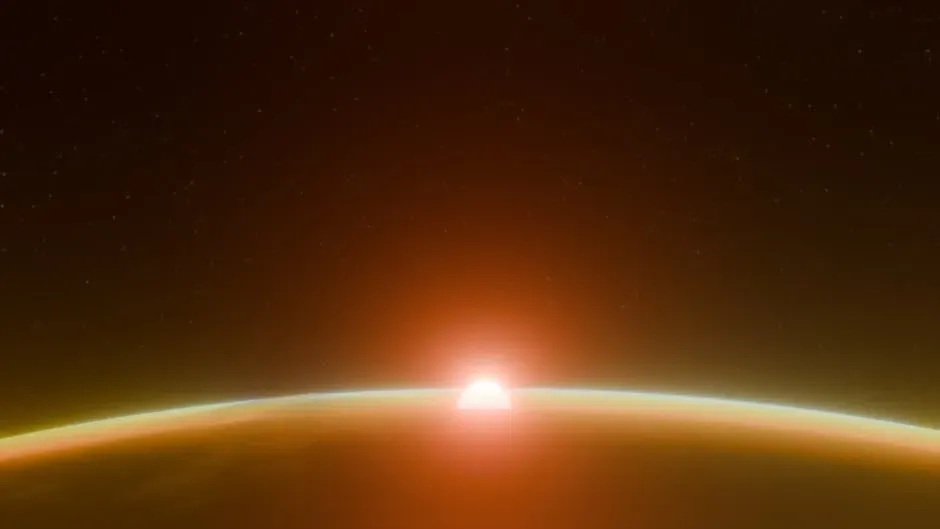
Personally, I think the most radical thing about modern cosmology is not that it proposes a beginning; humans have told beginning-of-the-world stories for as long as we have told stories. The radical part is that it presents a beginning we might never be able to push past using the tools of physics alone. That feels like standing on the shore of an ocean you cannot sail, not because your boat is small, but because there may be no water beyond the horizon, just the edge of the map itself.
In my view, that boundary is not a failure of science but an honest reflection of where its domain might end. Physics gives us a timeline back to an early, finite beginning and then falls silent about what, if anything, lies beyond the birth of time, because its very language is built on temporal notions. We can bring in philosophy, personal beliefs, and imaginative models to fill that silence, but we should be clear where evidence stops and speculation begins. Maybe the most mature stance is to accept that the universe might have a real, objective edge to what can be asked in scientific terms – and to find a strange kind of awe in the idea that time itself is one of the things that began. Does it unsettle you, or does it quietly thrill you, to think that even our questions have a horizon they can never cross?