
If you zoom out far enough in your imagination, past your city, past the Milky Way, past every galaxy we can see, there is a future waiting for the universe that is almost impossible to emotionally digest. Cosmology suggests that one day there will be no new stars, no galaxies shining, and eventually not even light crossing the void. The shocking part is not only that this is where physics points us, but that the timescale is so absurdly huge that our normal sense of “long time” just breaks down completely.
This is not the kind of future you see in science fiction movies, because it is too slow, too empty, too quiet for a good plot. But it is, as far as we can currently tell, the likely long‑term fate of reality: a universe that expands, cools, runs down, and asymptotically drifts toward darkness and silence. Understanding how we get from a bright, busy cosmos full of star formation to a cold, thin, nearly featureless spacetime is one of the most strangely beautiful stories in modern science. Let’s walk through it step by step, from the familiar present to a future so distant that pretty much every human word for “long” fails.
The Universe Is Still Young, Even After More Than Thirteen Billion Years
It feels like the universe should be old, because thirteen‑plus billion years sounds like a staggeringly big number compared to a human lifetime. But on cosmic terms, this is more like early adulthood than old age. The first stars lit up only a few hundred million years after the Big Bang, and galaxies have been growing, colliding, and reshaping themselves ever since. Right now, we live in a kind of golden age for complexity: stars are still forming, planets exist in huge numbers, and there is plenty of energy flowing through cosmic structures.
When you look at the night sky, what you see is a slice of this active phase: massive stars burning quickly and brightly, smaller stars like the Sun living more sedate lives, huge gas clouds giving birth to new generations of suns. Most of the universe’s interesting stuff, by our standards – chemistry, biology, planets, civilizations – depends on the fact that matter is still clumping and stars are still shining. Cosmologists sometimes joke that we turned up at the party at a pretty good time: not too early, when the universe was just hot plasma, and not too late, when almost everything will be dark and inert.
Why the Universe Cannot Keep Making Stars Forever
Star formation sounds like something that could just keep going, like a cosmic conveyor belt: gas collapses, makes stars, stars explode and recycle elements, which then form new stars. But the physics quietly hides a one‑way drain: every time stars shine, they convert nuclear fuel into energy and lighter elements, and some of that energy streams away forever as radiation. Over time, the raw, cold gas that can form brand‑new stars gets consumed, locked up in long‑lived, low‑mass stars, or blown out of galaxies altogether.
On top of that, gravity’s ability to bring stuff together fights a losing battle with the expansion of the universe. Galaxies that are not gravitationally bound to each other are being carried apart faster and faster by dark energy, stretching space so strongly that fresh material cannot easily fall in to feed star‑forming regions. There is no cosmic gas delivery service refilling galaxies. So while star formation is still going strong in many places today, measurements show that it has already peaked in the past and has been declining for billions of years. Push far enough into the future, and the universe simply runs out of the right kind of fuel in the right places to keep the star factory open.
The Era of Star Formation Ends, But Red Dwarfs Keep Glowing On
Eventually, there comes a time when no significant new stars are being born. The big, bright, short‑lived stars will have vanished long before this, having exploded or collapsed into remnants. What is left is a cosmos largely populated by small, red dwarf stars – those cool, dim, incredibly long‑lived objects that burn through their fuel with almost comical patience. Some red dwarfs are expected to shine for trillions of years, which makes our Sun, with its roughly ten‑billion‑year lifespan, look like a reckless sprinter.
During this long red‑dwarf era, the universe is still not dead, but it has lost much of its glamour. Night skies from any remaining planets would be a sparsely dotted red‑tinged canvas, more like the faint embers of a once fierce bonfire. There would be far fewer dramatic explosions, less bright ultraviolet radiation, and much lower overall energy flow. But even this stage is temporary. When the last of the red dwarfs finally run out of hydrogen and fade, the universe crosses a threshold: for the first time since the cosmic dawn, there will be no new light generated by ordinary nuclear fusion anywhere.
After the Last Stars: White Dwarfs, Neutron Stars, and Black Holes Rule
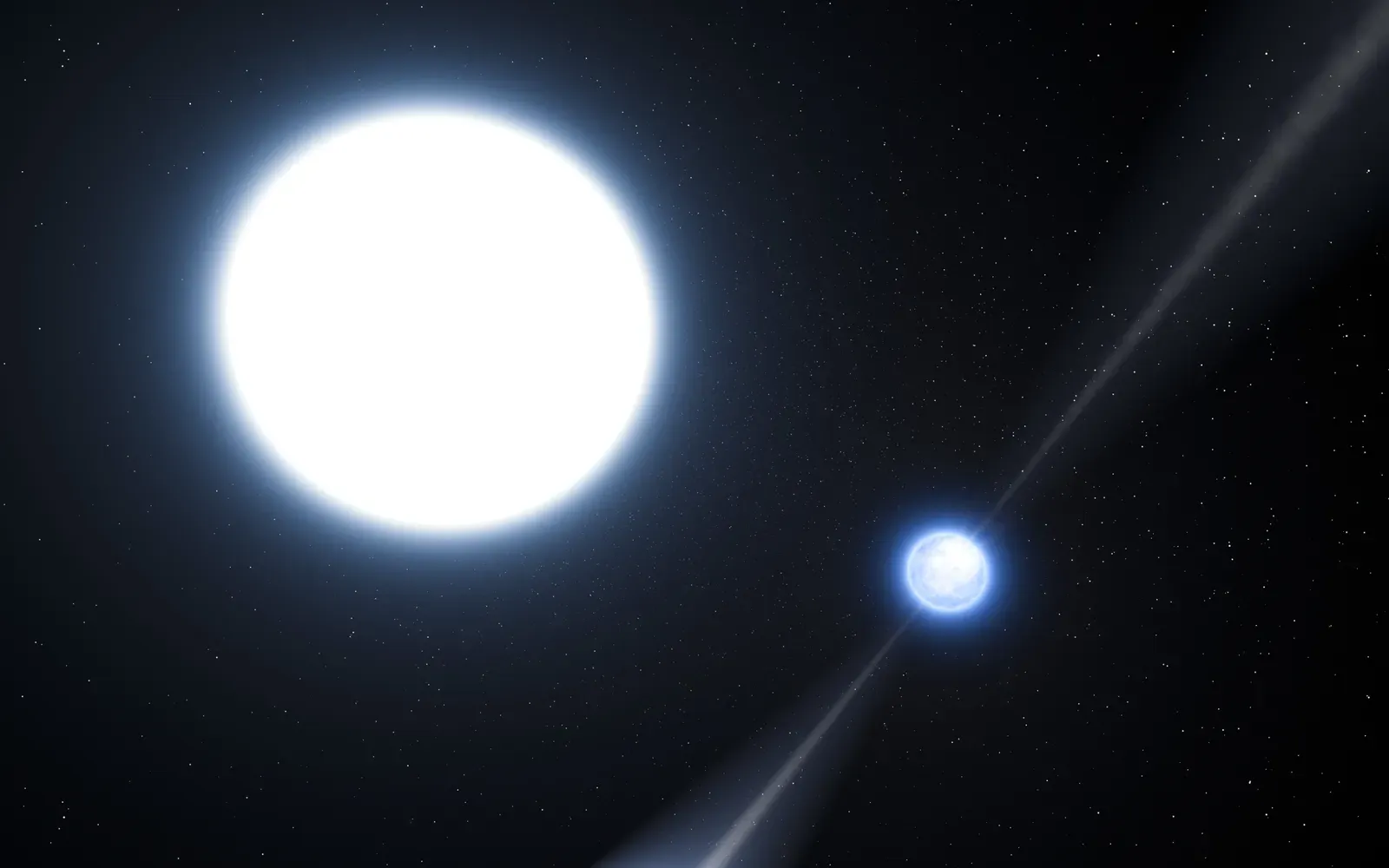
Once star formation stops and the existing stars burn out, the cosmic population becomes dominated by remnants. White dwarfs – dense, cooling cores of dead stars – will slowly radiate away their leftover heat and eventually become dark, cold cinders sometimes called black dwarfs. Neutron stars, the ultra‑compressed leftovers of big supernovae, will continue spinning and gradually lose their energy. Black holes will lurk wherever massive stars once lived or galaxies collided, capturing stray matter and merging with each other over unimaginable spans of time.
This is a universe of ghosts and fossils, where almost everything interesting is the result of ancient events. Energy still moves around, but mostly through slow processes: gravitational interactions, particle decay, and the faint glow of leftover heat from compact objects. If you zoomed in anywhere at random, you would probably not find a warm, Earth‑like planet or a bright star; you would find a lonely remnant drifting in a vast darkness, occasionally nudged by the gravity of something passing very far away. It is a cosmos that feels like an abandoned city after the lights have gone out and the last trains have stopped running.
Dark Energy Stretches Space Until Galaxies Slip Out of View
All of this is happening in a universe whose expansion is not just ongoing but accelerating, driven by what we call dark energy. On very small scales – inside galaxies, or among tightly bound galaxy clusters – gravity holds things together against this expansion. But on larger scales, space itself stretches so much that distant galaxies race away from us faster and faster. Over enough time, most galaxies that are not gravitationally tethered to the same group as ours will slip beyond what we can ever see or influence.
That means that, deep into the future, any observers that might exist will see a shrinking island of visible matter, surrounded by a vast, black nothing. They would not be able to detect the cosmic microwave background radiation easily, or observe the large‑scale structure of the universe, because those signals would be redshifted into oblivion by the expansion. In a strange twist, the universe will become simpler and more mysterious at the same time: the clues that told us about the Big Bang and cosmic evolution will fade from view, even though they are still part of the underlying story.
The Deep Future: Particle Decay, Evaporating Black Holes, and Fading Light
If you keep fast‑forwarding, you enter the domain where individual particles and black holes dominate the drama. Many cosmological models assume that protons, which make up the bulk of ordinary matter, may eventually decay over truly enormous timescales, turning matter into lighter particles and radiation. Even if proton decay does not happen, gravitational encounters can fling planets and remnants out of their galaxies over absurdly long periods, thinning things out even more. Meanwhile, black holes are not perfectly black; through a quantum process known as Hawking radiation, they very slowly leak energy and lose mass.
For stellar‑mass and supermassive black holes, the time it takes to evaporate is mind‑bogglingly huge – far, far longer than the current age of the universe. But in the far future, it becomes the main show. As the last black holes evaporate, they release their final trickle of radiation into an already dilute, nearly empty cosmos. By this stage, the universe is a thin soup of low‑energy particles and extremely stretched‑out photons, with almost no structure left. Light still technically exists, but it is so diffuse and so low in energy that it is practically indistinguishable from nothing.
When No Useful Light Can Travel and Thermodynamics Wins
At some extreme point in this winding journey, the universe reaches a stage where, for all practical purposes, no new structure can form and no useful light can travel. The expansion of space has stretched photons to such long wavelengths and low energies that they cannot really do work or meaningfully interact with anything. Temperatures everywhere are driven arbitrarily close to absolute zero. This is sometimes called heat death: not because everything is hot, but because there are no significant temperature differences left to power processes and create order.
From the standpoint of thermodynamics, the universe will have achieved something like maximum entropy, a state of almost perfect boredom. There is no more large‑scale clumping of matter, no more sustained flows of energy, no more free lunch for complexity to feed on. In a poetic sense, you could say that time itself, as we feel it – marked by events, changes, and causes leading to effects – has mostly stopped mattering. Things still technically “happen,” but they are so rare, slow, and inconsequential that the word loses its everyday meaning. The cosmos has settled into a long, cold, almost featureless waiting room with no appointments on the calendar.
The Timescales Are So Vast That Numbers Stop Being Intuitive
Here is where language quietly throws up its hands: the times involved in going from our current, starry universe to that distant, frozen state are so enormous that writing them down almost becomes a joke. We are not talking about millions or billions of years, but times so much larger that stacking zeros on the end of a number tells you nothing useful about how it really feels. You could write out monstrous exponents, invent clever mathematical notations, or even use names like googol or googolplex, and it still would not connect to human intuition in any meaningful way.
To put it in perspective, if you compressed the entire current age of the universe into a single second on a cosmic clock, many of the future eras we are talking about would last longer than the lifespan of everything that has ever existed on Earth, multiplied by more than you can reasonably picture. Personally, when I first tried to wrap my head around these numbers, it felt less like learning a scientific fact and more like running into the edge of what the human brain evolved to handle. At some point, you stop imagining a number and just accept a vibe: a future so far away that, compared to it, the whole history of our species might as well be the blink of an eye.
Why This Bleak Destiny Still Feels Strangely Uplifting
On the surface, the idea that the universe is headed toward darkness, silence, and near‑perfect emptiness sounds unsettling, even depressing. It challenges the comforting story that things are always building up to something grander or more meaningful. But there is another way to look at it: the fact that we live now, in this narrow window when stars shine and galaxies glow and life can arise, makes our existence feel outrageously precious. We are a brief, improbable flare of awareness in a cosmos that will mostly be quiet.
My own opinion is that this long, bleak cosmic future is not a reason for despair but an invitation to focus sharply on the present. Knowing that the universe will not always be so hospitable does not cheapen it; it makes every sunrise, every friendship, every little human drama a minor miracle against the backdrop of eventual nothingness. In a universe that will one day be too cold and empty for new stars or useful light, the fact that you are here, reading this, on a warm planet circling a stable star, is already outrageous enough. What better time than this unbelievably lucky moment to decide what kind of mark, however tiny and temporary, you want to leave on the cosmos – however briefly it glows?