
Imagine standing under a crystal-clear night sky, knowing that somewhere out there, entire stars are slamming into each other, galaxies are tearing themselves apart, and invisible black holes are quietly merging in the dark. You do not see any of this with your own eyes, yet these violent encounters are constantly reshaping the universe you live in. Cosmic collisions are not rare accidents; they are one of the main engines driving how structures form, evolve, and eventually die in space.
When you hear the word collision, you might picture two cars crashing on a highway. In space, the scale is so extreme that even the word collision barely captures it. You are talking about titanic events that release more energy in a few seconds than your Sun will emit over its entire lifetime. By understanding how stars, black holes, and galaxies collide, you get a front-row seat to the story of how your cosmic neighborhood came to be.
Why the Universe Is Built on Collisions
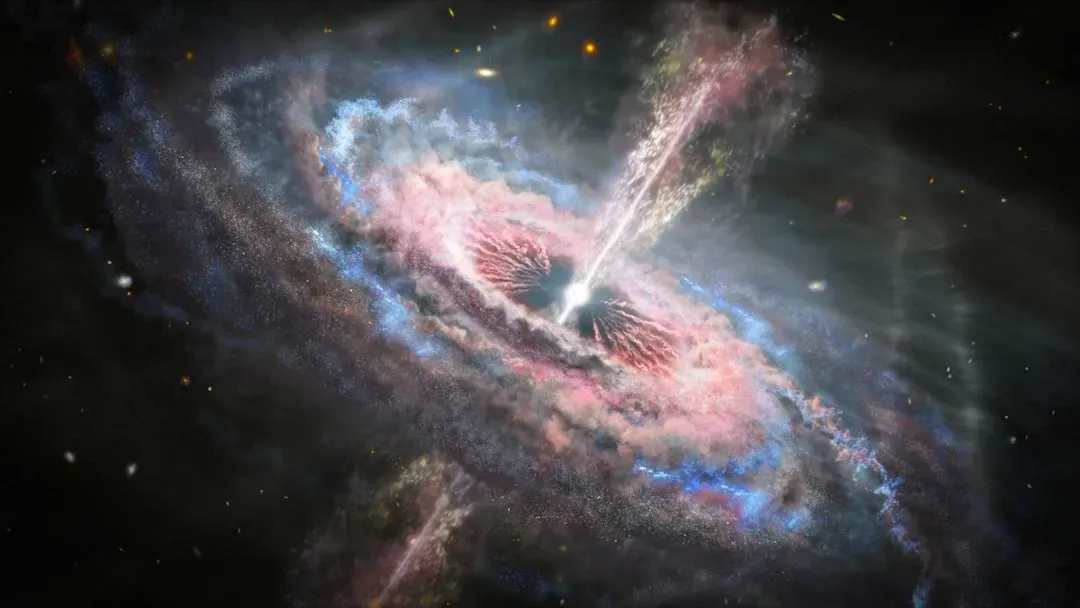
You might think of the universe as mostly empty, peaceful space, but gravity has a way of ruining that calm over long enough timescales. Every star, planet, and galaxy pulls on everything else, and over millions or billions of years, those gentle tugs can steer objects onto intersecting paths. When you zoom out far enough, you realize that collisions are not glitches; they are part of how structure in the universe grows from scattered gas into stars, clusters, and galaxies.
When huge clouds of gas collide, they compress and trigger bursts of star formation. When small galaxies fall into larger ones, they help build up massive spirals and ellipticals like cosmic Lego bricks. Even your own Milky Way was assembled through countless mergers with smaller galaxies, each collision leaving behind streams of stars and distorted shapes. Without this long history of impacts and interactions, you would not have the rich, structured universe you see today.
Galaxy Smashes: When Islands of Stars Collide
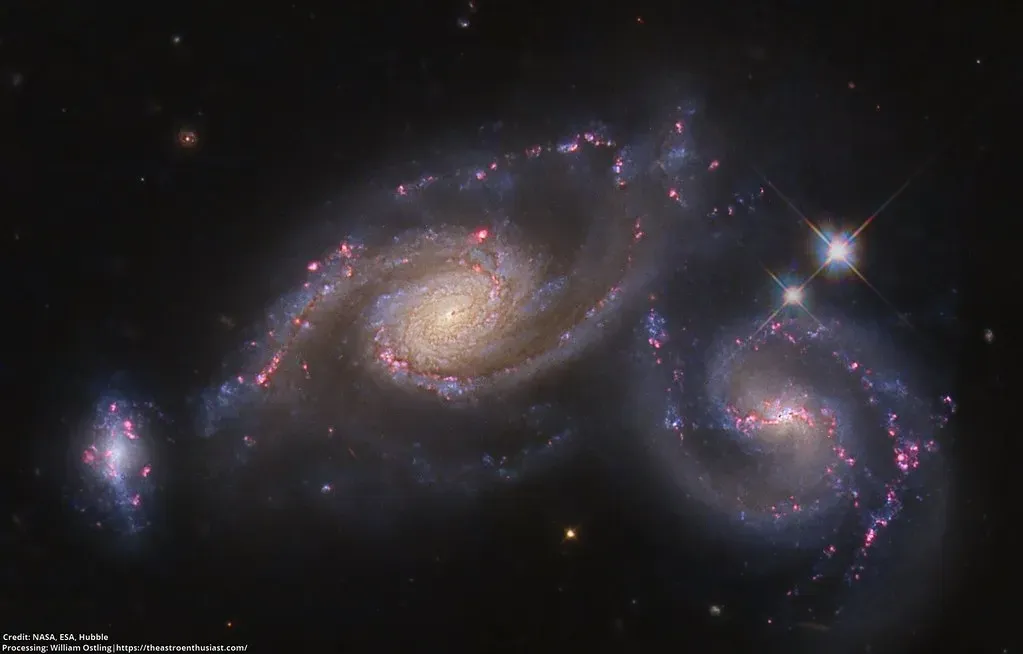
Galaxy collisions sound like the ultimate disaster, but if you were living on a planet inside one of those galaxies, you might not even notice. Galaxies are mostly empty space: stars are so far apart that, even when two galaxies plunge through one another, the odds of individual stars directly colliding are extremely low. What you do see, though, is gravity pulling and stretching the galaxies into wild shapes – tails of stars, twisted arms, and bright knots where new stars are rapidly forming.
When two galaxies merge, gas clouds inside them slam together, slow down, and pile up. That compressed gas can light up in a frenzy of star birth, creating what astronomers call a starburst galaxy. Over time, the original spiral shapes can be scrambled into a more rounded, smooth elliptical galaxy. Your own Milky Way is currently on a slow-motion collision course with the Andromeda galaxy, and in a few billion years, those two graceful spirals will likely fuse into a single, larger galaxy. If you were there to see it unfold, the night sky would become increasingly dramatic, filled with bright, distorted arcs of stars.
Star Collisions: Rare, Violent, and Transformative
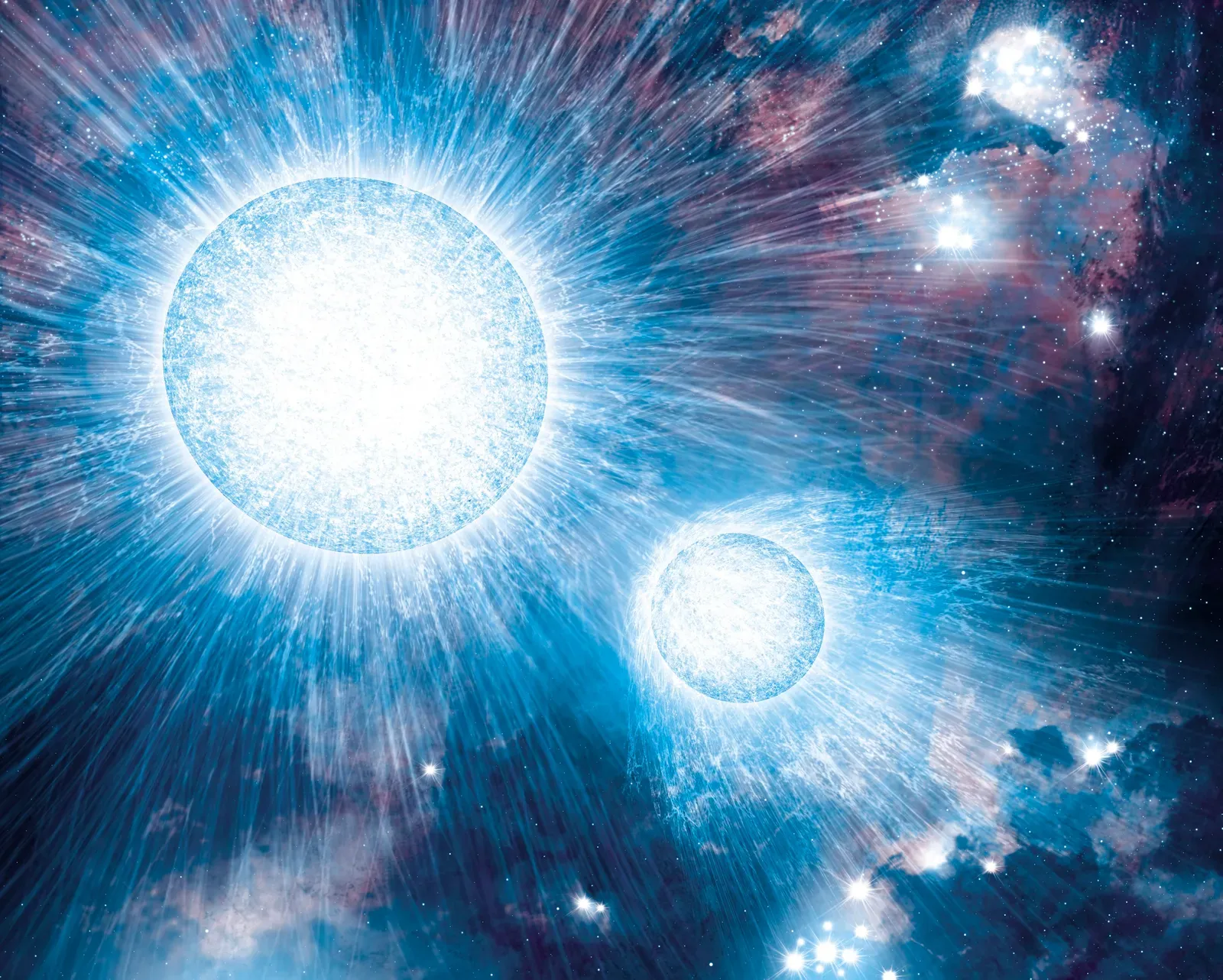
At the scale of individual stars, collisions are much rarer, but when they happen, they can change everything in their neighborhood. Most stars live very far apart, so direct hits are unusual in places like the region around your Sun. But in dense star clusters, where you can pack hundreds of thousands of stars into a relatively small volume, the odds go up. There, a star can wander too close to another, get pulled in by gravity, and eventually merge in a spectacular outburst.
When two stars collide or merge, you can get a sudden, dramatic brightening that may briefly rival an entire galaxy in luminosity. Sometimes a merger can produce a bigger, hotter star that burns through its fuel faster and may later explode as a supernova. In other cases, the encounter can fling stars out of the cluster at astonishing speeds, like cosmic slingshots. You might not think about it when you look at a calm, twinkling star, but some of those serene lights could be the survivors or byproducts of violent stellar pileups that reshaped their lives.
Neutron Star Mergers: Factories of Gold and Heavy Elements
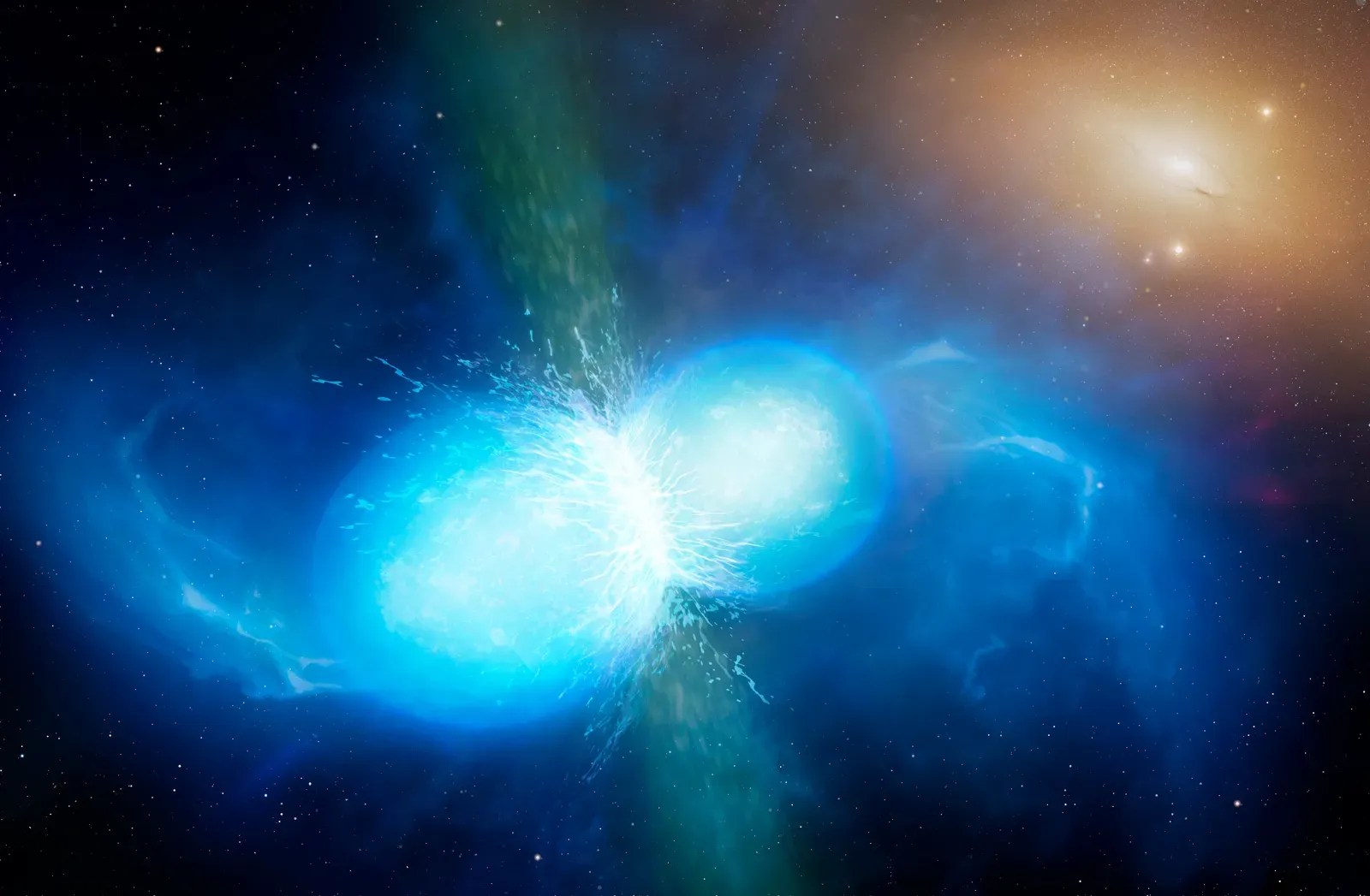
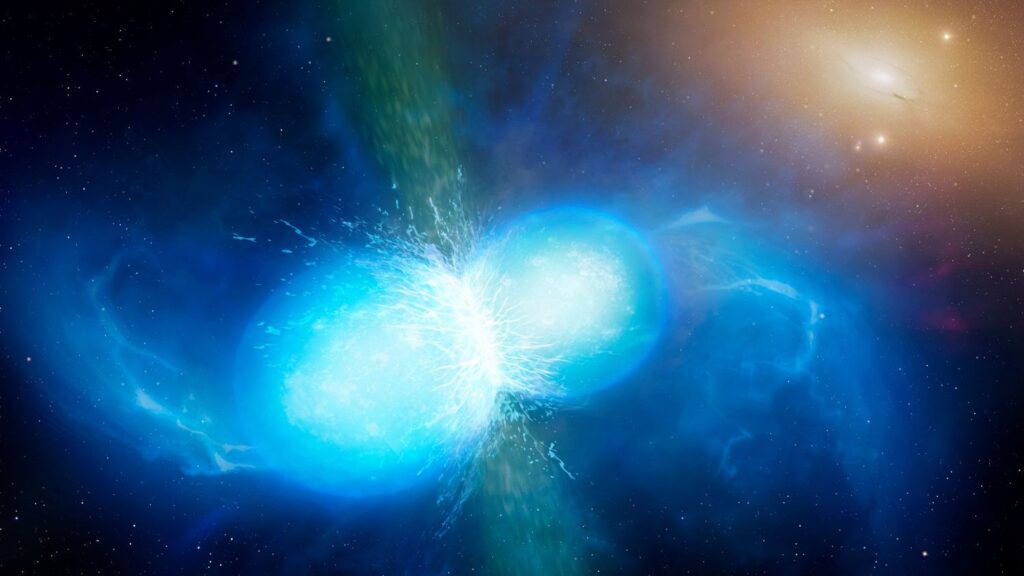
If you want to know where the gold in your ring or the platinum in electronics ultimately came from, you have to look to one of the most extreme kinds of collision: neutron star mergers. Neutron stars are the ultra-dense remnants of massive stars that exploded as supernovae. Imagine something more massive than your Sun squeezed into a city-sized ball; that is roughly what a neutron star is like. When two of these compact objects orbit each other in a tight pair, they gradually lose energy and spiral together until they finally collide.
That final crash releases a flood of energy and matter, creating an event called a kilonova. During this brief but intense explosion, conditions are just right to forge some of the heaviest elements in the universe, including much of the gold, platinum, and rare-earth elements you rely on in modern technology. You are literally wearing and using the debris of ancient neutron star mergers every day, even if you never think about it. These collisions also send out ripples in spacetime – gravitational waves – that you can detect on Earth with ultra-sensitive instruments.
Black Hole Mergers and the Music of Gravitational Waves
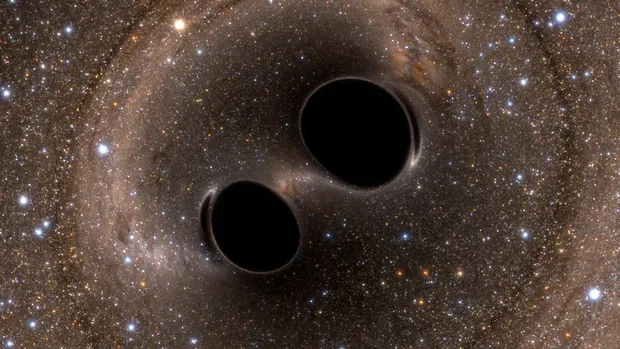
Black hole collisions are among the most mysterious and mind-bending events you can imagine, because you never see the black holes themselves. You only detect their presence through gravity and the way their mergers shake the fabric of spacetime. When two black holes orbit each other, they emit gravitational waves, like ripples spreading across a cosmic pond. As they get closer, they orbit faster and faster until, in a final plunge, they become one larger black hole.
On Earth, you can pick up these ripples with giant observatories that use laser beams in long tunnels to measure tiny changes in distance far smaller than the width of a proton. When the first gravitational waves from merging black holes were detected in the mid-2010s, it gave you a completely new way of listening to the universe. Instead of just seeing light, you could now hear the faint, distant “chirps” of black holes smashing together billions of light-years away. Each new signal tells you about the masses, spins, and environments of these invisible objects, rewriting what you know about how stars die and how black holes grow.
Comet and Asteroid Impacts: Collisions You Can Feel Close to Home
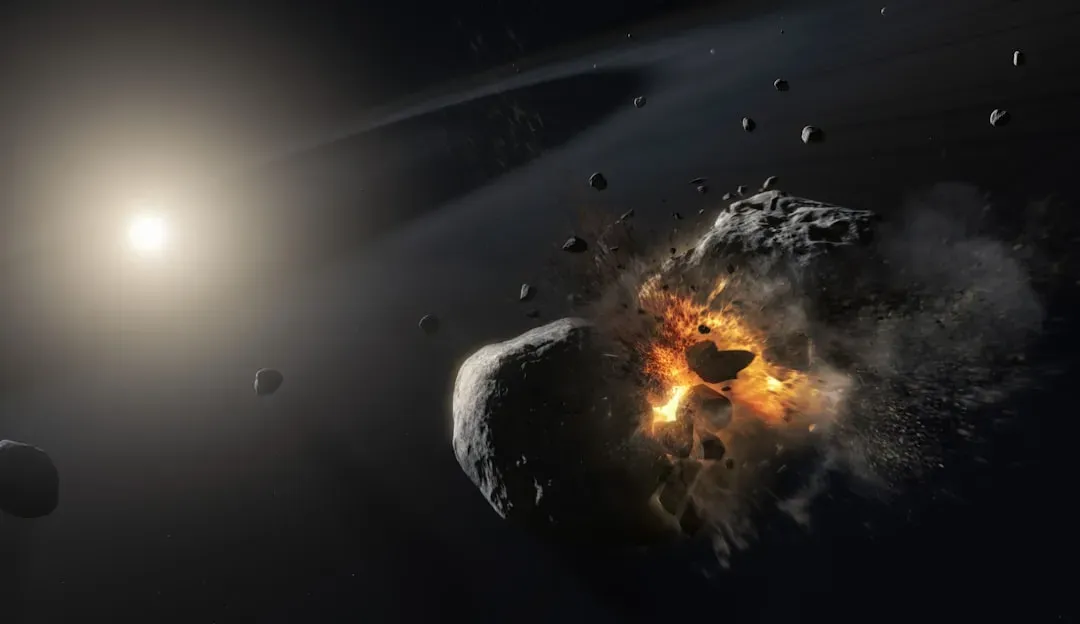
Cosmic collisions are not only out there in distant galaxies; they have shaped your own planet in direct and sometimes terrifying ways. Earth has been bombarded by asteroids and comets since it first formed, and those impacts have left scars you can still see in craters scattered around the globe. One of the most famous examples is the massive impact roughly about sixty-six million years ago that contributed to the extinction of the non-avian dinosaurs. An object several miles across slammed into what is now Mexico, throwing dust and debris into the atmosphere and disrupting the climate.
Today, you track near-Earth objects carefully because you know that another large impact could cause global damage. Space agencies around the world run programs to discover, catalog, and monitor potentially hazardous asteroids. You also test methods for deflecting or disrupting them, turning what used to be pure science fiction into early-stage planetary defense planning. On a smaller scale, frequent meteor impacts constantly deliver dust and small rocks to Earth, reminding you that your planet is not isolated, but moving through a dynamic, sometimes dangerous cosmic environment.
How You Detect and Study These Distant Catastrophes
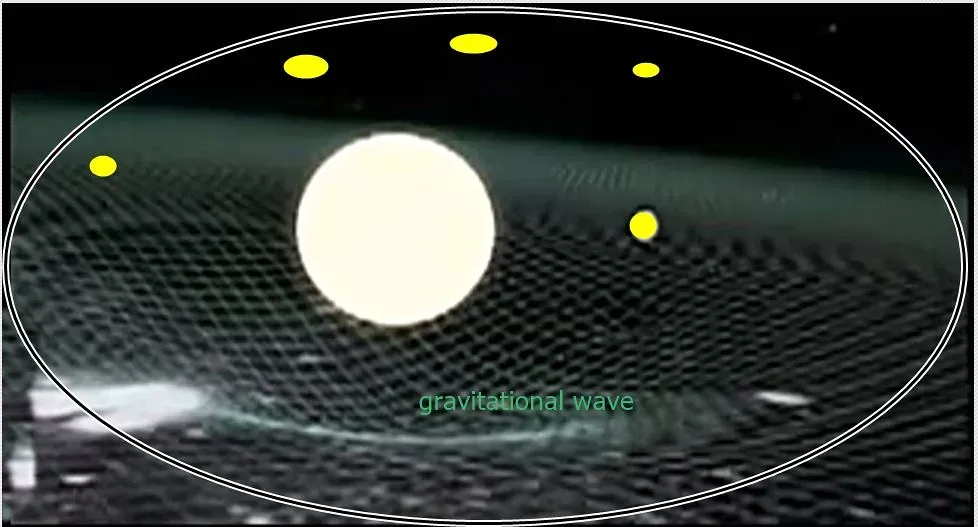
You might wonder how you can possibly know what happens when black holes merge or galaxies collide when you cannot go there yourself. The answer lies in building better and better cosmic “senses.” Telescopes that detect visible light, radio waves, X-rays, and gamma rays let you see different layers of these events, much like taking medical images of a body using multiple techniques. When a star explodes or a neutron star merger occurs, you quickly point many telescopes at the same spot in the sky to catch as much information as possible.
In the past decade, you have also added gravitational-wave detectors to your toolkit, which let you sense the motions of massive objects even when they emit little or no light. By combining light-based observations with gravitational waves, you get a more complete picture of a collision, similar to watching a movie with both sound and video instead of just one or the other. Computers then help you simulate different scenarios, letting you compare what your models predict with what your instruments actually see. Every time the data does not match your expectations, you are pushed to refine your understanding of how matter, energy, and spacetime behave under extreme conditions.
What Cosmic Collisions Mean for the Future of the Universe
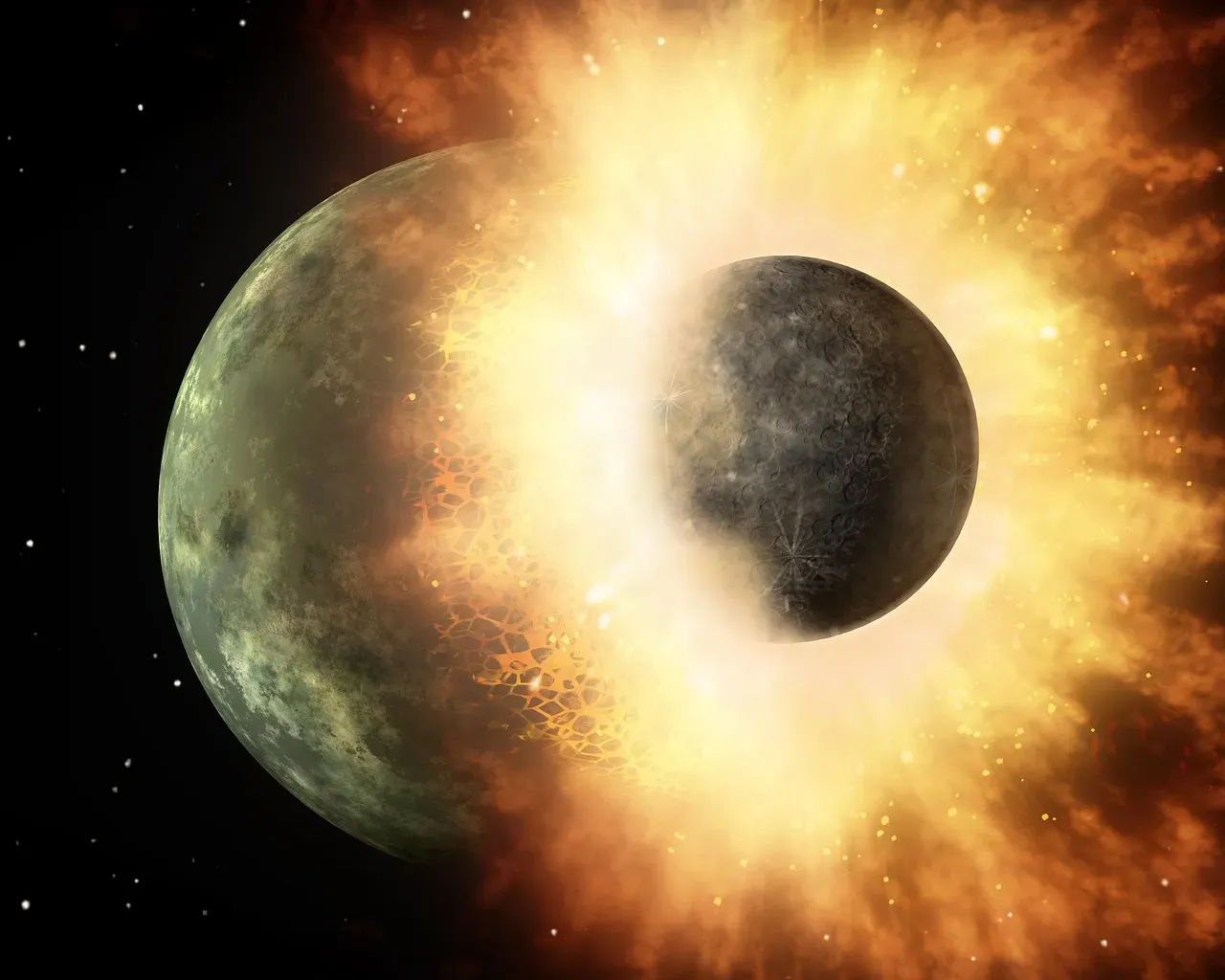
When you look far into the future, collisions remain central to how the universe will keep changing. Your Milky Way and Andromeda are on track to merge in several billion years, likely transforming into a single, larger galaxy with a different shape and structure. Within galaxies, stars will continue to interact, binaries will spiral in and merge, and black holes will keep swallowing gas, stars, and sometimes each other. Over incredibly long timescales, these processes will help decide where matter ends up and what kinds of objects still exist.
In a universe that appears to be expanding at an accelerating rate, large-scale collisions between separate galaxy clusters may eventually become rarer as distant regions drift farther apart. But within bound structures like galaxy groups and clusters, gravity will keep organizing matter through mergers and encounters. When you step back and see the big picture, you realize that cosmic collisions are not just dramatic fireworks; they are part of a long, patient shaping of the cosmos. They build galaxies, forge elements, trigger star birth, and sometimes wipe the slate clean so something new can form.
Conclusion: Living in a Universe That Thrives on Impact
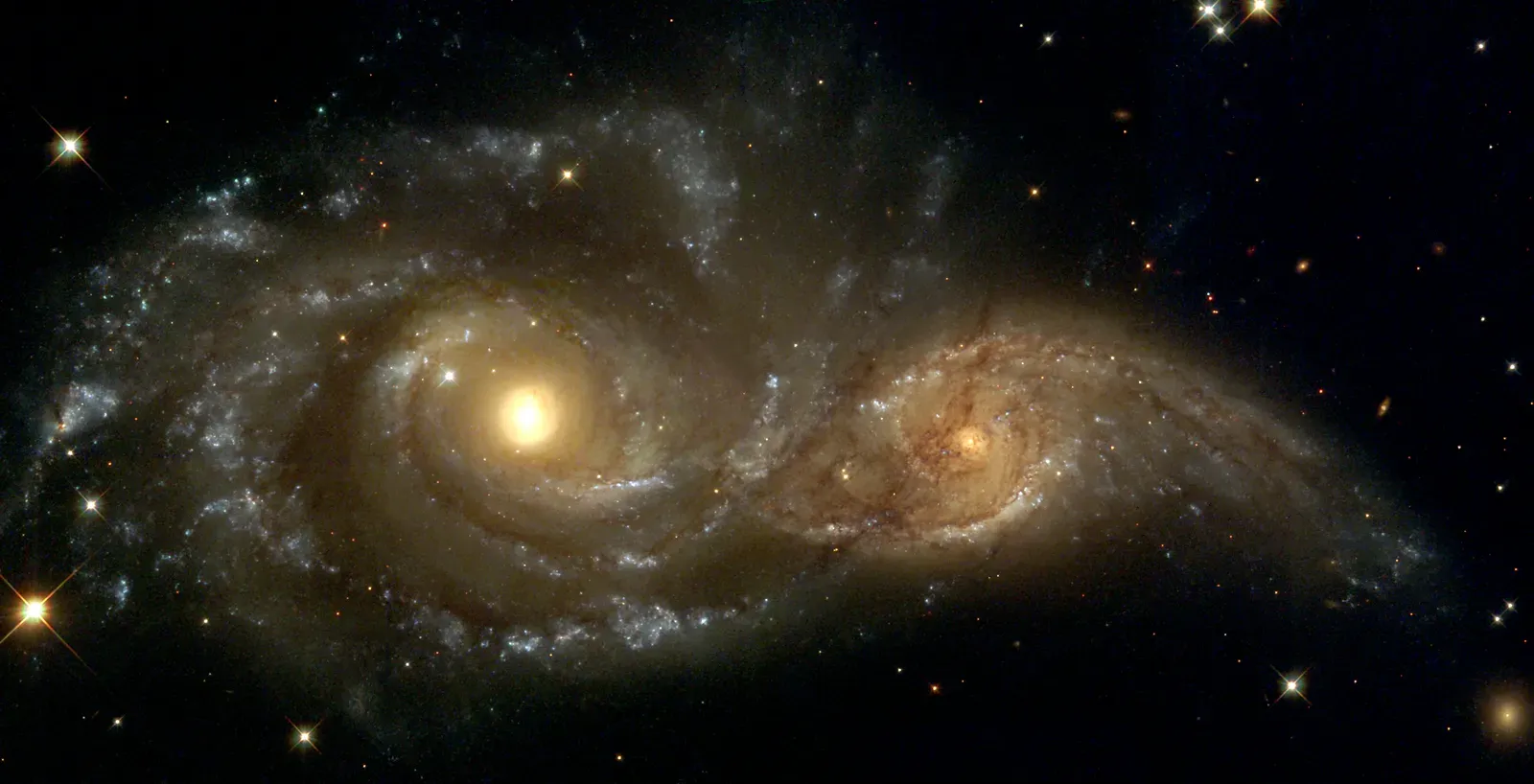
Once you understand how central collisions are to the universe, the night sky starts to feel very different. Those calm, distant stars and soft, milky bands of light hide a long history of crashes, mergers, and near misses. The atoms in your body were forged in stars, supernovae, and neutron star mergers; your galaxy was assembled through countless galactic encounters; your planet’s history has been punctuated by impacts that reshaped life itself. You are, in a very real sense, a child of cosmic collisions.
The next time you look up, you can picture galaxies slowly drifting toward each other, black holes dancing in tight spirals, and tiny dust grains from ancient impacts settling quietly onto Earth. Instead of seeing space as empty and still, you can recognize it as an ongoing story of motion, gravity, and transformation. Knowing this does not make the universe less mysterious; it makes it feel more alive and interconnected. When you think about your place in all of this, it is hard not to ask yourself: if collisions built the cosmos you inhabit, what surprising new things might still be forming out there right now?