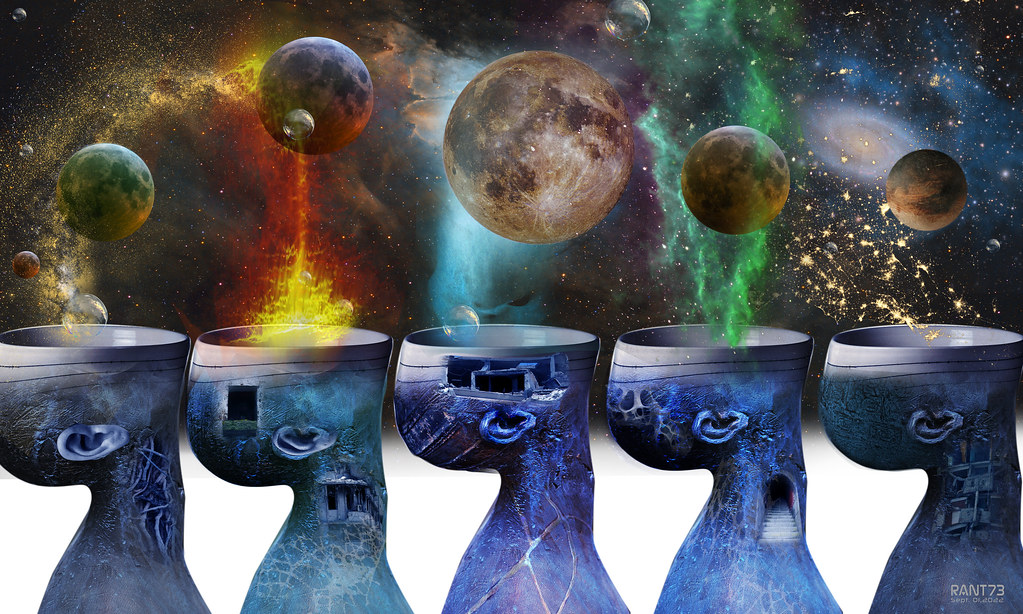

There is a strange, almost eerie moment many people never talk about: you wake up, you know exactly where you are, you feel utterly awake inside your own head – but your body is frozen like stone. It can be terrifying the first time it happens, yet this in–between state may be one of the clearest natural experiments the brain gives us about how consciousness works. It is like catching your own awareness stepping onto the stage before the lights fully come up on the rest of your nervous system.
Consciousness researchers are increasingly interested in this fragile slice of experience, not because it is mystical, but because it is mechanical in a very revealing way. In that stuck moment, control systems for movement are still turned off, while your sense of “being there” has already switched on. The fact that this can happen at all suggests that subjective awareness and bodily control can briefly run on separate tracks. If you have ever had this happen and wondered what it meant, you might be closer to the cutting edge of consciousness science than you realized.
That Creepy Awake-But-Frozen Moment Has a Name
When you wake up mentally but cannot move your body, you are probably experiencing something called sleep paralysis. It usually happens as you are either falling asleep or coming out of sleep, especially from rapid eye movement sleep, the stage where most vivid dreaming takes place. In this state, people often report being fully aware of their surroundings but unable to move, talk, or even open their eyes for several seconds to a couple of minutes. For many, it feels like being trapped inside a locked suit of armor while someone else has the key.
Scientists do not see sleep paralysis as a supernatural glitch but as a timing error in a very normal brain process. During rapid eye movement sleep, your brain deliberately shuts down most voluntary muscle control to stop you from acting out your dreams. Usually, this paralysis switches off as you wake up, but sometimes your conscious awareness comes back online before that motor shutdown releases. That mismatch – awareness on, body off – is exactly what makes this moment so interesting for people who study consciousness.
What Your Brain Is Actually Doing When You Sleep and Wake

To understand why this state is such a powerful window into awareness, it helps to know how bizarrely active your brain is when you sleep. Sleep is not simply a dimmer switch turning consciousness down; it is a carefully choreographed cycle of different brain states, each with its own patterns of electrical activity and chemistry. In rapid eye movement sleep, the brain can be nearly as active as it is when you are awake, except that your sensory input is reduced and your body is mostly paralyzed. That is why dreams can feel so real even though you are lying motionless in bed.
Waking up is not an instant flip, either; it is more like a stadium slowly turning its lights back on section by section. Brain regions linked to internal awareness can light up before the full networks for movement, attention, and sensory processing are fully online. When those internal awareness systems “boot” first, you get that raw feeling of being present, of “I am here,” even though other brain systems are still catching up. In that short overlap, it becomes painfully obvious that the feeling of being conscious is not identical to being physically responsive.
Why This State Fascinates Consciousness Scientists

In the lab, it is incredibly hard to isolate pure awareness from everything else your brain is doing. Most of the time, your conscious experience arrives as one big bundle: you can move, see, hear, think, speak, and feel all together. Sleep paralysis is like nature’s way of taking a scalpel to that bundle and briefly slicing off voluntary movement and external action, while leaving your inner experience intact. It gives scientists a rare case where awareness is present, but control over the body is temporarily offline.
That makes this state particularly relevant to big philosophical and scientific questions about what consciousness actually is. Does awareness depend on the whole brain being active, or can it exist in a more limited network while other parts are still asleep? The phenomenon suggests that the minimal “I am” feeling might rely on specific circuits that can activate independently from motor control systems. When researchers look at brain scans and sleep data, they are not just studying a sleep quirk; they are probing how the self can appear before the whole system is fully awake.
Awareness Without Action: A Real-Life Demonstration of Separation

When you are in sleep paralysis, your inner world and outer behavior are briefly divorced. Inside, you may be thinking clearly, remembering last night’s conversation, or trying to will your arm to move. Outside, nothing happens: no flinch, no word, no twitch. That gap between what you experience and what your body shows is not just eerie; it is a direct demonstration that awareness and action, while usually linked, are built on different layers of brain function. Your conscious intent can be present and vivid while the downstream motor pathways remain blocked.
This separation echoes what we see in other conditions, like certain forms of brain injury where people may be conscious but cannot move or speak. The terrifying part of sleep paralysis is that it feels like a temporary, reversible version of that. Yet the very reversibility of it makes it informative. Once the paralysis lifts and movement returns, you can remember what it was like to be awake but unable to act. Few other states give us such a clean before-and-after comparison of life with and without motor control while consciousness itself remains continuous.
Hallucinations, Presence, and the Brain’s Storytelling Instinct
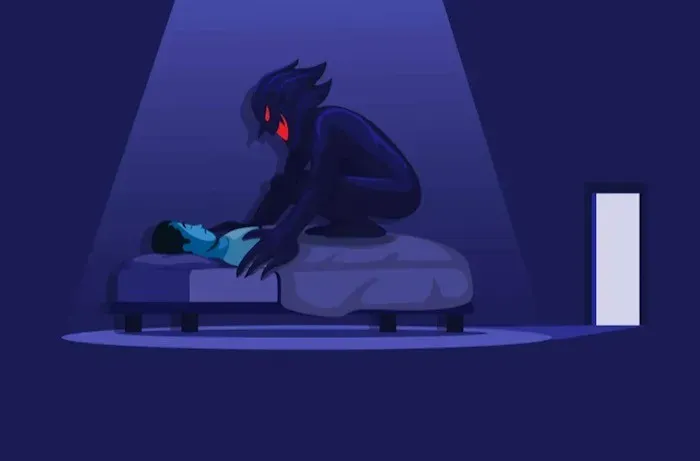
For many people, sleep paralysis is not just about being immobile; it also comes with intense hallucinations or a feeling that someone else is in the room. People describe sensing a threatening presence, feeling pressure on their chest, or seeing shadowy figures near the bed. From a scientific standpoint, this is your dreaming machinery and threat-detection systems bleeding into wakefulness. Parts of the brain that generate images, emotions, and body sensations in dreams are still active, even though your eyes are open and you know you are in your bedroom.
This cocktail of wakeful awareness plus dreamlike imagery is another reason researchers see this state as a powerful window into consciousness. It shows how strongly the brain can impose a story on neutral sensory input when fear is high and movement is impossible. The mind abhors gaps, so when it finds itself awake, paralyzed, and flooded with internal signals, it stitches those signals into a vivid narrative. That storytelling tendency is not just a quirk; it is central to how we experience reality in every state, not only during sleep paralysis.
What This Teaches Us About the “Minimal Self”

Consciousness science sometimes talks about the “minimal self” – the barebones sense that there is a subject here having experiences, even before you layer on personality, memories, and identity. Sleep paralysis seems to reveal that minimal self in a particularly raw way. You may not be moving or speaking, you may even be unsure whether your eyes are fully open, but you still have that core sense of “I am trapped in this body right now.” That feeling is shockingly stable, even when almost everything else is in flux.
This suggests that the brain systems responsible for this basic self-awareness are robust and can light up independently of voluntary action. You do not need full control of your limbs or even a complete, accurate picture of the room to feel like a subject of experience. That has deep implications for how we think about conditions such as coma recovery, locked-in syndrome, or anesthesia awareness. It points toward the idea that consciousness is not an all-or-nothing light switch, but a set of layered capacities, with the minimal self being one of the most resilient layers.
Separating Consciousness From the Brain: How Far Can We Go Honestly?

Moments like sleep paralysis tempt people to say that awareness is something separate from the physical brain, almost like a ghost temporarily locked out of its machine. From a scientific perspective, there is no good evidence that consciousness floats free of brain activity in the literal sense. What these episodes do show, very clearly, is that different brain circuits for movement, sensation, emotion, and self-awareness can fall out of sync. When they do, it can feel as if the mind and body have parted ways, even though they are still tightly coupled under the hood.
The honest, grounded way to describe this is that awareness can be functionally separated from some bodily capacities while still being generated by the brain. In sleep paralysis, the link between conscious intention and muscle control is temporarily severed, but the underlying mechanism is still neurobiological. To me, that actually makes the phenomenon more mysterious, not less. The idea that pure physical processes can create such a powerful illusion of disembodiment is its own kind of wild. It suggests that our everyday sense of unity between mind and body is more fragile and constructed than it feels from the inside.
How to Respond When This Happens – And Why I Think It Is Weirdly Valuable

If you have ever had this experience, you probably did not feel like you were getting a “window into consciousness” at the time; you just felt scared. The most practical advice is straightforward: remind yourself that it is a known, temporary state, focus on slow breathing, and wait for your body to catch up. Some people find that wiggling a finger or toe, or focusing on moving just the eyes, helps to break the paralysis sooner. Reducing sleep deprivation and stress, and keeping regular sleep schedules, can also lower the odds of episodes.
At the same time, I think there is something quietly valuable buried inside this nightmare-ish little glitch. It forces you to notice that your awareness can be blazing bright even when everything else is locked down. That realization can be unsettling, but it also expands your picture of what a conscious state can look like. In an odd way, sleep paralysis is like a free, involuntary lesson in how much of your sense of self is built on timing, coordination, and fragile alignments inside your brain. Once you have seen that, it is hard to go back to thinking of consciousness as a simple on–off switch.
Conclusion: A Tiny Horror That Exposes a Bigger Truth
Sleep paralysis might feel like a horror short film your brain screens without your consent, but it is also one of the cleanest, real-world demonstrations of how awareness can slip ahead of the physical brain’s full wakefulness. In that brief interval when you are awake inside but frozen outside, the usual fusion of mind, movement, and environment cracks just enough to let you peek at the wiring. You are confronted with a version of yourself that is purely experiential: no gestures, no speech, just the raw presence of “I am here” trapped in a silent body. For consciousness research, that is not just spooky; it is gold.
Personally, I think we underestimate how philosophically explosive these everyday anomalies really are. They show that our comfortable story about being a unified mind in seamless control of a body is more like a well-rehearsed performance than a law of nature. When the timing slips, the performance falls apart and you see how separate the pieces actually are. Maybe the real question is not whether awareness can ever exist without the brain, but how such a messy, glitch-prone brain manages to create such a convincing illusion of wholeness most of the time. Did you expect a moment of sheer helplessness in bed to be one of the sharpest clues we have about what it means to be conscious at all?