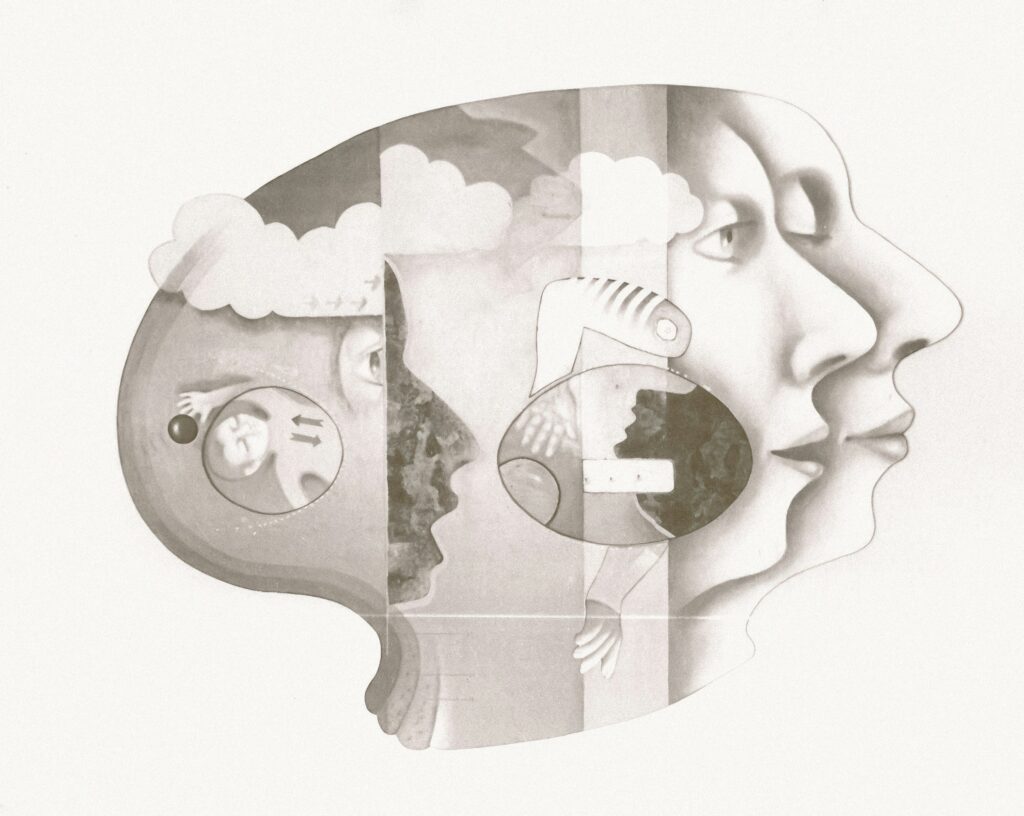

You know that nagging, almost itchy feeling you get as you’re falling asleep, like you’re forgetting something important but you can’t quite grab it? It can feel strangely urgent, even a little unsettling, as if your brain is closing a door you meant to walk through. You might replay your day, your to‑do list, even old conversations, trying to pin down what is slipping away.
Modern consciousness and memory research suggests that this moment is not random at all. As you drift toward sleep, your brain is actively sorting through the day’s experiences, strengthening some memories and quietly tagging others for long‑term storage or for pruning. That weird sense of “Wait, what am I forgetting?” may be your conscious mind brushing up against the edge of this hidden housekeeping process – your brain’s own archive team deciding what stays and what can safely fade.
The Nightly Memory Clean-Up Your Brain Runs Without Asking You

As you lie in bed, eyes closed, your brain is nowhere near “off.” Instead, it is shifting gears from taking in the world to processing it. You might feel like you are just lying there stuck with your thoughts, but under the surface, your brain is replaying parts of your day, choosing what to reinforce and what to let go. It works a bit like a photo app that quietly sorts pictures into albums in the background while you scroll through a few recent shots.
During the transition from wakefulness to sleep, your brain starts to reduce sensory input and internal chatter so it can do this deeper work more efficiently. You, however, still have enough awareness to notice odd fragments: a random detail, a missed errand, a half‑finished idea. That sudden discomfort – “I’m forgetting something important” – may simply be your conscious awareness briefly colliding with the brain’s background cleanup, before sleep pulls you fully into its own rhythm.
Why Your Brain Forgets on Purpose (And Why That’s Actually Good for You)

It is tempting to think forgetting is always a flaw, like a glitch in your mental hardware, but your brain literally needs to forget to function well. Every day, you’re flooded with sensory impressions, small conversations, random facts, and countless tiny choices. If you tried to keep all of that with equal strength, you would be mentally paralyzed, buried under a mountain of noise. Forgetting is not a failure; it is a strategy.
Your brain tends to keep what feels meaningful, emotional, or useful, and it allows the rest to fade. You can think of it like a librarian constantly deciding which books deserve permanent shelf space and which can be quietly sent to storage. That pre‑sleep feeling that something is slipping away can be your momentary awareness that some “books” are being pulled from the front of the shelf. It feels a bit uncomfortable, but it is part of how you stay focused, flexible, and sane in a world that floods you with information all day long.
What Consciousness Researchers Actually Know – And What They Don’t

It is easy to spin a dramatic story that every pre‑sleep jolt of “I forgot something!” means your brain has permanently deleted something precious, but the evidence is more subtle and less absolute. Researchers do know that sleep, especially deep and dream sleep, plays a major role in stabilizing certain memories and letting others weaken. They also know that the moments just before sleep are full of drifting thoughts, partial awareness, and loose associations that do not always make logical sense to you later.
What you do not have, at least not yet, is solid proof that this exact feeling always maps cleanly onto specific memories being deleted forever. Instead, you are probably sensing a mix: your brain beginning to disengage from the day, a few to‑dos slipping out of short‑term focus, and some weaker traces already starting to fade. The key is to treat that feeling as a useful signal – your mind is shifting state – rather than as a literal alarm that something vital has just been destroyed beyond rescue.
The Difference Between “I Forgot” and “My Brain Archived It”

When you say you forgot something, you usually imagine it as gone, as if a file got shredded. In reality, a lot of what you call forgetting is more like your brain pushing things into a dim back room, not erasing them entirely. You might not be able to recall a detail on demand, but with the right cue – a smell, a song, a comment from a friend – it can pop back, almost as if it had been hiding in plain sight. Your brain often archives more than you realize.
Right before sleep, you often feel the tension between what’s actively in your mind and what is sliding into that back room. A name on the tip of your tongue, an idea you were excited about, a small task you meant to do – these can feel like they are spiraling away just out of reach. In those moments, your experience is not always “deletion”; it may be your short‑term workspace emptying out while deeper systems quietly store some of those traces elsewhere. You feel the letting go, even if the memory is not truly gone, only less accessible.
Why the Feeling Hits You Right Before Sleep (and Not At Lunch)

During the day, you are busy reacting: answering messages, solving problems, moving from one thing to the next. Your brain is juggling many demands at once, so there is not much bandwidth left for you to notice what is being forgotten or filed away. At night, when you finally stop scrolling and turn off the lights, that constant distraction drops away. Suddenly, your attention has nowhere else to run, and you can sense background processes that were humming along unnoticed all day.
As your brain drifts into the first stages of sleep, your sense of time and priority also warps a little. A tiny overdue email can feel as urgent as a major life decision, simply because your mind is transitioning and your emotional filters are changing. That is why you can feel mysteriously haunted by an almost trivial detail just as you are nodding off. The timing is not magical; it is just the first quiet moment your awareness has to notice what has been slipping through your fingers all along.
How Your Sleep Stages Shape What You Remember Tomorrow

You do not drift into one uniform sleep; you travel through different stages that each shape memory in their own way. In the lighter stages, especially as you are just falling asleep, your thoughts can feel dreamlike but still somewhat connected to the day. This is when that sense of “I’m forgetting something important” is most common, because you have not fully let go of conscious control yet. You are standing in the doorway between waking and sleeping, able to peek into both rooms at once.
Later, as you move into deeper and dream stages, your brain gets serious about reprocessing experiences, often replaying patterns it wants to keep and allowing weaker traces to fade. By the time you wake up, some things will feel clearer and more solid, while others will seem distant or lost. What you felt slipping away the night before may be among the things your brain decided not to reinforce. But it can also happen that something you thought you lost comes back to you in the morning, surprisingly intact, because sleep helped stabilize it in ways you could not feel happening.
Simple Habits to Catch What You Don’t Want to Lose

If that pre‑sleep sense of forgetting makes you uneasy, you can turn it into a cue instead of a worry. Before you lie down, you can do a quick brain download: jot down tasks, ideas, or memories you want to keep in a notebook or notes app. By doing this, you give your brain a clear signal: this matters, keep it. You move some of the burden from fragile mental space into the physical world, which can be surprisingly calming.
You can also experiment with a brief nightly reflection – just a minute or two of asking yourself what stood out today, what you learned, and what you want to remember. This is like highlighting text in a book so your brain knows which lines to come back to later. You are not fighting your brain’s archiving system; you are guiding it, nudging it toward the memories and priorities you care about most. Over time, this little ritual can make bedtime feel less like a place where things slip away and more like a place where you consciously choose what to carry forward.
When That Feeling Points to Real Stress, Not Just Memory Housekeeping

Sometimes, the sensation that you are forgetting something important is not just about memory at all; it is about anxiety. If you are overloaded, stretched thin, or constantly worrying about dropping the ball, bedtime becomes the only quiet time your mind has to throw all those fears at you. In that state, your brain is not calmly archiving neutral details; it is scanning for threats and unfinished responsibilities, and every small thing feels catastrophic.
If you notice that your nights are filled with racing thoughts about work, family, money, or health, and you routinely wake up feeling exhausted, the issue might be more about how much pressure you are under than about what your memory systems are doing. In that case, building better boundaries, planning your next day earlier in the evening, talking things through with someone, or getting professional support can be far more helpful than obsessing over what your brain might be deleting. You are not failing; you are just carrying more than your nervous system is designed to hold comfortably.
Making Peace With Forgetting (Without Giving Up on What Matters)

You are never going to remember everything, and that is not just okay – it is necessary. Your brain is constantly protecting you from drowning in details, even if it sometimes feels like it is stealing things from you in the dark. That pre‑sleep twinge of loss is a reminder that you are human, with a limited spotlight of attention and a mind that has to choose. Instead of fighting that, you can work with it by putting what matters in writing, repeating it, talking about it, and revisiting it over time.
If you treat forgetting as an enemy, you will spend a lot of energy battling something you can never fully control. If you see it as your brain’s editing team, you can focus on giving clear signals about what deserves a permanent place in your story. The next time you feel that unsettling sense that something is slipping away as you fall asleep, you might still not remember exactly what it was – but you can trust that your mind is doing the best it can with the space it has. And maybe that is the real question: instead of trying to remember everything, what do you truly want your limited, precious memory to hold on to?