You have probably grown up with the quiet assumption that matter comes first and mind comes later. Stars form, planets cool, chemistry gets complicated, life appears, brains evolve, and at the very end of this long chain, consciousness flickers on like a light in a finished house. But what if you have it backwards? What if consciousness is not a latecomer, but something woven into the fabric of reality from the very beginning?
This idea sounds wild at first, almost mystical, yet you keep bumping into it when you look closely at modern physics, neuroscience, and philosophy. You start to see a pattern: every time you try to push consciousness into a neat little corner of brain activity, it slips through your fingers. So you are left with a daring possibility: maybe consciousness is not an accidental side-effect of matter. Maybe it is one of the basic ingredients of the universe, like space, time, and energy.
The Strange Problem You Face When You Try to Explain Consciousness Away
When you really sit with your own experience, you hit a wall that no scientific equation can fully dissolve: you are aware. You see colors, feel pain, taste coffee, remember childhood, and silently talk to yourself. You can describe neurons, brain regions, and chemical signals, but none of that tells you why any of it should feel like something from the inside. You can imagine a perfect brain scan of yourself, yet that image will never convey what it is like to be you.
This is sometimes called the hard problem of consciousness, and you feel its weight whenever you realize that no diagram of a brain cell explains the raw feel of fear, love, or awe. You can reduce a rainbow to wavelengths and refraction angles, yet the shimmering beauty you see in the sky is not captured by the math alone. In the same way, you can trace neural circuits, but the vividness of your inner life refuses to be reduced to a list of physical processes. That stubborn, irreducible feeling is what pushes you toward more radical ideas.
Why Some Philosophers Think Mind Might Be Everywhere (At Least a Little)
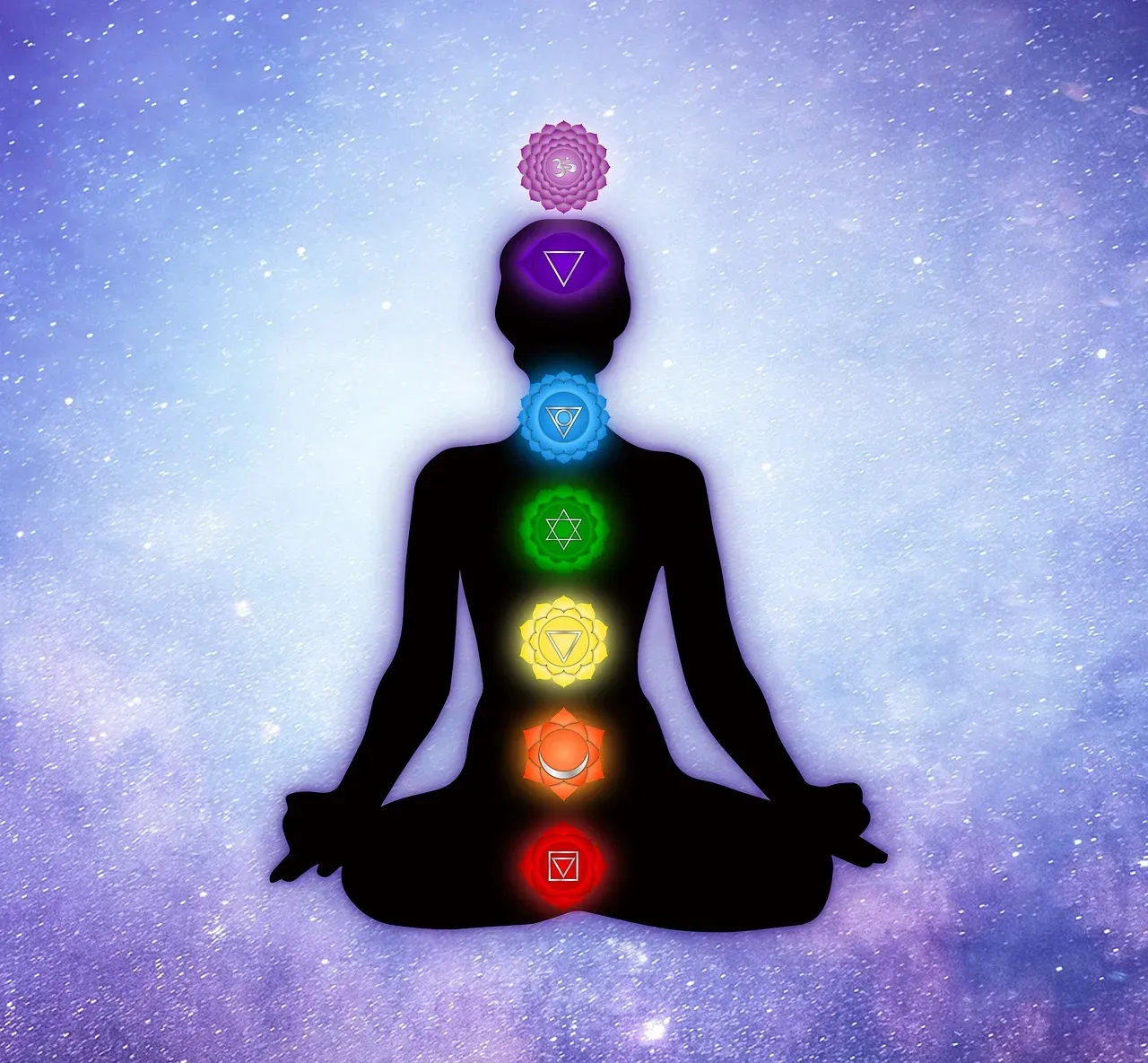
To escape this dead end, you are invited into a surprising view called panpsychism. Instead of saying consciousness pops out of matter once brains are complex enough, this view suggests that the building blocks of the universe already carry primitive forms of experience. That does not mean a rock thinks about its taxes, but it does mean that even the smallest physical systems might have a tiny, unimaginably simple inner aspect.
From this perspective, when you look at the universe, you are not seeing dead stuff that mysteriously wakes up; you are seeing a reality that has always had an inside. Complex creatures like you would then be elaborate, organized expressions of something that was present in seed form all along. This flips the usual story: instead of asking how mind emerges from matter, you start asking how the mental and physical sides of nature fit together as two faces of the same underlying reality.
How Modern Physics Quietly Opens the Door to a Mindful Universe
As you learn about quantum physics, you keep stumbling over an awkward fact: observation seems to matter. Experiments show that what you measure affects what you get, as if the act of measurement is not just passive watching but an active part of how reality shows up. You do not have to believe that human minds magically control particles to feel the unease: why should “measurement” have such a special role at the bedrock of physics?
This strange feature nudges you to wonder whether the universe is not just a cold machine grinding away in the dark. Some interpretations of quantum theory treat information, observation, or relational perspectives as fundamental, putting something mind-like at the roots of physical law. No responsible physicist claims that consciousness collapses wave functions in a simple, magical way, but you can feel how your tidy picture of a purely objective, observer-free world begins to crack. In those cracks, the idea of a universe where experience is basic does not look quite so ridiculous.
Brains as Instruments, Not Factories, of Consciousness
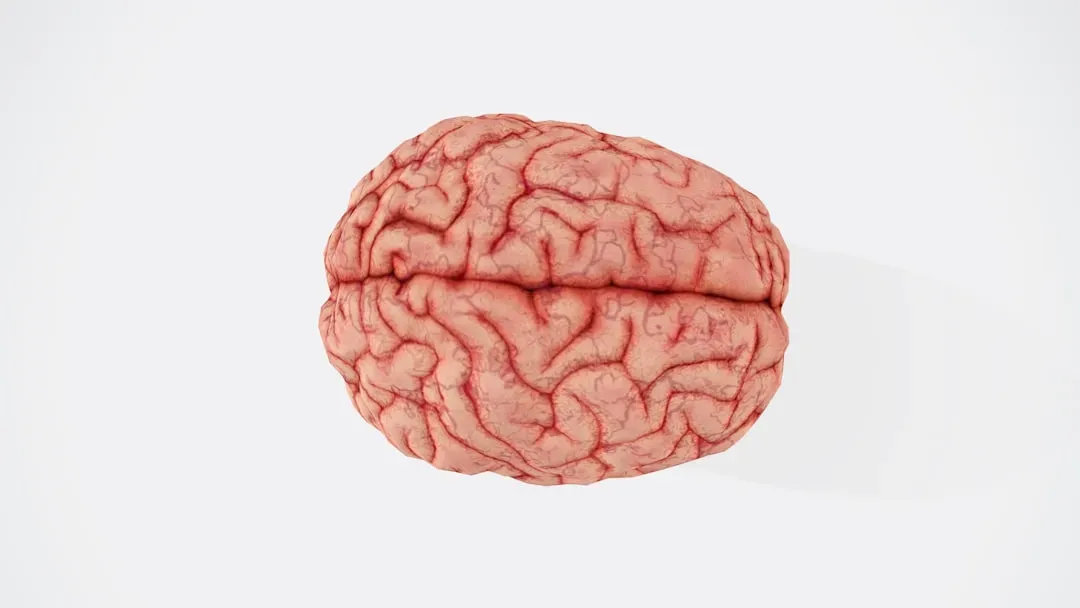
You are used to hearing that the brain produces consciousness the way a factory produces cars. But when you look closely at how your mind depends on your body and environment, another metaphor starts to feel more natural: the brain as an instrument or receiver. Just as a radio tunes into signals already in the air, your nervous system might be shaping and filtering a more general field of consciousness, not creating it from nothing.
Neuroscience shows you strong correlations between brain states and conscious states, but correlation is not the same as creation. When you damage a violin, the music gets distorted, yet you do not conclude that the wood invented the symphony. In the same way, when brain activity changes, experience changes, but that does not strictly prove that awareness is manufactured inside your skull. It may be that your brain is a beautifully tuned gateway through which a more fundamental consciousness takes on the specific form you call “me.”
Information, Complexity, and the Idea of Cosmic Awareness
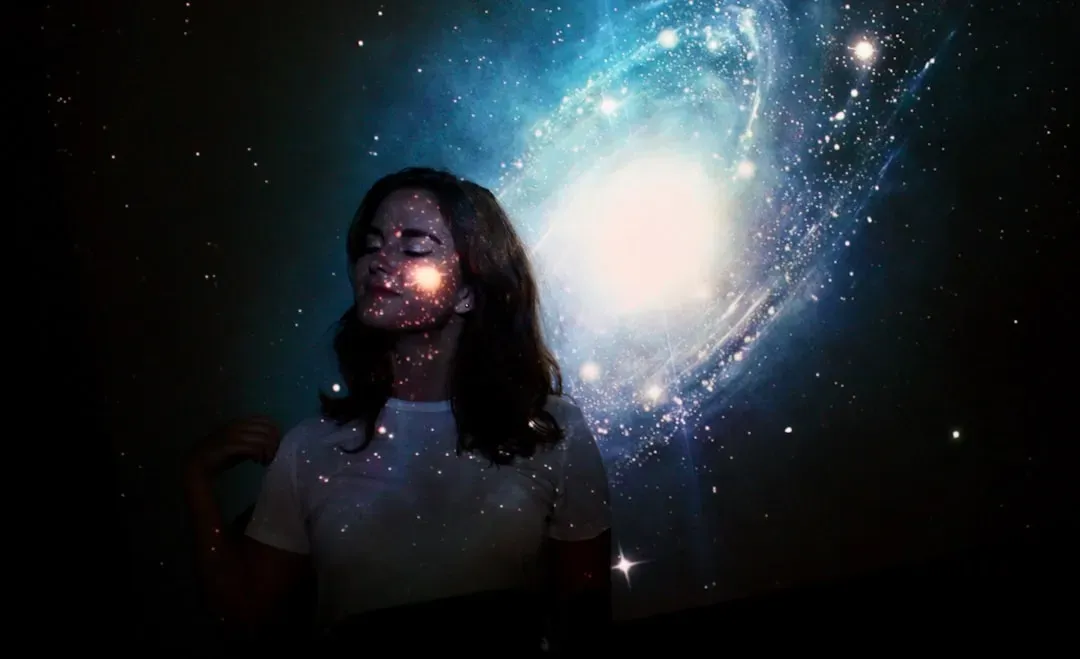
As you explore modern theories of consciousness, you find that many of them talk about information and integration. You are told that the more a system can integrate diverse information into a unified whole, the richer its conscious experience might be. This lets you map different systems – brains, computers, maybe even social networks – along a spectrum of possible awareness, instead of drawing a sharp line between “conscious” and “not conscious.”
If you follow that line of thought all the way down, you arrive at a bold suggestion: wherever there is information being processed and related, there might be some flicker of experience, however faint. Your brain would then be one of the most sophisticated hubs of this universal information flow, not the sole island of awareness in a dead sea. The universe starts to look like a vast web of interacting, information-bearing systems, each with its own tiny, internal point of view. You are not an exception to the universe; you are one way the universe becomes aware of itself.
What This View Changes About How You See Yourself and Others

If you take seriously the idea that consciousness might be fundamental, your attitude toward yourself begins to shift. You are no longer just a biological machine briefly at war with entropy; you are an expression of something intrinsic to reality, a local bloom of awareness in a much larger field. Your thoughts, feelings, and choices stop looking like random sparks and start looking like meaningful patterns in a universe that can, in some sense, feel.
This view also nudges you toward a different way of treating other beings. If experience is not a rare miracle but a widespread feature of nature, you have new reasons to care about how you affect animals, ecosystems, and even artificial systems that may someday host their own forms of awareness. Cruelty becomes more disturbing when you suspect that suffering might be more common in the universe than you previously allowed yourself to admit. Kindness, on the other hand, starts to feel like a kind of resonance with the deeper fabric of things rather than just a personal preference.
Staying Honest: What You Can Say, and What You Cannot

Even if you feel drawn to this picture of a conscious universe, you need to be clear about one thing: you do not yet have solid proof. There is no decisive experiment that tells you consciousness is fundamental, nor is there one that proves it is merely an illusion cooked up by neurons. You are moving in a realm where science, philosophy, and personal intuition intersect, and that means you have to walk carefully, avoiding grand claims that outrun the evidence.
What you can say, though, is that treating consciousness as basic helps you avoid certain logical traps that appear when you try to build mind out of matter alone. You can also say that this view fits surprisingly well with some puzzling aspects of physics and with the stubborn immediacy of your own experience. So instead of pretending you have final answers, you can use this idea as a guiding question, a working hypothesis that keeps you open, curious, and honest about how little you truly understand.
How You Might Live Differently If the Universe Is Awake

When you let the possibility sink in that consciousness is woven into reality, your everyday life quietly transforms. A walk in the woods is not just a stroll through a collection of objects; it becomes an encounter with other configurations of the same underlying awareness that shines through you. You may still doubt and analyze, but a subtle sense of kinship with the world begins to grow, as if everything is less like furniture in your personal stage play and more like family you do not fully know yet.
This shift does not require you to abandon science or leap into superstition. Instead, it invites you to treat your own awareness as something precious and to extend that respect outward. You might meditate, reflect, or simply pay closer attention to the texture of each moment, knowing that this very capacity to notice is part of what you are trying to understand. In that way, your daily life becomes both a laboratory and a kind of quiet reverence for the mystery you are made of.
Conclusion: Living with the Possibility of a Conscious Universe
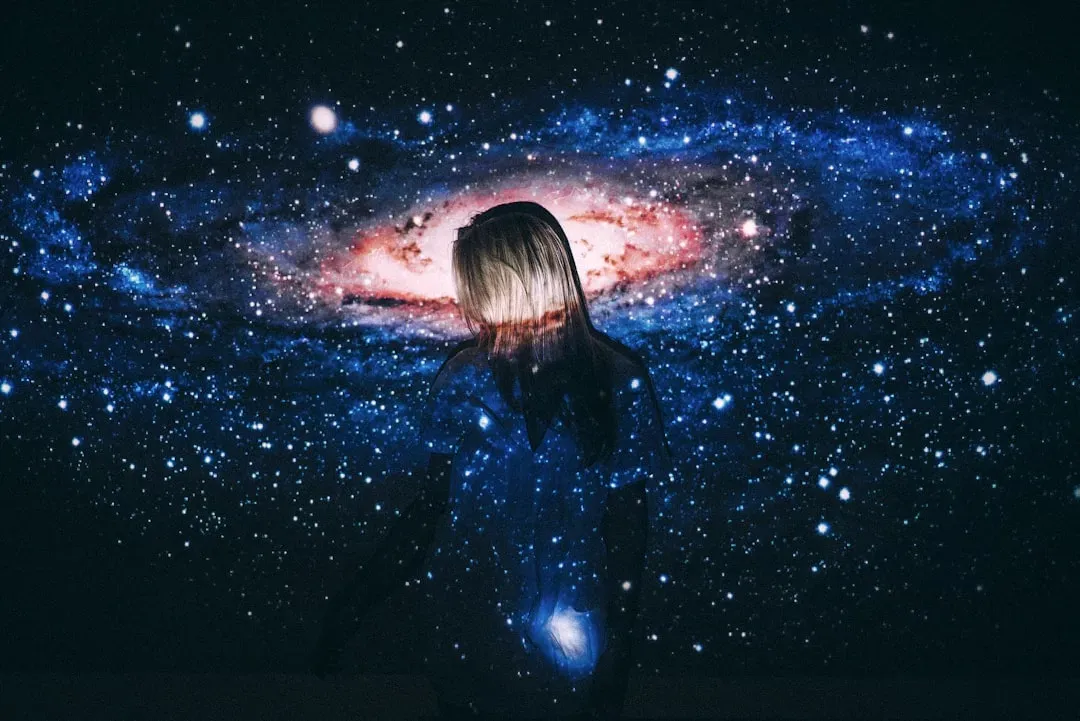
You stand at a strange crossroads: you know that you are conscious, you see that current explanations are incomplete, and you sense that the universe might be far more alive in its depths than your culture usually admits. Treating consciousness as a fundamental property does not solve every puzzle, but it offers you a coherent, if daring, way to hold together your inner life, modern science, and the oldest human intuitions about a living cosmos. You do not have to accept it as dogma; you can carry it as a lens, trying it on and seeing how the world looks when you assume that experience is not an accident, but a basic feature of what exists.
In the end, the mystery of why there is something it is like to be you remains one of the most intimate and astonishing facts you will ever face. Whether consciousness is a spark in the void or the glow of an already-awake universe, it is the ground from which every thought, question, and discovery arises. So as you go back to your day – to your coffee, your messages, your worries – you might pause for a moment and simply notice that you are aware at all. If consciousness really is woven into the fabric of reality, what does it mean that, right now, reality is looking back at itself through your eyes?