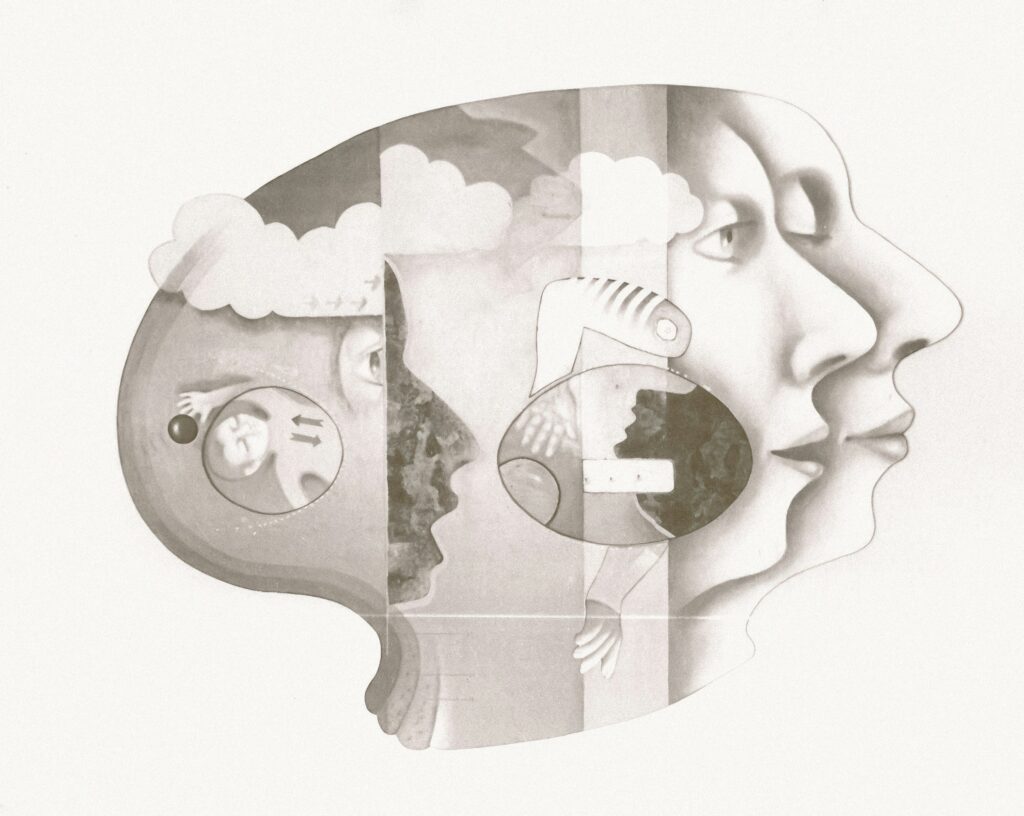

You know that oddly infuriating feeling when a word is right there, hovering just out of reach? You can almost hear it, almost see it, you know the first letter, maybe the rhythm of the syllables… but your mouth refuses to cooperate. It feels like your brain has failed you. Cognitive science says something much stranger is going on: your brain has actually already found the word. The glitch is not in the search itself, but in the final step of getting that word out into speech.
Once you understand that, the whole experience looks different. You are not “forgetting” as much as you are “mis-firing” at the last moment. Even better, researchers have found that your natural instinct to push harder and harder is often the wrong move. The most helpful strategies are surprisingly gentle, indirect, and downright counterintuitive. When you apply them, you not only escape those tip‑of‑the‑tongue traps more easily, you also get a fascinating peek into how language lives in your mind.
The Tip-of-the-Tongue Moment: Not Forgetting, but Misfiring

When you hit a tip‑of‑the‑tongue (TOT) state, your first thought is usually that you have lost the word. Cognitive science paints a different picture: your brain’s memory system has already located the correct word’s meaning, but the pathway from that meaning to the exact sounds of the word is temporarily jammed. You feel that weird certainty – you know you know it – because you really do. The “file” is open; you just can’t read the label on the tab.
Researchers describe this as a partial activation problem. You have the semantic information (what the word means) and often some phonological cues (how it begins, how many syllables it has), but the full sound pattern is not crossing the finish line into articulation. It is like having a song pulled up in your music app, album art and all, but your speakers are muted. So instead of thinking “my memory is failing,” it is more accurate to tell yourself “my output system is having a moment.” That small reframe can ease the panic that makes the block even worse.
How Your Brain Actually Retrieves a Word, Step by Step

To understand why the final step fails, you need a rough map of how word retrieval normally works. When you want to say something, your brain first activates the concept – the idea or meaning you’re trying to express. From there, it searches your mental lexicon, a huge internal database of words associated with that meaning, like spinning through the index of a giant library catalogue. This is fast and mostly unconscious, which is why everyday conversation feels effortless most of the time.
Once your brain has selected the right entry, it still has to convert it into a sequence of sounds, plan the movements of your tongue, lips, and vocal cords, and send timing signals to actually produce the word. That last conversion from meaning to sound is exactly where the tip‑of‑the‑tongue glitch usually appears. Think of it like typing an address into a GPS: the system finds the destination, but you still need a clear route to get there. In TOT states, the destination is correct, but the route is temporarily scrambled.
Why Knowing the First Letter Feels So Teasingly Close

One of the strangest parts of a tip‑of‑the‑tongue state is how you often know the first letter, the rough length of the word, or what language it’s from. This happens because parts of the sound representation are getting through, just not the whole package. Your brain is activating fragments strongly enough that you can sense them, but not strongly enough to assemble them into the final spoken form. You’re hearing the faint echo of the word, not the word itself.
That is why incorrect but similar words keep popping into your mind – they share sounds or rhythm with the word you want. Your language system works with networks of related items, so when one pathway is weak, neighboring ones light up more easily. This is irritating, but it is also a sign that your retrieval system is actually doing something sensible behind the scenes: it is searching among phonologically and semantically related options, even if the right one is still stuck just out of reach.
Stress, Age, and Fatigue: Why Tip-of-the-Tongue Moments Get Worse

You might notice these episodes more when you are tired, stressed, or feeling on the spot, and that is not your imagination. Stress hormones and mental overload can make that final step from meaning to sound more fragile. Under pressure, you tend to push harder, which increases muscle tension and narrows your focus, but language retrieval actually benefits from a slightly looser, more flexible state of attention. Your system needs room to “spread activation” across related options, not be squeezed into a mental corner.
Age can also bring more tip‑of‑the‑tongue experiences, even when your actual knowledge and vocabulary keep growing. Your brain’s connections for word sounds may become a bit noisier or less efficient, so those partial activations happen more often. Importantly, this is usually about access, not about losing the words themselves. It is like having more traffic on the same set of roads, not like having the city erased. That distinction matters, because it means there is still a lot you can do to support smoother access.
Why Forcing It Makes Things Worse: The Refractory Trap

Your natural reaction in a TOT moment is to bear down, repeat “come on, come on, come on,” and mentally slam your fist on the table. Cognitive science suggests that this intense focus can actually prolong the block. When you keep hammering the same unstable pathway, you tire out the neurons that are already struggling and push the system into what’s sometimes described as a kind of refractory or “cool‑down” period. The harder you chase, the more the word runs away.
You have probably had the experience where you finally give up, move on, and twenty minutes later the word pops into your head while you are doing dishes or scrolling your phone. That is not magic; it is what happens when the overworked pathway gets a break, and the activation can spread more freely through related networks again. The paradox here is brutal: the more desperately you try to remember the word right now, the more you delay the very retrieval you want.
The Counterintuitive Fix: Relax, Distract, and Loosen Your Focus

The most effective strategies for breaking a tip‑of‑the‑tongue state feel almost too simple: stop trying so hard, shift your attention, and let your brain work in the background. When you deliberately relax and think about something else, you reduce interference and give those fragile connections space to stabilize. Instead of yanking on the stuck drawer, you gently stop pulling and let the mechanism reset. This is why a brief distraction – talking about a different topic or standing up to get a glass of water – often clears the block.
You can also lightly circle the word without obsessing over it. For example, you might recall where you learned it, what context it usually appears in, or what kind of thing it names, but then intentionally move away from it again. The key is to stay curious rather than desperate. Curiosity encourages flexible, widespread activation, while desperation creates a kind of mental tunnel vision. It feels wrong to back off when you want the word so badly, but stepping away is often exactly the move that brings it back.
Helpful Prompts: Using Meaning and Associations Instead of Sound

Because the problem in TOT is often at the sound level, you can sometimes sneak around it by coming at the word through meaning and associations instead. You might describe the word’s function, category, or emotional flavor, or think of sentences where you would naturally use it. This strengthens the semantic side of the representation, which can in turn nudge the phonological side into place. You are essentially turning up the volume on the concept so that the connected sounds have a better chance to lock in.
You can also leverage related words purposefully. Instead of getting stuck on one wrong guess, list several neighbors: synonyms, antonyms, or words used in the same situations. This creates a richer activation pattern in your language network. Some people find it helpful to gesture with their hands, sketch a quick image, or move around while they search – small physical actions can subtly support retrieval by engaging overlapping brain systems. You are giving your mind more handles to grab the right word with, rather than trying to squeeze it out through a single narrow gap.
Training Your Brain: Habits That Reduce Tip-of-the-Tongue Frequency

While you can never eliminate TOT moments completely, you can make them less frequent and less disruptive by how you treat your brain in everyday life. Regular reading, varied conversation, learning new words in any language, or even picking up lyrics to songs all keep your lexical network active and flexible. When your system is used to moving between many different words and contexts, it is less likely to get stuck on any particular one. Variety functions like cross‑training for your language circuits.
General brain health matters too. Adequate sleep, manageable stress, physical activity, and decent nutrition all support the neural infrastructure that underlies word retrieval. You may not feel the difference day to day, but over time it shows up in how smoothly you find what you want to say. Instead of treating TOT episodes as signs that everything is falling apart, you can see them as gentle nudges to care for the system that carries your voice. You are not just memorizing more words; you are tending the network that lets you reach them.
When to Worry – and When to Just Laugh It Off

Because tip‑of‑the‑tongue moments feel so strange, it is easy to spiral into fear about memory loss or cognitive decline. In reality, occasional TOT states, even frequent ones during certain periods of stress or fatigue, are a normal part of how a complex language system behaves. They show up across ages, cultures, and languages. If you mostly retrieve the word eventually, and you function well in daily life, these glitches are usually just that – glitches, not warnings.
It may be worth talking to a professional if you notice a broader pattern: constant difficulty recalling familiar names and words, confusion about meanings instead of just sounds, or other changes in thinking, mood, or behavior. But for the average person, the healthiest response to a TOT moment is surprisingly simple: acknowledge it, shrug, apply the counterintuitive fixes, and move on. A little humor helps too. When you can laugh at your brain’s quirky wiring instead of fighting it, you give yourself the space you need to speak more freely again.
Conclusion: Your Brain Knows More Than It Lets You Say

When a word is sitting on the tip of your tongue, it is easy to feel broken, slow, or embarrassed. Cognitive science offers a kinder – and more accurate – story. In most cases, your brain has already done the hard work of finding the word; it is the final step of translating that knowledge into sound that has temporarily slipped. Once you see that, you stop blaming your memory and start working with the real bottleneck.
The counterintuitive fix is to resist the urge to push harder and instead loosen your grip: relax, distract yourself, lean on meaning and associations, and build long‑term habits that support a flexible, healthy language system. Your words are not vanishing; they are just caught in traffic on the way out. The next time you feel that almost‑there frustration, you can treat it as a small reminder that your mind is deeper, messier, and more capable than it appears in that awkward moment – and ask yourself, if your brain knows the answer already, how can you help it finish the last step instead of getting in its own way?