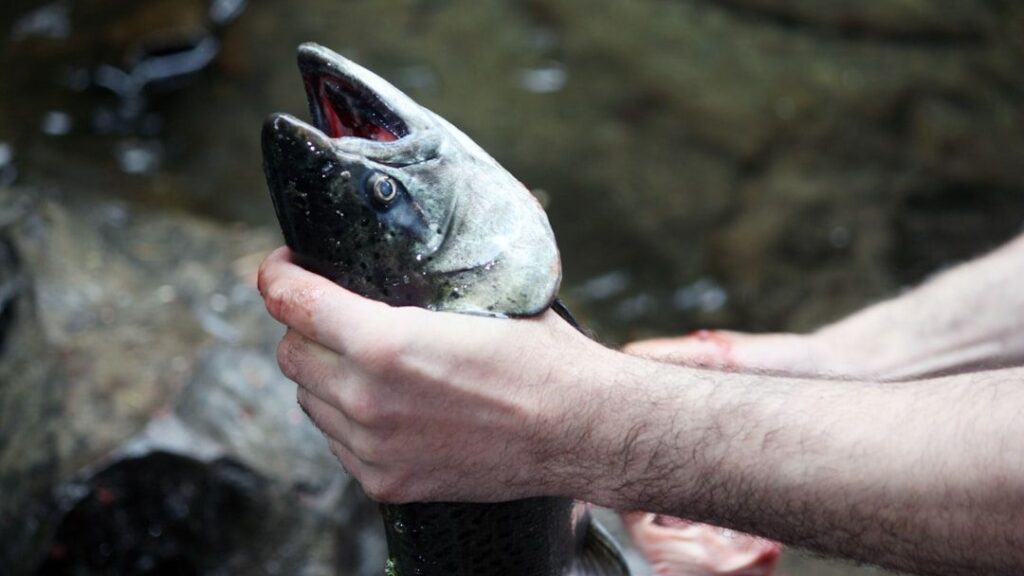

What Chinook salmon eat depends on where they are in the Salish Sea, study finds – Image for illustrative purposes only (Image credits: Unsplash)
Adult Chinook salmon throughout the Salish Sea depend most heavily on herring as their year-round food source, yet new evidence shows their overall diets shift noticeably from one area to another. Researchers from the University of Victoria and the Pacific Salmon Foundation examined stomach contents from fish collected across multiple sites and found that location plays a decisive role in what else the salmon consume. The work, led by Ph.D. student Wesley Greentree and published in Fisheries Oceanography, provides the first detailed regional breakdown of adult Chinook feeding habits in these waters.
Stomach Analysis Reveals Consistent Patterns
Scientists collected and dissected salmon stomachs from different parts of the Salish Sea to identify exactly what the fish had eaten. The approach allowed direct comparison of prey remains across sites rather than relying on indirect estimates. Results showed that certain fish species appeared repeatedly, while others turned up only in specific locations.
This method of examining actual stomach contents offers a reliable snapshot of recent meals. It avoids assumptions about what salmon might eat based on general surveys and instead documents real consumption at the time of capture. The consistency of some findings across seasons strengthened the overall picture.
Herring Remains the Dominant Prey Everywhere
Herring stood out as the single most important food item for adult Chinook salmon no matter where the fish were sampled. The species appeared in stomachs from every region examined and accounted for the largest share of identified prey. This pattern held steady throughout the year, indicating herring serves as a reliable base for the salmon diet across the entire study area.
The widespread presence of herring suggests the fish provide a stable energy source even when other prey fluctuate. Because herring occur in sufficient numbers in most parts of the Salish Sea, they buffer the salmon against local shortages of alternative foods. Researchers noted this reliability as a key factor supporting adult Chinook survival in the region.
Other Prey Species Appear Only in Certain Areas
While herring dominated overall, two other species showed strong ties to particular locations. Anchovy turned up frequently in stomachs from fish caught near Howe Sound, pointing to a localized abundance or preference in that part of the sea. In contrast, sand lance featured prominently in samples from the waters around Victoria and Sidney.
These differences highlight how ocean conditions and prey availability can vary even within the connected waters of the Salish Sea. Salmon in one area may encounter different schools of fish than those just a short distance away. The findings underscore that adult Chinook do not follow a single uniform diet but instead adjust based on what is most accessible nearby.
| Region | Key Regional Prey | Overall Importance |
|---|---|---|
| Howe Sound | Anchovy | Secondary to herring |
| Victoria and Sidney | Sand lance | Secondary to herring |
| All Salish Sea sites | Herring | Primary year-round |
Next Steps for Understanding Salmon Needs
The regional patterns raise questions about how changes in prey distribution could affect different groups of Chinook salmon. If herring populations shift or decline in certain zones, fish in those areas may face greater pressure to find replacements. Continued monitoring of stomach contents could track whether these location-specific habits remain stable over time.
Further work may also examine whether the observed differences influence salmon growth rates or migration timing. Because the current study focused on adult fish, additional research on younger life stages could reveal whether similar regional influences appear earlier in the life cycle. Such details would help refine management approaches that account for the varied feeding environments within the Salish Sea.