

Unexpected Find Spans Three States (Image Credits: Unsplash)
Brazil – Geologists have pinpointed the country’s initial tektite deposit, glassy relics from a formidable asteroid collision approximately 6.3 million years past.[1][2]
Unexpected Find Spans Three States
Researchers first spotted the tektites in northern Minas Gerais, within municipalities such as Taiobeiras, Curral de Dentro, and São João do Paraíso. The strewn field soon expanded into neighboring Bahia and Piauí, covering more than 900 kilometers.[1] Teams collected over 600 specimens by early 2026, ranging from under 1 gram to 85 grams in weight and up to 5 centimeters long.[3]
Álvaro Penteado Crósta, a senior professor at the State University of Campinas’s Institute of Geosciences, led the effort with collaborators from Brazil, Europe, Australia, and the Middle East. Their work appeared in the journal Geology in late 2025.[2] This marked South America’s debut tektite discovery, filling a notable void in the continent’s impact record.
Distinctive Features of the Geraisites
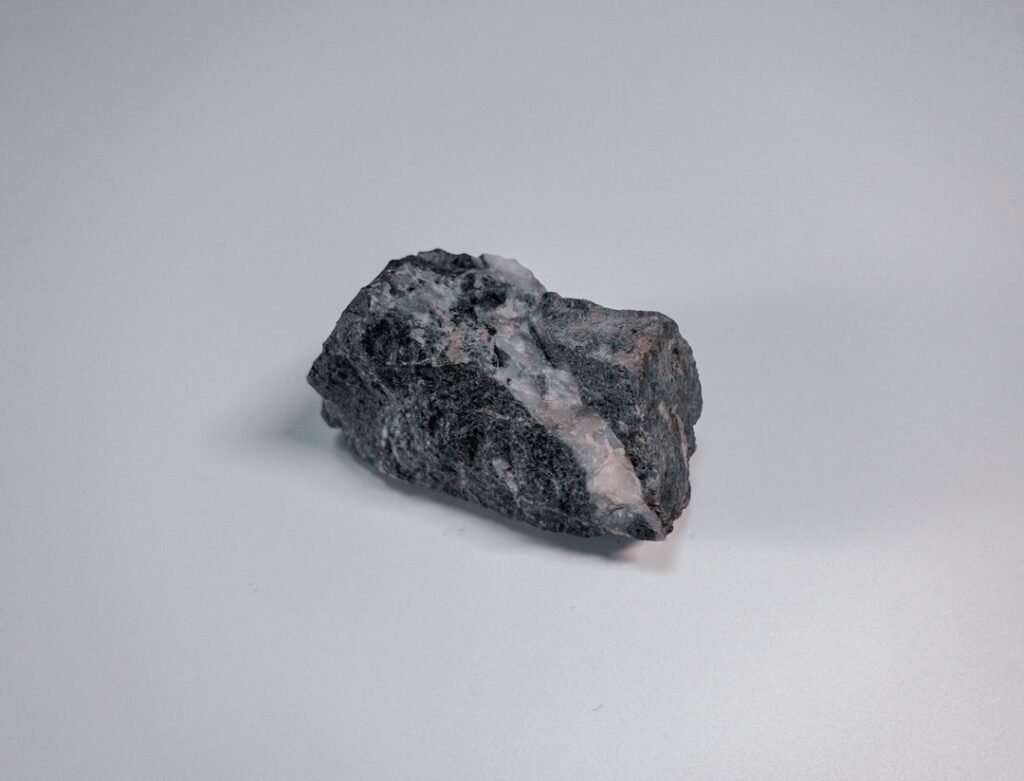
Named geraisites for their Minas Gerais origin, these fragments displayed classic tektite traits. Dark and opaque at first glance, they revealed a translucent grayish-green hue under intense light. Pitted surfaces bore tiny cavities from gas bubbles that burst during atmospheric flight and swift cooling.[1]
Chemical tests confirmed high silica levels from 70.3% to 73.7%, alongside 5.86% to 8.01% combined sodium and potassium oxides. Trace elements included 10 to 48 parts per million chromium and 9 to 63 ppm nickel. Infrared spectroscopy measured exceptionally low water content at 71 to 107 ppm – far drier than volcanic glass.[3] Aerodynamic forms dominated the collection:
- Spheres and ellipsoids
- Drop-shaped and discoid pieces
- Dumbbell and twisted varieties
Pinpointing the Impact’s Age
Argon isotope dating via the ⁴⁰Ar/³⁹Ar method yielded ages clustering around 6.78, 6.40, and 6.33 million years – placing the event at the Miocene epoch’s close. Experts viewed this as a maximum age, given potential argon inheritance from ancient target rocks.[1] Isotopic signatures traced the source to Archean continental crust, aged 3.0 to 3.3 billion years, likely from the São Francisco craton.
“The age of 6.3 million years should be interpreted as a maximum age since some of the argon may have been inherited from the ancient rocks targeted by the impact,” Crósta noted.[3] Such precision underscored the materials’ extraterrestrial origins.
Hunt Continues for the Vanished Crater
No impact structure has surfaced despite extensive surveys. Only three of Earth’s six major tektite fields boast identified craters; others remain buried, eroded, or submerged. The geraisite spread hinted at substantial energy release, though less than Southeast Asia’s vast Australasian field.[2]
Crósta explained, “These small cavities are traces of gas bubbles that escaped during the rapid cooling of the molten material as it traveled through the atmosphere,” a hallmark distinguishing tektites from earthly melts.[1] Future magnetic and gravimetric scans aim to locate the site, narrowing candidates via the craton’s footprint.
Key Takeaways
- Brazil hosts its first tektite field, geraisites, spanning over 900 km across three states.
- Formed 6.3 million years ago by asteroid impact on ancient craton rocks; crater elusive.
- Low water content and aerodynamic shapes confirm cosmic violence, urging further crater hunts.
This breakthrough enriches Earth’s violent cosmic archive, where South America previously tallied fewer than 10 large craters, most far older. It signals that such glasses might lurk unrecognized elsewhere, awaiting keen eyes. What secrets might the missing crater hold? Share your thoughts in the comments.