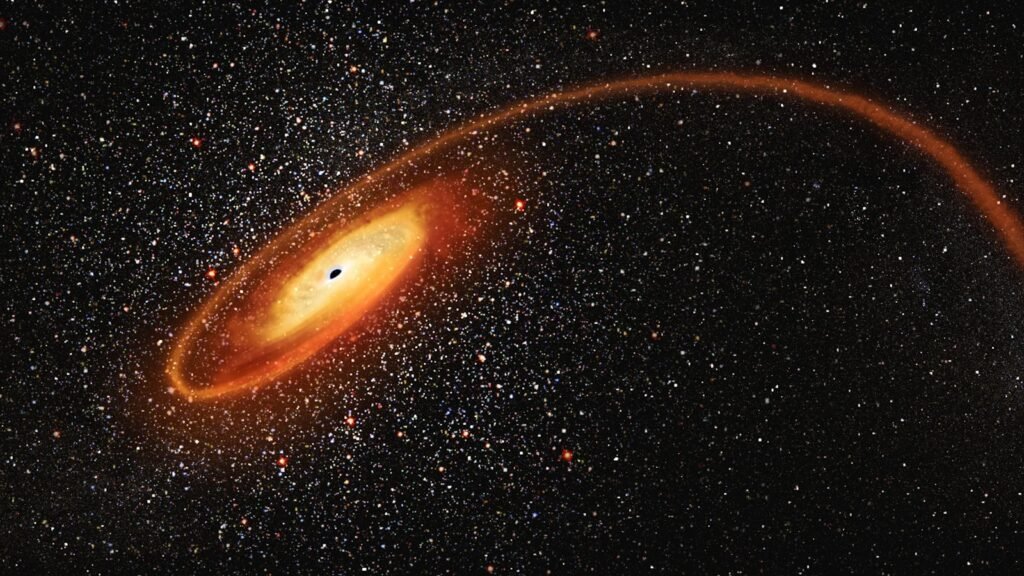

For decades, black holes have been cast as the ultimate full stop of the universe: regions where gravity wins, light loses, and everything ends in silence. Now, a new set of theories is rewriting that script, suggesting black holes might be less like cosmic trash compactors and more like tunnels or gateways that reshape information rather than destroy it. At stake is not just the fate of matter falling in, but our entire understanding of space, time, and what it means for information to “exist.” As physicists revisit old paradoxes with fresh tools – from quantum information theory to exotic simulations of space-time – they are discovering possibilities that sound closer to science fiction than sober mathematics. Yet these ideas are emerging from serious peer‑reviewed work, forcing scientists to confront a wild question: what if a black hole’s edge is not a final boundary, but the entrance to somewhere – or something – else?
The Hidden Clues at the Edge of the Abyss
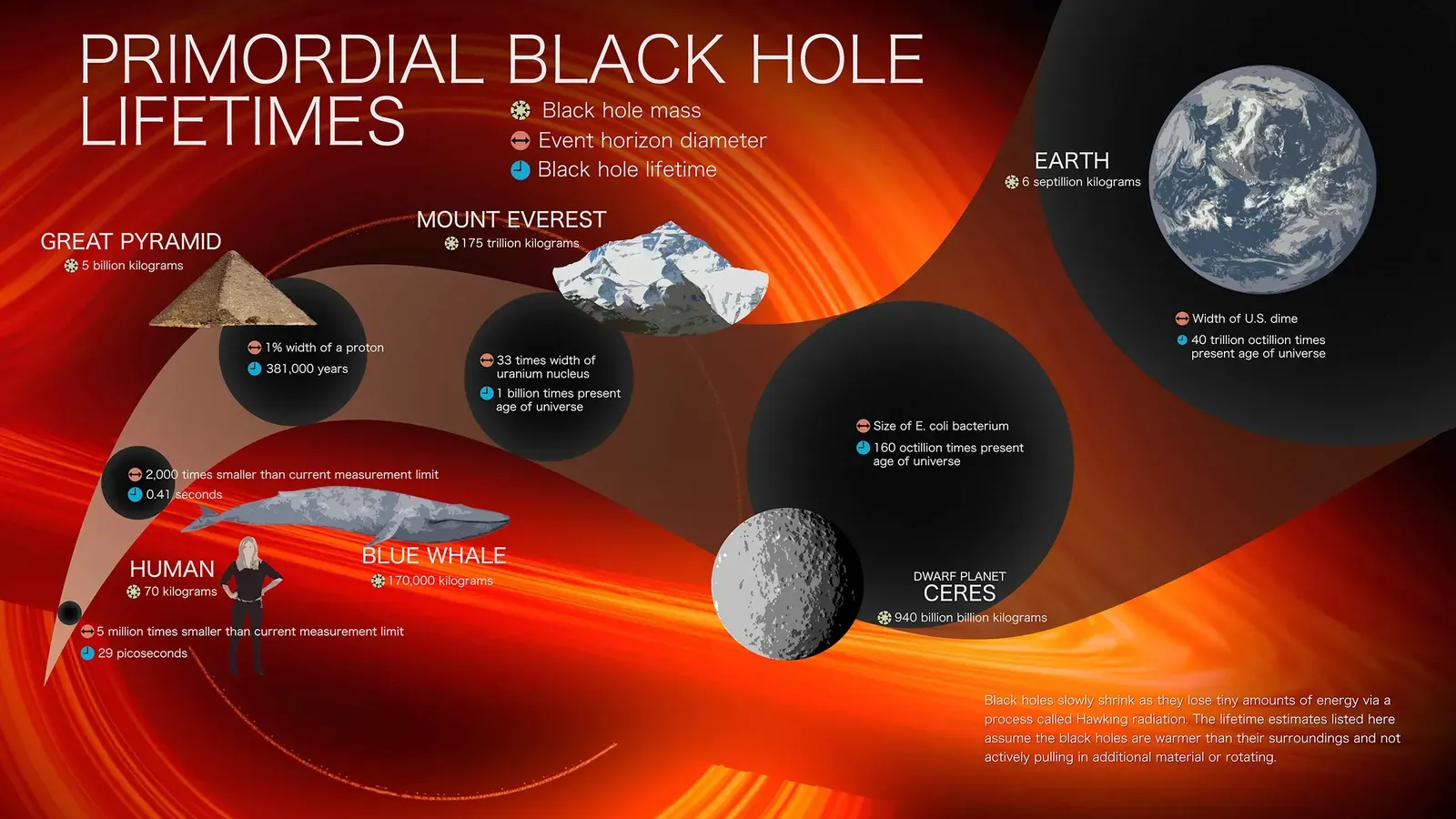
One of the most surprising clues that black holes might not be true dead ends comes from their edges, the so‑called event horizons. In classical physics, anything crossing this invisible boundary is gone for good, but quantum theory refuses to accept that information can simply vanish. Over the past few years, theorists have been exploring the idea that information about everything that falls in may be subtly encoded on the horizon itself, like an ultra‑compressed holographic skin. This picture suggests black holes are less like pits and more like strange, warped storage devices with mind‑bending capacity. The thought that every star, planet, or cloud that ever crossed the horizon leaves some kind of “imprint” challenges our old mental image of a simple gravitational sink.
Some models go further, proposing that the event horizon might be a dynamic, quantum‑fuzzy surface rather than a clean boundary. In these frameworks, infalling particles do not just disappear but become tangled in webs of quantum correlations that theoretically could be recovered, at least in principle. The details are brutally hard mathematics, but the implication is almost poetic: the universe has a better memory than we gave it credit for. Instead of a blank nothingness beyond the horizon, there might be a kind of hidden ledger, silently keeping track of everything that ever fell in. If that ledger exists, then the word “end” starts to look premature.
From Cosmic Graveyards to Possible Gateways
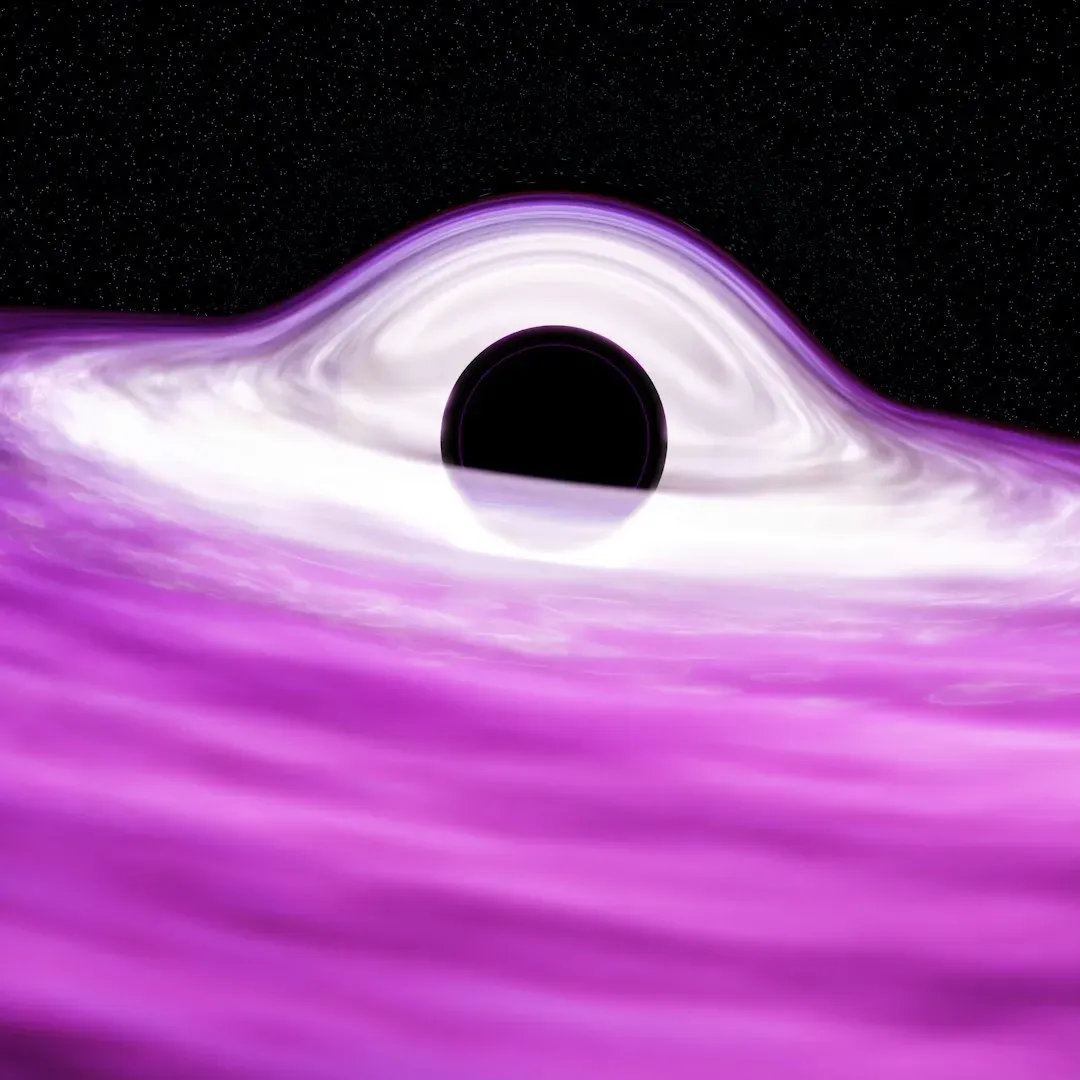
Gateway theories start with a bold reframing: what if a black hole’s interior curves space‑time so violently that it connects distant regions of the universe, or even different universes entirely? Solutions to Einstein’s equations have long allowed for wormhole‑like structures, and some modern ideas suggest certain black holes might resemble one half of such a bridge. In these models, matter crushed at the core is not annihilated in an absolute sense, but redirected along hidden geometric pathways. To an outside observer, the black hole still looks like a one‑way drop, yet the underlying structure could be more like a tunnel than a wall. It is a bit like discovering that a supposedly sealed cave, if mapped carefully, actually opens onto another valley on the far side of a mountain range.
Recent work in quantum gravity has tried to merge this wormhole picture with information‑preserving ideas from quantum computing. Some theories imagine paired black holes related through deep quantum entanglement, forming effective bridges in the fabric of space-time. In that view, what falls into one black hole might, under highly idealized conditions, be recoverable from another, not by sending a physical traveler through but via a transformation of information. No one is suggesting we are about to toss a spacecraft into Sagittarius A* and have it pop out of a twin, but the mathematics alone is a radical shift from the old “nothing escapes” dogma. Even if real astrophysical black holes never form stable, traversable gates, treating them as potential connectors rather than dead ends is already reshaping the questions scientists ask.
How Quantum Paradoxes Forced a Rethink
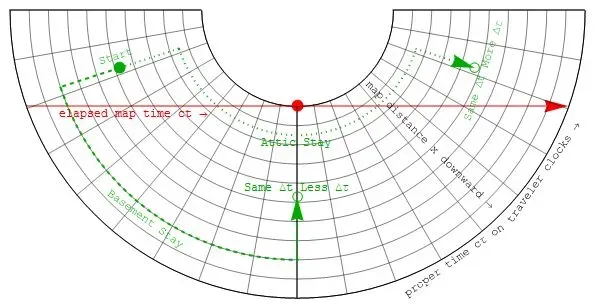
The push toward gateway‑style thinking did not come from daydreaming, but from a crisis: the black hole information paradox. When researchers realized that black holes slowly evaporate through Hawking radiation, they ran headlong into a conflict between general relativity and quantum mechanics. If radiation is purely random, then information about what fell in appears erased when the black hole finally disappears, something quantum theory insists cannot happen. For years, this paradox looked like a stalemate, with some proposals so extreme they implied we needed to abandon cherished principles of physics. That sense of being stuck pushed scientists to search for more radical structures inside and around black holes.
Out of that tension emerged concepts like holographic duality, where a higher‑dimensional gravitational system can be fully described by a lower‑dimensional quantum theory with no gravity. In that framework, a black hole corresponds to a complex quantum system that never truly loses information, even when the gravitational picture suggests otherwise. This dual view has opened the door to treating space‑time connections – wormholes, bridges, shortcuts – as manifestations of deep quantum entanglement. The paradox that once looked like a breakdown in physics is now driving some of the most creative work in theoretical science. Paradox, in other words, has turned into a portal of its own.
The Hidden Clues from Real Black Holes in the Sky
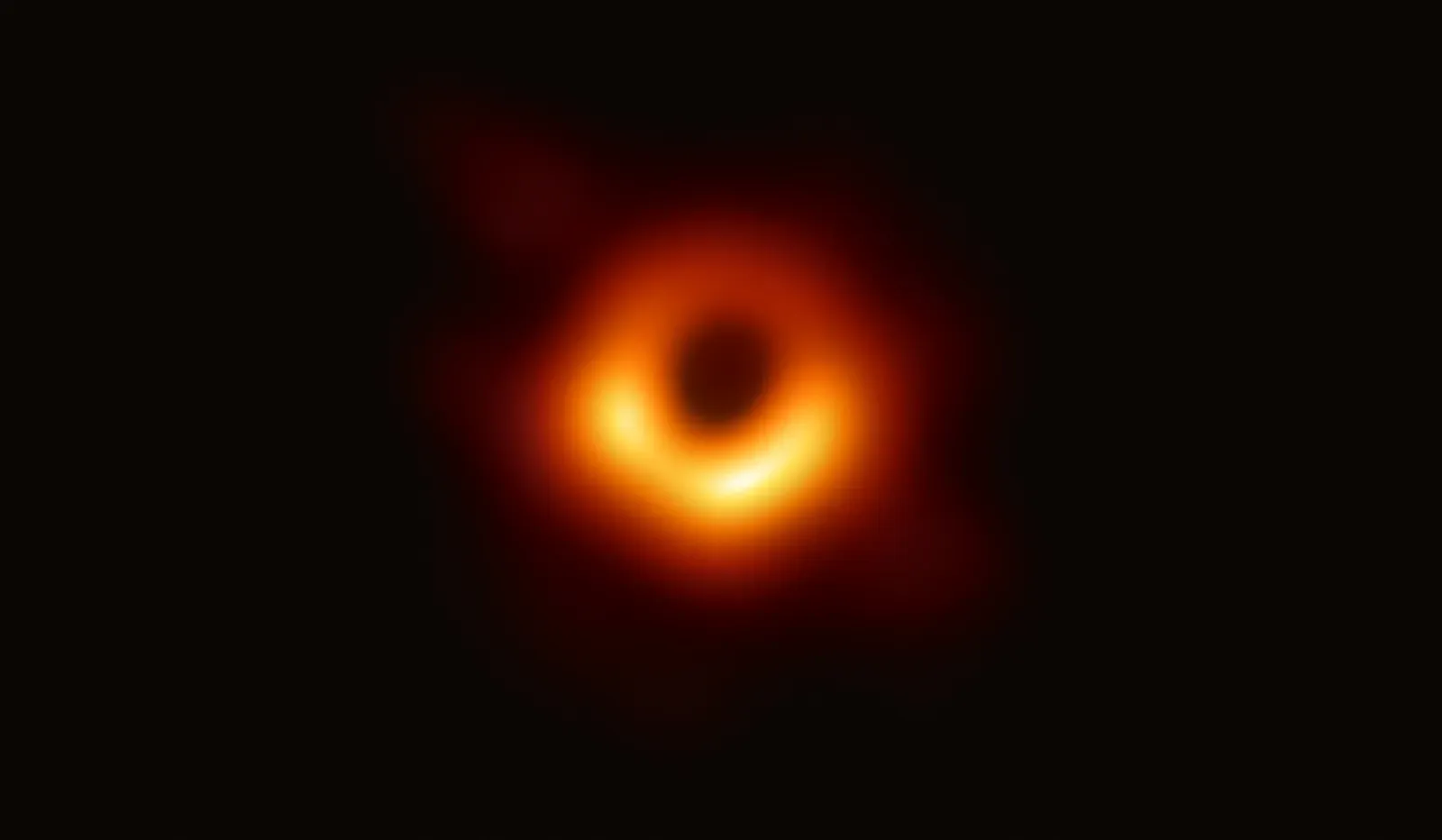
While much of the gateway discussion lives in equations, astronomers are quietly gathering data that constrain which ideas can survive. Images from the Event Horizon Telescope, for instance, show black holes ringed by glowing, swirling matter, confirming many predictions of Einstein’s theory with eerie precision. The timing of X‑ray flares, the motion of stars whipping around central black holes in galaxies, and ripples in space‑time from black hole mergers all give physicists new test beds. Every successful match between observation and theory tightens the leash on more speculative models while still leaving room for surprising interior structures. The universe is essentially letting theorists know where they can be wild and where they absolutely cannot cheat.
Even more tantalizing are hints buried in the details of gravitational wave signals. Some researchers have suggested that very subtle “echoes” in those waves – tiny after‑tremors following the main ringdown of a merger – could reveal exotic physics at or near the horizon. So far, the evidence is suggestive at best, and many experts remain skeptical, but the mere possibility pushes instrument builders to squeeze more sensitivity out of their detectors. If any deviation from classic black hole behavior is ever confirmed, it would be a seismic moment for physics, as if the universe had just cracked open the door to its backstage. Until then, researchers are left in an odd position: building increasingly precise machines to test ideas that sound almost fantastical.
Why It Matters: Gateways, Information, and Our Place in the Cosmos
On the surface, whether black holes are gateways or dead ends might seem like an abstract quarrel between theorists with too much chalk dust on their sleeves. In reality, the stakes are enormous, because the answer reaches into almost every corner of fundamental physics. The nature of black holes affects how we understand the Big Bang, the ultimate fate of the universe, and the deep relationship between gravity and quantum mechanics. If information is preserved through some kind of gateway‑like process, it would support the idea that the universe is, at its core, lawful and continuous, even in its wildest extremes. That runs counter to the older impression of black holes as cosmic shredders where meaning goes to die.
There is also a more personal, almost philosophical thread running through this debate. Humans have a habit of assuming limits are absolute until we discover they are not – whether it is the sound barrier, the speed of travel across oceans, or the visibility of distant galaxies. Recasting black holes from tombstones to portals fits that broader story, suggesting that what looked like an ultimate boundary may instead be a doorway to deeper understanding. It does not mean science will ever turn black holes into transportation hubs, but it does mean our mental map of the universe is less claustrophobic than we once feared. For many researchers, that shift in perspective alone is reason enough to care about the answer.
How New Tools Are Turning Theory into Testable Science
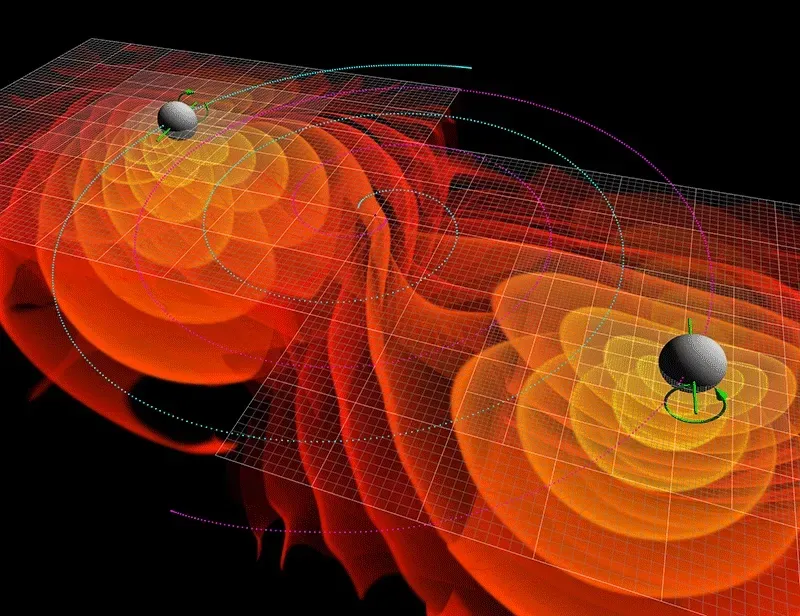
One of the most encouraging trends in black hole research is how quickly wild‑sounding ideas are being translated into concrete predictions. Supercomputer simulations now let scientists evolve realistic black hole mergers and accretion disks, tracking how light and gravitational waves should emerge. These models can fold in elements of exotic physics – such as modified horizons or new particle fields – and show how they would subtly tweak what telescopes and detectors see. Instead of arguing in the abstract about gateways versus dead ends, teams can now ask a sharper question: if a given gateway model is true, what exact signal should we look for in the next round of observations? That is the kind of question astronomy loves to answer.
At the same time, techniques from quantum information science are sneaking into black hole theory in a surprisingly practical way. Researchers use tools originally developed for error‑correcting codes and quantum computers to think about how information might be scrambled, stored, and eventually released by black holes. In a very real sense, black holes are being treated like the universe’s most extreme data centers, pushing our concepts of memory and processing to the limit. This cross‑pollination has already led to new mathematical correspondences that link quantum entanglement webs to geometric features of space‑time. For a field that once seemed trapped in unsolvable paradoxes, the chance to turn philosophical puzzles into measurable physics feels like a breakthrough in itself.
The Future Landscape: From Thought Experiments to Cosmic Laboratories
Looking ahead, the next decade of black hole science is likely to feel like moving from a grainy black‑and‑white broadcast to high‑definition color. Planned upgrades to gravitational wave observatories promise to catch many more mergers, with finer detail in their ringdown phases where exotic physics might lurk. New radio arrays and space‑based telescopes will sharpen images of event horizons and probe the environments of black holes across cosmic history. Each additional data set offers another chance for a gateway‑style prediction to either shine or be quietly ruled out. Theories that survive that onslaught of evidence will earn the right to be taken very seriously indeed.
Of course, huge challenges remain. Some of the most eye‑catching gateway models require conditions or symmetries that may never occur in the messy universe we actually inhabit. Others flirt with ideas that border on untestable, and scientists are rightly wary of straying too far from what observations can ever confirm. Still, the global effort is impressive: physicists, astronomers, and quantum information experts are turning black holes into the ultimate interdisciplinary project. Whether the final answer is a prosaic confirmation of classic horizons or a more exotic, gateway‑like picture, we will have learned an enormous amount about how reality knits itself together. In that sense, the journey may matter as much as whatever we find at the end – or the other side – of the tunnel.
How Curious Minds Can Engage with the New Black Hole Story
For non‑scientists, the idea of black holes as potential gateways can feel both thrilling and completely out of reach, but there are surprisingly concrete ways to plug in. Public data releases from major observatories mean that motivated amateurs can explore real gravitational wave events, black hole images, and simulation outputs with accessible tools. Supporting science journalism, planetariums, and outreach programs also helps keep nuanced discussions of these ideas in the public sphere, rather than leaving them buried in specialist conferences. Even something as simple as following mission updates and reading explanations from working researchers can sharpen your intuition about what is genuinely possible and what is speculative gloss. Curiosity, in this arena, is not just welcome – it is fuel.
On a more personal note, I still remember the first time I saw a simulated fly‑through of space curving around a black hole, and how it felt like someone had quietly turned the universe inside out. That sense of vertigo has only grown as gateway theories have migrated from the fringes toward the center of serious debate. Engaging with these ideas – asking hard questions, demanding evidence, but staying open to surprises – is one small way to be part of a story that stretches far beyond any one lifetime. You do not need a PhD to appreciate the audacity of testing whether nature builds cosmic doorways where we once imagined only walls. In the end, perhaps the most important gateway black holes offer is not to another universe, but to a deeper kind of wonder about this one.
Suhail Ahmed is a passionate digital professional and nature enthusiast with over 8 years of experience in content strategy, SEO, web development, and digital operations. Alongside his freelance journey, Suhail actively contributes to nature and wildlife platforms like Discover Wildlife, where he channels his curiosity for the planet into engaging, educational storytelling.
With a strong background in managing digital ecosystems — from ecommerce stores and WordPress websites to social media and automation — Suhail merges technical precision with creative insight. His content reflects a rare balance: SEO-friendly yet deeply human, data-informed yet emotionally resonant.
Driven by a love for discovery and storytelling, Suhail believes in using digital platforms to amplify causes that matter — especially those protecting Earth’s biodiversity and inspiring sustainable living. Whether he’s managing online projects or crafting wildlife content, his goal remains the same: to inform, inspire, and leave a positive digital footprint.