
You tend to imagine cosmic disasters as sudden, explosive events: a star going supernova, an asteroid slamming into a planet, a black hole tearing something apart. But the biggest transformation facing your home galaxy is almost painfully slow. Long before humans walked the Earth, before the dinosaurs, even before complex life crawled out of ancient seas, the Milky Way and the Andromeda galaxy were already locked in a quiet, relentless gravitational dance that is still shaping both galaxies today.
When you hear that Andromeda will collide with the Milky Way in several billion years, it sounds like a problem for some unimaginably distant future. The twist is that the “collision” is not a single moment at all. It is a process that has been unfolding for billions of years, and you are living in the middle of it. Once you understand how subtle and far-reaching gravity is on galactic scales, you start to see this not as doom, but as one of the most beautiful, slow-motion works of art the universe has ever produced.
You Are Already Inside the Gravitational Pull of Andromeda
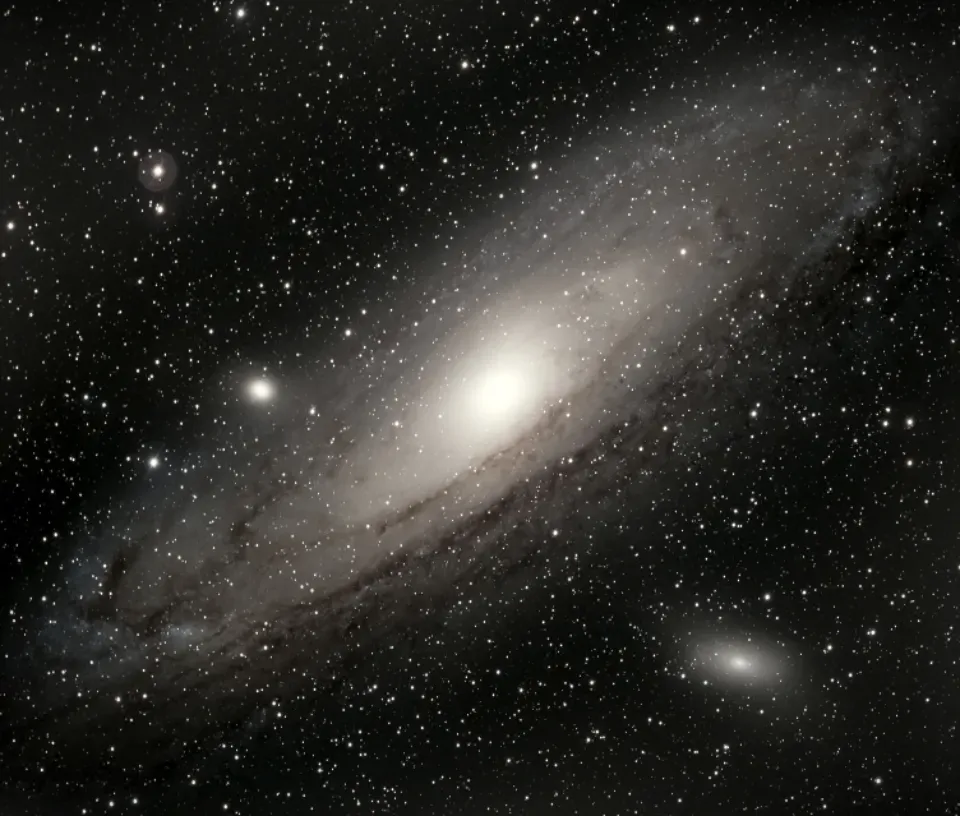
Even though Andromeda sits more than two million light-years away, you are not outside its influence. You are inside it. Gravity never really stops; it just gets weaker with distance. Because the Milky Way and Andromeda are both enormous, their gravitational “reach” extends far beyond the bright disks you see in photos. Long before telescopes existed, and long before humans, both galaxies were already feeling each other’s tug across the cosmic void.
If you could suddenly turn off every other source of gravity in the universe and leave only the Milky Way and Andromeda, nothing about their motion would surprise you: they’d still be on a collision course. That is how dominant their mutual pull is. You can think of it like two massive cargo ships far out at sea. They may be separated by many kilometers, but once their hulls start drawing water toward each other, their paths are already entangled, even if the actual impact will not happen for a very long time.
The Local Group: Your Small, Gravitationally Bound Island in Space
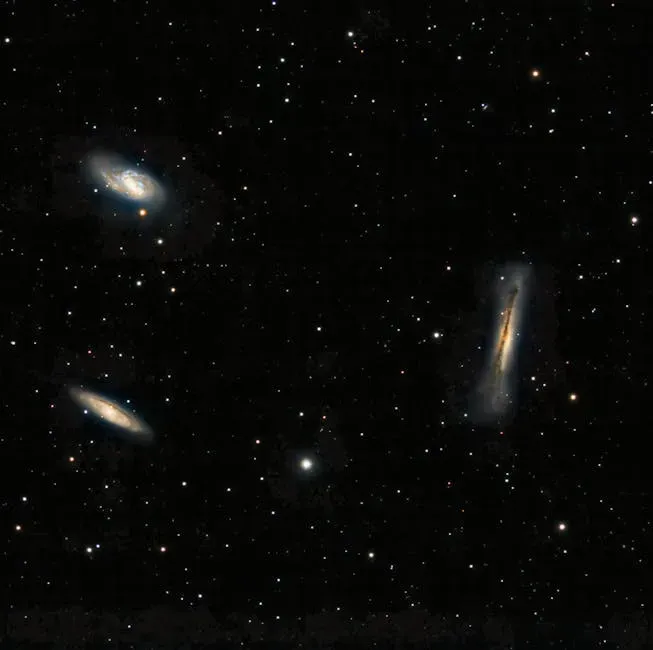
You and Andromeda do not live alone in space. You are part of a small gravitational family of galaxies called the Local Group. This group includes the Milky Way, Andromeda, the Triangulum Galaxy, and dozens of dwarf galaxies. All of them are moving through space, but they are not drifting apart with the general expansion of the universe the same way very distant galaxies are. Instead, their mutual gravity has won. On these scales, the expansion of space is no longer the boss; gravity is.
Once you realize this, the coming merger feels less like a random accident and more like the inevitable next chapter of a long-running story. The Local Group is like a cluster of leaves swirling in a slow eddy while the rest of the river flows past. You, the Milky Way, and Andromeda are stuck in this whirlpool together. Over cosmic time, smaller galaxies fall in, stars are stripped from their homes, and the two giants at the center of it all spiral closer, rearranging the entire neighborhood as they go.
You Can Already Measure Andromeda Rushing Toward You
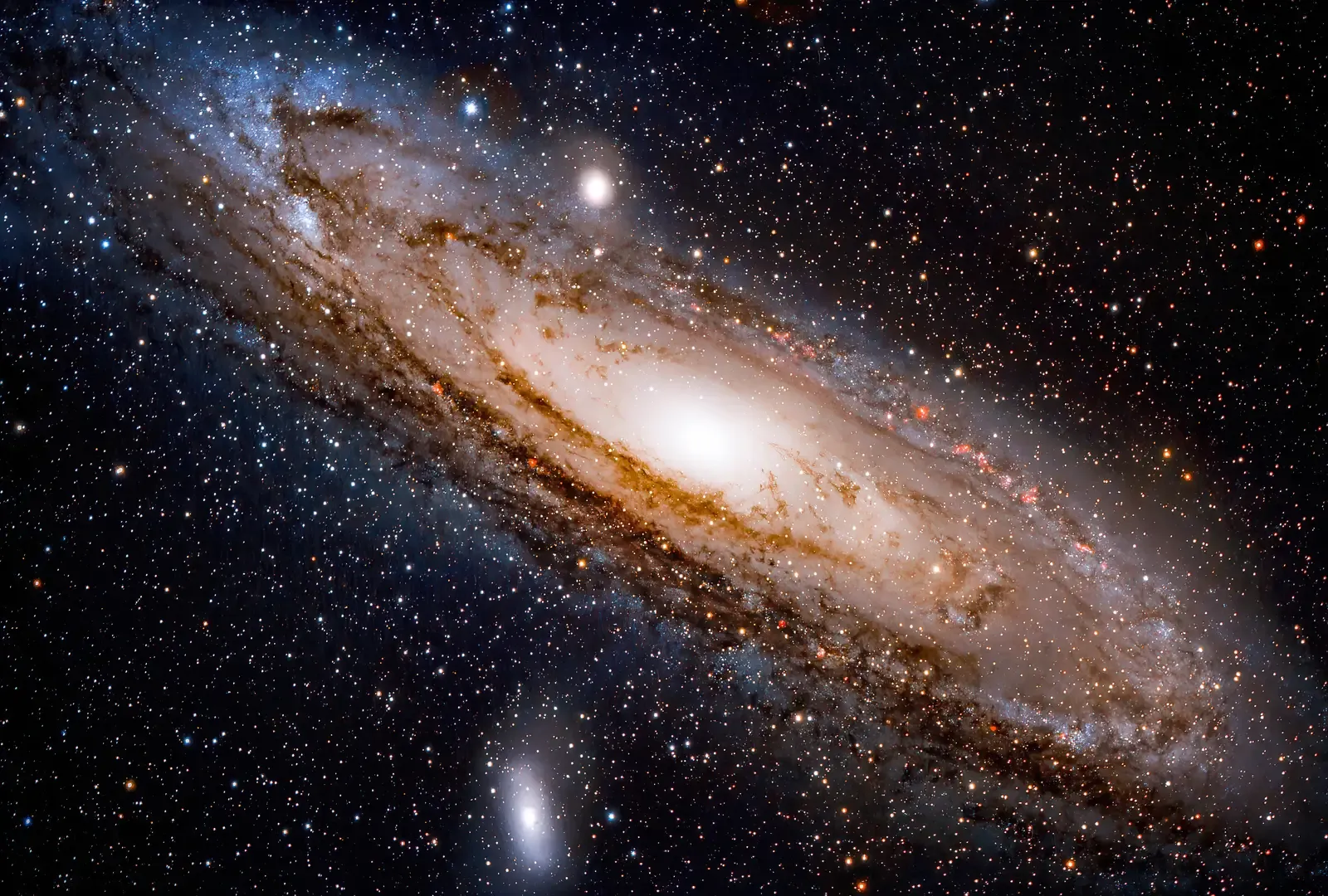
This merger stops being abstract the moment you look at the numbers. When astronomers split Andromeda’s light into its colors, they see that its spectrum is shifted toward the blue end. For you, that means Andromeda is moving toward the Milky Way rather than away, and it is doing so at hundreds of kilometers per second. Every second, the distance between the two giant galaxies shrinks by a tiny fraction, but add that up over millions of years and you get a dramatic inward plunge.
What makes this even more striking is that Andromeda is one of the rare big galaxies in your sky that is actually approaching. Most distant galaxies are receding as space expands, but your two heavyweights are so close and so massive that gravity can overpower that expansion locally. It is like throwing two magnets onto a stretched rubber sheet. The sheet keeps trying to pull them apart, but if the magnets are strong enough and close enough, they still snap together in the end.
The Merger Started Long Before You, and It Is Already Reshaping Both Galaxies
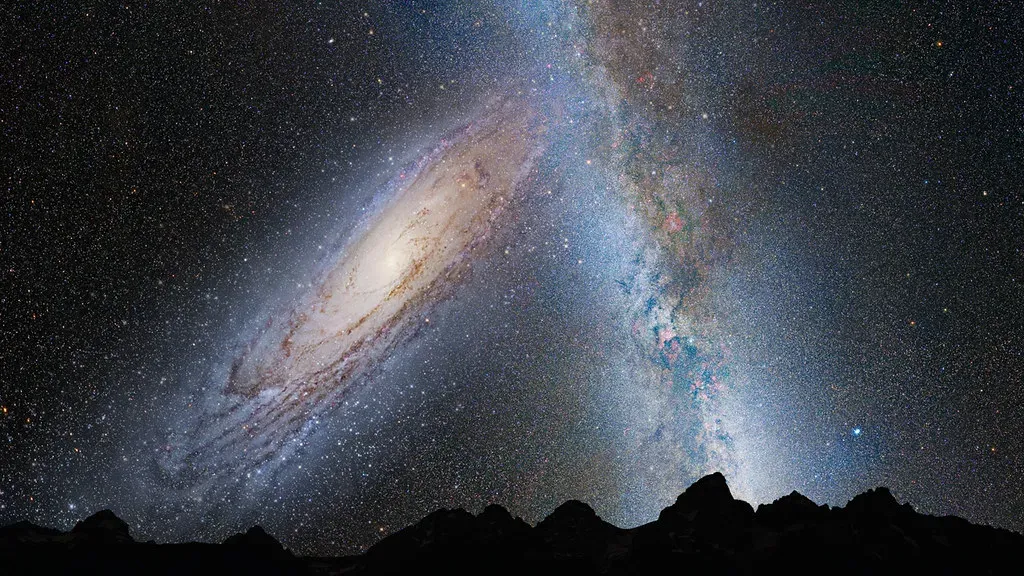
If you try to pin down the exact “start date” of the Milky Way–Andromeda merger, you will not find one. The moment their mutual gravity began significantly altering their paths, the process had begun, and that was billions of years ago. By the time life started flourishing on Earth, the galaxies were already slowly curving toward one another, like two dancers who have seen each other across the room and are gradually weaving through the crowd to meet in the middle.
Over such vast time spans, this steady pull can subtly stretch and distort the outskirts of each galaxy. Stars and clouds of gas in the far outer halos feel the combined gravity of both systems. Some orbits get gently reshaped, some small satellites get deflected or captured. Even before the disks touch, invisible tides are at work, like a distant moon raising tiny bulges in an ocean that no one is watching closely enough to see in real time.
Your Night Sky Will Eventually Transform, but Not in a Violent Flash
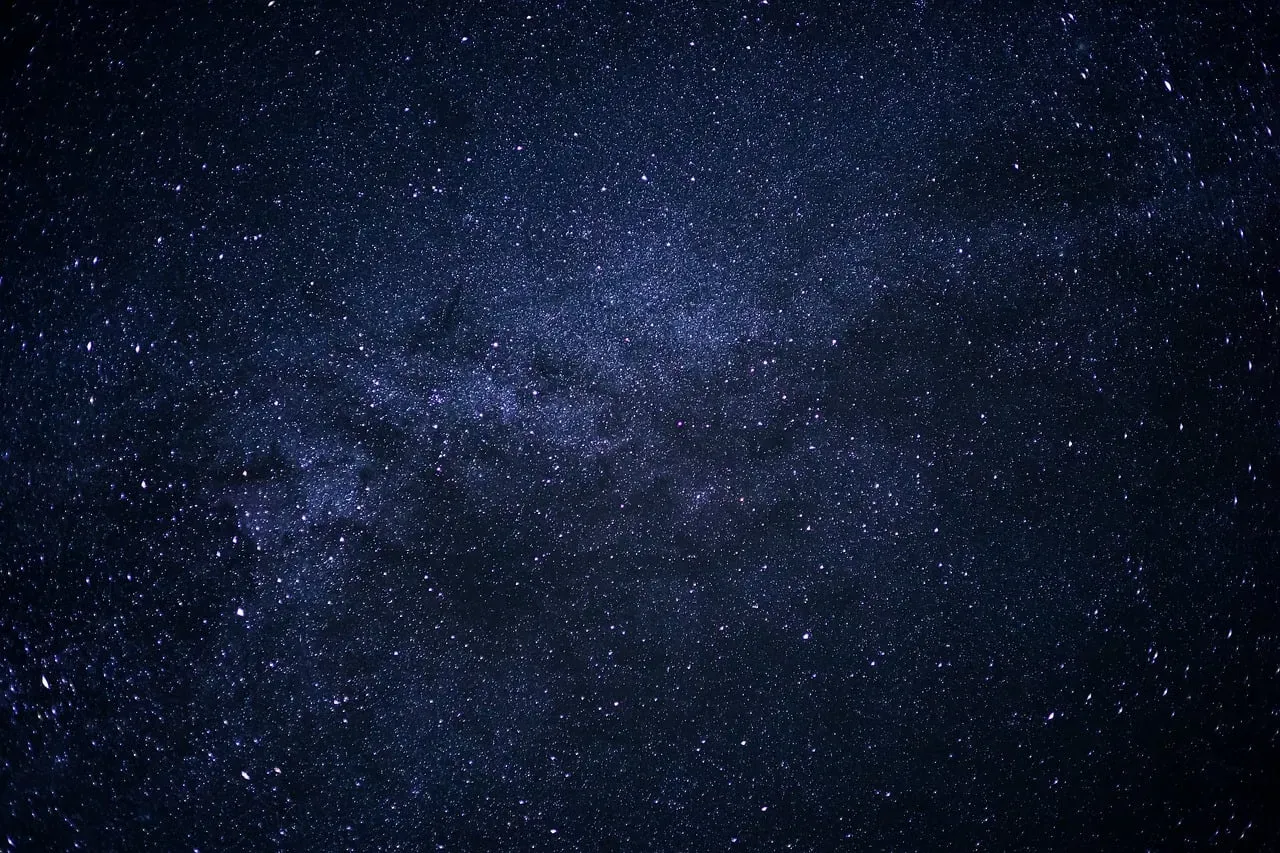
When you hear “galactic collision,” your first mental image might be exploding stars and shredded solar systems. Reality is weirder and more calming. On the scale of galaxies, stars are tiny and widely spaced. If your Sun were the size of a pea, the nearest star would be another pea tens to hundreds of kilometers away. That means that even when the Milky Way and Andromeda’s disks overlap, the chance that your Sun physically hits another star is incredibly small.
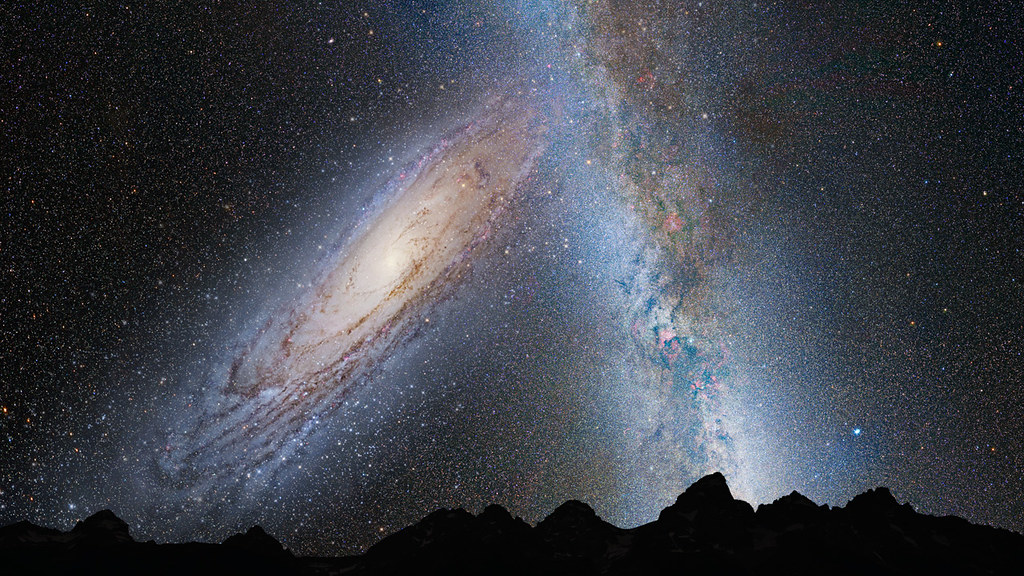
The big changes you would notice, if you could survive for billions of years, would happen in the sky, not right next door. As Andromeda approaches, it will grow from a faint smudge into a vast, bright swirl that rivals or exceeds the Milky Way’s band across the night. Over time, the two disks will appear to interlace, then blend, then settle into a new, more rounded galaxy. To you, it would feel less like a sudden impact and more like living under a slowly evolving painting that keeps being redrawn across the heavens.
The Final Galaxy Will Be Very Different From the Milky Way You Know
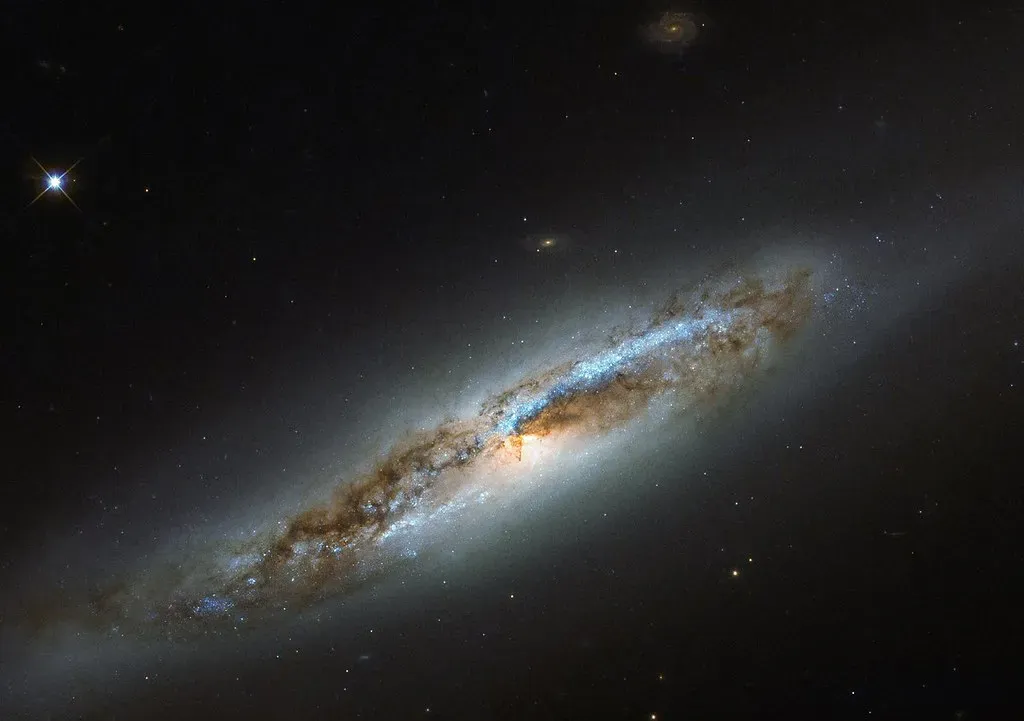
Eventually, the mutual pull of the Milky Way and Andromeda will cause them to merge into a single, larger galaxy. From simulations, you can expect the graceful spiral structures you know today to be heavily disrupted. Instead of tidy spiral arms, the final product is likely to be a more ellipsoidal or lentil-shaped system, sometimes called a giant elliptical or a mixed “milkomeda” style galaxy. The exact outcome depends on details like angles, relative speeds, and how much gas each galaxy still has to fuel new stars.
As the cores sink together, their central black holes will also spiral inward and eventually combine, releasing an enormous burst of gravitational waves. You will not feel this locally as destruction, but it is a powerful reminder that the center of the new galaxy will be fundamentally different from either original. Orbits of stars will be scrambled, stellar neighborhoods will be rearranged, and the Milky Way’s familiar structure will be gone, replaced by something new that still preserves all the mass and history, just in a different, more mixed-up form.
Your Solar System’s Fate in the Merger Is Surprisingly Calm
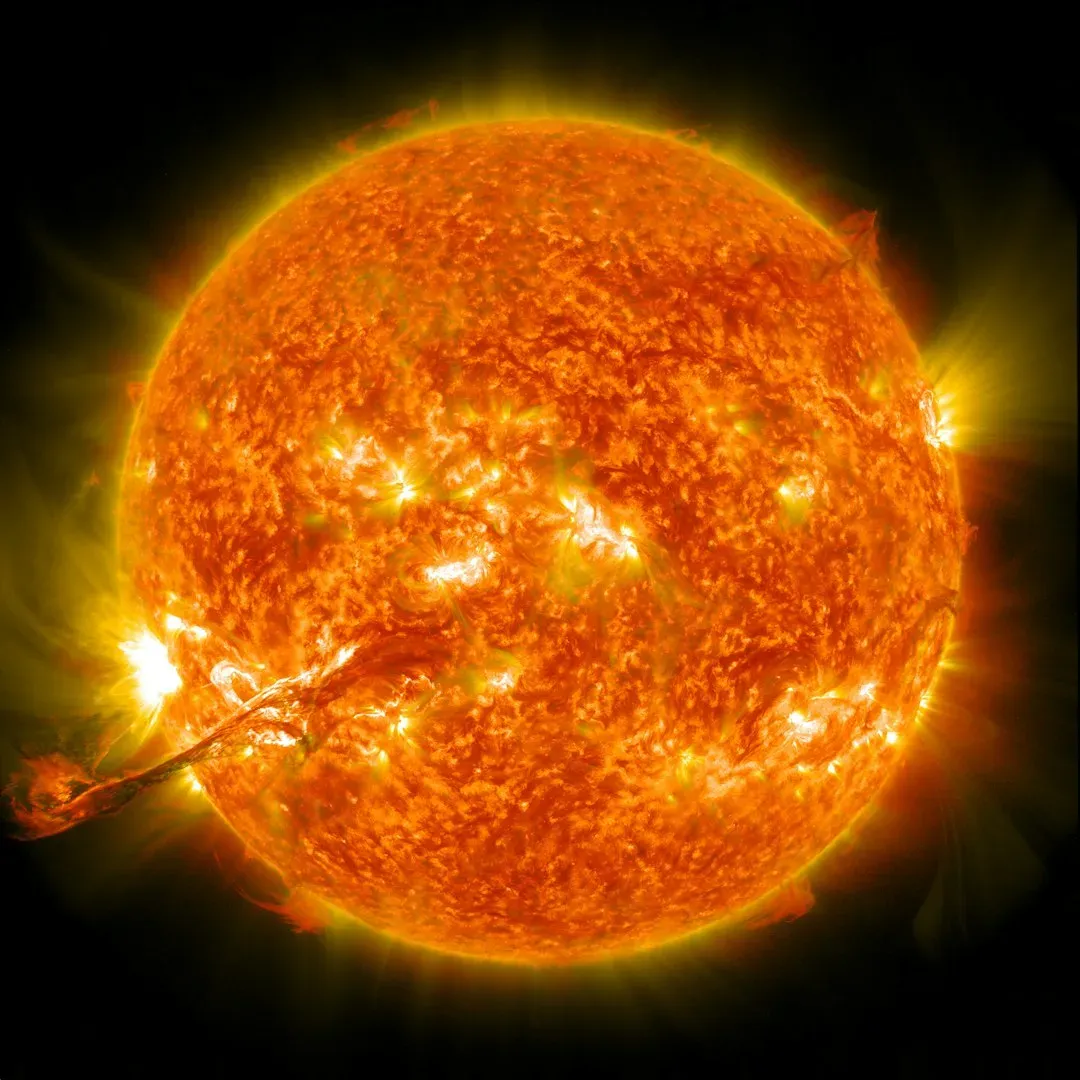
The part of this story that hits closest to home is what happens to your own solar system. The most likely outcome is that the Sun will not collide with anything, but its orbit around the galactic center will be altered by the changing mass distribution. It might get flung farther out into the new galaxy’s outskirts, or draw closer in, or end up on a more elongated path. On human scales, this sounds dramatic, but on stellar scales, it is basically a gentle reshuffling rather than a catastrophic evasion scene.
By the time the merger is reaching its most intense phases, the Sun will already be nearing the end of its life, gradually growing brighter and larger. Long before the final galactic structure settles, your home planet will likely be uninhabitable due to changes from your own star, not from passing galaxies. In a sense, the big drama of the merger mostly plays out in the background compared to the changes the Sun itself will impose on you. The universe loves long, overlapping timelines, and your story is embedded in several at once.
Why This Slow-Motion Collision Changes How You See the Universe
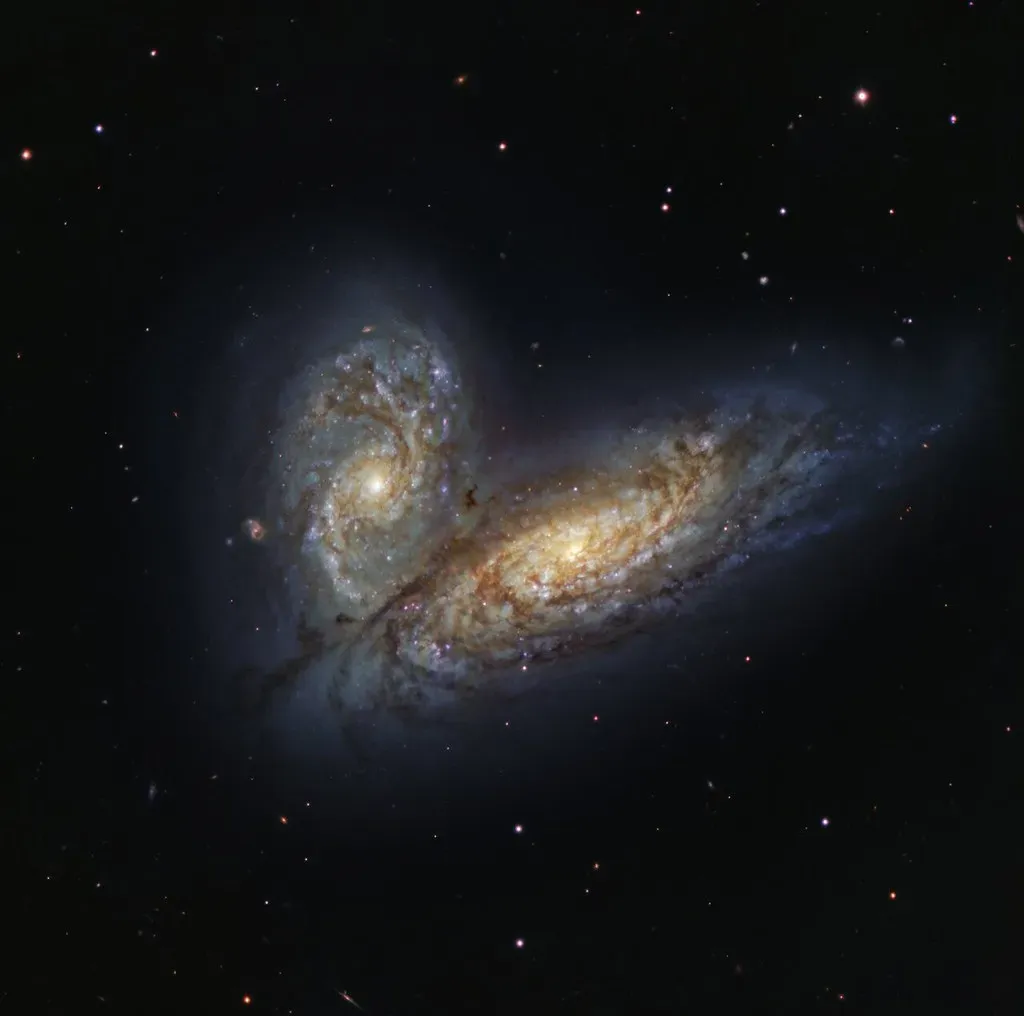
Knowing that the Milky Way–Andromeda merger is already underway shifts how you think about cosmic events. You are not waiting for something to start; you are living inside a process that has been unfolding since before your species appeared and will keep going long after your planet is gone. It turns “someday” into “already,” and forces you to appreciate that some of the most important transformations in the universe are too slow for any single lifetime to witness fully.
It also gives you a humbling sense of connection. The starlight you see when you look up is not just a static backdrop. It is part of a vast system in motion, curving under the influence of another giant galaxy you can just barely spot with your eyes under dark skies. You are not simply in the Milky Way. You are in a changing, interacting pair of galaxies on their way to becoming something entirely new.
When you put all of this together, the coming Milky Way–Andromeda merger stops feeling like a distant sci-fi plot and starts looking like the natural next chapter in your galaxy’s life story. You are already inside the gravitational handshake, the first acts of the collision are long past, and what you call the Milky Way is just one phase in a much longer evolution. The universe, it turns out, is patient to a degree your instincts can barely grasp.
So the next time you see Andromeda as a faint smudge in the sky, you are not just looking at a neighbor. You are looking at a partner that has been slowly pulling you in for billions of years, and will eventually join with your galaxy to create something entirely different. Does it change how you feel about your place in the universe to know that the biggest event in your galaxy’s future has already quietly begun?