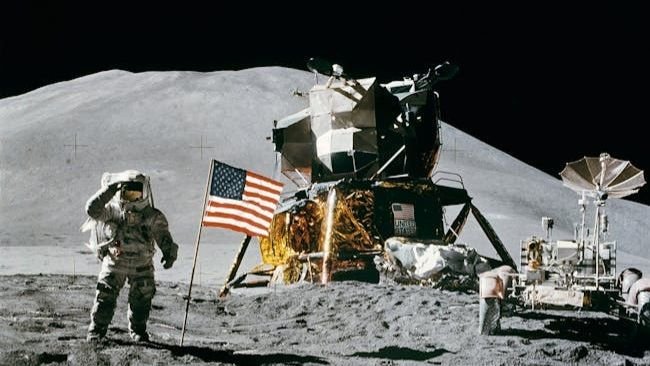

Humanity has not set foot on the Moon since December 1972. That is over five decades of silence, of footprints left undisturbed in lunar dust, of a chapter that seemed permanently closed. Yet here we are, in 2026, watching that chapter crack open again with a kind of urgency and ambition that the original Apollo era never quite carried.
The Artemis program is not simply a repeat performance. It is something far more layered, more complex, and honestly more exciting than a nostalgia trip to a familiar destination. What NASA and its international partners are building toward goes well beyond a flag-and-footprints moment. So let’s dive in.
A New Era Built on Old Footsteps
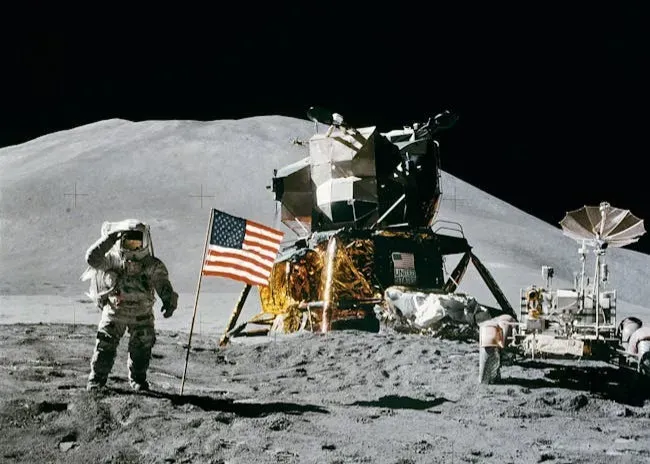
Here’s the thing about the Artemis missions that often gets lost in the headlines: they are not about proving we can go back. We already know we can. The real ambition is about staying. NASA’s vision involves building a sustained human presence near and on the Moon, using it as a proving ground for the technologies and systems that will eventually carry humans to Mars.
Think of it like learning to camp in your backyard before attempting a cross-country wilderness trek. The Moon, relatively close and at least partially understood, becomes the ultimate training ground.
The program draws its name from the twin sister of Apollo in Greek mythology, a deliberate and symbolic choice. It signals from the start that this effort is broader, more inclusive, and more forward-thinking than its predecessor.
The Artemis Timeline and What Has Actually Happened So Far
Artemis I launched successfully in November 2022, sending the uncrewed Orion spacecraft on a loop around the Moon and back. It was a critical test of the Space Launch System, the most powerful rocket NASA has ever built, and it performed remarkably well. That mission alone reignited something in public consciousness that had gone quiet for a long time.
Artemis II, the first crewed flight around the Moon, has been a mission in preparation with a crew of four astronauts, including Canadian astronaut Jeremy Hansen and NASA astronauts Reid Wiseman, Victor Glover, and Christina Koch. The mission represents the first time humans will travel to lunar distance since Apollo 17 in 1972.
Artemis III is where things get truly historic. It is planned to land astronauts near the lunar south pole, a region that has never been visited by any human being. The south pole is scientifically compelling precisely because it holds water ice in permanently shadowed craters, a resource that could be a game-changer for long-duration exploration.
Why the Lunar South Pole Changes Everything
Honestly, if you asked most people to point to the most interesting part of the Moon, they would probably gesture vaguely at the middle. The south pole is where the real story is hiding. Permanently shadowed regions there have temperatures cold enough to preserve water ice for billions of years, and confirmed water ice means confirmed possibility of producing rocket fuel, breathable oxygen, and drinking water directly on the Moon.
This is the concept of in-situ resource utilization, or ISRU, and it is central to why Artemis matters so much more than Apollo ever did in a practical sense. Apollo brought everything it needed from Earth. Artemis wants to live off the land.
The scientific potential is equally staggering. The ancient ice at the south pole could contain a preserved record of the early solar system, cometary material, and even organic compounds. Geologists are practically vibrating with anticipation at the thought of accessing that material directly.
The Humans Who Will Make History
One of the most significant commitments of the Artemis program is that it will put the first woman and the first person of color on the Moon. This is not a marketing slogan. It is a structural part of the mission design and crew selection process that reflects a genuine broadening of who gets to participate in human exploration.
Let’s be real: the Apollo astronauts were extraordinary individuals, but they were drawn from an extraordinarily narrow slice of humanity. Twelve men walked on the Moon, all of them white American males, all of them test pilots. The world has changed, and it would be jarring, even troubling, if the next generation of lunar explorers looked exactly the same.
Victor Glover, assigned to Artemis II, will become the first Black astronaut to travel to lunar distance. Christina Koch, also on that crew, previously set the record for the longest single spaceflight by a woman. These are not token selections. These are accomplished, mission-critical professionals.
Gateway: A Space Station Orbiting the Moon
Perhaps the most ambitious piece of the Artemis architecture that gets the least attention is Gateway. It is a small space station planned for lunar orbit, designed to serve as a staging point for missions to the Moon’s surface and eventually deeper into space. Gateway is being built with international partners including the European Space Agency, the Canadian Space Agency, and the Japan Aerospace Exploration Agency.
Unlike the International Space Station, Gateway will not be permanently crewed. It will be visited periodically, left in lunar orbit between missions, and gradually expanded over time. It is a fundamentally different concept in human spaceflight infrastructure.
The station would orbit in what is called a near-rectilinear halo orbit, a highly elliptical path that keeps it accessible from both Earth and the lunar surface. It sounds deeply technical, and it is, but the practical implication is elegant: a permanent outpost in lunar space that no single nation owns and no single mission requires.
The Commercial and International Dimension
Artemis is not a solo NASA mission. It involves a web of commercial partners, international agreements, and shared goals that make it structurally unlike anything attempted during the Space Race. SpaceX, for instance, was selected to provide the Human Landing System for the early Artemis lunar surface missions, specifically a lunar-adapted version of its Starship vehicle.
This reliance on commercial partners is either brilliant or risky depending on who you ask. I think it is probably both. The upside is speed and innovation. The risk is that commercial timelines and priorities do not always align with scientific or national priorities.
More than 40 countries have signed the Artemis Accords, a set of principles governing responsible behavior in space. These accords cover everything from transparency and interoperability to the peaceful use of the Moon. It is not a treaty in a formal legal sense, but it is shaping international norms in real time.
What This Moment Means for the Rest of Us
There is a generational dimension to Artemis that is easy to underestimate. The children watching these launches today are roughly the same age as the children who watched Apollo in 1969. For those kids, the Moon became a symbol of what was possible. For this generation, the possibility being offered is even larger: not just visiting, but inhabiting, not just exploring, but building.
The psychological and cultural impact of sustained human presence on the Moon is genuinely hard to predict. It may normalize space in ways that transform public investment, education, and even global cooperation. Or it may stumble under political pressures, budget cycles, and the sheer punishing difficulty of working in one of the most hostile environments in the solar system.
It is hard to say for sure which story wins out. What seems undeniable is that Artemis represents a real inflection point, a moment where humanity either commits to becoming a spacefaring civilization or retreats once more into the comfortable gravity of Earth. The footprints at Taurus-Littrow waited more than fifty years for company. Whether they get it, and how soon, may define what kind of species we choose to be.
What do you think? Is humanity finally ready to make the Moon a permanent destination, or are we still just dreaming bigger than we’re willing to commit? Drop your thoughts in the comments.