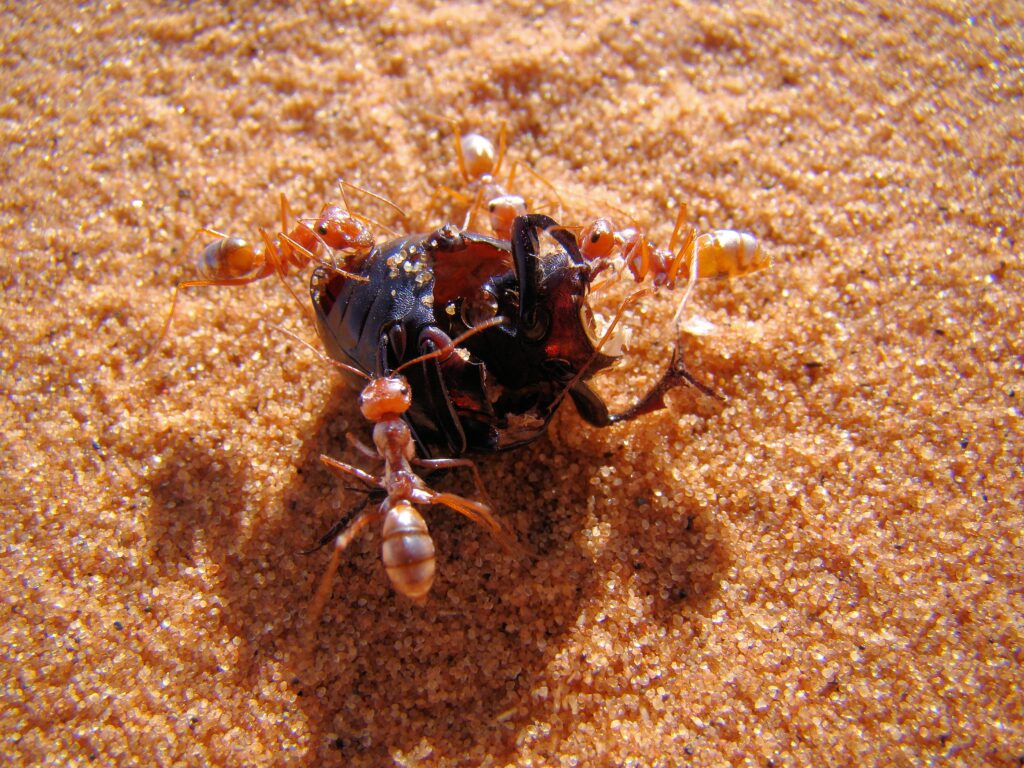
If you’ve ever complained about a hot summer sidewalk burning your feet, imagine walking barefoot on desert sand that pushes close to the limits of what life can tolerate. That’s normal life for Saharan silver ants. These tiny desert specialists race across scorching dunes in the middle of the day, at a time when most other creatures are hiding underground, and they do it without cooking alive.
What makes them so weirdly tough is not some mythical superpower, but physics and clever biology working together. Their bodies are covered in shimmering, metallic-looking hairs that act like a living climate-control system, bouncing away deadly sunlight and bleeding heat back into the air. The closer scientists look, the more these ants start to feel less like insects and more like tiny, self-cooling robots designed by nature.
A Desert Where The Ground Itself Becomes Dangerous

Picture a place where the safest strategy for most animals is simple: do not go outside. In the Sahara during midday, sand surface temperatures can soar well above typical air temperatures, turning the ground into a lethal hotplate. Many creatures survive by staying in burrows until the heat eases, emerging only in the cooler early morning or late afternoon when the risk of overheating drops.
Saharan silver ants flip that rule completely. They come out during the narrow window when desert heat is at its most brutal and predators like lizards retreat into the shade. The ants are essentially gambling that they can tolerate extreme ground temperatures just long enough to dash out, find the bodies of heat-killed insects, and get home again. It’s a lifestyle built around running right along the edge of what their bodies can withstand.
Running On The Edge Of Thermal Limits
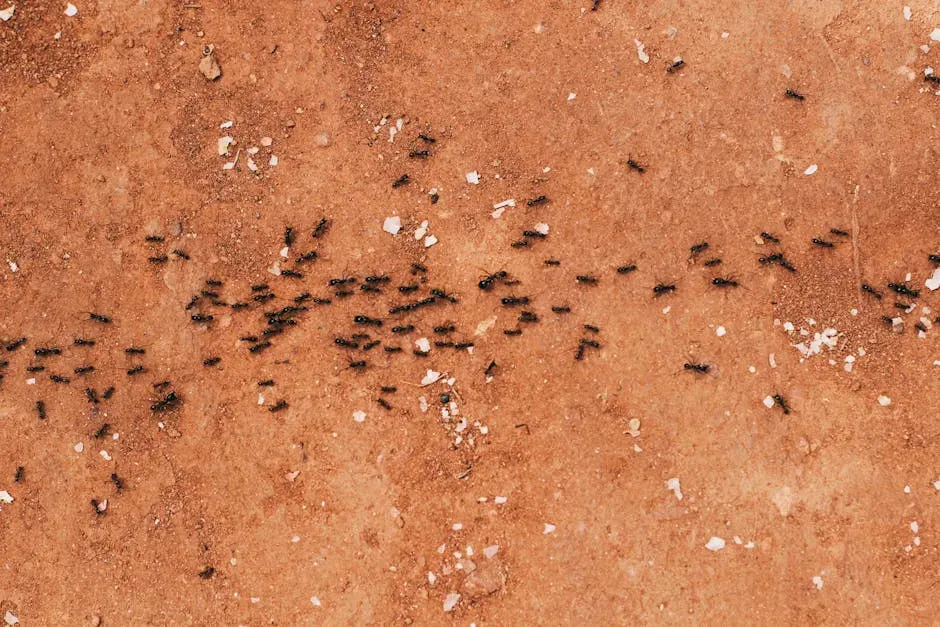
Every animal has a critical upper temperature where important proteins and cell structures start to break down, and for Saharan silver ants, that threshold is surprisingly high. Their bodies can operate near temperatures that would be catastrophic for many other insects. But “near” is the key word here; they cannot just linger indefinitely in that environment, even with special adaptations. Their survival depends on shaving off just enough heat to stay barely on the safe side.
That is where their timing and behavior become as important as their anatomy. The ants emerge when the temperature is extreme enough to sideline predators but not yet so extreme that immediate death is guaranteed. By combining a narrow foraging window with rapid movement and built-in cooling tricks, they essentially surf along their own biological red line, which is as risky as it sounds but clearly effective in the niche they occupy.
Shimmering Silver Hairs: Nature’s Built-In Sun Reflectors
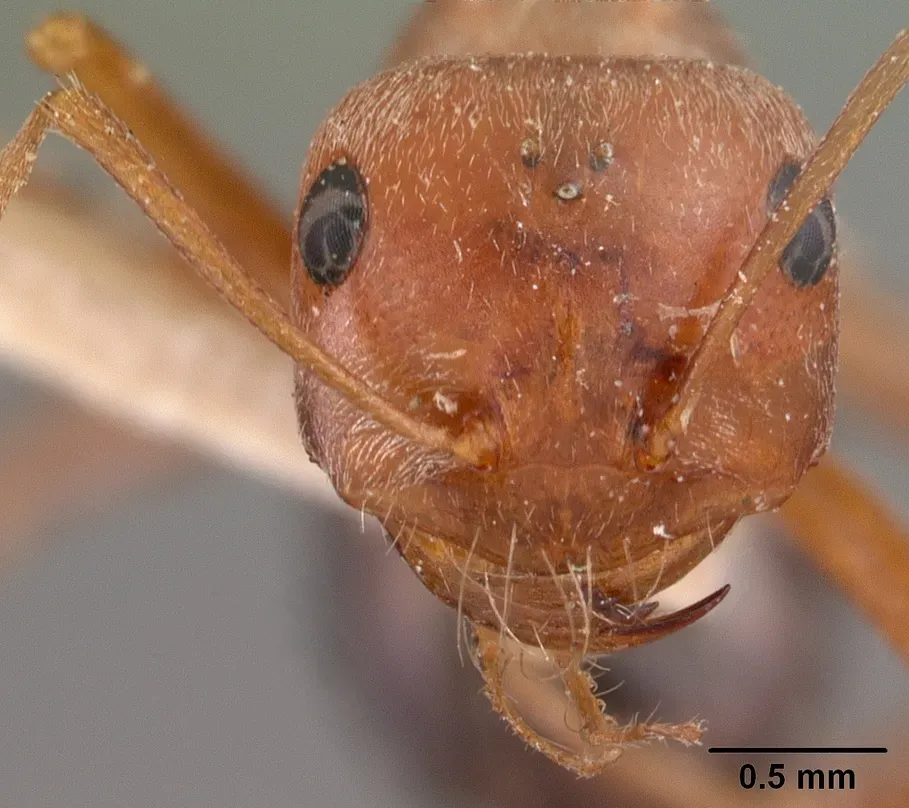
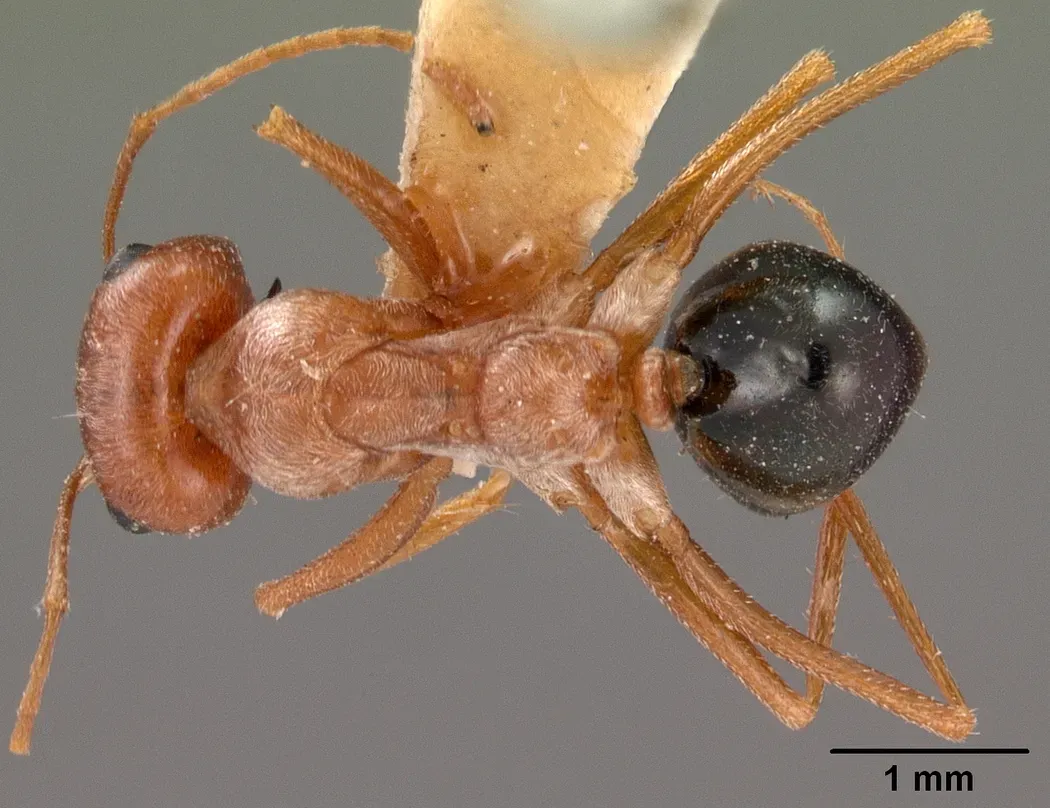
The most striking thing about these ants is their color: they look almost metallic, as if dusted in chrome. That illusion comes from a dense coat of unique, triangular cross-section hairs covering most of their bodies. These hairs are not just decorative; they are optical tools. Their shape and arrangement help reflect a large portion of incoming sunlight, especially the intense visible and near-infrared radiation that would quickly fry an unprotected insect.
Instead of absorbing heat like a dark surface, their reflective coat acts more like a mirror, bouncing energy away before it can sink into the body. This reduces the amount of direct solar heating they experience while they sprint across the dunes. In a place where even a few extra degrees can mean the difference between survival and collapse, the shimmering hairs are not a nice bonus but a core part of their survival plan.
Cooling From Two Sides: Reflecting Sun And Radiating Heat
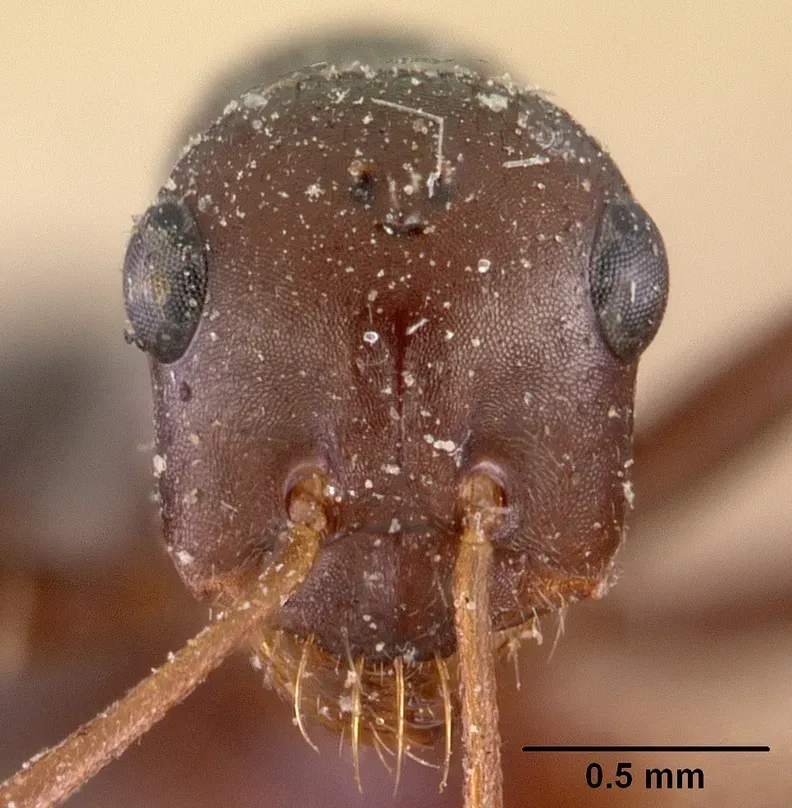
What makes these hairs even more impressive is that they do double duty. They help reject heat from the sun, but they also enhance the ants’ ability to dump excess body heat back into the environment. The hairs’ structure changes how the ant’s body interacts with different parts of the light spectrum. While they are highly reflective to incoming solar radiation, they are better at radiating energy away in the thermal infrared range, where the hot body can shed heat into the cooler sky.
In simple terms, the ants wear a coat that behaves somewhat like a high-tech fabric: it blocks the worst of the heat coming in, yet still lets warmth escape. This dual effect helps keep their body temperature several degrees lower than it would be with bare cuticle, which might not sound like much but can be enormous when you are already operating near your limit. It is an elegant combination of optics and thermodynamics wrapped around an insect no longer than a grain of rice.
Long Legs And Fast Sprints: Staying Above The Heat
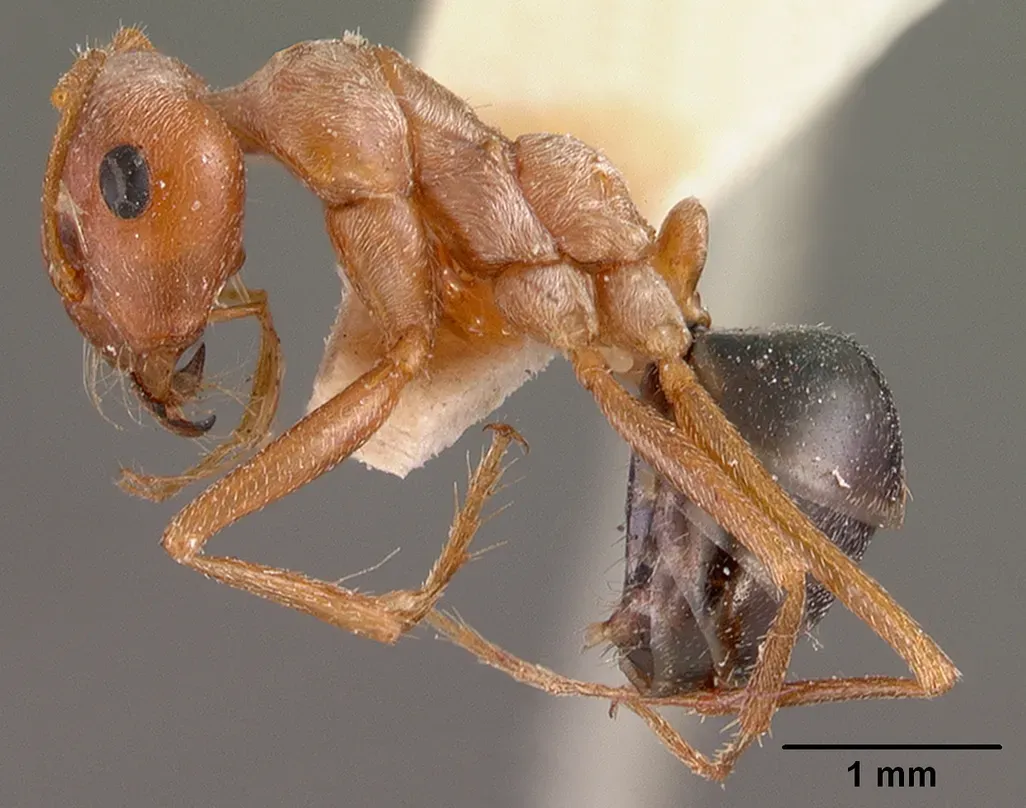
The hairs get most of the attention, but the ants’ body plan adds another clever layer of protection. Saharan silver ants have relatively long legs for their size, lifting their bodies higher above the scorching sand surface. Even a small increase in height makes a difference because air just above the ground tends to be slightly cooler than the surface itself. By holding their bodies in that slightly less hostile zone, they reduce the direct conductive heat they absorb.
On top of that, these ants move fast. They take quick, rapid steps, covering impressive distances relative to their body size in very short times. That speed is not just about grabbing more food; it cuts down the duration of exposure. The less time they spend on the dunes, the lower their heat load. Think of it like sprinting across a hot parking lot instead of strolling; you are not changing the temperature, but you are changing how long your body has to deal with it.
Life On A Timer: Behavior Fine-Tuned To Heat
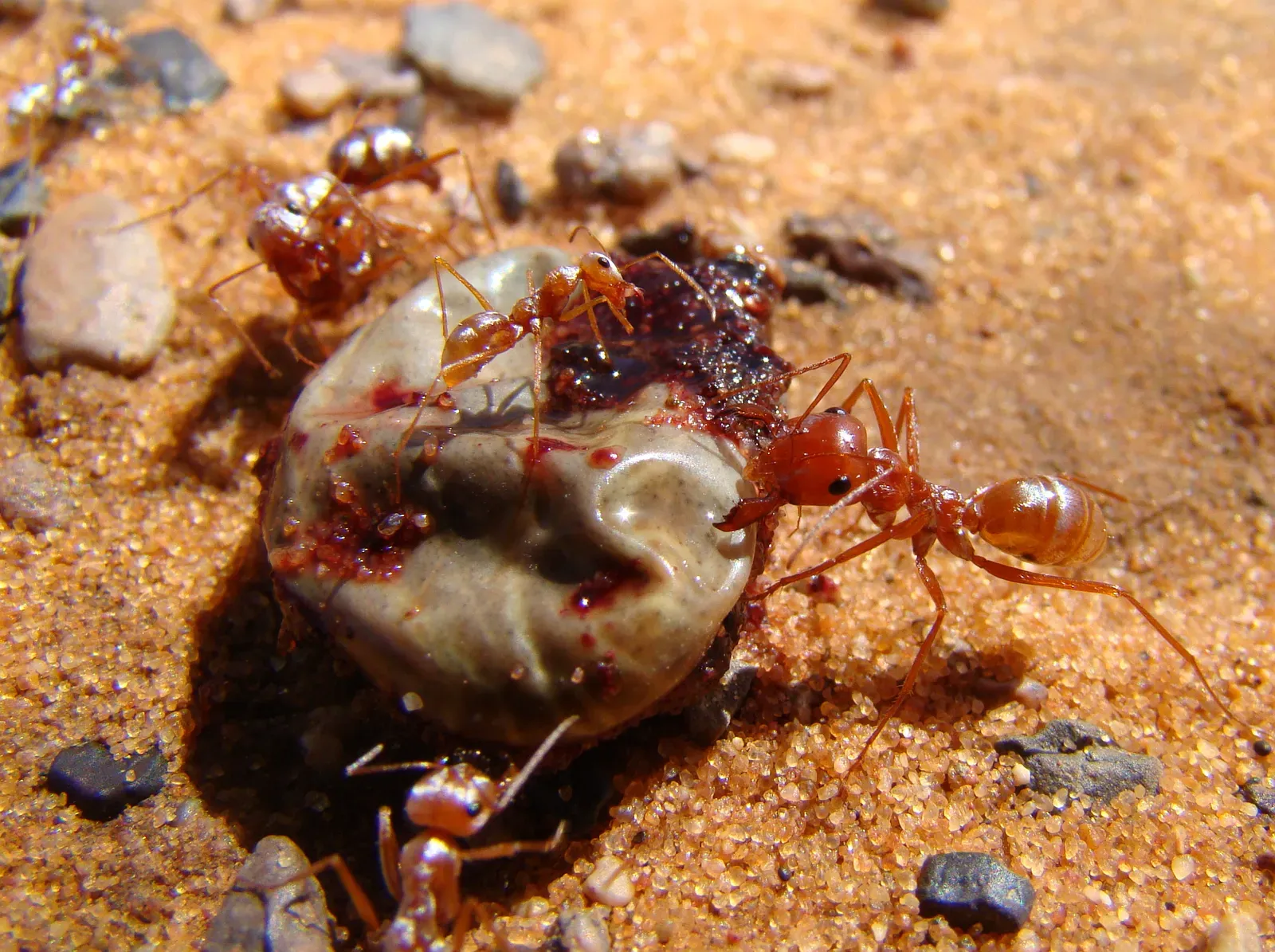
Their entire foraging routine is essentially built around a thermal clock. Colonies send workers out during a brief mid-day window when the balance between risk and reward is best. If they go out too early, predators are still active. If they go out too late, the sand may become so hot that even their impressive defenses are not enough. So they work in a tight schedule, racing to pick up heat-killed insects that have succumbed to the environment the ants are temporarily exploiting.
This means their behavior is not random; it is a carefully staged operation that takes advantage of a deadly period in the desert day. They are not trying to conquer the heat indefinitely, only to tolerate it just long enough to complete short, high-stakes missions. There is something almost relatable about that strategy: they deliberately enter a dangerous situation, fully aware in evolutionary terms that lingering is not an option.
Inspiration For Human Tech: Desert Ants As Natural Engineers
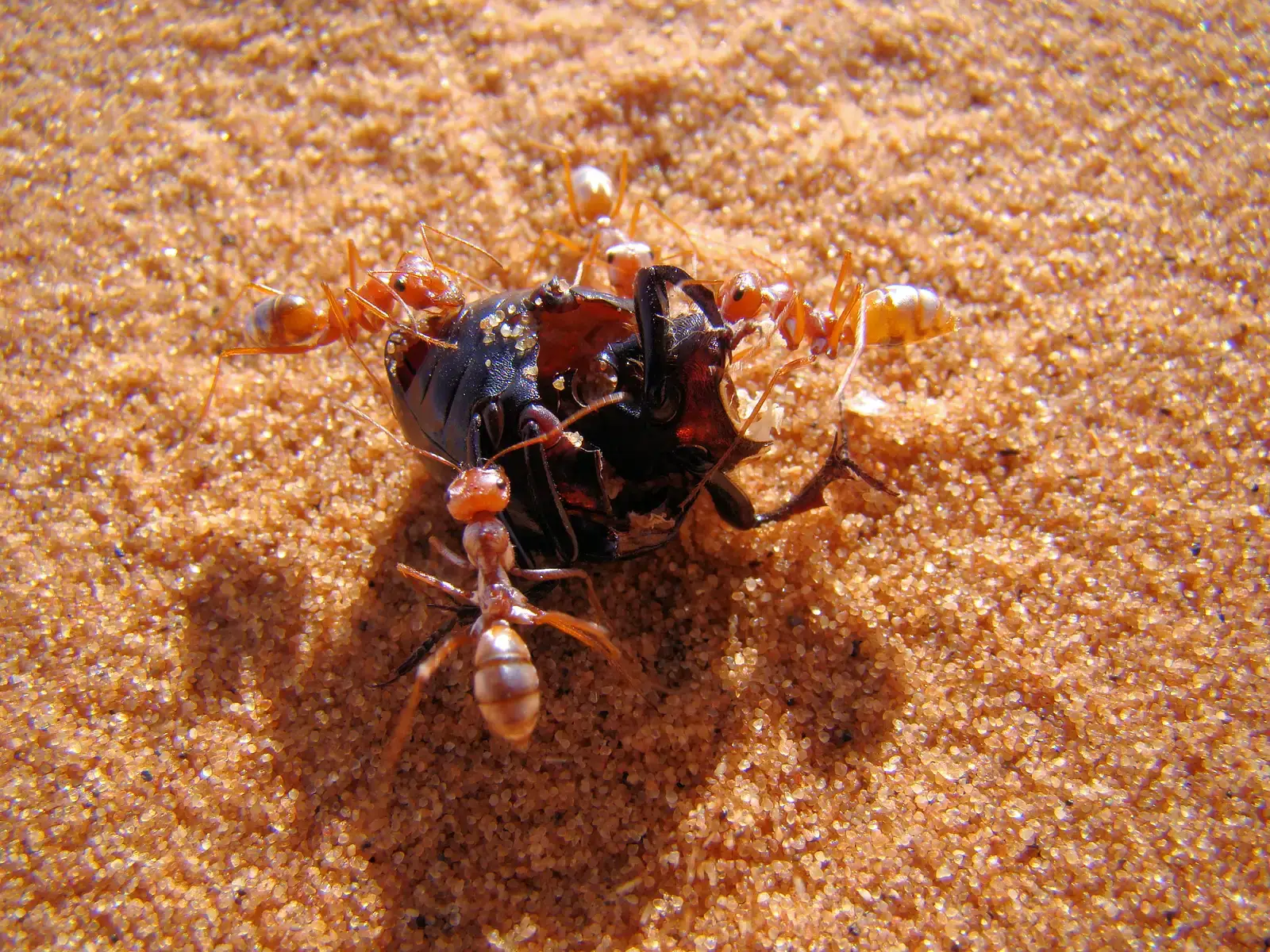
What makes Saharan silver ants especially exciting is not only what they do for themselves, but what they might teach us. Their reflective hairs provide a real-world example of passive cooling, where clever structure and material properties reduce heat loads without using energy or moving parts. Engineers and material scientists are already interested in similar approaches to design coatings and surfaces that stay cooler under strong sunlight.
You can imagine building materials, roof coatings, or clothing fabrics inspired by the way these hairs reflect some wavelengths and radiate others. Instead of relying only on air conditioners that consume a lot of energy, we could use surfaces that naturally stay cooler in full sun, just as these ants do. It is humbling that some of the answers to modern heat-management problems might be walking around on desert dunes, quietly demonstrating solutions that have been tested by natural selection over countless generations.
Why These Tiny Insects Might Matter More Than You Think
It is tempting to treat Saharan silver ants as a fun curiosity, a niche piece of trivia about weird desert life. But they are more than a biological oddity. They show how far evolution can push a body toward the edge of physical possibility, and how survival often depends on not one trick, but a layered set of adaptations: hairs, legs, timing, speed, and behavior all working in sync. In a world where rising temperatures are becoming a global concern, understanding such strategies feels less like a luxury and more like a necessity.
My own take is that we underestimate these kinds of organisms at our own loss. Instead of seeing them as tiny background characters in nature documentaries, we should see them as full-fledged teachers of physics, engineering, and resilience. Their survival on blistering sand is a reminder that nature has already solved many problems we are only starting to struggle with. The real question is whether we are willing to pay close enough attention to learn from them, or whether we will stay stuck thinking we already know better than a silver ant racing for its life across a burning desert floor.