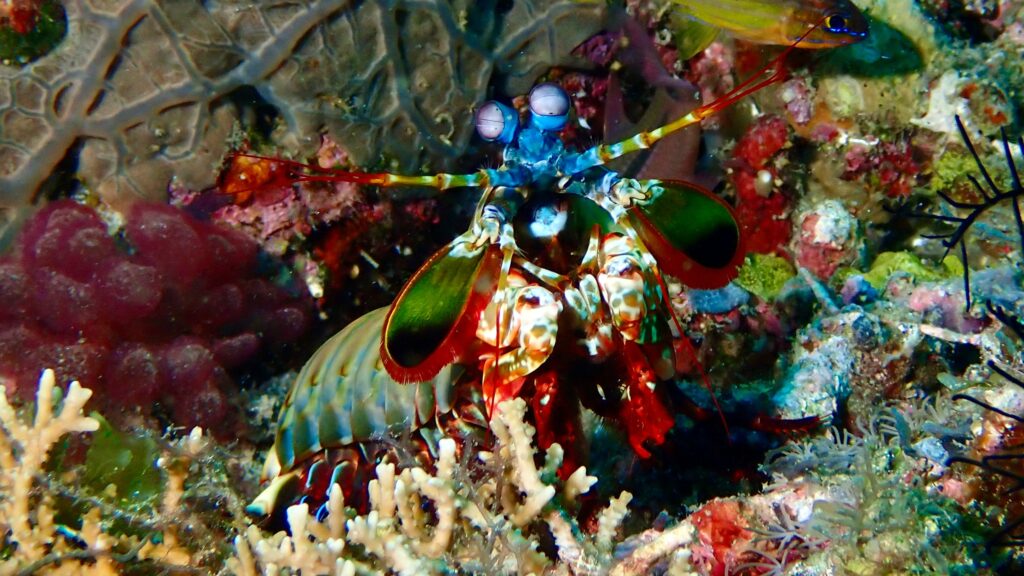
You live in a world that already feels full of color: sunsets streaked in orange and purple, neon signs buzzing at night, the deep blue of the ocean. But to a mantis shrimp, your world probably looks oddly washed out, like you’ve been watching life on a slightly broken TV this whole time. These small, fierce sea creatures see patterns in light that you simply cannot detect, no matter how hard you squint. Once you realize this, it kind of flips your sense of reality. If an animal can see entire dimensions of light that are invisible to you, what else are you missing? When you look at a calm, blue ocean surface, a mantis shrimp might be seeing hidden signals, secret reflections, and polarized patterns that tell a totally different story about what’s going on below. In a very real sense, it’s living in a richer visual universe than you are.
Mantis Shrimp Vision: A Superpower Hiding in Plain Sight
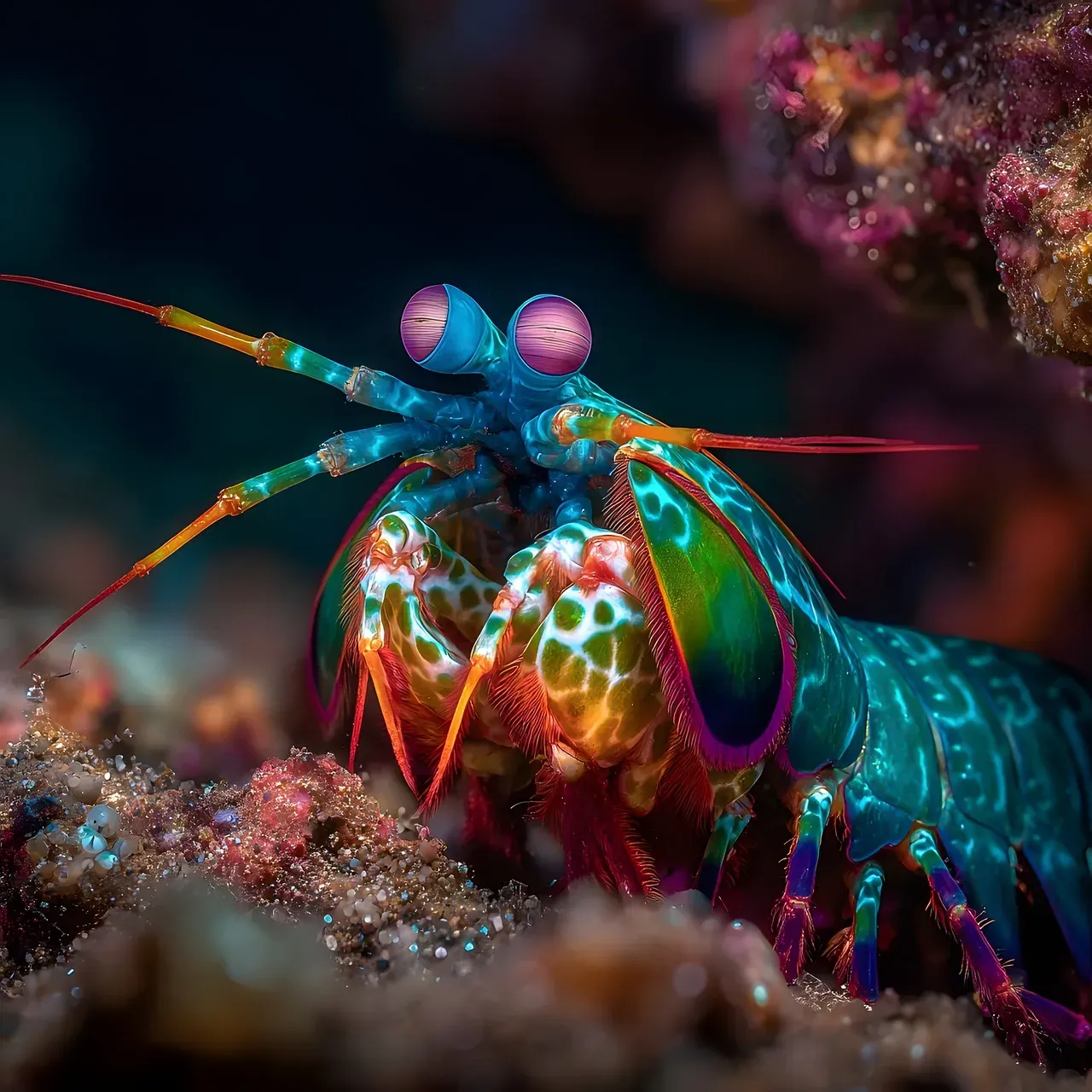
If you ever met a mantis shrimp in person, you might not think much of it at first. It’s small, it hides in crevices, and it’s usually more worried about not being eaten than impressing you. Yet behind those alien-looking eyes, you’re staring at one of the most advanced visual systems known in the animal kingdom. You rely on three types of color receptors in your eyes, but a mantis shrimp may have more than a dozen. That means while you’re doing the visual equivalent of playing with three crayons, this animal has a giant box of colors and tools you’ve never even seen. Its eyes are mounted on stalks, can move independently, and scan the world in a way that feels almost like sci‑fi, except it’s just normal life if you’re a mantis shrimp.
What Polarized Light Actually Is (And Why You Can’t Really See It)

To understand what makes the mantis shrimp so impressive, you first need to get a handle on polarized light. Light is a wave that vibrates in different directions as it moves through space. When that vibration gets filtered so it mostly lines up in one direction, the light is called polarized. Your eyes are mostly blind to the orientation of that vibration. You can get tiny hints of polarization if you wear polarized sunglasses and tilt your head, or notice strange patterns on a phone screen at certain angles, but that’s about it. To you, light is mostly just brighter or dimmer, more red or more blue. The hidden structure in the waves themselves passes right by you without leaving a trace in your perception.
How Mantis Shrimp Detect Polarization You Never Notice
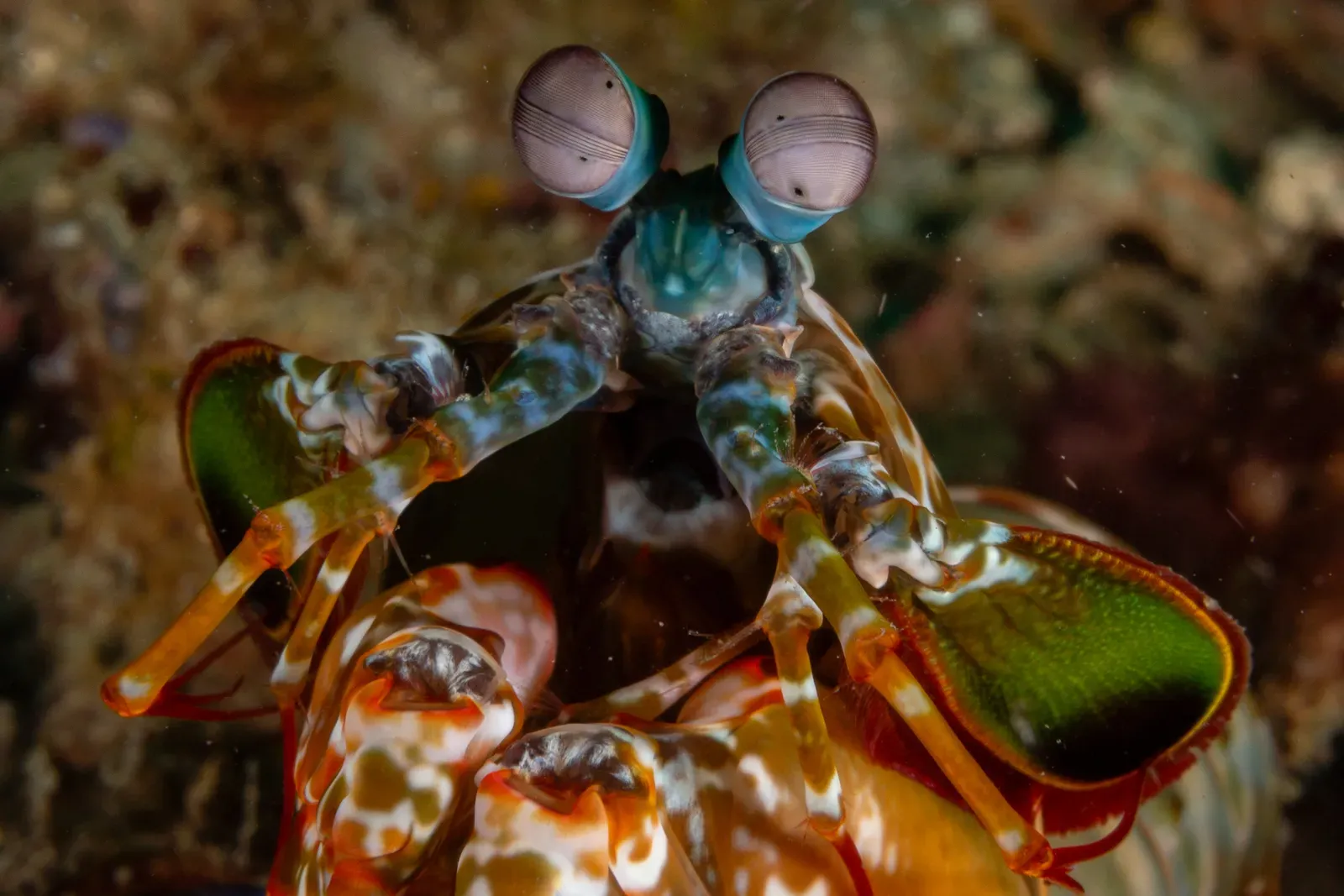
Now imagine if you could not only sense that light exists, but also read the direction it’s vibrating in, almost like reading invisible arrows drawn on every beam of light. That’s closer to what a mantis shrimp is doing. Specialized structures in its eyes act like built‑in polarizing filters, letting it separate differently oriented light in a way your eyes simply can’t. Instead of just seeing “light from above,” the mantis shrimp can tell whether that light is polarized horizontally, vertically, or at other angles, and in some cases can even pick up circular polarization that twists as it travels. To you, that same light would just look like ordinary brightness. To the shrimp, it’s packed with extra information about surfaces, reflections, and possibly the bodies of other animals.
Why Seeing Polarized Light Actually Matters in the Ocean
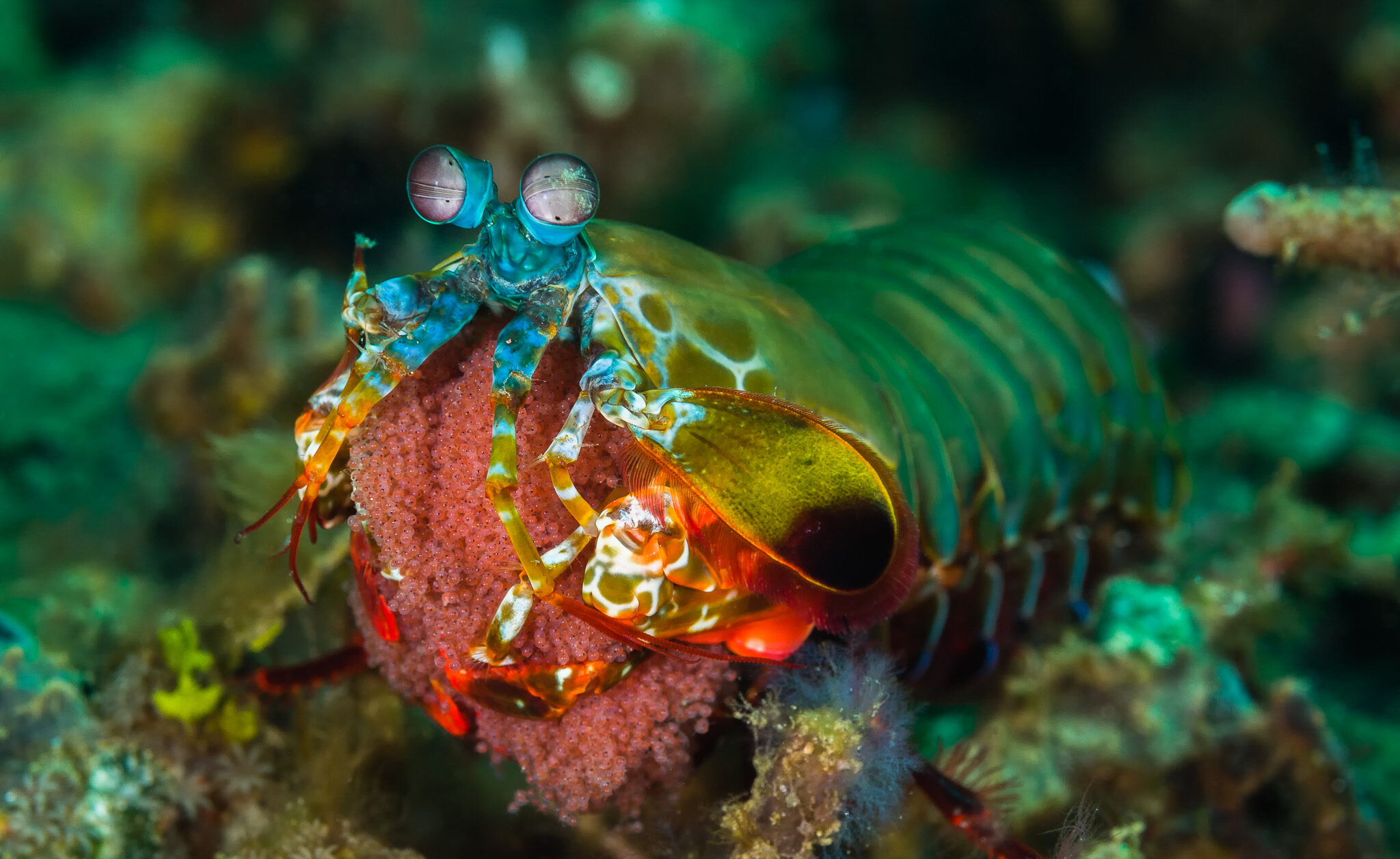
You might wonder why any creature would bother evolving such a complicated visual system. In the ocean, polarized light can reveal things that color and brightness alone can’t. When sunlight hits the water and scatters, it creates polarized patterns that can help a mantis shrimp detect contrasts, edges, and movements that stay invisible to you. Think about a predator or prey that is trying very hard to blend into the background. From your point of view, it might look perfectly camouflaged. But if its body reflects or scatters light in a slightly different polarized pattern than the surrounding water or sand, the mantis shrimp can pick it out like a highlighted object. What looks like a flat, blue blur to you can turn into a detailed, information‑rich scene for the shrimp.
Hidden Messages: Communication You Will Never See
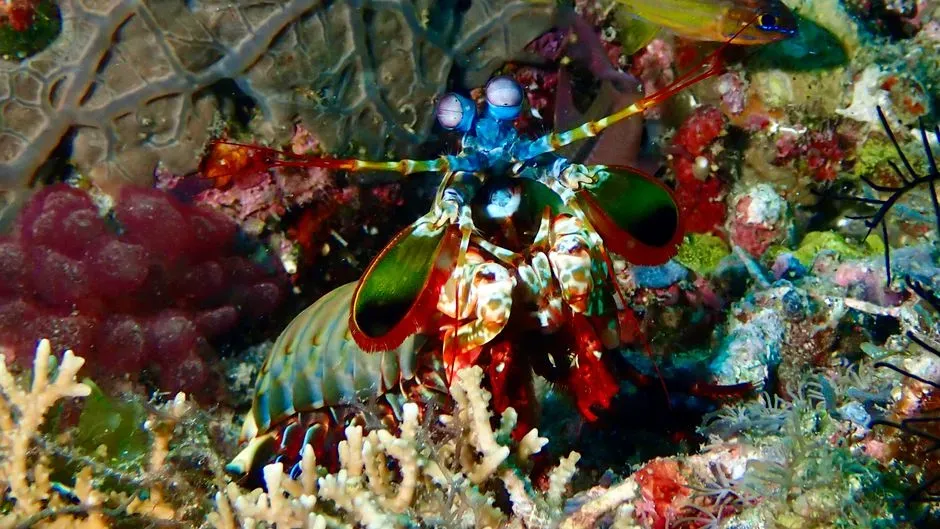
One of the most fascinating possibilities is that mantis shrimp may be using polarized light to send each other signals that you will never notice. Some species have body parts that reflect polarized light in distinct ways, acting almost like secret badges or flags that only others with similar vision can decode. You could stare at them all day and just see ordinary colors, while they are flashing high‑contrast signals back and forth. If that’s true, it means there’s a whole layer of communication that happens right in front of you but remains completely invisible. It’s like walking into a room where everyone is texting in a language you cannot read, even though the phones are lit up in plain sight. The mantis shrimp’s ability to see polarized light might help it recognize mates, signal aggression, or avoid conflict without giving anything away to predators or prey that lack that visual superpower.
From Animal Eyes to Human Tech: What You Can Learn
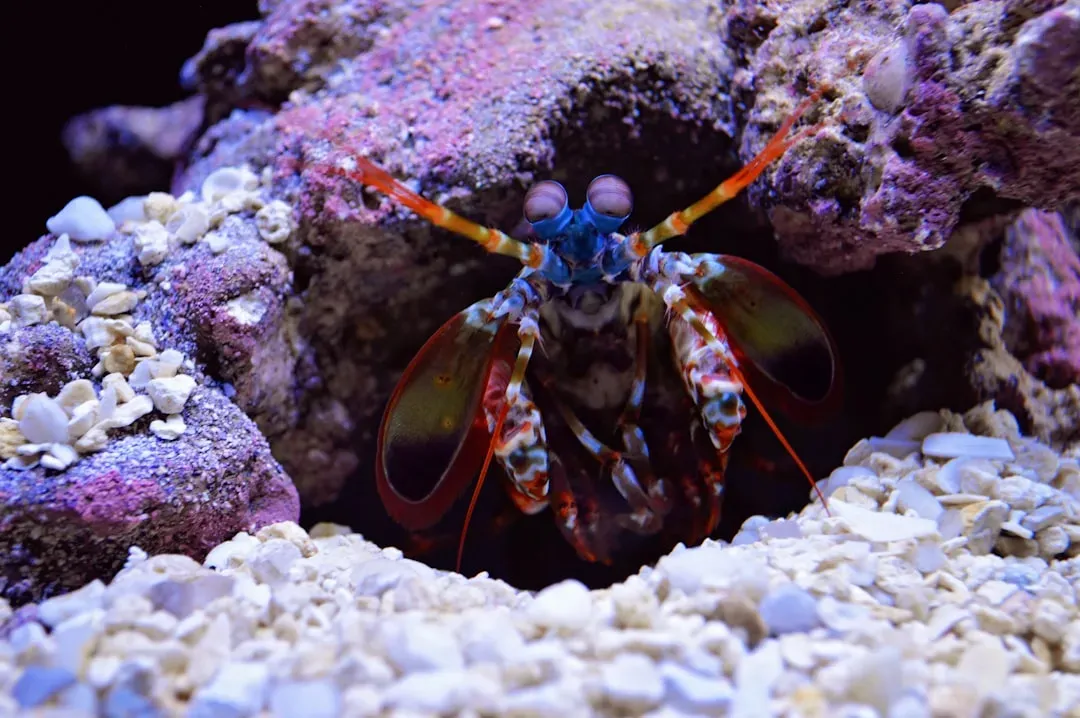
You might think this is just a fun ocean trivia fact, but the mantis shrimp’s vision has inspired serious human technology. Engineers and scientists study how its eyes detect polarized light so efficiently, hoping to design better cameras and sensors. Devices that can see polarization more precisely can help in underwater exploration, medical imaging, and even secure communications. When you borrow ideas from mantis shrimp, you’re basically “hiring” them as design consultants from millions of years of evolution. Their eye structures offer clever, compact ways to sort and process light that improve on what you’ve built so far. In a way, every time a new polarization‑sensitive camera or sensor is developed, you’re admitting that this little crustacean figured out some tricks long before you did.
How This Changes The Way You See Your Own Vision
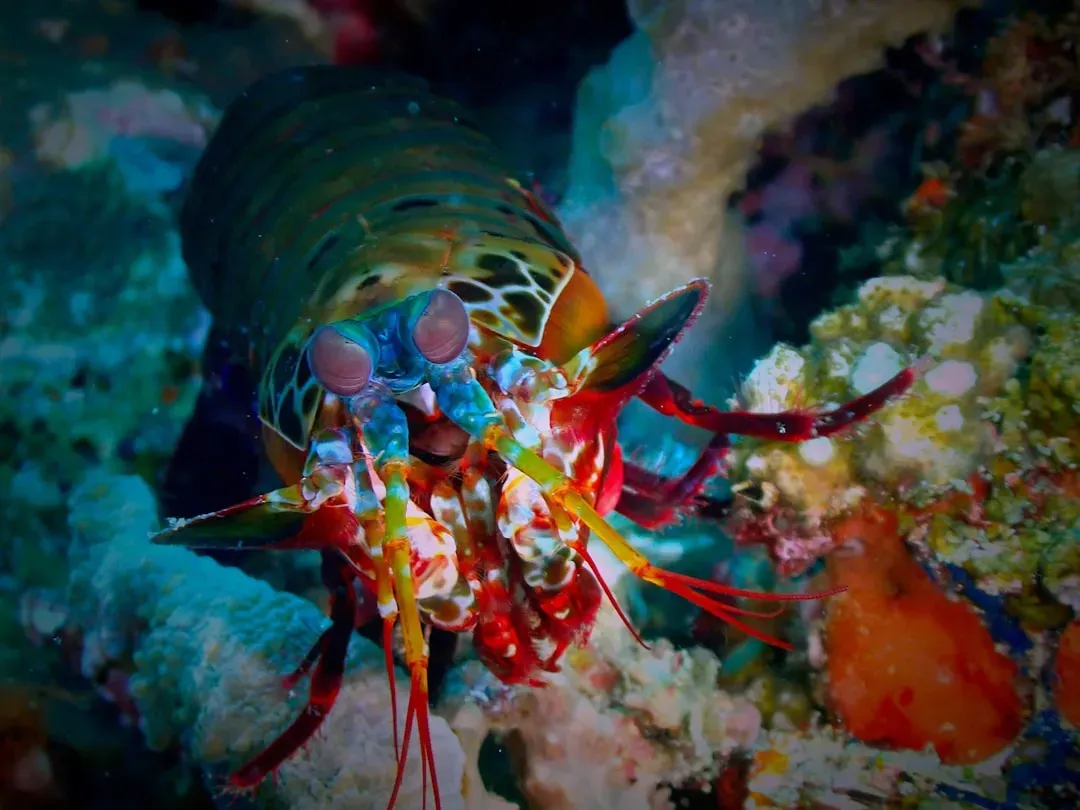
Once you learn that mantis shrimp can see polarized light and an extended range of colors you cannot, it forces you to rethink how complete your own perception really is. Your brain gives you a very confident feeling that you’re seeing the whole picture, but you now know that’s not true. You are getting a useful slice of reality, not the full version. Personally, I find that both humbling and oddly comforting. Every time you assume what you see is all there is, creatures like the mantis shrimp are a reminder that the universe is richer than your senses admit. It nudges you to be a little more curious, a bit more skeptical of your first impressions, and more open to the idea that other minds live in worlds that feel very different from yours.
Seeing Beyond Human Limits: A Different Way to Think About Reality
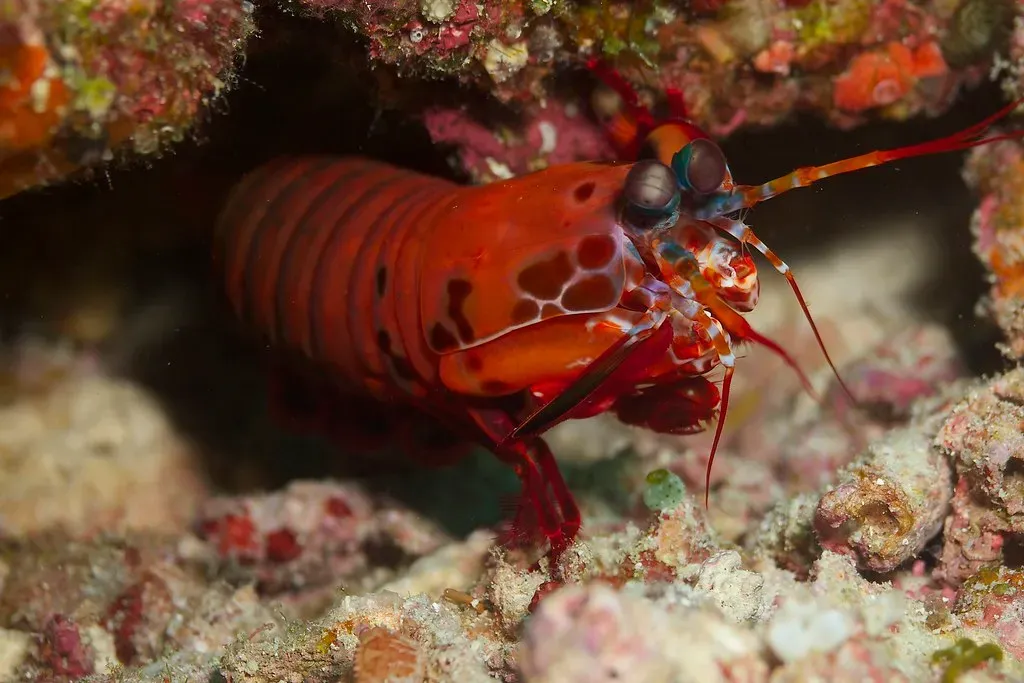
If an animal barely longer than your hand can see polarization patterns, extra colors, and hidden signals, then your sense of “normal” is clearly only one version of reality. You navigate perfectly well with it, but it’s still just a custom filter shaped by your evolutionary history on land, in air, with your particular predators and foods. The mantis shrimp had a different history in the shimmering, refracted world of the reef, and its eyes tell that story. The next time you look at a calm ocean, you can remind yourself that you’re not really seeing what is there, only what your eyes are built to notice. Somewhere below, a mantis shrimp might be watching the same scene through a visual system that reveals patterns and polarizations you will never experience directly. In that gap between what you see and what is actually there lies a powerful question: how much more of reality is still hidden from you, just waiting for the right kind of eye to notice it?
In the end, mantis shrimp are a sharp little wake‑up call that your senses are not the gold standard for what is real. They show you that even something as familiar as light still holds secrets that other animals can read far better than you can. Instead of making your vision feel inadequate, this can make the world feel bigger and more mysterious, like there is always another layer left to discover.
So the next time you step into bright sunlight or glance at the surface of the sea, you might wonder what a mantis shrimp would see standing right where you are. Would it spot hidden patterns you walk past every day without a second thought? And now that you know its visual universe is richer than yours, what else do you suspect might be out there, quietly existing just beyond your human senses?