
You have probably had that moment where you give your dog a command they know perfectly well, and they just… do nothing. Maybe you feel a flicker of irritation and think your dog is being stubborn, testing you, or even trying to be bossy. But when you look at what recent animal cognition and brain imaging research suggests, a very different story starts to emerge. Instead of a defiant little rebel, you may actually be seeing a brain that is confused, overloaded, cautious, or simply processing the situation in a more complex way than you realized. When scientists put dogs into scanners and design clever experiments, the data keeps pointing away from the idea of simple disobedience and toward something far more interesting: your dog is thinking, evaluating, and sometimes struggling with what you’re asking in that exact moment.
Why “Stubborn” Is Usually the Wrong Word

When you label your dog as stubborn, you’re assuming they fully understand what you asked, are perfectly able to do it, and are consciously choosing not to. Brain and behavior studies on dogs repeatedly show that at least one of those assumptions is very often wrong. You’re not dealing with a tiny human in a fur suit; you’re dealing with a different kind of mind, one that links words, tone, context, and your body language in ways that are similar to human toddlers but not identical. You’ve probably noticed your dog will obey “sit” instantly in your quiet kitchen but not in a busy park. If stubbornness were the main factor, you’d see the same response everywhere. Instead, what you see is context sensitivity: distraction, arousal, and environmental noise interfere with what the dog’s brain can process and act on. That lines up with what imaging and behavioral data show – performance drops in harder, noisier, or more emotionally charged situations, even when the dog clearly “knows” the cue in simpler settings.
What Brain Scans Actually Reveal About Dogs and Words

When researchers train dogs to lie still in MRI scanners, they can peek at which brain regions light up when a dog hears familiar words, new nonsense words, praise, or commands. You might expect a perfectly orderly map – this word equals this action, end of story. But what shows up is more nuanced: dogs’ brains react differently to known words versus made-up ones, and they respond strongly to the tone and emotional value of what you say, not just the syllables. In some experiments, dogs hear a word they supposedly know, but it’s used in a slightly different way or paired with a new object or context. Their brain activity suggests uncertainty and deeper processing, not a quick, confident match. That means when you repeat a command and your dog freezes or looks away, what’s going on may be something like “this sounds familiar, but I’m not sure this is the same situation,” instead of “I heard you and I’m choosing to ignore you.”
Context: Your Dog’s Hidden Decision-Maker
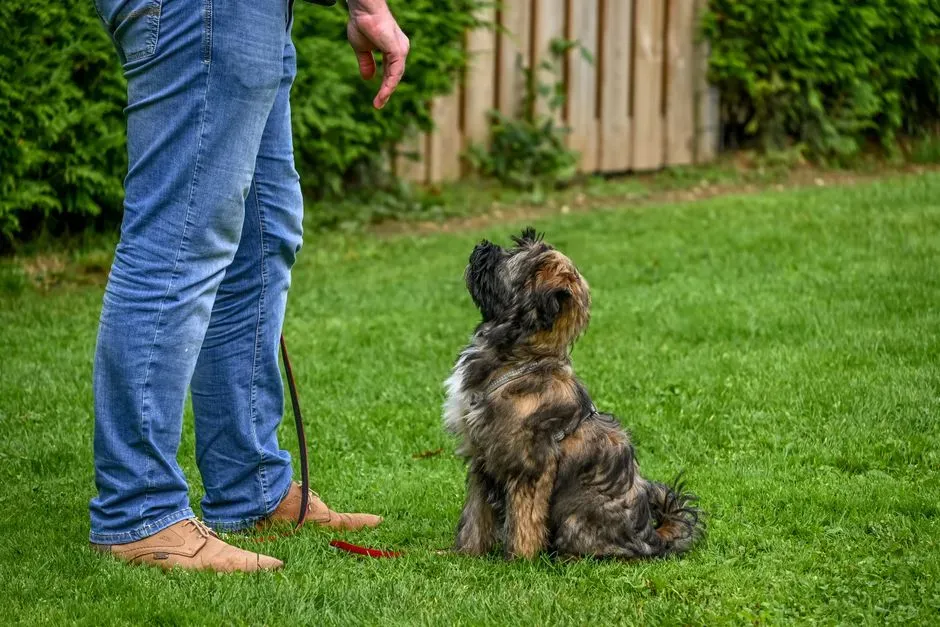
You tend to think of a command as a fixed thing: “sit” is “sit,” no matter where you are. Your dog’s brain, however, bundles the word together with the place, your posture, your tone, the smells around, and everything that happened a second before. Change enough of that background, and suddenly the “same” cue is not really the same situation to your dog anymore. This is why a dog that performs beautifully in a training class can look like they forgot everything at the vet’s office or on a walk past a barking fence. The brain has to filter: is that word still relevant when my heart rate is up, my senses are overloaded, and I’m worried or excited? Often, “ignoring” you is actually context conflict. The command is competing with fear, curiosity, or social information from other dogs, and your dog’s brain may decide that your cue is not the highest priority in that moment.
Stress, Fear, and the “I Can’t” Behind the “I Won’t”

You’ve likely seen your dog hesitate on a slippery floor, balk at getting into the car, or freeze at the vet even when you ask for a sit they normally do in their sleep. Those moments are easy to misread as dramatic or stubborn, but stress and fear change how the brain processes cues. Under stress, systems involved in survival and emotional regulation kick into overdrive, and the brain diverts resources away from fine motor control, learning, and flexible problem-solving. From the outside, that shows up as refusal or shutdown. From the inside, it’s closer to an “I can’t” than an “I won’t.” Even mild stress, like a new place or loud noises, can reduce response reliability to cues your dog deeply “knows.” If you increase pressure, raise your voice, or repeat the cue rapidly, you may actually make it harder for your dog’s brain to recover and respond, even though you feel like you’re just insisting they do what they were told.
Attention and Working Memory: Your Dog’s Mental Bandwidth

Think about the last time you tried to follow directions while checking your phone, watching traffic, and talking to someone else. Your brain has limits on how much it can juggle, and your dog’s brain is no different. When you give a cue, your dog has to notice it, hold it in working memory for a moment, and then organize their body to perform the action. That’s a lot of steps for a mind that is also tracking smells, sounds, and movements all around. When your dog is hyped up, tired, or overstimulated, their ability to hold your words in that mental “short-term workspace” shrinks. So that delayed response, half-finished sit, or total lack of reaction can come from a simple bottleneck: your words never really made it to the top of the mental pile. Calling it stubborn misses the reality that, just like you, your dog’s attention and memory are finite resources that can be drained by the moment.
Ambiguous Cues: When You Think You’re Clear and You’re Not
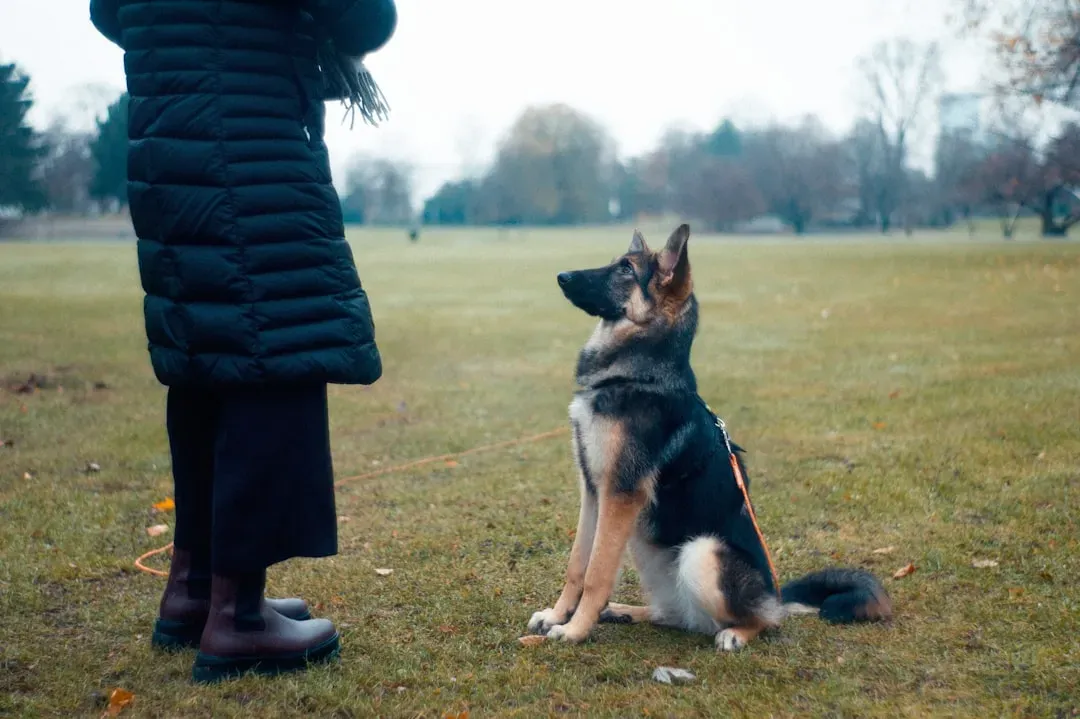
You probably assume you always say the same command the same way, but if someone filmed you, you’d see subtle changes: different tone, different timing, mixed body language, or conflicting signals from your hands and eyes. Dogs are experts at reading your whole body. When your mouth says “down” but your posture, hand, or facial expression suggests “come closer” or “stay alert,” you’re effectively sending two channels of information that do not match. Your dog then has to decide which signal to trust, and their choice may not line up with what you had in mind. What you interpret as “ignoring” might actually be your dog favoring the stronger or more familiar cue, like your body lean or hand movement, over the word. The more inconsistent and ambiguous your cues are, the more your dog’s brain has to guess. The more guessing there is, the more often you’ll see hesitation, mistakes, or blank stares that look like defiance but really come from confusion.
Motivation: When the Reward Map in the Brain Changes

Obedience is not just about understanding; it is also about whether the behavior feels worth doing in that moment. Your dog’s brain constantly weighs effort against reward, safety, and comfort. If sitting when asked has usually led to treats, play, or relief, the brain tags that behavior as valuable. If it leads to something unpleasant or nothing at all, that value tag fades, even if the dog still knows the word. So when your dog hears a familiar cue and hesitates, you are often looking at a live negotiation going on in their head: Is this worth it right now? Am I tired, sore, anxious, or just more interested in that smell over there? You might not like that internal cost–benefit calculation, but it is not stubbornness in a moral sense; it is motivation shifting with circumstances. The clearer and more consistently rewarding the behavior history is, the less resistance you’ll see when you give the cue.
Learning History: How Past Experiences Shape Present “Disobedience”
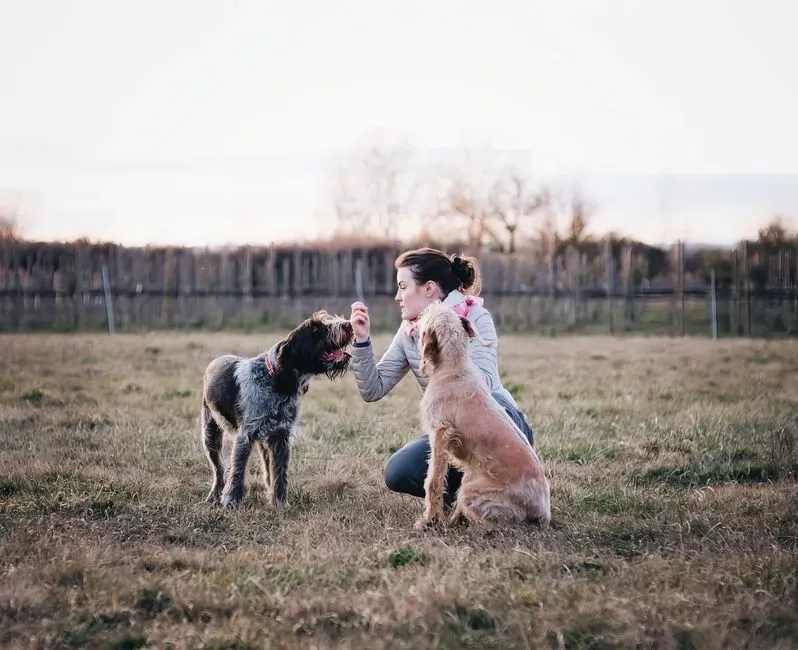
Every time you ask your dog to do something and something follows, you are writing in their learning history. If your dog has been punished, scolded, or overwhelmed around certain commands, their brain may pair your cue with tension rather than confidence. That can make them slower to respond, more likely to avoid eye contact, or more inclined to disengage entirely when you repeat the word. On the other hand, if your dog has a history of being allowed to ignore cues in certain contexts, their brain has learned that your words are optional in those situations. When you suddenly decide they are not optional, it feels to you like rebellion, but it is really just your dog following the rules they believe have been consistent so far. In both cases, what you see as present-day stubbornness is actually the long shadow of past experiences shaping how your dog’s brain predicts what will happen if they listen – or if they do not.
What This Means for How You Train and Talk to Your Dog

Once you stop seeing an ignored command as a character flaw and start viewing it as a clue about your dog’s inner state, your entire approach shifts. Instead of asking, “Why are you being so stubborn?” you start asking, “Are you confused, stressed, distracted, under-motivated, or dealing with a context that feels different to you?” That question pushes you toward cleaner training, more thoughtful setups, and gentler expectations. You begin to adjust the environment, lower distractions, reinforce more generously, and double-check your own body language and tone. You also give your dog more benefit of the doubt: if they are usually reliable, a missed response becomes a signal to slow down and help them succeed, not a reason to get harsher. Over time, that mindset builds trust, clarity, and consistency – and ironically, the “stubbornness” you used to see tends to fade, because you and your dog are no longer working against each other’s brains.
Conclusion: From Blame to Curiosity About Your Dog’s Mind
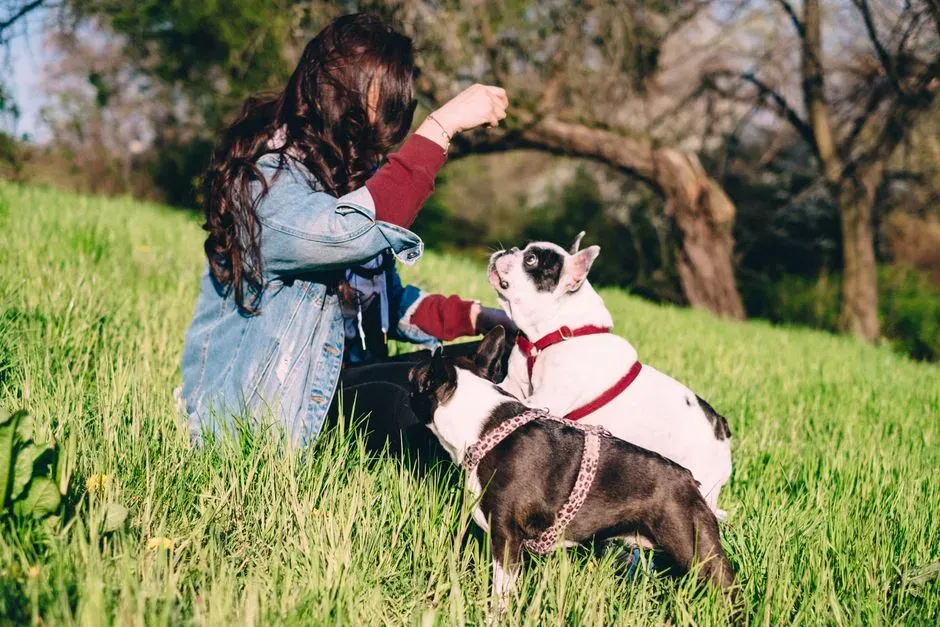
When a dog ignores a familiar command, it is tempting to latch onto the simplest explanation and call it stubbornness. Animal cognition research and brain scan data invite you to take a deeper, more generous view: your dog’s responses are the outcome of context, stress, attention limits, motivation, and learning history, all playing out in real time in a brain that is trying to make sense of your words and the world at once. You do not have a tiny enemy plotting against you; you have a thinking creature navigating a complex environment with limited mental bandwidth. If you trade irritation for curiosity and start treating those “ignored” commands as information instead of disrespect, your relationship with your dog changes. You train with more empathy, you communicate more clearly, and you see your dog’s failures as opportunities to understand their mind better, not as proof that they are willful or bad. The next time your dog seems to blow you off, will you assume the worst – or pause and ask what their amazing, imperfect brain might be struggling with in that exact moment?