
There are rocks beneath our feet that are almost incomprehensibly old. Not old like your grandmother’s furniture or a medieval castle – old like “before life existed on Earth” old. Scientists have long searched for ways to peer back into the planet’s first few hundred million years, a period so remote it barely leaves traces anywhere.
Zircon crystals are changing that. These tiny, nearly indestructible minerals are turning out to be something like nature’s own time capsules, locking in chemical signatures from a world that no longer exists. What researchers are uncovering from them is reshaping everything we thought we knew about early Earth. Let’s dive in.
Why Zircon Crystals Are Unlike Anything Else on Earth
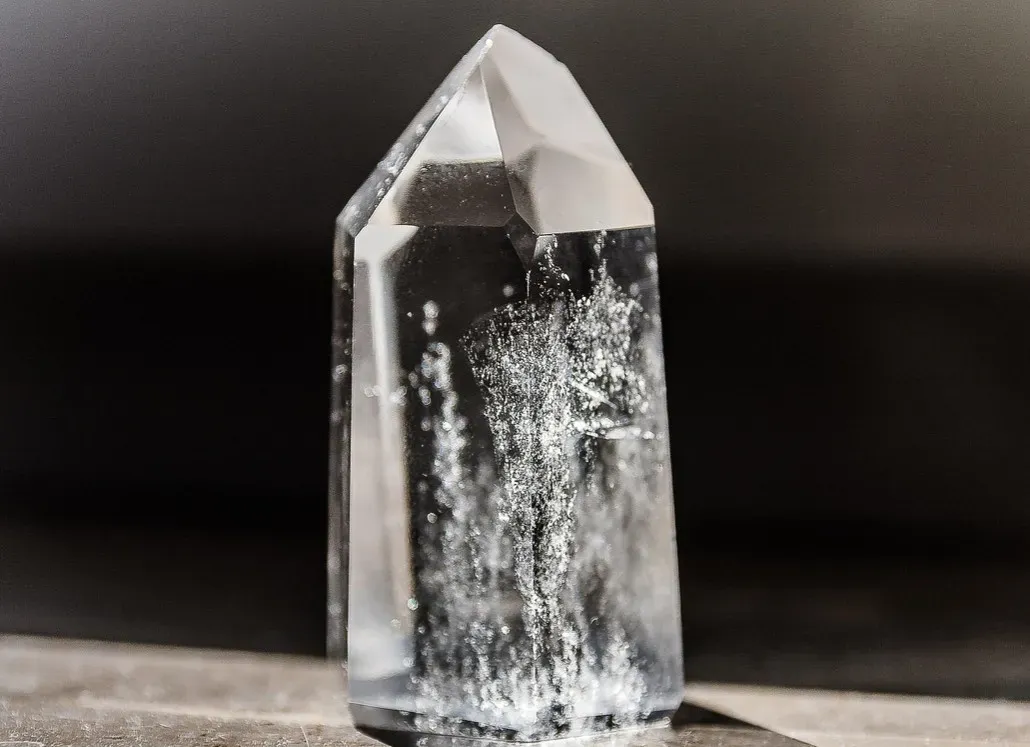
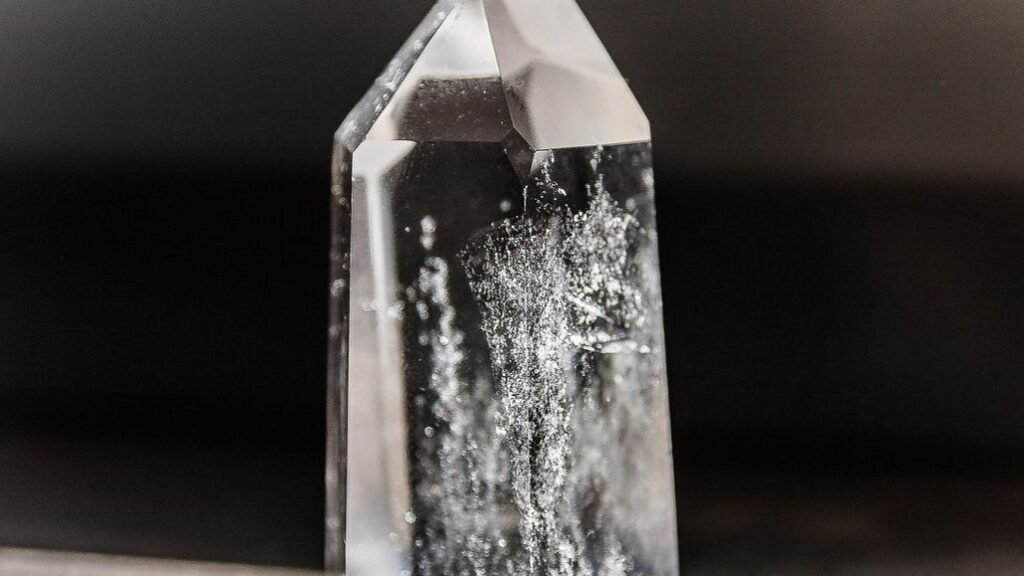
Here’s the thing about zircon – it’s almost absurdly durable. While most minerals break down, transform, or dissolve over geological timescales, zircon holds its internal chemistry together like a vault. That makes it essentially the only mineral capable of surviving from Earth’s first eon, the Hadean, which spanned roughly four and a half billion to four billion years ago.
What makes zircon truly remarkable is what it traps inside. As it forms, zircon incorporates uranium but rejects lead. Over billions of years, that uranium decays into lead at a known, predictable rate. Scientists can measure both elements and calculate, with extraordinary precision, exactly when that crystal formed. It’s like reading the date stamped on a coin from a lost civilization.
The Hadean Eon: Earth’s Most Mysterious Period
The Hadean gets its name from Hades, the Greek underworld – and honestly, that’s fitting. For a long time, scientists pictured early Earth as a hellish, largely molten world, constantly bombarded by meteorites with little chance for stable surface conditions. It was assumed that any geological record from this era was simply gone, erased by billions of years of tectonic activity and erosion.
Zircon crystals are forcing a major rethink. The chemical signatures preserved inside some of these ancient crystals suggest that liquid water may have existed on Earth’s surface far earlier than previously believed. That’s a staggering implication. It means the planet may have cooled and stabilized much faster than the old “hellish Earth” model suggested, potentially creating conditions hospitable enough to matter.
What the Oxygen Isotopes Are Telling Us
One of the most powerful clues hidden inside ancient zircons comes from oxygen isotopes. Specifically, researchers look at the ratio of oxygen-18 to oxygen-16 within the crystals. High ratios of oxygen-18 suggest that the source rocks from which the zircon formed had previously interacted with liquid water at relatively low temperatures. That’s a quiet but enormous revelation.
This kind of isotopic evidence points toward the existence of a hydrosphere on early Earth, possibly as far back as four point four billion years ago. I think what’s easy to miss here is just how radical that claim is. We’re talking about liquid water existing on a planet that was barely a hundred million years old, still reeling from the giant impact thought to have formed the Moon. The universe, it seems, wastes no time.
Jack Hills: The Remote Australian Site at the Center of It All
Most of the world’s oldest zircon crystals come from a place called Jack Hills, a remote and unremarkable-looking ridge in Western Australia. It doesn’t look like much from the outside. Scrubby vegetation, red dirt, nothing that would make a casual traveler stop and stare. Yet this is arguably one of the most scientifically significant geological sites on the planet.
The sedimentary rocks at Jack Hills contain detrital zircons – meaning zircons that eroded out of even older rocks and were deposited here long ago. Some of these crystals have been dated to around four point four billion years old, making them the oldest known terrestrial material on Earth. That’s older than the Moon as currently understood, and it means Australia is quietly housing fossils of a world that no longer exists.
Inclusions Inside the Crystals: Tiny Worlds Within Worlds
Beyond the isotopic chemistry, researchers are also studying microscopic inclusions trapped inside ancient zircons. These are literally fragments of ancient mineral matter that got encapsulated as the crystal grew billions of years ago. Think of it like an insect caught in amber, except the amber is older than anything alive, and the “insect” is a clue about Earth’s primordial crust.
Some inclusions have been found to contain remnants of minerals consistent with granitic rock compositions. That matters enormously. Granite forms through processes that involve liquid water and relatively low-temperature melting of crustal material. Its presence as an inclusion points toward an early crust that was more complex and water-influenced than the simple, barren magma ocean that once dominated scientific imagination. Honestly, the more we look inside these crystals, the stranger and richer early Earth becomes.
Implications for the Origin of Life
This is where things get genuinely exciting, and a little mind-bending. If Earth had liquid water, a stable crust, and complex geochemical processes happening as early as four point four billion years ago, then the window for life to emerge is suddenly much wider than scientists assumed even two decades ago. The traditional view was that life had to wait for things to settle down. That assumption looks increasingly shaky.
It’s hard to say for sure, but some researchers now think that early life could have had hundreds of millions of years more time to originate than the fossil record alone would suggest. The oldest known microbial fossils date to roughly three point five billion years ago, but chemical biosignatures push hints of life even further back. Zircon evidence doesn’t prove life existed in the Hadean – but it removes one of the biggest excuses for why it couldn’t have.
The Future of Zircon Research and What Comes Next
Technology is opening up new frontiers in this field at a rapid pace. Advanced ion microprobes and atom probe tomography now allow scientists to analyze zircon crystals at atomic-scale resolution, extracting information that would have been invisible to researchers just a generation ago. Each new technique is like turning up the resolution on a blurry photograph, suddenly revealing details that were always there but never seen.
Researchers are also expanding their search beyond Jack Hills, looking for ancient zircons in other cratons – the old, stable cores of continents – around the world. The more samples scientists can analyze, the more they can test whether the chemical signatures found so far are truly representative of early Earth conditions or just local quirks. Let’s be real: we’re still in the early chapters of this story. The crystals have been waiting four billion years. They’re not in a hurry. But the scientists studying them very much are.
A Tiny Crystal, an Enormous Story
It’s almost poetic, isn’t it? The oldest story on Earth is written not in grand canyon walls or towering mountain ranges, but in crystals smaller than a grain of sand. Ancient zircons are rewriting the textbook on how our planet formed, cooled, and prepared itself for the emergence of life. Every new analysis chips away at the old “hellish early Earth” narrative and replaces it with something far more nuanced and, frankly, more hopeful.
I think what makes this research so captivating is what it implies about cosmic possibility. If Earth could stabilize, produce liquid water, and build a complex crust within its first hundred million years, then the early chapters of other rocky planets elsewhere in the universe might not be the dead ends we imagined. Zircon crystals are small enough to hold between two fingers. The questions they’re answering are large enough to reshape how we think about life in the universe.
What do you think – does it change anything for you to know that Earth’s earliest history was far more dynamic and habitable than we once believed? Drop your thoughts in the comments.