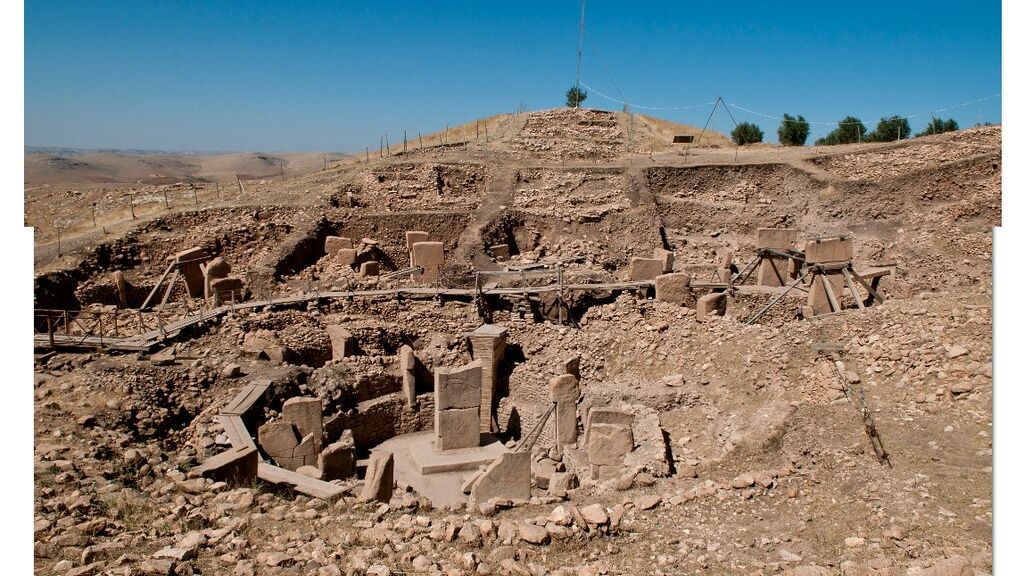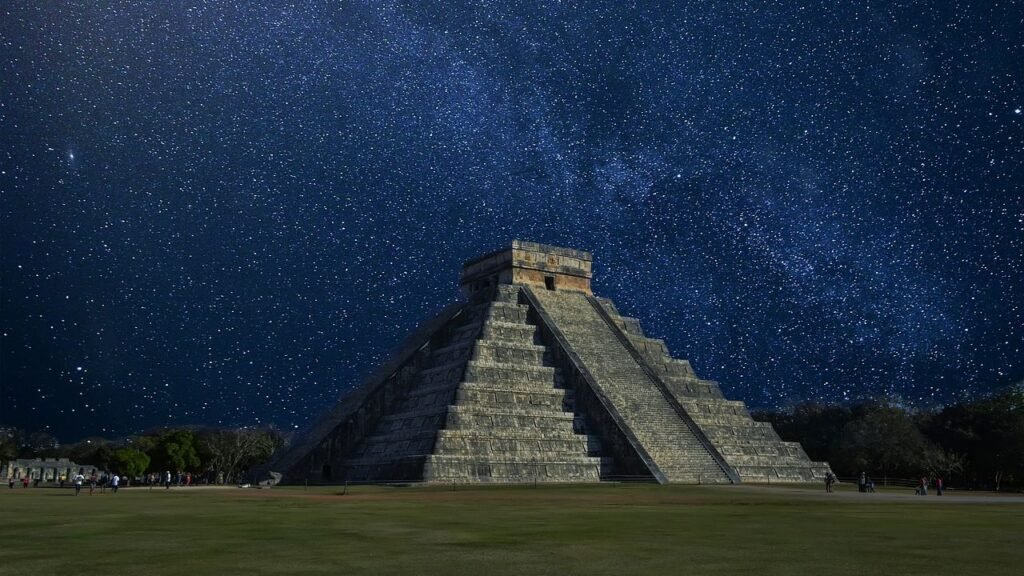

Ever wonder how ancient peoples, without telescopes or modern technology, managed to track the heavens with such precision? Long before satellites and digital star maps, civilizations across the globe were creating sophisticated systems to understand the cosmos above them. They didn’t just gaze at the night sky for entertainment. These early stargazers built monuments, carved records in stone and clay, and developed calendars that rivaled anything we use today.
What’s truly fascinating is how different cultures, separated by thousands of miles and centuries, all arrived at remarkably similar conclusions about celestial movements. From the deserts of Mesopotamia to the jungles of Central America, from the banks of the Nile to the plains of England, humans were obsessed with mapping the stars. Their knowledge wasn’t just impressive for its time. It laid the groundwork for modern astronomy and continues to puzzle researchers today. So let’s dive into the astronomical secrets that ancient civilizations left behind.
The Babylonian Stargazers Who Invented the Zodiac
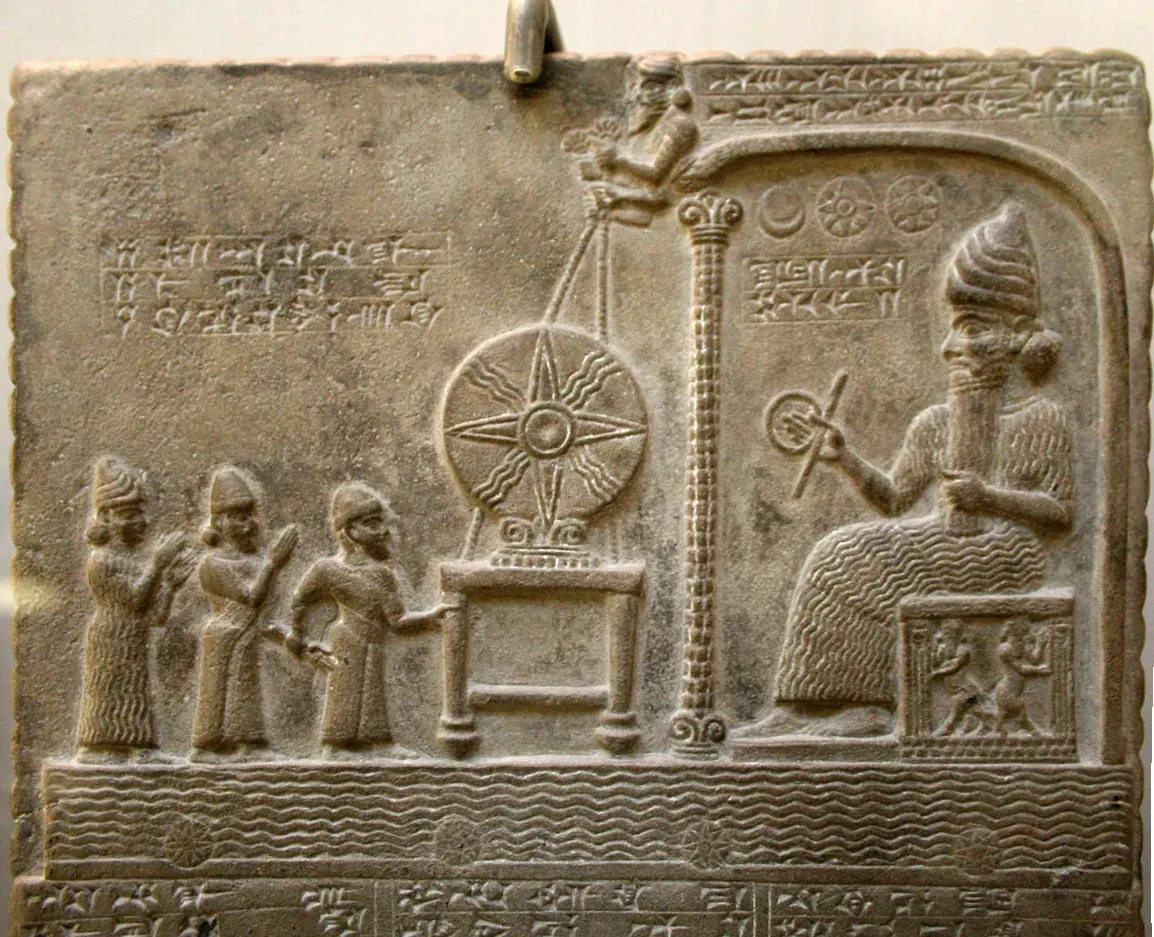
The ancient Babylonians were the world’s first known astronomers, and roughly six thousand years ago they erected watchtowers to scan the night sky, mapped the stars and visible planets, and recorded their observations on clay tablets. Think about that for a second. While most of humanity was still figuring out basic agriculture, these folks were already creating the foundation for what would become modern astronomy.
The MUL.APIN compendium, compiled around 1000 BCE, listed the names of 66 stars and constellations and provided data such as rising, setting, and culmination dates. Their meticulous record keeping on durable clay tablets meant that this knowledge survived for millennia. Around the 5th century BCE, Babylonian texts began describing celestial positions using 12 equally spaced signs, each associated with a zodiacal constellation and divided into 30 degrees, creating a normalized zodiac totaling 360 degrees. Yes, you read that right. Our modern zodiac system and the very concept of dividing a circle into 360 degrees comes straight from ancient Babylon.
Their meticulously compiled data provided the foundation to create the first calendars, used to organize the growing and harvesting of crops and the timing of religious ceremonies. This wasn’t just academic curiosity. Knowing when to plant and harvest could mean the difference between feast and famine.
Stonehenge and the Sun’s Journey Through Time
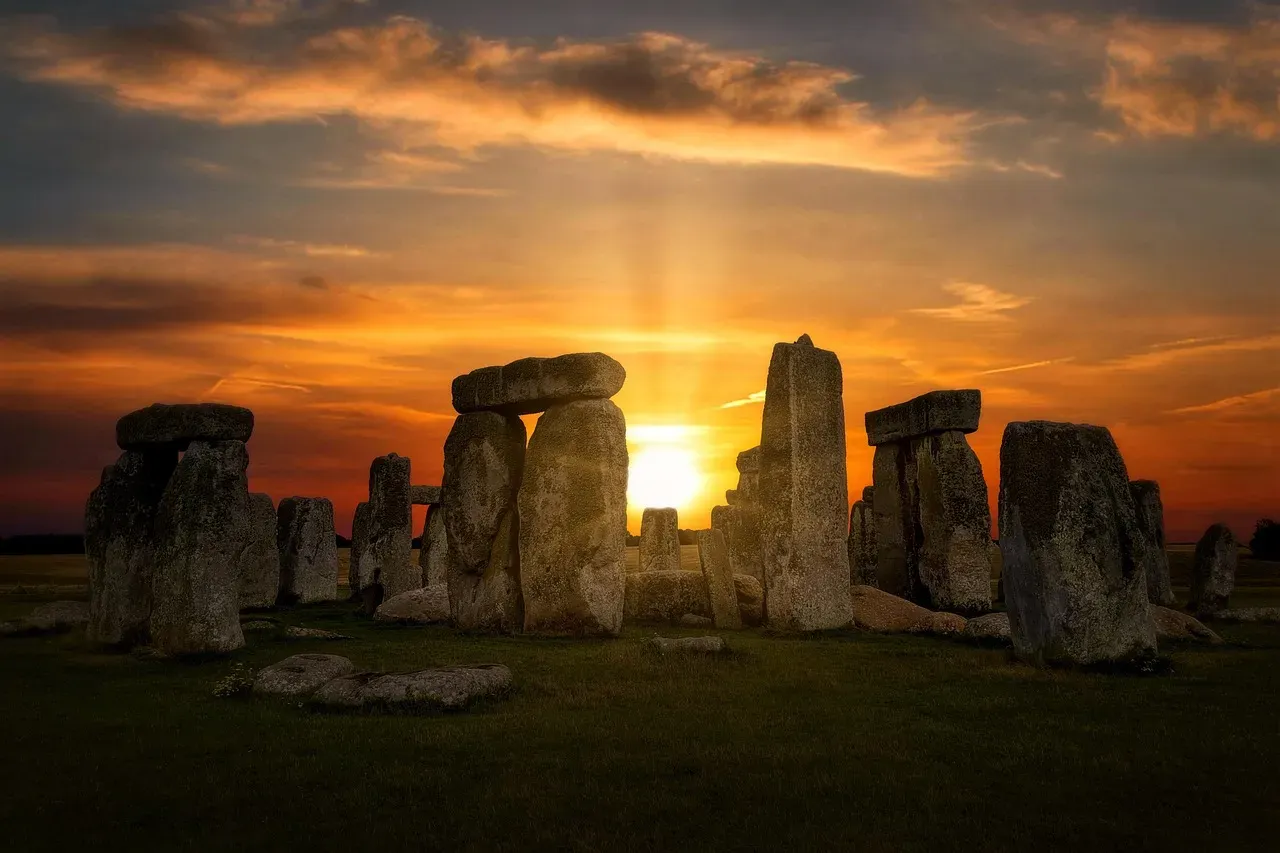
Stonehenge was carefully designed to align with the movements of the sun, with the enormous sarsen stones and smaller bluestones arranged around 2500 BC to frame the sunrise at summer solstice and the sunset at winter solstice. Standing in the center of that stone circle on midsummer’s day, you’d see the sun rise just to the left of the Heel Stone, its first rays shining directly into the heart of the monument.
Here’s the thing that really gets me. Laser surveys revealed that the stones framing the solstice axis were the most carefully worked and shaped using hammerstones, creating vertical sides that precisely framed the sun’s movement. These ancient builders didn’t just randomly place massive stones. They carefully selected, shaped, and positioned them with astronomical precision using only Stone Age tools.
It’s possible that Neolithic people noticed natural periglacial ridges and gullies at the site that lined up with the solstice and chose to build Stonehenge there as a result. Whether they discovered this alignment by chance or through careful observation, they clearly understood its significance. Evidence suggests that midwinter would have been the most important focus for the people who built Stonehenge, bringing communities together during the darkest time of year.
Egyptian Pyramids and the Stars of the Afterlife
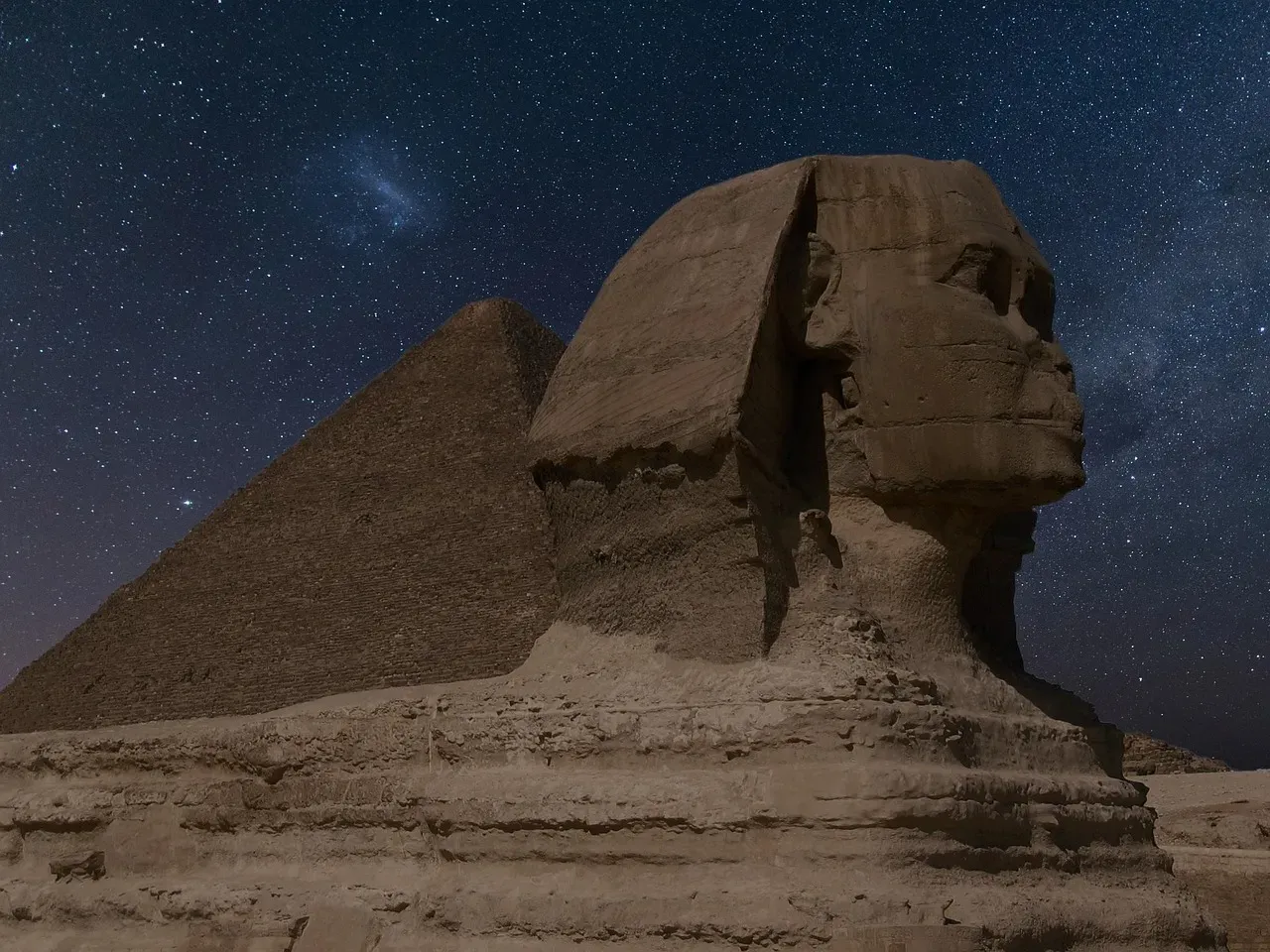
The Egyptians mapped the constellations visible in the night sky, developed a 365-day calendar based on the heliacal rising of the star Sirius, and aligned their monuments with celestial bodies. The precision is honestly mind blowing. The Great Pyramid of Giza is precisely oriented to the cardinal points, and its shafts align with specific stars. We’re talking about an accuracy that engineers with modern instruments would be proud of.
Two researchers found that one shaft from the pyramid aimed toward where the north star would have been during construction, while another generally pointed toward Orion’s Belt. The stars of Orion were associated with Osiris, the god of rebirth and afterlife by the ancient Egyptians. Though the popular Orion correlation theory remains controversial among scholars, there’s no denying that Egyptian builders possessed sophisticated astronomical knowledge.
Ancient Egyptians monitored the heliacal rising of Sirius, which heralded the annual flooding of the Nile, a vital event for agriculture that also marked the beginning of their calendar year. Their survival depended on reading the stars correctly, and they developed one of history’s most accurate early calendars as a result.
The Maya’s Obsession With Venus
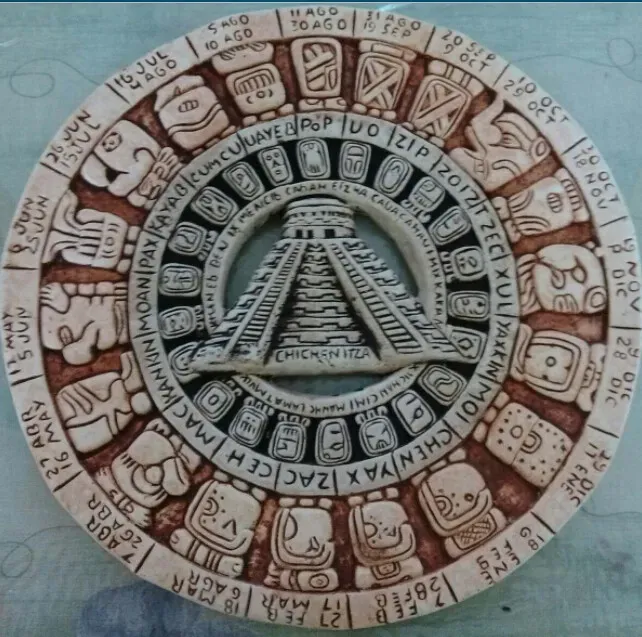
Venus held a special place in Mayan astronomy, as the Maya accurately calculated its synodic period as 584 days and recognized that five Venus cycles roughly equated to eight solar years, leading to the development of a Venus calendar used for ceremonial and possibly military planning. Their Venus observations were so precise that they rival modern calculations.
The Dresden Codex contained detailed recordings of Venus’s phases in its Venus Table, with data gathered by astronomers to help time ritual events with the planet’s cycles. Let’s be real here: these weren’t primitive superstitions. The mathematical correction of their Venus calendar was likely developed at Chichen Itza during the Terminal Classic period, representing a sophisticated astronomical innovation.
Venus was associated with the god K’uk’ulkan, and raids and battles were sometimes scheduled to coincide with specific phases of Venus, which were believed to bring divine favor. Whether or not you believe in planetary influences, the Maya’s ability to predict Venus’s position months or years in advance is genuinely impressive. Observations of Venus from Chichen Itza were important to the political arrival of K’uk’ulkan into the Mayan region.
Greek Astronomers and the Birth of Scientific Method
Aristarchus of Samos was responsible for the earliest known heliocentric theory, placing the sun at the center of the known universe with Earth revolving around it, and he succeeded in correctly mapping all the then known planets in order of distance. This was nearly two thousand years before Copernicus! Unfortunately, most ancient Greek thinkers rejected his radical idea.
Hipparchus of Nicaea compiled the first stellar catalogue in the second century BCE, listing the positions of 850 stars across the sky with a precision of about one degree using only naked eye observations. Hipparchus also created the magnitude system for describing star brightness, which is still in use today. His work represented a shift from mythology to systematic scientific observation.
The Antikythera mechanism, the world’s oldest analog computer dating to between the third and first centuries BCE, was a mechanical model of the solar system. This device could predict eclipses and track planetary movements with astonishing complexity. It incorporated complex bodies of observational and theoretical knowledge, much deriving ultimately from the Babylonian tradition. Greek astronomy was built on foundations laid by earlier civilizations.
Chinese Star Maps and Ancient Record Keeping
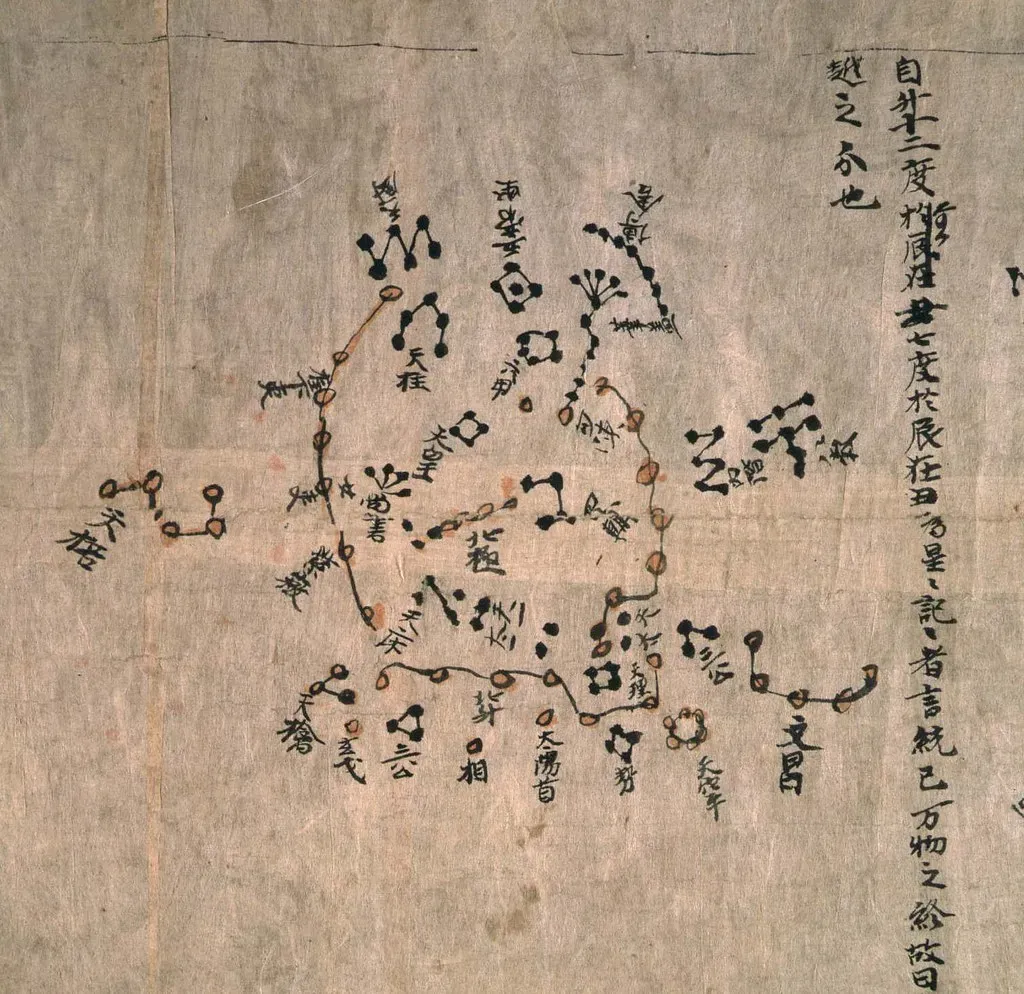
The Dunhuang Star Atlas, discovered in a Buddhist cave in Dunhuang, China, is said to be the earliest known preserved star map in the world, dating back before AD 700. Chinese astronomy developed independently from Western traditions, yet arrived at similar conclusions about celestial mechanics.
The Chinese determined the length of the year at about the same time as the Egyptians, and they also recorded comets, bright meteors, and dark spots on the Sun. Their systematic record keeping over centuries provided invaluable data for understanding long term celestial patterns. Honestly, it’s hard to say for sure, but their detailed observations of supernovae and other transient events offer insights that modern astronomers still study.
Ancient Chinese astronomy heavily influenced the culture, philosophies, and rituals, with the Chinese correlating celestial events with terrestrial occurrences. Like other ancient civilizations, they saw the cosmos as intimately connected to events on Earth.
Polynesian Navigation by the Stars
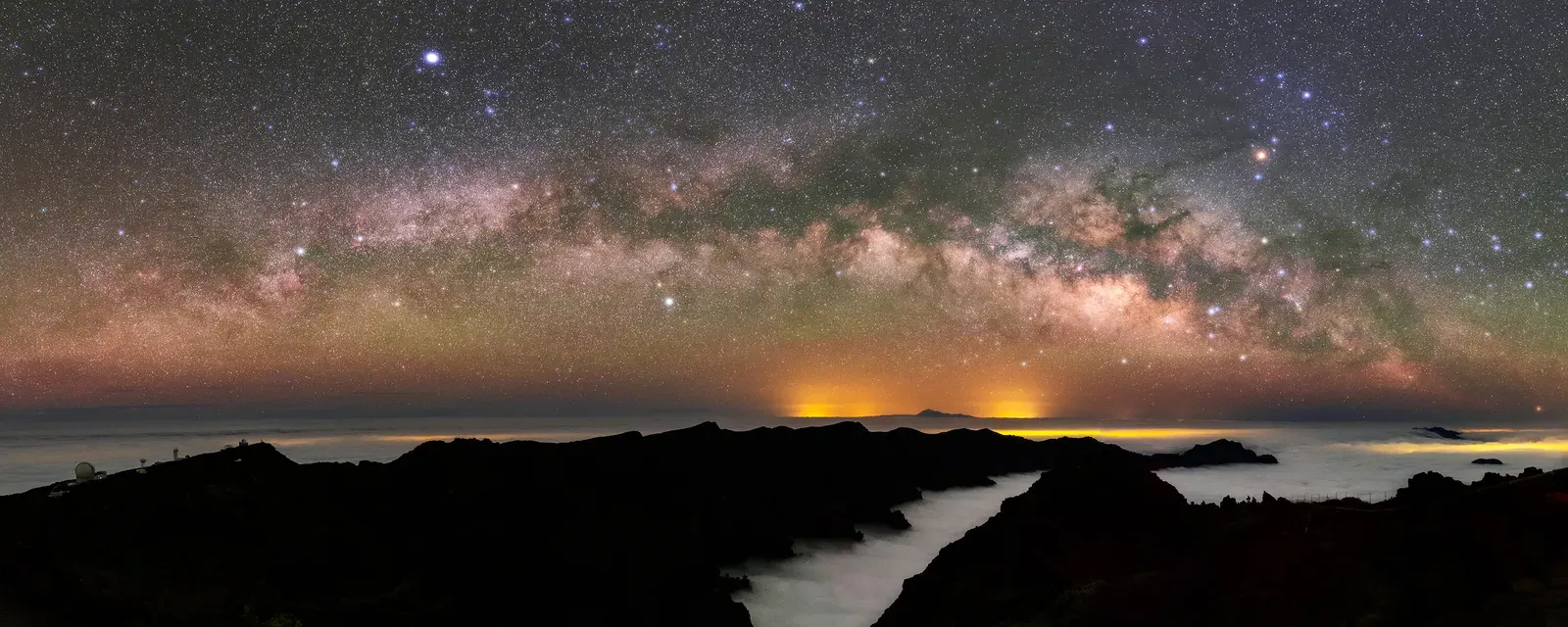
Ancient Polynesians learned to use the stars to navigate thousands of miles across the Pacific Ocean, enabling them to colonize distant islands, including the Hawaiian Islands. Without compasses, maps, or instruments, these master navigators crossed vast expanses of open water using only celestial knowledge passed down through generations.
The Polynesians used star charts, the positions of constellations, and the angle of the stars above the horizon to guide their canoes across vast distances. Their ability to locate tiny island chains in the middle of the Pacific Ocean remains one of humanity’s most impressive navigational achievements. These weren’t lucky guesses. They required deep understanding of star positions at different latitudes and times of year.
The transmission of this knowledge was entirely oral, passed from master navigators to apprentices through years of training. Yet the accuracy of their methods allowed them to find islands separated by hundreds of kilometers of empty ocean. Modern sailors using traditional Polynesian techniques have successfully recreated these ancient voyages, proving that their star navigation methods genuinely worked.
The Legacy That Shaped Modern Astronomy
The astronomical knowledge of ancient civilizations formed the foundation of modern astronomy, demonstrating a universal human drive to understand the cosmos and leaving a legacy that endures today. Every time you check a horoscope, mark an equinox, or divide a circle into degrees, you’re using concepts developed thousands of years ago.
Babylonian and Egyptian astronomers developed systems that became the basis for Greek astronomy, while societies in the Americas, China, and India developed their own unique approaches. These weren’t isolated discoveries. Knowledge spread along trade routes, evolved through cultural exchange, and built upon earlier foundations. When Alexander the Great conquered Babylon in 331 BCE, Greek scholars gained access to centuries of Babylonian records, which Hipparchus and others used to develop their own planetary models.
Advances in satellite imaging, drone technology, and computational modeling now allow researchers to reconstruct celestial alignments of ancient sites with precision, revealing insights into how early civilizations observed the night sky and discovering previously unnoticed alignments. We’re still learning from monuments built thousands of years ago. The more we study these ancient sites with modern tools, the more we realize just how sophisticated their builders truly were.
Conclusion: Ancient Wisdom Meets Modern Science
Ancient civilizations mapped the cosmos with breathtaking precision using only their eyes, simple tools, and generations of careful observation. They built monuments aligned to celestial events, created calendars that tracked planetary movements, and developed mathematical systems still used today. Their astronomical knowledge wasn’t primitive or superstitious. It was practical, accurate, and deeply sophisticated.
What strikes me most is how universal this drive to understand the heavens was. From Babylon to Britain, from Egypt to Easter Island, humans looked up at the same stars and asked the same questions. They found different answers shaped by their unique cultures, yet arrived at remarkably similar conclusions about how the cosmos worked. These ancient astronomers gave us the zodiac, the 360 degree circle, the concept of the week, and the foundations of celestial mechanics.
Their legacy reminds us that progress doesn’t always move forward in a straight line. Sometimes ancient knowledge gets lost and must be rediscovered. The fall of great civilizations often meant the loss of astronomical wisdom that took centuries to rebuild. Yet the monuments remain, still aligned to the solstices after thousands of years. What do you think inspired these ancient peoples to devote such incredible effort to mapping the stars? Tell us in the comments.