Most people assume ancient monuments were vaguely “sun-worshipping” structures, built to greet any old sunrise. That’s lazy history. The truth is far stranger and far more exact: builders across 11,000 years of human history, on four different continents, engineered specific stones, passages, and towers to catch light on exactly one day – the winter solstice, the shortest day of the year. Not the equinox. Not the summer solstice everyone assumes. The darkest, coldest morning on the calendar.
That obsession shows up in earthen mounds in Illinois, a carved spiral in a Chaco Canyon butte, a stone passage in Ireland engineered to the minute, and a Peruvian desert ridge that works like a giant sundial. Some of these alignments still fire perfectly, five thousand years later. Others were only decoded in the last two decades – and one discovery, made in 2021, quietly rewrites the entire timeline of when humans started tracking the sun this precisely. Here’s what thirteen of these structures reveal about just how obsessed our ancestors were with the return of the light.
#13 – Cahokia Woodhenge, Illinois, USA
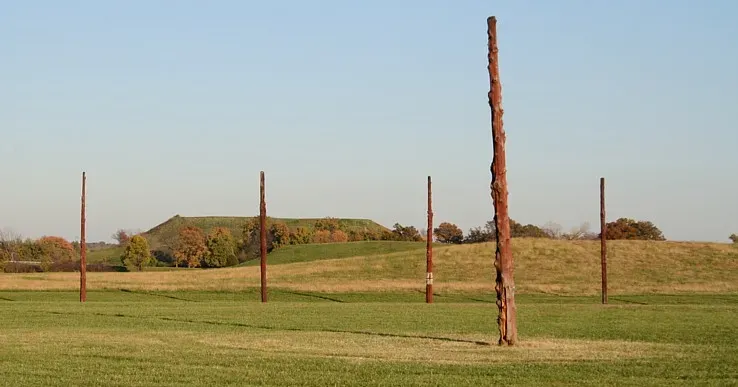
A thousand-year-old ring of wooden posts outside modern St. Louis was engineered with a precision that would embarrass some modern architects.
Cahokia’s Native American builders didn’t just plant timber in a circle. The 48 posts of the circle were set at 7 degrees 30 minutes apart from the geometric center, with the central post deliberately offset 5.6 feet to the east, correcting for the latitude of Cahokia to make the solstice sunrise alignments work. That’s not guesswork – that’s applied trigonometry with logs.
The payoff for that math happened once a year. The winter solstice sunrise pole lines up with Fox Mound, a mound located about 1,640 feet south of Monks Mound. Fox Mound wasn’t a small bump either – it stood roughly 46 feet tall and likely had a temple on top, making it even taller.
- Rebuilt at least five times over Cahokia’s roughly 300-year history
- Woodhenge III alone used 48 posts across a 410-foot diameter
- Modern sunrise observations still happen today at the equinoxes and both solstices, without ceremonies, out of respect for Native American beliefs
Next up, a mile-long serpent that points at nothing but darkness.
#12 – Serpent Mound, Ohio, USA
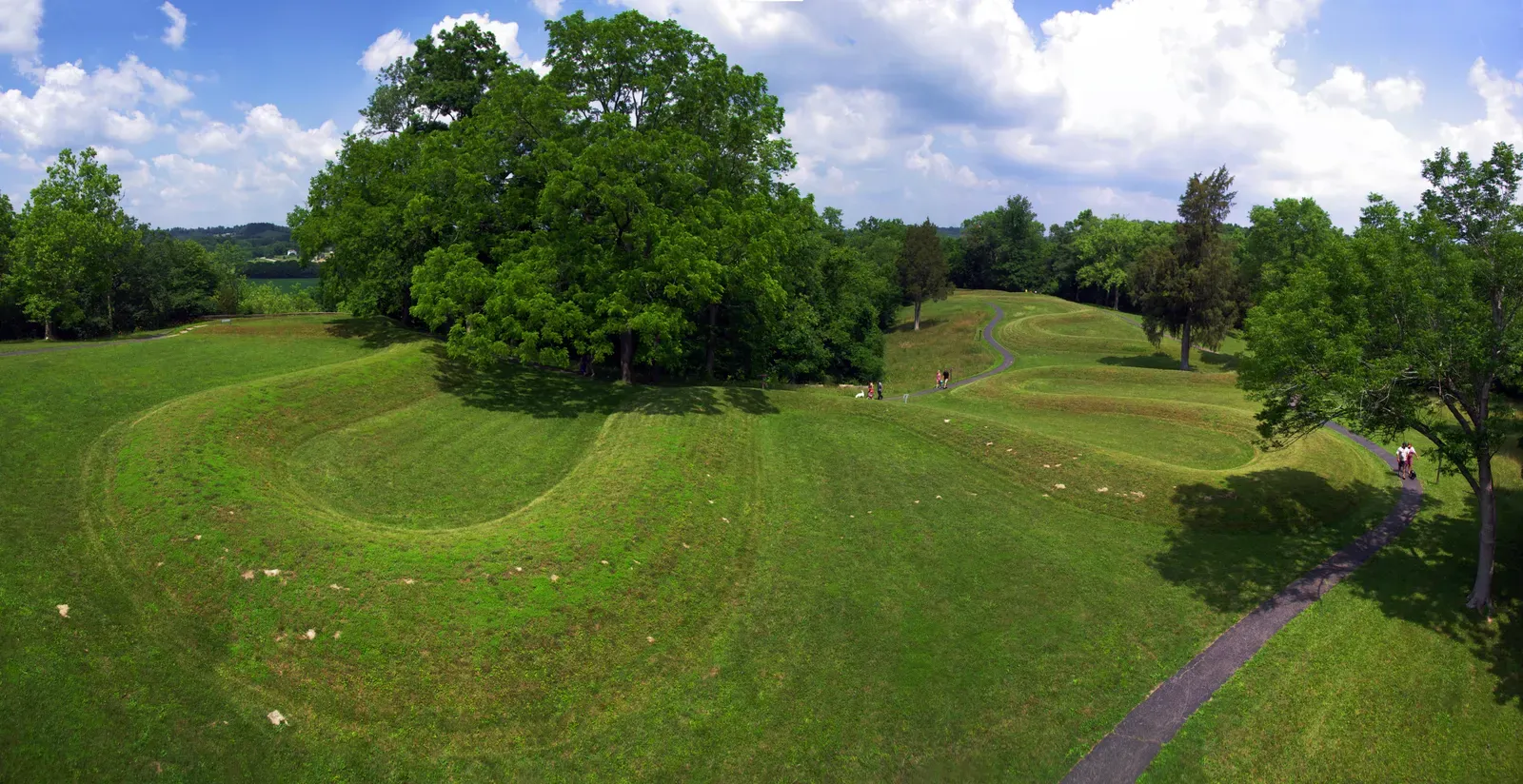
A quarter-mile-long earthen snake, and its tail points at the darkest sunset of the year.
Serpent Mound is one of the most photographed effigy mounds in North America, coiling across a ridge in Adams County. Most visitors focus on the head and the famous “egg” shape near its mouth. Few realize the tail end carries its own astronomical signature.
The coiled tail of Serpent Mound in Peebles, Ohio, is aligned to the winter solstice sunset. That’s a deliberate design choice on an earthwork that has no written records, no stone inscriptions, and no builder’s manual – just dirt, shape, and geometry that has survived centuries of plowing, tourism, and weather.
What’s genuinely strange here is how understated the alignment is compared to Stonehenge or Newgrange. There’s no dramatic light beam, no illuminated chamber – just a silent, mile-scale gesture toward the horizon that only reveals itself if you know exactly where to stand and when. It’s solstice architecture without spectacle, and that restraint is exactly why archaeologists argue it deserves more attention, not less.
New England’s version of this mystery is even weirder – and nobody agrees on who built it.
#11 – Calendar II, Vermont, USA
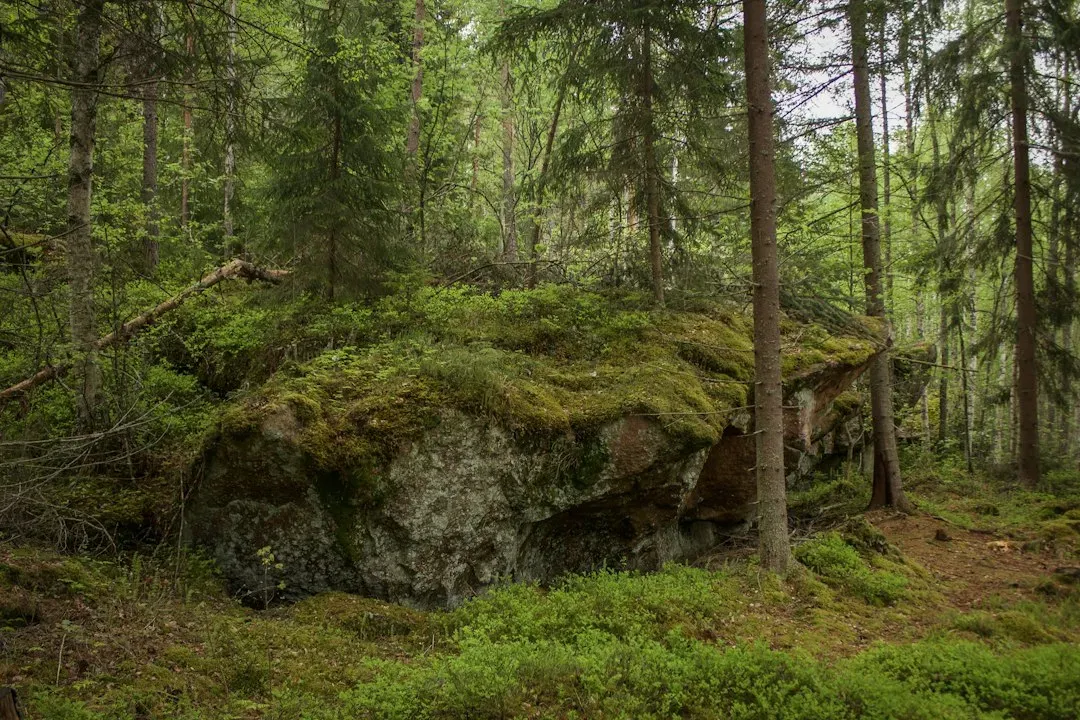
New England has its own solstice mystery, and archaeologists still argue about who built it.
Tucked into the Vermont countryside sits a stone chamber known as Calendar II, one of dozens of mysterious megalithic structures scattered across the northeastern United States. This chamber orients to the winter solstice sunrise. That single sentence hides an enormous controversy.
Some researchers argue these New England stone chambers are colonial-era root cellars or icehouses, built by farmers in the 18th and 19th centuries. Others insist certain chambers show construction techniques and astronomical precision that predate European settlement entirely. The debate hasn’t been settled, and it probably won’t be soon – there’s no inscription, no artifact cache, and no consensus dating method that satisfies everyone.
Quick Compare
- Root cellar theory: Built by 18th- or 19th-century farmers strictly for cold storage, no astronomy required
- Precolonial theory: Construction techniques and solstice precision predate European settlement
- What’s agreed: No inscriptions, artifacts, or dating method has settled the debate
Here’s the controversial opinion worth arguing about: dismissing every one of these chambers as “just a root cellar” is intellectually lazy. A root cellar doesn’t need a precise solstice sunrise alignment. Farmers needed cold storage, not astronomy. Whatever Calendar II actually is, its orientation wasn’t an accident of convenient rock placement.
Then things get seriously old. Like, older-than-farming old.
#10 – Karahan Tepe, Turkey
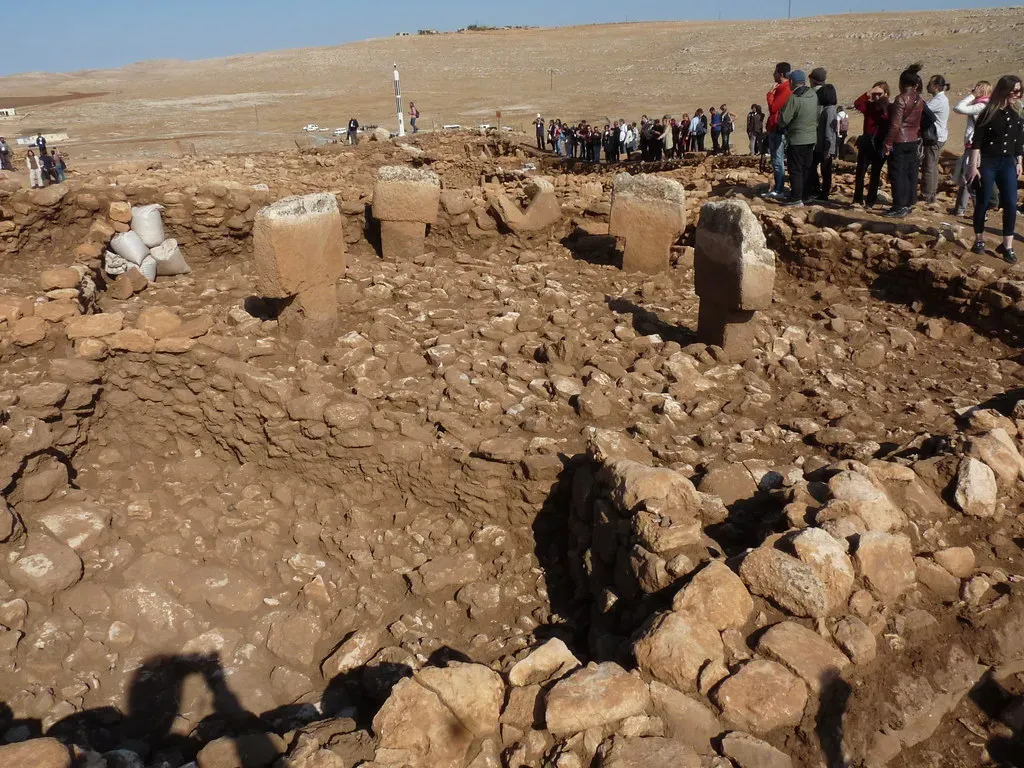
This one rewrites the entire timeline of human astronomy – by about 6,000 years.
In December 2021, researcher Hugh Newman and JJ Ainsworth discovered what may be the oldest known winter solstice alignment recorded anywhere on Earth at Karahan Tepe, the sister site to Göbekli Tepe in southeast Turkey, dating to 11,400 years ago. Read that number again. Eleven thousand, four hundred years. That’s before the wheel, before writing, before pottery in most of the world, and centuries before agriculture had spread widely across the Fertile Crescent.
The alignment was first witnessed on the morning of December 20th of that year. Hunter-gatherer societies, previously assumed incapable of large-scale architectural planning, apparently tracked the sun’s minimum point on the horizon with enough consistency to carve it into monumental stone structures.
Here’s the fact that changes the whole picture: Karahan Tepe predates Stonehenge by roughly 8,000 years and Newgrange by even more, yet shows comparable – some argue superior – solar sophistication. It forces a hard question: were “primitive” societies really primitive, or did we just underestimate them?
Britain’s quieter tombs have their own twist on this same idea.
#9 – Stoney Littleton Long Barrow, Somerset, England
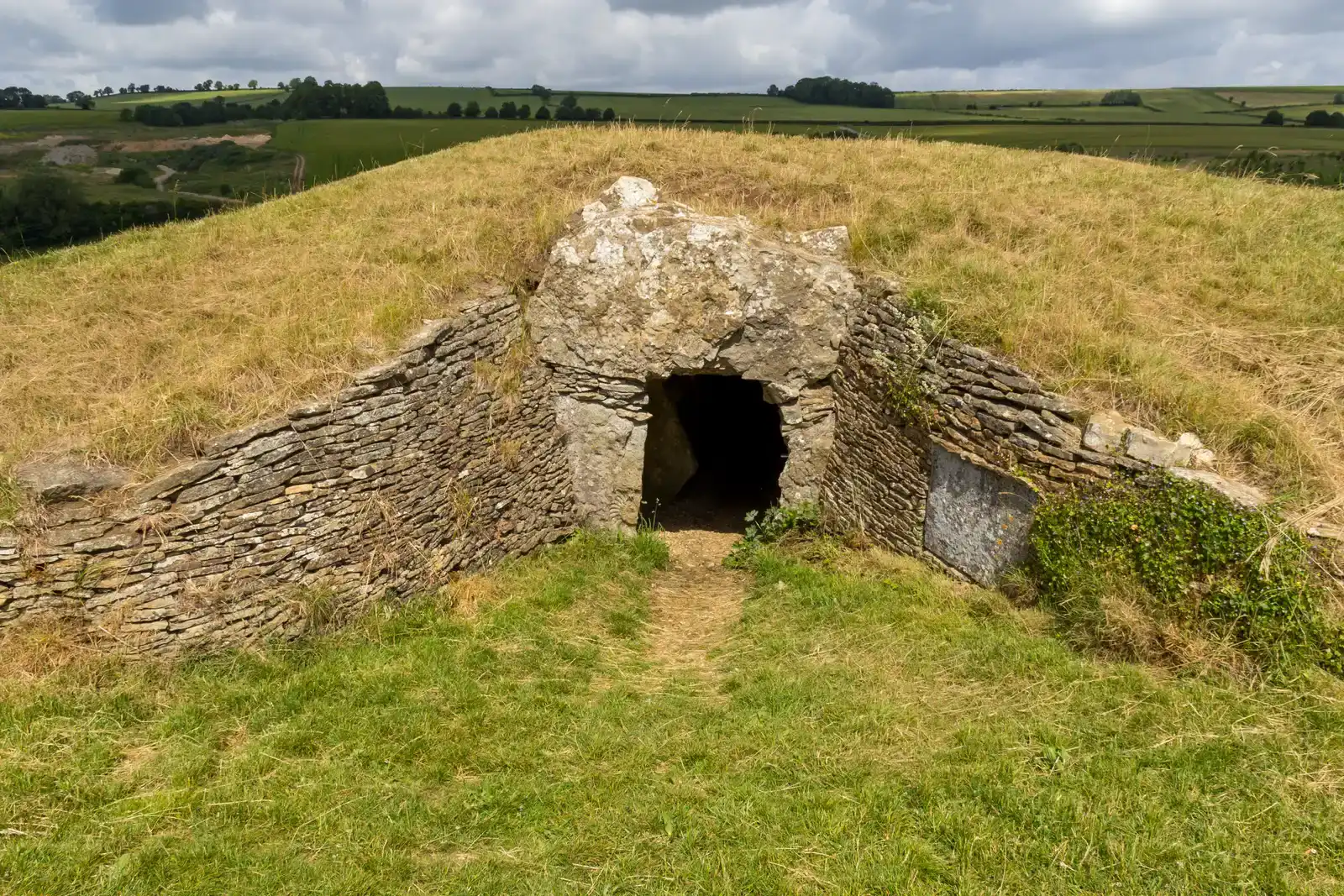
Britain’s solstice architecture isn’t limited to Stonehenge – this quiet Neolithic tomb has its own sunrise trick.
Buried in the rolling hills of Somerset, Stoney Littleton is a chambered long barrow – essentially a stone-lined tomb covered by an earthen mound, built for collective burial and ritual use thousands of years ago. Unlike the flashier sites on this list, it rarely makes international headlines.
Stoney Littleton in Somerset orients to its sunrise, while Maeshowe on Orkney orients to its sunset – an interesting split among Britain’s Neolithic tomb builders. Some communities apparently prioritized the moment the light returns at dawn; others chose the moment it disappears at dusk. That’s not a random split – it suggests regional traditions and even regional beliefs about what the solstice actually meant.
Most people don’t realize that dozens of lesser-known British long barrows carry similar orientations, hiding in plain sight across the countryside, unmarked by ticket booths or gift shops. Stoney Littleton is proof that solstice engineering wasn’t reserved for national monuments – it was a widespread Neolithic habit.
Germany got there first, and by a shockingly wide margin.
#8 – Goseck Circle, Germany
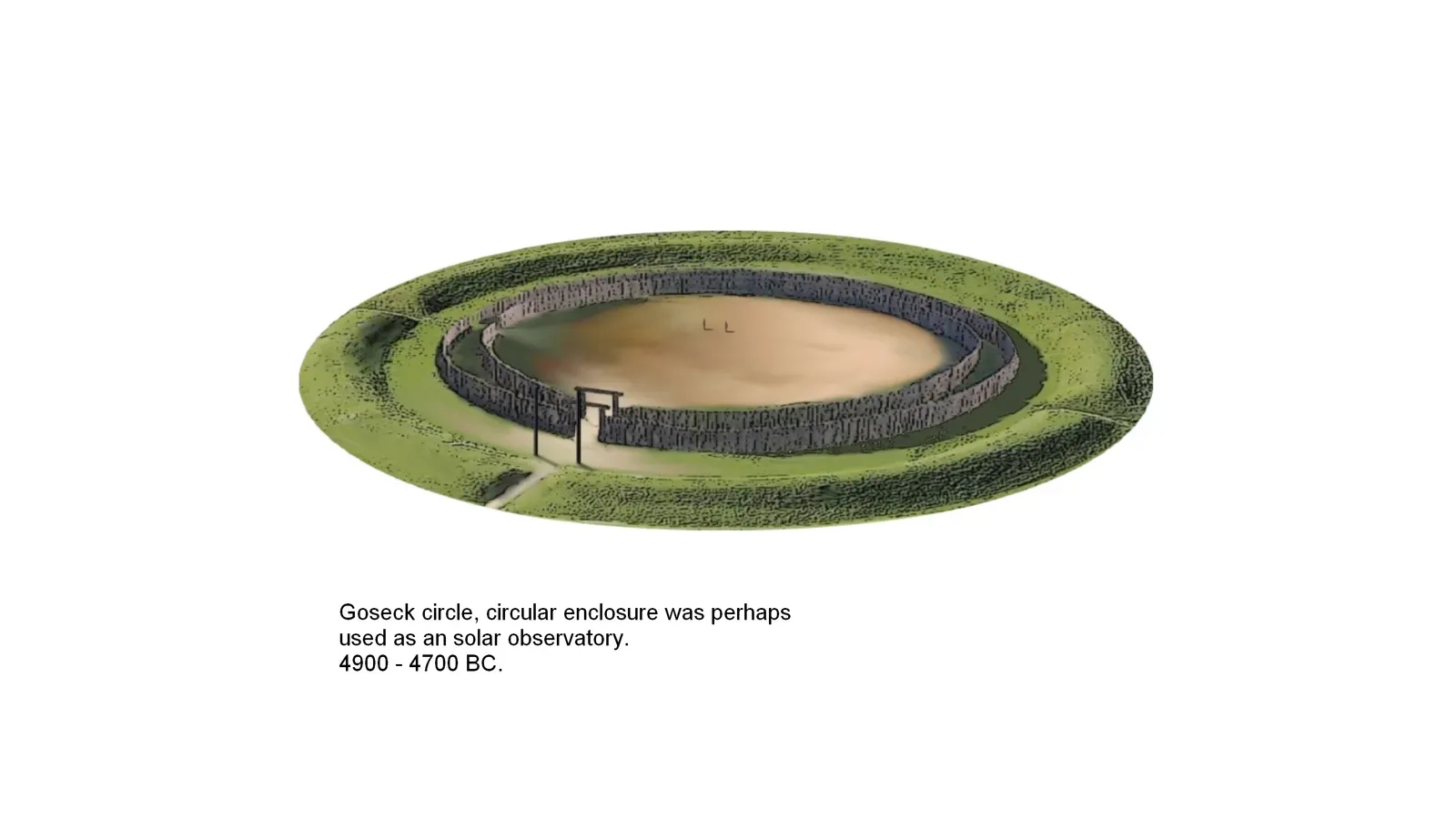
Long before Stonehenge existed, a ring in Saxony-Anhalt was already tracking the darkest day of the year with startling accuracy.
The Goseck Circle consists of a concentric ditch 75 metres across and two palisade rings containing entrances aligned with sunrise and sunset on the winter solstice, plus smaller entrances aligned with the summer solstice. That’s a double-checked system – one axis for the shortest day, a secondary one for the longest.
Researchers describe the structure’s southern gates as lining up with winter solstice sunrise and sunset, a relationship confirmed by measured orientation studies. Standing at the center on the right morning, a person centuries ago could watch the sun rise perfectly framed by a gap in the wooden palisade – no telescope, no compass, just careful surveying.
What’s wild is how recently this was rediscovered. The existence of the site wasn’t made public until August 2003, and it only opened to visitors in December 2005. A 7,000-year-old solar calendar sat hidden under German farmland well into the 21st century.
New Mexico’s version of this trick used nothing but rock and shadow.
#7 – Fajada Butte’s “Sun Dagger,” Chaco Canyon, New Mexico
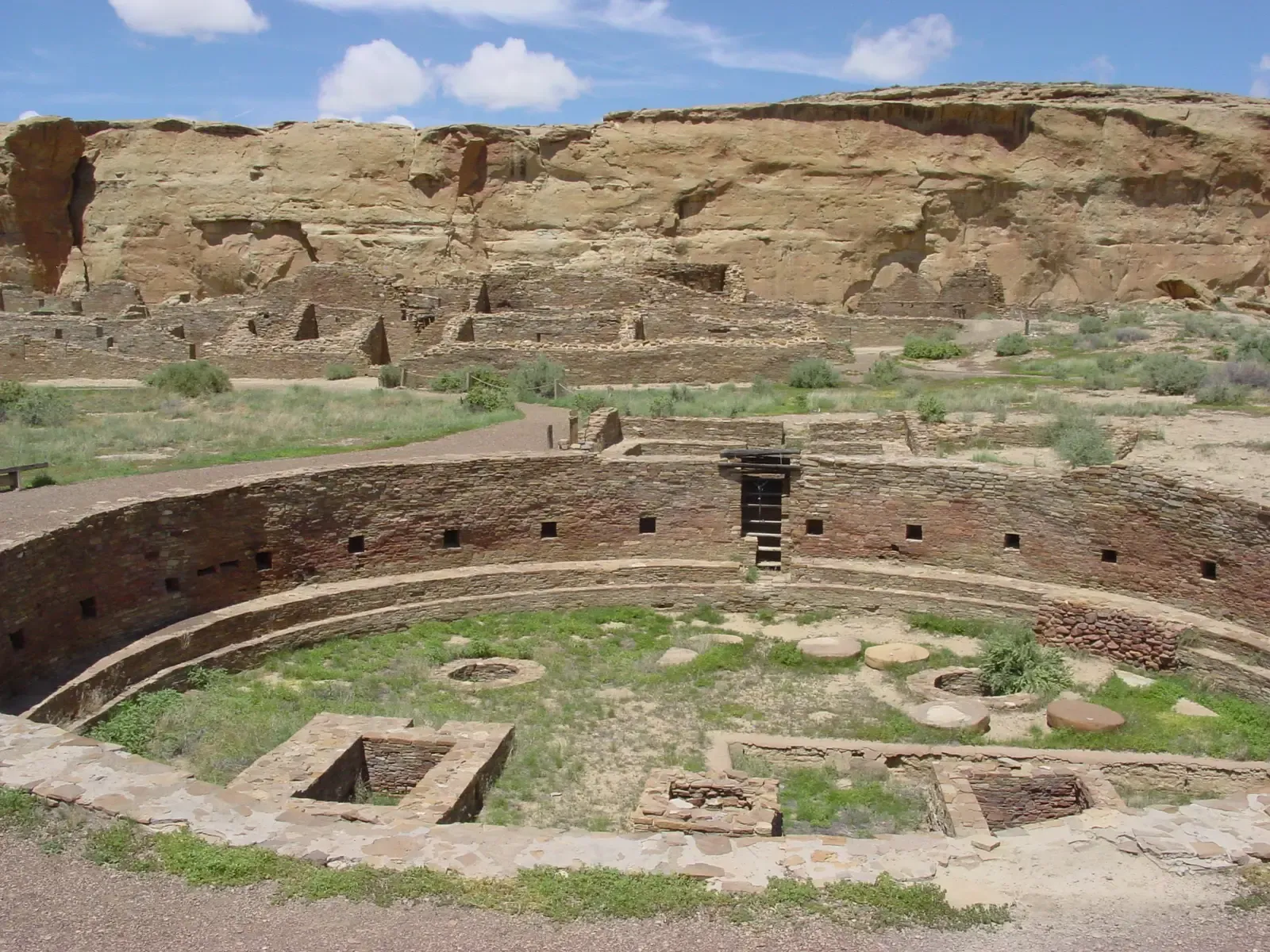
Three leaning slabs of rock turned a sandstone butte into one of the most elegant calendars ever built by hand.
At Fajada Butte in Chaco Canyon, a small petroglyph spiral records a blade of light entering from a thin gap between three large leaning rocks, marking both solstices. The Ancestral Puebloan builders who carved this didn’t need a single upright monolith – they used naturally positioned boulders and simply added the carving underneath.
In 1977, artist Anna Sofaer noticed that on the winter solstice, two “daggers” of light form on either side of the petroglyph for a total of 49 minutes, precisely framing the spiral, and this takes place in the late morning. On the summer solstice, by contrast, only one light dagger illuminates the central axis of the spiral, indicating a rudimentary but clever solar calendar.
Fast Facts
- Discovered by artist Anna Sofaer in 1977 at Fajada Butte, Chaco Canyon
- Two light daggers bracket the spiral for a combined 49 minutes on the winter solstice
- Only one dagger crosses the spiral’s center on the summer solstice
- Foot traffic later shifted the slabs, degrading the original alignment
Here’s the mistake most articles make: they treat the Sun Dagger as flawless ancient engineering frozen in time. In reality, foot traffic and erosion from visitors shifted the very slabs that created the effect, and the original alignment has since degraded – a reminder that even “permanent” solstice monuments are fragile.
Peru’s towers might be the cleverest solution on this entire list.
#6 – Chankillo’s Thirteen Towers, Peru
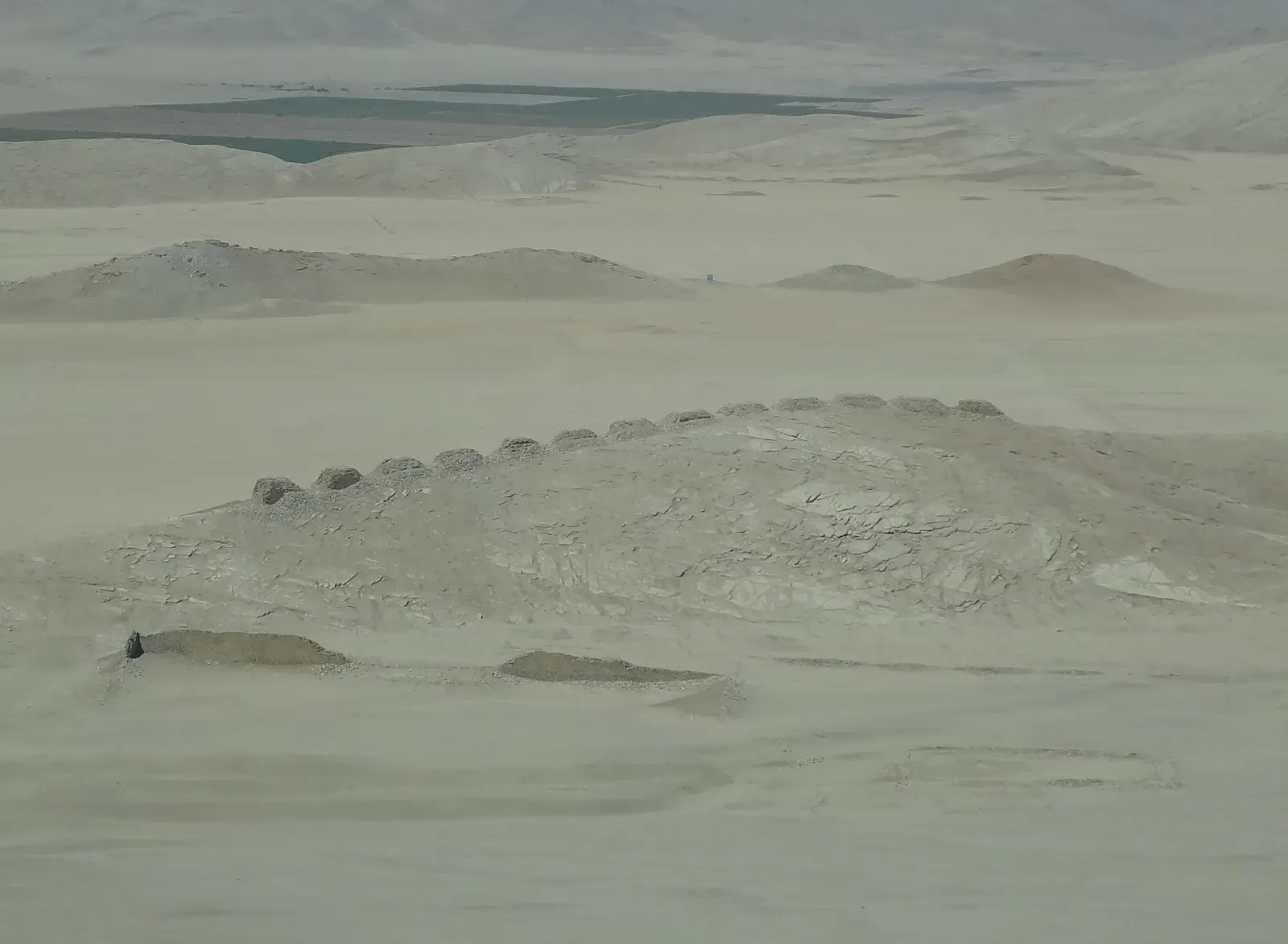
Thirteen stone towers on a desert ridge in Peru form what might be the most mathematically elegant solar calendar on this entire list.
In the coastal desert of Peru, thirteen squat stone towers march along a ridge between two observation platforms, and when Peruvian archaeologist Ivan Ghezzi and archaeoastronomer Clive Ruggles published their analysis in 2007, Chankillo was recognized as the oldest known solar observatory in the Americas. Built around 250-200 BC, it predates Incan sun-tracking structures by more than 1,700 years.
Here’s where it gets genuinely clever:
- The gaps between towers divide the year into regular intervals of about ten days, allowing the sun’s date to be read to within two or three days.
- On the winter solstice, the sun rises behind the furthest tower on one end, then moves behind each successive tower until reaching the far end six months later, at the summer solstice.
- UNESCO inscribed the complex as a World Heritage Site in 2021.
A masterpiece of human creative genius.
UNESCO World Heritage Committee
This wasn’t a religious guess dressed up as science. It was a functioning, testable, repeatable calendar – arguably the most precise pre-telescope solar instrument ever discovered.
Scotland’s answer to this puzzle gives you three weeks instead of three minutes.
#5 – Maeshowe, Orkney, Scotland
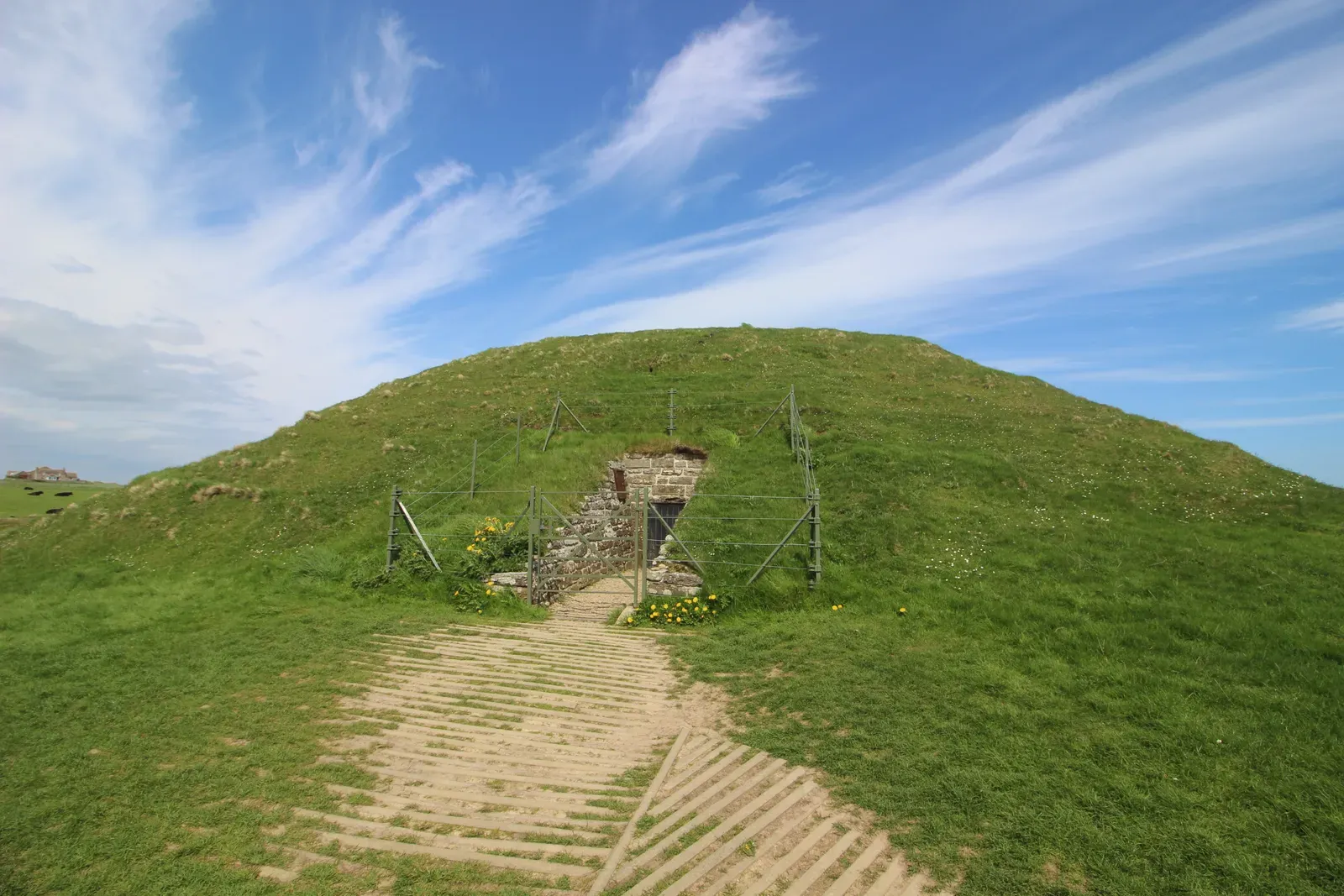
A tomb on a windswept Scottish island turns into a golden tunnel for three weeks every winter – and only three weeks.
Maeshowe tomb in Orkney, built around 2800 BC, features a 33-foot entry corridor that captures the setting sun for roughly three weeks around the winter solstice. Unlike Newgrange’s tighter single-day window, Maeshowe’s builders gave themselves – and future generations – a wider margin of forgiveness for cloud cover.
On clear days, the light carves a golden beam into the rear wall of the chamber, symbolizing renewal after the solstice’s darkness. Locals and archaeologists alike still gather on clear December evenings hoping to catch that beam land precisely where it has for nearly 5,000 years.
Most people don’t realize Maeshowe sits within a wider Orkney landscape saturated with Neolithic ritual sites – stone circles, standing stones, and settlement mounds – suggesting the entire region operated as a coordinated ceremonial calendar, not just one isolated tomb chasing the sun alone.
Machu Picchu flips this whole concept upside down – literally.
#4 – Temple of the Sun, Machu Picchu, Peru
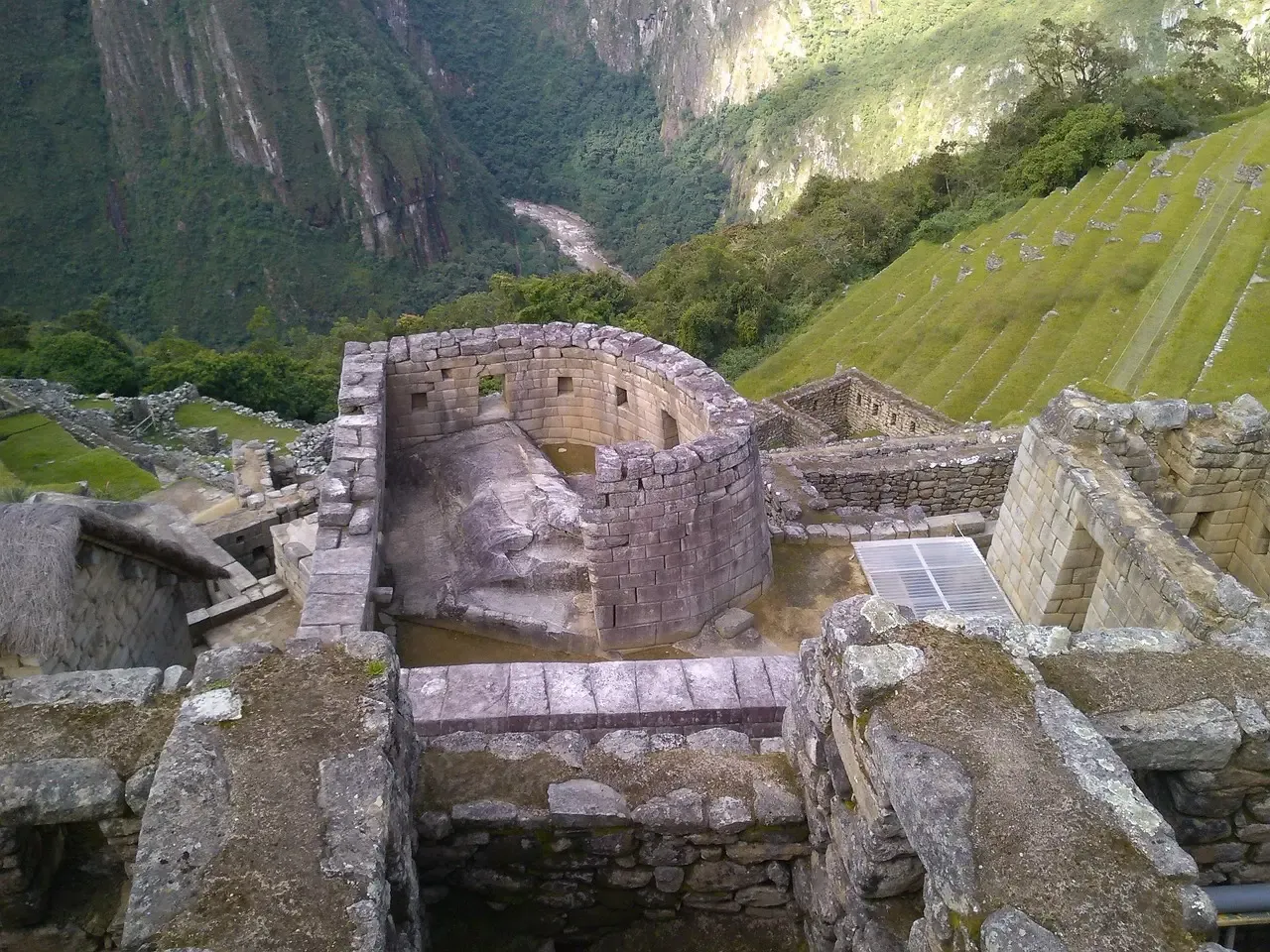
High in the Andes, a curved stone temple flips the entire “shortest day” concept on its head – literally, by hemisphere.
The semicircular Temple of the Sun at Machu Picchu is widely discussed for its carefully placed trapezoidal windows and their solar sightlines. Machu Picchu has numerous alignments built into its structure, including both the winter and summer solstices.
Here’s the twist most listicles skip entirely: because Machu Picchu sits in the Southern Hemisphere, its “shortest day” doesn’t fall in December like it does for Newgrange or Stonehenge – it falls in June. The same astronomical event, tracked by builders on opposite sides of the equator, points at completely different calendar dates.
Why It Stands Out
- Sits in the Southern Hemisphere, so its shortest day falls in June, not December
- Trapezoidal windows create solar sightlines for both solstices within a single structure
- Proves the winter solstice is a universal mechanism, not a fixed calendar date
The real surprise here isn’t the architecture – it’s the reminder that “winter solstice” isn’t a universal date, it’s a universal mechanism. Every culture on this list solved the identical problem of tracking the sun’s minimum arc, but the calendar date attached to that solution depends entirely on which half of the planet you’re standing on.
Egypt’s version aims straight at a god.
#3 – Karnak Temple, Egypt
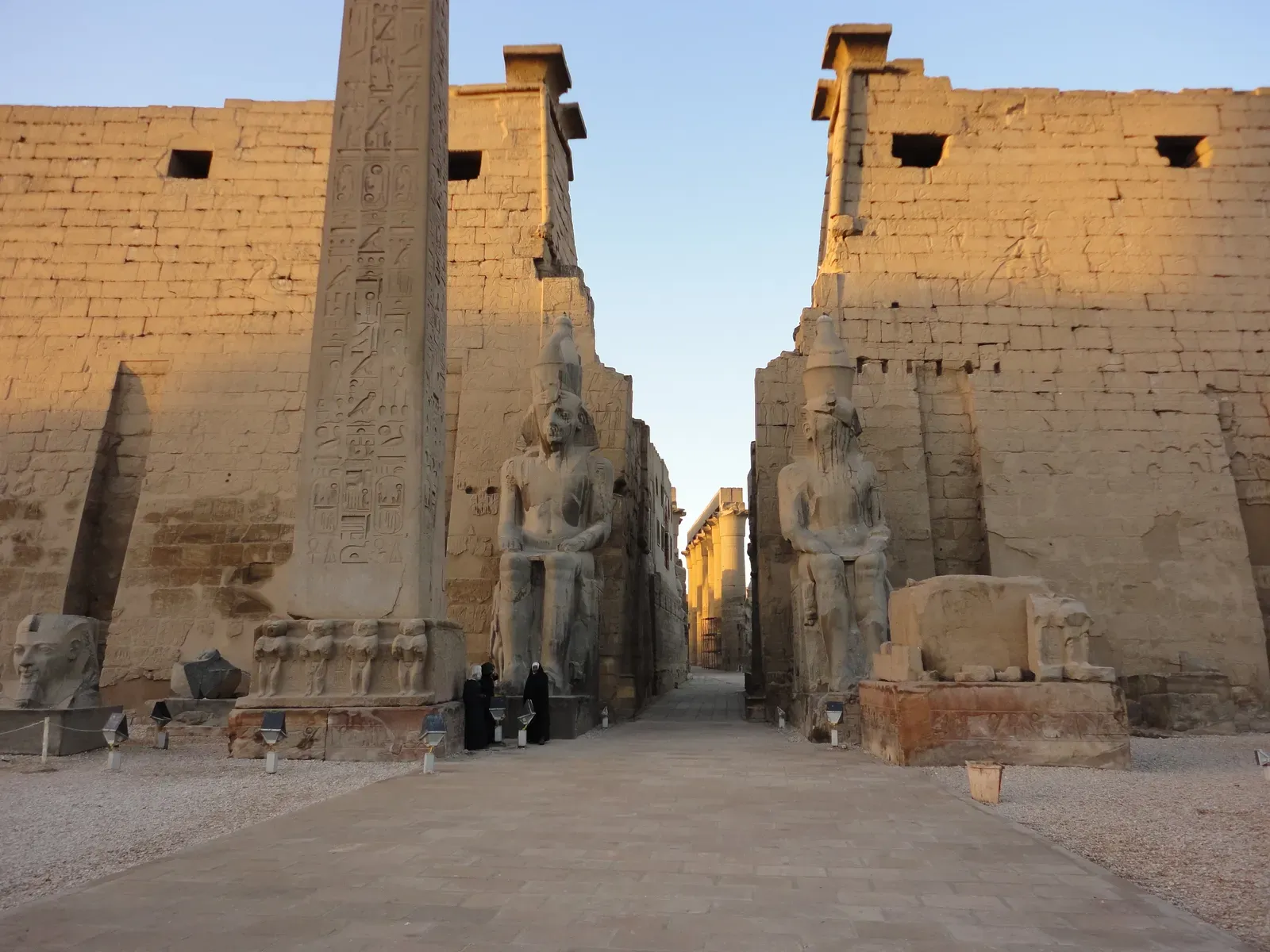
Egypt’s largest religious complex has a secret sightline that only fires once a year, and it’s aimed directly at the god Amun-Re.
During the winter solstice sunrise at the Temple of Karnak, the sun’s rays shine directly between the portals of the Gate of Nectanebo and light up the sanctuary of Amun-Re. This isn’t a side chapel effect – it’s the innermost sanctuary of one of the largest religious structures ever built.
The rising sun of the winter solstice shines between two massive pillars, casting a bright beam of light through the complex for a total of 25 minutes. Twenty-five minutes, once a year, after millennia of quarrying, hauling, and stacking multi-ton stone blocks with obsessive geometric precision.
Here’s the controversial opinion: Egyptologists spent decades emphasizing Karnak’s summer solstice and equinox alignments while treating the winter solstice sightline almost as an afterthought. That framing undersells what’s actually happening – a precisely engineered light show timed to the exact moment ancient Egyptians needed reassurance that the sun would return.
Everything you think you know about Stonehenge is about to get complicated.
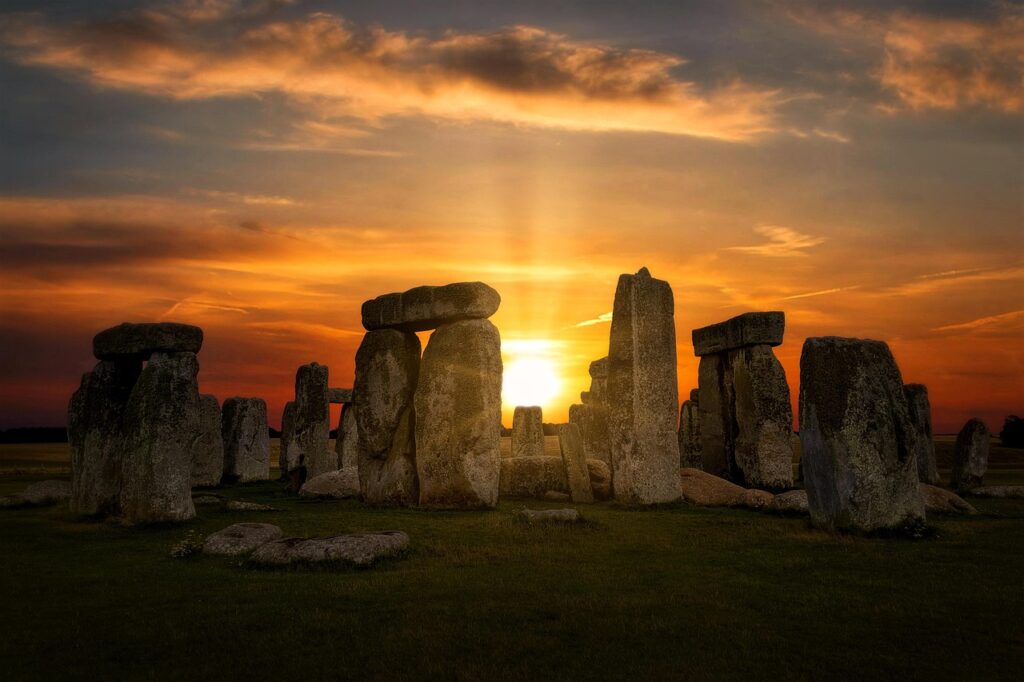
#2 – Stonehenge, England
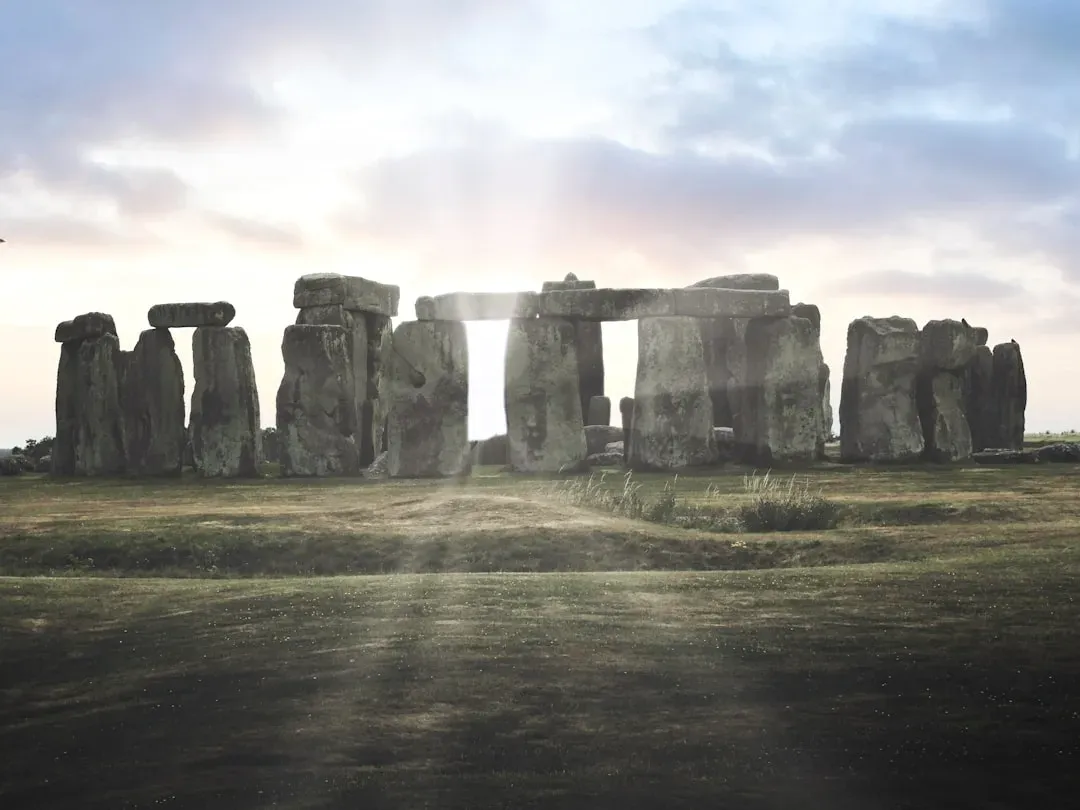
Everyone assumes Stonehenge is a summer solstice monument. The emerging archaeological consensus says that’s backwards.
English Heritage describes the monument as aligned so that the summer solstice sunrise rises behind the Heel Stone in the northeast and the winter solstice sun sets to the southwest. That sunset alignment, not the famous sunrise one, may actually be the point.
Archaeological evidence increasingly suggests that midwinter, not midsummer, was the more significant ceremonial focus, backed by excavations at nearby Durrington Walls revealing large-scale feasting in December and January. People weren’t traveling to Stonehenge in June for a solstice party – they were doing it in the dead of winter, when food stores mattered and the return of light meant survival.
There’s more to the alignment than the obvious axis, too. There’s a direct sightline running through the monument along the Altar Stone, through a deliberately carved notch, pointing at the rising point of the sun over Coneybury Hill, and the site also contains a winter solstice sunset orientation matching the avenue, exactly opposite the summer solstice sunrise.
Worth Knowing
- Durrington Walls excavations reveal large-scale feasting in December and January, not summer
- The Altar Stone sightline points toward sunrise over Coneybury Hill through a carved notch
- The avenue’s winter solstice sunset orientation sits exactly opposite the summer sunrise axis
Here’s the shocking part: Britain’s most famous monument might be a winter monument that history mislabeled as a summer one.
And then there’s the one that started it all.
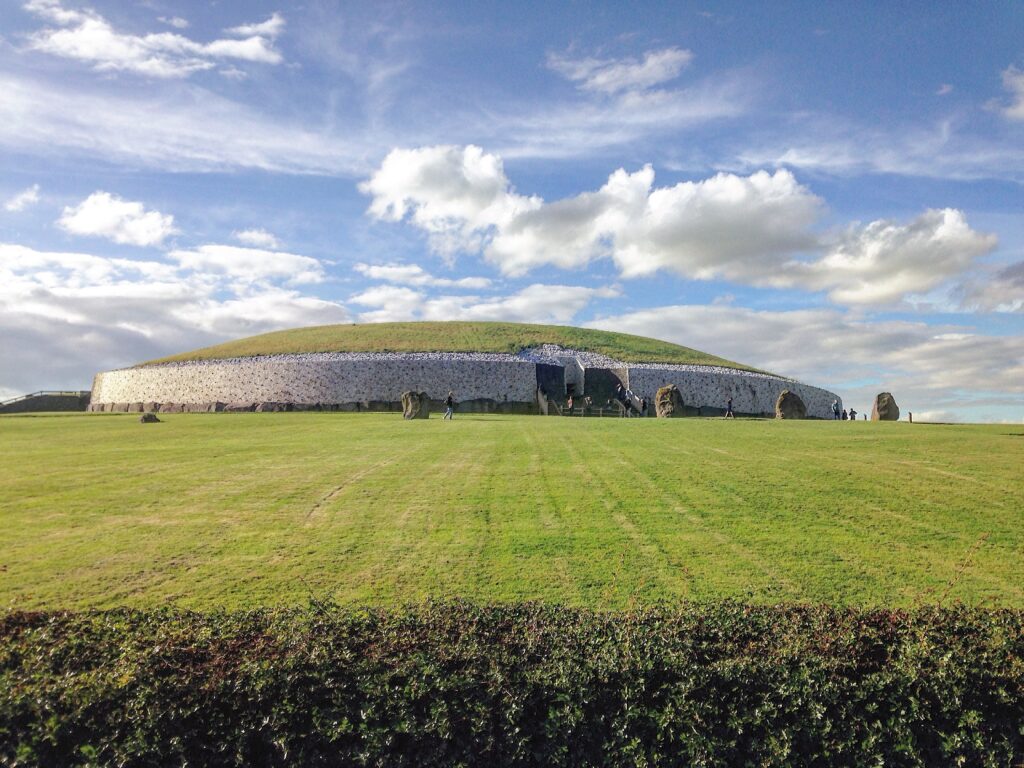
#1 – Newgrange, Ireland
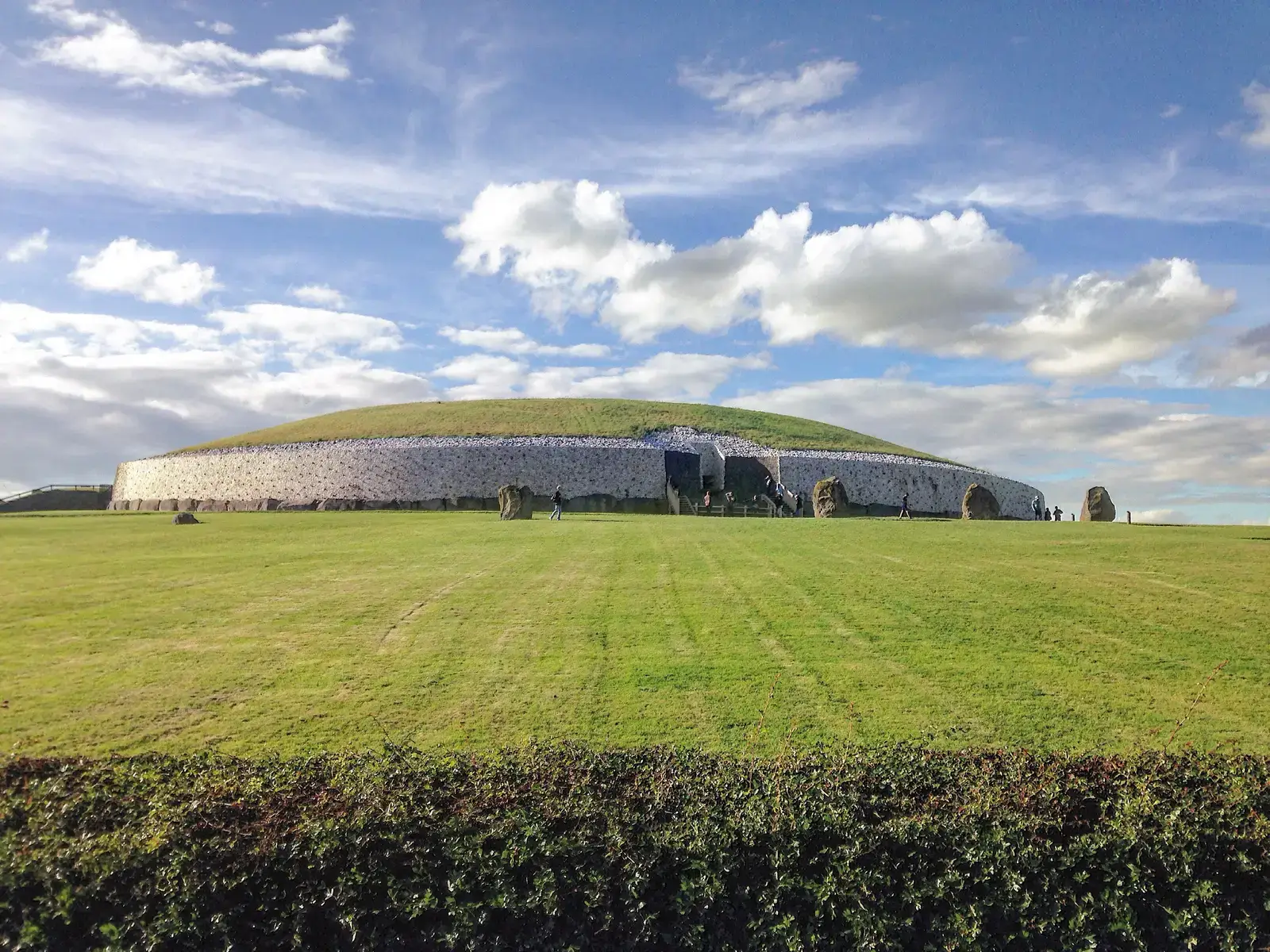
Nothing on this list beats the sheer engineering audacity of a passage tomb built to trap sunlight for six minutes, once a year, for over five thousand years running.
At Newgrange in Ireland, built around 3200 BCE, a narrow passageway floods with light at dawn on the winter solstice, requiring precise construction that suggests special significance tied to the return of sunlight after the darkest period of the year. This predates the Great Pyramid of Giza and Stonehenge alike.
The mechanism is the real marvel. For a few minutes each year, sunlight enters a precisely engineered roofbox above the entrance and travels more than sixty feet down a stone passage, illuminating the central chamber before fading again. There’s no margin for error built into casual guesswork – that roofbox had to be positioned with an accuracy that modern surveyors still find impressive.
The most surprising fact on this entire list: this happens once a year, for a few minutes, and has done so reliably since before the wheel was common technology in most of the world. The builders of Newgrange clearly understood solar cycles and used that knowledge to shape the internal experience of everyone who entered the tomb. That’s not primitive superstition. That’s applied astronomy carved into stone and dirt, five millennia ahead of telescopes.
The Bottom Line

Thirteen structures, four continents, and one obsession: the exact moment the sun stops retreating and starts coming back. From Karahan Tepe’s 11,400-year-old alignment to Chankillo’s mathematically precise towers to Newgrange’s six-minute light show, ancient builders treated the winter solstice as the single most important date worth engineering around – not the equinox, not even the summer solstice in most cases.
The most controversial takeaway is that Stonehenge, the world’s most photographed solstice monument, was probably built for the wrong solstice in most people’s minds. Winter, not summer, may have been the point all along. Did we miss a solstice-aligned structure that deserves a spot on this list? Drop it in the comments.