Every so often, an object turns up in the sand that refuses to sit quietly on a museum shelf. It gets photographed, catalogued, argued over in academic journals, and then argued over again a decade later when someone proposes a new theory. Egypt has produced more than its share of these stubborn puzzles, pieces that look ordinary enough until you actually try to explain what they were for.
What follows are six such objects, each pulled from a real tomb, each studied by real archaeologists, and each still lacking a single, agreed-upon classification. None of these require alien visitors or lost civilizations to be interesting. The genuine mystery is strange enough on its own.
The Disc of Sabu: A stone wheel nobody can explain
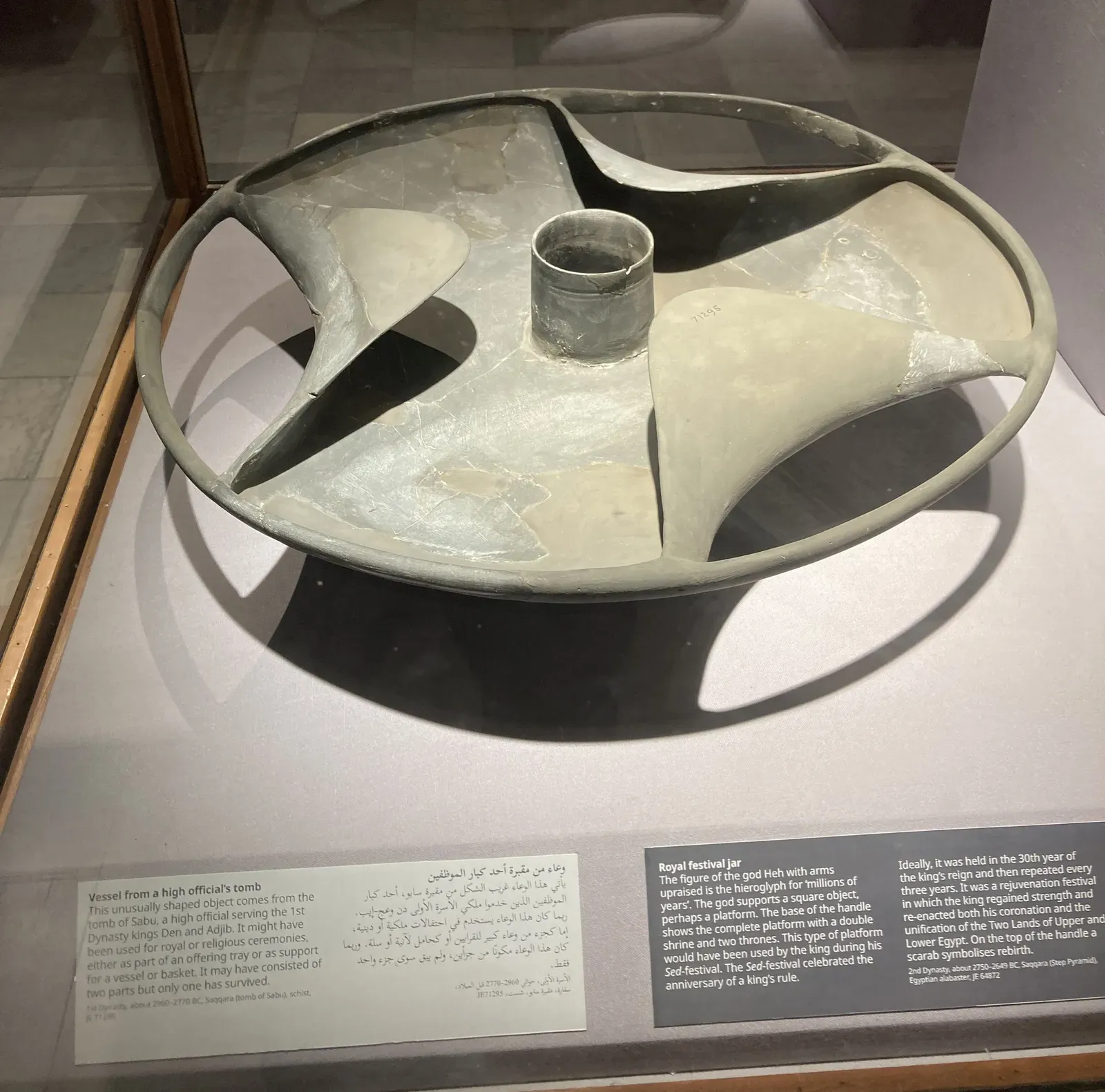
Found in 1936 inside the mastaba of a First Dynasty official named Sabu at Saqqara, this shallow siltstone bowl has three thin, curving lobes rising from its rim, giving it an odd resemblance to a propeller or a steering wheel. The Sabu Disk resists easy classification, carved from schist and dated to Egypt’s First Dynasty, its form so unlike typical funerary ware that early observers likened it to machined components rather than ancient craft. It was discovered by British Egyptologist Walter Bryan Emery, and it has been sitting in the Egyptian Museum in Cairo ever since, quietly refusing to explain itself.
The leading theory is fairly mundane. Researchers suggest the disk likely held food or oil, though the delicate nature of the carving suggests the bowl was not for everyday use and may have been placed in the tomb as an offering for the afterlife. Other researchers have floated everything from a beer-mixing tool to a decorative imitation of a lost metal original, but no matching machinery, shafts, housings, or associated mechanical installations were ever recovered from the tomb, and the stone itself is too fragile for many of the high-speed functions people have proposed for it. Nearly ninety years on, it remains a bowl shaped like a question mark.
The Saqqara Bird: Toy, charm, or something else
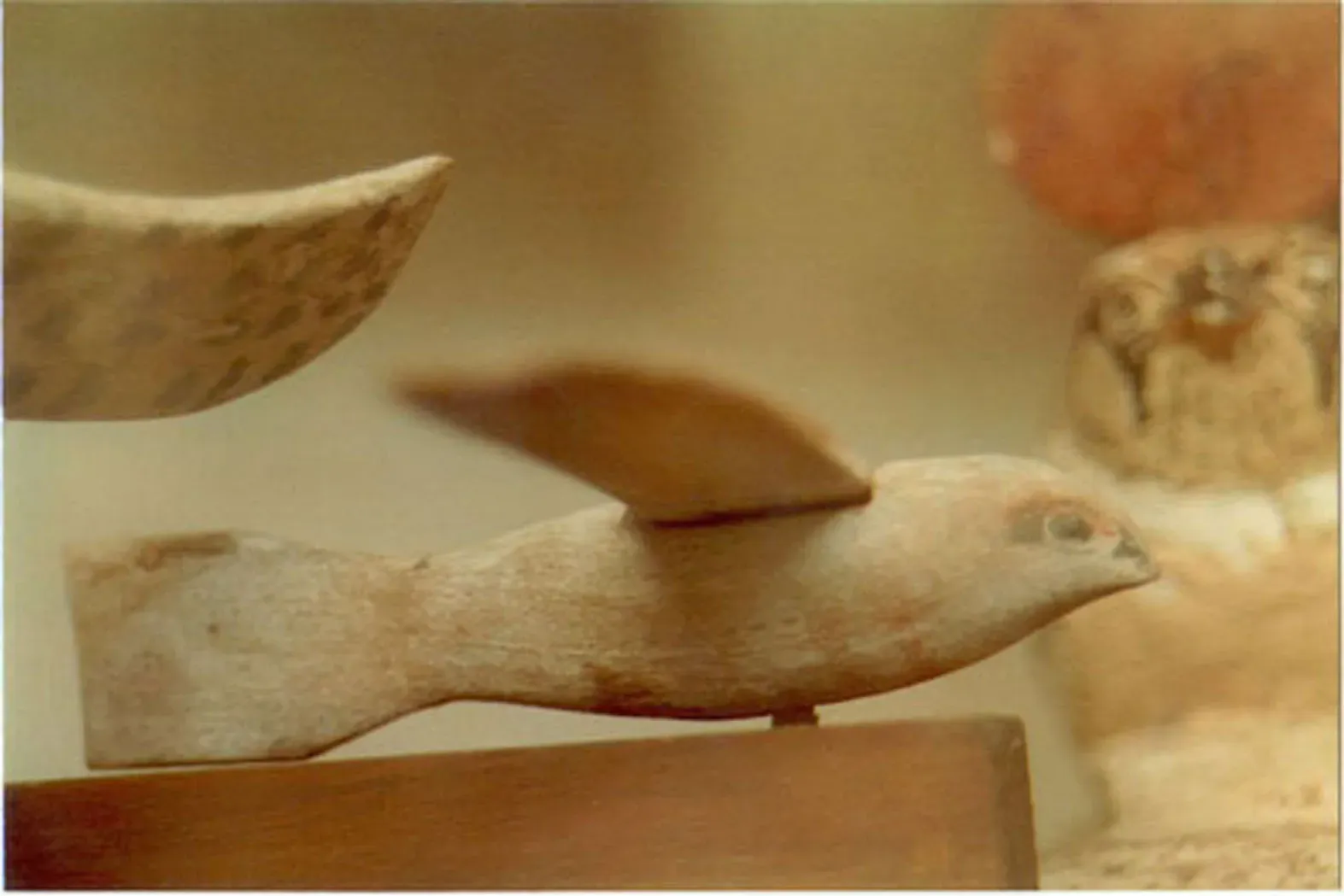
Discovered in 1898 in the tomb of Pa-di-Imen at Saqqara, this small carved wooden figure is only about fourteen centimeters long, yet it has generated an outsized amount of debate. Dating back to approximately 200 BC during the Ptolemaic period, the artifact has intrigued experts due to its striking resemblance to a modern airplane, with straight, aerodynamically shaped wings. The bird lacks a tail, which is exactly where the disagreement begins.
In 2019, engineers at Tongji University ran the object through modern aerodynamic testing. Using 3D scanning to create a digital model, then computational fluid dynamics and a wind-tunnel test on a 3D-printed replica, they concluded that the Saqqara Bird has a lift-to-drag ratio of about 2.5 and is aerodynamically stable in gliding flight, but only with the addition of a tail. That last detail matters, because the absence of a horizontal stabilizer on the original artifact is considered a serious problem, and there is no archaeological evidence such as tool marks or broken surfaces indicating a tail piece was ever attached and lost. Most Egyptologists still favor a simpler explanation, a votive object or a toy, but the engineering data keeps the debate alive.
The Imiut fetish: A skin on a pole with no clear origin
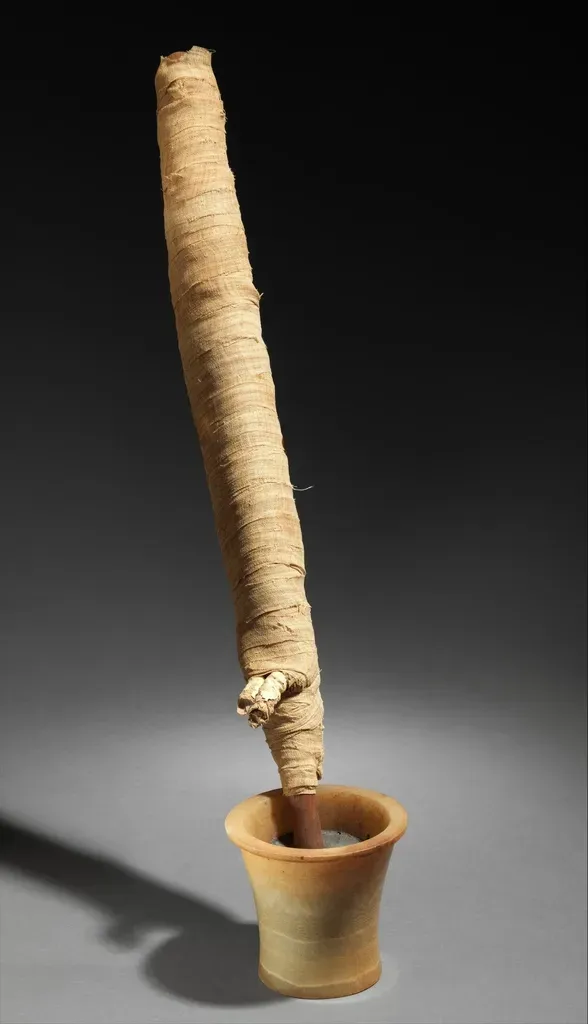
Among the more visually unsettling objects recovered from Egyptian tombs is the Imiut fetish, a stuffed animal skin, headless, mounted on a pole and set into a stand topped with a lotus bud. It appears repeatedly in funerary contexts and shrine equipment, often associated with the god Anubis, yet its actual origin story has never been pinned down. Described as a religious object used in funerary rites, it is basically a stuffed, headless animal skin, often of a feline or bull, tied by the tail to a pole, and its origin and purpose remain unknown.
What makes the Imiut fetish tricky is that it was clearly important enough to be included in royal burial equipment, including material connected to Tutankhamun’s tomb, yet ancient Egyptian texts never bother to explain what it symbolized or why it took that particular grisly form. Scholars generally connect it to embalming and rebirth symbolism, given its ties to Anubis and the jackal-headed rites of mummification. Still, the leap from “used in funerary ritual” to “here is precisely what it represented” has never been fully closed, which keeps it technically unresolved even after a century of study.
Tutankhamun’s ritual trays and staffs: Rewriting a royal mystery
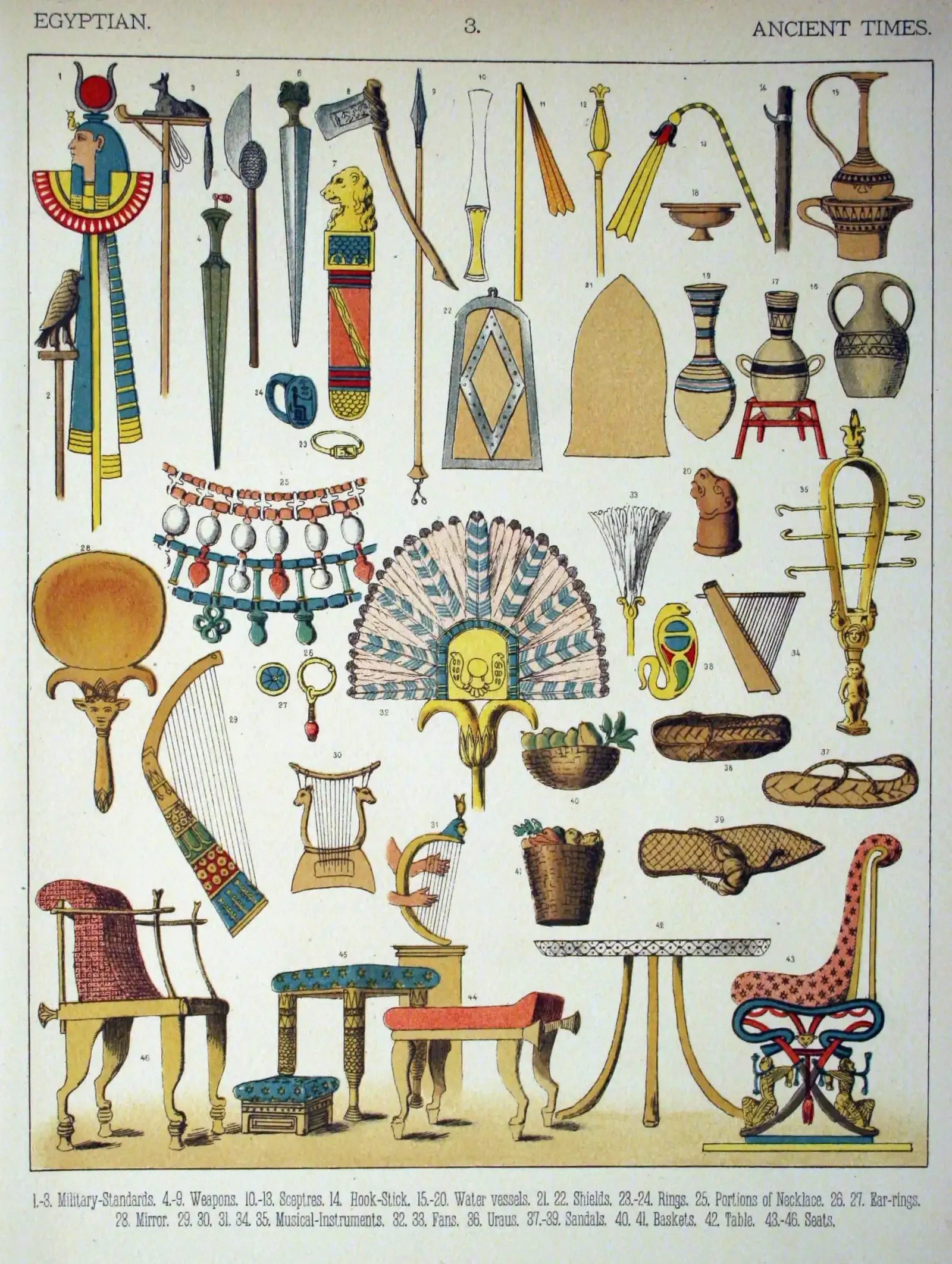
When Howard Carter’s team cleared Tutankhamun’s burial chamber in the 1920s, they catalogued a set of trays and staffs whose function sat quietly unexplained for decades, filed away as ceremonial items without a clear ritual home. That changed only recently. Four trays and four staffs found in Tutankhamun’s burial chamber may have been used in an ancient Egyptian ritual, according to a paper examining the objects in fresh detail.
An Egyptologist has proposed that these items are evidence a rite known as the Awakening of Osiris was performed in the burial chamber, marking the earliest known evidence for the use of that rite on a pharaoh. That is a meaningful step forward, yet it is worth being honest about what it actually is: a compelling new interpretation, not a settled classification accepted by every specialist in the field. Objects like these are a good reminder that “unclassified” does not always mean permanently mysterious. Sometimes it just means the right connection had not been made yet.
The meteoric iron dagger: A blade from the sky, a technique still debated
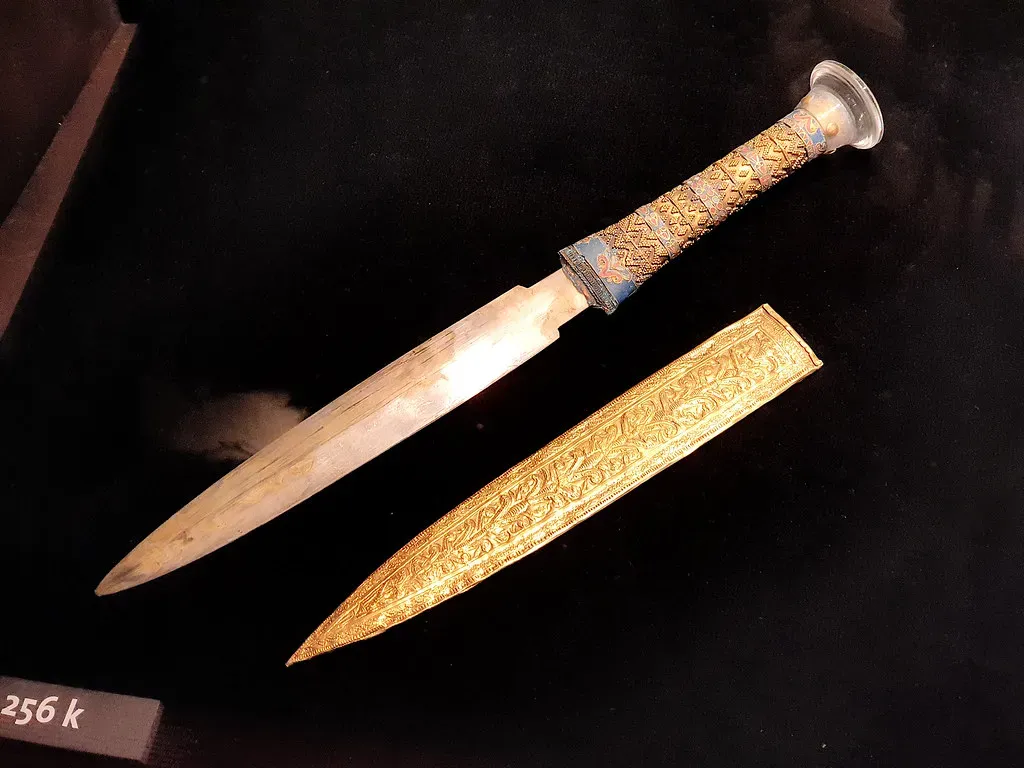
Tutankhamun’s tomb also produced a dagger with an iron blade that puzzled researchers for a long time, largely because ironworking was not supposed to be common in Egypt during his reign. Later compositional analysis confirmed that the metal was meteoritic in origin, meaning it came from a fallen meteorite rather than smelted ore, which at least settled the material question. What has not been settled is the manufacturing side of the story.
Researchers still debate whether Egyptian craftsmen forged the blade themselves using imported meteoritic iron, or whether the finished dagger arrived as a diplomatic gift from a foreign power already skilled in ironworking, such as the Hittites or Mitanni. The hilt and sheath are unmistakably Egyptian in style, which complicates a simple “imported object” explanation. So the material has an answer, extraterrestrial iron, while the craftsmanship behind it remains a genuinely open question among specialists in ancient metallurgy.
The apotropaic wands: Egypt’s curved ivory puzzle
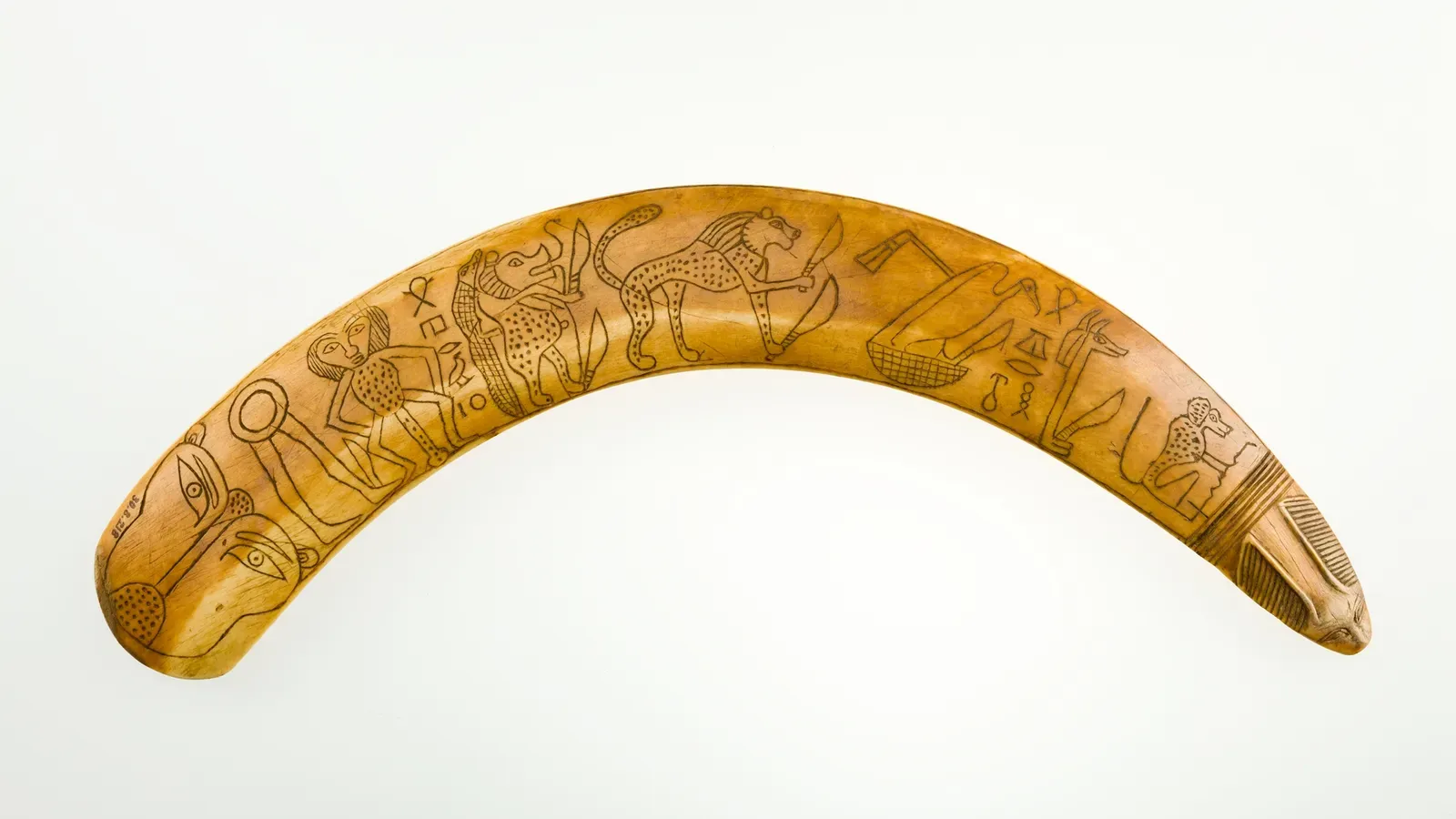
Curved ivory wands, usually carved from hippopotamus tusk and decorated with rows of protective animals such as lions, turtles, and mythical hybrid creatures, turn up fairly often in Middle Kingdom tombs. They are generally grouped under the label “apotropaic,” meaning protective against evil, but that label covers a surprising amount of uncertainty underneath it. Were they used mainly in childbirth rituals, drawn in a circle around a mother and newborn for protection? Were they broader household protective tools used throughout life and only buried with their owner at the end?
Both explanations have supporters, and both fit the available evidence reasonably well, which is precisely the problem. The wands are found in domestic contexts as well as tombs, they show wear consistent with regular handling, and their imagery draws on a wide mix of mythological figures rather than anything specifically tied to birth. Until more contextual evidence turns up, perhaps from an undisturbed burial with clear associated ritual material, Egyptologists are left choosing between plausible theories rather than confirming one outright.
Final thoughts
None of these six objects need a science fiction explanation to be worth talking about. What makes them genuinely interesting is that trained specialists, working with real evidence and modern analytical tools, still cannot close the file on them. That is not a failure of archaeology. It is a fairly honest reflection of how much of the ancient world survives only in fragments, without the instruction manual attached.
My own take, for what it is worth, is that the pull toward dramatic explanations, ancient aircraft, alien technology, lost machinery, usually says more about our own appetite for mystery than about the objects themselves. The Sabu Disk does not need to be a turbine to be remarkable. A bowl that has outlasted five thousand years of guesswork is plenty impressive as it is.