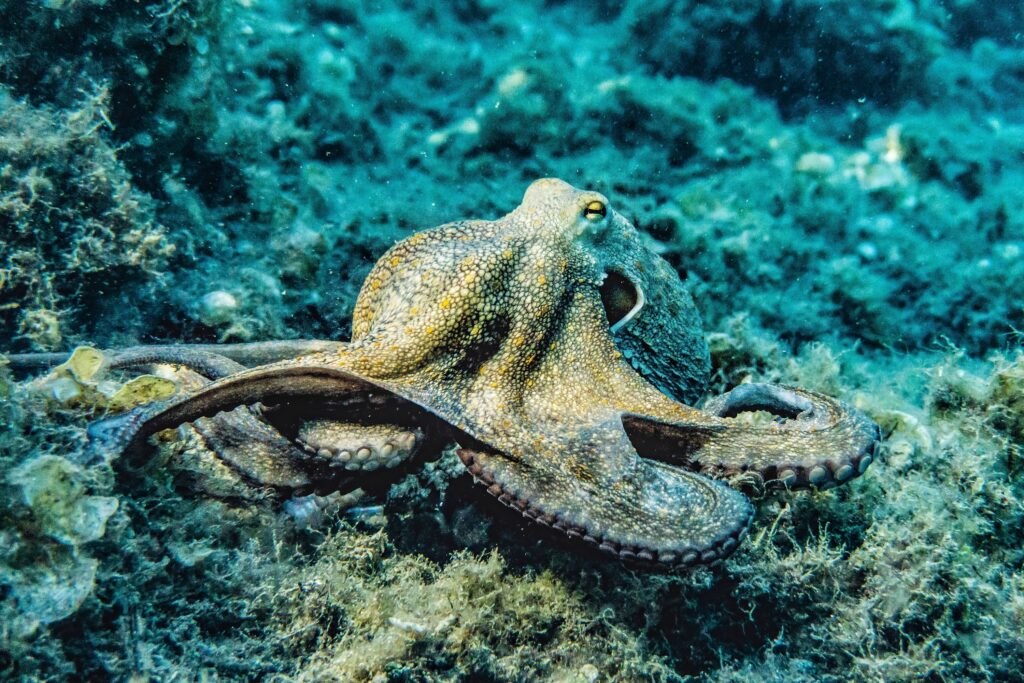
Most people assume octopuses are just clever sea creatures that squeeze through tight spaces and change color for fun. That assumption is wrong – and dangerously outdated. Marine biologists studying these animals in labs from Naples to Okinawa keep hitting the same wall: octopuses keep doing things that, on paper, shouldn’t be biologically possible.
They edit their own genetic instructions like a coder patching software overnight. They appear to dream in shifting color. They see through skin that has no eyes at all, and they run a body governed less like a dictatorship and more like a loose democracy of semi-independent minds. Some of what’s on this list sounds like science fiction – but it’s sitting in peer-reviewed journals, not aquarium folklore. Here’s what’s actually happening inside these eight-armed enigmas, starting with a trick almost no other animal on Earth can pull off.
#1 – They Secretly Edit Their Own RNA in Real Time
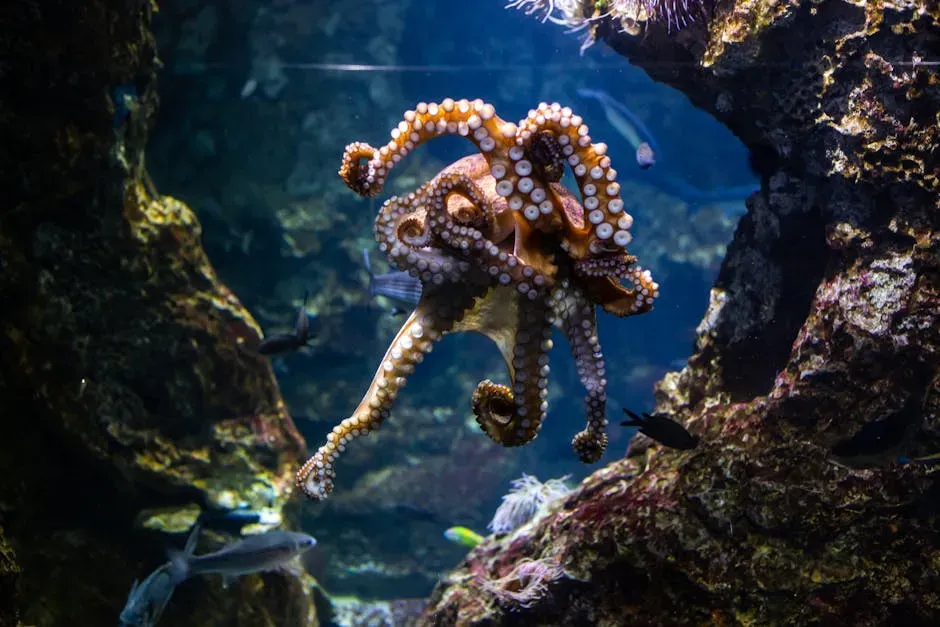
Most animals adapt to a changing environment the slow way: a random DNA mutation appears, and if it helps, it survives and spreads over generations. Octopuses apparently didn’t get that memo. In April 2017, scientists discovered that octopuses, along with some squid and cuttlefish species, routinely edit their RNA sequences to adapt to their environment – which is strange, because that’s not how adaptation is supposed to work in complex animals.
The mechanism is almost unsettling in its precision. Cephalopods use a specific type of RNA editing called A-to-I editing, where an enzyme called ADAR converts the RNA base A to an I. The coolest part: the modified protein gets implemented within 24 hours. That means an octopus isn’t waiting on evolution – it’s rewriting its own nervous system overnight to survive a cold snap, using this trick for short-term environmental acclimation, not just across generations or continents, but locally, in response to a single seasonal shift. But that’s nothing compared to what we found about #2.
#2 – Their Cells Contain a Mutation Never Seen in Any Other Animal
Harvard researchers weren’t looking for a miracle when they pulled apart octopus ribosomes – they thought they’d made a lab error. They noticed something unusual in the ribosomal RNA extracted from octopuses: an unexpected gap that broke what’s usually one continuous rRNA fragment in other creatures into two pieces. At first they assumed they’d simply made a mistake. They hadn’t.
This split turned out to be real, and it does something extraordinary to protein manufacturing. The unique structure reduces the “misfolding” that can cause proteins to lose their proper function – and remarkably, this held true even when researchers inserted the octopus’s genetic material into completely different creatures. When they inserted the same rRNA break into the ribosomes of E. coli, the bacteria produced proteins with twice their normal fidelity. A structure biologists assumed was frozen by evolution turned out to be flexible after all. But that’s nothing compared to what we found about #3.
Fast Facts
- Discovery came from Harvard researchers examining octopus ribosomal RNA
- The unexpected gap was first mistaken for a lab error
- Inserted into E. coli, the split structure doubled protein fidelity
- No other known animal shows this same ribosomal split
#3 – They Might Actually Dream
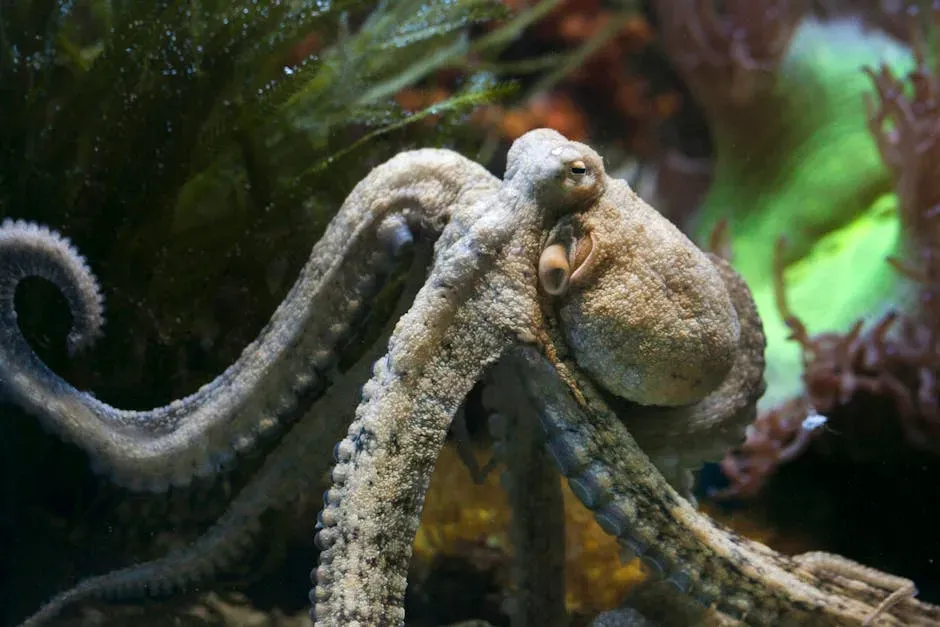
For decades, “dreaming” was considered a mammal-and-bird-only phenomenon, tied to a brain structure octopuses simply don’t have. Then researchers pointed cameras at sleeping octopuses and refused to look away for 50 straight days. Brazilian scientists found shifts in color, behavior, and movement they say are evidence of a real sleep cycle – the octopus switching between active and quiet sleep much like humans switch between deep sleep and REM.
The footage is genuinely eerie. An octopus wraps its arms around itself, breathing evenly in a uniform whitish gray – then moments later begins a mesmerizing shift between burnt orange and rust red, its eyes, muscles, and sucker pads twitching as if it’s living through a vivid dream. A follow-up study by neuroethologists in Okinawa confirmed the pattern was no fluke: during active sleep, the octopuses cycled through the same skin patterns they display while awake, suggesting the dreams themselves may be steering the color changes. Most people would never guess an invertebrate could have a REM-analog. But that’s nothing compared to what we found about #4.
#4 – They “See” Color Through Skin That Is Technically Colorblind
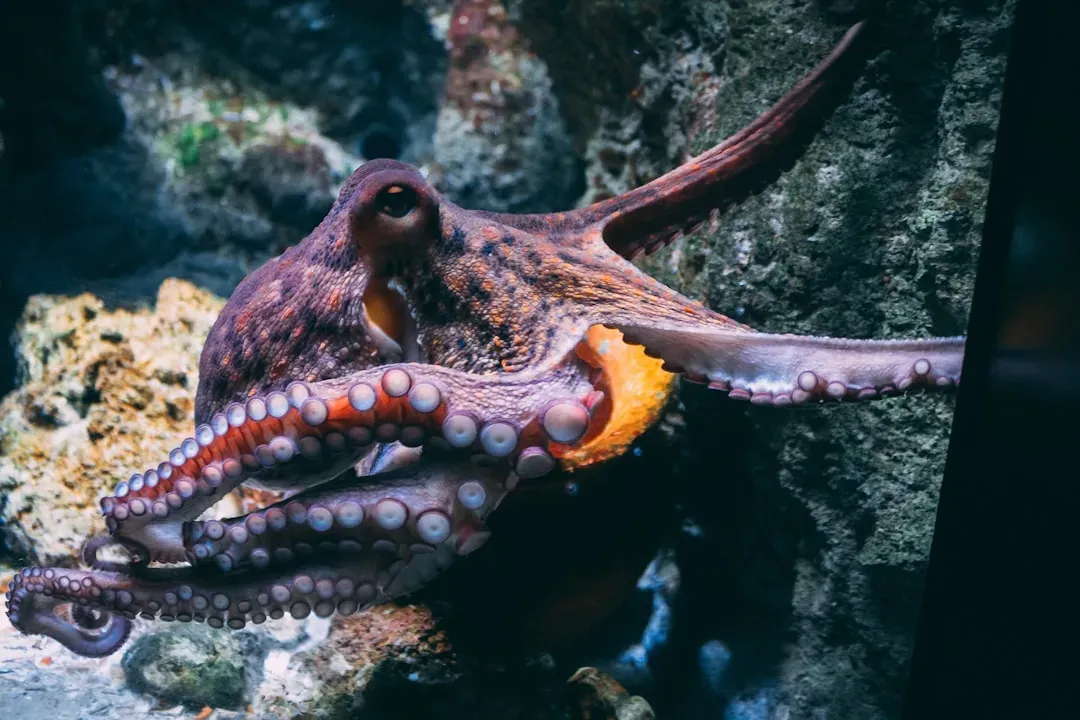
Here’s a contradiction that shouldn’t exist: an animal that is functionally colorblind yet camouflages itself in near-perfect color matches every single time. By the usual definition, octopuses are colorblind – they only have one visual pigment, an opsin that peaks around 475 nanometers. So how do they pull off camouflage that would make a chameleon jealous?
The answer, uncovered almost by accident, is that the skin itself may be doing the “seeing.” Evolutionary biologists confirmed octopuses can sense light without using their eyes at all, because octopus skin contains the same pigment proteins found in eyes, making it directly responsive to light. Lab tests on detached tissue made the case even stronger: when researchers exposed skin samples to light, the pigmented spots called chromatophores expanded and darkened the skin – with zero help from the eyes or brain. The skin isn’t just a canvas. It’s a second sensory organ, working independently of the octopus’s own eyeballs. But that’s nothing compared to what we found about #5.
#5 – They Steal Weapons From Their Deadliest Predators
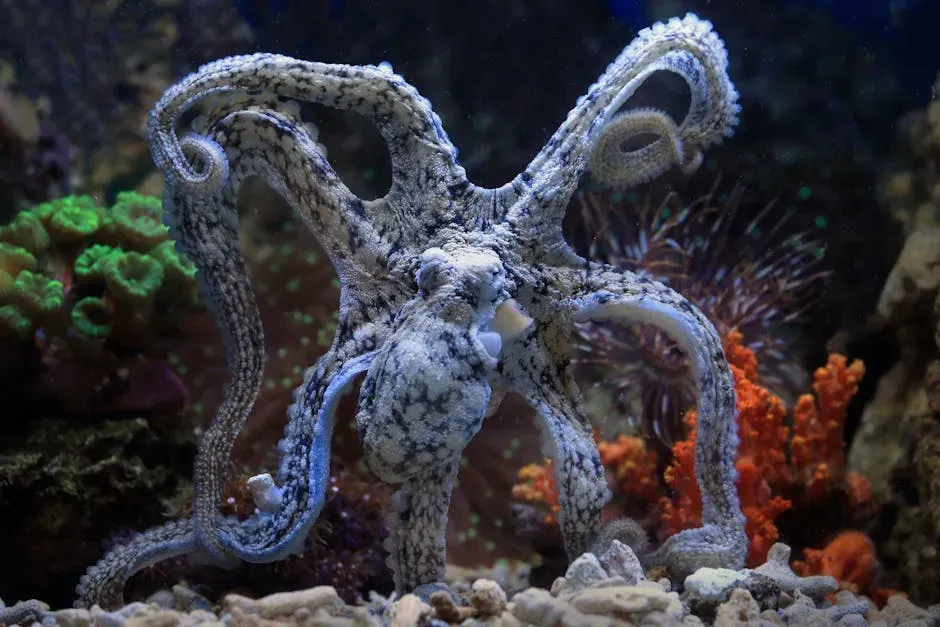
Tool use was long considered the domain of “advanced” animals – primates, elephants, certain birds. Octopuses were assumed to lack the coordination and forward planning required. Then biologists watched a tiny blanket octopus do something reckless and brilliant at the same time: small individuals of the common blanket octopus rip tentacles from the Portuguese man o’ war and carry them around as weapons – tentacles loaded with a venom potent enough to kill fish twice the octopus’s size.
This isn’t opportunistic contact; it’s deliberate armament. The octopus is immune to the sting itself but can inflict it on unwitting predators and prey, essentially wielding another species’ chemistry as its own defense system. No mammal or bird does anything remotely like it. It’s a level of functional tool use that forces biologists to rethink what “intelligence” even requires – no complex brain necessary, just an accurate risk calculation and an immunity most animals can’t survive. But that’s nothing compared to what we found about #6.
#6 – They Recognize Individual Humans – and Hold Grudges
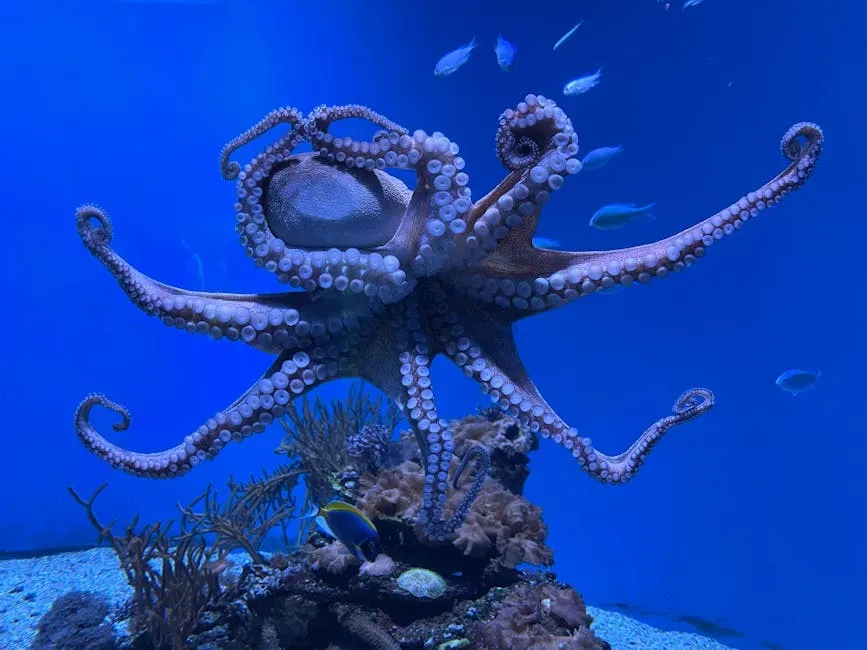
If you’ve ever felt like an octopus was staring at you with intent, you weren’t imagining it. Biologists at the Seattle Aquarium ran an experiment where one person fed a group of octopuses regularly, while a different person poked them with a bristly object over two weeks. The results confirmed something startling: facial memory in an animal with zero evolutionary reason to need it.
Octopuses have large optic lobes – brain regions dedicated to vision – and researchers say they can recognize individuals outside their own species, including specific human faces. It isn’t unique behavior, since some mammals and crows can do it too, but it’s rare enough to raise eyebrows. Aquarium staff have reported octopuses squirting water at specific people they seem to dislike, while treating others with total indifference. That’s not a reflex. That’s a memory, a preference, and arguably a grudge – built into an animal separated from us by 500 million years of evolution. But that’s nothing compared to what we found about #7.
Worth Knowing
- The Seattle Aquarium test ran for two weeks with two different handlers
- One handler fed the octopuses; the other poked them with a bristly object
- Large optic lobes appear to drive facial-recognition ability
- Some crows and mammals share this rare recognition skill
#7 – Two-Thirds of Their “Brain” Is Actually in Their Arms
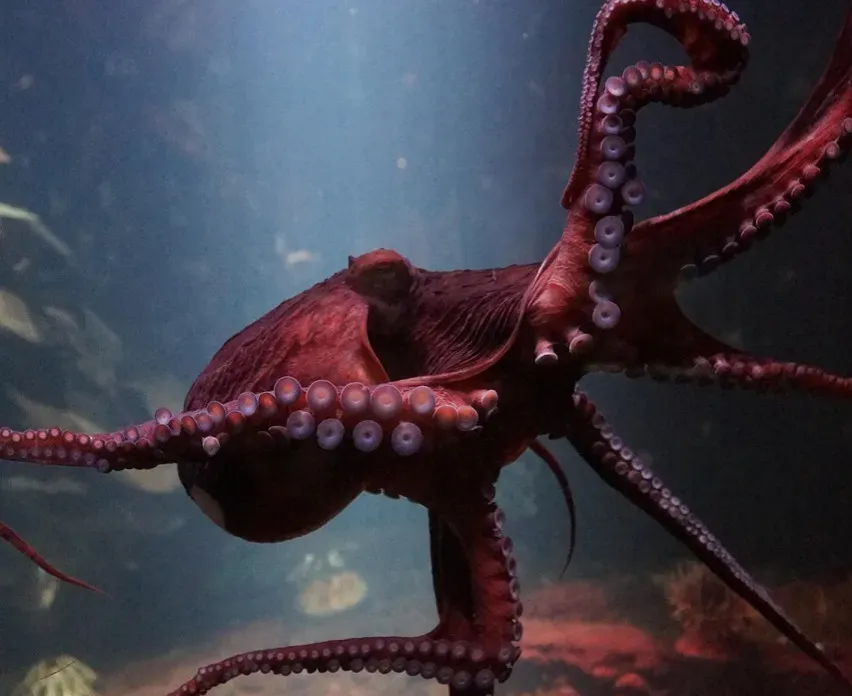
Ask most people where an octopus thinks, and they’ll point to its head. That’s only a third right. Unlike most smart animals – including humans, where the brain holds most of the neurons – an octopus keeps only one-third of its neurons in its head, with the rest scattered across its eight arms. This isn’t a minor quirk; it fundamentally changes how the animal operates.
Because so much processing power sits outside the central brain, the arms can behave almost like independent creatures. This distribution lets the sensitive suckers feel for prey instantly, reacting on their own instead of waiting for a signal from the head. That means a reaching (or even severed) arm can taste, grip, and solve simple local problems without any instruction from above. Biologists studying cephalopod cognition now describe the octopus nervous system less as one brain and more as nine semi-autonomous ones working in loose coordination – a structure with no real parallel anywhere else in the animal kingdom. But that’s nothing compared to what we found about #8.
#8 – They Build Barricades Out of Rocks
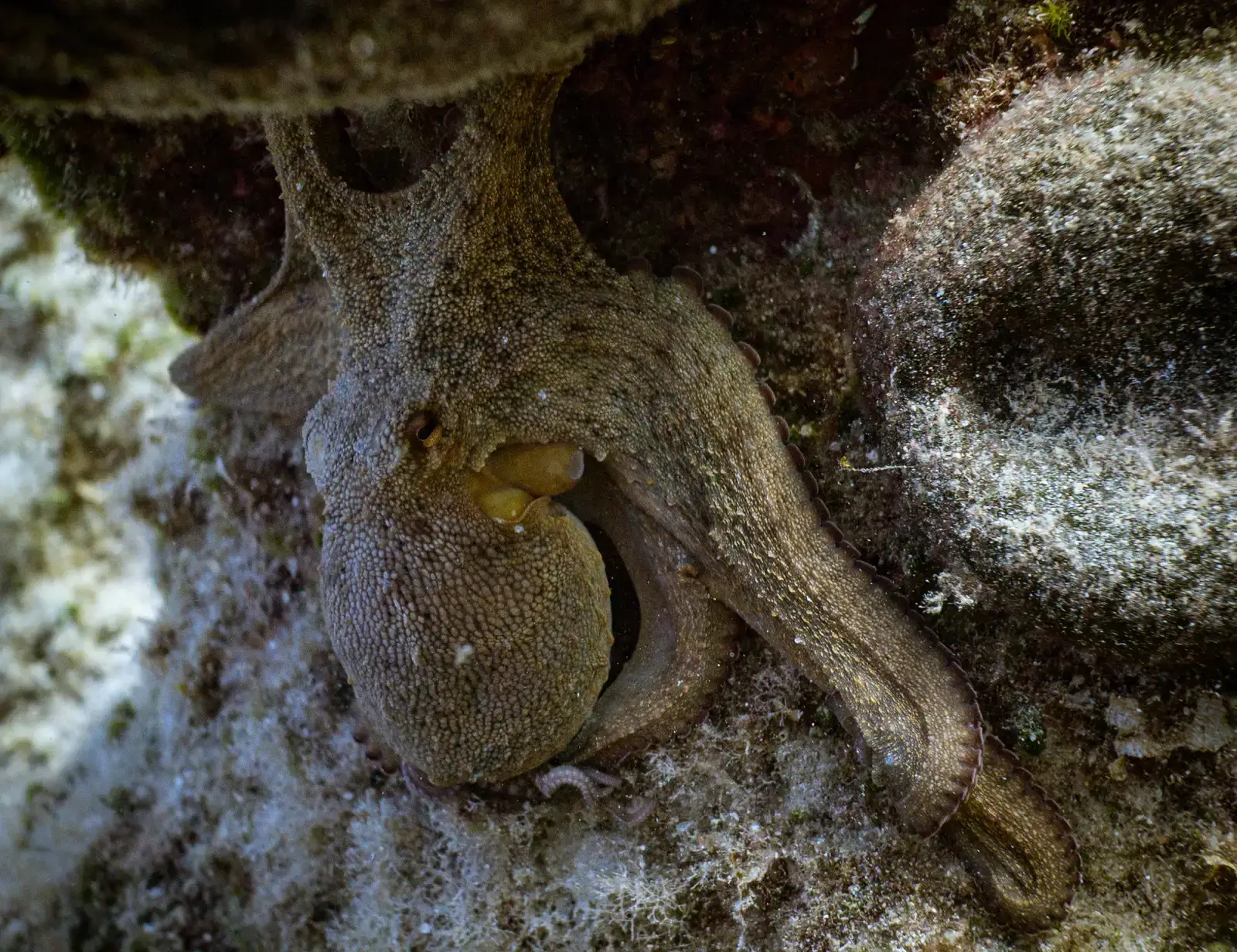
Watching an octopus stack stones might sound like a nature-documentary exaggeration, but researcher Jennifer Mather documented exactly that, and it changed how scientists talked about cephalopod planning. She watched an octopus scuttle out of its den, grab a rock with one arm, haul it back, then leave again for another and another – until the rocks lined up in a row, forming a wall over the den’s opening.
This wasn’t a random pile. It was a constructed barrier, built with intent, using materials gathered specifically for the task.
That was my ‘aha’ moment.
Jennifer Mather
Independent biologists have echoed the same shock at the sophistication involved. Very few animals use natural objects as tools in such clever ways, notes biologist Piero Amodio, who says it’s surprising how complex octopus behavior can actually be. But that’s nothing compared to what we found about #9.
#9 – One Mother Guarded Her Eggs for Over Four Years Without Eating
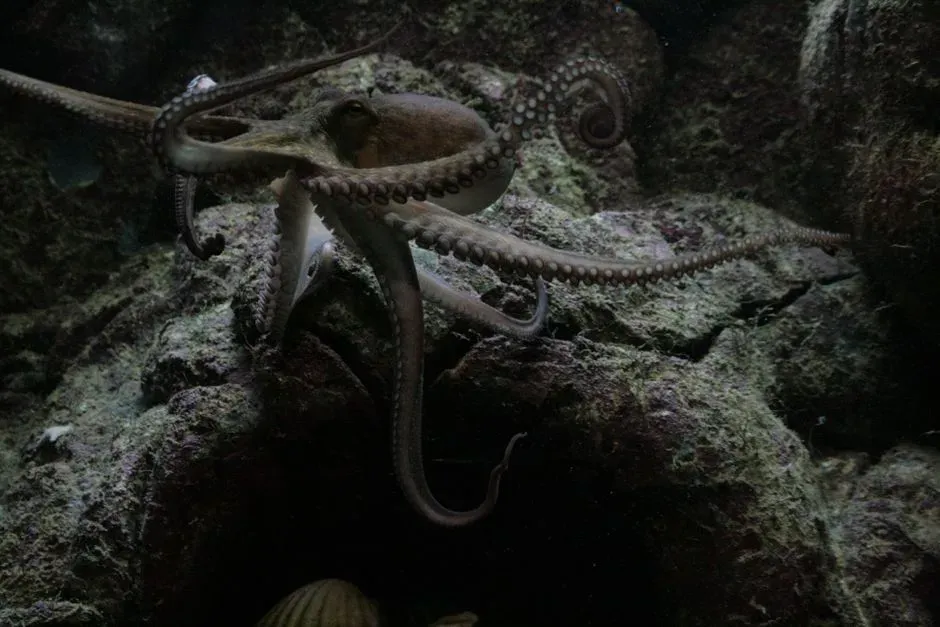
Parental sacrifice exists across the animal kingdom, but nothing prepared biologists for what a deep-sea octopus named Graneledone boreopacifica was willing to endure. Researchers tracked a single female brooding her eggs on a rocky ledge in the Monterey Canyon, expecting the vigil to last months. It lasted years – an unheard-of commitment that pushed the limits of what a marine invertebrate’s body should survive without feeding.
Her extraordinary self-sacrifice gave her offspring time to reach an advanced stage of development, and the hatchlings emerged looking like miniature adults – giving them a real shot at survival. By the time researchers made their final dive to check on her, the outcome was final and irreversible: the eggs had hatched, and the female was gone. She had starved herself into nonexistence purely to buy her offspring a survival advantage – a level of biological sacrifice that stunned the marine biology community. But that’s nothing compared to what we found about #10.
At a Glance
- Species: Graneledone boreopacifica
- Location: a rocky ledge in the Monterey Canyon
- Brooding period: over four years without feeding
- Outcome: hatchlings emerged fully developed; the mother did not survive
#10 – Their Skin Physically Reshapes Into 3D Textures
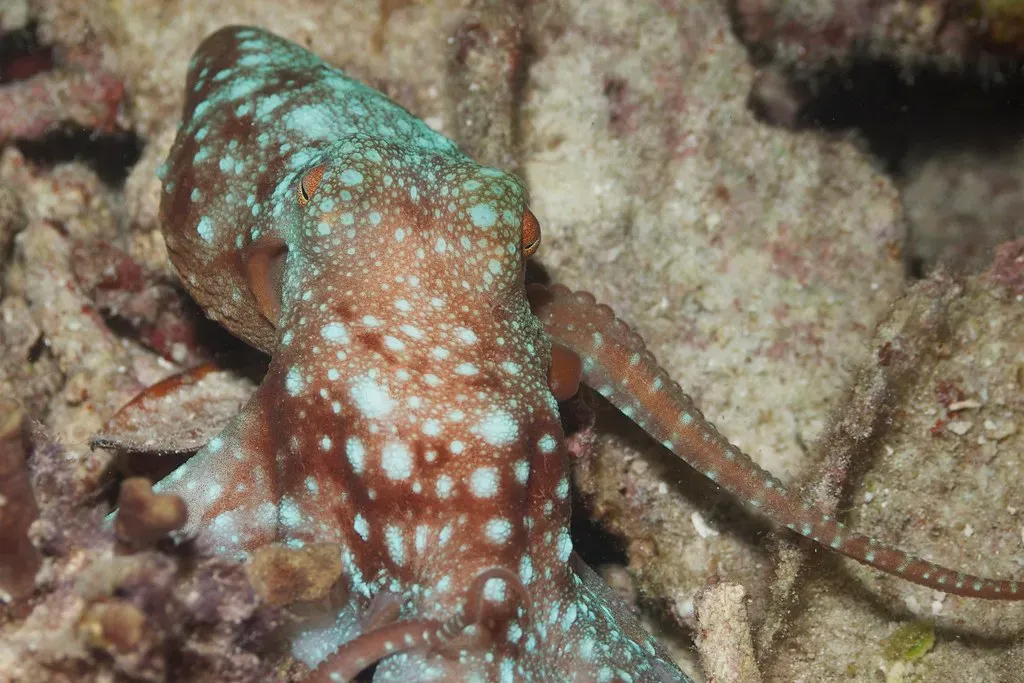
Color-changing skin is impressive on its own. What biologists didn’t expect was that octopuses can also change the actual topography of their skin – turning smooth flesh into bumpy coral or jagged rock in a fraction of a second. This goes far beyond pigment; it’s a structural transformation happening in real time across the entire body surface.
Thousands of specialized cells called chromatophores handle the instant color shifts, while separate structures called papillae – tiny areas of skin the octopus can expand or retract – rapidly change its texture to match the surroundings. The combined effect is a camouflage system operating on two totally different physical dimensions at once – color and shape – something no land animal, including chameleons, can replicate. Biologists describe it as one of the most sophisticated disguise systems in the entire animal kingdom, built entirely from skin muscle and nerve control, with no specialized organ required. But that’s nothing compared to what we found about #11.
#11 – Some Impersonate Entirely Different, More Dangerous Animals
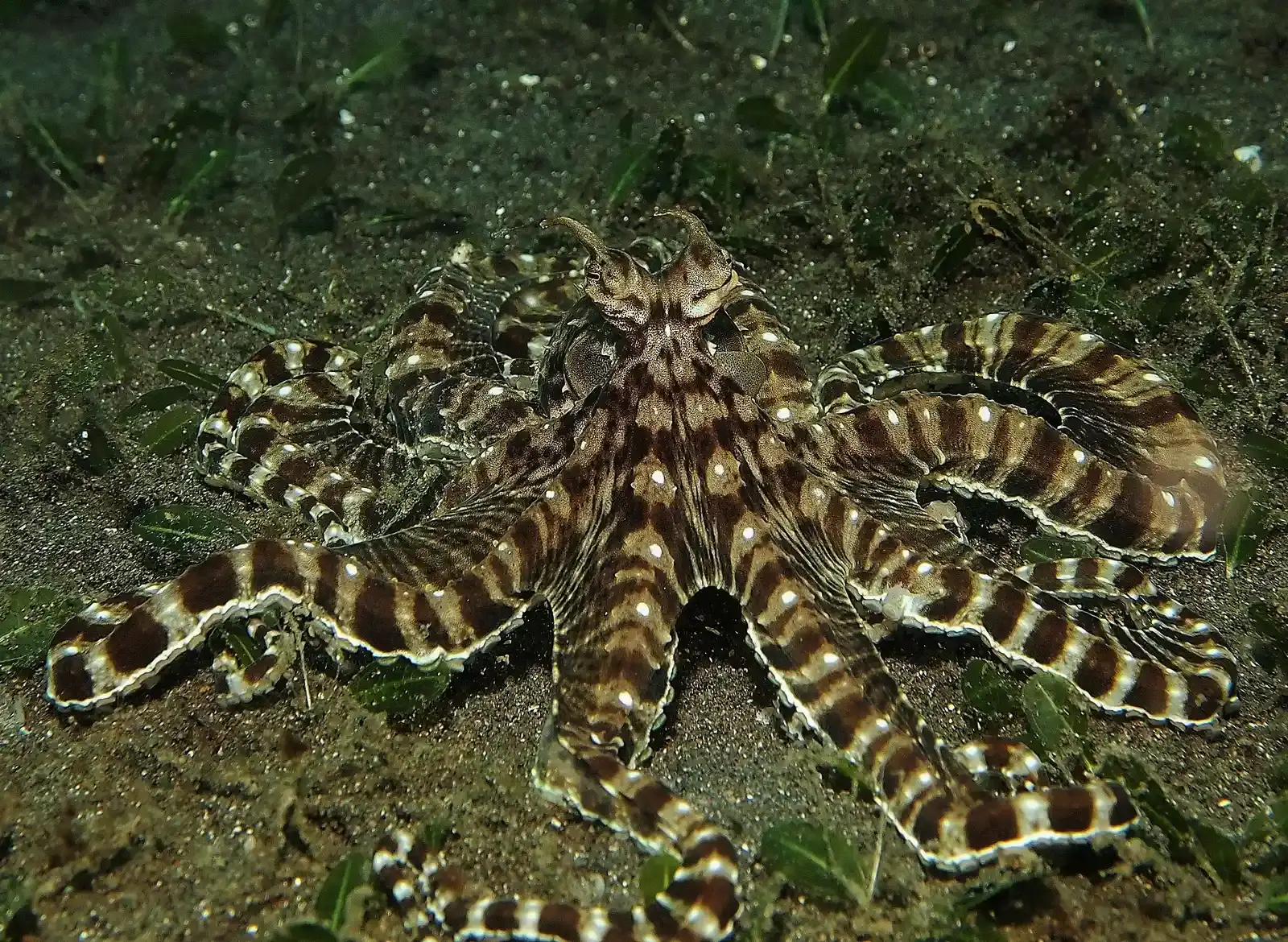
Camouflage usually means blending into a background. A rarer, stranger skill is pretending to *be* a different animal altogether – and one octopus species does exactly that, discovered by scientists barely a generation ago. First documented in 1998 in Indonesia, this octopus doesn’t copy the rocks, reefs, and seaweed around it like other octopuses do. It disguises itself as entirely different animals, making it one of the most skilled impersonators on the planet.
This mimic octopus doesn’t just adopt a static disguise; it actively performs the *behavior* of the animal it’s impersonating. It can arrange its body to resemble more threatening creatures, like sea snakes or lionfish, to drive predators away. Biologists confirmed it can switch between multiple disguises depending on the specific threat nearby – flattening into a flatfish to glide away from one predator, then coiling into a banded sea snake shape to repel another. It’s essentially theatrical improvisation, executed by a creature with no formal “training,” and it remains one of the strangest defensive behaviors ever documented in the ocean. But that’s nothing compared to what we found about #12.
#12 – Every Individual Octopus Solves Problems Its Own Way
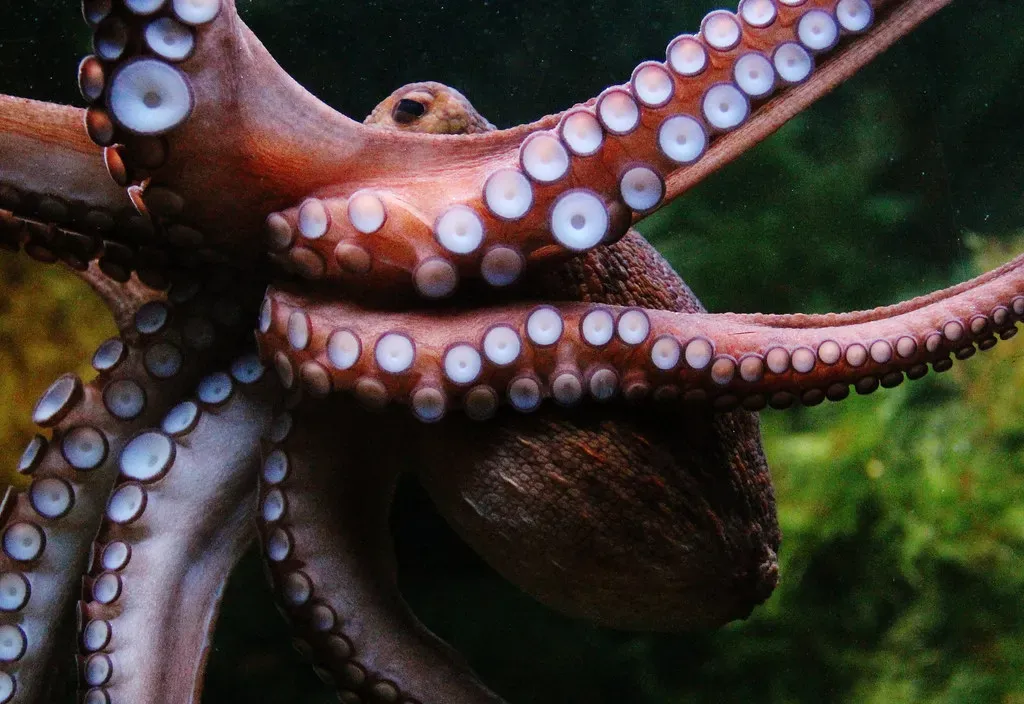
Biologists long assumed that within a species, behavior would be fairly uniform – every octopus of a given type would solve a puzzle roughly the same way, at roughly the same speed. Recent puzzle-box experiments blew that assumption apart, revealing something closer to distinct personalities than programmed instinct.
Researchers found that octopuses more inclined to approach new objects were quicker to try the puzzle box and more likely to succeed in opening it – but they didn’t necessarily reach the solution before other individuals, suggesting an excessive appetite for novelty can actually hinder problem-solving efficiency. In other words, the boldest octopus isn’t automatically the smartest one – curiosity and competence turned out to be separate traits entirely. The study also found that season and fishing site were significant drivers of behavioral differences, meaning where and when an octopus grew up shapes how it thinks, not just its genetics. That level of individual variation is rarely documented so clearly in invertebrates. But that’s nothing compared to what we found about #13.
#13 – “Jumping Genes” Are Active Inside Their Learning Centers
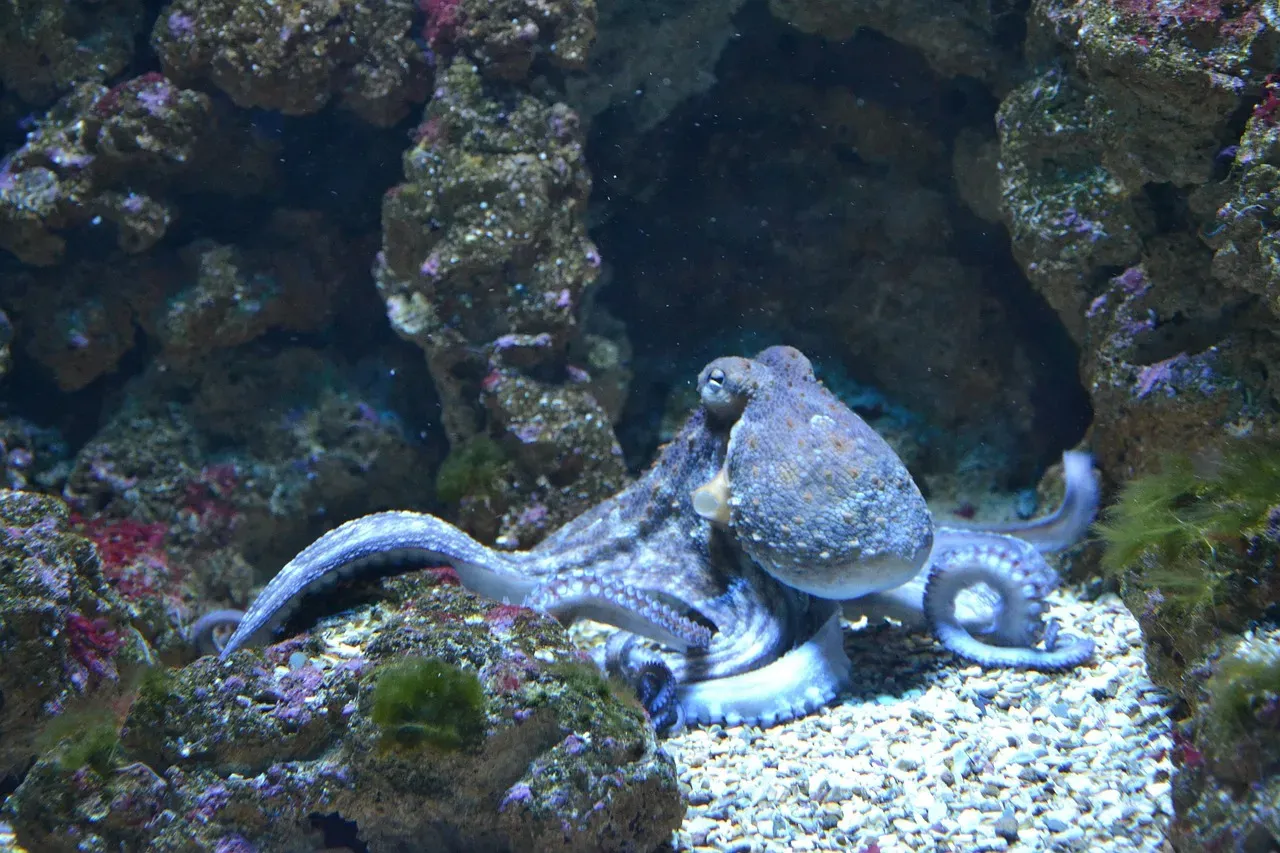
Save the strangest discovery for last: octopuses share a genetic mechanism with humans that most biologists assumed was either irrelevant or dangerous in most animals – mobile pieces of DNA called transposons that copy and paste themselves around the genome. Finding these active and seemingly purposeful inside an octopus brain was the real shock.
When scientists took a closer look at octopus jumping genes, they discovered transposons from the LINE family active in the octopus’s vertical lobe – a brain region critical for learning that is functionally similar to the human hippocampus. In humans, this same LINE-family transposon activity is linked to memory formation and neural plasticity. Finding it doing similar work in an animal whose last common ancestor with us predates the dinosaurs suggests nature stumbled onto the exact same genetic trick for building a learning brain – twice, independently, hundreds of millions of years apart.
Why It Stands Out
- The active transposons belong to the LINE family, also found in humans
- They operate specifically in the vertical lobe – the octopus’s learning hub
- The vertical lobe functions much like the human hippocampus
- Humans and octopuses last shared a common ancestor before the dinosaurs existed
The Bottom Line
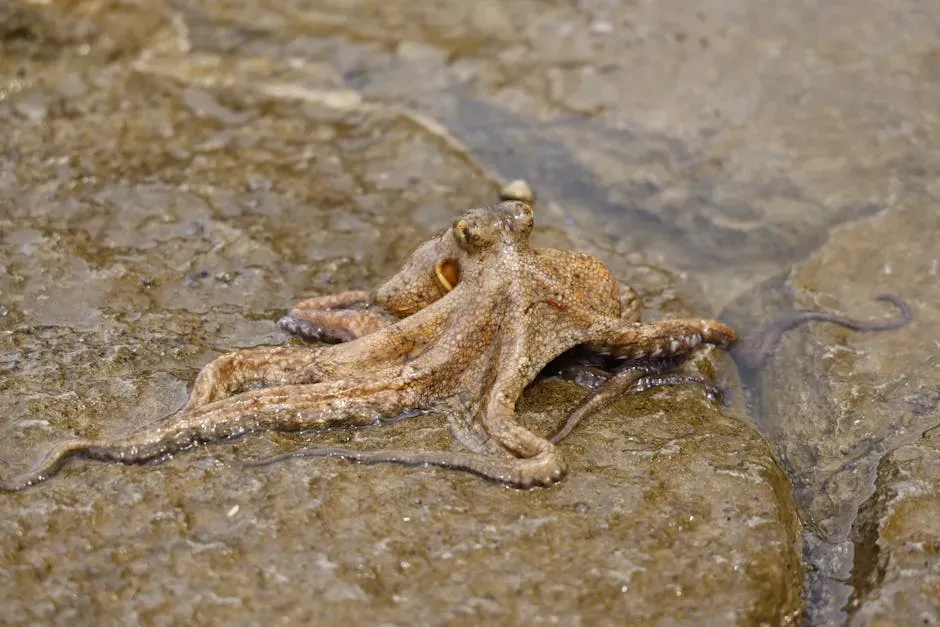
Octopuses aren’t just “smart for an invertebrate” – they’re rewriting the rules biologists thought governed nervous systems, genetics, and even sleep itself. The RNA editing and ribosome discoveries alone suggest evolution gave octopuses a shortcut mammals never got: the ability to fine-tune their own biology in hours instead of generations.
Add in dream-like sleep, skin that sees, and a brain split across nine semi-independent parts, and the “simple sea creature” label starts to look almost insulting. If you ask us, the most underrated finding here isn’t the RNA editing – it’s the individual personality differences in problem-solving, because it hints these animals aren’t running on instinct at all. Which discovery shocked you the most? Drop it in the comments.