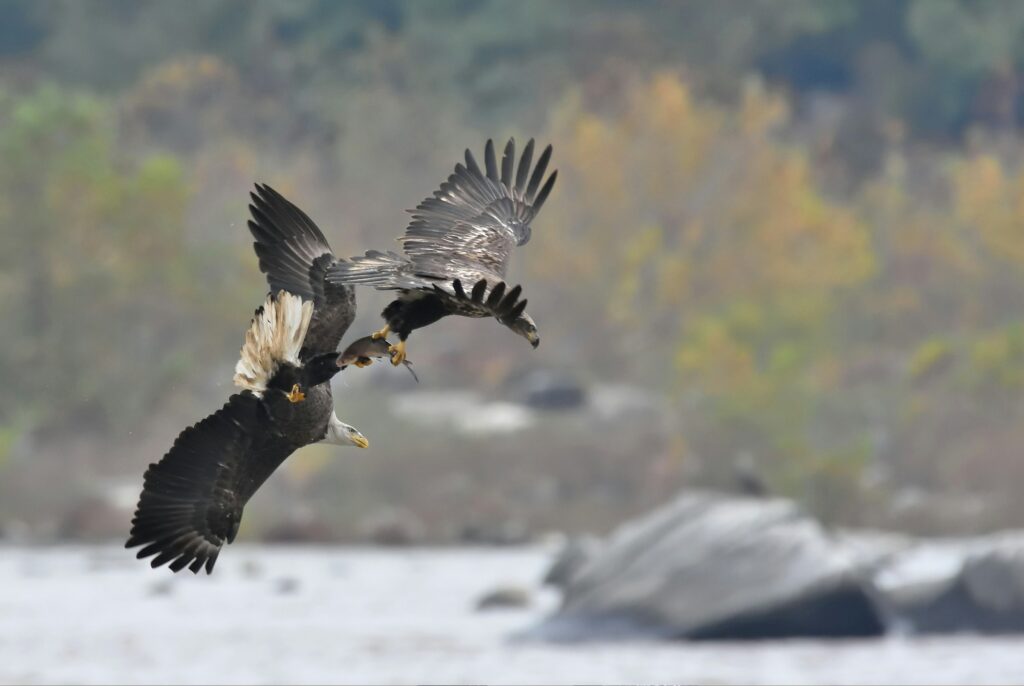
If you picture a bird of prey, you probably imagine a lone hunter stooping from the sky, catching its own quarry in a perfectly timed strike. That does happen, of course – but nature is messier and far more surprising. Some of the most successful raptors on Earth are shameless thieves, saving energy by letting others do the hard work and then muscling in for the prize.
This behavior, known as kleptoparasitism, flips our usual idea of “noble” predators on its head. These birds are tactical opportunists, reading the chaos of a hunt like a seasoned pickpocket reads a crowded subway. Once you see how many famous raptors make a living by stealing, you may never look at an eagle or falcon the same way again.
Bald Eagle: America’s Iconic Thief in the Sky
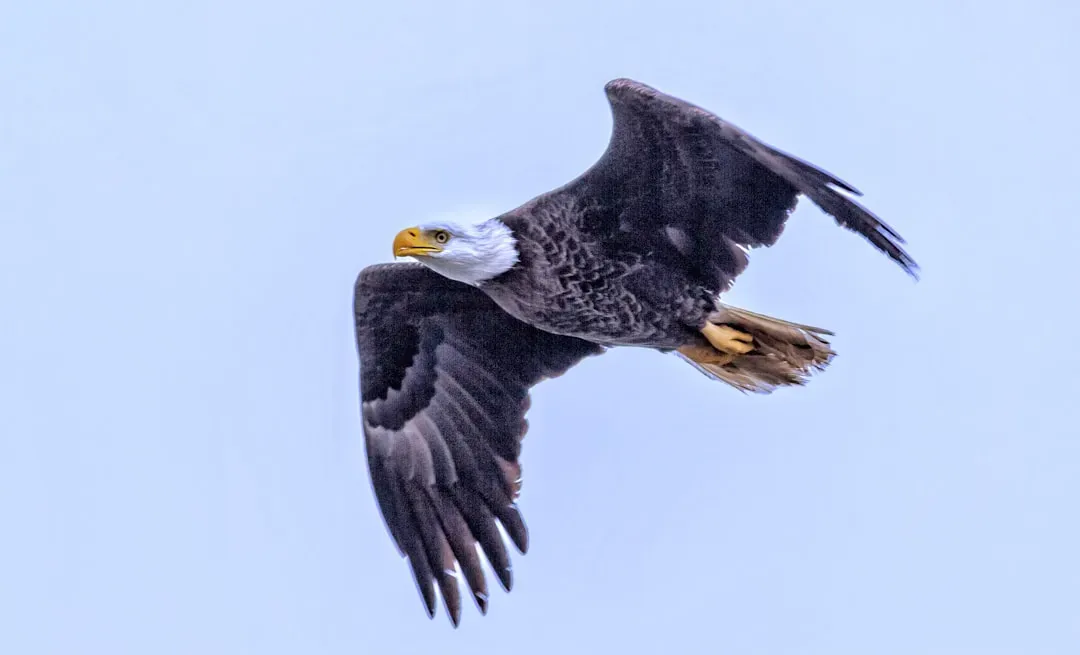
It is a little ironic that the bald eagle, a national symbol of strength and independence, is also a notorious food thief. Bald eagles do hunt their own fish and waterfowl, but they also regularly harass ospreys, gulls, and ducks until the original hunter drops its catch. The eagle then swoops in and grabs the falling fish midair or snatches the prey right off the water’s surface, turning someone else’s hard work into a free meal.
Watching an eagle chase an osprey is like watching an aerial mugging. The osprey, burdened with a wriggling fish, twists and dives, trying to outmaneuver the larger bird. The bald eagle uses its size, stamina, and sheer intimidation to keep pressing the attack. From a cold energy-budget perspective, this is smart: why burn calories fishing when you can let an expert like the osprey do the precise dive, then step in as the bully at the end?
White-Tailed Eagle: The Coastal Pirate of Eurasia
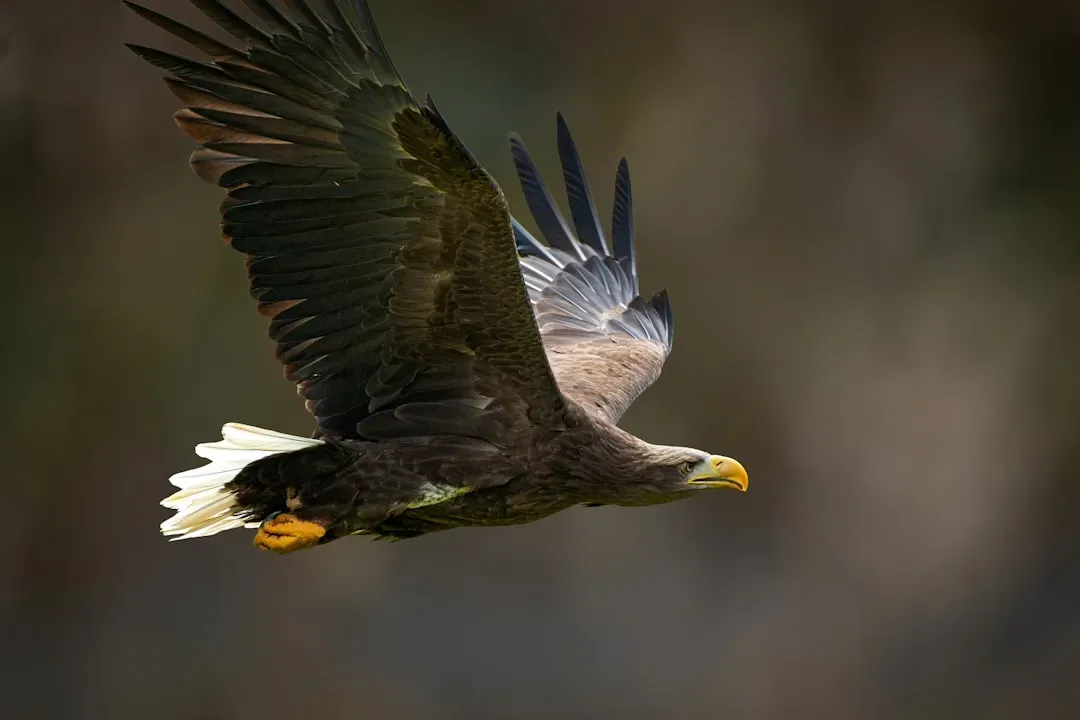
The white-tailed eagle, often called the “sea eagle,” plays a similar role across parts of Europe and Asia. With its massive wings and imposing build, it patrols coasts, lakes, and estuaries, ready to exploit any opportunity. These eagles certainly catch their own fish and waterbirds, but they are also famous for stealing from other raptors, including ospreys and smaller eagles, as well as from gulls and cormorants.
In some areas, a white-tailed eagle cruising overhead can change the entire mood of a colony of seabirds. Gulls erupt, ducks flush, and anything carrying food becomes a target. To me, this bird feels less like a solitary hunter and more like a roaming tax collector, taking its “cut” in the form of stolen prey. You can almost imagine it as a living reminder that in nature, dominance often matters just as much as skill.
Golden Eagle: Power Hunter That Will Steal If It Pays Off
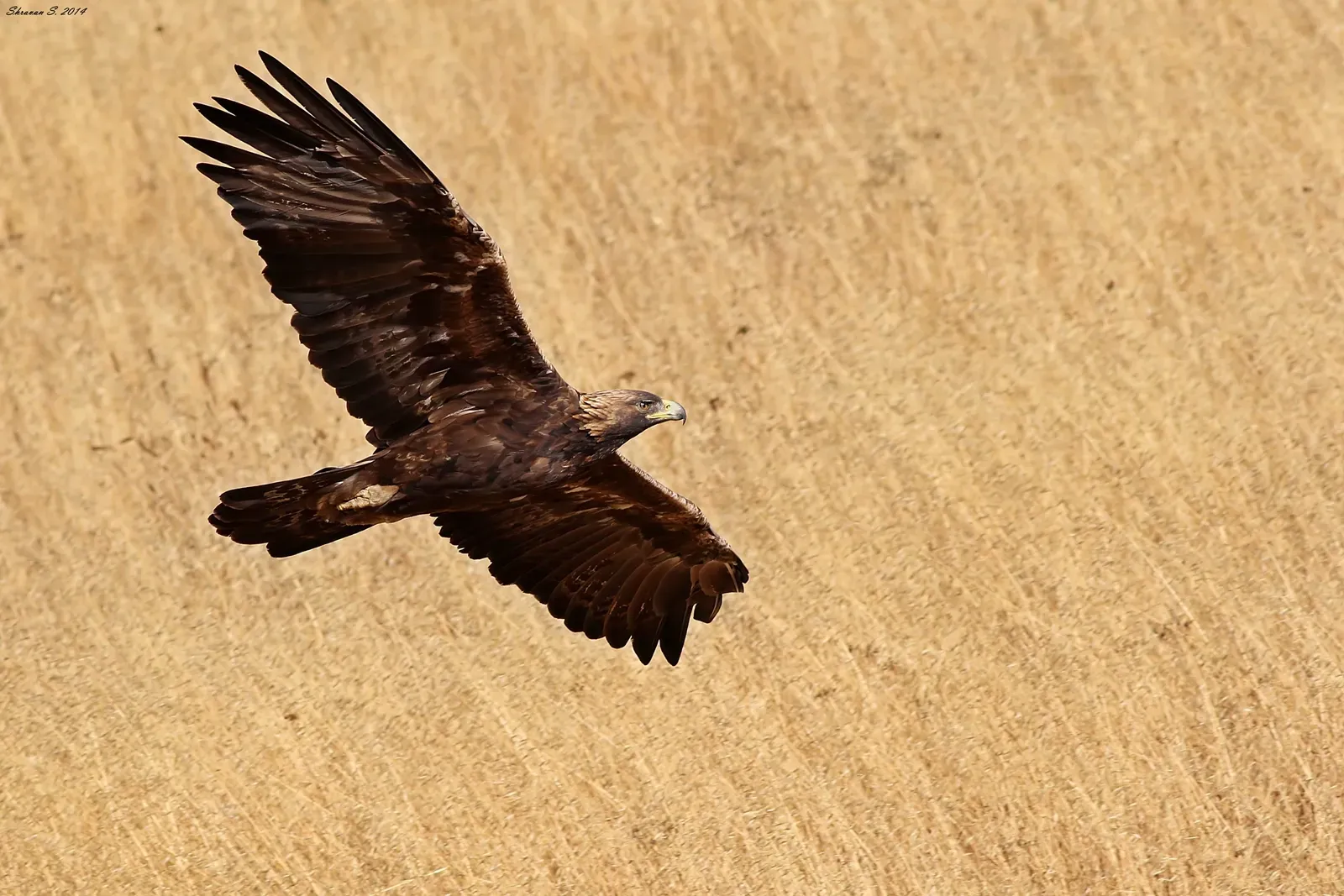
Golden eagles have a fearsome reputation as hunters capable of taking down hares, foxes, and even young ungulates, yet they are not too proud to steal when the odds favor them. In open landscapes where food is scarce or patchy, golden eagles have been observed robbing other raptors, such as buzzards and smaller hawks, as well as driving scavengers like ravens off carcasses. They blend pure hunting prowess with a very practical willingness to cut corners.
What makes golden eagles fascinating is this flexibility. They can spot a rabbit at a distance and launch a high-speed chase, or they can simply watch the sky and look for another predator or scavenger that has already struck. If a fox, corvid, or smaller bird of prey secures something substantial, a golden eagle may appear like a hammer from above, displacing the original feeder. It is a reminder that in wild ecosystems, being adaptable can matter more than sticking to a single hunting script.
Fish Eagle (African Fish Eagle): The River and Lake Opportunist
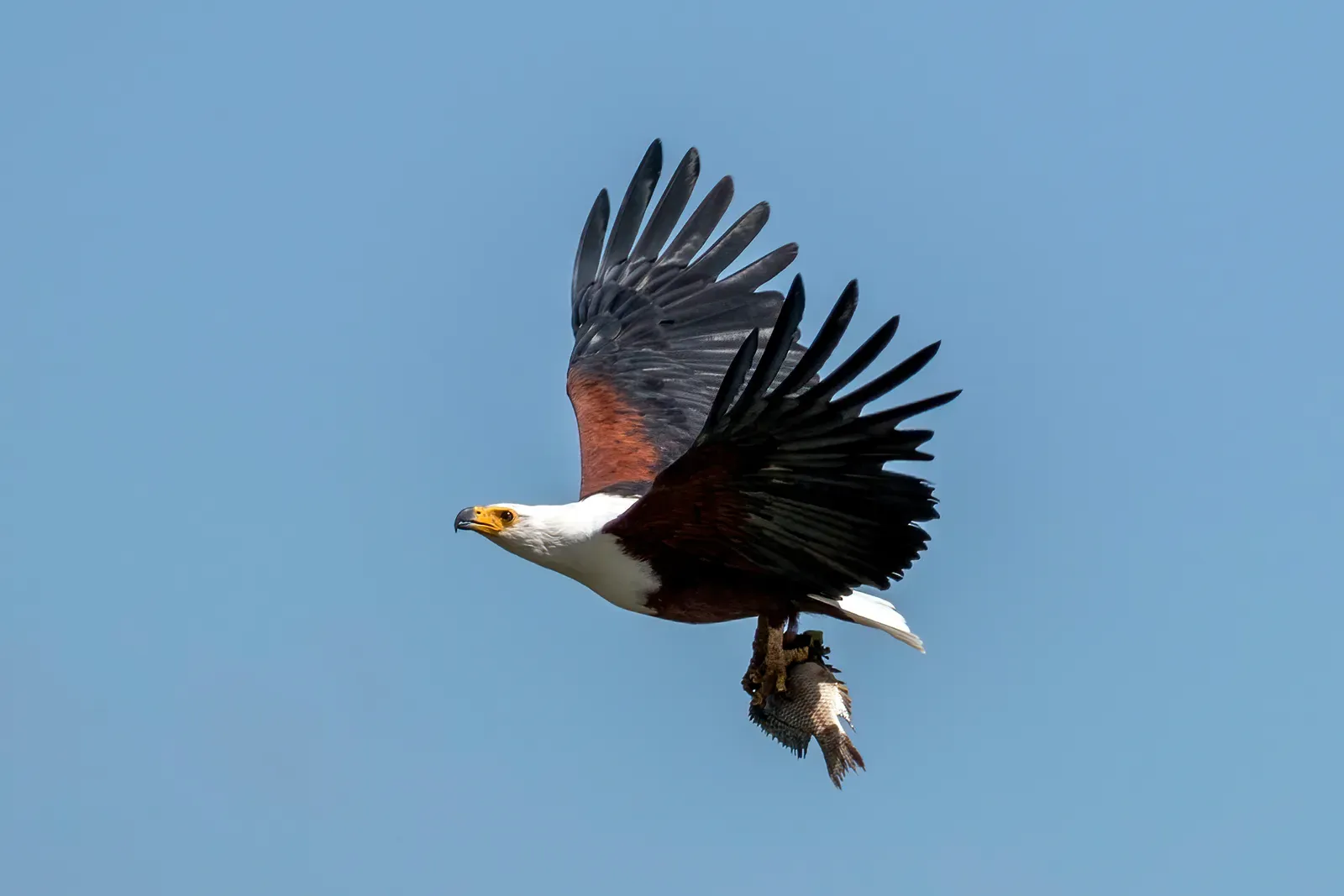
Across many African lakes and rivers, the piercing call of the African fish eagle is part of the soundscape, but so is its habit of thievery. These striking raptors are excellent fish hunters in their own right, snatching fish from just below the surface with razor-sharp talons. At the same time, they also take advantage of fish or other aquatic prey already caught by herons, kingfishers, pelicans, and even other raptors when they see an easy chance.
Imagine a tranquil stretch of water, a heron finally landing a fish after minutes of careful stalking – then suddenly a fish eagle dives in, and the whole scene explodes into feathers and splashes. Instead of spending that time and focus on the hunt, the eagle can watch for those final, vulnerable seconds when a successful hunter is exposed and distracted. That blend of elegance and aggression is part of what makes watching fish eagles so gripping: they are as much strategists as they are hunters.
Parasitic Jaeger (Arctic Skua): Specialist Air Pirate
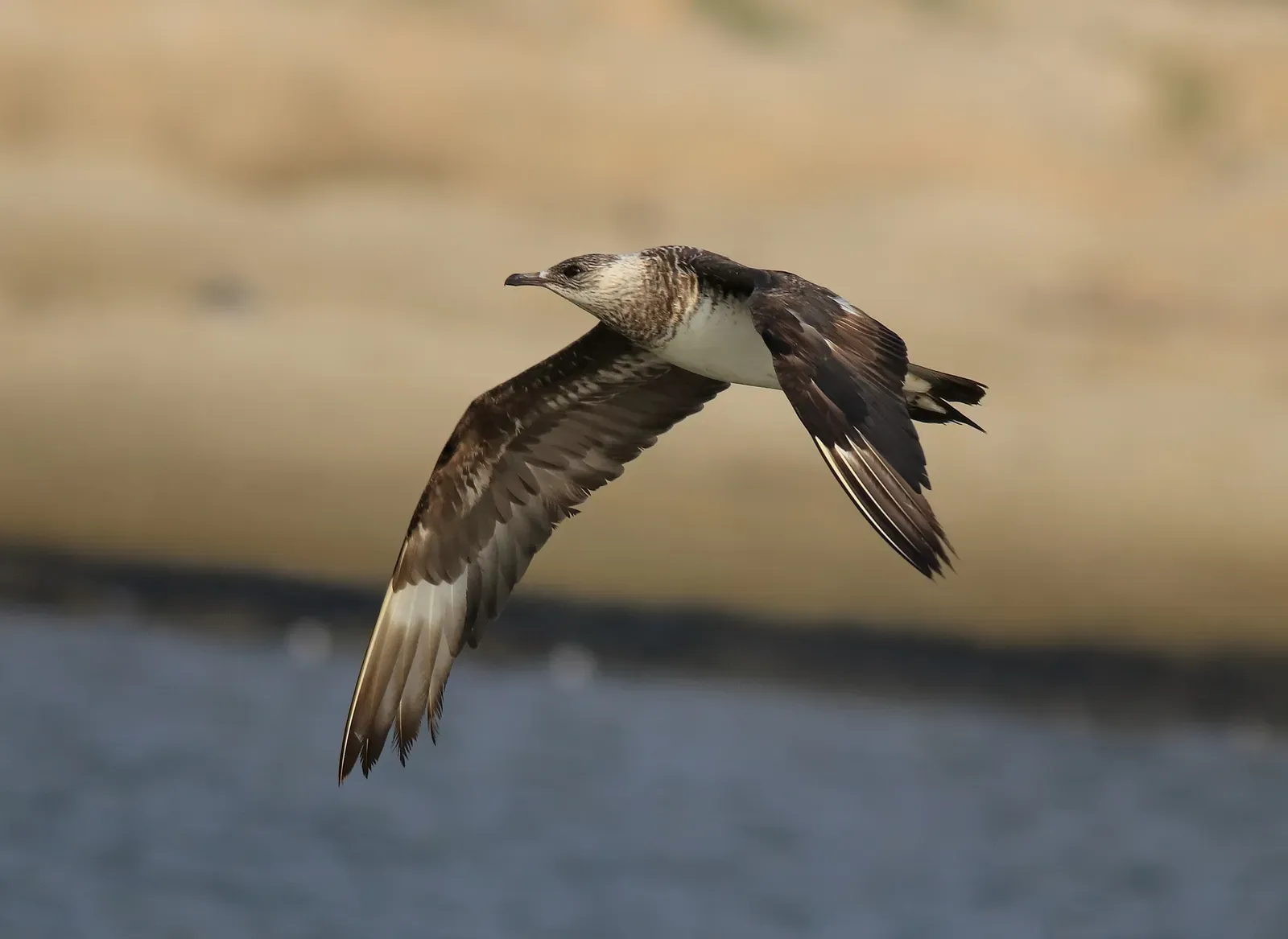
Despite not looking like a classic “hawk,” the parasitic jaeger (also known as the Arctic skua) is absolutely a raptor in attitude. Along northern coasts and open seas, these birds have built an entire lifestyle around harassing other seabirds, especially terns and smaller gulls. Instead of diving for their own fish, they often chase a bird that has just caught something, twisting and turning in the air until the victim panics and drops or regurgitates its meal.
Jaegers are like the pickpockets of the ocean sky. They are finely tuned to read body language, noticing when a tern or puffin has scored a fish and then immediately giving chase. To the human eye, it can look almost playful – complex chases, sharp turns, feints – but underneath that spectacle is a hard-edged energy strategy: why risk a failed dive when you can perfect the art of theft? I find it oddly admirable; they do one thing incredibly well, and they lean into it fully.
Peregrine Falcon: Lightning Hunter That Still Steals on the Side
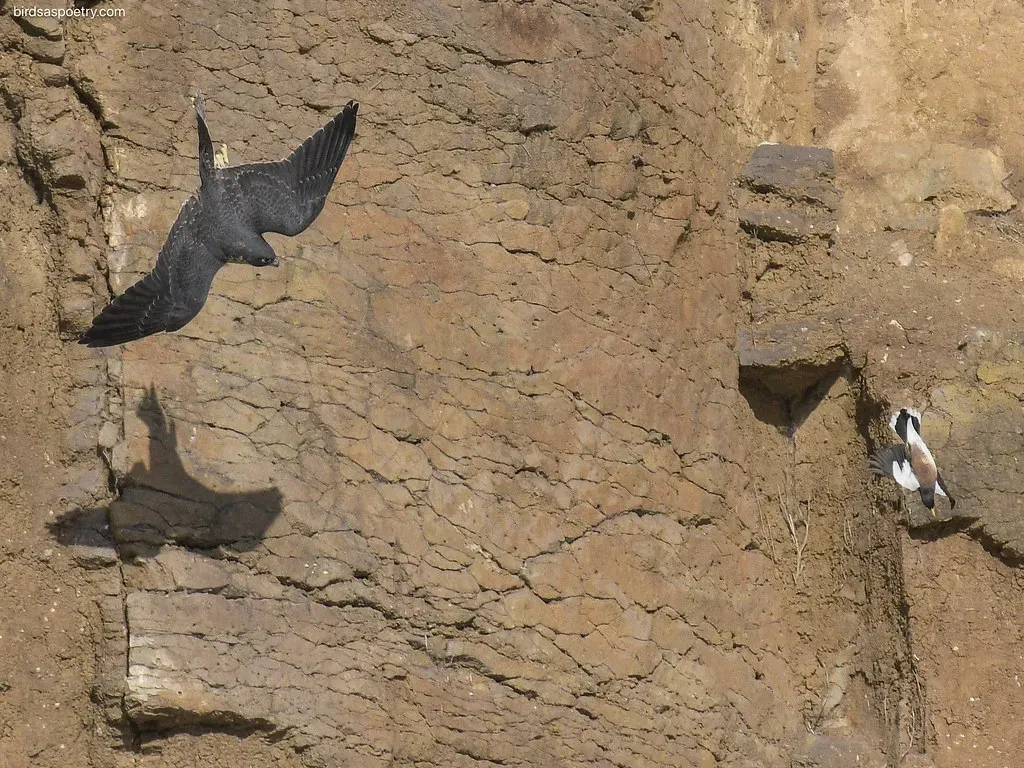
The peregrine falcon is famous for record-breaking stoops, smashing into birds mid-flight at dizzying speeds. With that kind of hunting power, it might be tempting to assume peregrines never need to steal. Yet they, too, sometimes engage in kleptoparasitism, particularly in areas where many birds concentrate, such as coasts, wetlands, and cities full of pigeons and gulls. A peregrine that notices a distracted gull or smaller raptor with food may simply swoop in and snatch the prize.
In urban settings, where I’ve watched them personally, peregrines can be especially opportunistic. A gull or crow wrestling with a scrap is an easy mark compared to a perfectly timed stoop on a fast pigeon. It is not that peregrines rely on theft the way some other species do, but that they are pragmatic: if you are built for speed and agility, using those traits to rob someone is just another tool in the toolbox. It slightly dents their “pure hunter” myth, and I think that makes them even more interesting.
Harris’s Hawk: Social Hunter That Also Shares and Steals
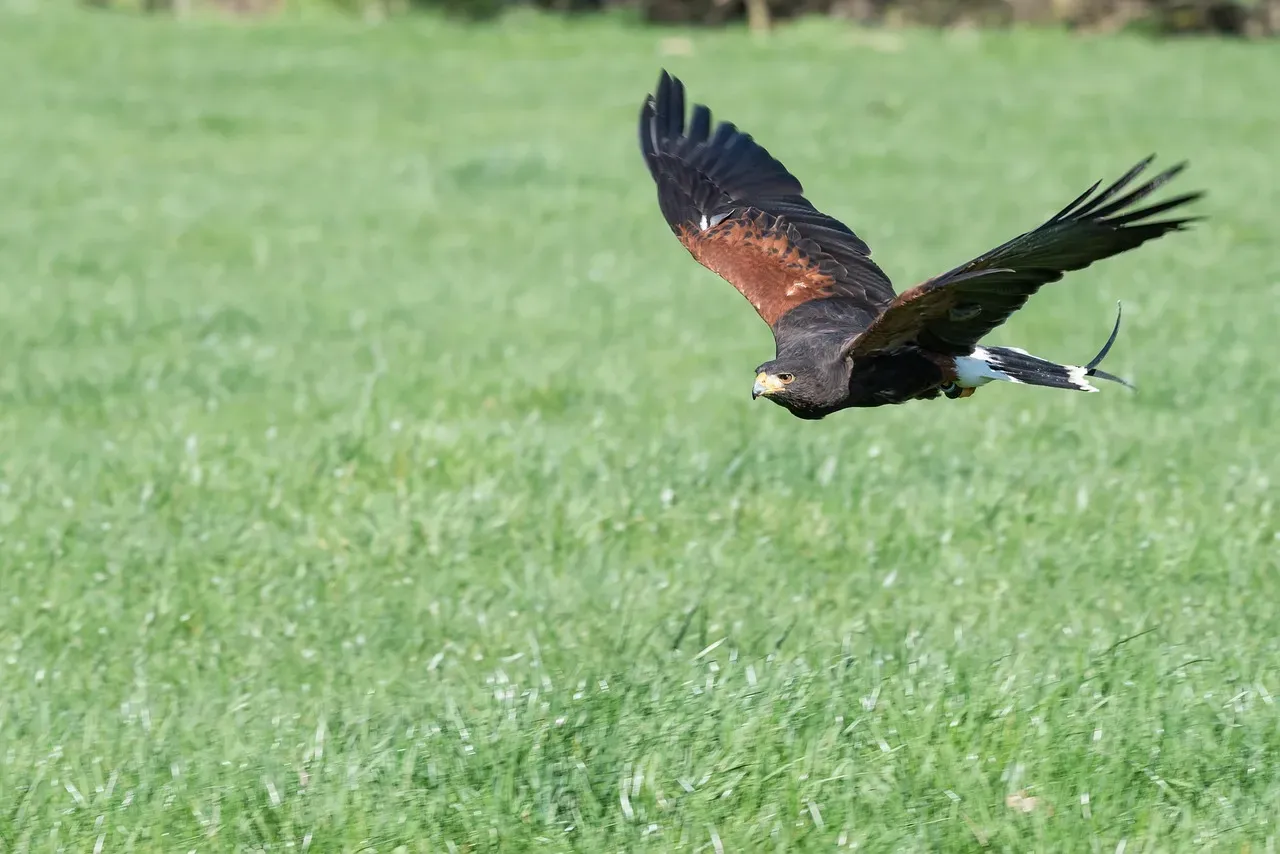
Harris’s hawks are well known for their cooperative hunting style; small family groups work together like a pack of wolves to flush and corner prey. But being social does not mean everyone is polite about food. Within these groups, individuals sometimes grab pieces from one another, and in areas where other raptors are present, a group of Harris’s hawks can use their numbers to intimidate and take over a kill made by a different predator, including other birds of prey.
This mix of cooperation and internal competition feels very familiar to anyone who has ever worked on a group project where some members did more work and others grabbed more credit. The hawks rely on each other to secure difficult prey, yet still jostle and occasionally steal within the team and from neighbors. To me, they highlight that kleptoparasitism is not just about lone bullies; it can emerge naturally wherever several powerful hunters overlap and food is precious enough to fight over.
Caracaras (Especially the Crested Caracara): Opportunistic South American Raiders
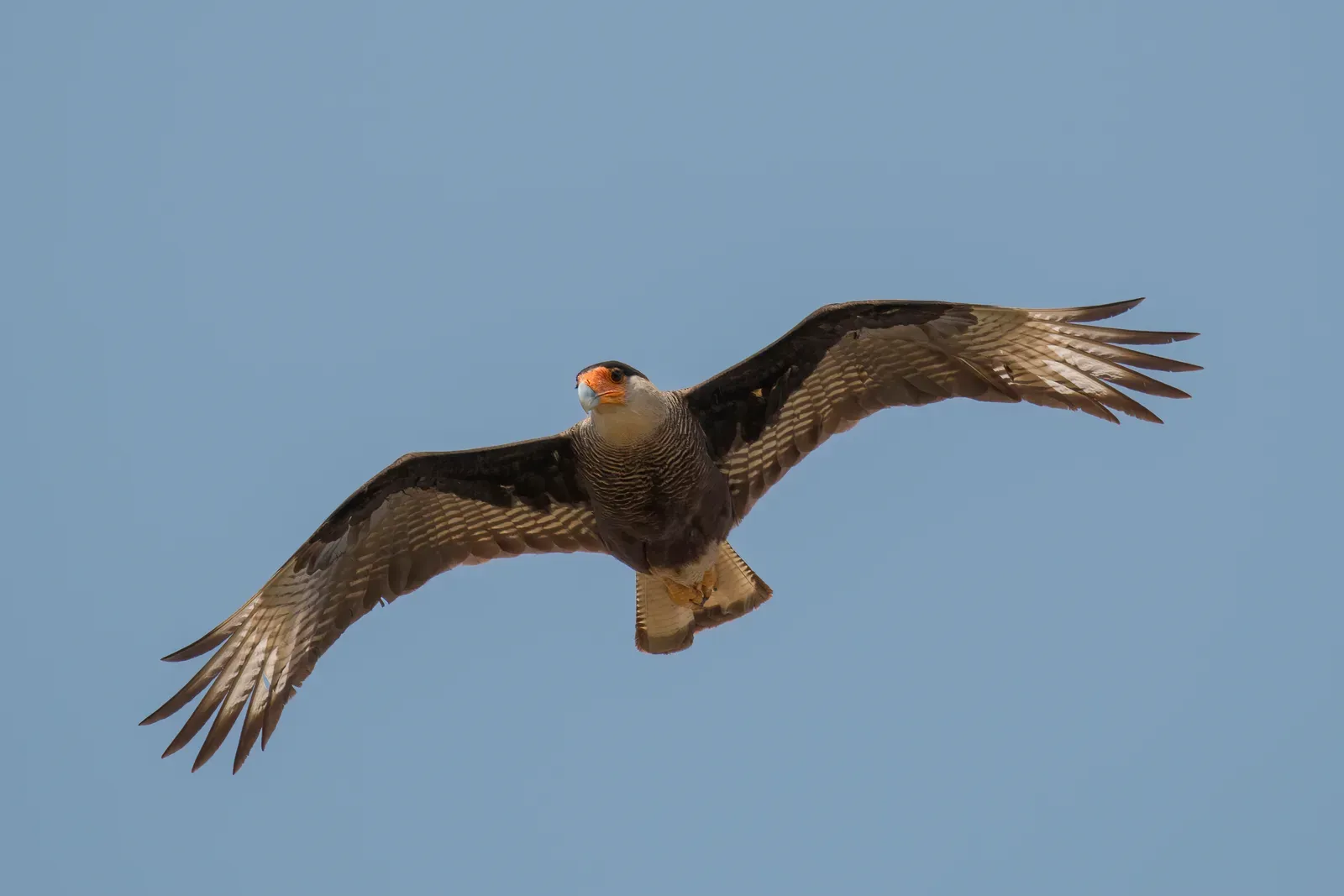
Caracaras are falcons with the soul of a street scavenger. Unlike sleek, exclusively aerial hunters, caracaras often walk or run on the ground, patrol roadsides, and investigate carcasses and human leftovers. The crested caracara in particular is known to rob other birds, snatching food from vultures, eagles, and storks, and muscling into feeding frenzies whenever a carcass or dropped prey item appears. They combine elements of scavenger, predator, and thief all in one package.
Picture a group of vultures feeding on a carcass when a bold caracara struts in, pulling at scraps and darting away from snapping beaks. If a heron or raptor lands nearby with something in its talons, the caracara may rush over, trying to grab a piece in the confusion. I actually like how unpretentious they are; they are not trying to be elegant sky assassins. Instead, they play the long game of constant opportunism, grabbing whatever advantage the landscape offers that day.
Conclusion: Raptor Morals, Energy Budgets, and Why Thieves Thrive
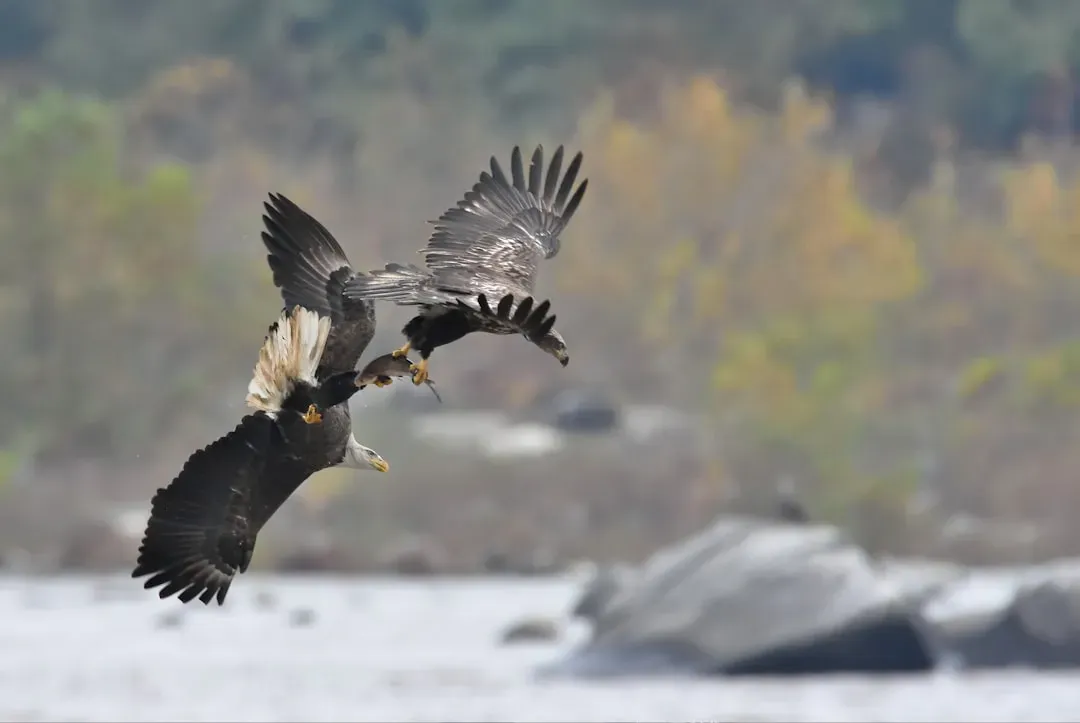
Once you start paying attention, it is hard to keep seeing raptors as lone, honorable hunters who always win by sheer skill. From bald eagles to jaegers, many of the world’s most impressive birds of prey are perfectly comfortable stealing a meal when the math makes sense. In an environment where every calorie counts and hunting can mean a long series of failures, letting someone else handle the risky part and then taking over is less “cheating” and more ruthless efficiency.
Personally, I think the fact that so many top predators steal tells us something uncomfortable but important about power in nature: dominance and timing can be just as valuable as raw talent. We might find it unfair to watch an osprey lose its fish to an eagle or a tern get mobbed by a jaeger, yet those thieves are thriving precisely because the strategy works. Next time you see a raptor, it is worth wondering – not just what it can catch – but what it might be planning to take. Did you expect so many of the sky’s legends to be such expert robbers?