You’ve scrolled past these photos a hundred times without questioning them: the frostbitten hero standing at the summit, the crevasse rescue frozen mid-panic, the campfire circle lit like a scene from a novel. They feel like proof – raw, unedited evidence that history really happened this way. That’s exactly why the truth stings a little.
Photo historians, forensic analysts, and the expedition diaries themselves tell a different story. Footprints were wiped and re-walked. Rescues were rehearsed after the real danger had already passed. Animals were baited into position. None of this means the explorers were liars – but it does mean the camera was doing more directing than documenting. Here are 13 of the most famous expedition photographs ever taken, and the quiet staging experts say is hiding in plain sight.
The Crevasse Rescue That Was Restaged After the Danger Passed
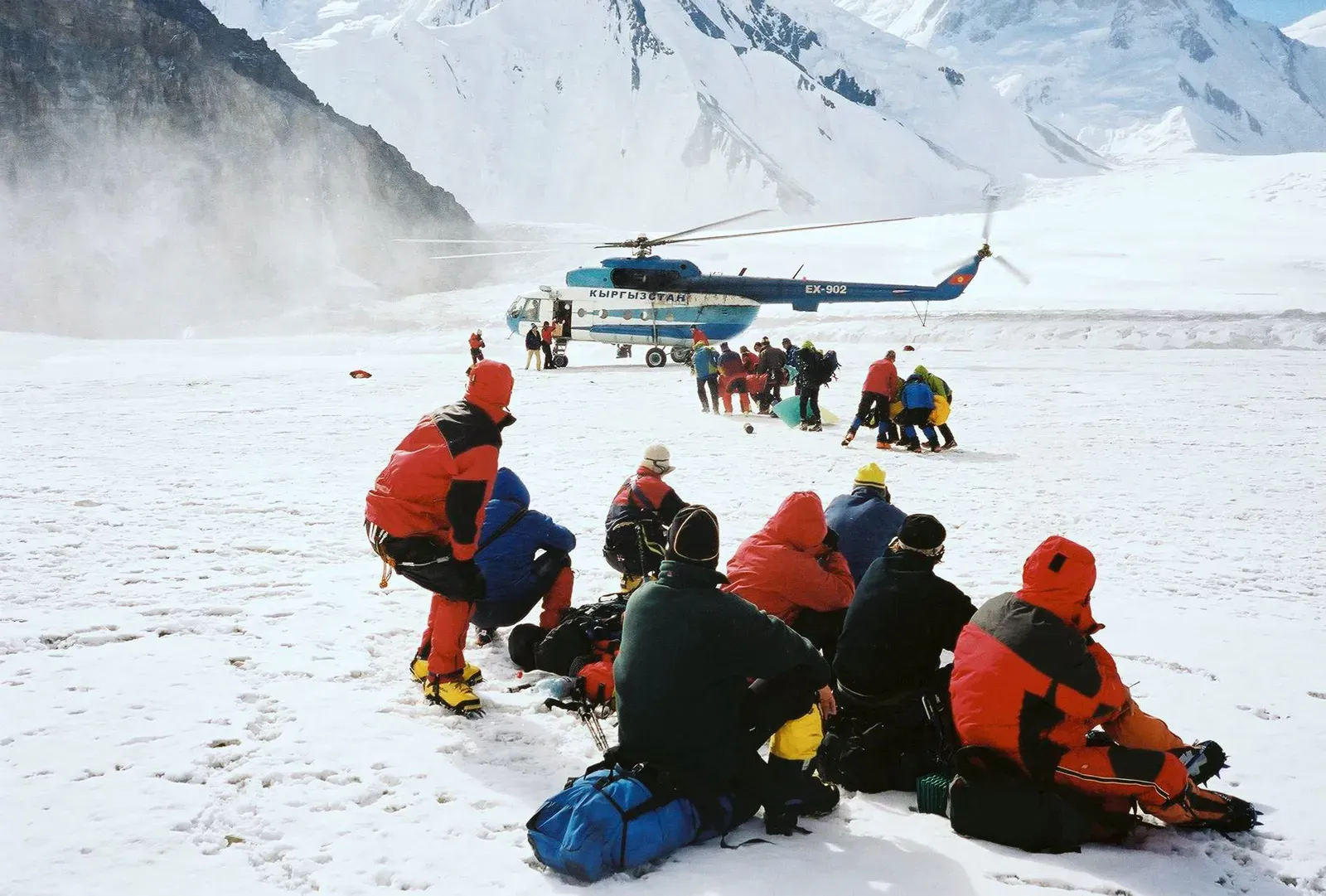
Everyone knows the shot: a climber dangling into a crevasse, rope pulled taut, teammates leaning back with everything they’ve got. It reads like a photograph snapped a half-second before someone died. That’s the whole point – it’s designed to read that way.
Look closer and the cracks show. Photo analysts studying classic crevasse images keep flagging the same tell: the rope is too clean, the tension too even, and the “victim” is positioned exactly where the composition looks best, not where gravity would have actually dropped them. Real falls twist bodies and tangle ropes; they don’t arrange themselves into a triangle for the lens. Several early polar and alpine diaries even admit to rehearsing the rescue “for the camera” once everyone was already safely back on solid ice – which means the fear was real once, but the photo of it wasn’t.
The Lone Explorer Silhouette That Was Built, Not Found
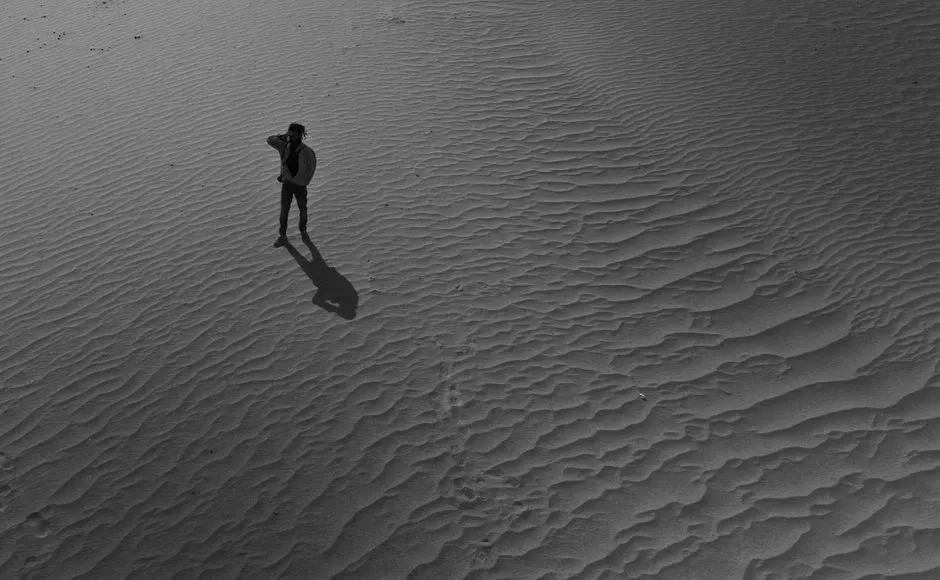
You know this one too: a solitary figure on a ridge, ice axe raised, sunset detonating behind them like the sky itself is applauding. It’s become the default poster image for “human courage against nature.” It’s also, according to historians who’ve cross-checked sun position data against the original negatives, almost never an accident.
Real sunsets move fast and rarely cooperate with a photographer’s frame. Yet in shot after shot, the subject stands precisely where the backlighting sculpts a clean silhouette and erases distracting facial detail – ideal for a lecture-hall poster, unlikely for a spontaneous survival moment. Some expedition notes are refreshingly honest about this: the photographer waited with a tripod already set, then simply asked a teammate to walk to “that outcrop” and hold still once the light peaked. Even the footprints leading there tend to walk in a straight, confident line to the money spot and stop – no wandering, no hesitation, nothing like exhaustion.
Fast Facts
- Sun-position analysis shows subjects almost always stand exactly where backlighting produces a clean, flattering silhouette.
- Expedition notes describe photographers setting up a tripod first, then directing a teammate to walk into place.
- Footprints leading to the pose usually run in one confident, unwavering line – not the wandering path of real fatigue.
The Desert Caravan That Marched Back and Forth for the Camera
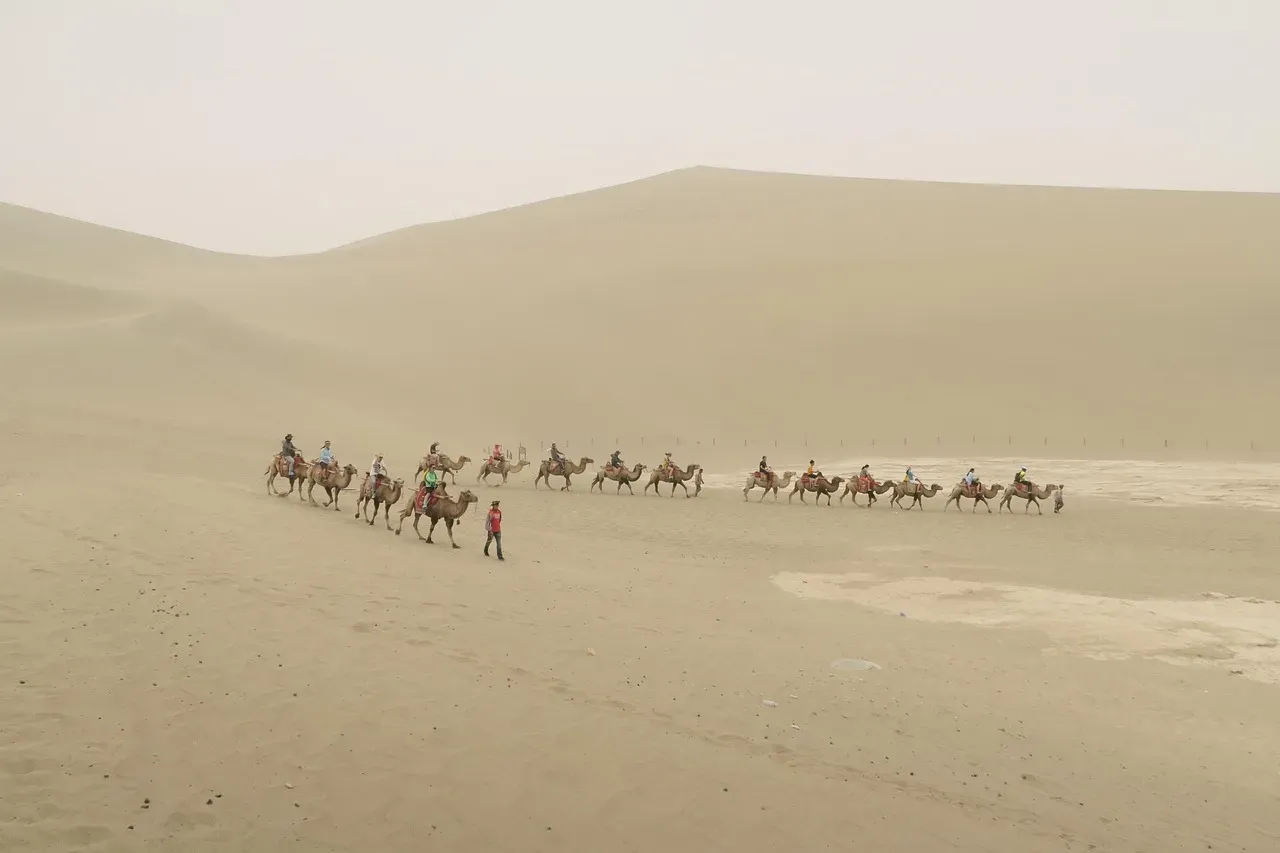
The image is practically a genre unto itself: camels or porters strung across a dune in perfect, evenly spaced silhouette, like a storyboard someone drew before the trip even began. Real expedition logistics are nothing like this. Animals balk, people bunch up, loads slip sideways, and nobody walks in a tidy row on purpose.
When analysts zoom into some of the most famous caravan photographs, the spacing is suspiciously perfect – the kind of visual rhythm a trained photographer builds, not the kind stressed guides create by accident. Written records from early Sahara and Silk Road expeditions describe marching the line up and down the same dune repeatedly so the photographer could “get the right angle.” The tidiness is the giveaway. Real hardship doesn’t line up on cue, and dust clouds don’t politely avoid blocking the best silhouettes unless someone waited for them to settle first.
The “First Footprint” That Was Wiped Clean and Re-Walked
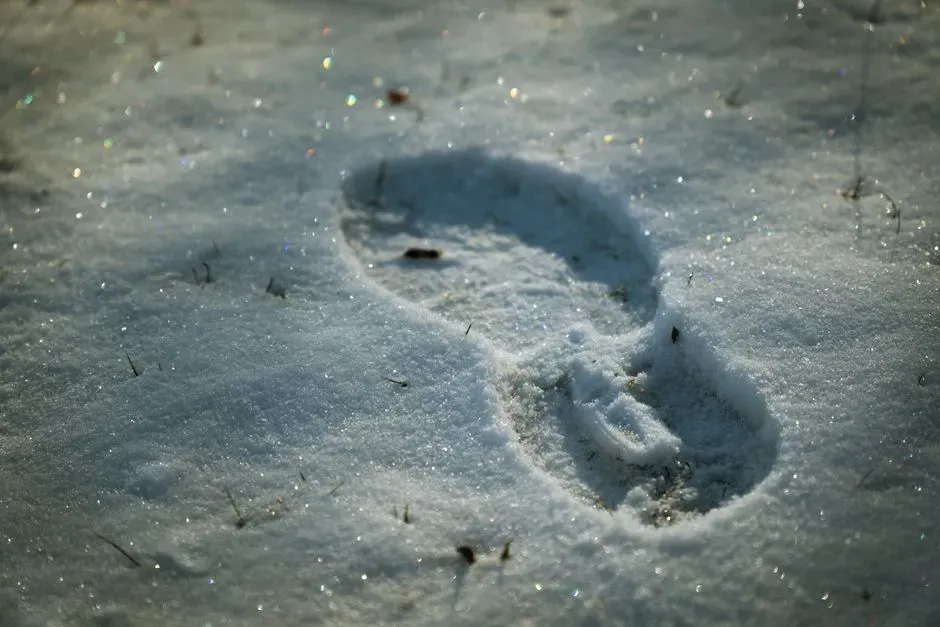
One of exploration photography’s most persistent clichés: the single, pristine bootprint pressed into untouched snow or sand, leading straight toward the camera like nature left a welcome mat. It’s meant to say “no one has ever stood here before.” Ice and terrain specialists say real first footprints on virgin ground almost never look like this.
Genuine first steps, especially by exhausted, roped-together travelers, are deep, uneven, and messy. The prints in these famous photos instead look pressed by hand, textbook-clean, with the surrounding surface subtly smoothed as if someone erased the actual mess before restaging a cleaner path. Some polar photographers have openly admitted to wiping older tracks to “clean the composition” before shooting the official first-arrival image. The landing was real. The footprint you’ve seen a thousand times was a second draft.
The Campfire Story Circle Lit Like a Film Set
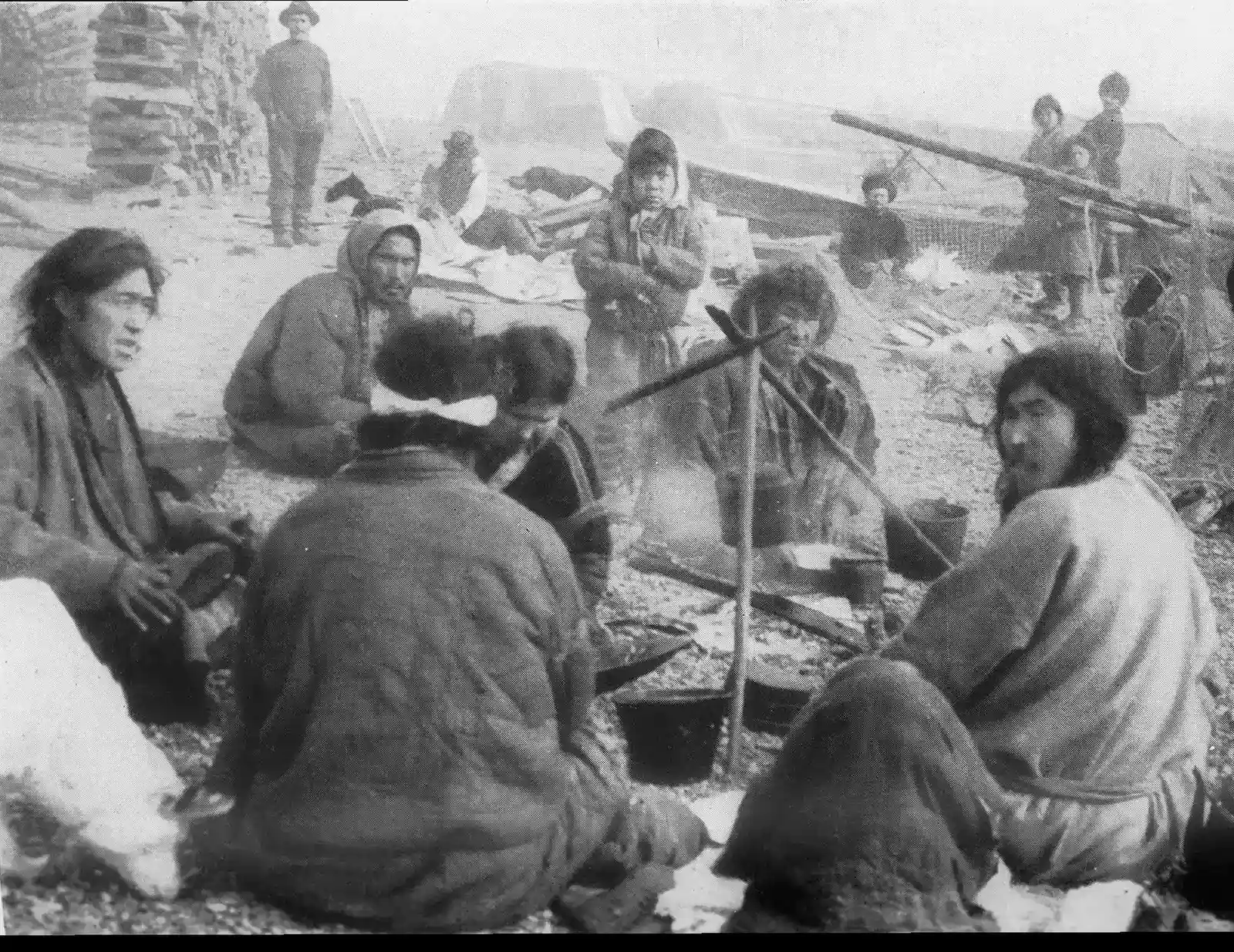
It’s the coziest image in the whole genre: a ring of explorers around a fire, faces glowing, tents artfully arranged behind them like a postcard. It feels like you’re eavesdropping on a private moment of friendship at the edge of the world. Low-light photography specialists say it’s closer to a photo shoot than a candid snapshot.
Real campfires throw hard, uneven shadows, but in many of these images every face is lit evenly and brightly, which points to reflectors, extra lamps, or a re-enactment staged at dusk rather than midnight. The logs are stacked for looks rather than for actually burning well, and instead of facing each other the way people do around a real fire, everyone is angled three-quarters toward the camera. Letters from several 1930s and 1950s expeditions describe the photographer asking the group to grab their mugs after dinner and “pretend you’re hearing a great tale” – which is exactly what generations of viewers have mistaken for a moment nobody knew was being watched.
The Single-Log River Crossing They Didn’t Actually Need
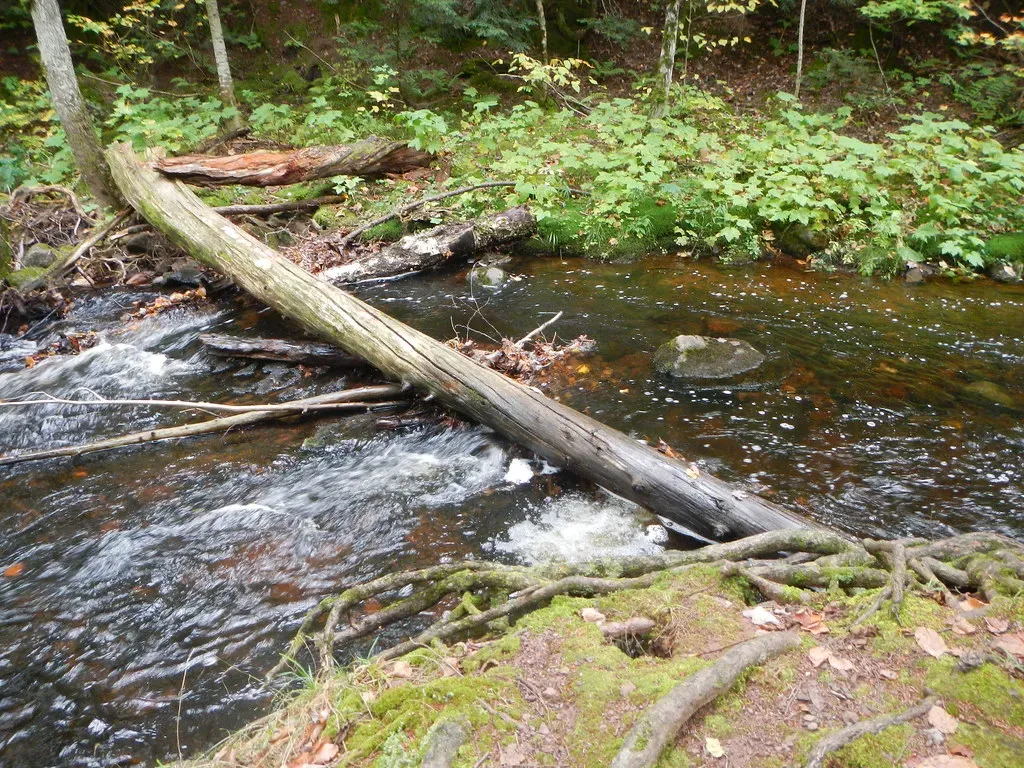
Nothing sells danger like a lone, dripping log stretched across churning water, with a heavily loaded explorer inching across in full gear. It’s one of adventure photography’s oldest tricks, and field safety experts say it’s rarely how anyone actually crossed. Real expedition leaders avoid the riskiest routes, especially while hauling cameras and limited supplies.
Yet the most famous versions of this shot show the subject perfectly centered on a log that happens to align with the frame’s natural perspective lines, often with a conveniently placed rock in the foreground for depth – the kind of composition that requires scouting, not survival instinct. Look just off-frame in some archival prints and you’ll spot older footprints or crossing marks suggesting a safer ford existed nearby. Diaries from certain Amazon and Himalayan expeditions confirm it: the team crossed somewhere easier, then came back later with a smaller crew specifically “to photograph the more dramatic section.”
The Storm-Battered Tent That Wasn’t Really in a Storm
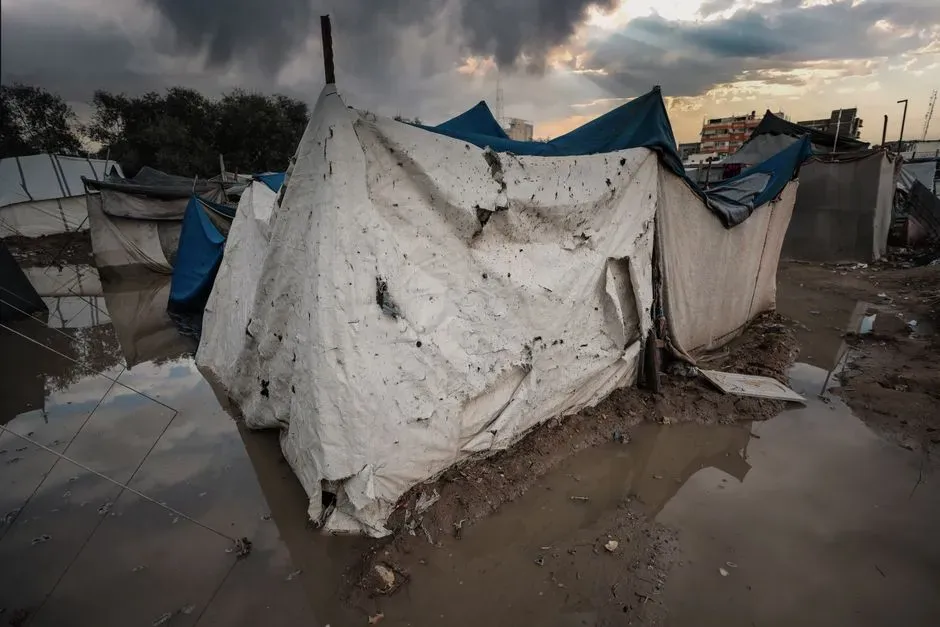
Few images promise chaos like canvas snapping in gale-force wind while team members throw their weight against a collapsing tent. It looks like the exact second everything nearly fell apart. Meteorologists and fabric experts who’ve studied these photos closely keep finding the same inconsistency: the storm in the picture doesn’t match the storm in the details.
Snowfall, flag angle, and clothing movement often look far too mild for the ferocity the tent is supposedly enduring, and the tent’s sides appear pulled inward by hands just out of frame rather than by real gusts. Footprints nearby stay crisp instead of scoured, which is not what happens in an actual whiteout. Some expedition accounts are candid about this gap: when real storms hit, nobody was thinking about cameras, and entire days went undocumented for exactly that reason. The dramatic tent photos that did survive were often reconstructed the next calm morning, built to “show what it was like” for audiences back home.
Quick Compare
- Real storm: scoured, wind-blasted footprints and violently flattened clothing.
- Staged “storm”: crisp, undisturbed footprints and canvas pulled inward by hands just out of frame.
- Real storm: no time, light, or safety margin for taking photographs at all.
- Staged “storm”: quietly reconstructed the next calm morning to look convincing.
The “Curious” Wild Animal That Was Probably Baited
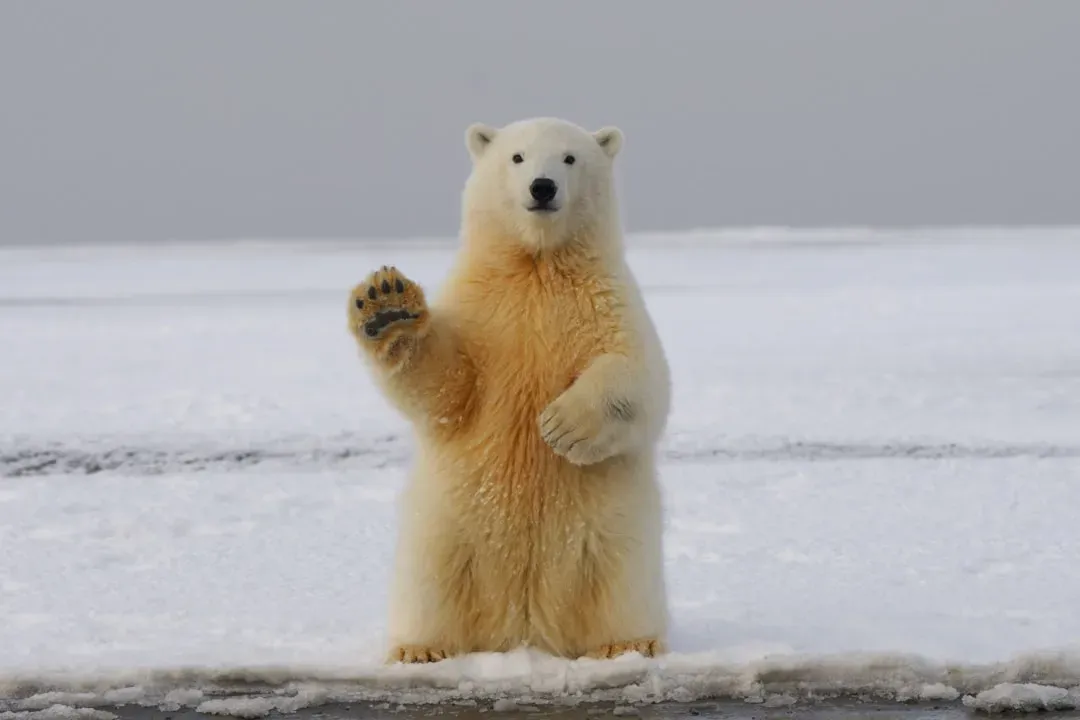
Explorers loved to describe sudden wildlife encounters: a bear sniffing at the packs, a big cat silhouetted on a ridge, a penguin waddling straight toward the lens. The photos are sold as sheer luck, a wild animal wandering into frame at the perfect moment. Wildlife biologists reviewing these images are considerably more skeptical.
In many classic shots, the animal is oddly calm, perfectly side-on to the camera, or posed against a suspiciously clean background – not the behavior of a genuinely startled creature. In polar photos especially, experts see signs of habituation or outright baiting, with animals standing exactly where food scraps or seal remains were likely left for them. Timid species appearing inches from a tent with zero visible stress, or the same animal caught in slightly different poses across multiple frames like a studio session, are both classic red flags. A century ago, staging wildlife for education or promotion wasn’t considered dishonest – it was just how you got the shot.
The Glacier Overhang No Safety Officer Would Ever Allow
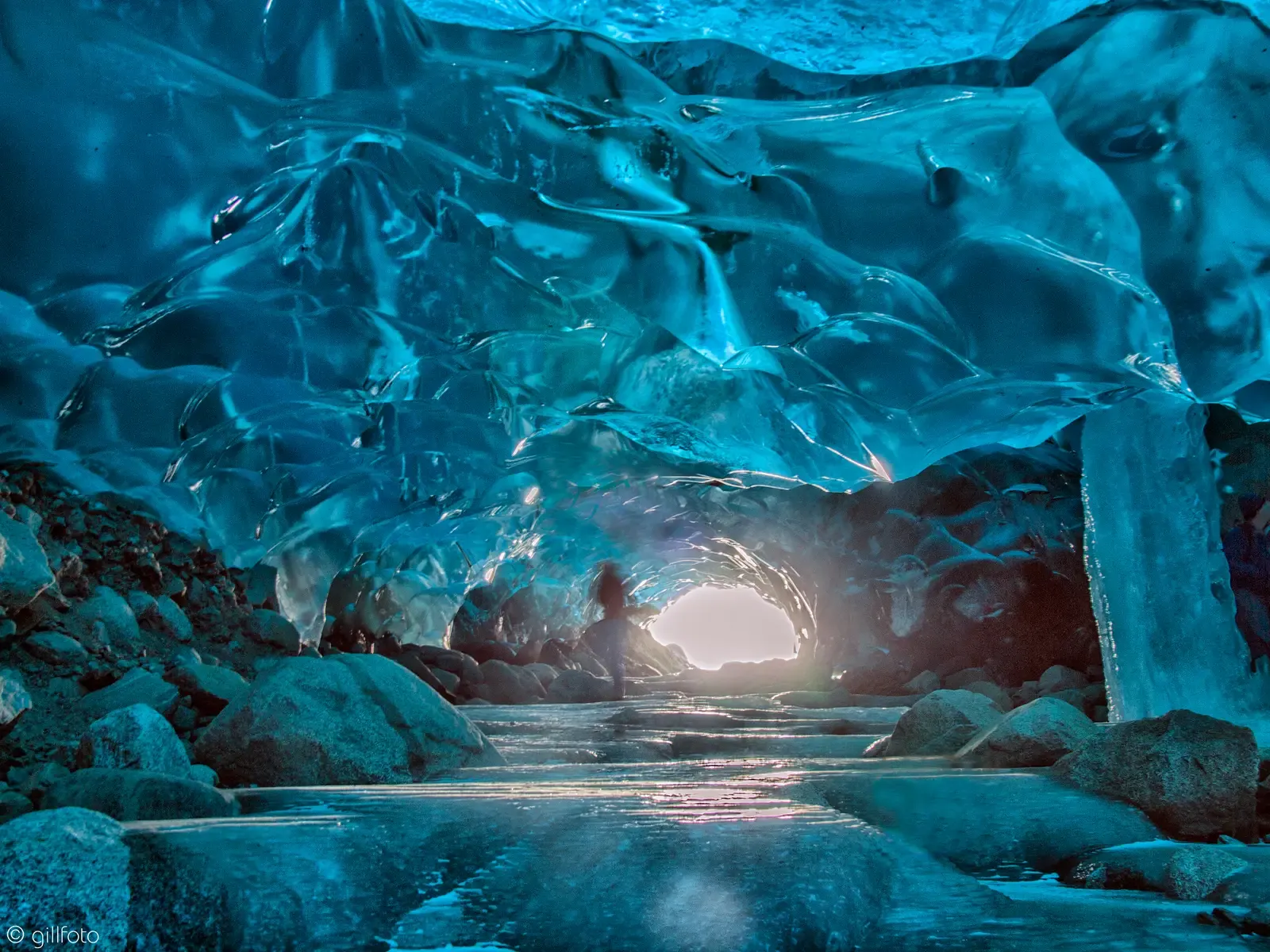
The heroic figure standing beneath a glowing blue ice overhang, staring into the cavern’s depths, is one of exploration photography’s most beautiful motifs. It’s also, according to glaciologists, one of its most reckless-looking setups – if it happened the way it’s shown. Overhangs and cornices like these are notoriously unstable, and no responsible expedition leader parks a person on the thinnest, most exposed ice just because it looks good.
And yet that’s exactly where the subject stands, again and again, framed perfectly against the deep turquoise void. When experts compare multiple frames from the same session, they often see the subject inching step by step into a more dramatic position, a clear sign of trial and error chasing “the” shot. A few surviving contact sheets even show safer, less thrilling earlier attempts that were quietly left out of the final album. The version that got published wasn’t the safest one – it was the one that looked the most like it could kill you.
The “Just Discovered” Fossil That Was Cleaned and Repositioned First
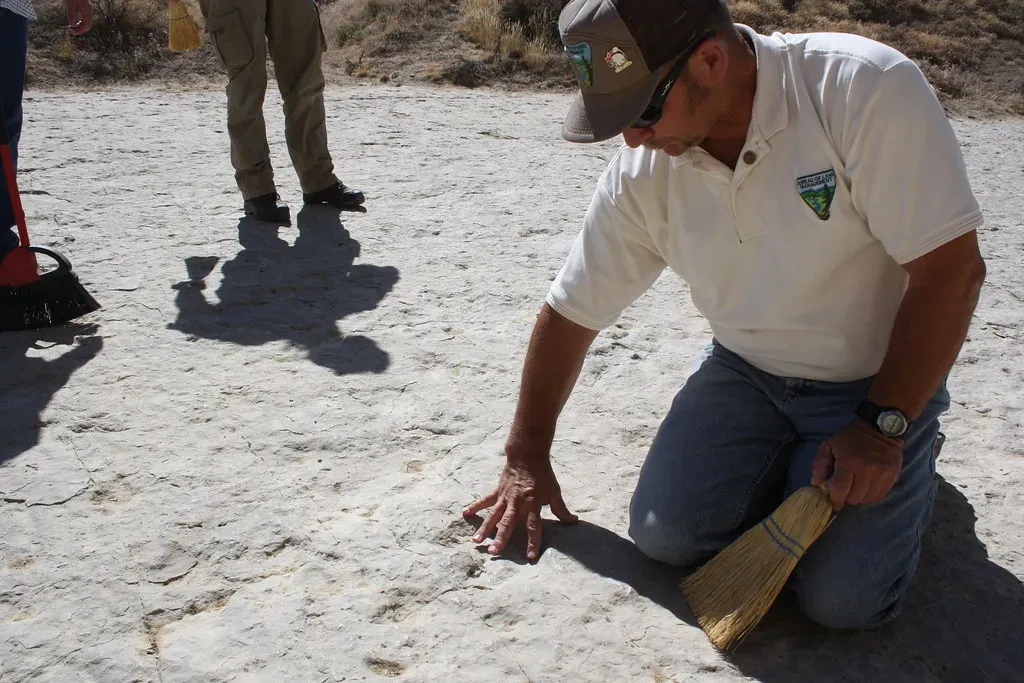
Exploration isn’t only about landscapes – it’s about finds, and the photos of those finds are sold as the instant of discovery itself: a bone emerging from rock, a shard half-buried in dust, a tool lying exactly as it was for centuries. Archaeologists and paleontologists know the real process looks nothing like this. Standard practice, even a hundred years ago, was to clean and reposition an object before photographing it for clarity.
In many expedition albums, the “find” sits at a perfectly diagonal angle with dust brushed away and the surrounding rubble curated for contrast – some fossils are improbably pristine, with no excavation debris or tool marks anywhere nearby. Shadows in a few photos even reveal that the trench had already been deepened before the “discovery” was shot, and multiple angles show the same object re-placed to read more clearly on film. The intent usually wasn’t to lie about the moment of first sight – it was to document the object properly. But public imagination later turned that careful documentation into a myth: “we brushed away one handful of sand and there it was.”
Worth Knowing
- Cleaning and repositioning a find before photographing it was standard practice, not an attempt to deceive.
- Pristine fossils with zero surrounding excavation debris are a frequent giveaway of a restaged shot.
- Shadow analysis on several photos shows the trench had already been widened before the “discovery” image was taken.
The Hero Shot at the “Most Dangerous Point” That Wasn’t
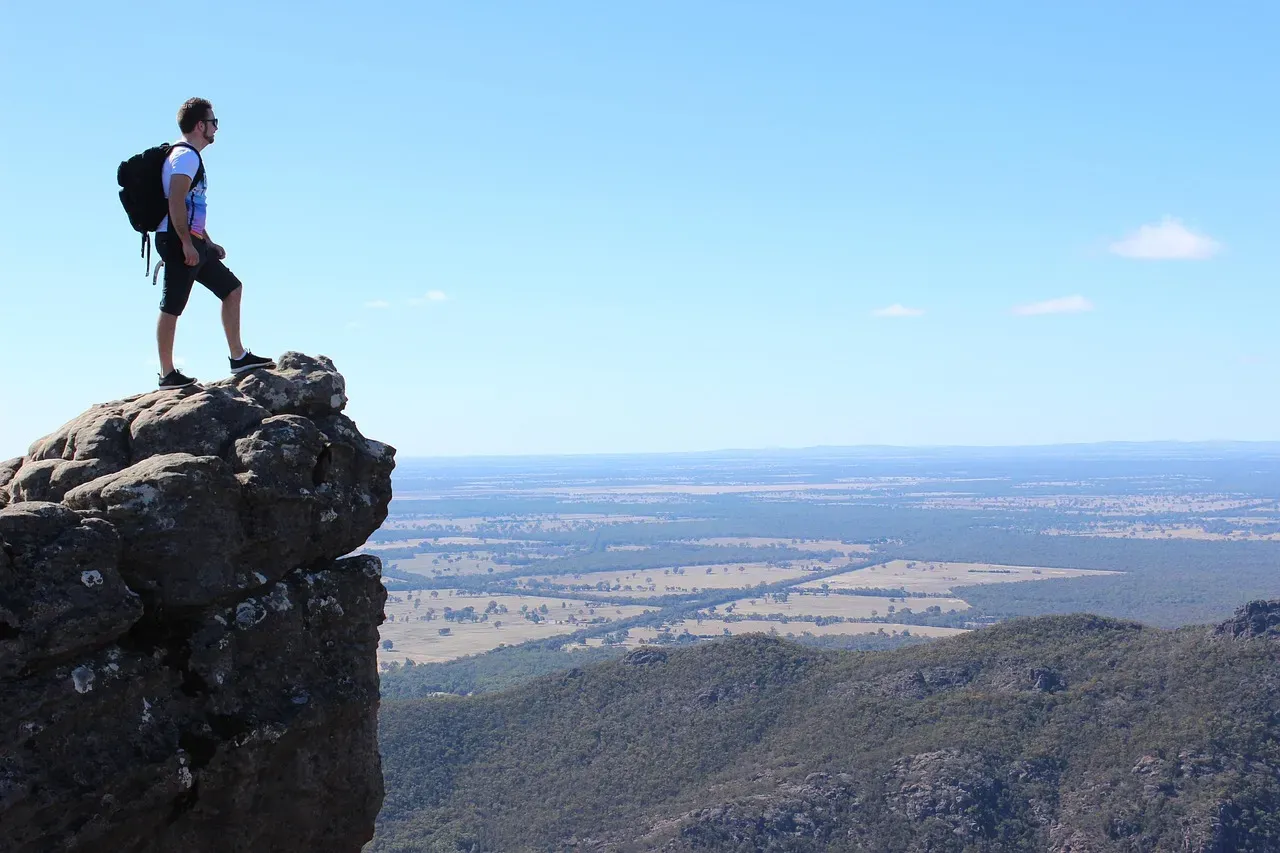
You know the pose: an explorer standing at a cliff’s edge or on a knife-ridge, arms crossed, entirely composed, with a caption declaring this “the most dangerous point of the route.” Mountaineering and safety experts who revisit these actual locations tend to roll their eyes. They frequently find wider, safer stances available just out of frame, and evidence that a tight composition is doing all the work of manufacturing exposure.
Some historic climbers admitted to stepping closer to a drop than necessary because the photographer insisted the safer spot “didn’t read” as dangerous enough. A wide-angle lens swung close to someone’s boots can turn a moderate slope into a bottomless abyss on film. Ropes are another giveaway – in several iconic shots they’re neatly coiled or left slack for aesthetics rather than tensioned for actual protection. It’s choreography dressed up as candor, and yet modern climbers still sometimes cite these staged images as reference points for how dangerous a route “really” is.
The Exhausted Summit Collapse That Happened Twice
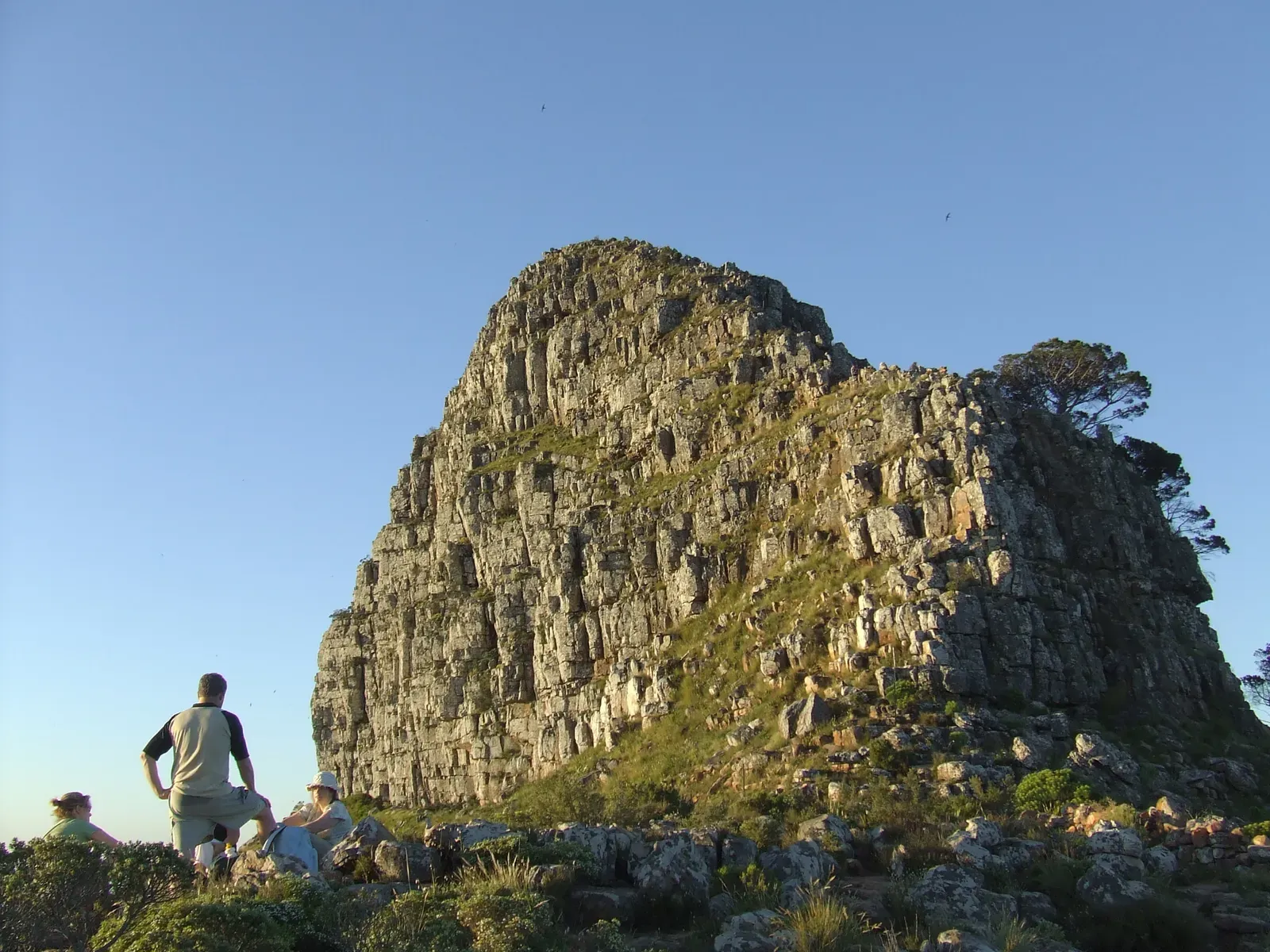
Few images hit harder than the explorer slumped at a summit cairn or finish line, face in hands, gear strewn everywhere, looking like the exact moment human endurance finally broke. Sports scientists and historians who’ve studied these photographs closely have real doubts about how many of them capture that moment at all. Genuine collapse is messy – people flop wherever their legs give out, not wherever the composition happens to work.
In the most famous versions, packs are arranged in pleasing arcs, flags or tools are angled conveniently toward the lens, and the “collapsed” body is turned just enough for the face to be recognizable. Some expedition diaries describe team members being asked to “lie down again like before” so the photographer could reset the exposure. In other cases, the team actually reached the goal in brutal weather with no camera in sight, then staged the arrival photo on a clearer day once everyone had rested. History remembers the performed version. The lived one, the one that actually hurt, usually went undocumented.
The “We Survived” Group Portrait Built Like a Press Release
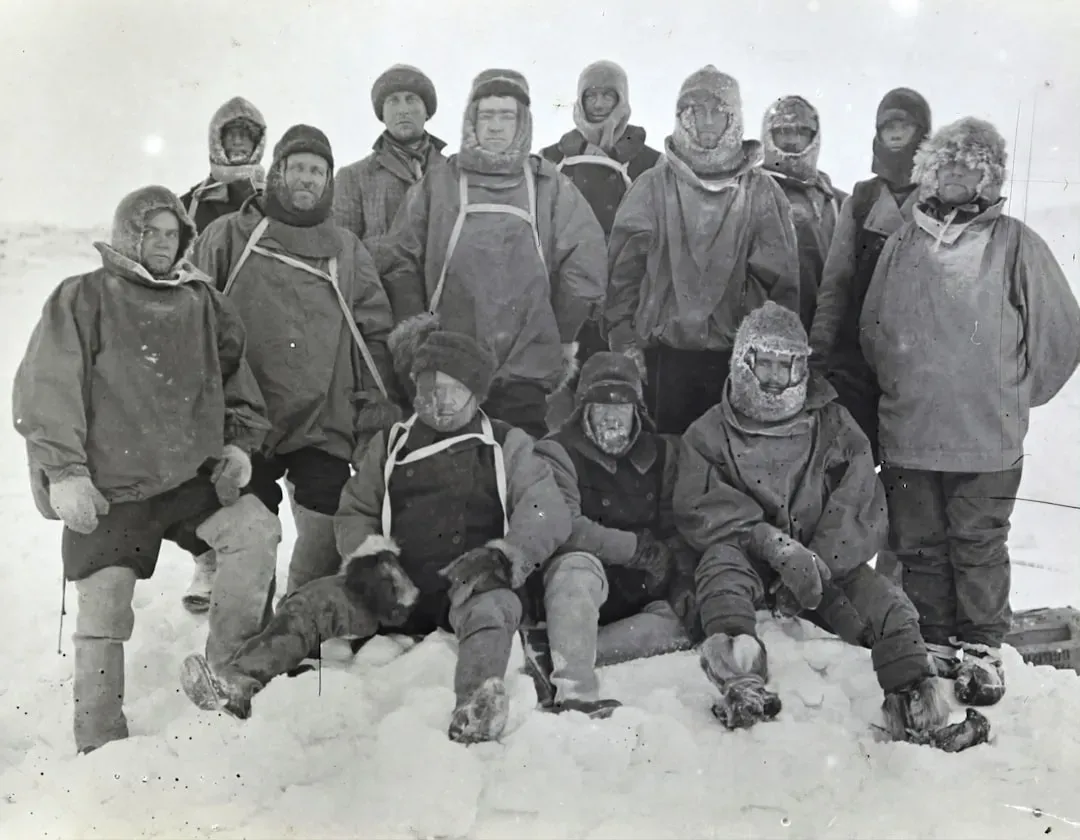
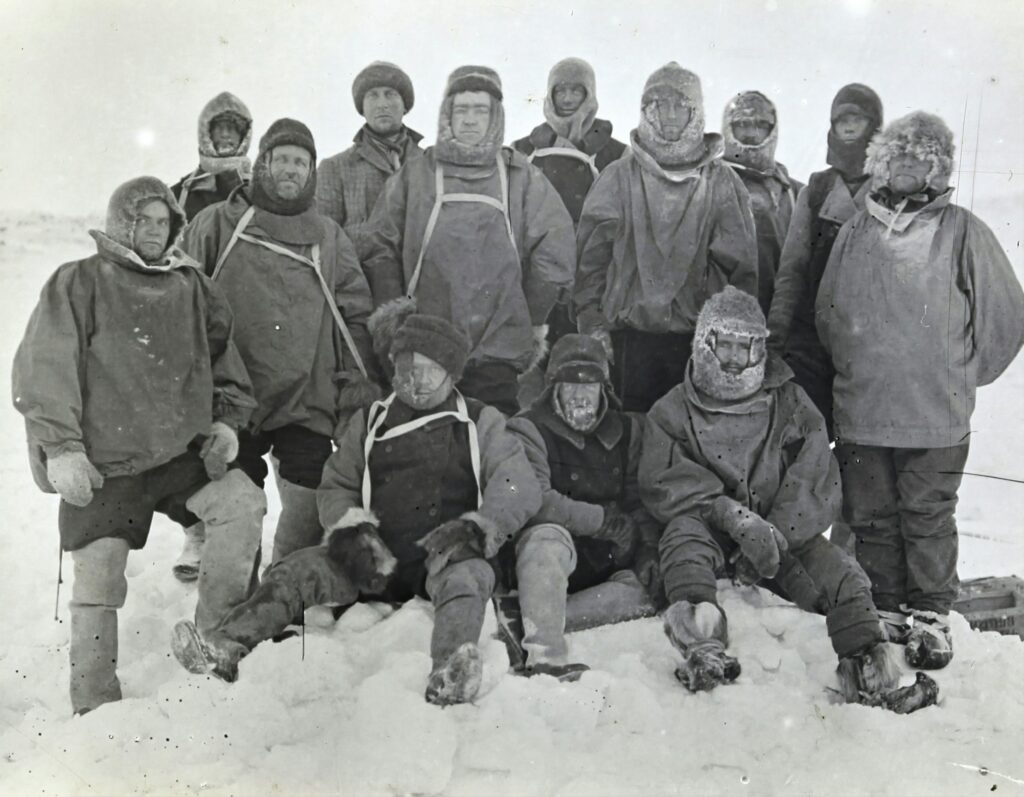
The single most obviously staged – and still the most widely misread – expedition photograph is the triumphant group portrait: everyone in frame, grim but proud, flags hoisted, gear piled just so. Audiences treat it as pure documentary truth, when it may actually be the least candid image in the whole album. Group poses require instruction by definition – taller in the back, kneel here, chin up, hold the flag higher – and in harsh environments, that coordination only gets more deliberate.
Experts analyzing famous polar, Himalayan, desert, and jungle team portraits point out that objects are arranged symmetrically to tell a story: sledges front and center, instruments placed just so, trophies or samples laid out like props in a shop window. Lighting is chosen to flatter rather than to show the real condition of frostbitten faces or injuries, and multiple takes almost always exist – the version we all know is simply the one that fit the narrative best. None of this makes the suffering or the achievement fake. It means the final image is a carefully edited thesis statement about the journey, built for sponsors, lecture halls, and history books – reality not as it happened, but as the expedition wanted it remembered.
Why It Stands Out
- Every object in frame – sledges, instruments, flags – is arranged like a shop window display, not left where it actually landed.
- Lighting is chosen to flatter, often smoothing over frostbite, injury, or exhaustion visible in unpublished takes.
- Multiple takes almost always exist; the famous frame is simply the one that fit the story the team wanted told.
The Bottom Line
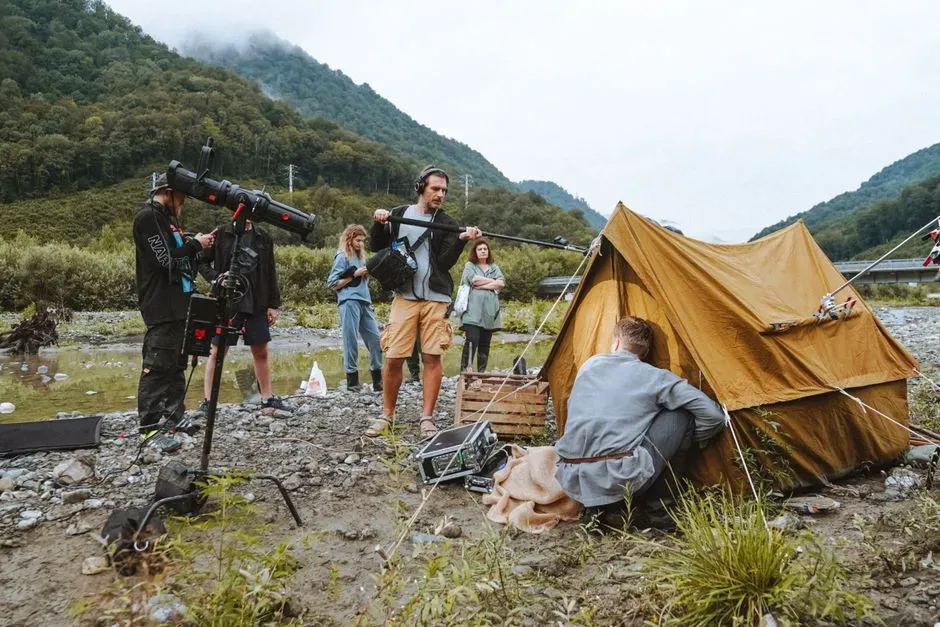
Once you start noticing it, you can’t stop: footprints wiped and re-laid, gear nudged into perfect arcs, danger stretched by nothing more than a wide-angle lens and good timing. The most iconic expedition photographs in history carry the fingerprints of quiet, deliberate staging – and that doesn’t make the journeys themselves any less real, any less brutal, or any less brave.
What it does mean is that we’ve been reading these images wrong for a hundred years, treating them as raw surveillance footage from the past instead of what they actually are: carefully designed arguments, built to make sponsors open their wallets and audiences believe in heroes. My honest take? That’s not a betrayal – it’s just what storytelling with a camera has always required. The lie would be pretending the suffering wasn’t real. The staging was only ever about making sure we’d believe it.