You’ve probably heard the reassuring version of the story: every human-made object shows up exactly where the timeline says it should, filed neatly into rock layers that match its age with no exceptions. That’s the tidy picture geology textbooks like to paint.
But pull the actual case files – old mining logs, quarry blasting reports, newspaper clippings from the 1800s – and a stranger pattern starts to surface. Objects that look unmistakably manufactured keep turning up sealed inside strata that had already finished forming millions, sometimes hundreds of millions, of years before anyone could have made them. Some of these cases collapse the second a geologist looks closely. Others don’t collapse quite so easily, and that’s exactly why they keep resurfacing.
#1 – The London Hammer: An Iron Tool Locked Inside 100-Million-Year-Old Limestone
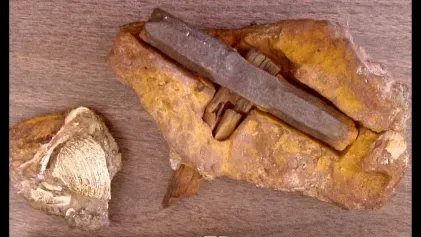
In 1936, a couple walking near London, Texas, spotted a lump of rock with a piece of wood sticking out of it. Inside was a fully formed iron hammer head, handle and all, encased in a hard limy concretion sitting within Lower Cretaceous strata – rock dated to roughly 100 million years old. The hammer’s design lines up neatly with 19th-century mining tools, which is exactly what makes the setting so jarring.
Geologists have since shown that concretions like this one can form fast, sometimes within decades, as minerals dissolved in groundwater precipitate around any solid object they touch. The detail that still nags at people, though, is how completely sealed the hammer was inside an otherwise undisturbed layer of rock. Skeptics point to cracks or old mining disturbance as the likely entry point; believers say a hammer that well-sealed shouldn’t have had one. Either way, it’s the case that launched a thousand campfire arguments – and #2 is even stranger.
Fast Facts
- Discovered in 1936 near London, Texas
- Encased in a limestone concretion tied to Lower Cretaceous rock, roughly 100 million years old
- Iron head fused to a wooden handle, fully intact
- Design closely resembles 19th-century mining hammers
#2 – The Coso Artifact: A 1920s Spark Plug Mistaken for a 500,000-Year-Old Geode
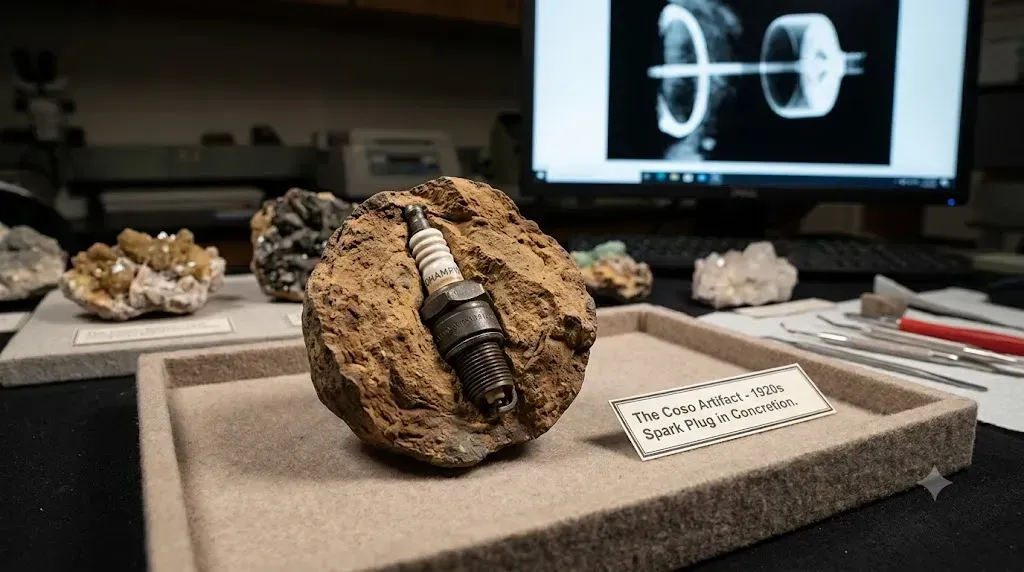
In 1961, three rockhounds in California’s Coso Mountains cracked open what they assumed was a geode and found something that looked disturbingly artificial: a cylinder of porcelain and metal, complete with a hexagonal head. Early excitement pegged the surrounding rock at half a million years old, and for a moment it looked like they’d found something the history books couldn’t explain.
The mystery didn’t survive an X-ray. It turned out to be a 1920s Champion spark plug, rusted and wrapped in an iron-oxide concretion that had built up around it in the ground – not a geode at all. The whole “ancient artifact” case rested on decades of natural crust-forming, not millions of years. It’s a satisfying explanation, but it also set the template every future “impossible artifact” story would have to answer to. Which brings us to a find that answer isn’t so easy to give.
#3 – The Nampa Figurine: A Tiny Clay Doll Pulled From a 2-Million-Year-Old Drill Core
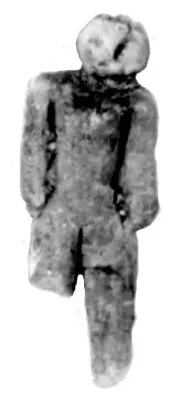
In 1889, well drillers in Nampa, Idaho hit something unexpected 300 feet down, inside a formation dated to roughly 2 million years old: a 1.5-inch clay figure, carved with enough detail to look almost like a tiny human. For a while, it was treated as proof that people – or something like people – were around far earlier than anyone assumed.
Later reviews weren’t so sure. The figure’s style resembles much younger indigenous work, and its iron-oxide staining matches other objects known to have sunk through loose, quicksand-like sediment over time. That slow sinking, rather than ancient burial, is now the leading explanation for how something so recent ended up so deep. The controversy hasn’t fully died, mostly because no one can prove exactly how it got there. And the next case swaps clay for something a lot heavier.
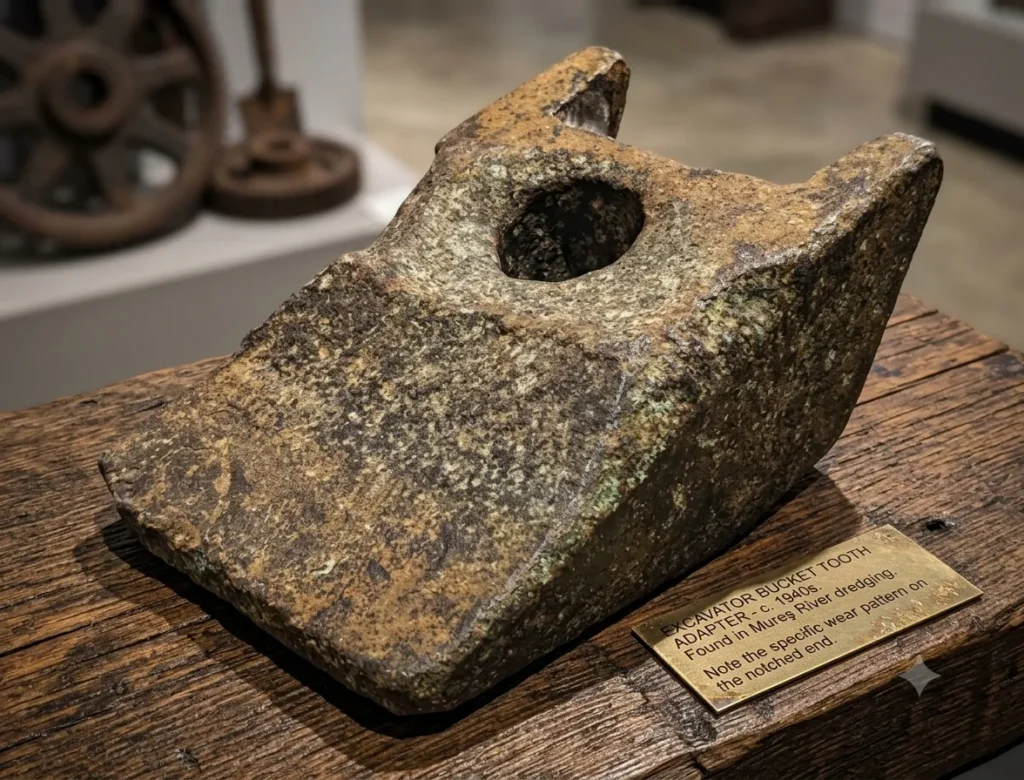
#4 – The Wedge of Aiud: A Mystery Alloy Buried Beside Ice Age Mastodon Bones
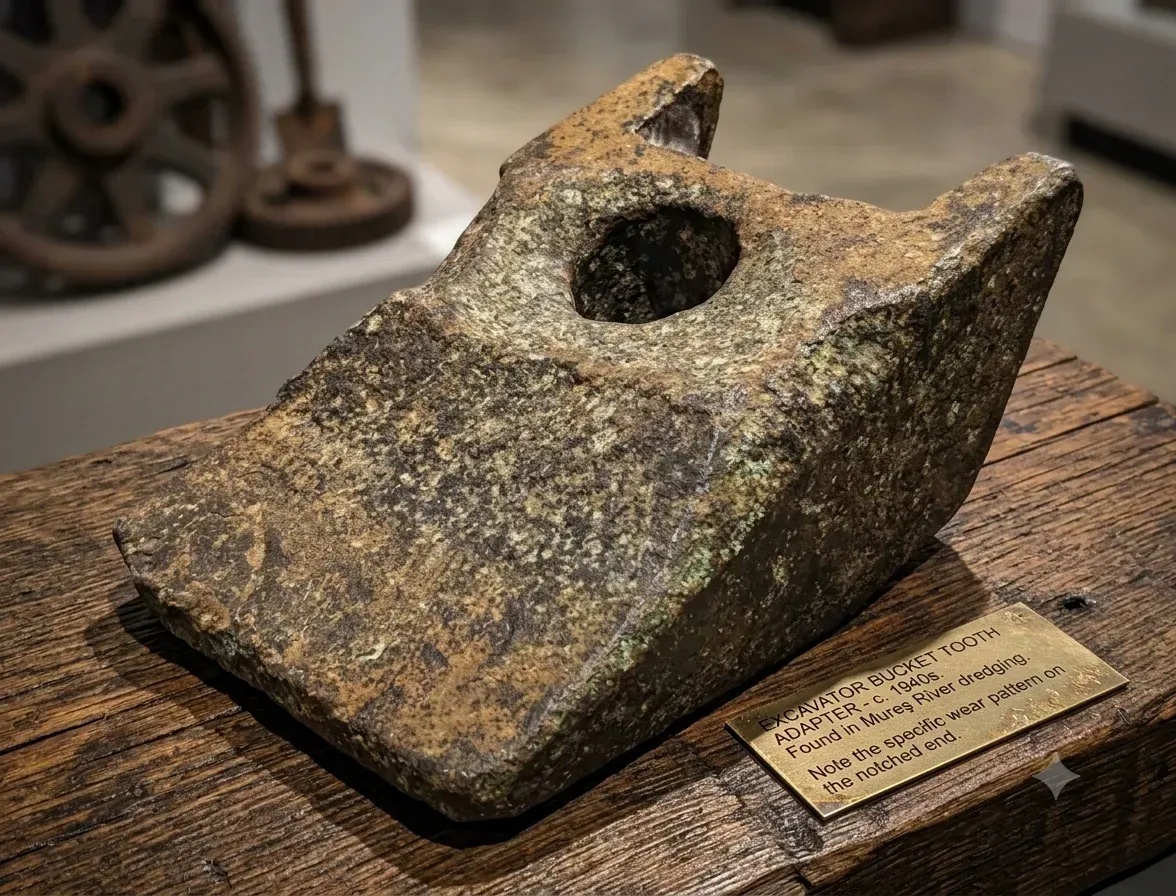
Construction crews working near the Mures River in Romania in 1974 dug up something odd 33 feet underground: a wedge-shaped chunk of metal sitting alongside the bones of mastodons that died roughly 11,000 years ago. At five pounds, with no visible casting seams, it didn’t look like scrap.
Lab analysis found it was aluminum – fine on its own, except aluminum wasn’t industrially produced until the 1800s, and this thing was sitting next to Ice Age fauna. The alloy also contained trace metals that don’t match typical 20th-century scrap aluminum, which is the detail that keeps this case alive. The excavator-debris explanation gets floated a lot, but no paperwork has ever backed it up. We’ll come back to this one later, because it isn’t done surprising people yet.
#5 – The Wolfsegg Iron: A Fist-Sized Lump Cracked Out of 20-Million-Year-Old Coal
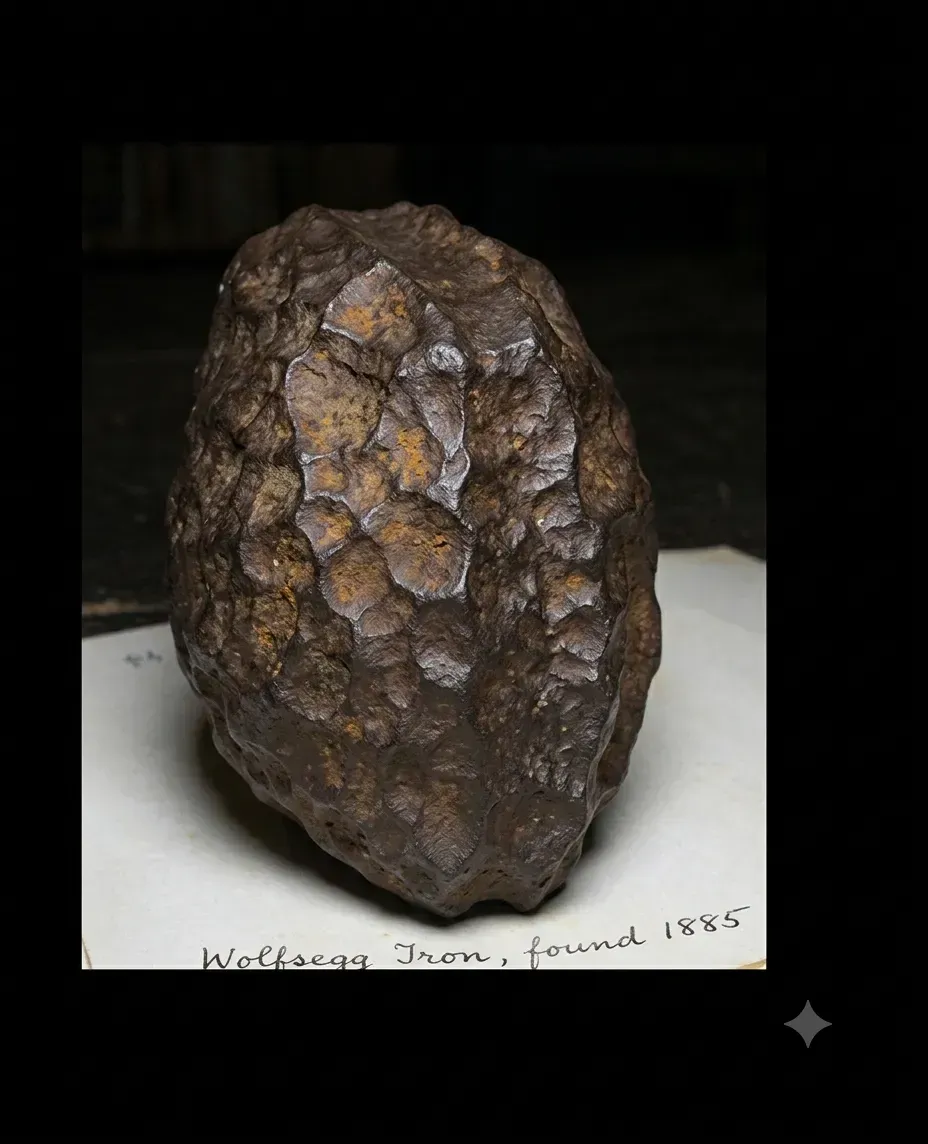
Austrian miners broke open a coal seam in 1885 and pulled out something that didn’t belong: a heavy iron object, initially described as nearly cube-shaped, sitting inside coal dated to the Tertiary period – about 20 million years old. Word spread fast that miners had found a machined block from a lost civilization.
Closer inspection walked that back. The object turned out to be irregular, not a true cube, with edges that look more consistent with a natural iron lump or a fragment of mining equipment than a manufactured part. What nobody has managed to explain, though, is how any iron object – natural or man-made – ended up fully enclosed inside a seam that old. No modern source has ever been traced, so the file stays open. Up next, a find that came out of a quarry blast instead of a coal shovel.
#6 – The Dorchester Pot: An Ornate Metal Vessel Blown Out of Solid Precambrian Rock
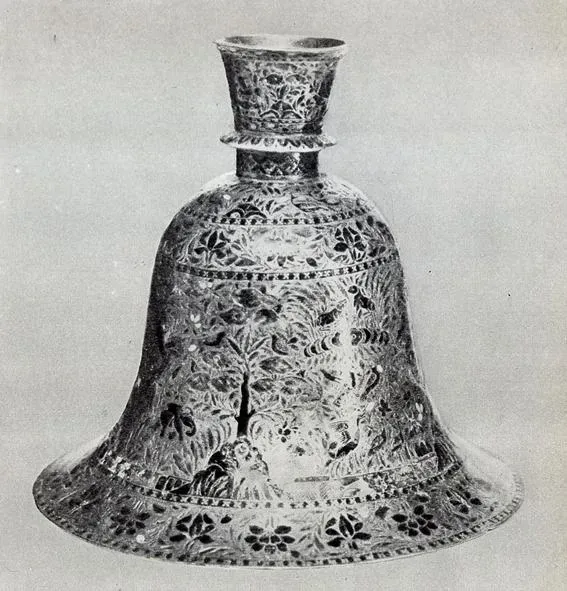
In 1851, a dynamite blast at a Massachusetts quarry did what quarry blasts do – except this time, it shattered a rock formation hundreds of millions of years old and left behind fragments of a delicate zinc-and-silver vessel with a floral design and bell-shaped body. Newspapers at the time described it almost like a piece of jewelry that had no business being there.
The vessel had reportedly been sitting eight feet deep inside solid rock, with no cracks or seams suggesting later insertion. That depth, inside rock that old, is the single detail that has kept this story circulating for over 170 years. Modern skeptics suspect a natural formation was misread or the site had undocumented disturbance, but the original 19th-century account has never been formally retracted. The next entry trades stone for coal, and the story only gets more personal.
#7 – The Morrisonville Gold Chain: Jewelry a Woman Found Inside Her Coal Bucket
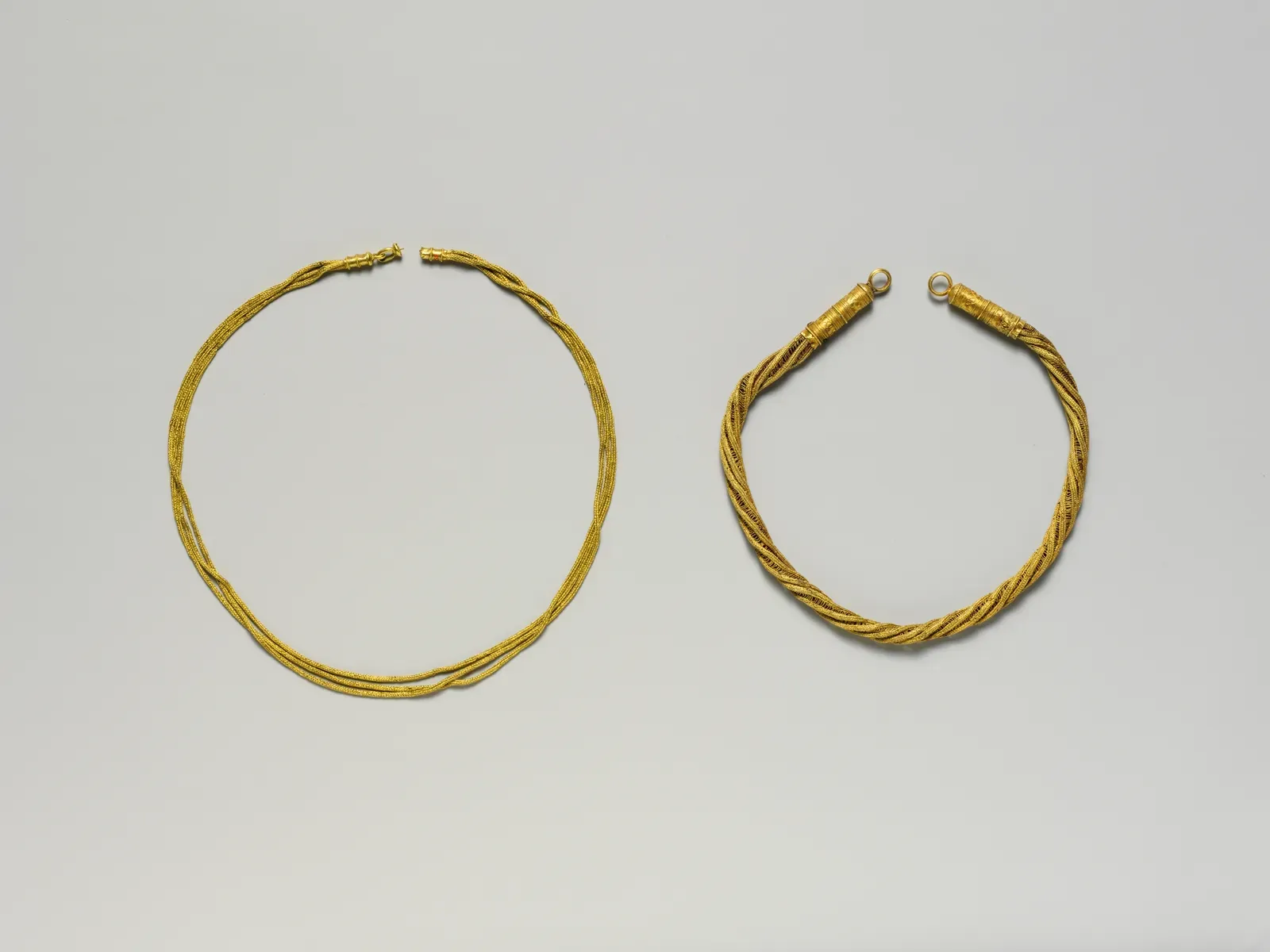
In 1891, an Illinois woman broke apart a chunk of coal to feed her stove and found a delicate gold chain embedded inside it, coal that had formed somewhere between 260 and 320 million years ago. The links showed no scorching, no bending, nothing that suggested it had been shoved in recently.
It’s one of the most quoted “impossible artifact” cases precisely because of how mundane the discovery was – no expedition, no excavation, just a housewife breaking coal for heat. The chain’s total enclosure inside solid coal, with zero damage, is what makes this case so hard to wave away. Nobody has the actual chain to test today, which cuts both ways: it protects the mystery, but it also means it can never be proven. What turned up in a Virginia mine decades later is even harder to dismiss.
#8 – The Virginia Brass Bell: An Alloy That Shouldn’t Exist, Found Inside 300-Million-Year-Old Coal
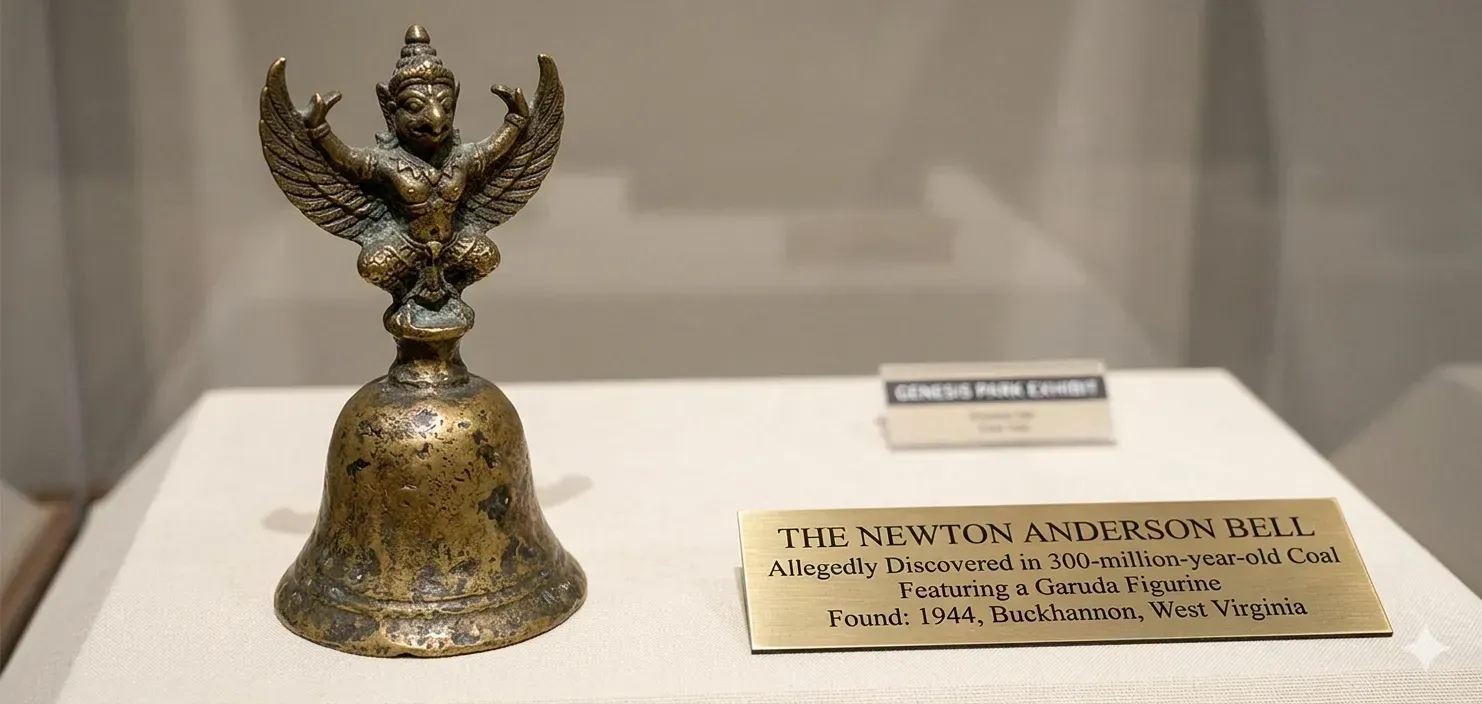
In 1944, a young boy broke open a lump of coal from a Virginia mine and found a small brass bell inside, dating the surrounding rock to the Carboniferous period, roughly 300 million years old. It’s a strange enough image on its own – a bell, intact, in coal older than the dinosaurs.
Neutron activation analysis run decades later found something even stranger: the bell’s alloy mixed copper, tin, zinc, and trace elements that don’t line up with standard modern metallurgy. That unusual composition is the reason this case keeps getting cited instead of dismissed outright. Mining contamination remains the leading counter-explanation, but the bell’s depth and intact seal argue against a casual accident. From here, the story crosses an ocean.
Quick Compare
- Morrisonville Gold Chain (1891) – Illinois coal, 260-320 million years old, no scorching or damage to the links
- Virginia Brass Bell (1944) – coal roughly 300 million years old, alloy with unmatched trace elements
- Illinois Iron Pot (late 1800s) – Carboniferous coal, over 300 million years old, backed by sworn witness statements
#9 – The Gold Thread of Rutherford Mill: A Woven Metal Strand Pulled From 320-Million-Year-Old Scottish Stone
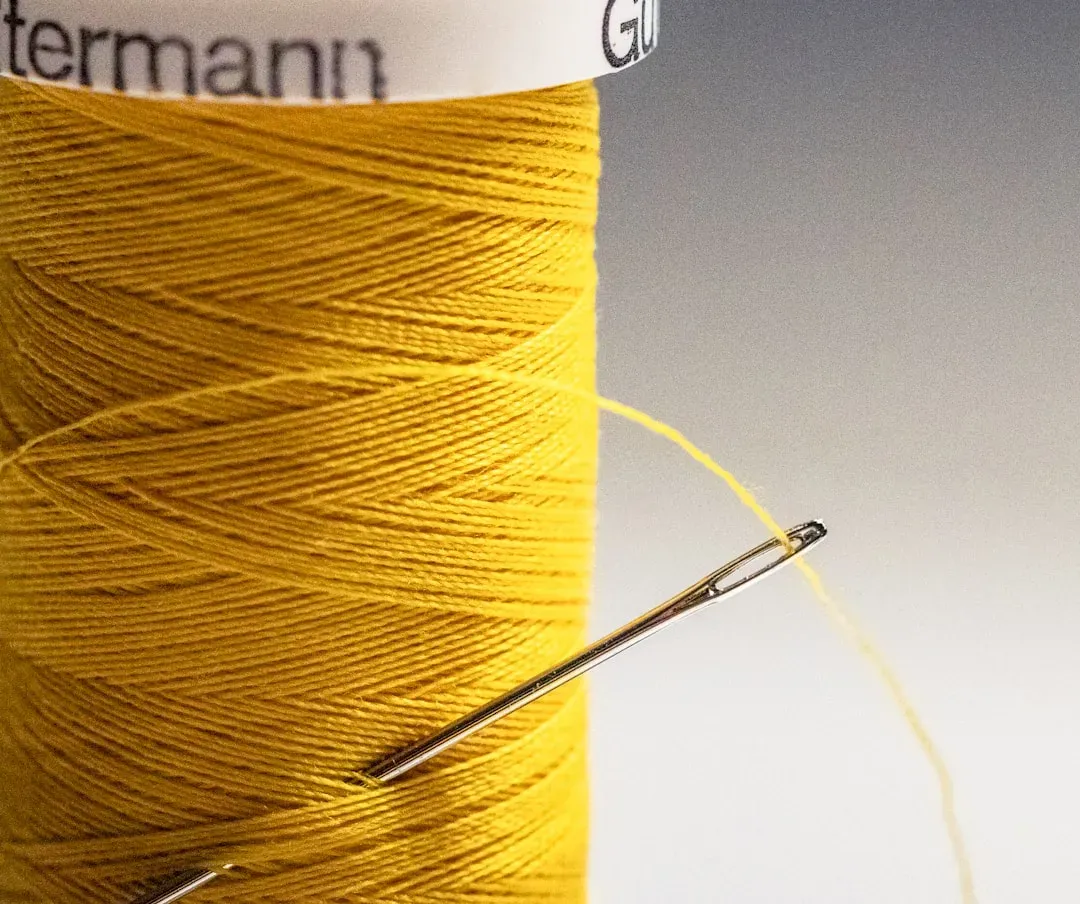
Quarry workers near Rutherford Mill, Scotland, hit something unexpected in 1844: a thin gold thread, extracted from eight feet inside solid stone dated between 320 and 360 million years old. Witnesses described it as twisted and uniform, more like drawn wire than anything nature could produce on its own.
This is one of the earliest documented cases of its kind, predating most of the American finds by decades. Its uniform twist is what convinced 19th-century observers it was made, not grown or formed by mineral accident. No modern lab has ever gotten hold of it, so the case rests entirely on period eyewitness testimony – shaky by scientific standards, but stubbornly persistent in the historical record. The next artifact swaps thread for something you could actually cook in.
#10 – The Illinois Iron Pot: A Cooking Vessel Sealed Inside a 300-Million-Year-Old Coal Block
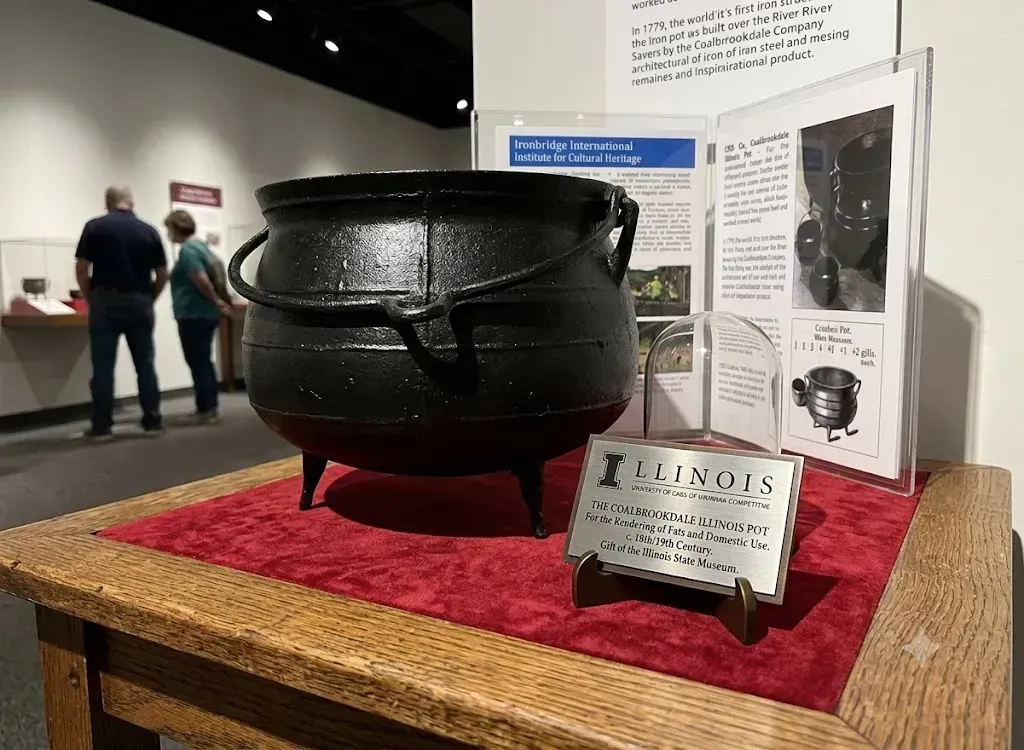
Late in the 19th century, miners in Illinois reportedly cracked open a large lump of coal and found an iron pot lodged inside it, coal placed firmly in the Carboniferous period, over 300 million years old. Contemporary accounts describe the pot’s shape and material as matching nothing from any known ancient toolkit.
What sets this one apart is how it was documented at the time – with affidavit-style statements from witnesses, unusually formal for a mining-camp discovery. That level of detailed, sworn reporting is rare enough that even skeptics admit it doesn’t read like a casual tall tale. The leading counter-theory is a hoax or accidental mix-up during extraction, though no direct evidence of either has surfaced. What comes next has fossils crushed right into the impression.
#11 – The Coal Shoe Print: A Footprint With Crushed Trilobites Pressed Into It
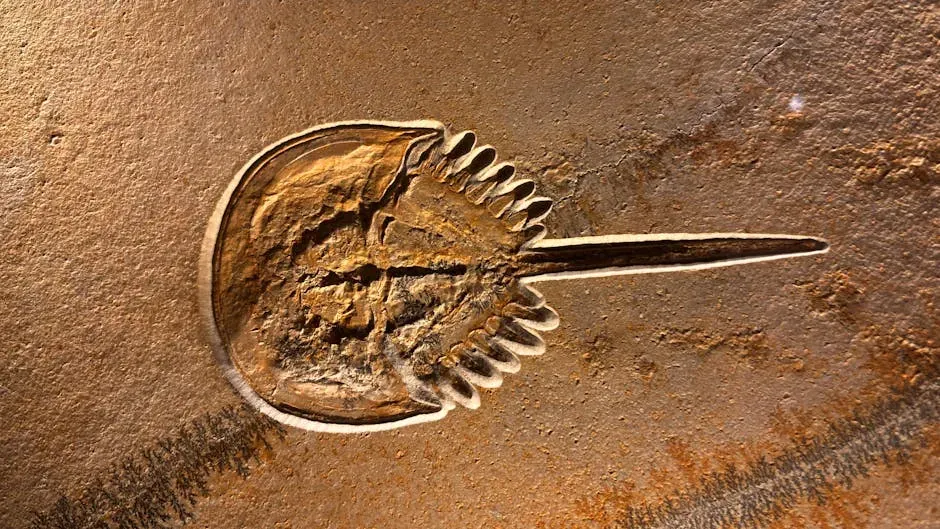
Scattered 20th-century reports describe something almost too strange to be real: a human shoe print, complete with stitching and sole patterns, pressed into coal seams millions of years old – with crushed trilobite fossils caught directly underneath the impression. If real, it would mean footwear existed alongside creatures that went extinct hundreds of millions of years before humans evolved.
The catch is that no verified specimen has survived for modern testing; the accounts exist mostly as descriptions and old photographs. The crushed trilobites are the detail that makes the story so visually unforgettable, even without a physical sample to examine. Without a preserved print and a controlled dig site, this one stays filed under anecdote rather than evidence – frustrating, given how compelling the description is. The next case, at least, still has physical structures you can visit.
Worth Knowing
- Trilobites vanished from the fossil record long before coal-forming forests existed, making their presence here especially odd
- No physical specimen of the print has ever been preserved for lab testing
- The entire case rests on written descriptions and old photographs, not a surviving object
#12 – The Baigong Pipes: Metal-Like Tubing Embedded in 150,000-Year-Old Rock
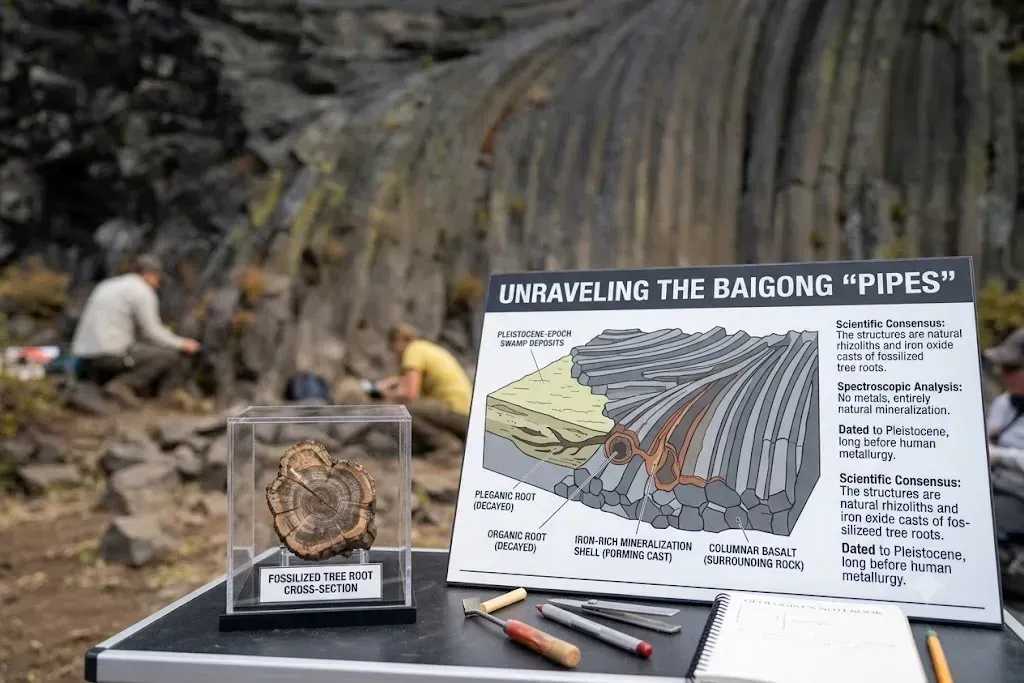
Near Mount Baigong in China, researchers documented pipe-like formations running through rock dated to around 150,000 years old, some with startlingly regular diameters and consistent wall thickness – not the kind of irregularity you’d expect from random mineral growth. The site also sits near a pyramid-shaped hill, which only added to the intrigue.
Later analysis identified many of the “pipes” as petrified wood or bamboo casts, mineralized over time into shapes that mimic manufactured tubing. Even with that explanation on the table, the sheer scale of the network and its odd relationship to the nearby hill keep researchers coming back to the site. It’s a case where the natural explanation is plausible, but the full picture still hasn’t been nailed down. And that brings us back to the artifact that started this whole conversation.
#13 – The Aiud Wedge, Revisited: The Alloy That Still Doesn’t Add Up
Return to that Romanian wedge from case #4, and the story gets more uncomfortable the closer you look. Re-examinations of its aluminum content keep landing on the same problem: industrial aluminum production simply didn’t exist when this object was supposedly buried alongside Ice Age mastodon remains, 33 feet down in a sealed stratigraphic layer.
Its specific alloy composition, including elements that suggest deliberate smelting rather than natural formation, is arguably the single most surprising verified detail in this entire list. Plenty of alternative explanations exist – contamination, mislabeled depth, modern debris mixed into old fill – but none of them have been proven, and the documentation from the original find has never been discredited. Of every case here, this is the one that refuses to quietly resolve itself.
The Bottom Line
Look across all thirteen cases and a pattern emerges that’s almost more interesting than any single artifact: most of these mysteries dissolve the moment you understand how fast concretions form, how easily objects migrate through loose sediment, or how convincing a rusted spark plug can look after fifty years underground. Geology has a way of imitating impossibility.
At a Glance
- 5 of the 13 cases involve objects pulled directly from coal seams
- Quoted ages for the surrounding rock span from about 150,000 years to over 300 million years
- At least two cases – the Aiud wedge and the Virginia bell – hinge on metal alloys that still lack a clean explanation
- Nearly every unresolved case comes down to one question: how did this get sealed in with no crack or seam?
But a handful of these – the Aiud wedge’s alloy, the Virginia bell’s odd metallurgy, the sheer sealed depth of the Dorchester pot – don’t fold quite so easily under scrutiny. My honest take: most “out of place” artifacts are exactly what skeptics say they are, explainable if you’re patient enough to dig into the mineralogy. But dismissing every single one outright feels like its own kind of laziness. A few of these files deserve to stay open, not because they prove lost civilizations, but because good science means admitting when the evidence hasn’t actually closed the case yet. Did we miss one? Drop it in the comments.