Walk through any natural history museum and you’ll see it: a towering T. rex skeleton, every rib and vertebra clicked into place like the puzzle was solved centuries ago. It feels certain. Permanent. Almost boring in its completeness.
Now forget that image, because most of history’s deadliest predators were never found that way at all. What follows isn’t a list of tidy, complete skeletons – it’s a countdown of eleven killers rebuilt from evidence small enough to hide in a coat pocket. A tooth. A claw. A jaw sliver. And the smaller the fragment, the stranger the detective work behind it.
#1 – Megalodon: The Ocean Titan Rebuilt From Teeth Alone
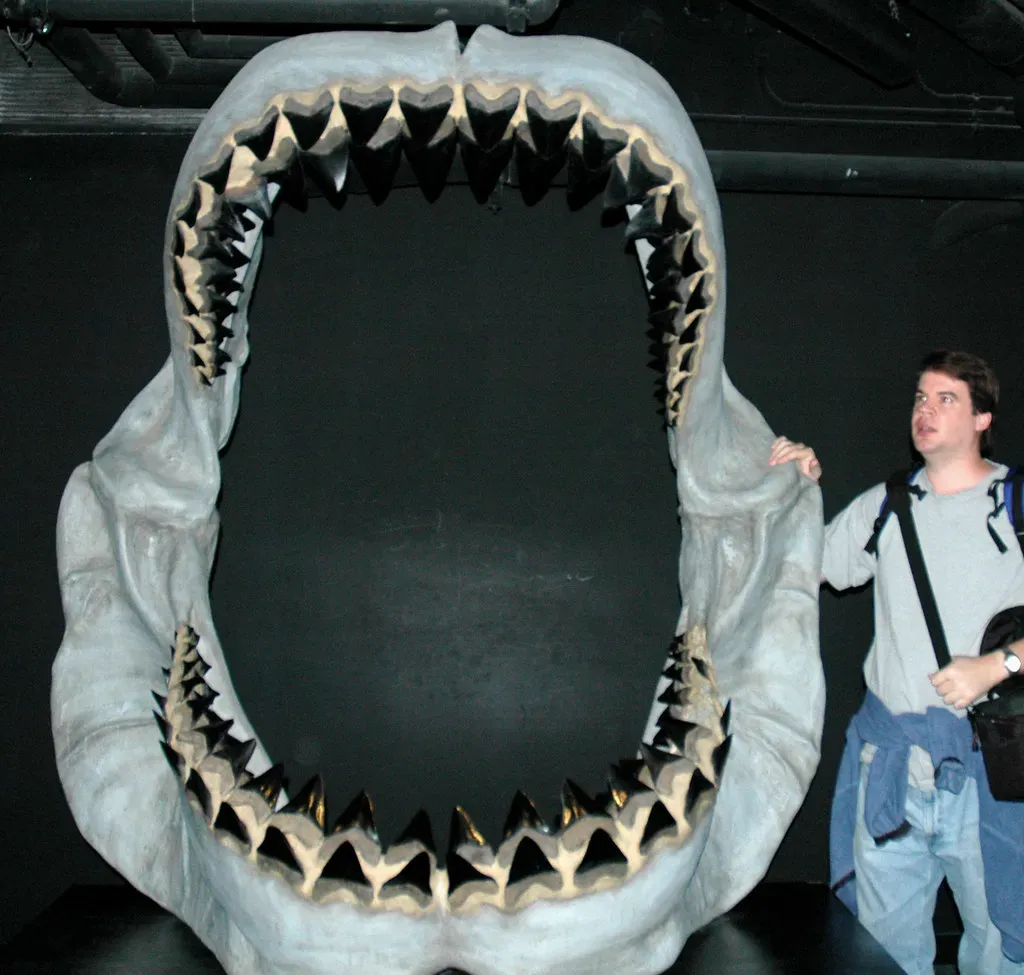
Everyone pictures Megalodon as a scaled-up great white, but that image owes more to movie posters than to science. What we actually have is almost entirely teeth, plus a scatter of vertebrae – all of it small enough to fit in a backpack once you strip away the rock. Sharks have cartilage skeletons, not bone, so nearly the entire body simply rotted away millions of years ago.
From tooth size and jaw mechanics alone, researchers estimate a bite force that may have topped 30,000 to 40,000 pounds per square inch, strong enough to crush a whale’s skull like styrofoam. But the body shape – sleek torpedo or stockier brute – is still argued over in journals and on social media. One of the ocean’s most famous monsters is, structurally speaking, a pile of teeth wearing a very confident costume.
- What the teeth reveal: estimated body length
- What the teeth reveal: likely prey, from small whales to seals and big fish
#2 – Baryonyx: The Killer Known From One Terrifying Claw
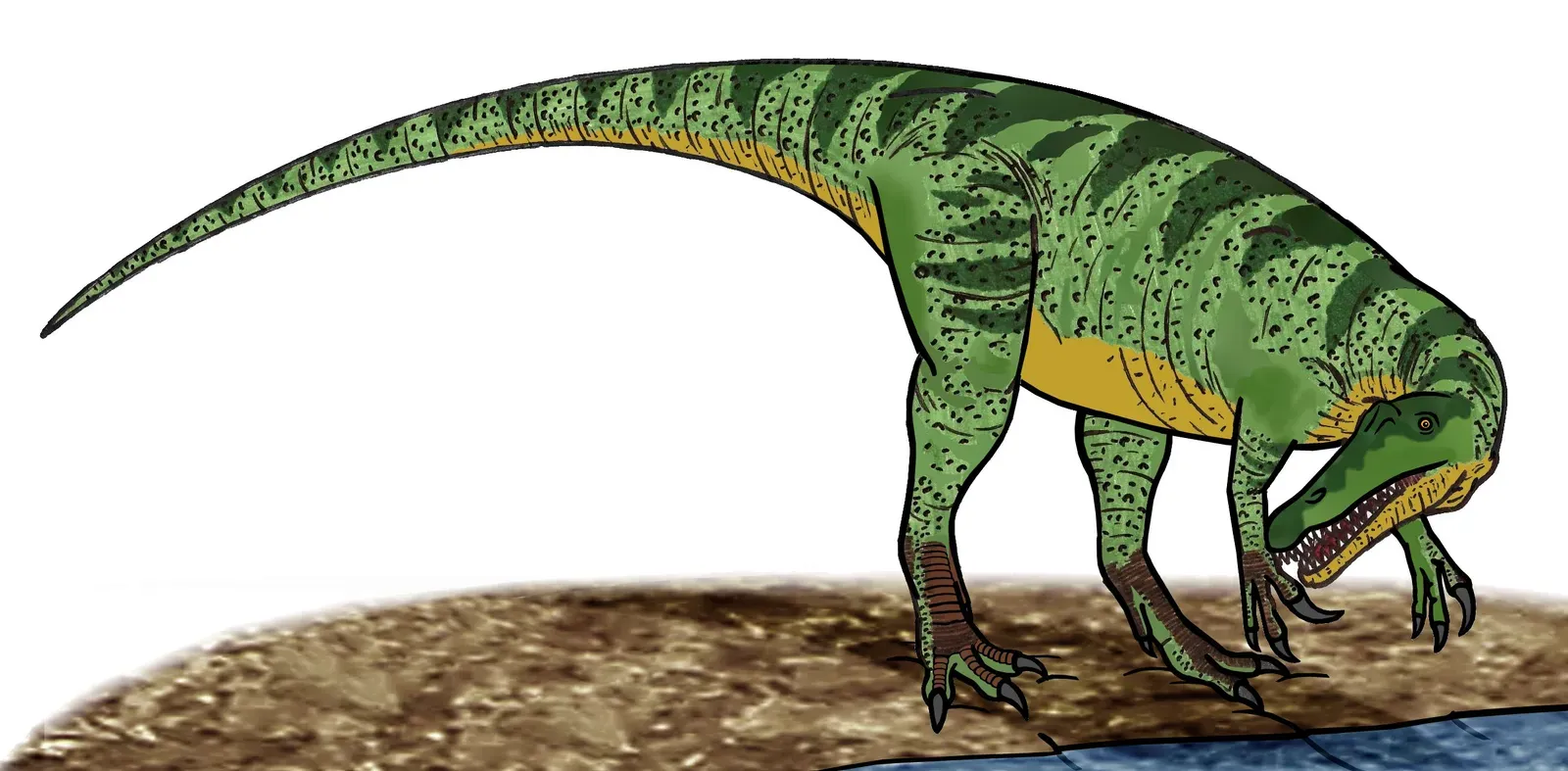
Try imagining an entire semi-aquatic dinosaur hunter built from a single hand weapon smaller than your phone. Before more complete remains turned up in later digs, Baryonyx burst into the fossil record thanks to one absurdly oversized, sickle-shaped claw – about 12 inches long, and for years, the only real clue anyone had.
That one claw forced scientists into guesswork: was this an Allosaurus-style land predator, a fish-eater, or something nobody had a name for yet? Its heavy curvature and reinforced structure pointed away from delicate slicing and toward powerful gripping and tearing, so researchers modeled it like a fishing gaff or a bear’s hook. A single bone essentially invented an entire hunting lifestyle.
- That claw helped inspire the idea of a fish-eating “spinosaur” group
- It shaped every reconstruction of Baryonyx hauling giant fish from riverbanks
#3 – Spinosaurus: The Apex Hunter Built From a Jaw Tip That No Longer Exists
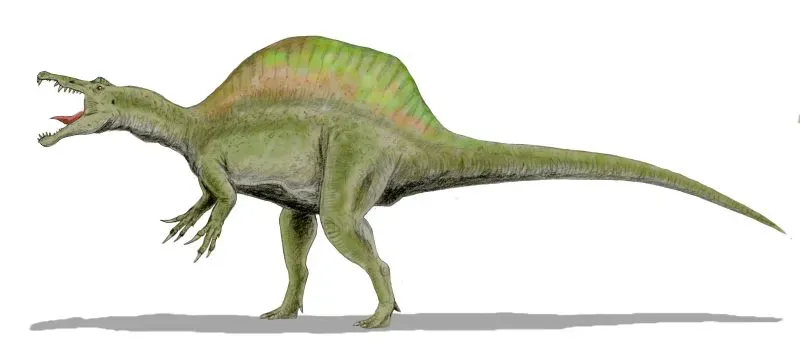
Most people know Spinosaurus as the crocodile-snouted, sail-backed giant that wrestles T. rex in movies. The irony is brutal: the earliest ideas about it came , and those original fragments are now gone forever. The fossils discovered in Egypt were largely destroyed during World War II, leaving behind only photographs, drawings, and a partial jaw tip with a few oddly massive vertebral spines.
That jaw fragment, with its narrow snout and conical teeth, screamed “fish-eater,” much like a crocodile or modern gharial. Based on that alone, some early paleontologists imagined it as an unusual but secondary predator, not the semi-aquatic apex menace we picture today. The entire body – length, sail size, posture, all of it – was a best-guess composite stitched together from related species and a handful of surviving measurements.
Fast Facts
- First described in 1915 from fossils unearthed in Egypt
- The original specimens were destroyed in a 1944 wartime bombing raid
- New material recovered decades later in Morocco reshaped the entire reconstruction
- Length estimates range roughly 12 to 18 meters, potentially longer than T. rex
The debate over how it even walked, on two legs or four, still hasn’t fully settled.
#4 – Kelenken: The Terror Bird Rebuilt From a Single Skull Piece
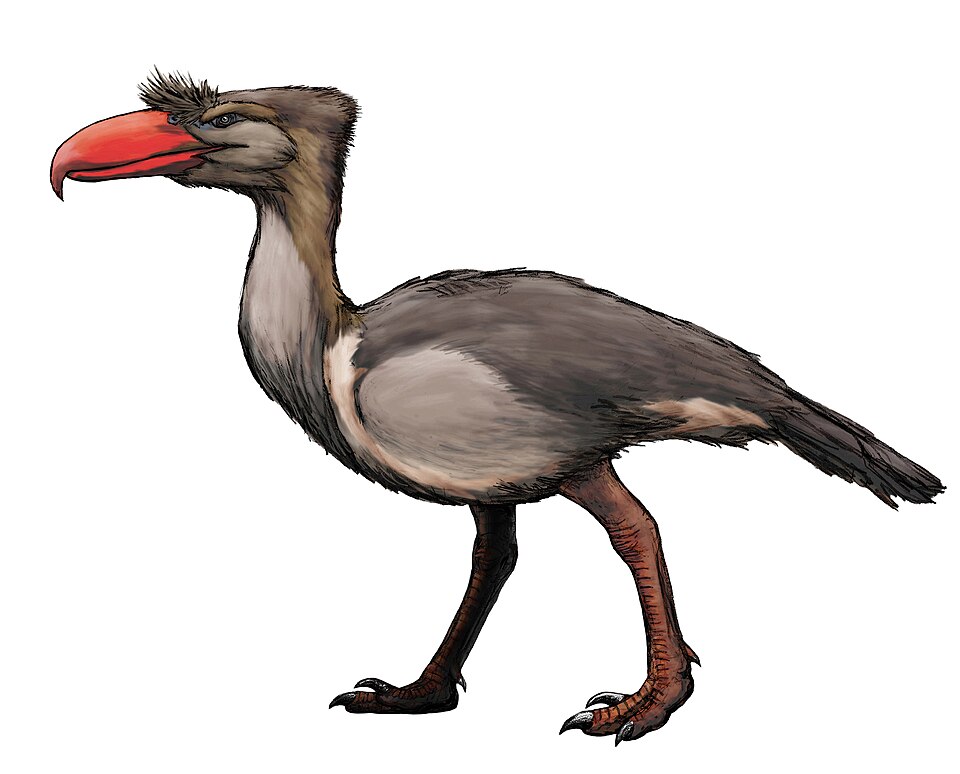
You’d assume reconstructing a giant, flightless, bone-crushing bird would require a full skeleton. It doesn’t. Kelenken guillermoi, one of the largest “terror birds” ever identified, was originally known from a gigantic partial skull and a few other scraps, many no bigger than your hand.
That skull fragment included the beak region, revealing a massive hooked tip built more like a hatchet than a bird’s bill. From that alone, scientists inferred a predator capable of slamming its beak down with enough force to crush bone or deliver a fatal puncture wound in a single strike. The rest of the body – long legs, heavy torso, stubby wings – comes almost entirely from comparisons with better-known relatives like Phorusrhacos.
- The iconic image of Kelenken sprinting down prey relies on skull shape and leg proportions borrowed from relatives
- It assumes a lifestyle closer to a running, stabbing wolf than a modern ostrich
#5 – Mosasaurus: The Sea Dragon Built From Teeth and a Few Vertebrae
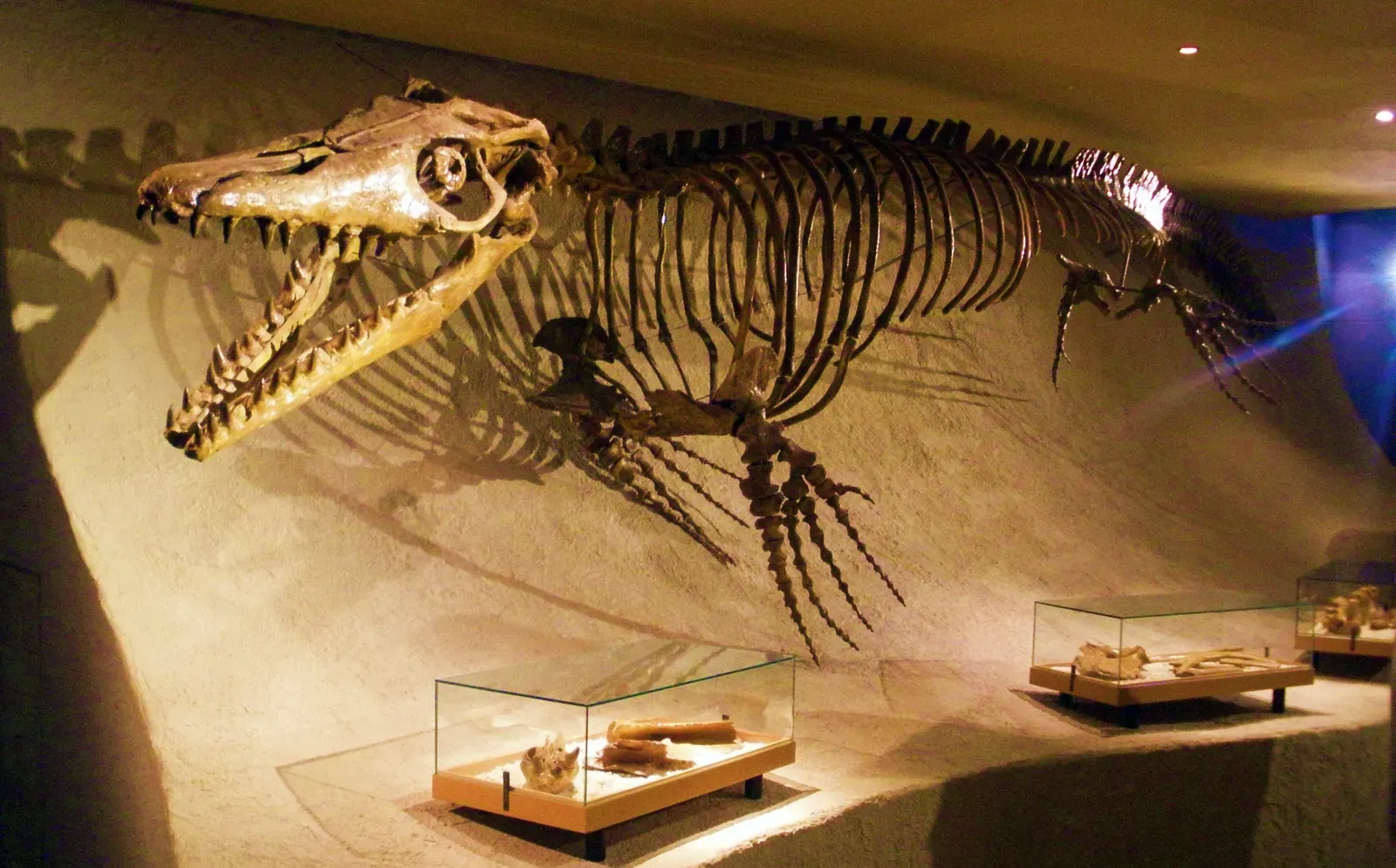
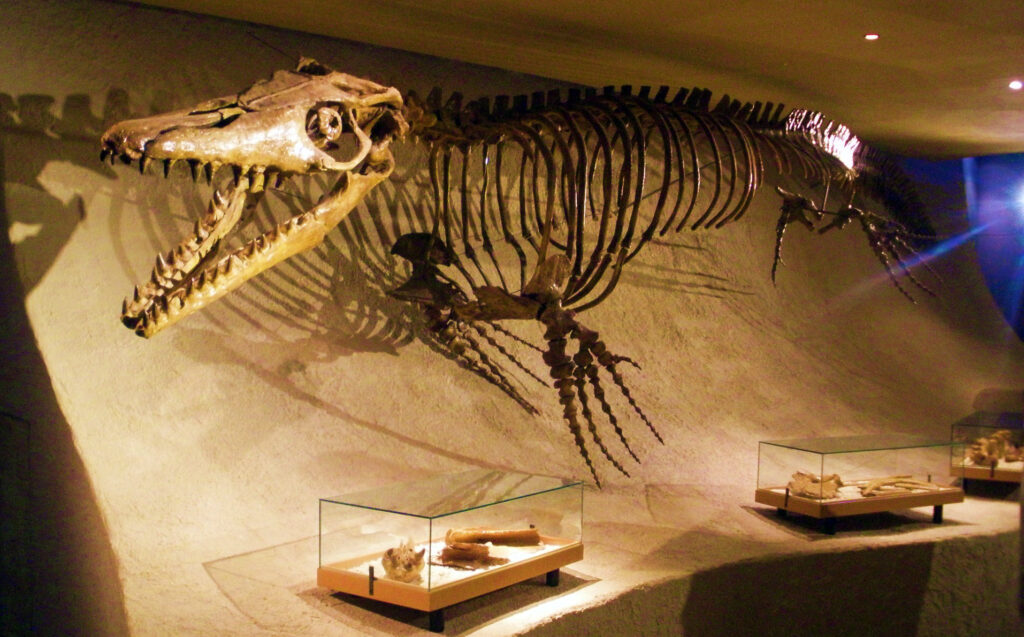
The sea “dragons” that ruled Late Cretaceous oceans are museum favorites now, but their first reconstructions were pure speculation. Early Mosasaurus finds were mostly jaws packed with sharp, conical teeth, plus a handful of vertebrae and ribs small enough to hold in one hand. Scientists in the 1800s argued for decades over whether it was a crocodile, a giant monitor lizard, or something entirely new to science.
Wear patterns and enamel structure on those teeth hinted at a diet of hard, struggling prey – turtles, fish, maybe other marine reptiles. But the powerful tail fluke we now take for granted wasn’t confirmed until much later, from better specimens of related mosasaurs. For years, illustrations gave it a simplistic eel-like tail simply because that was the safest guess anyone could make.
- Only recent soft-tissue impressions from relatives confirmed a shark-like tail fin
- Those same impressions revealed streamlined paddles instead of stumpy limbs
#6 – Dakosaurus: The “Crocodile-Whale” From a Hand-Size Skull Shard
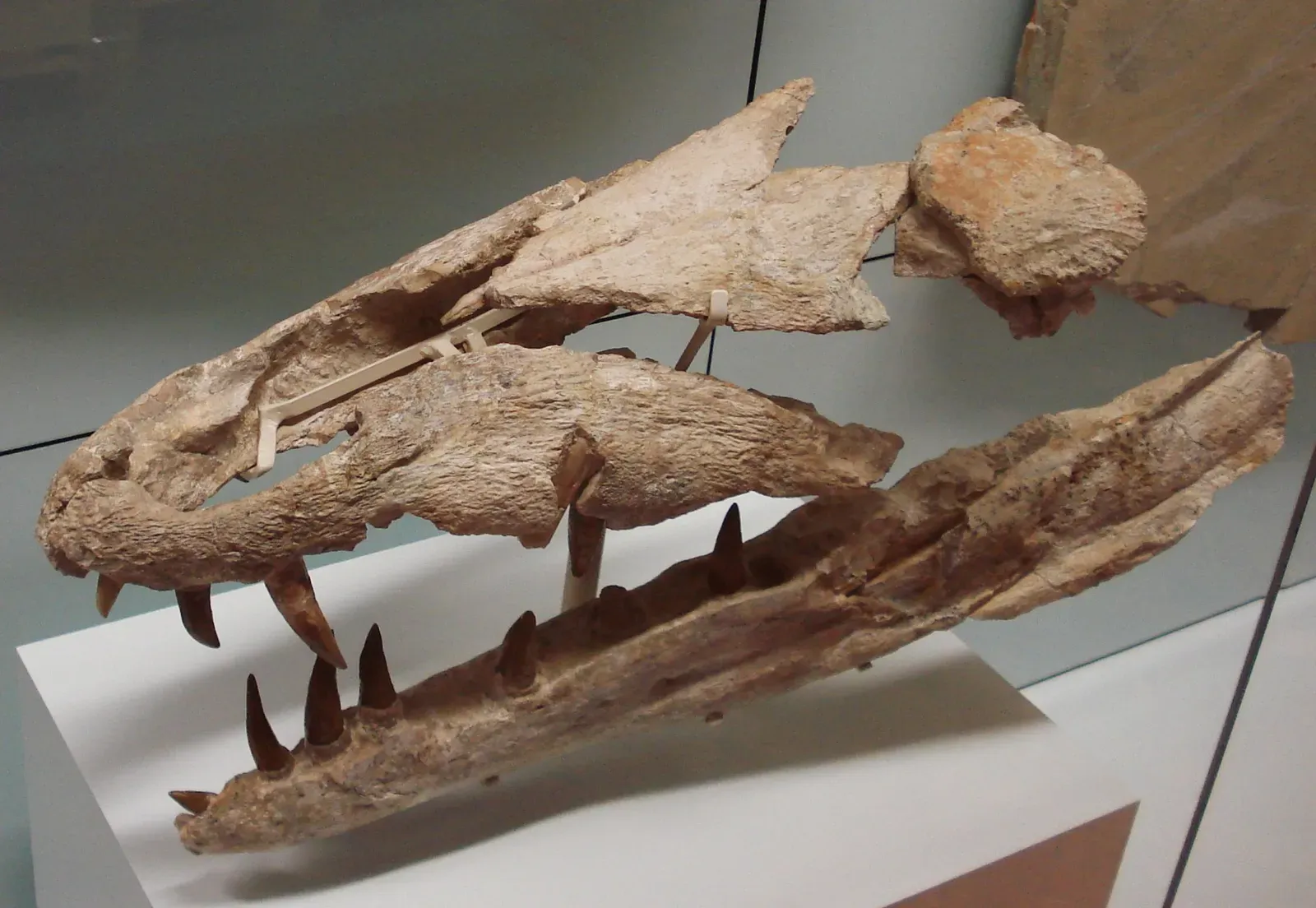
If Dakosaurus swam past you, you’d probably call it a Jurassic crocodile crossed with a killer whale. That image comes from remarkably little material. One of the key early fossils was a short, deep sliver of skull with big, laterally compressed teeth, just a few inches long as a preserved fragment.
That small piece told researchers two crucial things. First, the short, high snout wasn’t built for delicately snapping at fish; it looked designed for clamping down and tearing large chunks from sizeable prey, possibly seals or even other marine reptiles. Second, the teeth were serrated and flattened sideways, unlike a typical crocodile’s cone-shaped teeth, which pushed scientists to compare it more closely with theropod dinosaurs than with any modern reptile.
- That fragment suggested confrontational, possibly pack-like behavior around large prey
- It also pointed to short ambush bursts rather than long, sustained chases
#7 – Microraptor: The Tiny Raptor Known From a Finger-Sized Jaw
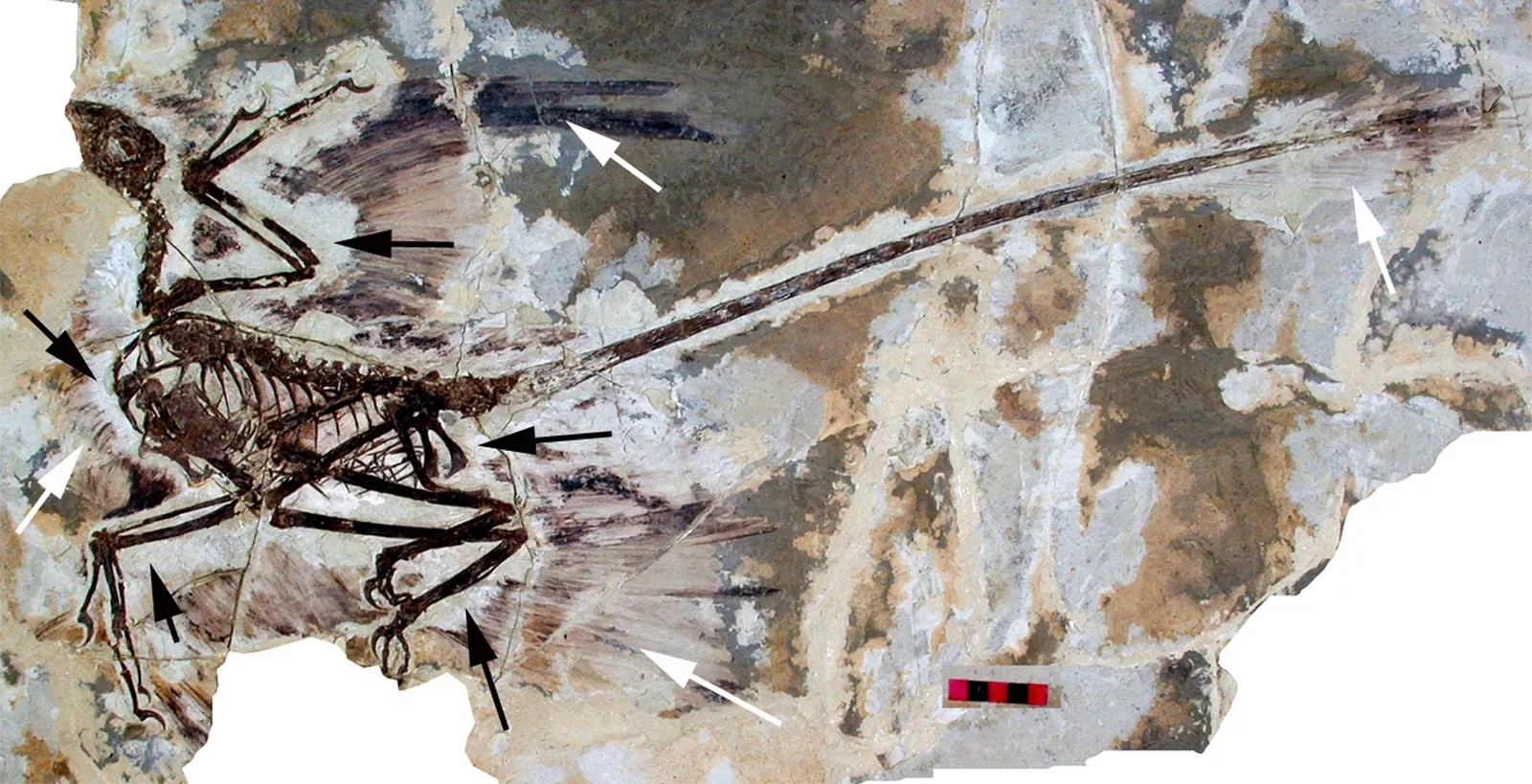
The word “raptor” makes people picture human-sized killers, but some of the most important raptors were crow-sized – and first known from almost nothing at all. Before spectacular feathered specimens emerged from Liaoning, China, several dromaeosaurids were identified from jaw fragments and isolated teeth no larger than a finger.
One key jaw showed a double row of small, backward-curving teeth, each carrying microscopic serrations. From that alone, paleontologists inferred a diet of small vertebrates and possibly insects, plus a skull shape closer to modern predatory birds than to lumbering reptiles. The full picture – a forest-dwelling, four-winged glider – only arrived once complete fossils surfaced, but that early jaw fragment had already whispered “small, agile predator” long before anyone could prove it.
- The fragment correctly predicted a predatory diet focused on small animals
- It also hinted at a lightweight skull built for speed, not bone-crushing power
#8 – Smilosuchus: The Saber-Snouted Killer Built From a Snout Tip
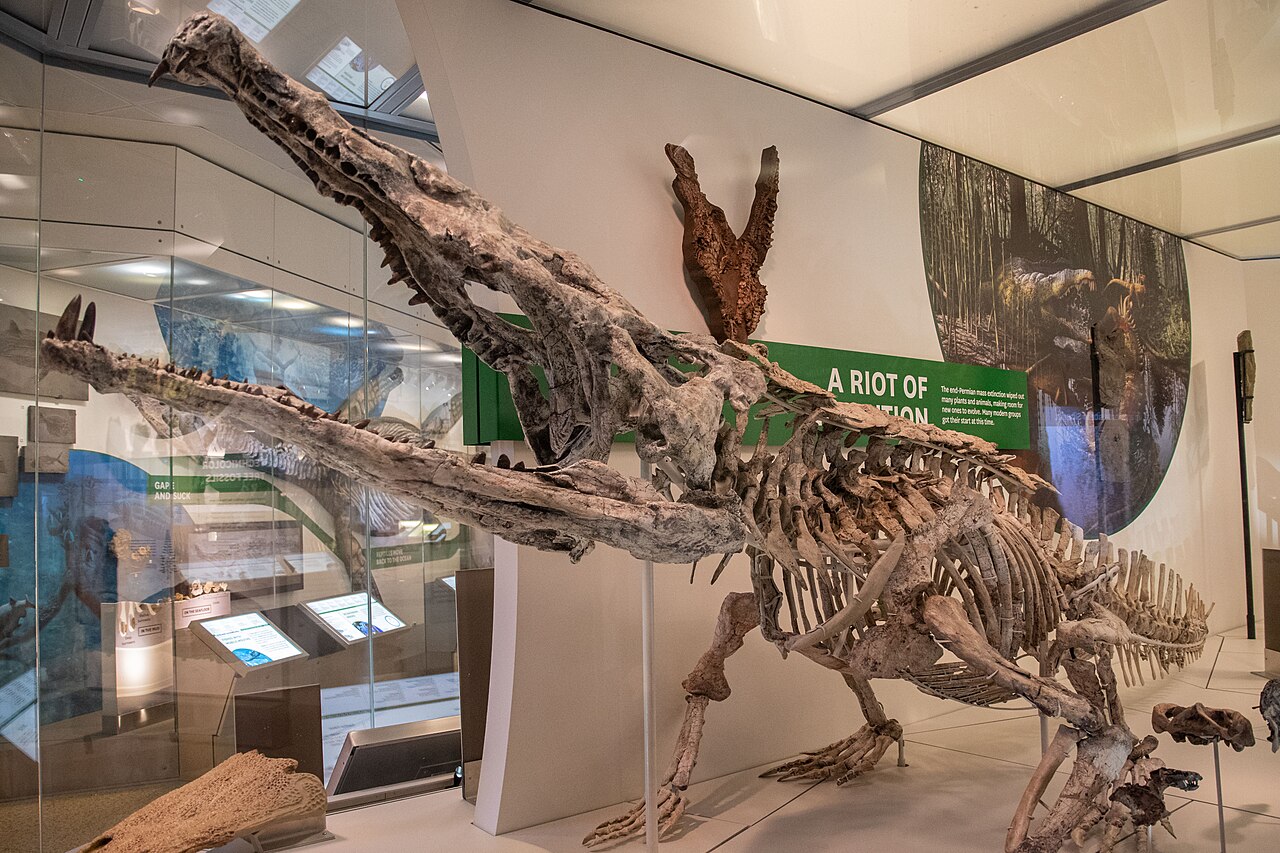
Prehistoric rivers had their own crocodile-shaped predators that weren’t crocodiles at all – phytosaurs like Smilosuchus. For several species, the first fossils recovered were snout tips and jaw pieces with strangely placed nostrils, often no bigger than a human hand.
Those fragments showed nostril openings pushed back near the eyes instead of at the tip of the snout, an odd detail that told paleontologists these animals belonged to a separate lineage that had simply evolved to look like crocodiles. The robust jaw pieces, lined with conical teeth, suggested a strong, ambush-style bite aimed at fish and land animals that wandered too close to the water’s edge. Nearly everything else about the animal – body depth, limb strength, swimming speed – had to be borrowed from later, more complete relatives.
At a Glance
- A phytosaur, not a true crocodile, despite the near-identical body plan
- Lived during the Late Triassic, well before true crocodilians existed
- Nostrils sat high near the eyes instead of at the snout tip
- Related phytosaur species are estimated to have exceeded 8 meters in length
What still unsettles some researchers is how confidently these animals get drawn today, given that the whole idea started with a few odd skull bits.
#9 – Quetzalcoatlus: The Giant Flying Predator From a Palm-Sized Beak
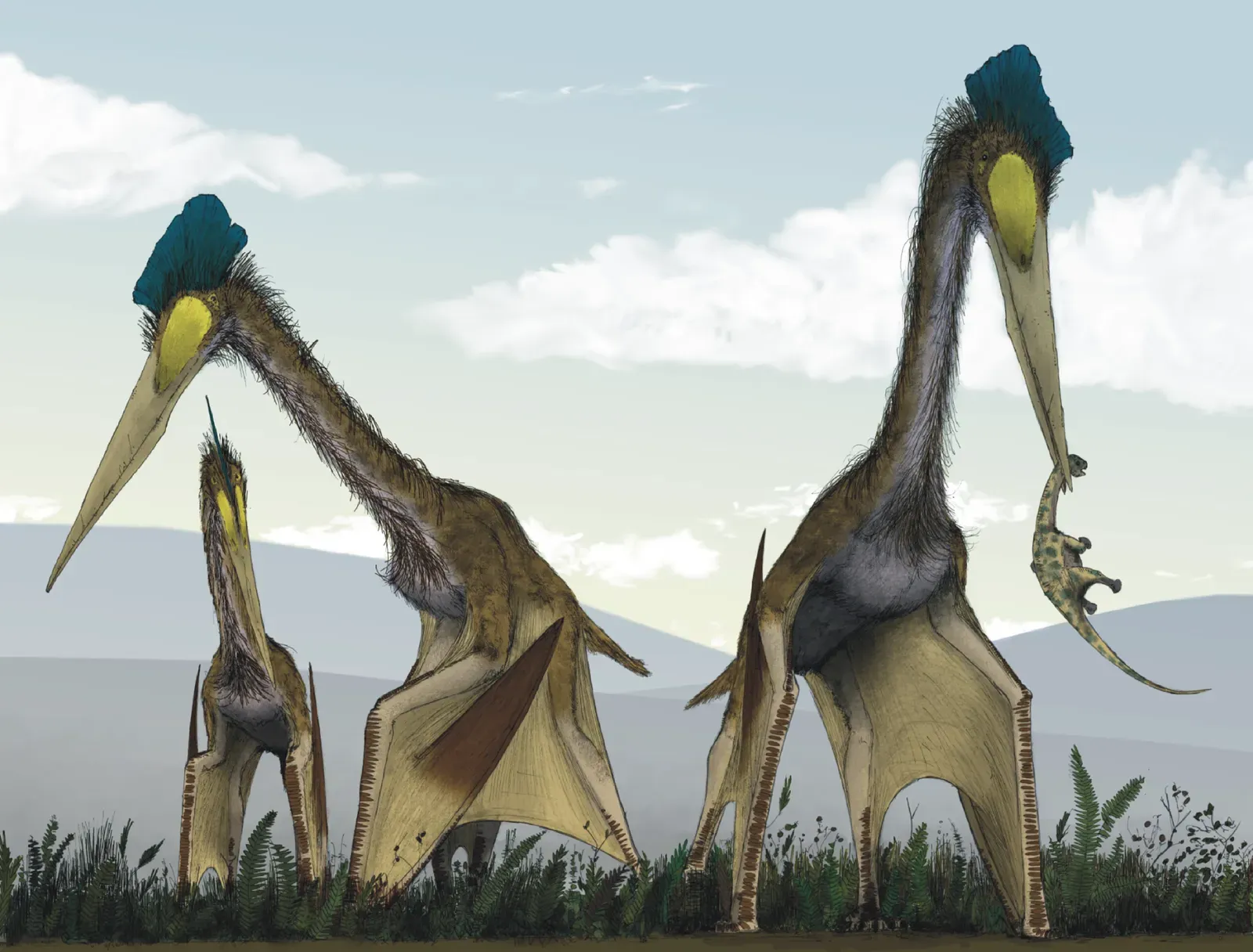
This might be the most shocking case on the entire list: a flying predator the size of a small airplane, first recognized from fragments you could tuck into a jacket pocket. Quetzalcoatlus northropi, the enormous azhdarchid pterosaur, was initially known from neck vertebrae and bits of jaw and skull, many under 15 centimeters long.
Those narrow, toothless jaw fragments suggested a long, spear-like beak. Combined with absurdly elongated, hollow neck vertebrae, paleontologists pieced together an animal that could strike downward at small dinosaurs on the ground like a stork from a nightmare, while still soaring effortlessly over Late Cretaceous landscapes. Its exact flight style, and even how something that large managed to launch off the ground, remains fiercely debated precisely because the evidence is so thin.
- Hand-sized fragments still support a wingspan estimate of 10 to 11 meters
- They point to a terrestrial stalking lifestyle rather than a gull-like fisher
#10 – Dunkleosteus: The Armored Ocean Hunter From Jaw Plates Alone
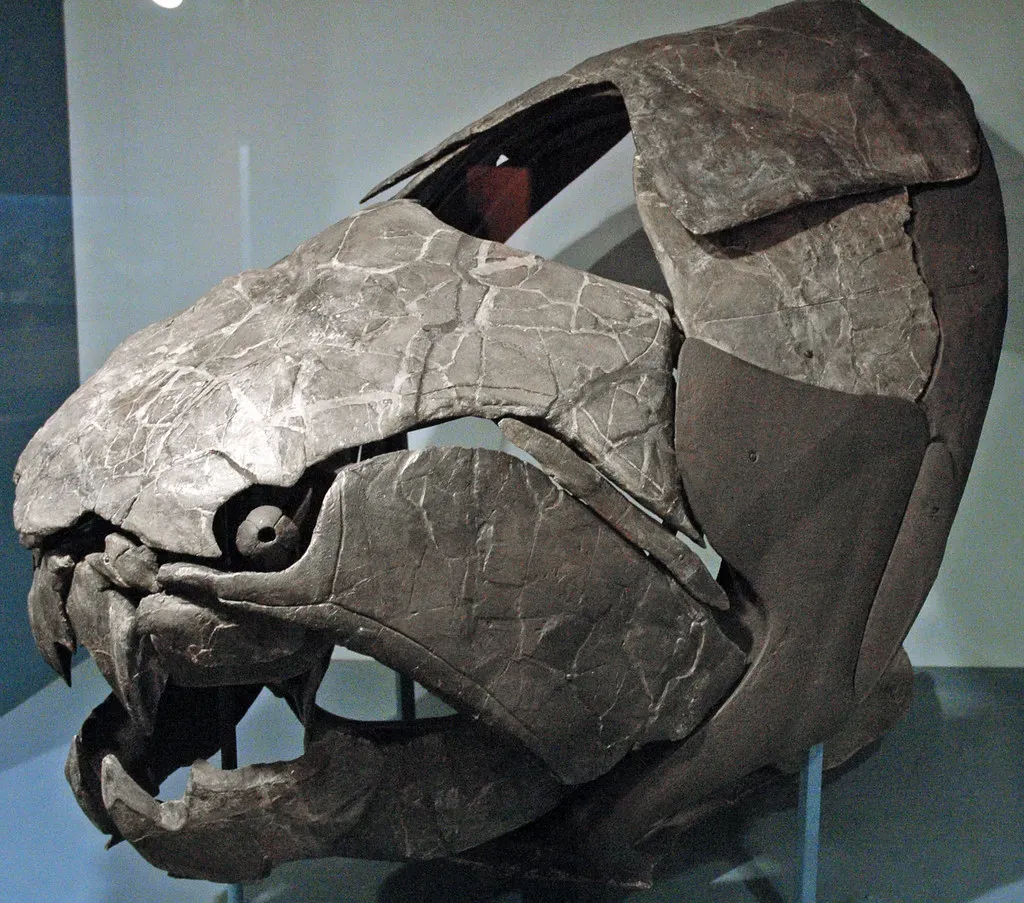
This Devonian monster fish gets drawn like an armored tank with jaws, but the reality behind that image is even stranger. For Dunkleosteus, we mainly have bony head and jaw armor plates, often in chunks small enough to cradle in two hands. Virtually the entire rest of the body – tail, fins, exact length – is extrapolated from smaller, better-known relatives and biomechanical scaling models.
Those jaw plates, however, are extraordinary on their own. Their shape and muscle attachment scars suggest jaw-closing speeds so fast, and forces so great, that Dunkleosteus may have generated a vacuum effect strong enough to suck prey toward its mouth before shearing it in half. Some estimates put its bite force in the same league as large modern crocodiles and great white sharks, all inferred from a handful of skull fragments.
- Those shards suggest a likely length of 6 to 8 meters
- They also point to a thick, torpedo-shaped body built for ambush, not marathon swimming
#11 – The Tooth-Taxa Mystery Killers: Entire Predators Known Only From Teeth
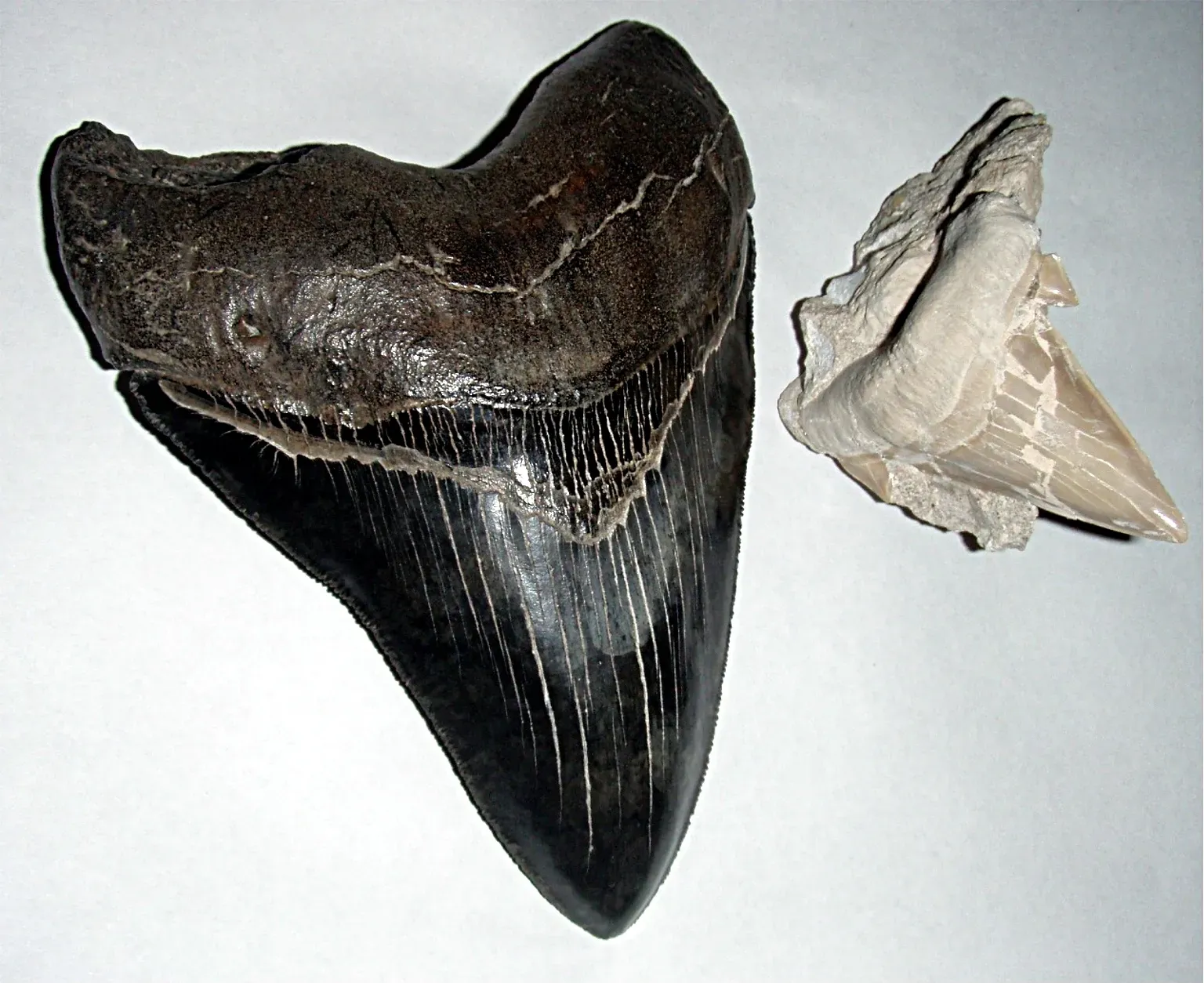
Here’s the uncomfortable truth this whole list has been building toward: some of the scariest prehistoric predators we casually talk about aren’t even proper “species” yet. They’re just teeth. Literally, only teeth. In fossil beds from the Mesozoic and Paleozoic, paleontologists regularly find isolated predator teeth smaller than a human hand that don’t match anything else on record.
These teeth might carry unusual serration patterns, bizarre curvature, or enamel textures unlike any known animal. Researchers give them temporary names or informal IDs, then cautiously infer an entire predator around them: body size from tooth dimensions, diet from wear and breakage patterns, hunting style from overall shape. In some ecosystems, a single strange tooth is the only proof that a particular apex hunter ever existed at all.
- Knife-like, recurved teeth with fine serrations hint at flesh-slicing theropods
- Cone-shaped, thick teeth with cracked tips suggest hard-shelled fish or ammonite eaters
The Bottom Line
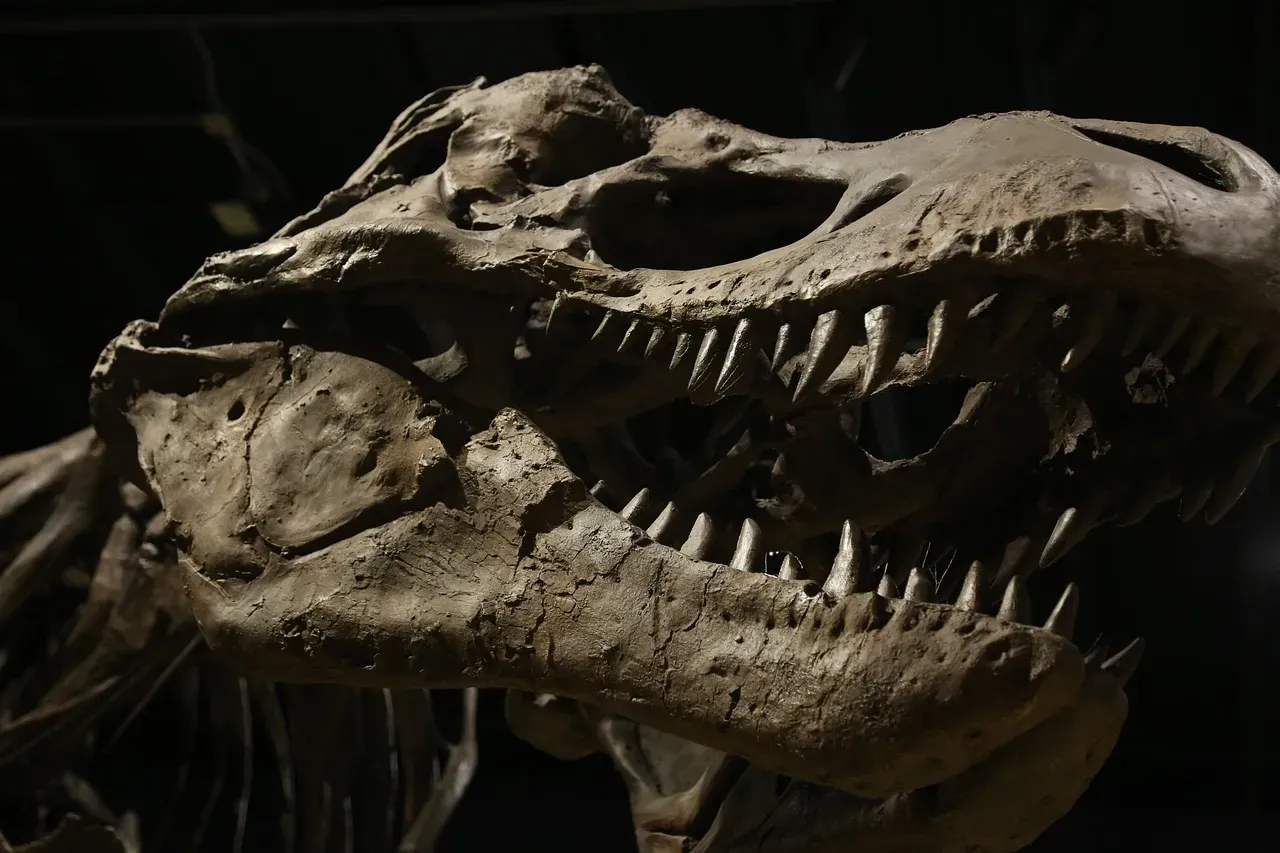
Walk through a museum and it’s easy to assume every terrifying prehistoric predator came from a near-complete skeleton, carefully assembled bone by bone. In reality, entire apex hunters – Megalodon, Dunkleosteus, terror birds, giant pterosaurs, and countless unnamed tooth-taxa – were built from fragments that could literally sit in the palm of your hand. Paleontologists are doing high-stakes forensic work: scaling a tooth into a body length, turning a single claw into a hunting style, using a palm-sized jaw shard to rebuild an entire ancient food web.
Quick Compare
- Megalodon – rebuilt almost entirely from teeth and scattered vertebrae
- Baryonyx – an entire hunting style built around one 12-inch claw
- Quetzalcoatlus – first identified from jaw and neck fragments under 15 cm long
- Dunkleosteus – known mainly from armored jaw plates, with the body shape inferred
That means some of the “iconic” reconstructions we’ve all grown up with are more educated guess than settled fact, and a few will almost certainly be overturned in our lifetime. Personally, I think we’re underestimating how many top predators are still missing from the record entirely, hiding as an unlabeled drawer of teeth in some museum basement. Which reconstruction on this list do you trust the least, and which forgotten, fragmentary killer do you think deserves more attention?