Most people assume dating an artefact is simple: you run a test, get a number, and slot the object neatly into a timeline. Then the machine spits out a date that makes absolutely no sense – a medieval-looking relic older than the pyramids, a Stone Age layer with practically modern charcoal, a fossil that shouldn’t exist yet somehow does.
These aren’t glitches scientists quietly bury. They’re the moments that force entire fields to argue in public, re-run the tests, and sometimes admit the textbooks were wrong all along. Thirteen of those moments are below, and a few of them will make you question how confident anyone can really be about the past.
#13 – The Shroud of Turin’s Contested Medieval Date
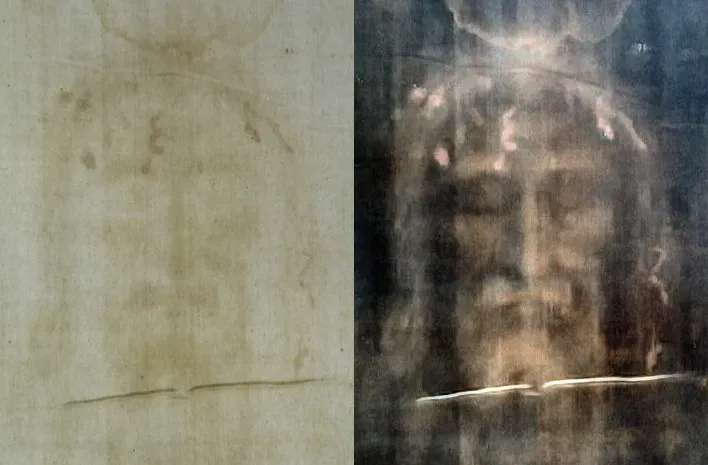
For decades, the Shroud of Turin was the poster child for an “impossible” lab result. In 1988, three independent laboratories ran radiocarbon tests and landed on a strikingly tight range: AD 1260–1390. That drops the cloth squarely in the medieval period, centuries after the time of Jesus, and the agreement between three separate labs made the finding feel bulletproof.
For believers, that number felt absurd. For skeptics, it was a mic-drop moment. But critics later noted the sample came from a corner of the cloth that may have been rewoven or repeatedly contaminated by centuries of candle smoke, fire damage, and human hands, along with bacterial films that can quietly add centuries to an apparent age. The result is a lab-certified “medieval” date that still clashes with textile and pollen evidence some researchers say points much further back.
Fast Facts
- Tested in 1988 by three labs: Oxford, Arizona, and Zurich
- Radiocarbon result: AD 1260–1390, a medieval range
- Sample cut from a single corner of the cloth
- Possible contaminants: soot, fire damage, and biological residue
#12 – The “Too-Young” Dinosaur Soft Tissue Problem
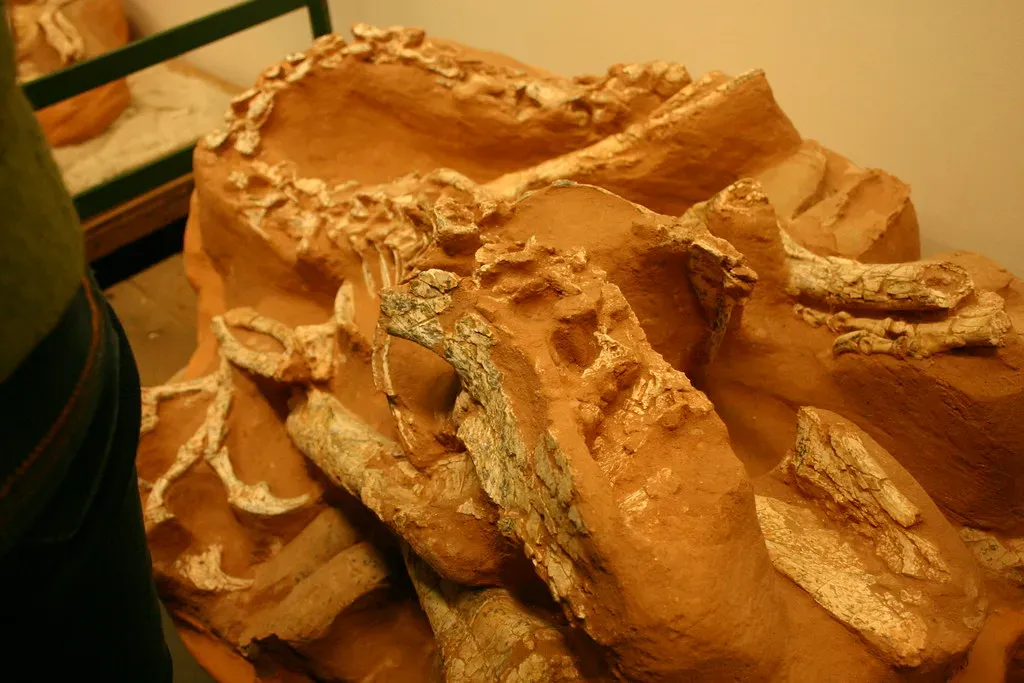
When flexible, tissue-like structures turned up inside dinosaur bones, most scientists assumed contamination or misidentification. Then a handful of radiocarbon measurements on purported dino samples came back absurdly young – tens of thousands of years old, not tens of millions. On paper, that number yanks dinosaurs into a timeframe that overlaps with modern humans.
Almost nobody in mainstream geochronology takes that reading at face value. Radiocarbon dating physically cannot measure anything older than about 50,000 years, because by then virtually all the original carbon-14 has decayed away, so any signal at all is treated as a red flag for contamination, microbial biofilms, or lab consolidants rather than proof of a young dinosaur. Still, the fact that a real lab ever printed a radiocarbon age on dinosaur material handed fringe theories a permanent talking point.
#11 – Mungo Man: Human Remains Older Than Their Own Lake
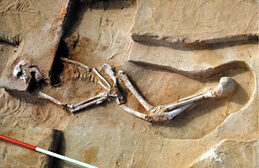
Lake Mungo in Australia produced one of the most politically charged “impossible” dates in archaeology. Early radiocarbon testing put the famous Mungo Man burial at roughly 30,000 years old. Newer methods – uranium-series dating and optically stimulated luminescence – later pushed that number to 40,000 to 45,000-plus years, upending long-held assumptions about when humans first reached Australia.
The real gut-punch came when some tests suggested the sediment surrounding the burial was actually younger than the bones inside it, a contradiction that shouldn’t be geologically possible. That forced researchers to look hard at wind and water reworking the soil, partial bleaching throwing off the luminescence readings, and carbon quietly migrating through arid ground. Mungo Man ended up proving that when dating methods disagree violently, it’s rarely time travel – it’s usually a messier site than anyone expected.
#10 – The Piltdown Hoax and the Convenient Ancient Skull

Piltdown Man wasn’t just a fake fossil – it was proof that a story can outrun the evidence for decades. Before modern dating techniques existed, Piltdown’s human-like skull paired with an ape-like jaw was accepted as a 500,000-year-old “missing link,” a number based almost entirely on expectation rather than measurement. For nearly forty years it sat in textbooks, quietly distorting the entire timeline of human evolution.
When fluorine testing and later radiocarbon dating finally got applied, the illusion collapsed instantly. The “ancient” remains turned out to be a medieval human skull paired with an orangutan jaw, both chemically stained and physically filed down to look prehistoric. Piltdown remains one of the most humbling reminders in science: without a reproducible lab date, human bias alone can age an object by half a million years using nothing but a convincing story.
#9 – The Kensington Runestone and America’s Phantom Vikings
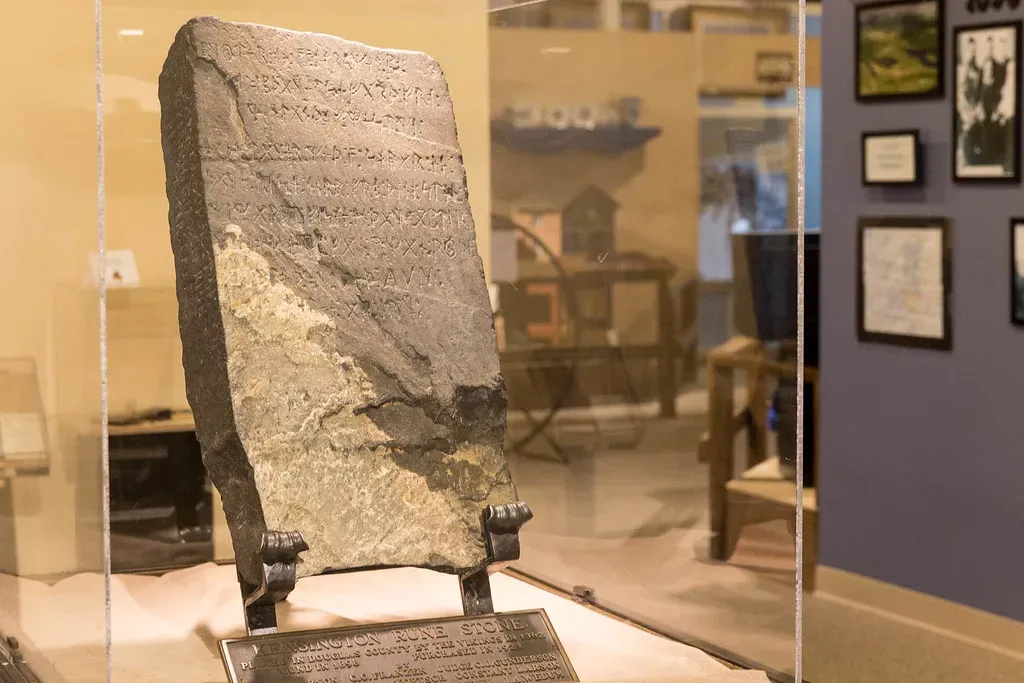
Found in Minnesota in 1898, the Kensington Runestone claims to record a 14th-century Scandinavian expedition deep into North America. If genuine, it would push documented European presence in the region a full century before Columbus ever set sail. Most linguists and historians call it a 19th-century hoax – but lab tests have never fully closed the case.
Weathering analysis on the stone’s inscriptions has produced genuinely conflicting readings: some researchers see erosion patterns consistent with centuries of exposure, while others say the wear pattern is perfectly compatible with a much more recent carving. Organic material recovered near the find site has occasionally returned dates that don’t line up neatly with either the 1300s story or a late-1800s forgery. The runestone sits in a permanent chronological tug-of-war, and no lab result has ever definitively pinned it down.
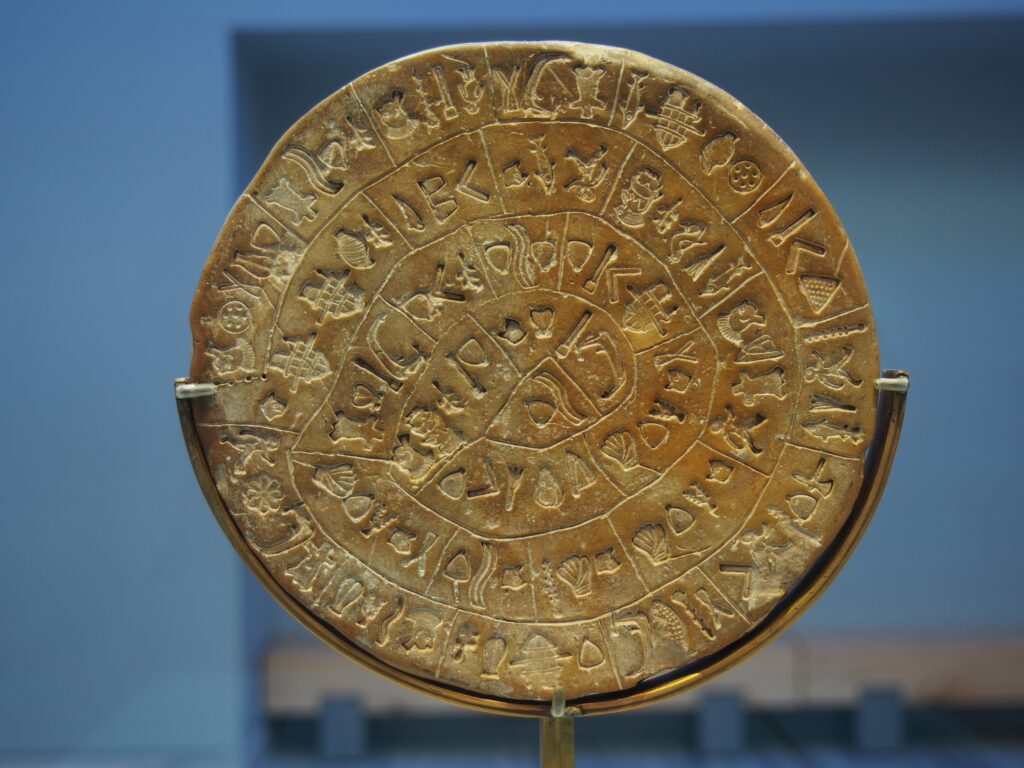
#8 – The Phaistos Disc and a Script That Refuses to Age
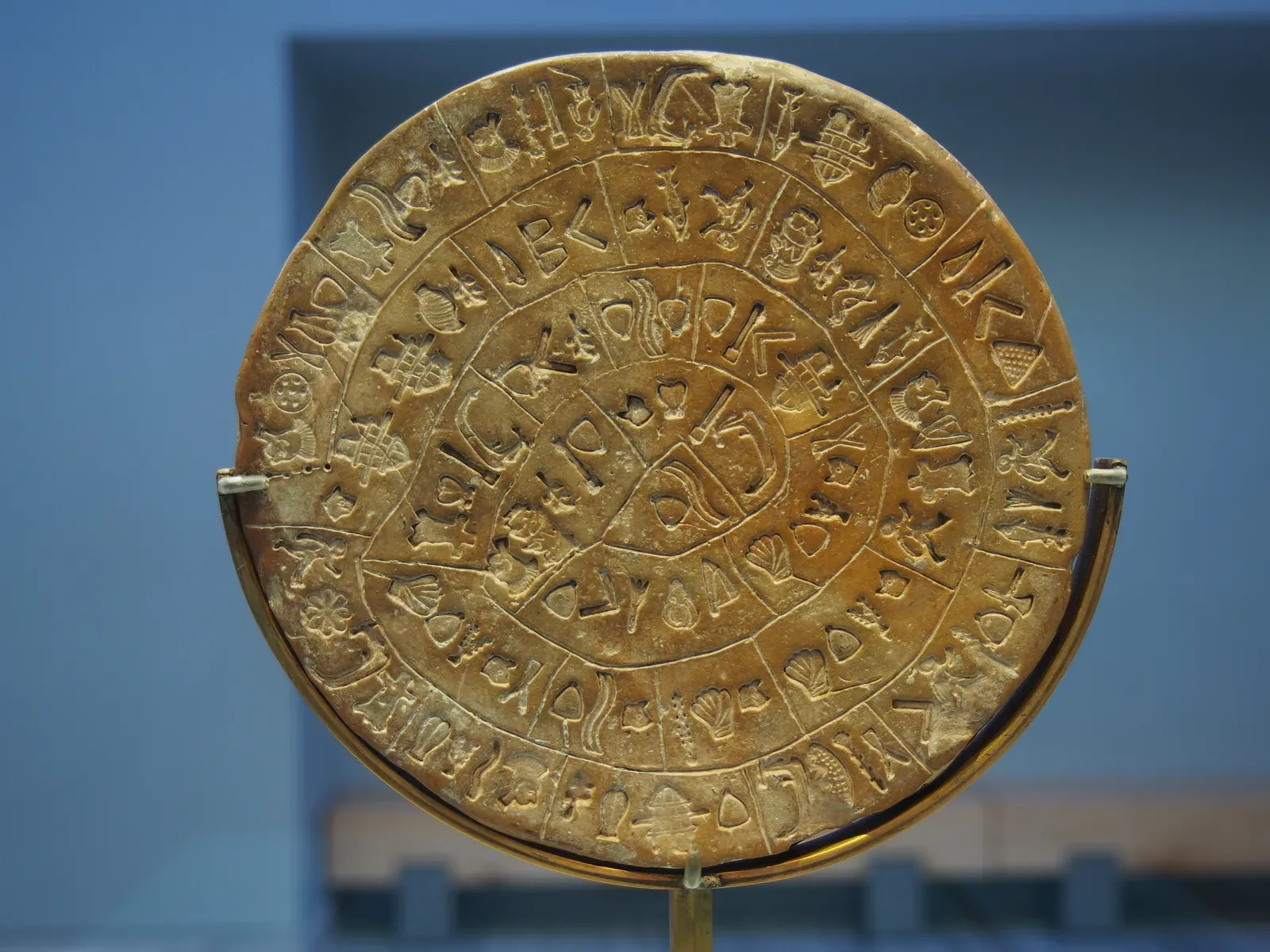
The Phaistos Disc from Crete is one of archaeology’s most maddening objects. Its spiral-stamped, still-undeciphered script was found in a Bronze Age context, placing it around 1700–1600 BC alongside genuine Minoan material. That should have settled the matter – except some scholars have long suspected it’s a modern plant, or even a clever 19th-century forgery disguised as ancient writing.
Thermoluminescence testing on the clay has generally supported a Bronze Age firing date, but the margins of error are wide enough that skeptics haven’t backed down. Their argument is uncomfortably plausible: a talented modern forger could simply have used genuinely ancient clay, or re-fired an old fragment, and the lab would never know the difference. The disc’s script feels almost too sophisticated for its supposed era, and that lingering unease keeps pulling it toward “impossible” in the public imagination even as the clay itself checks out.
#7 – The Dead Sea Scrolls and Suspiciously Modern Ink

When the Dead Sea Scrolls were first studied, scholars dated them to roughly the 3rd century BC through the 1st century AD, based on handwriting style and historical context. Radiocarbon testing of the parchment itself broadly confirmed that window. The controversy started when attention shifted from the parchment to the ink, and popular media ran with claims that some ink components looked anomalously modern.
Spectroscopic analysis did find modern consolidants and handling contaminants on several fragments, and in a few cases, radiocarbon testing of patching material or attached fibers returned dates centuries younger than the parchment underneath – creating the illusion of impossibly fresh writing on ancient skin. Serious scholars read this as evidence of later repair and conservation work, not secret 20th-century forgery. But the mismatch was enough to fuel conspiracy theories that still circulate about fabricated scrolls slipped into a genuine collection.
At a Glance
- Paleography placed the scrolls between the 3rd century BC and 1st century AD
- Radiocarbon testing of the parchment matched that same window
- Some patching material and fibers dated centuries younger
- Spectroscopy found modern handling residue on several fragments
#6 – The Vinland Map and the Ink That Gave It Away
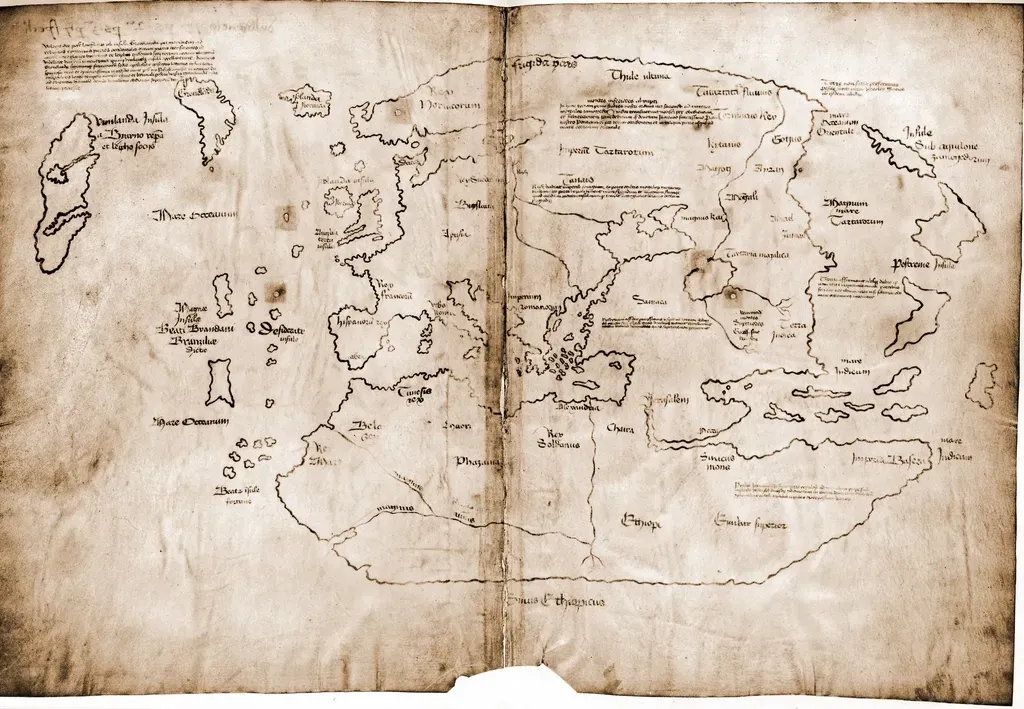
The Vinland Map was once celebrated as proof that Norse explorers charted North America around AD 1440, decades before Columbus. When the parchment was radiocarbon dated, it returned a broadly compatible medieval age, and for a while the lab results and the exciting story lined up perfectly.
Then chemists turned their attention to the ink itself. Electron microscopy revealed titanium dioxide in a crystal form that simply didn’t exist before the 20th century – a pigment no medieval scribe could have touched. That single detail yanked the map’s actual creation into the modern era, while the parchment underneath it remained stubbornly, genuinely old. It’s one of the rare cases where lab work split a single object into two historical periods actively at war with each other, and forgery is the only explanation that fits both results.
#5 – The “Too Early” Homo Naledi Claims
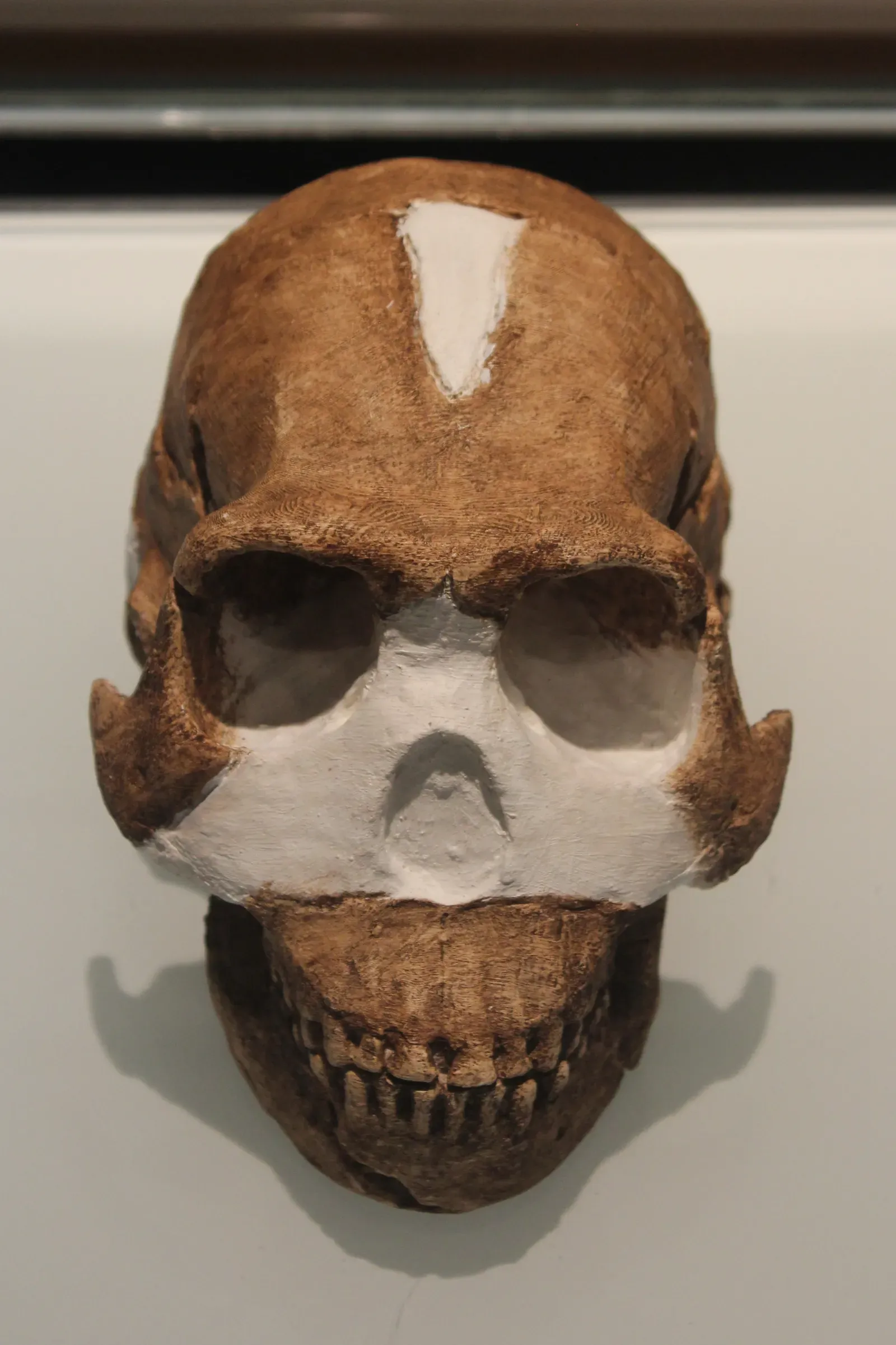
When Homo naledi fossils were pulled from South Africa’s Rising Star cave system, most researchers assumed something with such a strange mix of primitive and modern traits had to be over a million years old. The actual dating campaign delivered a genuine shock: combined uranium-series and electron spin resonance methods pointed to just 236,000 to 335,000 years ago – practically neighbors to early Homo sapiens.
That number dropped a small-brained, primitive-looking hominin into a period everyone assumed belonged exclusively to more advanced humans, and critics immediately called for retesting, pointing to uranium migration and complex cave burial events as likely culprits. Repeated independent analyses kept converging on the same late Middle Pleistocene window anyway. The fossils were never actually misdated – it was our assumptions about who got to be “advanced” that turned out to be wrong.
#4 – The “Out of Place” Human Footprints at Laetoli
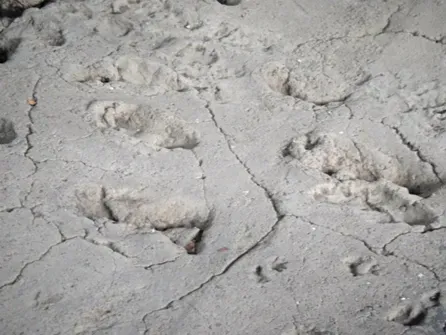
Laetoli, Tanzania, is famous for hominin footprints dated to roughly 3.6 million years ago, generally attributed to Australopithecus afarensis. That fits the fossil record cleanly enough – until a separate trackway, known as Site A, was re-examined and briefly argued to resemble modern human-like feet. A Homo-like footprint sitting in a 3.6-million-year-old ash layer would be nothing short of evolutionary heresy.
The radiometric dates on the ash never budged; the layer really is that old. What changed was the interpretation of the footprints themselves, as detailed anatomical analysis eventually concluded they could still belong to an australopith-grade hominin rather than anything resembling us. The “impossible” combination dissolved once the anatomy got scrutinized harder than the clock – but for a while, those prints looked like literal time travelers.
#3 – The Antikythera Mechanism’s High-Tech Bronze Age Brain
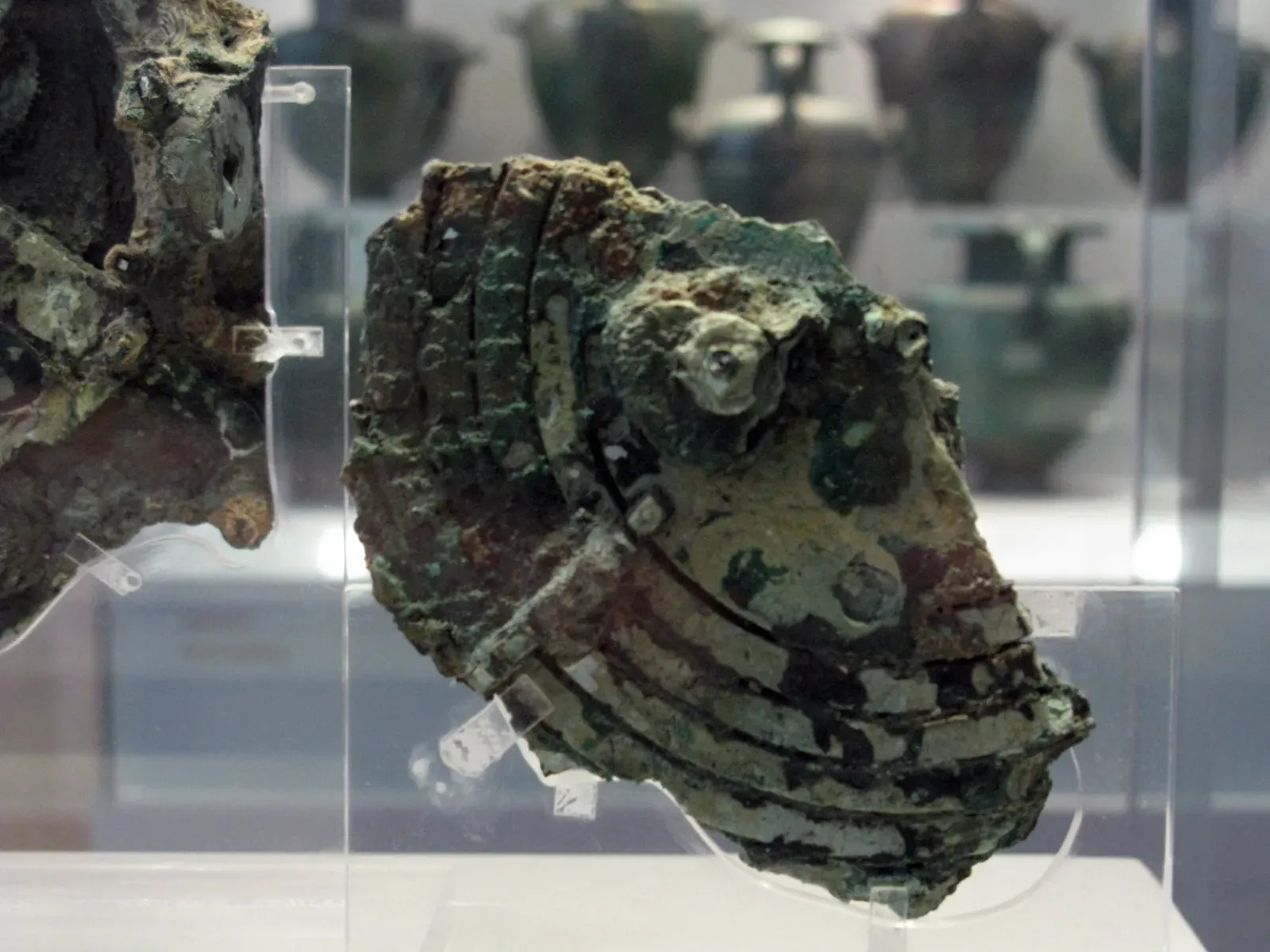
When the Antikythera Mechanism was pulled from a Greek shipwreck in the early 1900s, almost no one believed something with such intricate gearing could actually be ancient. Yet dating of the wreck’s associated organic material and artefacts placed it firmly around the 2nd to 1st century BC – a mechanical, computer-like device sitting deep inside the Hellenistic world.
Metallurgical testing confirmed the bronze and its corrosion patterns matched genuinely ancient, long-buried alloys rather than any modern intrusion, and X-ray and CT imaging revealed a level of gearing sophistication historians insisted didn’t reappear for another 1,500 years. This wasn’t a dating error to be explained away – it was a hard correction to how badly modern historians had underestimated ancient engineering.
Why It Stands Out
- Recovered from a Greek shipwreck in the early 1900s
- Dated to the 2nd–1st century BC using associated wreck material
- Bronze corrosion patterns confirmed genuine ancient burial, not a modern intrusion
- CT imaging revealed gearing complexity unmatched for roughly 1,500 years
#2 – Göbekli Tepe and Neolithic Architecture That Shouldn’t Exist
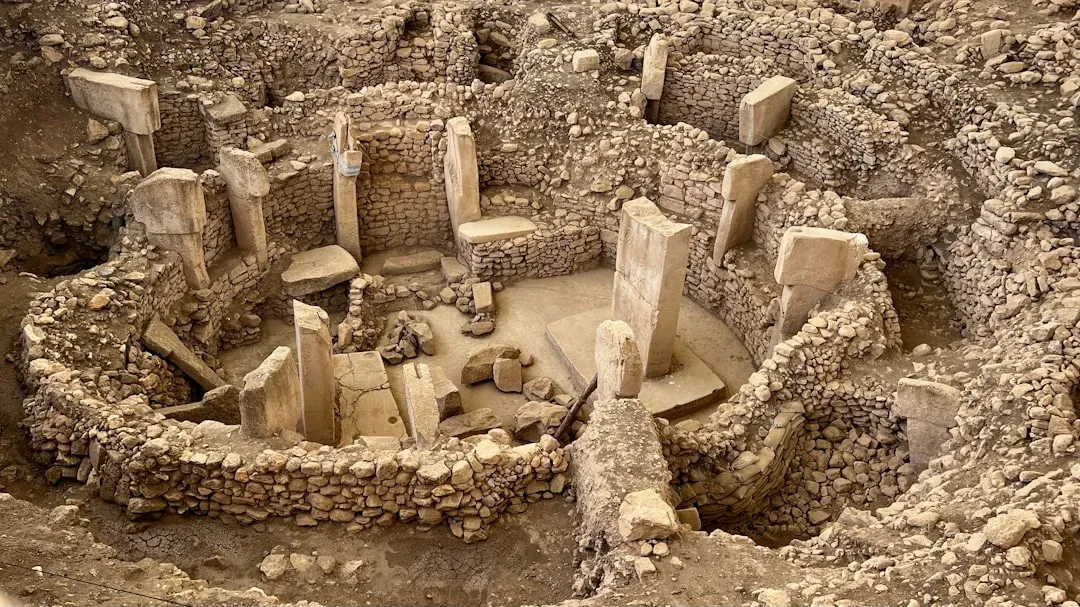
When Göbekli Tepe hit the headlines, plenty of archaeologists quietly winced. Massive stone enclosures, T-shaped pillars, and intricate carvings in southeastern Turkey were radiocarbon-dated to roughly 9600–8200 BC, thousands of years before Stonehenge or the Egyptian pyramids. According to the old model, hunter-gatherers at that point in history simply weren’t supposed to be capable of organized monumental construction.
Multiple labs tested charcoal, bone, and other organic material from tightly controlled contexts, and the results kept landing in the same early Holocene window no matter how the numbers were recalibrated. Rather than treating the dates as suspect, archaeologists eventually had to rewrite the origin story of monumental architecture entirely.
First came the temple, then the city.
Klaus Schmidt, lead excavator of Göbekli Tepe
#1 – The “Too Old” Carbon Dates at L’Anse aux Meadows
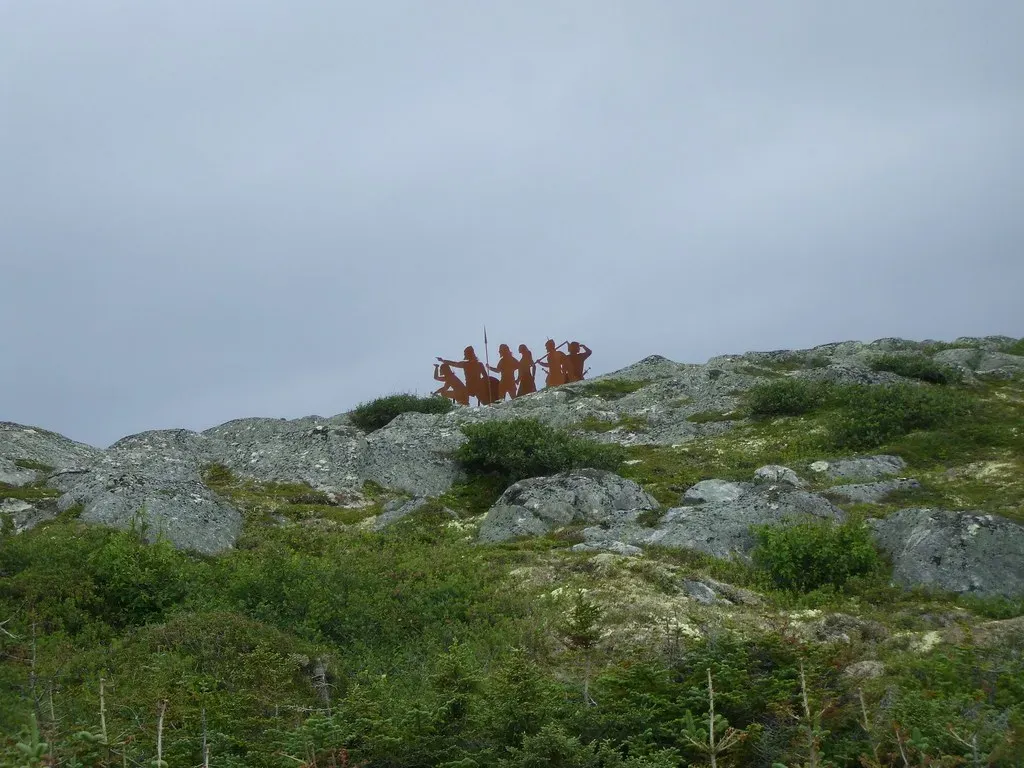
L’Anse aux Meadows in Newfoundland is the only widely accepted Norse site in North America, and for years most researchers agreed it was occupied around AD 1000–1050, matching the old Icelandic sagas almost perfectly. High-precision dating on plant remains later pinpointed activity to roughly AD 1021, which fit the narrative beautifully – until a handful of stray measurements hinted at pulses of human presence slightly earlier or later than the standard Viking window.
Some samples associated by stratigraphy looked younger than the site’s supposed abandonment date, while others overlapped with indigenous activity rather than clearly Norse structures. To an outsider, that scatter looks like evidence of an impossibly extended Viking occupation. To specialists, it flagged something far less dramatic: mixed deposits, bioturbation, and later indigenous reuse of the same ground – proof that labs can only measure what they’re actually handed, not what we wish the history books said.
Quick Compare
- Saga-based estimate: occupation around AD 1000–1050
- High-precision plant-ring dating: activity pinpointed to AD 1021
- Some samples: younger than the site’s supposed abandonment
- Other samples: overlapping with later indigenous reuse of the land
The Bottom Line

Across all thirteen of these cases, the pattern is almost embarrassingly consistent: it’s rarely the lab machine that’s wrong. It’s our expectations. Every “impossible” date traces back to one of three culprits – contamination, as with the Shroud and the dinosaur tissue; forgery or hybrid artefacts, as with the Vinland Map and Piltdown; or a theory that badly underestimated what ancient people and hominins were actually capable of, as with Göbekli Tepe, the Antikythera Mechanism, and Homo naledi.
The loudest corners of the internet want every strange result to mean mainstream science is hiding something. My honest read after going through all thirteen is the opposite: the real story is how often researchers were forced to publicly eat their own assumptions once the data refused to cooperate. That’s not a cover-up. That’s science working exactly as it’s supposed to, even when it’s humiliating. Which of these cases do you think actually rewrites history – and which ones are just noise dressed up as mystery?