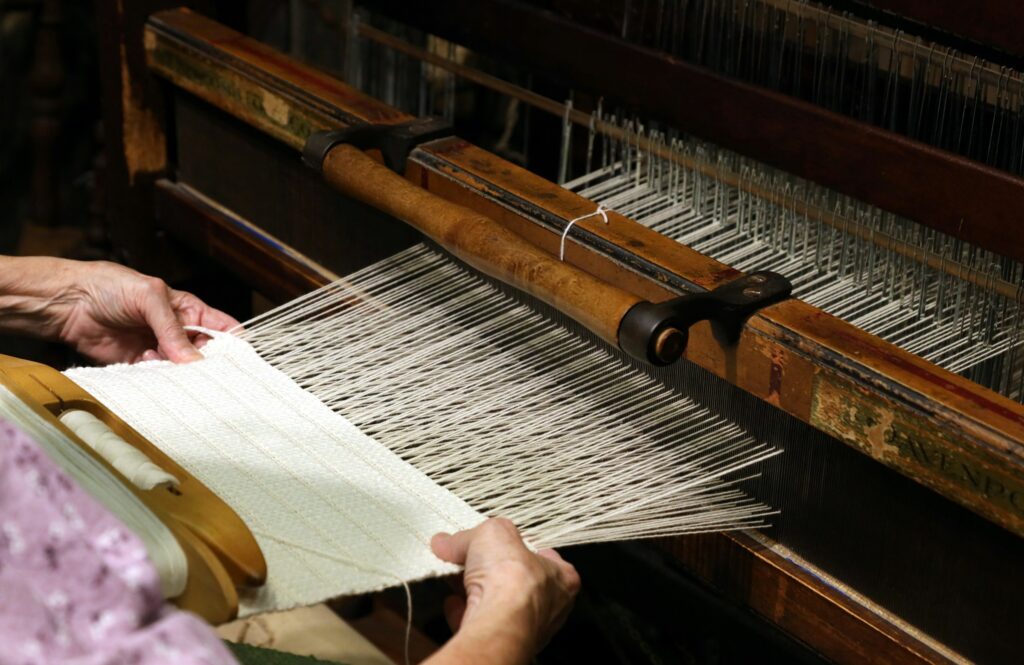
Most people assume textile technology only moves in one direction – forward. Newer looms, newer fibers, newer numbers on the sheet packaging, all supposedly better than whatever came before.
Then you look at what conservators and fiber analysts actually find under a microscope, and that tidy story falls apart fast. Some ancient and pre-industrial cloths were woven so fine, so densely, and with such obsessive human control that no standard loom running today – not even a high-end industrial one – could physically reproduce them at the same specs. Here are twelve textiles that prove “progress” isn’t always a straight line, and why the people who study them still sound a little stunned.
#12 – The “Impossible” Egyptian Linen That Started All The Rumors
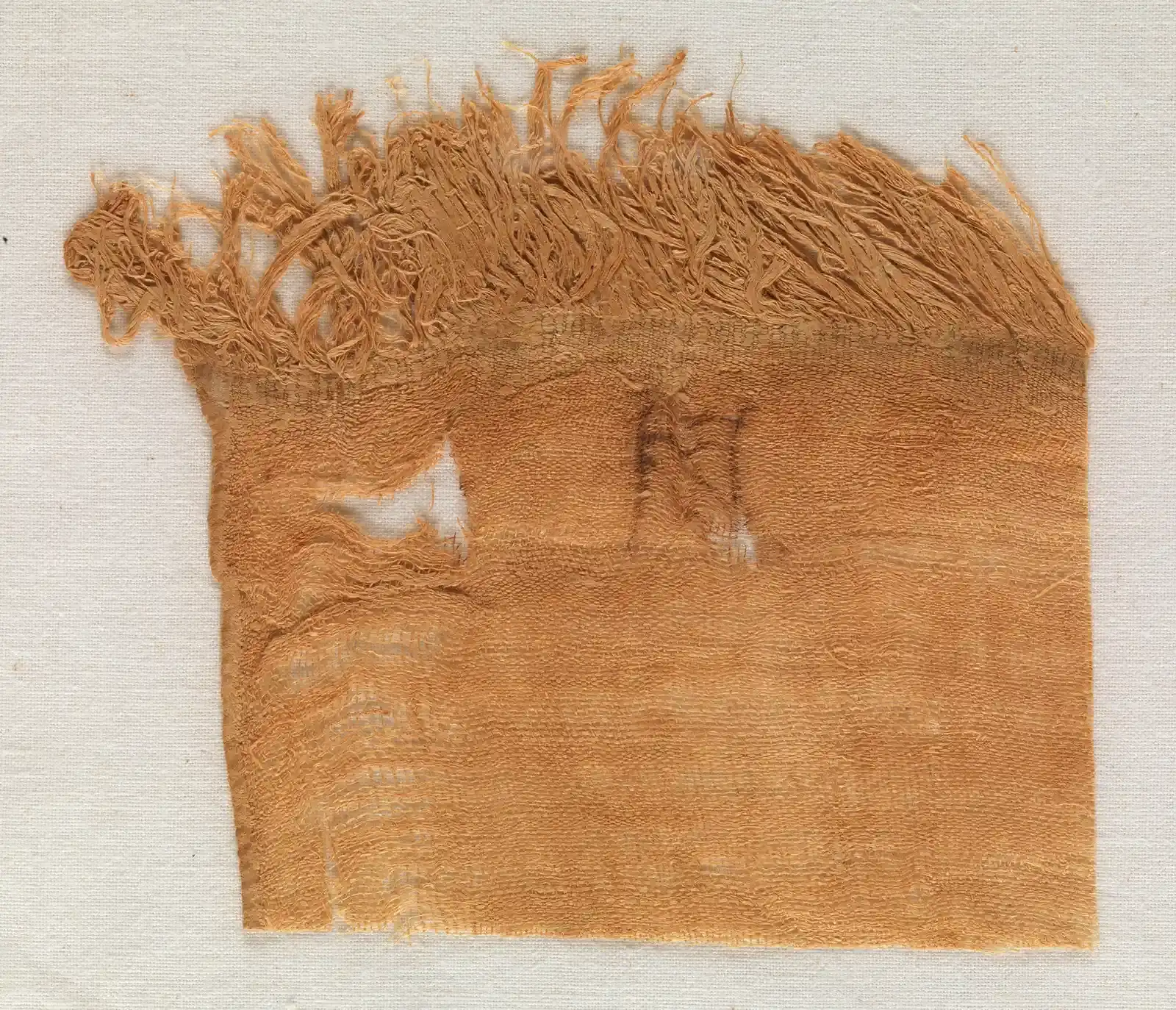
Experts roll their eyes at viral claims of “3,000-thread-count” Egyptian linen, and fair enough – that number is nonsense. But there’s a kernel of real shock buried underneath the meme. Some New Kingdom mummy wrappings and elite garments show linen spun to remarkable fineness, woven with over 100 threads per centimeter in a single direction, on handlooms, with zero electricity involved.
What makes these linens genuinely wild isn’t just the density – it’s the consistency. Under magnification, the yarns stay almost perfectly even for long stretches, barely a slub or a thick spot in sight. Modern air-jet and rapier looms can hit impressive numbers, sure, but usually with synthetic or cotton blends under nearly perfect tension and humidity control. Raw hand-spun flax at this evenness, at scale? That’s a different animal entirely.
#11 – Indian Muslin So Fine It Was Called “Woven Air”
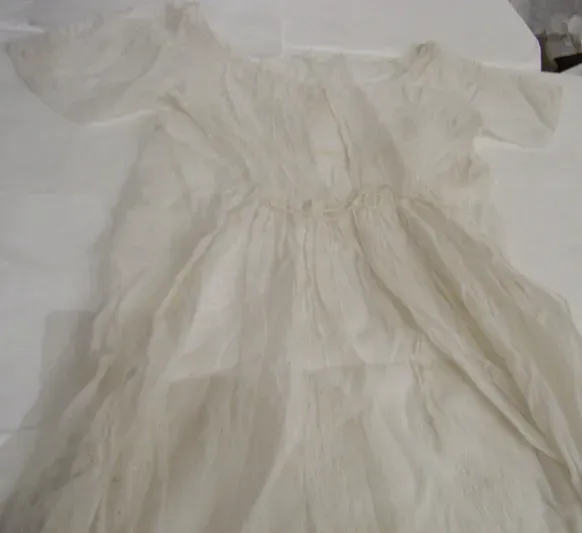
Dacca muslin from Bengal has taken on an almost mythical reputation, and the science backs it up. Yarns spun by hand from ultra-select cotton, grown in one tiny microclimate, reached counts of 300 to 400 and beyond – fine enough that entire bolts of fabric could pass through a finger ring. Today’s luxury shirting fabrics rarely crack 200s in true single-ply terms, and that already lives in a world of obsessive mills and eye-watering prices.
Here’s what breaks modern production: at that fineness, thread snaps constantly under industrial tension and speed. Mill directors have quietly admitted that recreating the exact historic width and fineness of Dacca muslin would be economically suicidal today. The real loss wasn’t the loom – it was an entire ecosystem of growers, spinners, and weavers who spent their whole lives inside one product. Museum reconstructions get close on small swatches. Nobody is weaving full-scale bolts like the originals.
Fast Facts
- Dacca muslin yarns reached counts of 300 to 400s, hand-spun entirely from one select Bengal cotton variety.
- Fine bolts were famously able to pass through a finger ring, a benchmark still used to describe extreme sheerness.
- Most luxury shirting today tops out around 200s in genuine single-ply terms.
- The original cotton strain and its microclimate no longer exist in the same form.
#10 – Qin and Han Dynasty Silks With Microscopic Warps

Most people picture ancient Chinese silk as ornate but chunky – think heavy brocades. The forensic textile record says otherwise. Some Qin and Han dynasty gauzes and high-status robes used warp yarns so fine that conservators measure thread spacing in the dozens per millimeter. The resulting cloth was nearly translucent, yet stable enough to survive in sealed tombs for over 2,000 years.
Modern silk mills can absolutely weave fine organza and chiffon, but they lean on engineered filaments, climate-controlled factories, and computer-tuned tension systems. The paradox here is specific: at the exact combination of tight warps, ultra-fine singles, and wide loom widths found in some tomb pieces, today’s mass-production looms would shred the yarn without a full redesign. These were slow, human-paced technologies that treated every inch as precious – a mindset even luxury houses quietly avoid replicating at scale.
#9 – Andean Camelid Cloth With Warp Counts That Don’t Make Sense
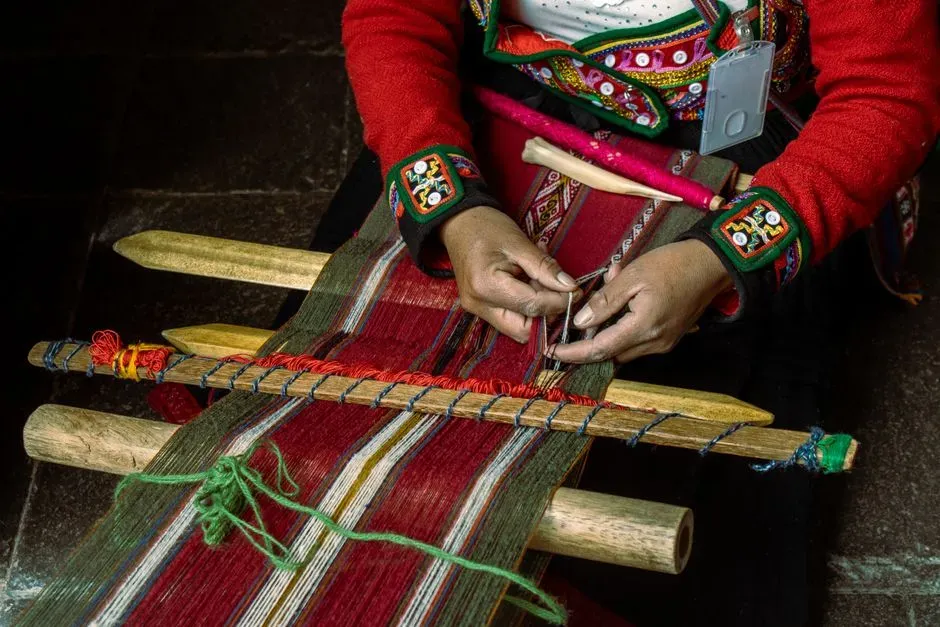
Long before the Inca, Andean weavers were producing camelid textiles – alpaca, vicuña, llama – so technically demanding that museum scientists still debate how they held together on the loom at all. Some tunics and mantles show warp and weft counts rivaling the finest Old World silks, using animal fibers that behave completely differently under tension and humidity than plant fibers do.
Modern mills do spin fine alpaca and vicuña, but usually into knits or looser weaves. Push those slightly hairy fibers through a high-speed loom at extreme density, and you get snarls, broken ends, and constant downtime. The ancient trick was radical patience: backstrap looms, body-tensioned warps, and weavers who understood exactly how much force one specific herd’s fiber could handle. Put bluntly, no factory today is stopping a million-dollar loom to nurse a single vicuña thread across a meter of cloth.
#8 – Medieval European Altar Linens With “Overbuilt” Grids
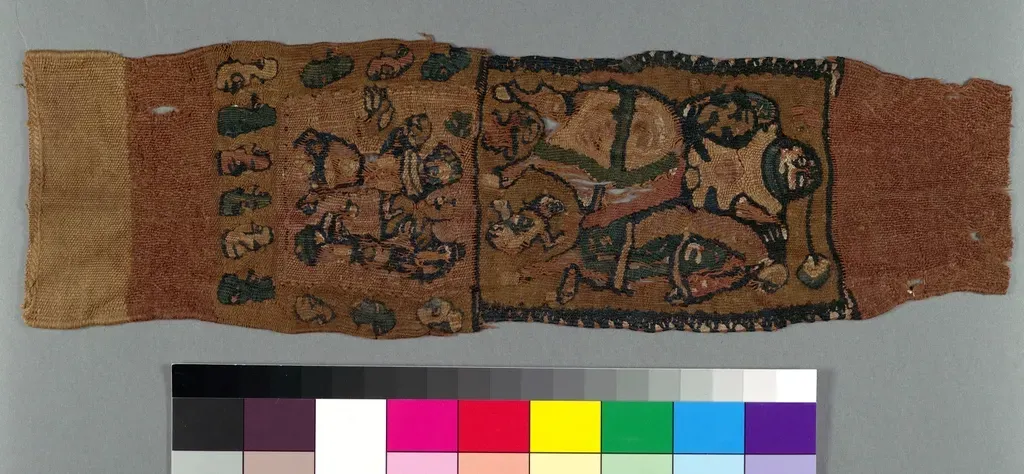
People assume medieval European linen was coarse and rustic. Conservation labs keep finding the opposite in high-status liturgical cloths – insanely regular tabby weaves with thread counts rivaling fine modern dress shirting, often layered with drawn-thread work and embroidery that assumes zero yarn breakage or skew.
Here’s the catch: these weren’t products in any modern sense. They were devotional projects, sometimes worked over years by weavers who could babysit a single warp, adjust tension by feel, and re-spin a weak spot mid-project. Industrial looms are engineered to eliminate exactly that kind of micro-intervention. Could a modern loom hit those densities in pure, unbleached flax across wide widths without cheating on ply counts? Technically, maybe. But it would need to move so slowly and by hand that it stops being “industrial weaving” at all.
#7 – Japanese Edo-Period Silk Gauzes Meant To Be Seen But Not Seen
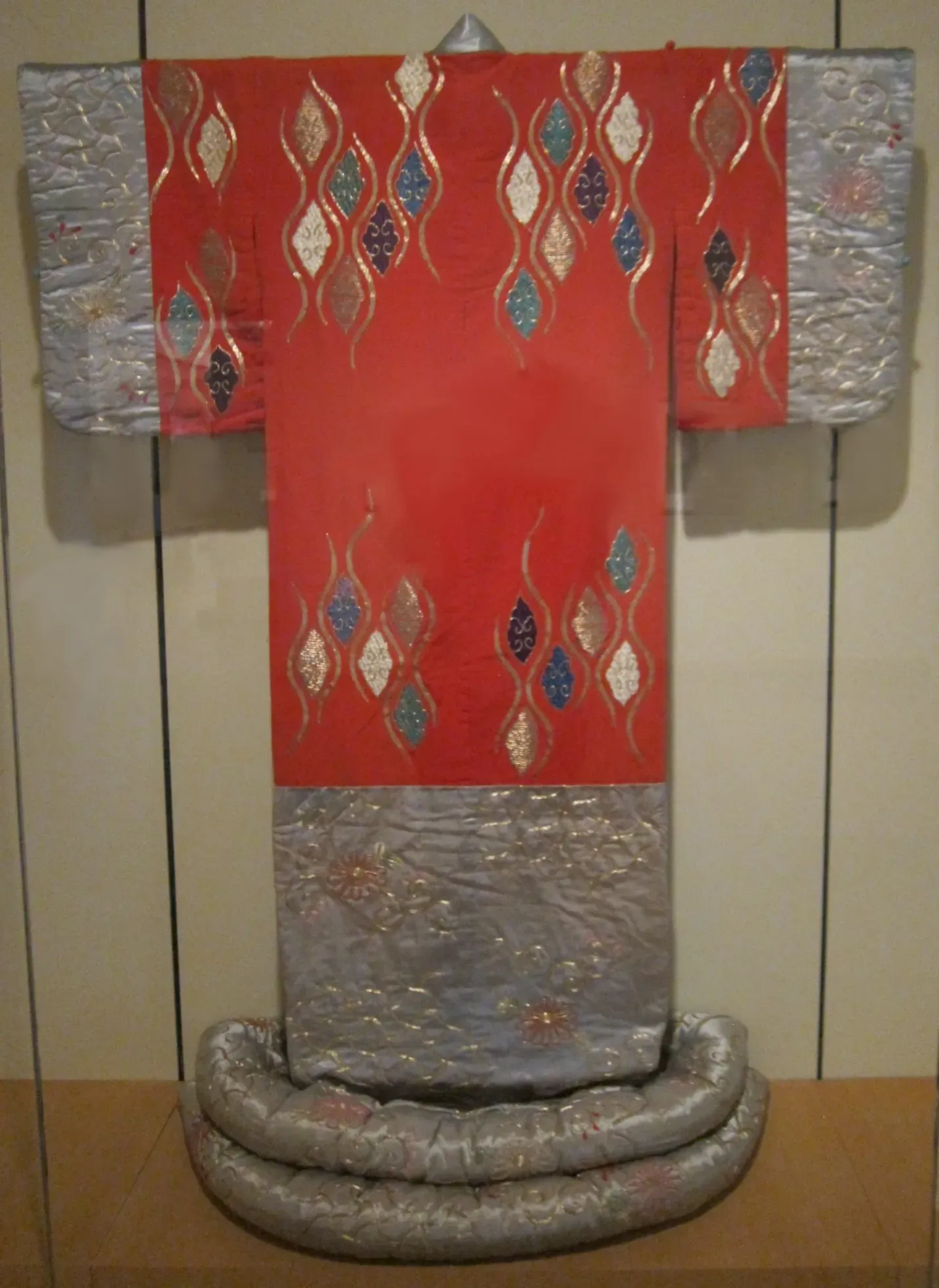
Edo-period Japan is famous for bold, graphic kimono patterns. But some of the most jaw-dropping textiles from that era are the nearly invisible ones – silk gauzes where warp threads are set so fine and so close together they blur into a shimmer instead of distinct lines, often stabilized with subtle leno or twisted structures.
Replicating that look hits two walls at once. First, the filament quality: many of these were reeled from exceptionally long, uniform cocoons, then lightly degummed to hold a very specific stiffness. Second, the loom behavior itself – weaving open, sheer structures at high warp density fights against how standard mechanized shedding and beat-up systems want to work. They’re built for either tight, stable cloth or obvious open mesh, not this in-between shimmer. Today’s mills can fake the feel with synthetics or clever finishing, but the raw silk on a dense, airy grid is genuinely a different animal.
Worth Knowing
- These gauzes leaned on leno or twisted-warp structures to keep ultra-fine threads from collapsing into a shapeless mesh.
- The silk came from unusually long, uniform cocoons, lightly degummed rather than fully processed for softness.
- Standard mechanized looms are tuned for either tight cloth or open mesh – not the sheer in-between zone these fabrics occupy.
#6 – Ottoman Silk Velvets With Warp Systems From Another Planet
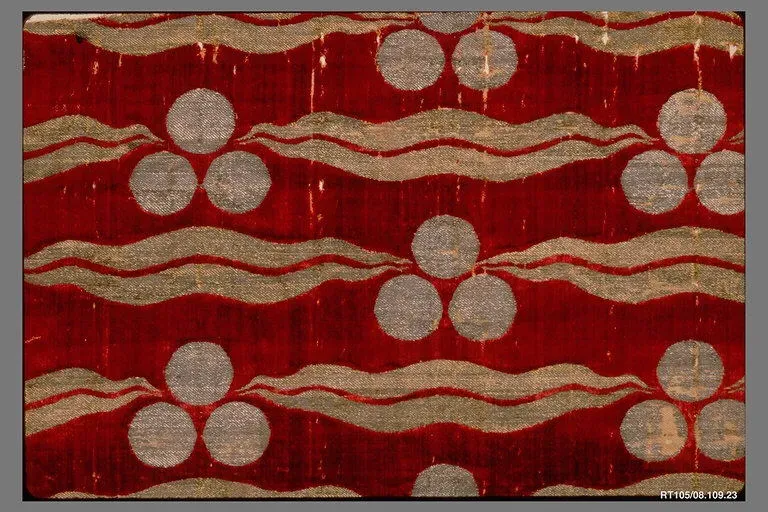
Velvet sounds simple – lush, soft, done. Historically, some Ottoman and Italian workshop velvets were anything but. Technical analysis shows multiple warp systems stacked together – ground warps, pile warps, sometimes supplementary pattern warps – packed at densities that push the outer limits of hand control. Each cut pile stood perfectly even, creating a pattern clarity modern knockoffs rarely match.
Industrial velvet weaving absolutely exists, but it’s built for speed and uniformity, not structural complexity. Try running that many different warp tensions, at that density, on a fast jacquard loom, and your maintenance crew will revolt. A lot of “historic look” velvet sold today quietly simplifies the structure – trading thread count and warp variety for printable patterns and chemical embossing instead. The originals, built on slow drawlooms with human pattern controllers, represent a kind of micro-engineering modern factories consider financially irrational.
#5 – Pre-Industrial Cotton Percales That Outperform Designer Sheets
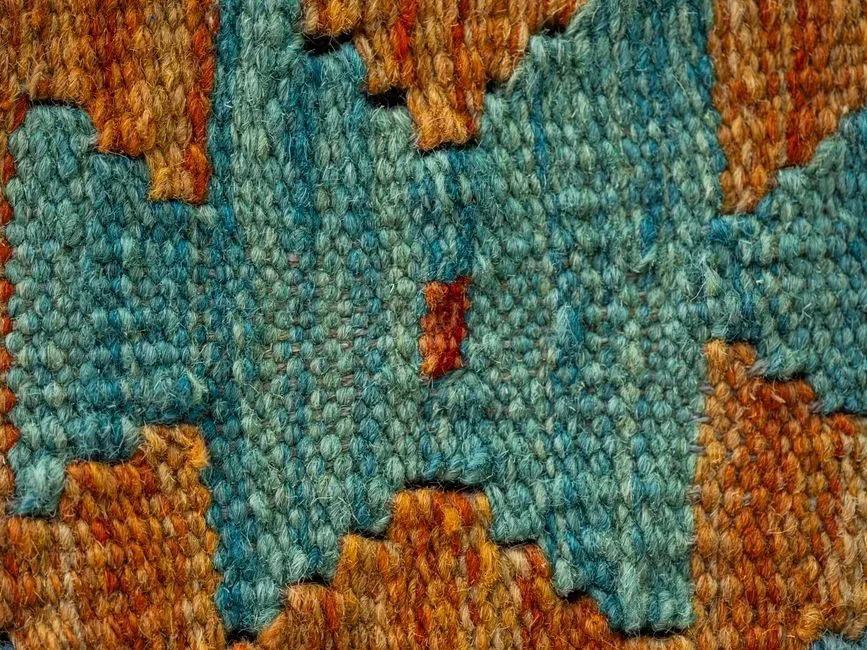
Marketers love pretending ultra-smooth cotton percale is a 20th-century hotel invention. In reality, some 18th and 19th century handwoven cottons – especially from Gujarat and Bengal – hit thread counts and surface regularity that many “luxury” sheets today simply don’t match, once you strip away inflated multi-ply counting tricks. The yarns are single-ply, the weave is honest, and the hand is crisp without being board-stiff.
The modern issue isn’t that looms can’t approach those numbers. It’s that the industry optimizes for cheaper fiber blends and illusory thread counts padded with multi-ply yarns instead. Try weaving ultra-fine, long-staple cotton at real historic densities on a standard high-speed loom, and tension and breakage problems show up fast, especially across wide sheeting widths. In controlled lab reconstructions, researchers routinely have to slow the loom way down – essentially reverting to pre-industrial behavior just to make the fabric hold together.
#4 – Pre-Columbian Cotton Mantles With “Signature” Local Densities
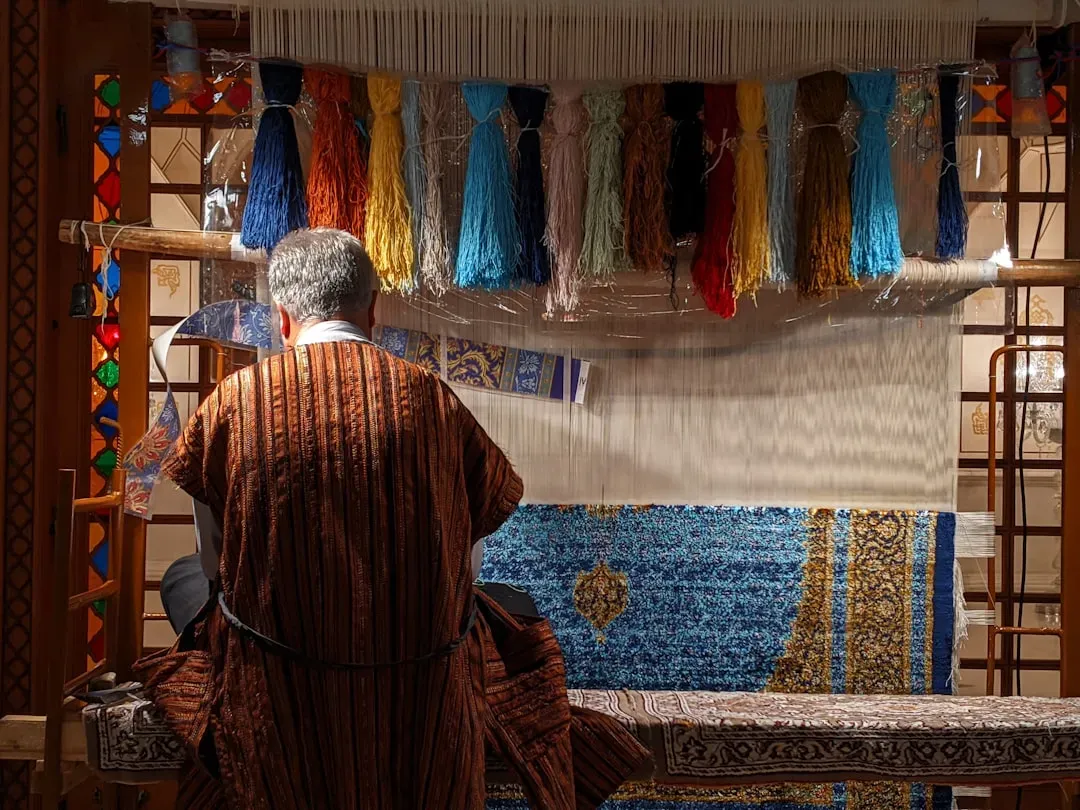
Along coastal South America, archaeologists keep uncovering cotton mantles and tunics with tightly controlled, deliberately varied thread counts – denser in some zones, airier in others – often within the same piece of cloth, without obvious loom marks or tension lines giving away the shift. That implies weavers were adjusting picks and possibly warp spacing on the fly, tailoring drape and visual effect section by section, purely by feel.
Modern looms can produce variable density, but usually through programmed take-up and carefully engineered jacquard patterns on predictable, machine-spun yarns. Doing it on handspun cotton, with genuinely high densities in critical design zones, is another level entirely. To mimic that in a mill setting, you’d have to slow production down and reintroduce human judgment – exactly what contemporary manufacturing exists to remove.
#3 – Venetian Gold-Brocaded Silks Where Metal Isn’t the Hard Part
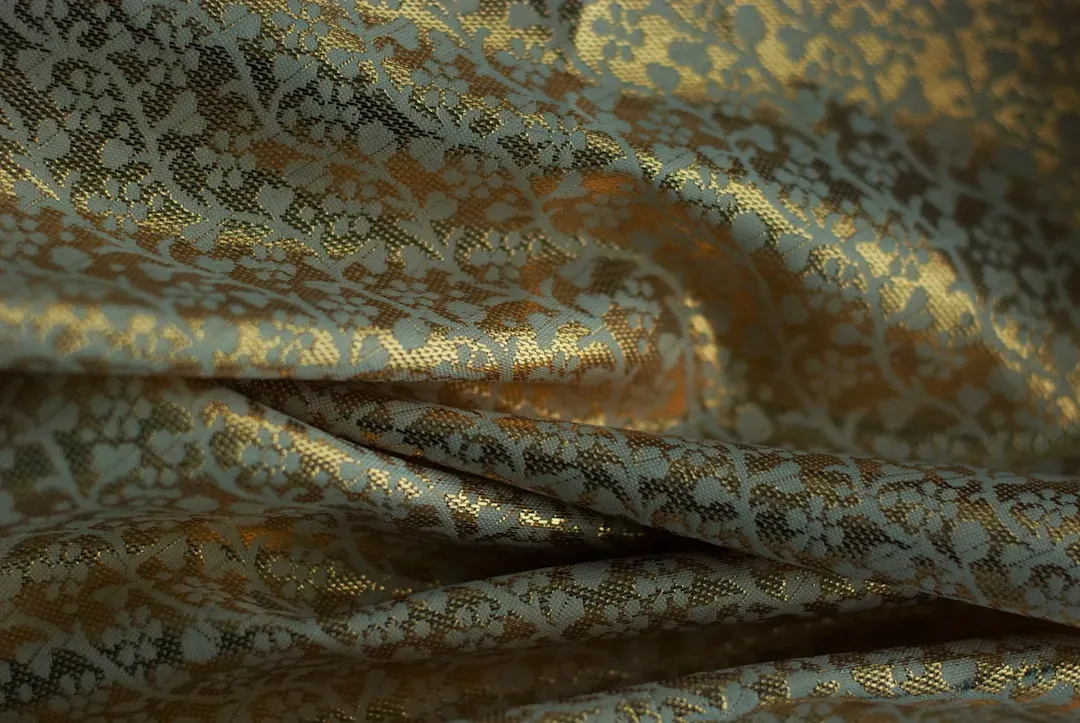
Everyone fixates on the gold thread in historic European brocades, but the ground cloth underneath is the real feat of engineering. Analysis of some 16th and 17th century Venetian silks shows exceptionally fine silk warps packed at high density, then loaded with heavier metal-wrapped wefts in the brocaded zones. Keeping that ground stable under that kind of punishment isn’t trivial, even in theory.
Modern looms handle metallic yarns just fine – but usually over far more forgiving synthetic bases. Combine a hyper-dense, almost gauze-like silk ground with stiff metal thread on a fast loom, and you get broken ends, loom stops, and warped patterns. Historical workshops solved this with slow weaving, highly trained drawboys, and constant micro-corrections by hand. A custom, low-speed jacquard rig could probably imitate it at lab scale. A commercial mill making full widths and yardages at those exact counts, profitably? Realistically, no.
Quick Compare
- Historic Venetian silk: ultra-fine, dense silk ground plus stiff metal-wrapped wefts, woven slowly by trained drawboys.
- Modern metallic-thread fabric: forgiving synthetic base, run on fast jacquard looms built for consistency over complexity.
- Lab-scale reconstruction: possible on a custom low-speed rig, but not viable for commercial full-width production.
#2 – Ultrafine Lace Grounds That Shouldn’t Hold Together
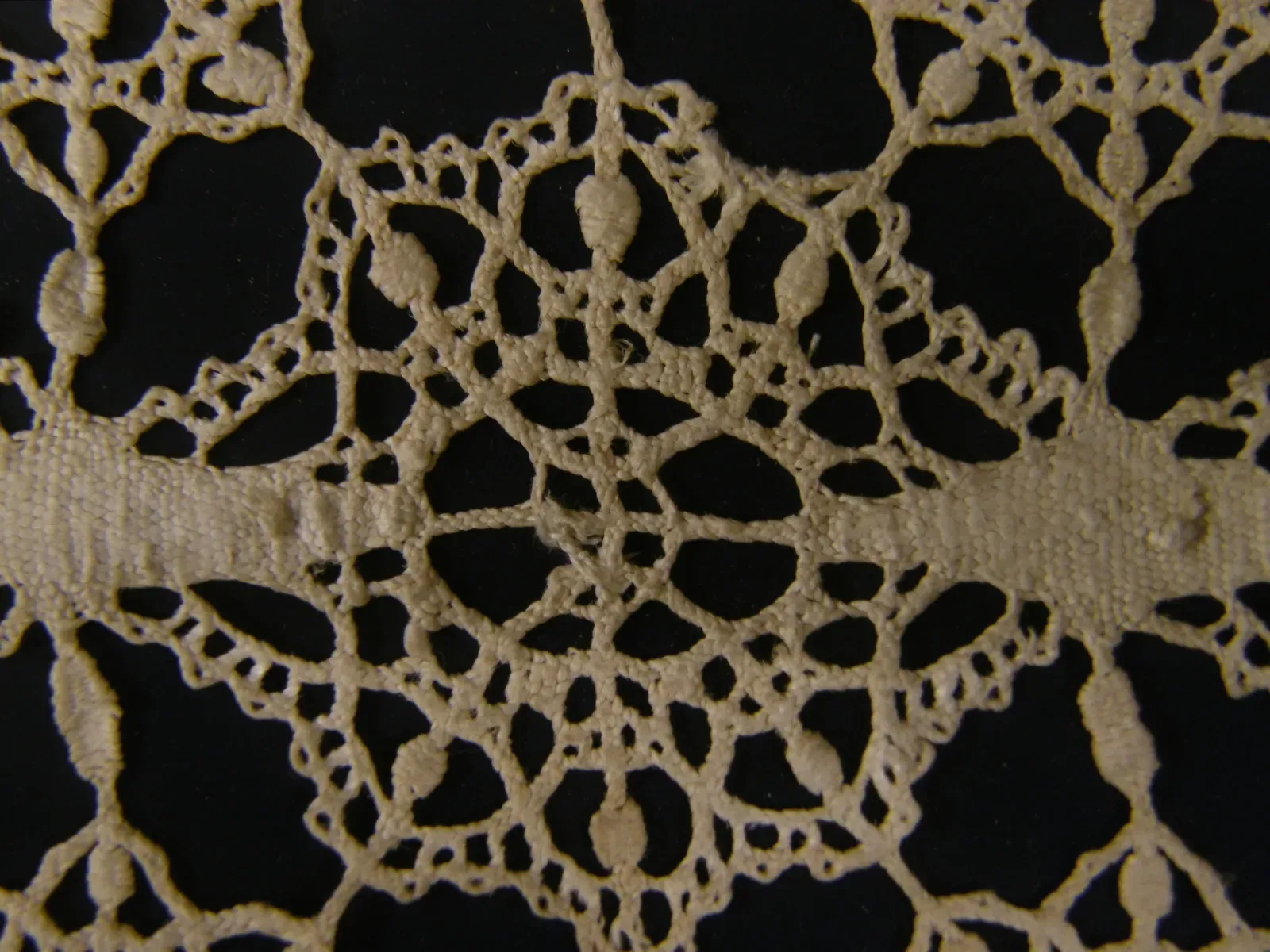
Lace usually gets filed under knitting or looping, but a lot of historic bobbin lace actually sits on woven-like grounds – tiny, repeated meshes made from threads so fine they flirt with invisibility, forming a stable network over large areas. In high-end 17th and 18th century laces, the effective thread density of those meshes is off the charts compared to normal fabric.
Today’s raschel and Leavers machines can simulate lace patterns, but they cheat on scale and fiber to do it – heavier threads, synthetic filaments, added resin, all making the structure more forgiving for high-speed equipment. The original linen or silk versions used minimal sizing and relied entirely on meticulous human tension control. A machine-made lace that truly matches those microscopic grounds, in natural fiber, at scale, simply doesn’t exist commercially. It’s too slow, too fragile, and too unforgiving to be worth a factory’s time.
#1 – The Vanished World of True Dhakai Jamdani
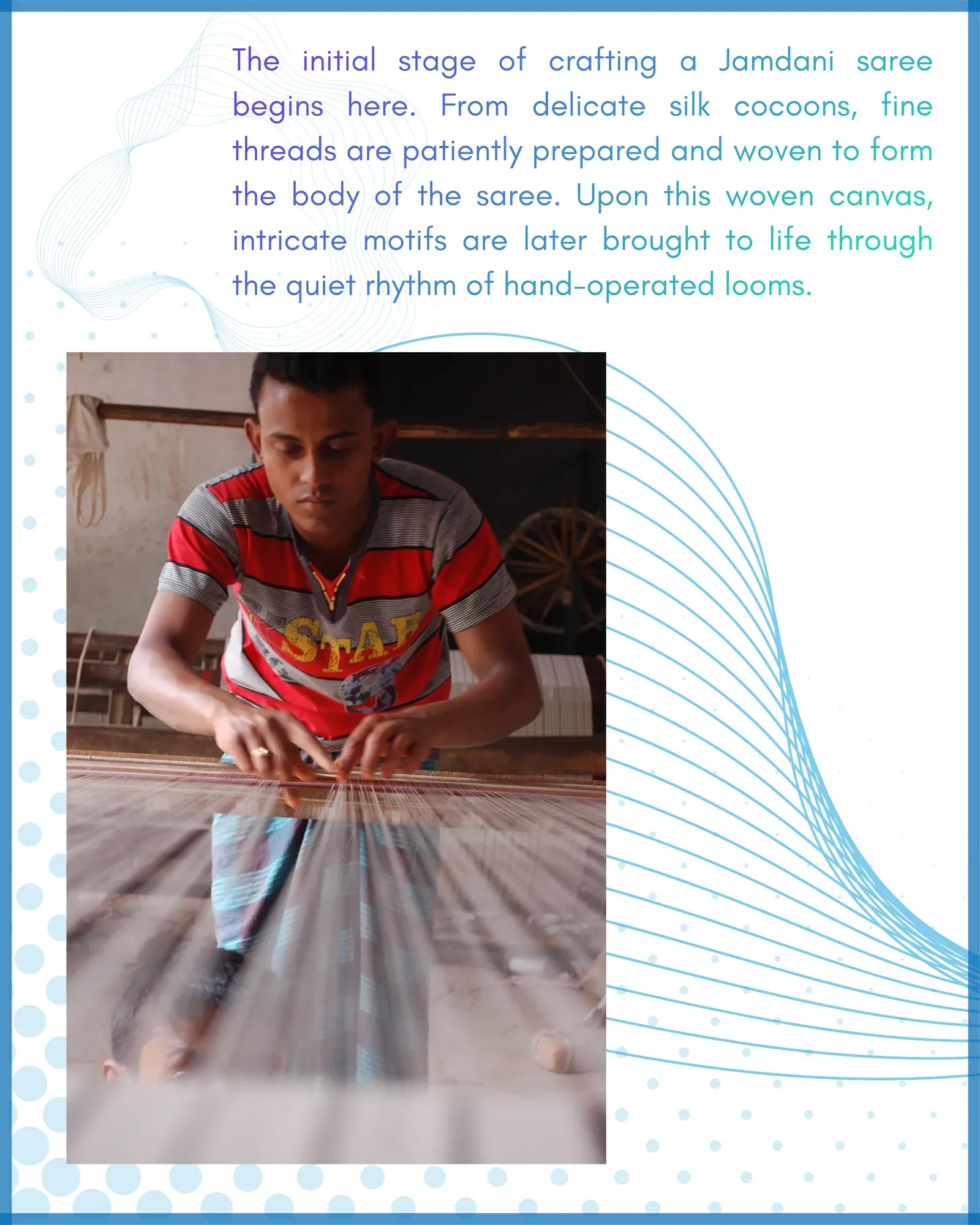
If one textile deserves the crown here, it’s historic Dhakai jamdani in its purest form – not the modern power-loomed saris sold under that name today, but the pre-industrial masterpieces with ultra-fine muslin grounds and hand-placed pattern motifs woven in pick by pick, at terrifying density. Picture weaving “woven air,” then pausing every few threads to hand-place a tiny pattern yarn without warping the grid underneath it.
Modern jacquard looms handle complex patterns just fine – until the thread gets this small and this densely packed in handspun cotton. Then the system breaks: yarn snaps, patterns misregister, and the economics collapse completely. What vanished wasn’t just a loom. It was a whole culture that treated weaving a few centimeters a day as perfectly normal, backed by an agricultural system that bred cotton specifically for this one purpose. Even artisans reviving jamdani today, on traditional looms, quietly admit the absolute peak historic pieces sit in a league that neither hand nor machine production has fully reclaimed.
At a Glance
- Traditional jamdani weavers hand-placed pattern yarns pick by pick into an already ultra-fine muslin ground.
- Progress on the finest historic pieces could amount to just a few centimeters of finished cloth per day.
- Modern jacquard looms handle complex patterns but struggle once thread gets this fine and densely packed.
- Even today’s jamdani revival artisans acknowledge the historic peak hasn’t been fully matched.
The Bottom Line
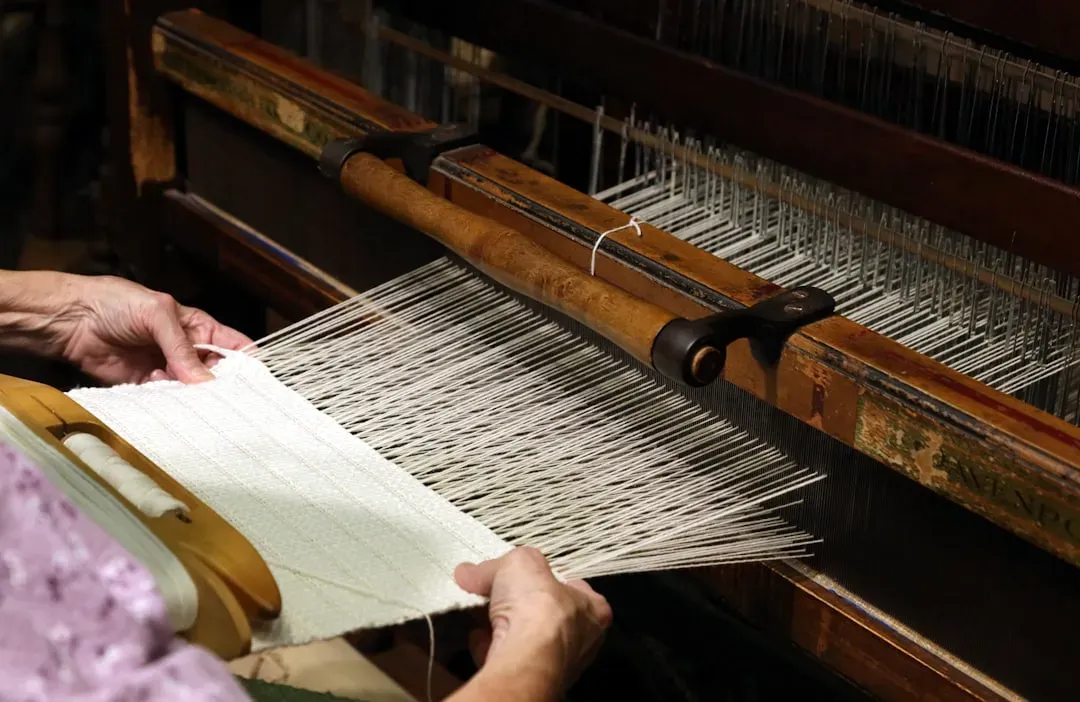
Textile marketers love a clean progress story: every year, higher counts, better machines, smoother fabric. The record says something messier. Again and again, historic textiles hit thread densities, structural complexity, and fiber discipline that our standard, economically driven looms simply aren’t designed to tolerate anymore.
Could we hack together lab-scale replicas with custom rigs and heroic patience? Probably. But that’s not the same as saying “our looms can do it” in any meaningful industrial sense. The uncomfortable truth is that we didn’t just gain efficiency over the centuries – we traded away entire ways of working, and with them, forms of cloth that made no financial sense but perfect cultural sense. I’ll say it plainly: some of what got left behind wasn’t primitive at all. It was just too slow, too human, and too uneconomical for a world that decided speed mattered more than the thread.