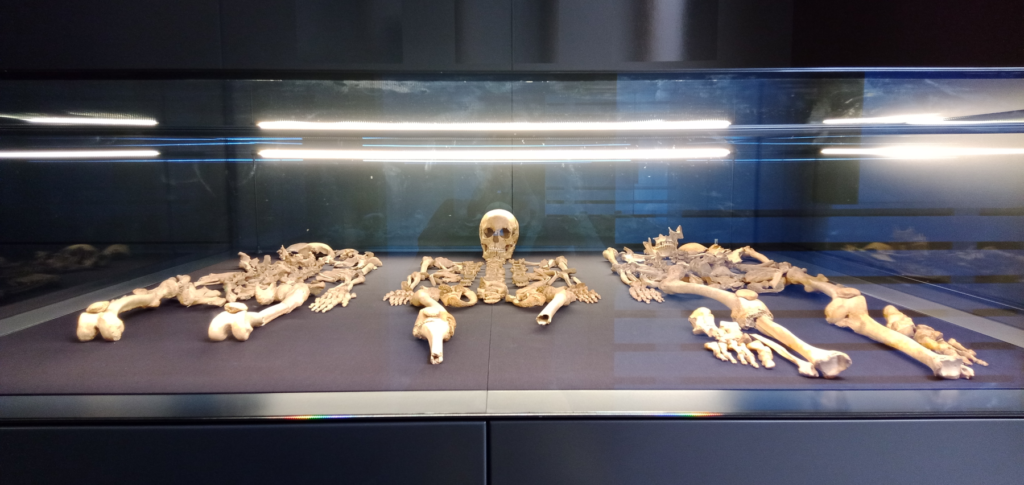
Most people assume every bone pulled from the ground eventually gets a tidy Latin name and a spot on some evolutionary chart. That’s the comfortable version of science. The real version, the one that happens in drawers and back rooms of anatomy labs, is messier: fragmentary skeletons that fail every comparison, joints that don’t move the way they’re supposed to, and specimens that have sat unlabeled for decades because nobody will put their name on a guess.
None of what follows is alien conspiracy or internet hoax bait. These are real, physical skeletons that trained anatomists have measured, x-rayed, and argued over – and still can’t confidently assign to any known species. Here are 13 of them, starting with the one that was almost dismissed as “just a weird wolf.”
#13 – The Cave-Shelf Skeleton That Started as a “Deformed Wolf”
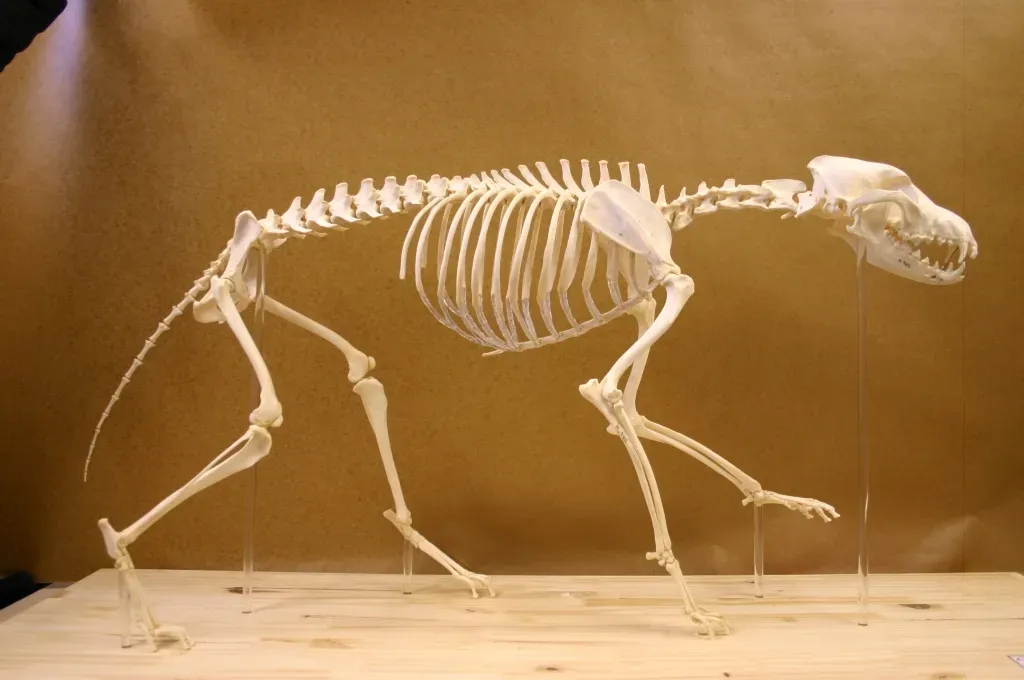
When field biologists first hauled this partial skeleton out of a cave shelf, everyone had the same lazy explanation ready: deformed wolf. Long legs, big canines, roughly the right size. Case closed – or so they thought, until someone actually measured the pelvis.
The angles didn’t match wolf, dog, or coyote. The vertebrae showed articulation patterns built for a faster, spring-loaded runner, and DNA extraction kept failing no matter how careful the lab got. Old-school measurement eventually did what genetics couldn’t: it proved that no living or fossil canid shares this exact combination of limb geometry and spine. Officially it has a boring museum code. Unofficially, researchers just call it “the wolf that wasn’t.”
#12 – The Island Primate That Looks Almost, But Not Quite, Human
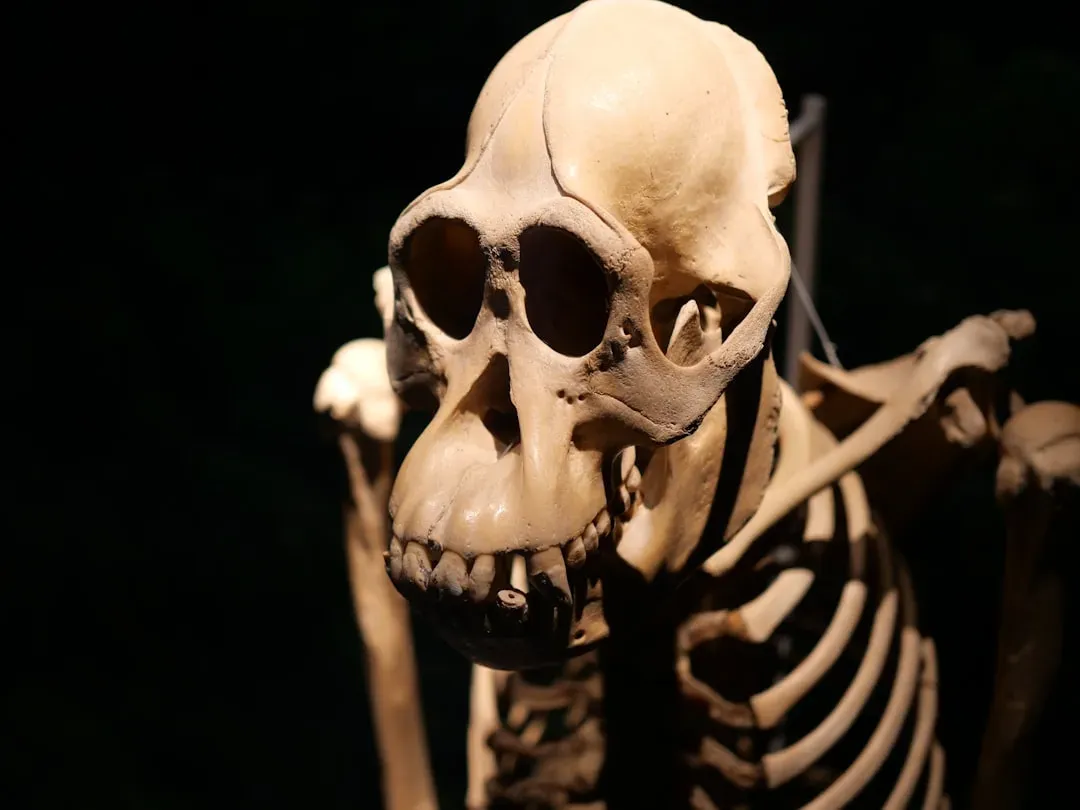
This skeleton came from a tiny offshore island where no primates live today – which is the first red flag. The skull looks unsettlingly familiar at a glance: rounded cranium, small brow ridges, a face that feels one degree too close to ours. Then you look at the arms.
They’re too long. The fingers curve too much, and the shoulder joint is built for climbing, not for holding a tool. Its brain size lands right between modern humans and the smallest known archaic hominins, yet the teeth don’t match any species on record. Anthropologists have tried “malformed human,” “juvenile,” and “sick monkey” – none of it survives close measurement, so it sits in academic limbo: clearly a primate, clearly not us, and not convincingly anything else.
#11 – The “Overbuilt Deer” That Grew Its Own Armor
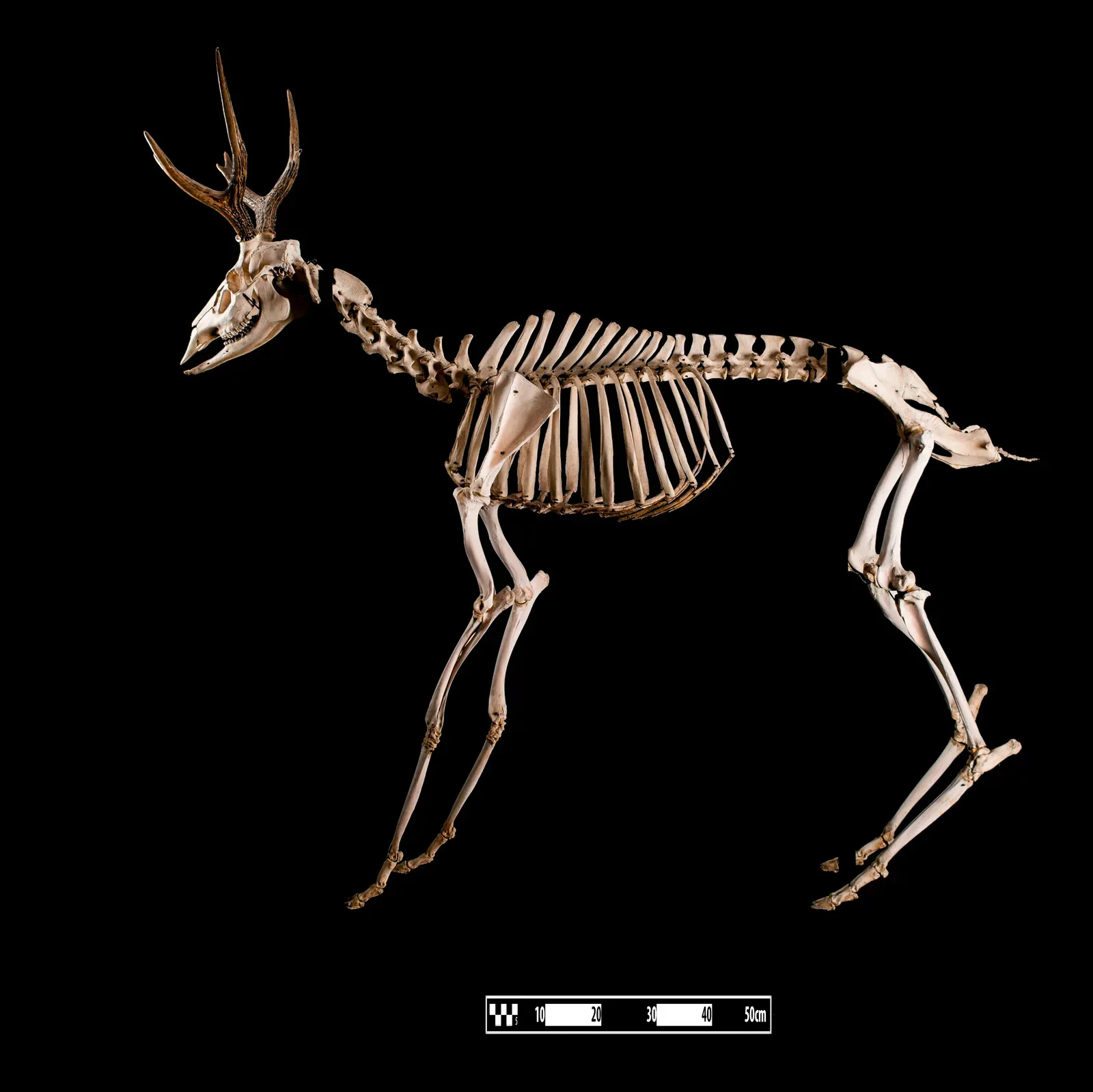
Farmers thought they’d hit a buried cow with the plow. What came up instead had the delicate hooves and long legs of a deer, but a ribcage that made anatomists do a double take. Running along the spine were bony ridges and overlapping plates that look closer to primitive armor than anything a modern grazer would ever need.
Picture a sleek antelope trying to cosplay as an armadillo, and you’re close. The joint surfaces show stress patterns unlike any deer, antelope, or cattle alive today, as if this animal regularly braced against forces grazers simply don’t encounter. Some anatomists suspect an unknown Pleistocene lineage; others push back with “pathology.” But the armor is symmetrical on both sides, which disease almost never manages to pull off cleanly.
Fast Facts
- Deer-like hooves and long, slender legs paired with a heavily reinforced ribcage
- Bony ridges and overlapping plates running the full length of the spine
- Armor is symmetrical on both sides, arguing against disease or injury
- Joint stress patterns unlike any living deer, antelope, or cattle
- Researchers split between “unknown Pleistocene lineage” and simple pathology
#10 – The Riverbed Skeleton With Fish Ribs and Mammal Legs
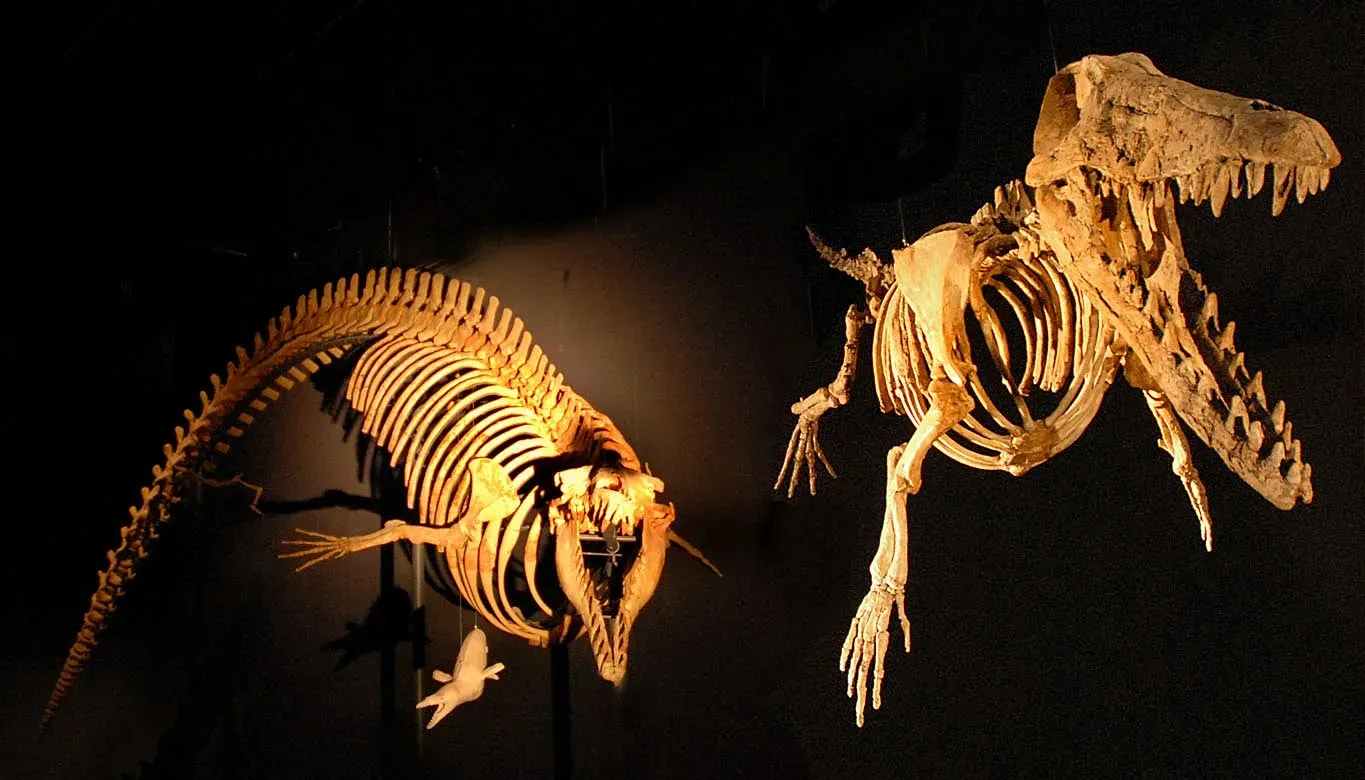
This one looks like someone’s idea of a joke. Pulled from an ancient riverbed, its torso is wrapped in thin, overlapping ribs that flare outward like a fish’s – except those ribs attach to a spine and limb girdles that scream land animal. The forelimbs have solid, weight-bearing joints, the kind built for walking, not swimming.
At first, experts tried to file it among early amphibians or transitional fish-to-land fossils. Then the dating came back too young, and the limbs looked too advanced for that story to hold. No known species from that period combines fish-style ribs with confidently mammal-like joints, and every attempt to force it into an existing group means ignoring bones that flatly disagree.
#9 – The “Child-Sized Biped” That Turned Out To Be a Full-Grown Adult
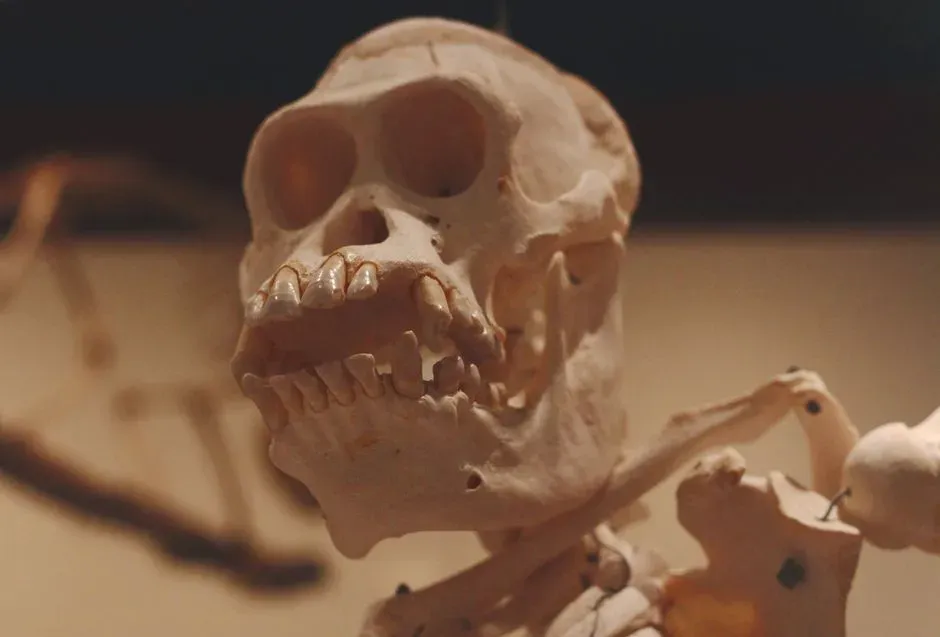
Locked in a cabinet is a nearly complete skeleton barely over a meter tall – the kind of thing you’d assume was a child until you check the growth plates. They’re fused solid, like an adult’s. The teeth are fully erupted and worn down from years of use. This wasn’t a kid. It was a fully mature, small-bodied biped that never got taller.
The pelvis and femur angle strongly suggest it walked upright, but the feet keep an arch and toe layout unlike anything in modern humans or named hominin species. Inner-ear structures tied to balance suggest it moved confidently over rough ground, not that it was disabled or stunted. Its skull capacity doesn’t cleanly match the small hominins we already know, either, so it sits in the record labeled “indeterminate hominid” – scientific shorthand for we’ve run out of boxes to put it in.
#8 – The Deep-Sea “Spine in Search of a Body”
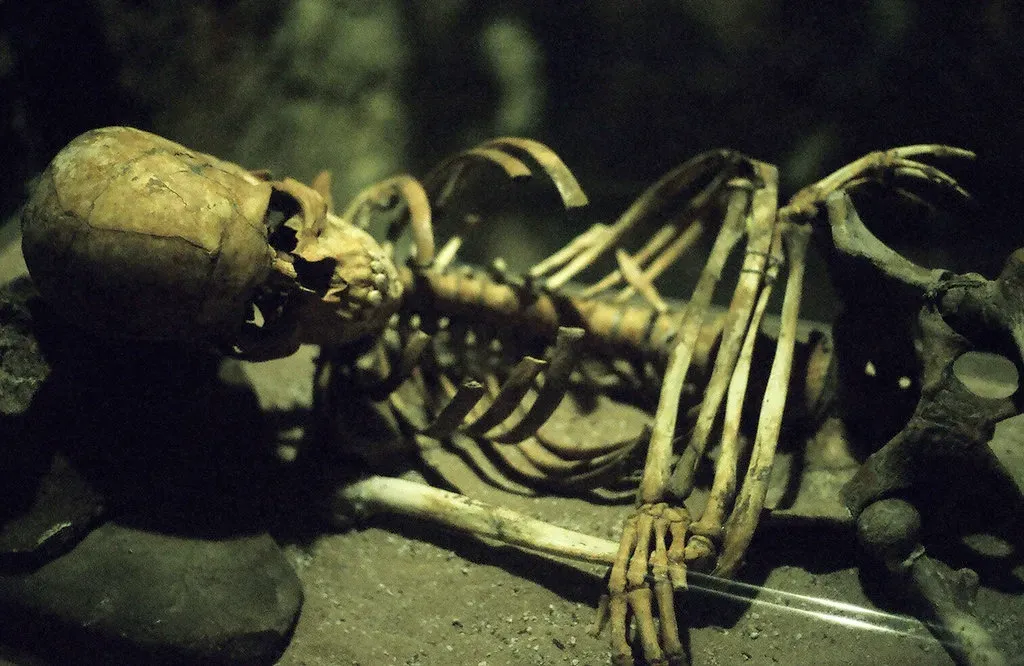
Some skeletons are barely skeletons at all. This one, dredged up from an extreme deep-sea trawl, is basically hundreds of tiny vertebrae strung into a hyper-flexible column, with only faint hints of fins or limbs ever attached. The bone is so lightly mineralized it borders on cartilage.
X-rays show interlocking joint facets unlike known eels, fish, or marine mammals, hinting at a serpentine motion that doesn’t match anything on the reference charts. The collagen structure and growth rings won’t sync with any established deep-sea family. It’s almost certainly a vertebrate. Where it belongs on the tree of life is, right now, nobody’s honest guess – so it stays filed as “indeterminate vertebrate,” a quiet admission that the ocean floor still keeps secrets.
#7 – The Desert Quadruped With Hands Where Hooves Should Be
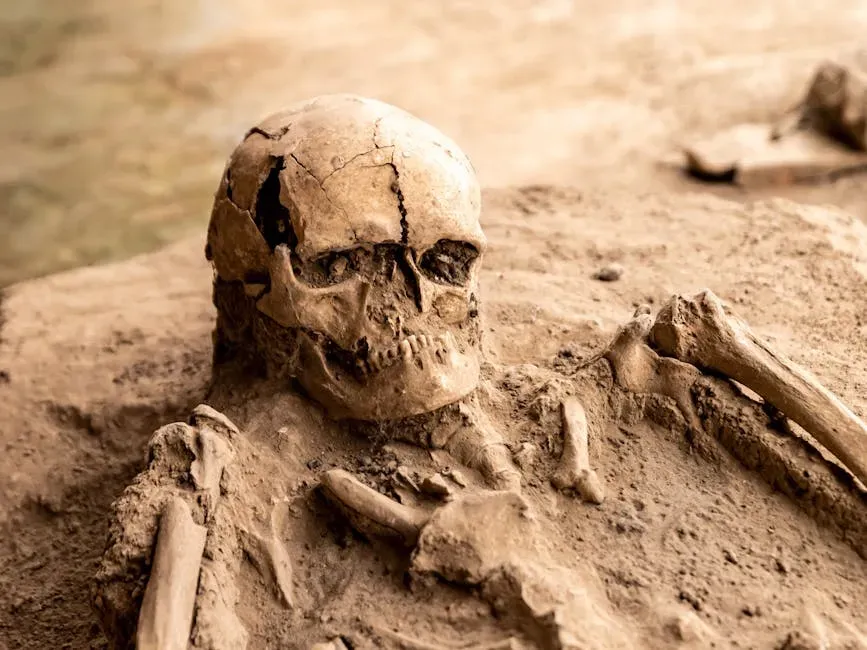
This is the specimen that actually started arguments in the lab. Dug from arid sediment, it’s a four-legged, roughly dog-sized skeleton – until you reach the front limbs. Instead of paws or hooves, they end in elongated, almost hand-like digits with joint surfaces complex enough to suggest real grasping ability.
The hind limbs look normal, built for running, but the shoulder girdle is braced in a way that could support weight if the animal partially reared up. Some anatomists guessed at a burrower feeling its way underground; others floated a long-lost arboreal lifestyle from a greener era. Every theory hits the same wall: the hand-like limbs are too structured to be a random deformity, but too specific to file under any species we’ve already named.
#6 – The Mixed-Signal Bird That Refuses to Fly or Walk Normally
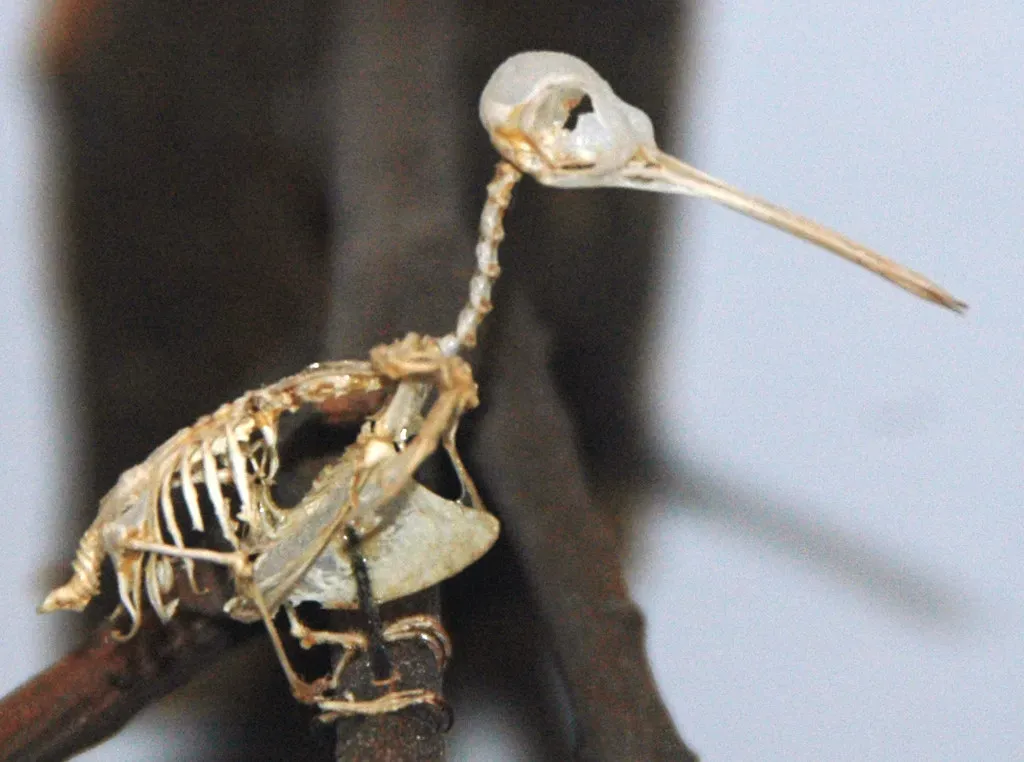
This skeleton reads like a bird that couldn’t commit to a lifestyle. The forelimbs carry robust, wing-like bones with clear muscle-attachment scars, the kind you’d expect on a strong flier. But the breastbone is oddly underdeveloped for that job, and the hind limbs are thick and short – built for standing, not sprinting.
Bird anatomists tried lining it up with known flightless lineages, but the wing joints aren’t reduced or vestigial; they look purpose-built for something. It’s too heavy for the usual “light for flight” rule, yet too wing-equipped to write off as flightless. The best guess going around is that it represents a lost evolutionary experiment: a creature that flew poorly but excelled at something else entirely, maybe climbing through thick vegetation nobody preserved.
Quick Compare
- Typical flier: light, keeled breastbone, strong wings, slender legs
- Typical flightless bird: reduced wings, heavy legs, flat breastbone
- This skeleton: strong, muscle-scarred wings + weak breastbone + heavy, short legs
#5 – The Mountain Skull With a Jaw That Shouldn’t Exist
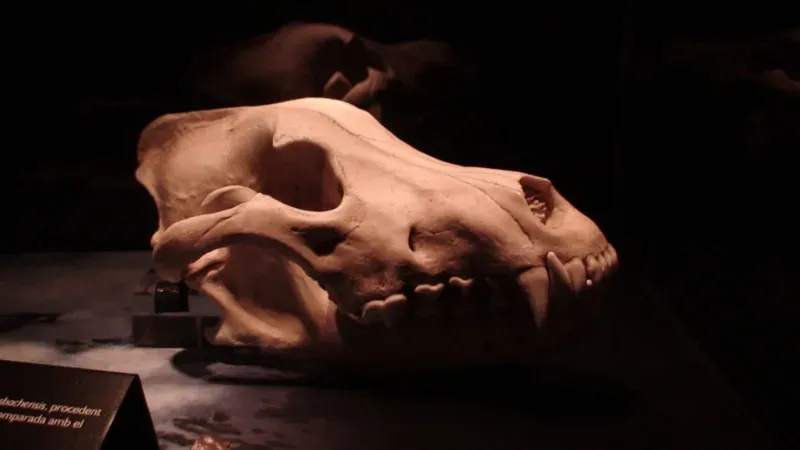
Sometimes one bone is enough to derail an entire classification. This skeleton, pulled from a high-altitude cave, has a skull that loosely resembles a large carnivore – right up until you examine the jaw. The mandible mixes slicing carnassial teeth with broad, crushing molars in an arrangement that doesn’t match big cats, bears, hyenas, or canids.
The jaw joint even sits at an unusual angle, allowing more side-to-side motion than a strict meat-eater would ever need. Tooth wear suggests a diet that swung between hard objects and flesh, and both sides of the mandible mirror each other too precisely to blame pathology. Without a real match anywhere in the fossil record, it sits in storage as an “unnamed carnivoran” – a placeholder for a species that may have vanished before anyone got the chance to describe it.
#4 – The “Compression Mystery” That Survived Every Excuse
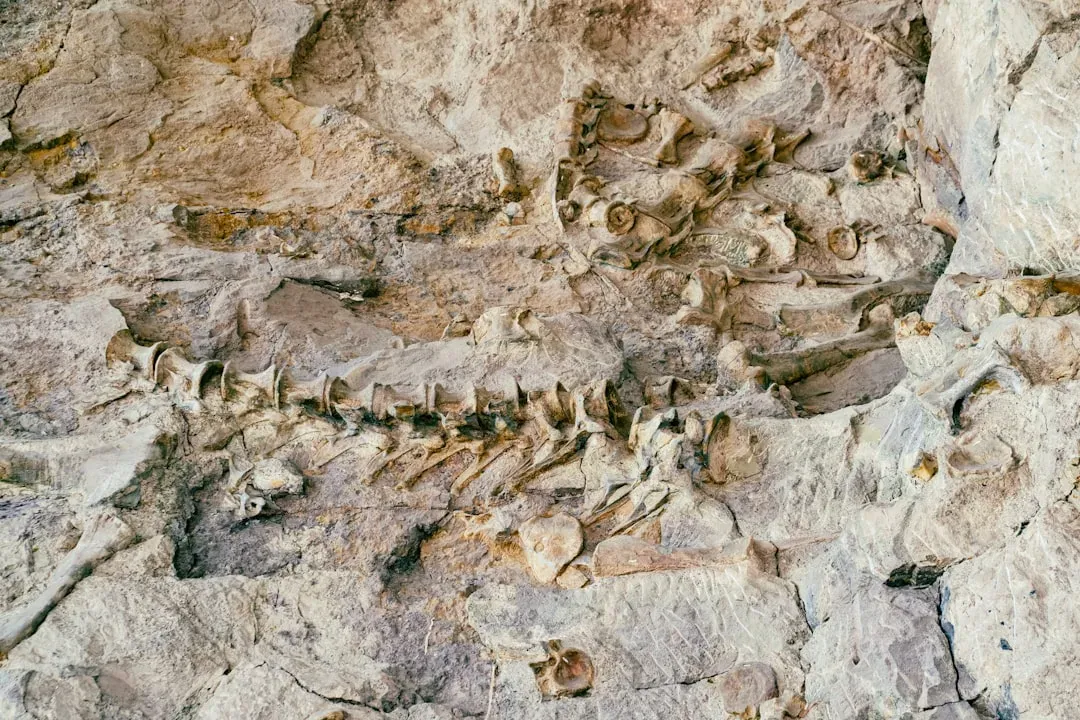
Fossils squashed by sediment over millions of years can look genuinely alien, and paleontologists usually know how to correct for it. This one broke the script. Found in heavily compressed rock, its long bones looked warped – but even after digital 3D “uncrumpling,” the proportions stayed strange: an extremely elongated lower leg paired with a shortened upper body.
Skeptics assumed it was just a squashed member of a known species, so researchers ran taphonomy models simulating exactly that kind of distortion. The models failed. Certain ankle and knee angles simply resist that type of deformation, which leaves a genuinely uncomfortable possibility on the table: the weird proportions might be real, not a geological accident. No known lineage from that time and place has those limb ratios, so it stays stuck between “new species” and “old species mangled by time.”
#3 – The Lab Skeleton That Might Be a Frankenstein… or Might Not
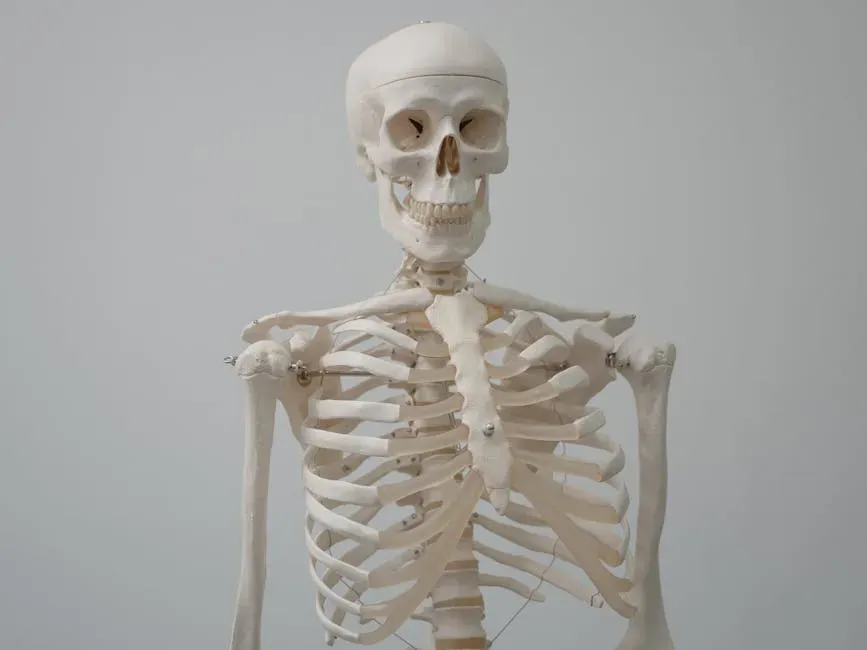
Every anatomist’s nightmare is a composite specimen – bones from different animals accidentally wired together decades ago and mislabeled as one individual. This mid-sized quadruped has that exact vibe. The front half matches a known herbivore family cleanly. The back half doesn’t match anything close.
The pelvis and tail carry joint structures that belong on a completely different branch of the family tree, with attachment sites suited to a more agile, possibly predatory build. It would be an easy dismissal – except microstructure analysis shows consistent bone density, growth rings, and wear patterns across the entire skeleton, the kind of consistency you’d only expect from a single living individual. Until someone proves otherwise or finds a second matching specimen, this one stays too internally consistent to dismiss and too strange to publish as a known species.
#2 – The Coastal Giant That Breaks the Size Rules
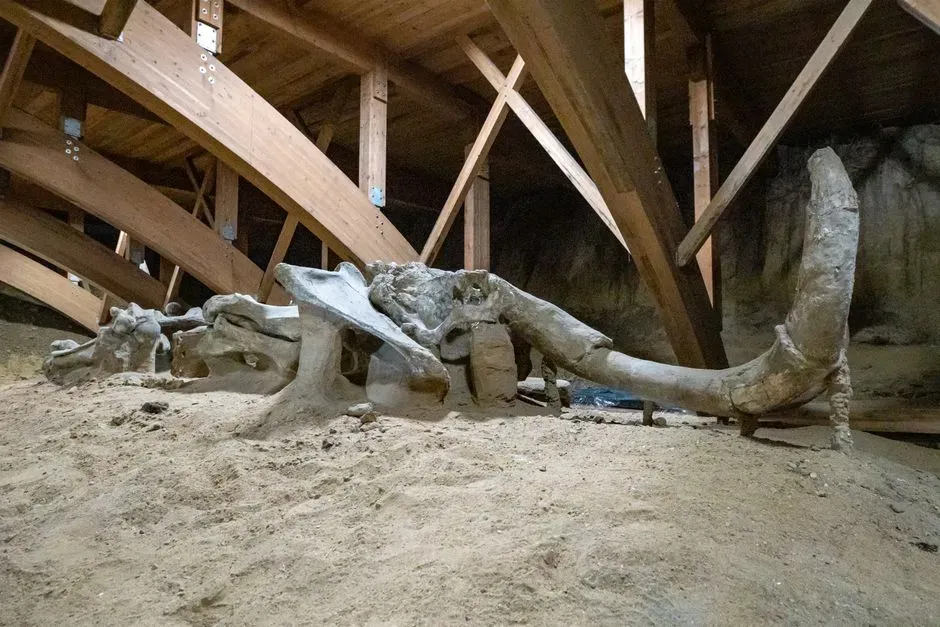
Coastal caves occasionally produce big bones, but this specimen pushes past what regional megafauna should look like. Its long bones suggest an animal larger than known whales, large land mammals, or big flightless birds from the area, yet none of the structural details line up with any of them.
The vertebrae are thick and clearly weight-bearing, but the joints allow a strangely wide range of motion for something this massive. Biomechanical stress models suggest an animal that distributed its weight in an unfamiliar way, possibly semi-aquatic or partly buoyed by water. But the limb anatomy and rib curvature don’t match classic semi-aquatic giants like hippos or ancient marine reptiles either, which leaves it too big and too structurally odd to slot into anything already on the books.
Why It Stands Out
- Long bones point to an animal larger than known regional whales, land mammals, or flightless birds
- Vertebrae are thick and weight-bearing, yet joints allow unusually wide motion for the size
- Biomechanical models hint at an unfamiliar weight distribution, possibly semi-aquatic
- Limb anatomy and rib curvature rule out classic semi-aquatic giants like hippos or marine reptiles
#1 – The “Almost Human” Skeleton Anatomists Refuse to Name
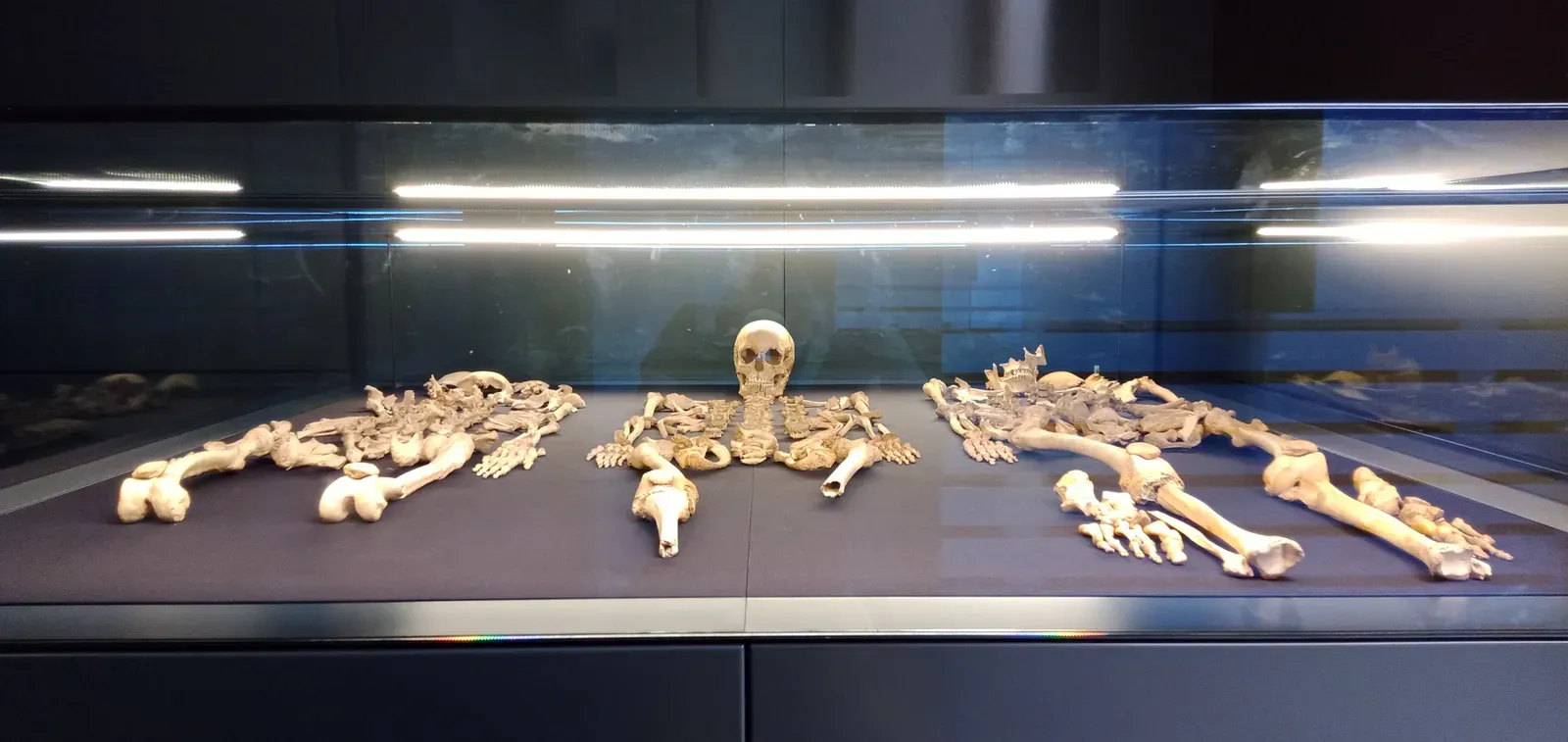
The most controversial entry on this list isn’t the strangest-looking. It’s the one that hits closest to home. In a restricted-access collection sits a partial skeleton anatomists reluctantly describe as “almost human.” The pelvis, spine, and legs show a convincingly upright, bipedal build, and the hands have opposable thumbs with joint geometry suited to precise, controlled grips.
Then you reach the skull, and everything gets complicated. Cranial capacity falls short of Homo sapiens, but the internal bony landmarks don’t match earlier human species cleanly either. The face is flatter than most archaic hominins, yet the teeth and jaw mechanics diverge in their own direction, and the genetic material recovered so far is too degraded or contaminated to settle anything. The most honest anatomists working on it will tell you plainly: this skeleton does not map with confidence to any named hominin species – it might be a population we’ve only glimpsed in fragments, or a branch that walked upright, used its hands skillfully, and simply never made it into a textbook.
The Bottom Line
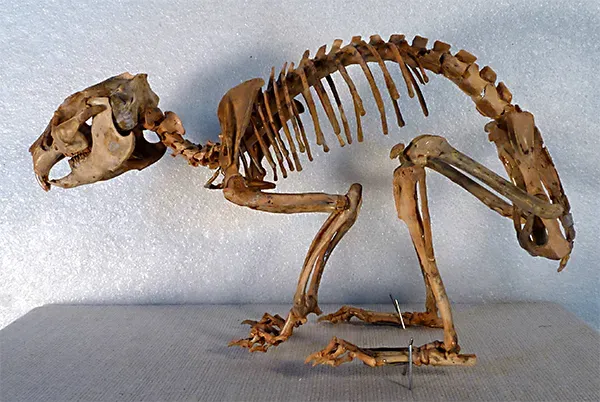
Say “skeletons no one can name” out loud and people jump straight to aliens and government cover-ups. The real answer is quieter and, honestly, more unsettling: our anatomical and fossil record is packed with specimens that just don’t fit the boxes we’ve already built. Some are almost certainly extreme individual variants or undiagnosed pathologies. Others are distorted, poorly preserved, or possibly even mixed up in storage decades ago.
But a stubborn handful of these remain internally consistent, carefully measured, and still unmatched anywhere in the species catalog. Anatomists are conservative by training – they’d rather stamp something “indeterminate” for fifty years than rush a name that turns out wrong. I think that caution is exactly the point: it’s proof the system is working honestly, not proof that science has failed.
Pretending everything already has a tidy label isn’t rigor. It’s laziness dressed up as certainty. So which unsettles you more – the ones that are probably just strange individuals, or the ones that might be whole lineages we’ve never properly met?