
Pause for a second and notice your experience right now. It feels like one smooth, flowing movie of “you,” moving effortlessly from this moment to the next. But a growing body of work in neuroscience and philosophy suggests that this feeling of ongoing continuity is not what it seems. Instead, your brain may be piecing together brief, disconnected “frames” of awareness and then retroactively smoothing them into a seamless narrative.
This is the core idea behind the temporal binding hypothesis: that your nervous system knits together events that happen close in time, and this stitching process is what gives rise to your sense of a single, persisting self. That view is both scientifically intriguing and personally unsettling. If it’s right, then the “you” who began this paragraph is already gone, and what remains is a story that your brain is telling itself about how it all hangs together.
What Temporal Binding Actually Means
Temporal binding is the tendency of the brain to pull together separate events that happen within a short time window and treat them as a single, unified experience. Instead of registering a strict timeline of milliseconds and micro-events, your brain seems to operate with a kind of temporal glue, merging sensations and actions that are near in time into one coherent “now.” In experiments, people often misperceive when they acted versus when something in the world changed, as if the brain is shifting timestamps to create a better story of cause and effect.
Crucially, this binding doesn’t just clean up noisy data; it appears to change what we consciously experience. When your action and its outcome are pulled together in time, they feel more tightly linked, and your sense of having willed the outcome gets stronger. That means your awareness of what happened and when is not a neutral readout of the world. It is already a construction, a reinterpretation of events through the lens of temporal binding, and that has serious implications for what you call “me, moving through time.”
The Brain Works in Frames, Not a Smooth Video
We like to imagine consciousness as a high-definition livestream, but biologically it looks more like a flipbook of discrete snapshots. Neural processing happens in rhythmic bursts and cycles, from brain waves in the tens of times per second range, up to broader integration windows lasting a few hundred milliseconds. Within these windows, incoming information gets gathered, processed, and then “published” into conscious awareness as a moment that feels unified.
Several lines of research suggest that what you experience as “the present moment” may actually be a chunk of roughly a fraction of a second that your brain has bundled together. Instead of a perfectly continuous flow, you get a sequence of such chunks, each one a stitched-together package of sensory input, thoughts, and intentions. Once a chunk is formed, it already contains a smoothed story of what just happened, even if the raw inputs arrived at slightly different times. That behind-the-scenes stitching is invisible to you, but it defines what your subjective life feels like.
How Temporal Binding Shapes Your Sense of Agency
One of the most striking effects of temporal binding shows up in your sense of agency – the feeling that “I did that.” In lab tasks, when people press a button that causes a tone or a light, they often report the action and the outcome as happening closer together in time than they really did. The brain appears to compress the gap between intention and effect, as if it is aligning the internal sense of will with the external consequence to preserve a coherent story of control.
This matters because your feeling of being a continuous self is deeply tied to the belief that you are the author of your actions. If your brain is quietly shifting the apparent timing of events to strengthen the impression of “I caused this,” then your experience of agency is partly a post-hoc reconstruction, not a raw, real-time signal. The smoother that reconstruction feels, the more you believe in a solid, ongoing “I” – but that “I” may be just the hero character in a narrative your brain keeps editing on the fly.
The Illusion of a Continuous Self
If your brain is constantly stitching together brief, isolated windows of awareness, then the continuity you feel across time is more like a special effect than a fundamental property of reality. Each moment of consciousness contains traces of the immediate past and expectations about the near future, giving it the flavor of an unbroken stream. But underneath that feeling is a series of discrete constructions, each updated and reassembled based on new information and ongoing neural activity.
The uncomfortable implication is that there may not be a single, persisting entity riding through time from birth to death. Instead, there is a rapidly updating process that keeps re-identifying with its own previous states, much like a TV series that treats each episode as part of the same story even though each one is produced separately. The sense that “I am the same person I was five minutes ago” might be less a metaphysical fact and more a convenient story that today’s brain-state tells about yesterday’s brain-state.
Memory: The Brain’s Favorite Editing Tool
Memory plays a starring role in reinforcing this illusion of continuity. You don’t just recall events as they happened; you reconstruct them each time, integrating new beliefs, emotions, and context. That reconstruction tends to smooth over gaps, inconsistencies, and abrupt shifts in identity, presenting you with a clean narrative arc instead of a messy scrapbook of fragments. It is like your brain is constantly rewriting earlier chapters so that the current version of “you” makes sense.
Temporal binding feeds directly into this process by defining which events get grouped as part of the same moment and which get separated as before or after. What falls in the same temporal window often becomes a single memory unit, while what falls outside may get blurred, forgotten, or reattached later in a different form. Over years, these fine-grained stitching operations accumulate, and what you end up calling “my life story” is less a raw recording and more a heavily edited film that always favors cohesion over accuracy.
On a personal level, I’ve noticed this in something as simple as telling an old travel story. Each time I retell it, the emotional beats stay consistent, but the exact details drift and tighten, as if my brain is optimizing the narrative structure more than preserving exact history. It feels continuous, but in reality, each retelling is a fresh construction anchored to a skeleton of partial memories – and that’s exactly the kind of thing temporal binding makes easy.
When the Illusion Breaks: Clues from Disorders and Disruptions
One way to see how constructed your sense of continuity is, is to look at what happens when the stitching process falters. In certain neurological and psychiatric conditions, people report feeling detached from their own actions, or experiencing time as fragmented and disjointed. Their sense of a stable, ongoing self can weaken or fracture, suggesting that the underlying glue that most of us take for granted can, in fact, come apart under the right conditions.
Even in everyday life, disruptions to normal temporal binding can be felt during shock, trauma, intense fatigue, or altered states of consciousness. Time can seem to slow down or speed up, events may feel unreal or oddly distant, and the narrative of “I was just here, then this happened, then that” stops fitting neatly. These breakdowns offer a sobering hint that your usual feeling of smooth continuity is not a guaranteed feature of the mind, but a delicate construction that can glitch, stretch, or even temporarily vanish.
Living with the Idea That the Self Is a Construct
So what do you actually do with the claim that your continuous self is an illusion created by temporal binding? For some people, this view feels liberating. If the self is not a fixed, unchanging entity but a constantly updated process, then there is more room for growth, reinvention, and compassion for your past selves. You can think of earlier versions of you as different configurations of the same underlying system, not as final verdicts on who you “really” are.
For others, this idea can feel destabilizing or even threatening, as if it undermines responsibility, meaning, or authenticity. Personally, I find it helpful to treat the self like a user profile in a complex app: it’s not a literal thing inside the machine, but a useful interface that organizes many moving parts into something you can work with. Temporal binding is one of the key design tricks that keeps the interface feeling simple and continuous, even though the underlying processes are anything but.
Conclusion: A Story You Can Still Take Seriously
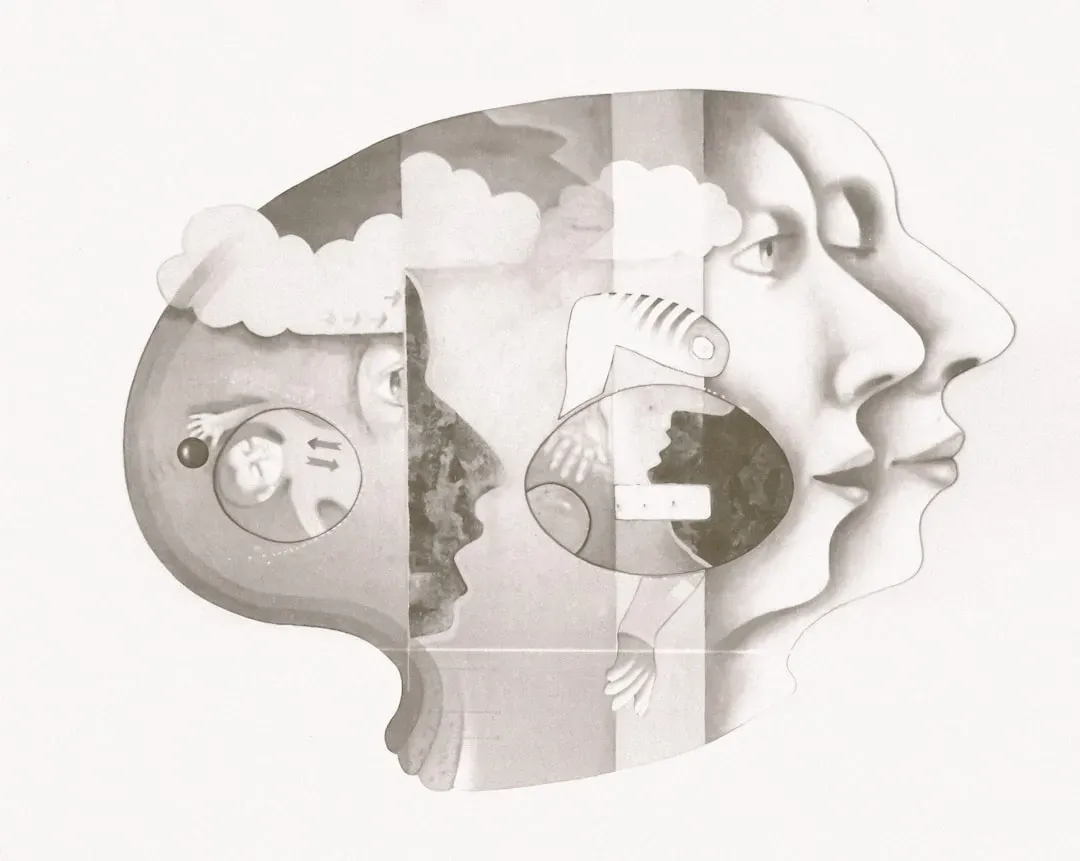
If the temporal binding hypothesis is on the right track, then the self you feel so deeply attached to is not a solid object moving smoothly through time, but a stitched-together sequence of brief awareness moments, retrofitted into a story of continuity. That does not mean your experiences are fake or meaningless; it means that their unity is achieved through construction rather than given by default. Your brain is less a passive camera and more an active editor, cutting, splicing, and rearranging to create something that hangs together as a life.
My own opinion is that recognizing this illusion does not cheapen the self – it makes it more precious and more flexible. If you are, in large part, a story your brain keeps telling, then you have at least some power over how that story is interpreted, updated, and extended. You are not a fixed essence trapped in time; you are an ongoing narrative woven out of moments that never truly touch, yet somehow feel continuous. Knowing that, what kind of story do you want your brain to keep stitching together next?