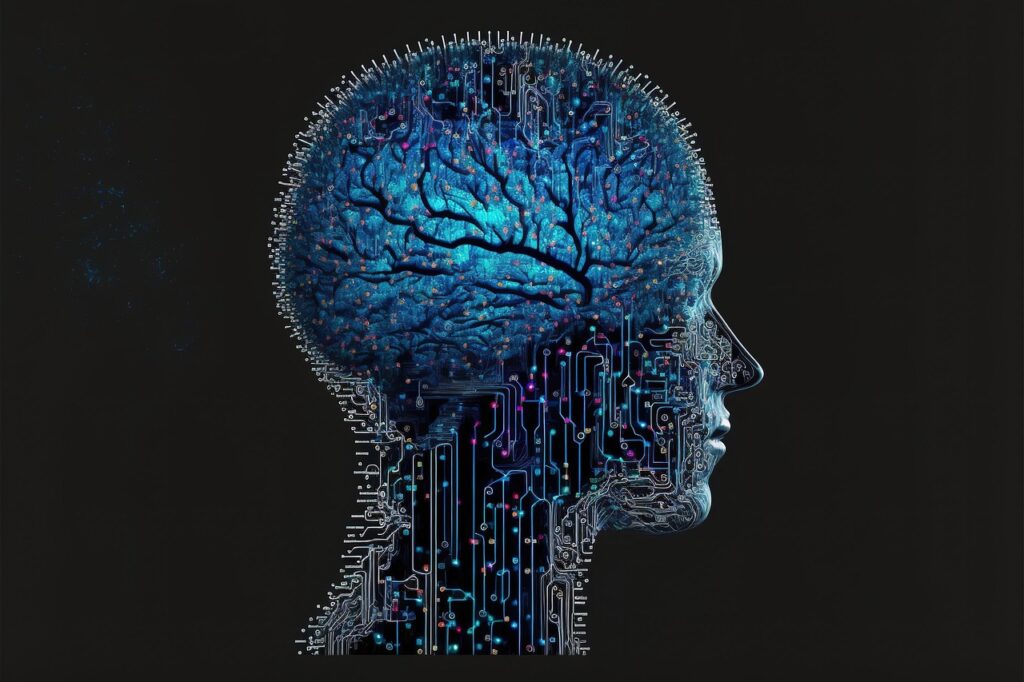

You know that weird jolt you feel when someone across the room looks annoyed, even if they do not say a word? Your brain locks onto that angry expression almost instantly, often before you have even fully registered anyone else in the crowd. It is not your imagination, and it is not because you are “too sensitive.” It is because your mind is running very old software that was shaped long before cities, smartphones, or social media ever existed.
Evolutionary psychology suggests our brains are tuned to treat anger like a flashing red warning sign. Long before there were laws, police, or HR departments, an angry face could mean danger, conflict, or even death. So our ancestors’ brains evolved to spot that signal fast. In many ways, we are still walking around with Stone Age threat detectors plugged into a modern world – and understanding that mismatch can be both unsettling and strangely comforting.
The Brain’s “Threat Radar” Is Older Than Civilization

Imagine living in a small band of hunter‑gatherers where a single bad conflict could split the group, cost you allies, or end in violence. In that world, missing the early signs of anger was not just awkward, it could be fatal. The human nervous system adapted by building a kind of threat radar that gives priority access to anything that even hints at danger – including angry faces.
Deep in the brain, structures involved in emotion and threat detection react extremely quickly to potential danger cues. Those systems do not wait for careful reasoning; they act more like a smoke alarm that goes off at the first hint of trouble. A scowling brow or tightened jaw can trigger a rapid cascade of attention and arousal, sometimes before you are consciously aware of what you are seeing. Civilization is new; that reflex is ancient.
Why Angry Faces Pop Out Faster Than Happy Ones

When researchers show people arrays of faces – some happy, some neutral, some angry – participants tend to notice the angry faces more quickly. The idea is that negative, potentially threatening expressions grab attention in a way that positive ones usually do not. From an evolutionary perspective, this makes perfect sense: missing a friendly signal costs you an opportunity, but missing a hostile signal could cost you your life.
This does not mean we are “naturally negative” or doomed to fixate only on bad things. Rather, the brain uses a kind of survival math: prioritize what can hurt you first, then sort out the rest. Anger signals disagreement, potential aggression, or social rejection, all of which mattered a lot in small, interdependent groups. So our visual and emotional systems developed to treat an angry face almost like a siren on the horizon – hard to ignore, even if you try.
Small Groups, Big Stakes: The Social Survival Logic

For most of human history, people lived in tiny bands where you could not simply move to another city or switch friend groups if things got tense. Your survival depended directly on the mood and attitudes of the dozen or so people around you. In that setting, noticing who was upset with whom – and especially who might be upset with you – was not gossip, it was strategy.
An angry face was like a social weather report: storm clouds forming, better pay attention. If a powerful or influential group member looked angry, it might mean loss of status, resources, or even exile. Being tuned into anger likely helped our ancestors navigate alliances, avoid fights they could not win, and repair relationships before they broke completely. Today, when your stomach drops because your boss frowns during a meeting, that is the same ancient logic still running in the background.
The Amygdala: Your Built‑In Early‑Warning System

At the core of this fast response is a small but crucial brain structure often linked with fear and threat processing. It acts like a hypervigilant gatekeeper, scanning incoming sensory information for anything that looks dangerous. Facial expressions – especially angry or fearful ones – are one of its favorite inputs, because they often signal social or physical risk.
What is striking is how quickly this system can react, sometimes even when the image is flashed so briefly you do not consciously register it. That suggests part of your brain is evaluating faces on a rapid, almost automatic track: safe, unsafe, neutral. When it flags an expression as potentially hostile, it can nudge your attention, quicken your heartbeat, and prime your body to respond, all before your “thinking brain” has weighed in. Civilization may have given us etiquette and conflict-resolution training, but this primitive alarm system is still very much online.
Anger as a Negotiation Tool, Not Just a Threat

Here is where it gets more nuanced: anger is not only about physical danger. In social species like ours, anger can function as a negotiation tactic – its message is often something like “you crossed a line” or “I am not okay with this deal.” From an evolutionary angle, showing anger can help a person push for better treatment, fairer resource sharing, or respect, without necessarily resorting to violence.
If anger works as a social bargaining tool, then it benefits everyone to detect it early. The sooner you notice someone is angry, the sooner you can decide: back down, stand firm, compromise, or disengage. Spotting anger fast allows conflicts to be recalibrated before they escalate. That means our hair-trigger sensitivity to angry faces is not just about avoiding harm; it is also about navigating complex, shifting negotiations over status, fairness, and boundaries.
Modern Life, Ancient Wiring: When the System Misfires

The twist is that we are using this old threat-detection wiring in a world it was not designed for. Today, we see hundreds of faces a day – on screens, in crowds, at work – far more than our ancestors ever did. Social media, video calls, and big organizations mean our brains are constantly bathed in micro‑expressions, ambiguous looks, and half‑seen reactions, and that ancient radar tends to overreact.
This can feed anxiety and conflict. A coworker’s neutral face on a video meeting may look slightly annoyed because of lighting or fatigue, but your brain still flags it as danger. You might ruminate for hours about a short reply from a friend, reading it as anger when it is really just busyness. The system that once helped our ancestors survive tight‑knit groups can turn into a source of chronic stress in today’s overstimulating environment.
Gender, Culture, and Power: Who Gets Read as “Angry” Faster?

Although the basic sensitivity to angry faces seems widespread, who we see as angry – and how we interpret that anger – is heavily shaped by culture, gender expectations, and power dynamics. People from certain groups may be stereotyped as more aggressive, which can make others falsely perceive anger in their neutral expressions. That means our ancient pattern‑recognition system is now mixing with learned biases in complicated ways.
There is also a power angle: noticing anger in a boss, parent, or authority figure tends to feel more urgent than noticing anger in someone with less influence over your life. From a survival standpoint, that is predictable – anger from powerful individuals has always carried bigger consequences. But in modern societies, this can reinforce unhealthy hierarchies, where some people constantly monitor and appease the moods of those above them, while their own anger goes ignored or minimized.
Can We Outsmart Our Stone Age Alarm System?
Here is the good news: we are not prisoners of our evolutionary history. Knowing that your brain is wired to over‑prioritize angry faces gives you a tiny bit of distance from the reaction. When you catch yourself spiraling because of a frown or a short message, you can pause and think, “Okay, this might just be my ancient threat radar overdoing it.” That simple reframe does not turn the alarm off, but it turns the volume down.
On a deeper level, emotional skills like self‑awareness, empathy, and clear communication are how we “patch” this old software for a modern world. Asking for clarification instead of assuming hostility, checking your interpretations against reality, and recognizing when your body is in threat mode even though you are physically safe – these are ways of updating the system without ripping it out. We cannot change that our ancestors survived by spotting anger quickly, but we can choose how we respond once we notice it.
Conclusion: Our Fear of Angry Faces Is Rational, but Not Always Right

I think we underestimate how much of our daily stress comes from this deep, ancient fear of other people’s anger. On one hand, it is hard not to respect it: this bias helped countless generations avoid fights, mend relationships, and stay alive in unforgiving environments. Noticing angry faces faster is not a flaw, it is a survival feature that did its job so well we are still here to talk about it.
On the other hand, treating every frown like a life‑or‑death signal in the twenty‑first century is exhausting and, frankly, unnecessary. My own view is that emotional maturity in our era means learning to work with this reflex instead of letting it run the show – acknowledging the fear, checking the facts, and sometimes daring not to panic when someone simply looks annoyed. Our brains may be built for a world of spears and campfires, but our choices do not have to be. The next time an angry face grabs your attention, will you let your Stone Age alarm system decide what happens next, or will you take the wheel?