
There’s a very specific kind of tension that shows up when a room suddenly goes quiet. You can feel it in your shoulders, in your stomach, even in the way you start overthinking your last sentence. Nothing actually happened, but your body acts like something did. That jolt of unease is not random, and it is definitely not just you being awkward.
What you are feeling is a modern echo of something very old: a nervous system that evolved to treat sudden silence as a potential warning. Long before open-plan offices and group chats, sudden quiet could mean predators nearby, an approaching storm, or a threat the group had just detected. Our brains still run that ancient software, even when the “danger” is just a lull in conversation at dinner.
When Silence Meant Danger, Not Awkwardness

Imagine a group of early humans gathered around a fire, talking, laughing, and moving about. Suddenly, the birds stop singing, the group goes quiet, and everyone freezes for a second. That silence was not socially uncomfortable; it was a survival signal. In the wild, many animals go still and quiet when they sense danger, and humans learned to pay attention to that pattern.
Our nervous systems are tuned to changes, not constants. A sudden drop in sound often meant something in the environment had shifted and could be dangerous. Today, when a meeting, classroom, or party drops into abrupt silence, your brain is still running that ancient calculation: something changed, pay attention, maybe protect yourself. Your mind calls it awkwardness, but your body is treating it as a mini alert.
The Brain’s Threat-Detection System Never Retired
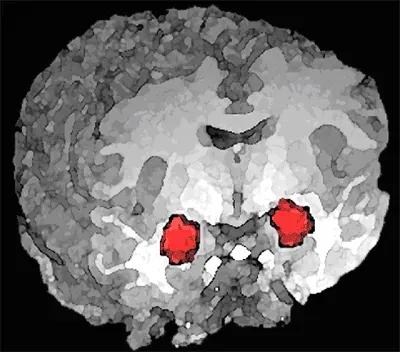
Under all our modern habits sits a brain that is obsessed with one main task: stay alive. The parts of the brain responsible for detecting threats, especially deeper structures like the amygdala, are built to react quickly to possible danger before you have time to think it through. Sudden quiet in a previously noisy environment is exactly the kind of shift that gets flagged as suspicious.
Because this system is so fast and automatic, you often feel unease before you can explain it. That weird flutter in your chest, the micro-tensing of your muscles, the little voice asking if you said something wrong – these are downstream effects of a brain that has just noticed a drop in noise and decided to stay on high alert. Your conscious mind tries to make sense of it socially, but the original trigger is biological.
Social Animals Hate Being Out of Sync

Humans are intensely social animals, and we’re constantly tracking what everyone else is doing, often without realizing it. When a group suddenly goes quiet, it creates a kind of social mismatch: you might still be in “talking mode,” while everyone else has switched to “silent mode.” That mismatch can feel a bit like stepping off a curb you did not see – you were expecting one thing, and your body gets another.
On an evolutionary level, being in sync with your group was a matter of safety and belonging. If everyone stopped talking because they sensed a threat, and you kept loudly chatting, you were more likely to be noticed by predators or seen as unreliable by your group. That old pressure to match the group’s behavior shows up now as a jolt of embarrassment or anxiety when you realize you are the only one still speaking or laughing after a sudden hush.
Silence Forces Your Brain to Fill In the Blanks

When sound disappears, your senses and mind do not simply relax – they start guessing. In a noisy environment, your brain has more data to work with. In a suddenly quiet one, there is less information, but your survival wiring still wants to predict what might be happening. The result is that your mind rushes in to fill the silence with possibilities, and those possibilities tend to be negative when you are feeling vulnerable.
This is why a sudden pause in conversation can make you instantly replay what you said, assuming you made a mistake or upset someone. In reality, the group may have just run out of things to say at the exact same moment. But because our brains evolved to treat unknowns as potentially dangerous, your inner narrative skews toward self-blame or fear. The silence becomes a blank canvas, and your worries grab the paintbrush.
Group Silence and the Echo of Predators

Out in nature, noise usually signals normal life: birds calling, insects buzzing, animals moving. Predators, on the other hand, often move quietly, and prey species that detect danger tend to freeze and go silent. Early humans learned that when the forest went quiet, it might mean a lurking threat, even if they did not see it. That association between sudden silence and hidden danger still lives in our nervous system.
Now translate that into a modern setting: the hum of conversation at a café suddenly dips, or a group of friends all stop talking at the same time. Nothing is stalking you in the bushes, but your body reacts as if something similar might be happening. A rush of alertness, a shift in breathing, and a spike in self-consciousness are all echoes of a time when catching that signal a second earlier could have been the difference between life and death.
Modern Anxiety Riding Ancient Wiring

Our social anxieties love to piggyback on ancient survival systems. The same body that once helped your ancestors detect predators now helps you detect possible social rejection, embarrassment, or conflict. A sudden quiet moment becomes a canvas for modern fears: maybe they are judging you, maybe you overshared, maybe you are not welcome here. The brain’s old threat systems do not care whether the danger is physical or emotional; they just react.
In a world where most real threats are not wild animals but social or psychological stressors, it makes sense that our unease shows up more in quiet rooms than in dark forests. The wiring did not change, but the environment did. Your discomfort in a sudden silence is a kind of misfired survival reflex, and honestly, it is surprisingly logical once you see the code underneath. The reaction is ancient; the story you tell yourself about it is very 2026.
Learning to Work With, Not Against, Your Instincts
Here is the useful part: once you understand that your unease in sudden silence is a very old system trying to protect you, it stops feeling like a personal flaw. Instead of beating yourself up for feeling awkward, you can see it as your body running outdated but well-intentioned software. That shift alone can soften the edge of the discomfort and bring a bit of humor into the moment.
Personally, the day I realized my “cringe” moments were just my nervous system double-checking for tigers was the day I started caring a lot less about them. You do not have to override the instinct; you just have to update the story you attach to it. The silence is not proof you messed up – it is just your brain doing what it has always done and sometimes overreacting. The real question is whether you let that ancient echo run your social life, or whether you treat it as a background noise you can notice and gently ignore.
Conclusion: Awkward Quiet as a Glitch in an Old Survival System

If you strip this whole thing down to its core, that strange prickly feeling when everyone suddenly goes quiet is not a character flaw or a sign you are bad at social life. It is the residue of an ancient survival system that equated sudden silence with danger and group stillness with a need to prepare. We have carried that sensitivity into offices, classrooms, and group chats, where the biggest threat is usually bruised ego, not actual predators. In that sense, our discomfort is both slightly outdated and completely understandable.
My honest opinion is that we should stop treating these moments as evidence something is wrong with us and start treating them as proof that our brains are still astonishingly loyal to their original mission: keep us safe at any cost. The unease you feel is not weakness; it is overprotectiveness. Once you see it that way, a quiet room becomes less of an accusation and more of a reminder that you are built to survive, even in situations that only feel dangerous in your head. The next time a conversation dies and the silence feels heavy, maybe ask yourself not what you did wrong, but which ancient part of you just woke up – would you have guessed it was the same part that once listened for predators in the dark?