

You know that feeling: the street is quiet, your footsteps echo, and suddenly you just have to glance over your shoulder. Nothing obvious triggered it, yet your body reacts as if something might be there. It can feel irrational, even a little embarrassing, but it is one of the most deeply human things you do. This habit is not just about fear; it is your brain, your senses, and millions of years of evolution working together to keep you alive. When you understand what is really happening inside you in those moments, the whole experience starts to feel less like paranoia and more like a finely tuned early‑warning system you inherited from your ancestors.
Your Brain Is Wired for Survival, Not Comfort
When you walk alone at night, your brain is not trying to make you feel safe; it is trying to keep you alive. Deep in your nervous system, older survival circuits constantly scan for potential threats, especially in conditions where predators or attackers would historically have had the advantage: darkness, isolation, and limited escape routes. You feel this scanning as a vague unease that pushes you to check behind you, even when nothing looks obviously wrong. You instinctively overreact because, from an evolutionary perspective, a false alarm costs you almost nothing, while a missed threat could cost you everything. Looking back three times on an empty street might make you feel silly, but your survival wiring treats that as a cheap price for extra information. Your comfort is negotiable; your survival is not.
The “Better Safe Than Sorry” Bias in Your Mind
As you walk, your brain constantly makes quick calculations: how risky is this situation, and how sure are you about what is happening around you? At night, your certainty drops because your senses are limited, so your brain quietly shifts into a “better safe than sorry” mode. That is when you start hearing small sounds more sharply and noticing vague shapes more intensely, as if your mind is turning up the contrast on the world. Looking behind you is your brain’s way of reducing uncertainty as fast as possible. You briefly trade forward progress for a quick 360‑degree update, like a driver checking their rearview mirror on a foggy road. Even if you see nothing at all, the act of checking gives your brain new data, and that alone can dial your anxiety down a notch – at least for a few steps.
How Darkness Hijacks Your Senses
In the dark, your eyes stop being your dominant sense in the way you are used to during the day. Your vision becomes grainier, slower, and less reliable, so your brain gives more weight to every rustle, echo, and distant footstep. That is why a small sound behind you can feel oddly amplified and why your first instinct is to turn your head and look. Your imagination also fills in what your eyes cannot see. When a shadow flickers or you hear something subtle behind you, your mind quickly sketches in the worst‑case possibilities to prepare you for danger. Turning around to look is your way of forcing reality to interrupt that mental horror movie: either there is something there and you respond, or there is nothing and you get a brief sense of relief.
The Ancient Predator Problem You Still Carry
Even though you live in a modern world of streetlights and smartphones, your nervous system was built in a world where predators often attacked from behind or from the edges of your awareness. You carry that history in your body. When you walk alone at night, your posture, your pace, and your urge to look back all echo behaviors that once helped your ancestors survive in forests, plains, and narrow paths. You do something similar to what many animals still do: you periodically check your rear, widen your scanning area, and shorten the time you spend with your back completely “blind.” You may not think of yourself as prey, but your survival systems are humble enough to act as if you could be, just in case. That quiet humility is part of why you are here at all.
Your Inner Alarm System: How Anxiety Keeps You Moving
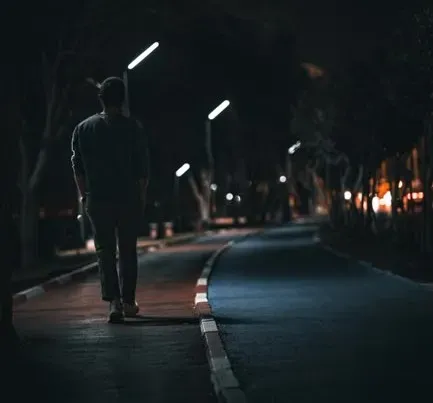
The tension you feel walking alone at night is not just vague fear; it is a finely tuned alarm system that runs automatically in the background. Your heart may beat a little faster, your muscles stay slightly more tense, and your breathing shifts without you consciously directing any of it. The urge to look behind you is one of the simplest actions that system can trigger to get you more information with almost no effort. Sometimes this alarm system overshoots, and you end up feeling jumpier than the situation truly warrants. But even then, it is working toward a clear purpose: to keep you ready to react. You might notice you walk a bit faster, stay closer to well‑lit areas, or mentally rehearse what you would do if someone appeared behind you. All of that is your anxiety quietly rehearsing safety plans, not just tormenting you for fun.
Stories, News, and the Fear You Carry in Your Head
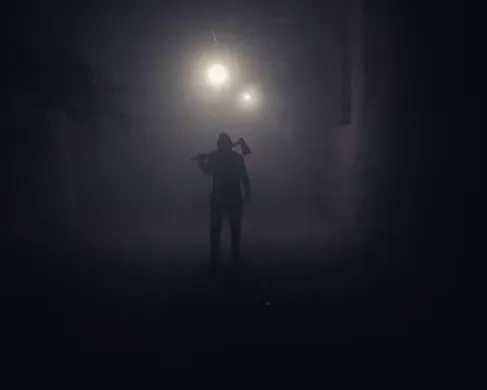
Long before you ever walked alone at night, you learned stories about what can happen in the dark. News reports, movies, true‑crime podcasts, and warnings from family all feed into your mental map of danger. So when you finally find yourself on that dim, quiet street, you are not just reacting to the present moment; you are reacting to everything you have ever heard about what “could” happen there. That mental library makes you more cautious, which can be useful, but it also means your brain sometimes treats low‑probability risks as if they are right behind you. You might replay a scary story as you walk or picture a scenario you once saw in a film. Turning around to check behind you becomes a way to test whether the story in your head is actually playing out – or whether, this time, it is just your mind rehearsing old fear scripts again.
The Social Awareness You Learn from Childhood
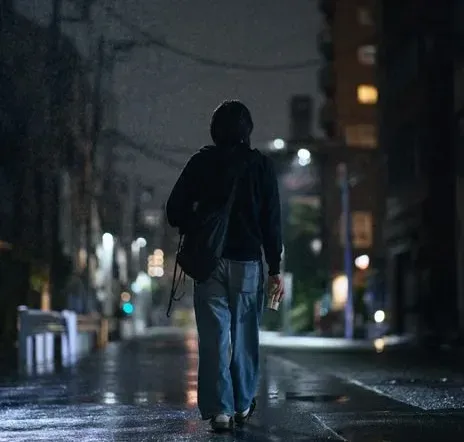
You are not only wired by evolution; you are also trained by experience. From a young age, you are taught to be careful in certain situations – never walk alone in some places, watch who is around you, stay alert in the dark. Over time, that social training quietly embeds itself in your habits, so your body reacts automatically before you have even formed a conscious thought. If you have ever heard footsteps behind you, seen someone speed up to match your pace, or had a genuinely uncomfortable encounter, your brain remembers it very clearly. Later, even in safer situations, your nervous system pulls those memories forward and nudges you to check behind you again. You are not just reacting to the street you are on; you are reacting to every street that ever felt wrong to you.
Control, Visibility, and the Need to “Stay One Step Ahead”
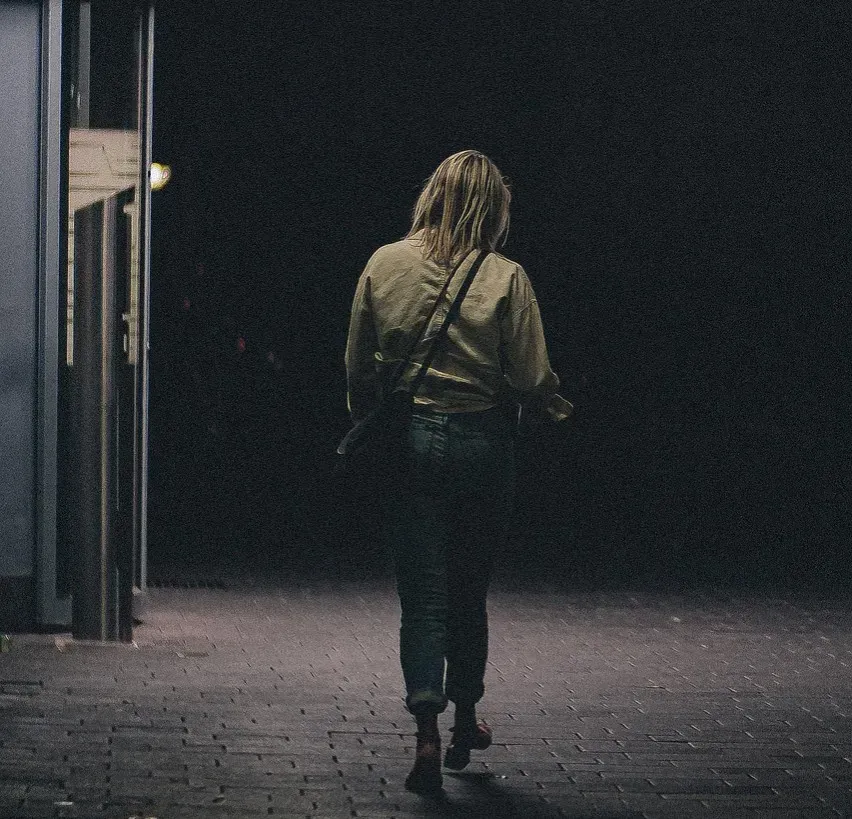
When you walk alone at night, one of the most unsettling feelings is not knowing what is behind you. That sense of being exposed can make you feel as though you are giving up control. Looking back is your way of reclaiming a bit of that control by bringing the unknown into your field of view, even if only for a second. It is like turning a mystery into something you can name and track. You might also notice that once you see a person behind you, you keep tabs on them more closely. You may adjust your route, cross the street, or change your pace so you no longer feel surprised by their position. In those moments, your instinct to look behind you is less about fear of the dark and more about managing the situation strategically, staying a mental step ahead instead of just hoping nothing happens.
How You Can Work With This Instinct Instead of Fighting It

The urge to look behind you will probably never disappear, and it honestly does not need to. Instead of treating it as an embarrassing quirk, you can treat it as useful input – one signal among many that helps you stay aware. When it shows up, you can let yourself check your surroundings calmly, then use that information to decide what to do next instead of spiraling into worst‑case thinking. You can also stack other habits on top of this instinct so it becomes part of a broader safety routine. You might choose better‑lit routes, keep your phone accessible but not so distracting that you lose awareness, share your live location with a trusted person, or walk more confidently and deliberately. The instinct to look behind you becomes just one piece of a smarter, more intentional way you move through the world when you are alone at night.
Conclusion: A Small Turn of the Head, A Big Story of Survival

Next time you find yourself glancing over your shoulder on a quiet street, you can see it differently: not as irrational fear, but as a tiny echo of a long history of human survival. Your body and brain are doing what they were built to do – collect information, reduce uncertainty, and keep you alert in situations where the stakes could be high, even if nothing bad actually happens. You do not have to love the feeling, but you can respect what it is trying to do for you and shape how you respond to it. In that quick turn of your head, there is a whole story about evolution, memory, culture, and your own personal history woven together. Knowing that, how will you feel the next time you instinctively look back into the dark?