

You probably know that sinking feeling: you look around at your life, at the news, at the endless loop of work and distraction, and a quiet thought slips in that everything might be, on some level, pointless. You might call it depression, anxiety, existential dread, or just a bad night, but it can feel less like a glitch and more like a hard truth your mind refuses to unsee. Instead of treating these states as simple malfunctions, you can actually take them as serious signals, like your inner dashboard flickering with warnings about how you’re living, what you believe, and what you expect from the world. You live in a universe that, as far as science can currently tell, does not come pre-packaged with meaning, purpose, or a happy ending. You are a self-aware animal on a small rock in a vast and indifferent cosmos, with a brain wired for survival, social belonging, and prediction. When that brain stares too long into the abyss and sees no instructions, no guaranteed justice, and no cosmic referee, the resulting nausea can feel like pathology. But what if it’s actually an accurate reading of the situation – and the next move is not to numb it away, but to work with it?
You Live in a Universe That Doesn’t Come With Instructions

If you zoom out far enough, your life looks shockingly fragile and arbitrary: you didn’t choose to be born, you don’t control most of what happens to you, and one day your body will simply stop. Modern cosmology suggests a universe driven by physical laws, not personal destinies, and biology paints you as an evolved organism, not a chosen soul dropped into a scripted story. When you feel the absurdity of going to meetings, answering emails, or scrolling feeds in the face of all that, you’re not being irrational – you’re noticing the mismatch between everyday routines and cosmic scale. You also grew up surrounded by stories – religious, cultural, family narratives – that try to soften that mismatch by promising higher plans, moral arcs, or karmic balance. If those stories crack for you, the floor can suddenly fall out, and anxiety or depression might show up as the emotional echo of losing those built‑in meanings. Instead of seeing that as you “breaking,” you can see it as your mind updating to new information: the universe might not have an inherent script, which means you’re left with the unnerving freedom to write your own.
Depression as a Harsh but Honest Reality Check

When depression hits, it can feel like your mind is saying, over and over, that nothing matters and nothing will change. That can be dangerously oversimplified and absolutely needs care – but buried in it, there can be a grain of accuracy: many of the things you’ve been told will finally make you feel complete (status, achievement, endless productivity) really don’t deliver. If your life has been built around chasing goals that don’t match what you actually value, depression can function like an emergency shut‑off switch, forcing you to pause and reconsider. From an evolutionary and psychological angle, depression often shows up when you’re stuck: in unwinnable social battles, overwhelming stress, or grinding mismatch between your inner needs and outer life. Your energy drops, your motivation collapses, and you withdraw, which can be a crude way for your system to conserve resources and stop wasting effort on lost causes. In a universe with no built‑in purpose, that pull to reassess and redirect your limited time and energy is not pure malfunction; it can be an brutal, imperfect strategy to get you to ask: “If nothing is guaranteed to matter, what do I want to choose anyway?”
Anxiety as Your Survival Radar Turned Up Too High

Anxiety, at its core, is your brain running threat‑detection software. You evolved in an environment where missing real danger meant death, while seeing danger where there was none just meant wasting some energy. So your mind erred on the side of overreacting. Now, instead of predators and famines, your radar locks onto bills, emails, social status, and a thousand what‑ifs you can’t fully control. In a world with no guaranteed safety net or ultimate rescue, your anxiety isn’t entirely wrong: a lot can go badly, and some of it will. The problem is not that anxiety notices risk; it’s that it rarely knows when to stand down. You can end up living as if every possible future catastrophe is happening right now inside your chest. In a meaningless universe, where nothing and no one promises you a happy ending, that vigilance can feel like the only thing standing between you and chaos. But you also have the capacity to deliberately shape where you point that radar, how you interpret its alerts, and what you do with the energy it releases – so instead of being ruled by it, you can treat it as one voice among many in your inner council.
Existential Dread as the Cost of Seeing Too Much

There’s a particular flavor of dread that doesn’t come from specific problems, but from stepping back and seeing the whole picture: you’re temporary, everyone you love is temporary, and most of what you do will be forgotten. That isn’t a symptom you invented; it’s a straightforward inference from what you know about time, death, and memory. When this hits you at three in the morning, it can feel like a bottomless pit, but it’s actually your ability to reason extrapolating all the way out to the end. You might even feel like you’ve broken some unspoken rule by noticing this. You watch others carry on as if the big questions don’t bother them, and you wonder if you’re just too dramatic or too sensitive. But there’s decent evidence that many people simply distract themselves, lean on comforting stories, or focus on narrower concerns because constantly holding the full existential picture would be overwhelming. Your dread is the price you pay for not looking away – and while it hurts, it can also be the doorway into a more honest, self‑directed way of living.
Consciousness Evolved for Survival, Not for Comfort
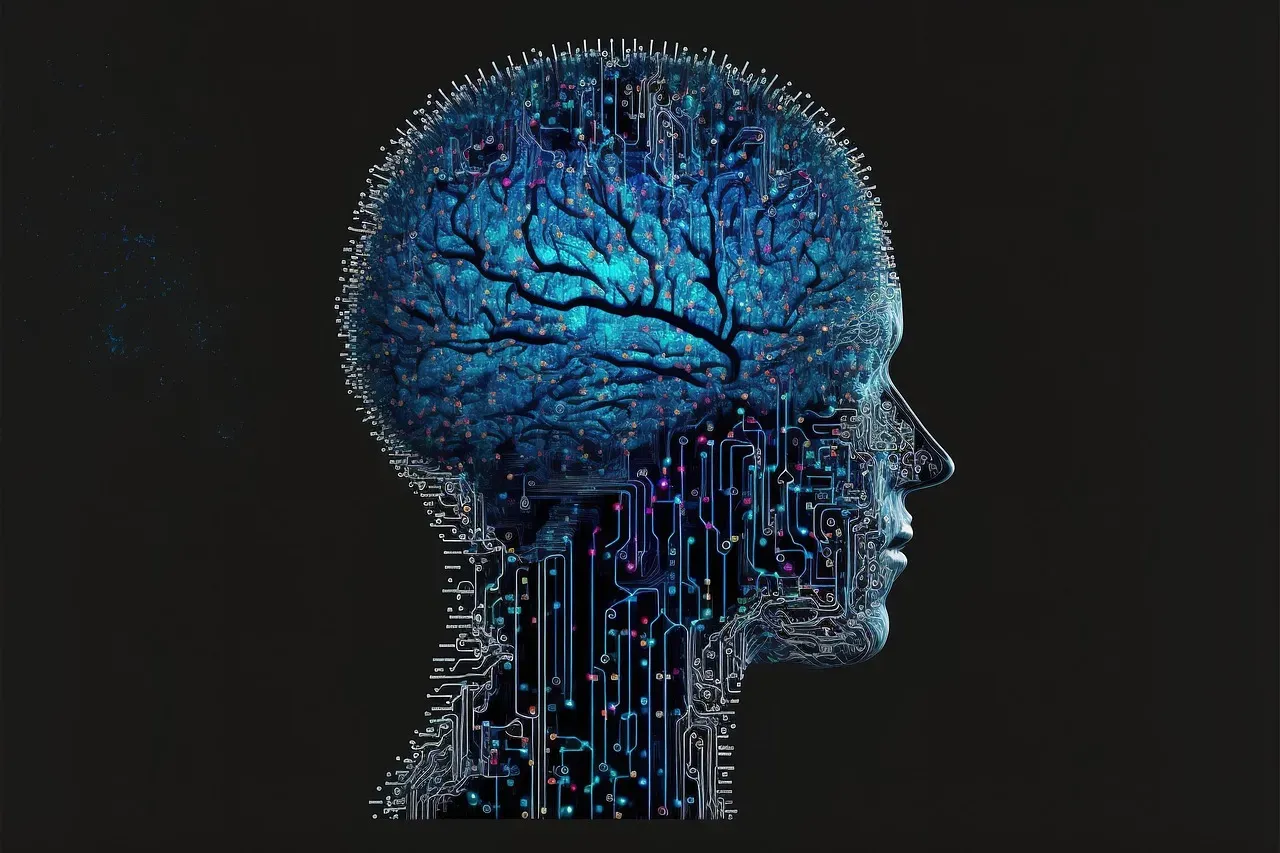
Your conscious mind didn’t evolve to make you serene; it evolved to help you navigate a complex, uncertain environment well enough to survive and reproduce. That means it prioritizes spotting problems, tracking social dynamics, and predicting painful outcomes over keeping you in a good mood. In that context, depression, anxiety, and existential fear can be seen as side‑effects of a hyper‑alert, deeply social, forward‑looking brain running on a world with no guaranteed meaning or safety. You can think of your awareness like a powerful flashlight in a dark, indifferent landscape. It will naturally swing toward threats, losses, and confusion, because paying attention to those used to mean the difference between life and death. The fact that it now also shines on questions like “What is the point of all this?” is not a glitch; it is your evolved hardware doing too good a job. Once you realize the system wasn’t built to keep you content, you can stop blaming yourself for not feeling okay in conditions no human nervous system was really designed for.
Meaning as Something You Build, Not Something You Find

If the universe doesn’t hand you meaning, you’re left with the unsettling task of constructing it yourself. That can feel fake at first, like you’re just playing pretend with your own life. But when you look at how humans actually live, you see people creating meaning all the time through relationships, projects, creativity, care, learning, and small commitments they return to over and over. None of these are cosmic guarantees; they are chosen anchors. You can test this directly: when you invest time and attention into something that feels aligned with your values – helping someone, building a skill, raising a child, making art – you experience a kind of lived meaning that doesn’t require the universe to have a master plan. Your depression may whisper that it’s all still pointless in the grand scheme, and your anxiety might poke at everything that could go wrong, but at the scale of your actual life, chosen purposes are real enough to shape how each day feels. Meaning stops being a hidden object you hope to discover and becomes a practice you keep returning to.
How This View Can Help You Suffer Differently

Seeing your pain as an accurate reading of a harsh reality can sound like the opposite of comfort. But it can quietly remove a heavy extra layer of shame: you can stop telling yourself that you are broken for struggling in a world that is, in many ways, terrifying and strange. Instead, you can say: of course I’m overwhelmed; of course I feel lost; my mind is responding logically to a situation that has no built‑in safety or script. From there, your goal shifts from trying to eliminate all discomfort to learning how to suffer more wisely. That might look like seeking therapy or medication not to deny reality, but to give your brain enough stability to work with it. It might look like talking honestly with people you trust about these thoughts, so you’re not carrying the full existential weight alone. You’re not trying to turn off the alarm system entirely; you’re trying to tune it so you can still actually live.
Practical Ways to Live in a Possibly Meaningless Universe

Once you accept that the universe may not care what you do, you get to ask a much better question: given that, how do you want to live? You can start by shrinking the frame from cosmic to local: your nervous system is not built to carry the heat death of the universe and the fate of all life every time you have coffee. Focus on concrete, near‑term moves – like improving one relationship, making one corner of your environment kinder, or taking one step toward work that feels less hollow. You can also experiment with practices that ground you in experience rather than theory: mindfulness, time in nature, physical movement, creative play, or simple rituals that make days feel inhabitable. These do not solve the big questions, but they make your body and mind more resilient while you live with them. Think of it like tending a small garden in the middle of an uncaring cosmos: the stars don’t notice, but you do, and the people around you do, and that might be enough.
You Are Not Alone in Feeling This Way

One of the cruelest tricks of depression and existential dread is convincing you that you’re uniquely defective for thinking this way. In reality, many people quietly wrestle with the same questions, especially in a time where old belief systems are fading and constant information makes the world’s chaos impossible to ignore. When you imagine that everyone else has it figured out, you’re comparing your inner landscape to their public highlight reel. If you start speaking even a little more honestly – with a friend, a therapist, an online community that feels thoughtful rather than nihilistic – you often discover how common these feelings are. That shared recognition does not magically grant the universe meaning, but it does soften the edges of your isolation. You realize you’re not a broken outlier; you’re a human staring at the same strange, indifferent sky as everyone else, just with your eyes a bit more open.
Conclusion: Turning Accurate Despair into Chosen Defiance

If depression, anxiety, and existential dread are not malfunctions but honest responses to a universe with no inherent meaning, then your task is not to gaslight yourself into thinking everything is secretly fine. Your task is to become the kind of person who can look at that emptiness and still decide to care, to build, to love, to protect, and to create – fully aware that nothing guarantees it will last or be remembered. That decision turns you from a passive victim of meaninglessness into an active author of your own small, defiant story. You won’t ever fully silence the dark thoughts, and maybe you shouldn’t; they keep you honest about the stakes and the limits. But you can hold them in one hand while, with the other, you plant something worth tending in the short, unpredictable span you have. In a universe that offers you no script, choosing to show up anyway might be the closest thing to meaning you’ll ever get – and maybe, if you’re honest, it’s the one that feels most real. What kind of life would you write if you stopped waiting for the universe to hand you a reason?