
You move through your day assuming something so basic you rarely question it: your brain makes your mind. It feels obvious that when the brain lights up, thoughts, feelings, and awareness appear, and when it shuts down, so do you. But what if you’ve had it backwards all along, and your brain is less like a generator and more like a filter that keeps most of reality out of your awareness rather than creating it from scratch?
Once you take that possibility seriously, a lot of things you normally dismiss or ignore start to look very different: near-death experiences, psychedelic states, mystical moments, sudden flashes of insight. Instead of glitches in the system, they might be moments when the filter loosens and you briefly experience more of what is always there. You do not have to buy into any wild theory to explore this idea – you only need to look honestly at what you know about brains, consciousness, and your own experience, and ask whether the standard story really explains it all.
Why the “Brain as Generator” Story Feels So Obvious
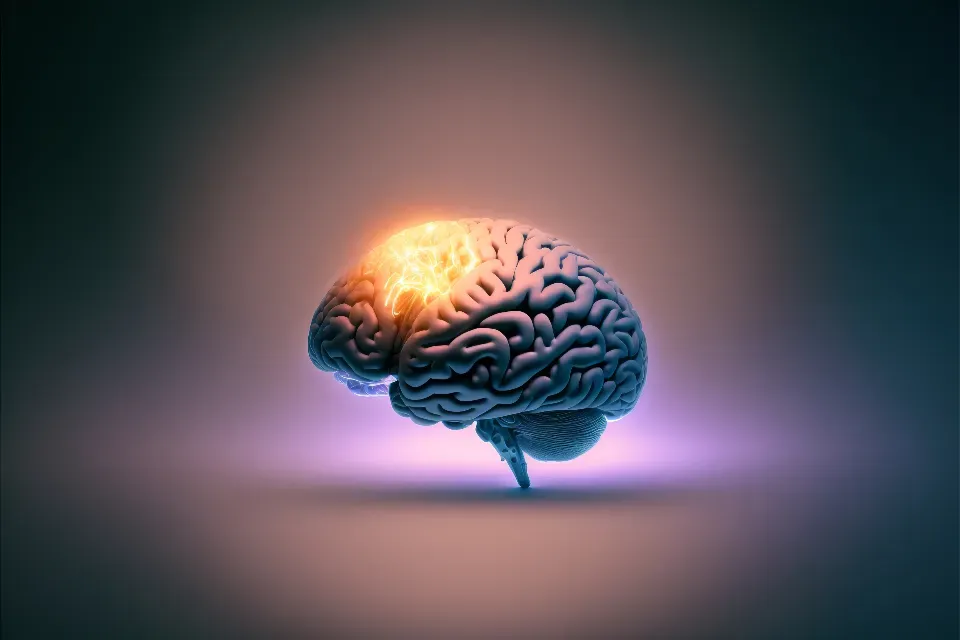
You have strong reasons to think the brain creates consciousness, and many of them are straightforward. When someone has a stroke, a head injury, or dementia, their personality, memory, and awareness can change dramatically. When you drink alcohol or take anesthetics, your consciousness clearly shifts. Look at brain scans while someone is thinking, feeling, or seeing, and you see measurable changes in brain activity that track surprisingly well with what they report.
Because the correlation between brain activity and conscious experience is so tight, it is natural to assume the brain does all the producing. A light switch is up, the room is bright; it is down, the room is dark – so you call the switch the source of light, even though you know the power plant is doing the real work. In everyday life, your brain looks like that switch: flip it into different states, and different experiences turn on. This is the intuitive power of the “brain makes mind” story, and it is why almost everything in modern neuroscience is framed that way.
How a Filter Model Changes the Picture
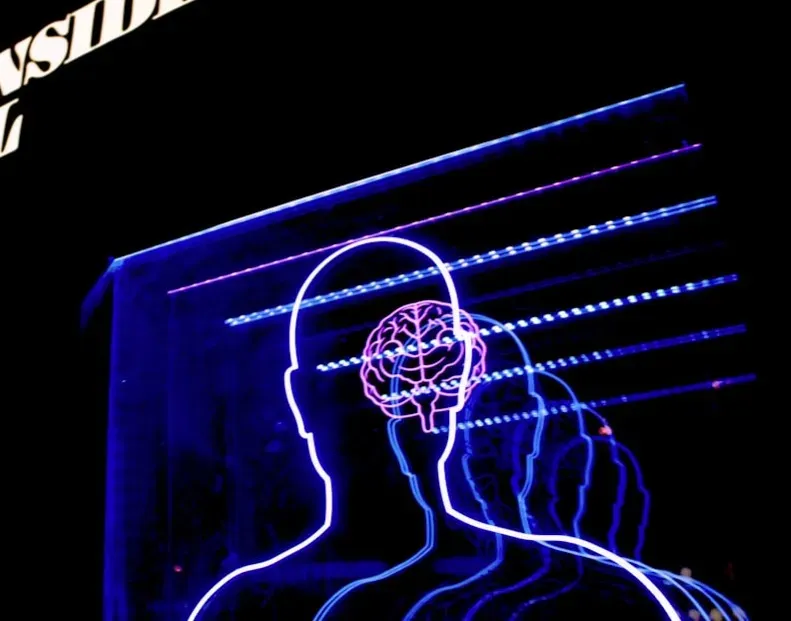
Now imagine you swap that story out: instead of a generator, you picture your brain as more of a filter, tuner, or limiter. Consciousness, in this view, is not something the brain produces; it is something more fundamental that the brain shapes and narrows, the way tinted glasses turn a blindingly bright scene into something your eyes can actually tolerate. Your everyday waking state would then be a carefully restricted slice of a much larger reality, one calibrated for survival in a dangerous world rather than for seeing everything that exists.
This filter idea is not new; it has shown up in different ways in philosophy, psychology, and some spiritual traditions. Modern versions suggest that your brain may be ruthlessly cutting away most of the information around and within you, letting through only what helps you navigate, predict, and stay alive. Under this model, changes in brain function do not create new consciousness so much as open or close the “gates” that control what part of consciousness you can access. You would be like a radio tuned to a narrow band of frequencies, not a speaker that generates sound by itself.
Why Evolution Might Favor Less Consciousness, Not More
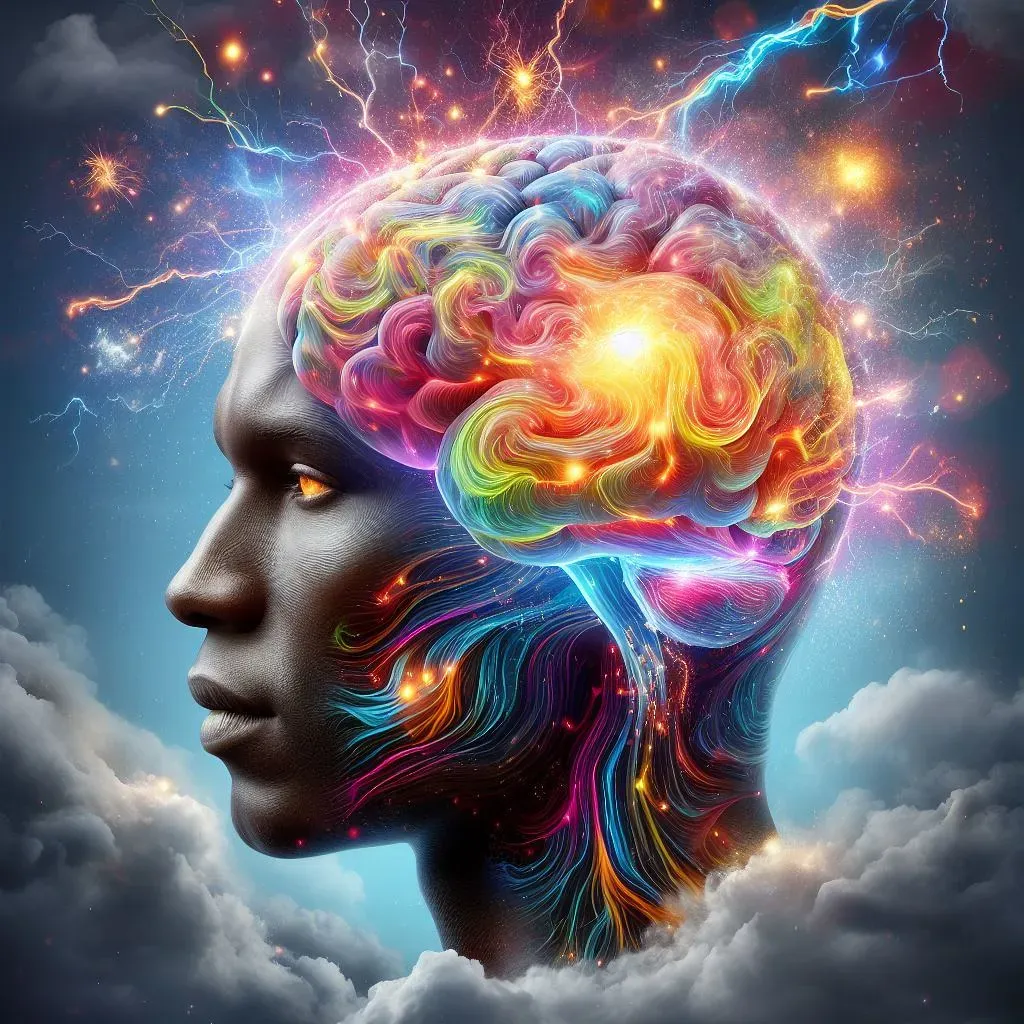
If consciousness is somehow more expansive than what you usually experience, you might wonder why evolution would ever want to narrow it down. From a survival standpoint, though, it actually makes sense that your brain would specialize in ignoring almost everything. Your ancestors did not need a cosmic view of reality; they needed to spot predators in the bushes, notice social cues in their group, and remember where the water source was. Anything that did not help with those tasks was useless, or even dangerous, distraction.
You can see this in your own attention every day. When you drive a car, you cut out most of your surroundings and lock onto the road; when you are in a deep conversation, you can fail to notice someone calling your name from only a few meters away. Your nervous system automatically downgrades what is irrelevant so you do not get overwhelmed. The filter model simply pushes this idea further and suggests that your entire conscious field is one massive act of reduction, tuned not to truth but to usefulness.
What Altered States Hint About the Filter
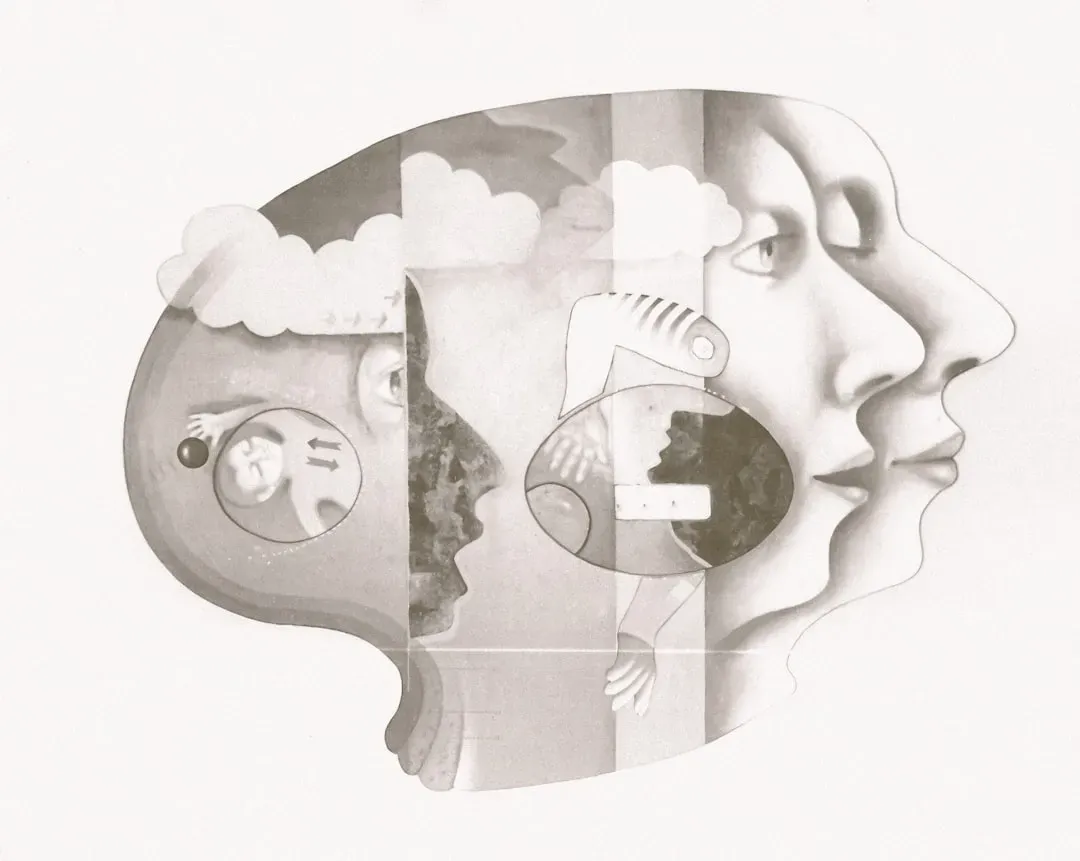
When you change your brain chemistry or disrupt its usual patterns, you often report that your awareness expands, not shrinks. Under anesthesia or deep sedation your experience disappears, but in some psychedelic, meditative, or near-death states, people describe feeling as if their sense of self dissolved, time lost its normal structure, and they became aware of something far larger than their usual mind. From a generator perspective, these might look like hallucinations or malfunctions. From a filter perspective, they can look like temporary relaxations of the usual limits.
If you treat your brain as a filter, then strong emotional experiences, certain breathing practices, or specific substances could be understood as twisting the “knobs” that govern what gets through. You might start perceiving connections where you normally see separation, or feel an intense sense of presence and meaning that your normal, tightly focused state blocks. This does not prove those experiences reveal a deeper reality, but it does raise a simple question: why do some disrupted brain states feel more like waking up from a narrow dream than sinking into one?
Near-Death Experiences and the Limits of Brain-Based Explanations

Few things challenge your standard assumptions about consciousness as much as what people report around the time of clinical death. Some individuals describe vivid, structured experiences while their brain function is greatly impaired or even briefly absent by usual medical criteria. They talk about heightened clarity, rich perceptions, and sometimes verifiable details about events in the operating room or elsewhere that you would not expect if awareness depends entirely on a normally working brain.
Scientists have proposed various physiological explanations: brief bursts of brain activity, lack of oxygen, the chemistry of dying cells. You should absolutely take those possibilities seriously, because your body is capable of remarkable last-minute noise as it shuts down. At the same time, if the brain is a filter, these episodes could be moments when the filter breaks down and your usual constrained awareness opens up in an unusual way. You do not need to commit to any specific interpretation, but you can recognize that the standard “brain only” story is still wrestling to fully account for what people describe.
Your Everyday Perception as a Constructed Tunnel
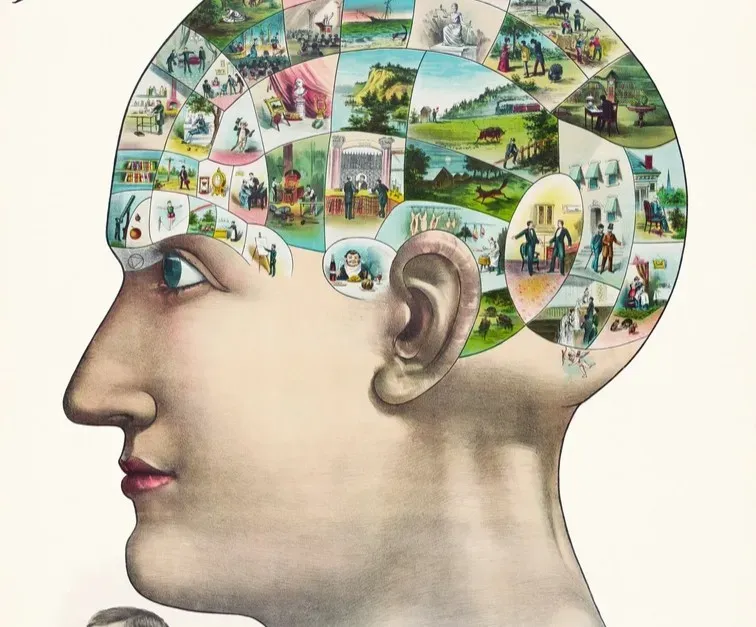
Even in ordinary life, you are not experiencing the world as it is; you are experiencing what your brain chooses to show you. Visual perception alone involves your brain filling in blind spots, smoothing over rapid eye movements, and stitching together a stable scene from fragmentary data. What you see feels rich and continuous, but your nervous system is constantly editing, guessing, and discarding behind the scenes. You walk around inside a tunnel of perception, not an open window.
If you accept that your senses already filter reality heavily, it is not a huge stretch to imagine that your deeper sense of “being someone” might also be a construction inside that tunnel. The feeling that you are a separate self, located behind your eyes, looking out at a world, may itself be part of the filtration strategy. It packages an overwhelming amount of information into a story you can use: you are here, that is out there, and your job is to survive and get what you need. The filter model suggests there might be much more to experience than that story allows, but your brain keeps the story running because it works.
How This View Changes Your Sense of Self and Death

If you let the filter idea sink in, your sense of who you are starts to shift. Instead of thinking of yourself as a fragile, temporary mind produced by a particular brain, you might see yourself as a local expression of a larger field of consciousness that your brain narrows into a workable human life. In daily practice, nothing magical has to happen: you still pay your bills, care for your relationships, and take care of your body. But somewhere in the background, you hold the possibility that your awareness is not as tightly tied to your brain as you once assumed.
This has implications for how you face death, even if you remain completely agnostic about any afterlife. If the brain is only a filter, then death could be the end of a particular way of looking at reality rather than the destruction of awareness itself. You cannot verify that from where you stand, and you should be honest about that uncertainty. Still, even considering the idea can soften the fear that everything you are will vanish into nothing the instant your neurons stop firing, and it can encourage you to focus less on clinging and more on living deeply while you can.
Practical Ways to Explore the “Filter” in Your Own Life

You do not need extreme experiences to test pieces of this model for yourself; you can start with simple practices that reveal how adjustable your awareness already is. When you sit quietly and pay attention to your breath, for example, you notice how your mind keeps narrowing down to thoughts, then widening out to bodily sensations, then snapping back again. With a bit of training, you can widen that field and notice sounds, sensations, and emotions you usually ignore without collapsing under them, like dim stars appearing when you step away from a city’s bright lights.
Similarly, when you deliberately shift your focus – listening for the quietest sound in a room, relaxing your gaze to take in the entire visual field, or tuning into your heartbeat – you quickly see that the range of what you can experience is much larger than what you usually register. Those small experiments hint that your normal state is not the only way your brain can configure the filter. You may still decide that consciousness depends on the brain, but you will at least have felt directly how much of your reality is a matter of what your brain lets in or keeps out.
Living Differently If Your Brain Is a Filter, Not a Factory

If you take seriously the idea that your brain might be limiting reality rather than generating it, you start approaching life with a bit more humility and curiosity. You become slower to dismiss other people’s unusual experiences as mere fantasy, because you recognize that your own window on reality is tightly constrained and heavily edited. You might treat wonder as a valid response to existence instead of an indulgence, because you know that whatever you see is probably only a small slice of what is actually there.
On a practical level, this view can nudge you to cultivate states that gently widen your awareness – through contemplative practices, creative work, deep conversations, or time in nature – rather than staying locked into the most efficient, narrowed mode all the time. You are not trying to escape your human life; you are simply acknowledging that your mind may be capable of more subtlety and depth than your survival wiring typically allows. In that sense, you live less like someone trapped inside a sealed skull and more like someone peeking through a keyhole, aware that the room beyond is larger than what you see.
Conclusion: What If You Are Already More Than You Think?
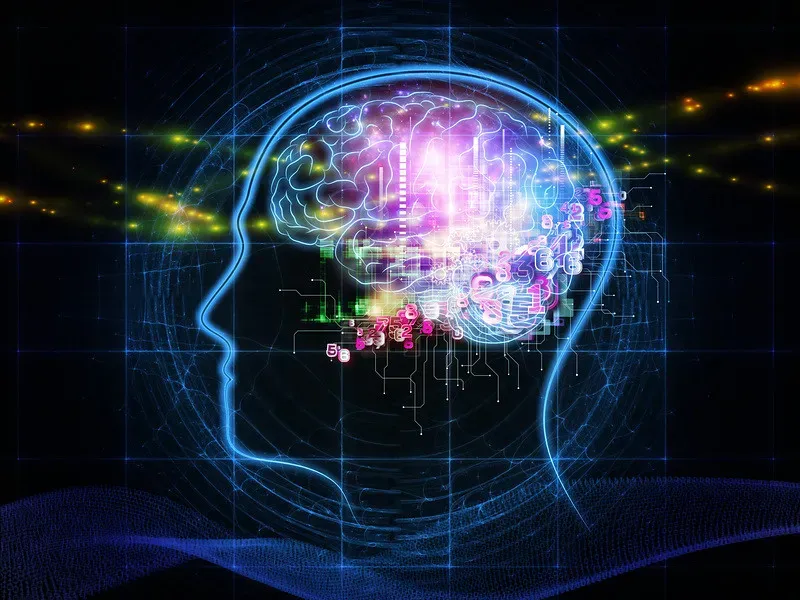
When you step back from the standard story that your brain creates your mind, the alternative view of the brain as a filter does not look as wild as it first sounds. You already know that your senses slice away most of reality, that your perception is mostly a constructed tunnel, and that altered states can radically shift what you experience without necessarily damaging you. Putting those pieces together, it is at least reasonable to wonder whether consciousness might be something broader that your brain shapes and restricts for practical purposes rather than manufactures from nothing.
You do not have to abandon science, ignore evidence, or adopt any particular belief system to hold this question open. You only have to admit that the relationship between brain and consciousness is not yet fully understood, and that a filtering role fits much of what you already observe about yourself. If you are, in some sense, more than what your everyday awareness reveals, then exploring your own mind becomes less about squeezing meaning from a brief spark and more about getting to know the edges of a much deeper mystery. How differently might you live if you really took that possibility to heart?