
Most people assume ancient and medieval builders were working with primitive tools and guesswork, while today’s engineers – armed with lasers, computer modeling, and unlimited horsepower – could replicate anything from history in a weekend. That assumption is dead wrong. Modern construction firms have quietly admitted, on the record, that they cannot recreate at least a dozen structures built centuries or millennia ago, not because we lack the desire, but because the materials, labor systems, or raw physical audacity involved no longer exist in the modern world.
Here’s what engineers, materials scientists, and structural historians actually say about the feats that still leave them stumped – and why the list gets stranger the closer you get to the top.
#13 – The Great Wall of China’s Impossible Scale
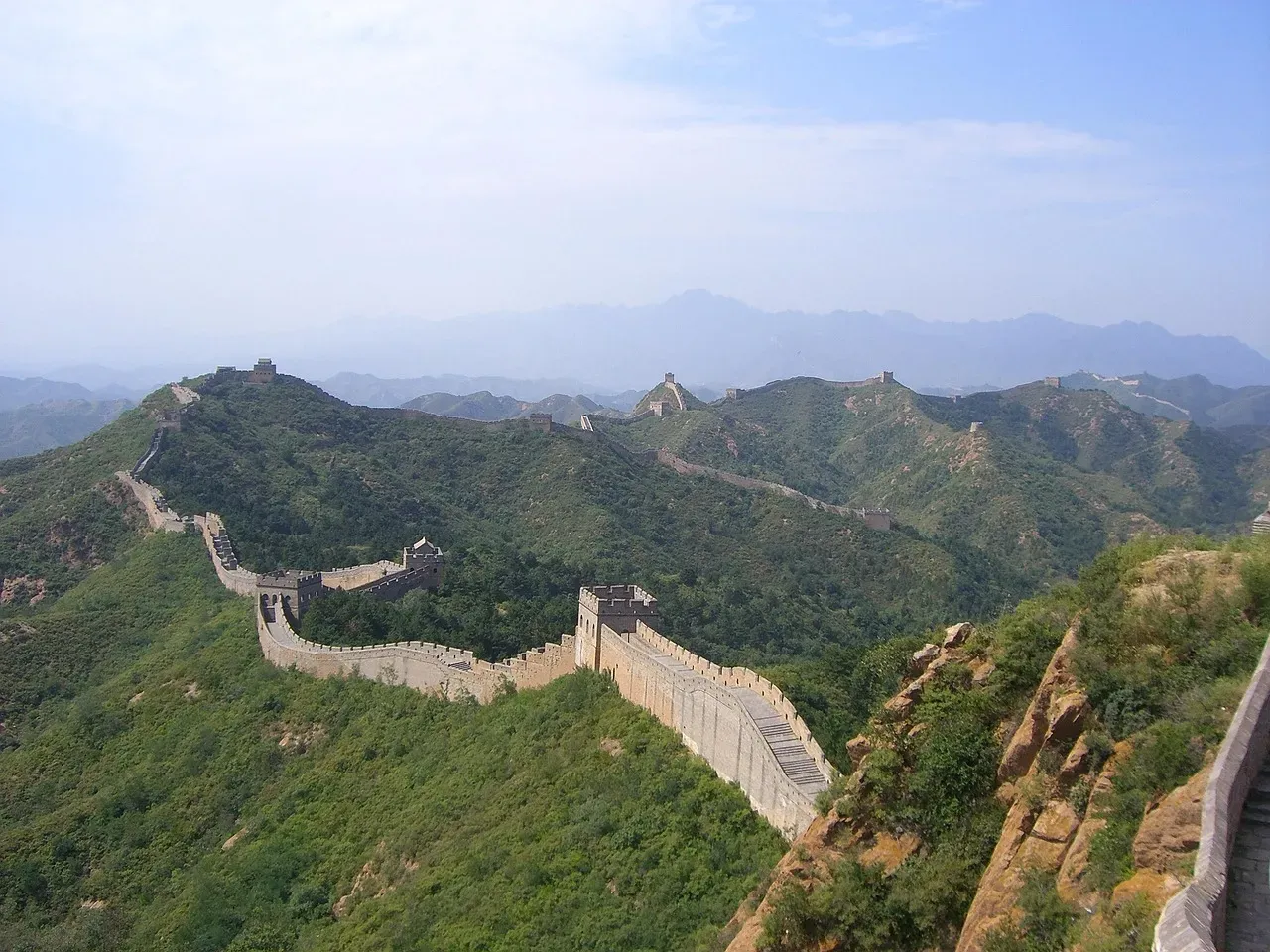
No modern contractor would ever get permission, budget, or workforce to build anything like it today. The Great Wall wasn’t one wall – it was a network of walls, towers, and garrisons stretching across mountains, deserts, and grasslands, built and rebuilt over roughly two thousand years by multiple dynasties.
Entire sections were constructed on ridgelines so steep that modern construction equipment still can’t reach them; the only access remains the same as it was in the Ming Dynasty, on foot with hand tools. The labor force numbered in the hundreds of thousands, many of them conscripted soldiers and peasants who died during construction and were, according to persistent historical accounts, buried within the wall itself. Modern engineers who study the wall point out that no government today could conscript labor at that scale, and no private company could justify the cost-per-mile across terrain that remote. And that engineering marvel is a rounding error compared to what’s rusting-proof in Delhi.
Fast Facts
- Total mapped length across all dynasties: roughly 21,196 kilometers, according to a 2012 Chinese government survey.
- Construction spanned more than 2,000 years, from the 7th century BCE through the Ming Dynasty (1368-1644).
- Ming-era sections alone, the most famous and best preserved, stretch about 8,850 kilometers.
- Labor estimates run into the hundreds of thousands of conscripted soldiers, prisoners, and peasants per major building phase.
#12 – Delhi’s Iron Pillar That Refuses to Rust
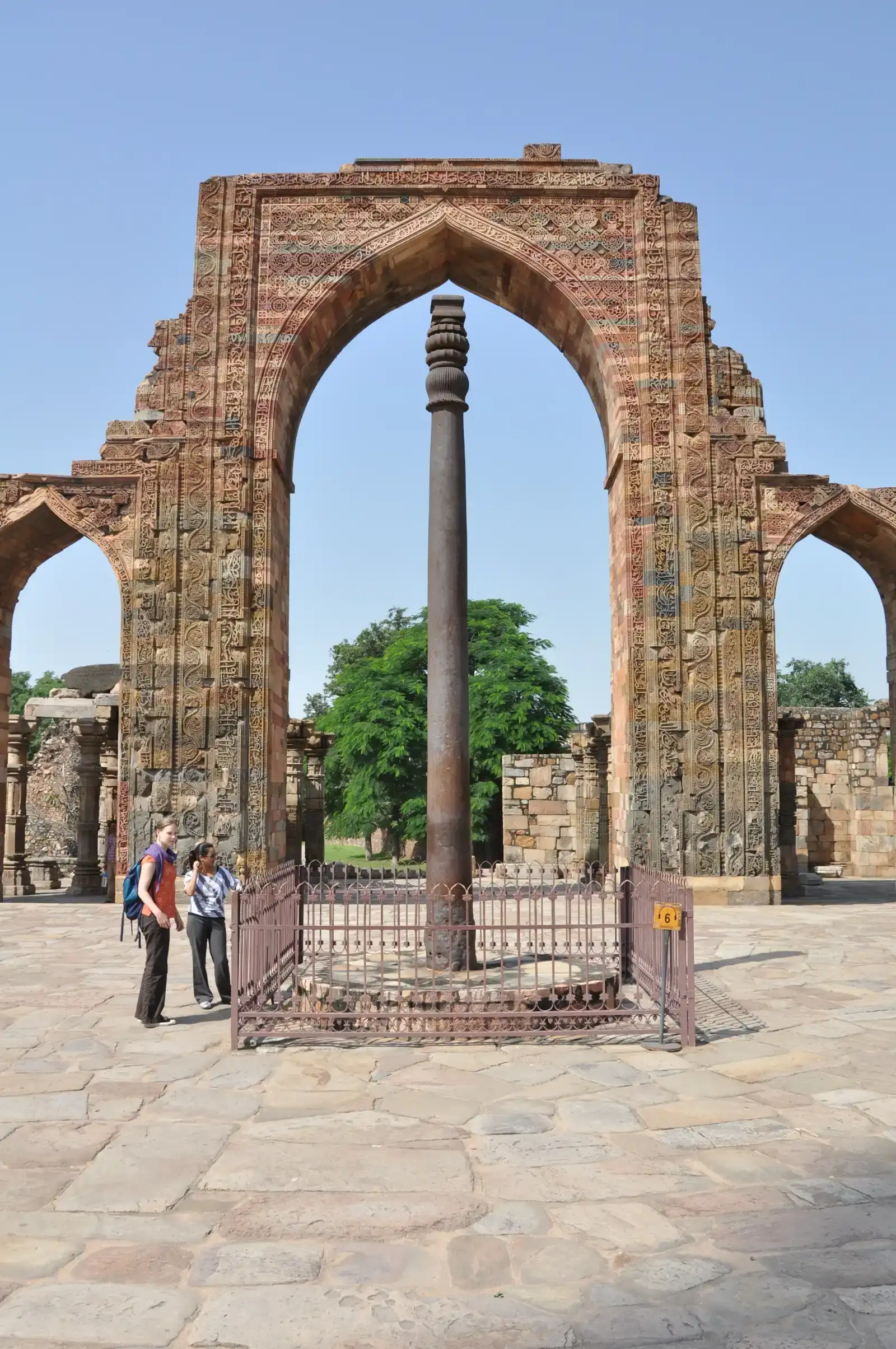
A 1,600-year-old iron pillar sits in Delhi, exposed to monsoon rain and humidity every single year, and it still hasn’t rusted through. Cast sometime around the 4th or 5th century CE, the Iron Pillar of Delhi is made of nearly pure wrought iron, standing over 7 meters tall.
Metallurgists have found that its surface developed a thin protective layer of misawite, a compound formed from phosphorus in the iron reacting with the atmosphere. Modern steel, by contrast, is engineered to be stronger under load but almost always contains additives that make it far more vulnerable to long-term oxidation without external coatings. Foundries have tried to replicate the phosphorus-rich smelting process, but modern iron ore is processed differently, and the ancient technique used to concentrate phosphorus content that precisely has never been fully reverse-engineered. Still, a stubborn iron pole has nothing on a blade that vanished from history entirely.
#11 – Damascus Steel’s Vanished Metallurgy

Blacksmiths spent centuries chasing a steel so sharp and flexible it became legendary, and then the recipe simply disappeared. Damascus steel, technically made from a raw material called wootz steel imported from India and Sri Lanka, produced blades with a distinctive rippling pattern and a reputation for holding an edge that European steel couldn’t match.
Production collapsed sometime in the 18th century, likely because the specific ore deposits used ran out or changed composition. In 2006, researchers using electron microscopy discovered that genuine Damascus blades contained carbon nanotubes, a nanostructure nobody in the ancient world could have understood, let alone engineered on purpose. Modern metallurgists have made blades that mimic the surface pattern, but they openly admit these are cosmetic recreations, not true reproductions of the original alloy’s molecular structure. Even a lost steel formula feels tame next to gears that shouldn’t have existed for another thousand years.
#10 – The Antikythera Mechanism’s Impossible Gears
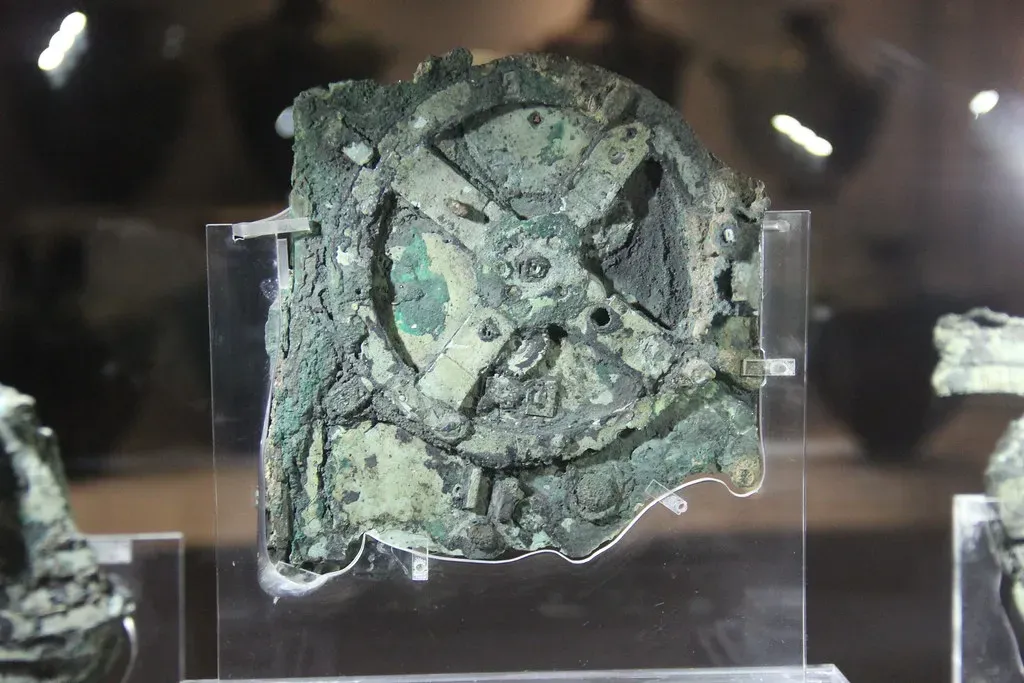
A shipwreck off a Greek island produced a bronze device so mechanically advanced that scientists initially assumed it had to be a hoax. Recovered in 1901 and dated to roughly 150-100 BCE, the Antikythera Mechanism used at least 30 interlocking bronze gears to track lunar phases, planetary positions, and eclipse cycles with startling precision.
Nothing else of comparable mechanical sophistication appears in the historical record for over a thousand years afterward. The gear-cutting precision required to make dozens of tiny bronze teeth mesh correctly would challenge a hobbyist machinist even with modern tools. Historians still don’t know who built it, whether it was a one-off masterpiece or part of a lost tradition of Greek mechanical engineering, or how the knowledge behind it simply vanished. As baffling as ancient gears are, moving mountains with bare hands might top it.
#9 – Stonehenge’s 150-Mile Stone Journey

Prehistoric builders moved multi-ton stones across roughly 150 miles of hills, rivers, and forest with no wheels, no metal tools, and no draft animals proven to have been used. The smaller bluestones at Stonehenge have been geologically traced to quarries in the Preseli Hills of Wales, meaning Neolithic builders somehow transported them across a huge stretch of ancient Britain around 5,000 years ago.
The larger sarsen stones, some weighing over 20 tons, came from closer quarries but still required a logistics operation involving hundreds of laborers coordinating without written plans. Nobody has definitively proven the exact transport method, whether sledges, rollers, or river rafts, because no tools or sledge remains from the actual construction have survived. Modern experimental archaeologists have moved similar stones using teams of volunteers and timber sledges, proving it’s physically possible, but they still needed modern safety equipment and far smaller stones than the real sarsens. Yet dragging stones across Britain looks almost simple next to a bridge that refused to fall for fourteen centuries.
#8 – The Bridge That Outlived Every Engineer Who Studied It
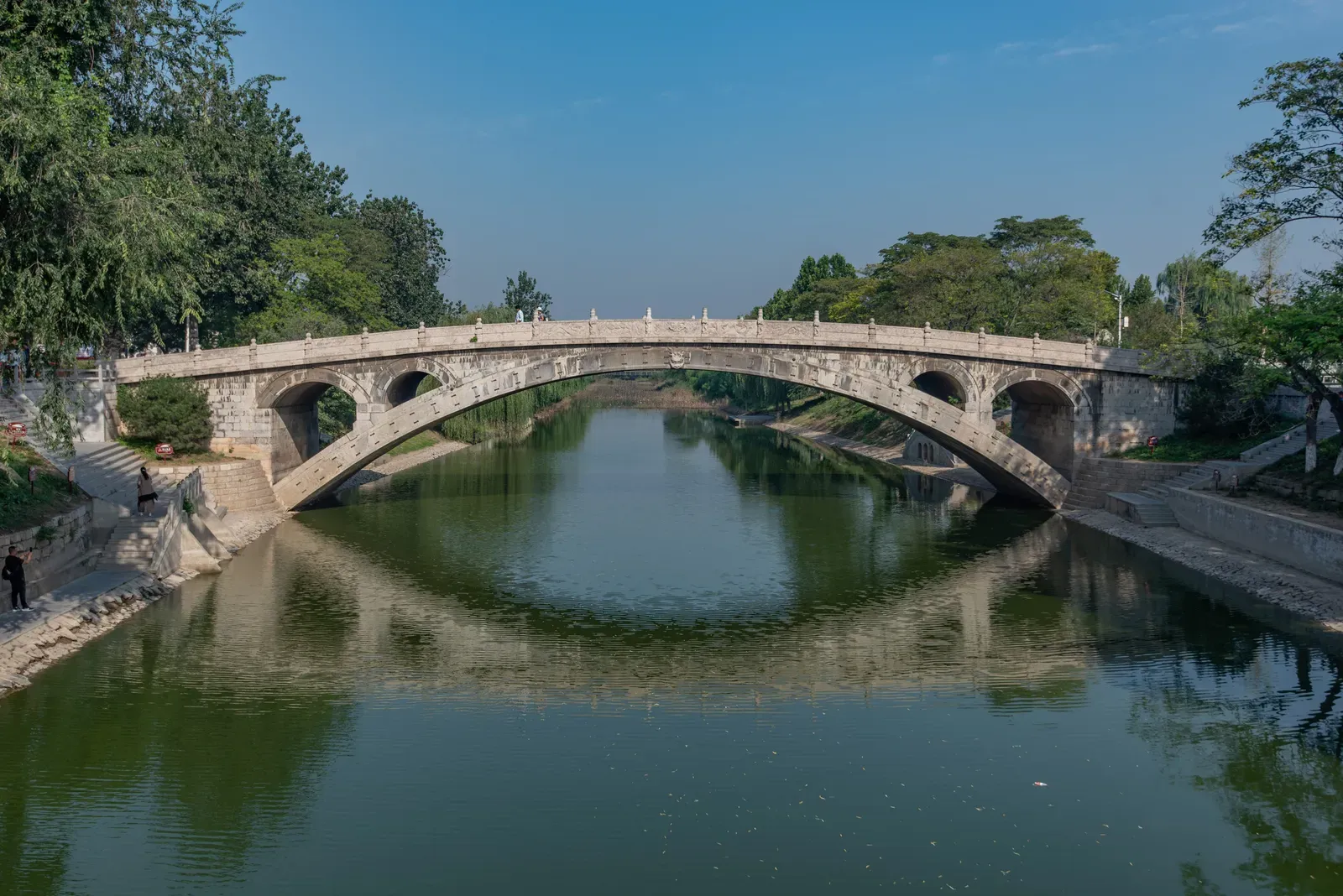
China’s Zhaozhou Bridge has carried foot and vehicle traffic since the year 605 CE, making it the oldest open-spandrel segmental arch bridge still standing on Earth. Designed by an engineer named Li Chun, the bridge uses a flattened arch shape rather than the deep semicircular arches common elsewhere in the ancient world, distributing weight in a way that reduces material use while increasing flexibility.
This design wasn’t replicated in Europe for roughly 700 years. The bridge has survived at least ten major floods and multiple earthquakes over fourteen centuries without structural collapse, a track record no modern bridge has been tested against because none are old enough yet. Reproducing it exactly today would be straightforward technically, but reproducing 1,400 years of proven survival simply isn’t something any new structure can claim. A surviving bridge is impressive, but an entire hidden empire beneath a temple is another level of ambition.
#7 – Angkor Wat’s Hidden Hydraulic Empire

Beneath the temple spires of Angkor Wat lies something far more impressive than the architecture tourists photograph: a massive water management system that supported one of the largest pre-industrial cities on Earth. Built in the 12th century, Angkor’s builders constructed enormous reservoirs called barays, along with canals and moats, to manage monsoon flooding and dry-season drought for a population estimated to be in the hundreds of thousands.
This infrastructure allowed the Khmer Empire to sustain intensive rice agriculture across a landscape that would otherwise swing between flood and drought every year. Lidar surveys in the 2010s revealed the urban sprawl around Angkor was far larger than previously known, suggesting the hydraulic network was even more extensive than modern archaeologists had assumed. Modern hydrologists studying the site note that the scale of coordinated water engineering, done without modern surveying equipment, still isn’t something any single project replicates today. Water engineering aside, nothing tests modern limits quite like trying to replace an entire forest.
Worth Knowing
- At its peak, the Angkor metropolitan area may have covered close to 1,000 square kilometers, one of the largest pre-industrial urban footprints ever recorded.
- The West Baray reservoir alone spans roughly 8 by 2.1 kilometers, an artificial lake dug and shaped entirely by hand.
- Lidar-based population estimates for Angkor at its height run as high as several hundred thousand residents.
- The hydraulic network had to manage both monsoon flooding and dry-season drought within the same annual cycle.
#6 – The Forest Inside Notre Dame’s Roof

Long before the 2019 fire, Notre Dame’s roof frame carried a nickname among carpenters: “the forest,” because it was built from an estimated 1,300 individual oak trees. Constructed in the 12th and 13th centuries, the timber frame required trees that were centuries old at the time of harvest, meaning builders were using oaks that had been growing since long before the cathedral itself was planned.
Modern France simply does not have forests with enough mature oak of that size and density to replace the frame using identical materials and techniques, which is why the 2019 restoration debate over steel versus timber became a national controversy. Carpenters trained in medieval joinery techniques, a nearly extinct trade, had to be specially recruited for the restoration because the original method used no nails or metal fasteners, relying entirely on interlocking wooden joints. France ultimately chose to rebuild with timber, but organizers openly admitted the project required sourcing trees from across the entire country just to approximate what one region’s forest once provided naturally. A missing forest is one problem; a dome that seems to defy gravity is a completely different kind of impossible.
#5 – Hagia Sophia’s Floating Dome

For nearly 1,500 years, Hagia Sophia’s dome has appeared to hover above its walls, an optical and structural illusion that Byzantine engineers achieved using astonishingly delicate materials rather than brute strength. The builders used hollow bricks made from volcanic ash from Rhodes, reducing the dome’s overall weight while maintaining strength.
A ring of 40 arched windows around the base makes the dome appear to hover, with no obvious solid support between it and the air, while also cutting dead weight exactly where outward thrust is greatest. The bricks are thin and the mortar joints are unusually wide, in places wider than the bricks themselves, giving the shell a slight flexibility that let it shift during tremors instead of cracking apart all at once. Run through modern structural analysis, the design still checks out: near-optimal load distribution and seismic resistance, achieved with nothing more advanced than brick and volcanic ash. Recreating a masonry dome that deliberately flexes, rather than resists, would mean throwing out most of what modern seismic codes are built around. As gravity-defying as that dome is, nothing rattles modern engineers quite like walls that shrug off earthquakes.
#4 – The Inca Walls That Laugh at Earthquakes
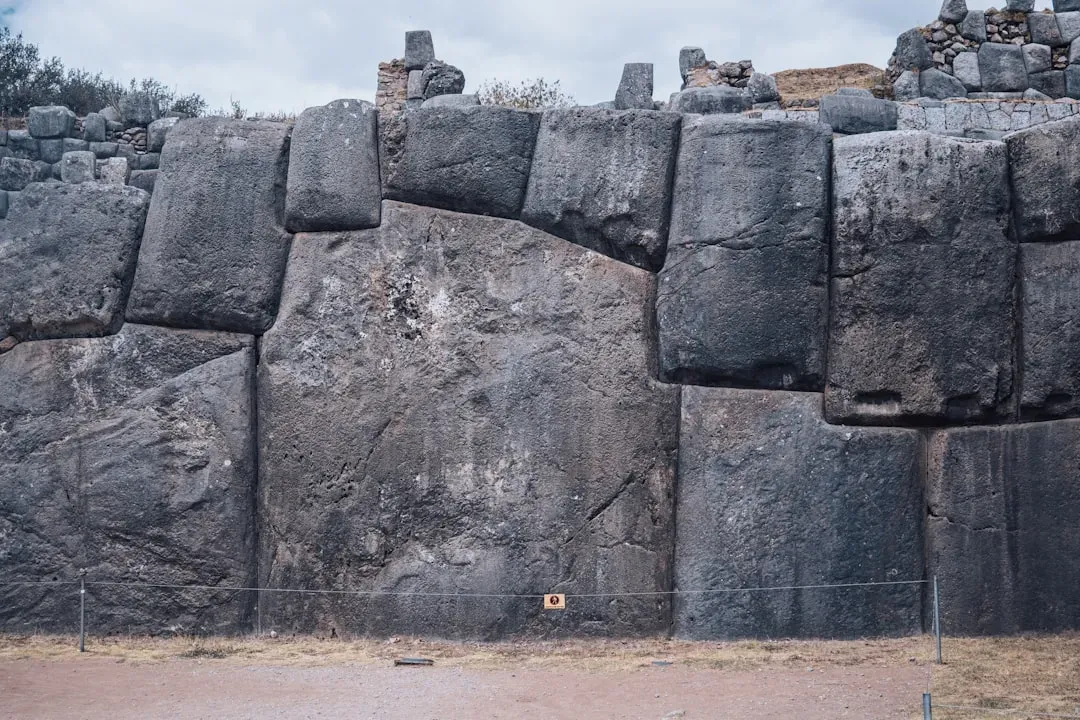
At Sacsayhuaman, above Cusco, Peru, Inca builders stacked stones weighing up to 200 tons on top of each other with no mortar, no cement, and no metal tools – and the walls have outlasted colonial buildings constructed centuries later with modern materials. The stones were fitted together so precisely that a piece of paper cannot be slid between them.
The genius wasn’t just precision for its own sake; it was seismic strategy. Peru is a seismically active region, and a rigid, mortared wall would crack and crumble during an earthquake, so the mortar-free walls were designed to move, letting the stones “dance,” shifting in place before settling back into their perfect fit during a tremor. In the 2010 Cusco earthquake, which damaged modern buildings in the city, the Inca walls remained essentially intact. Structural engineers studying the site openly acknowledge no one fully agrees on how the builders moved stones weighing up to 200 tons up steep slopes, without the wheel and without draft animals. Even earthquake-proof walls seem almost ordinary next to a monument accurate enough to shame modern surveyors.
Quick Compare
- Sacsayhuaman’s Inca walls (15th century, no mortar): survived the 2010 Cusco earthquake with no significant structural damage.
- Nearby colonial and modern buildings (mortared stone and concrete): suffered cracking and partial damage in that same quake.
- Design philosophy: Inca walls were built to shift and resettle during tremors, while modern rigid construction is built to resist movement outright.
#3 – The Pyramid That’s More Accurate Than It Should Be

The Great Pyramid of Giza was built roughly 4,500 years ago without a single piece of modern surveying equipment, and its accuracy still embarrasses some contemporary construction projects. The base is level to within just 2 centimeters across its entire 13-acre footprint, and its sides are aligned to the cardinal directions with astonishing accuracy.
Researchers believe the builders aligned the monument to the cardinal points with an accuracy of better than four minutes of arc, or one-fifteenth of one degree, using nothing but water channels for leveling and star observations for orientation. All three of the largest Egyptian pyramids, two at Giza and one at Dahshur, are remarkably aligned, in a way you wouldn’t expect to see from an era without drones, blueprints, and computers. Even more strangely, all three pyramids show the same manner of error, rotated slightly counterclockwise from the cardinal points, suggesting a consistent, repeatable method rather than lucky guesswork. Precision is one kind of miracle. Moving stones this size is a completely different one.
#2 – Baalbek’s Stones That Nobody Can Explain
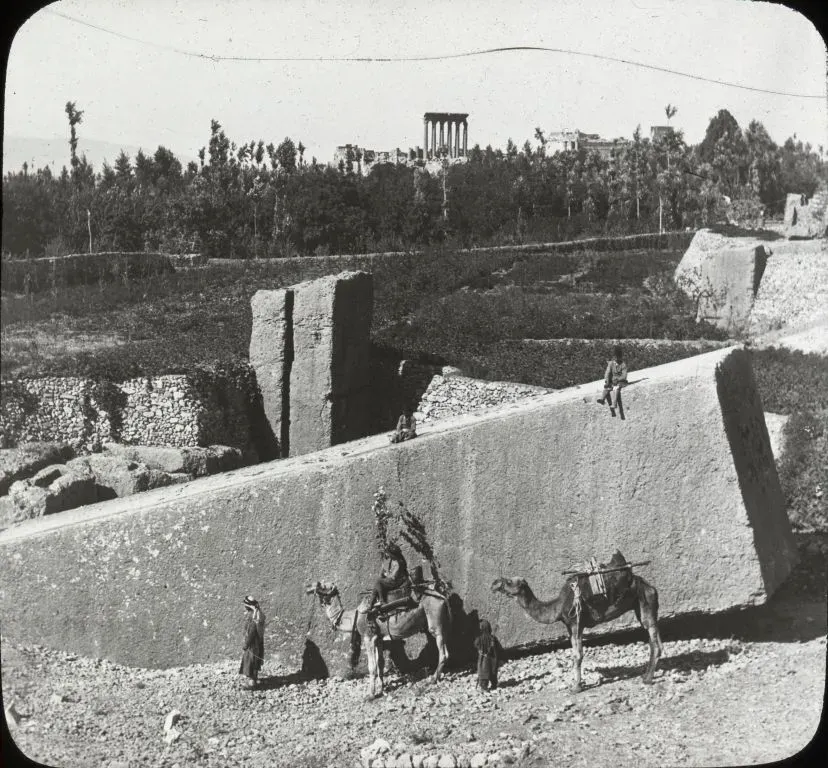
In Lebanon, at a site the Romans expanded but almost certainly didn’t originate, sit stone blocks so massive that no crane, truck, or rigging system in the world today could lift them in one piece. The Trilithon stones are each 19 metres long, 4.2 metres high, and 3.6 metres thick, weighing around 750-800 tonnes.
Nearby lies the so-called Stone of the Pregnant Woman, weighing about 1,000 tonnes, still sitting in the quarry where it was abandoned mid-extraction. Even more staggering, a third monolith discovered in the same quarry in 2014 is estimated at around 1,650 tonnes, making it one of the largest stones ever carved by human hands. The stone at Baalbek is proof of engineering technology and manpower ancient planners used to move stones of such scale, something that even today’s engineers cannot confidently achieve. Modern heavy-lift cranes max out well below these weights when moving a single, unbalanced monolith over any real distance, especially uphill. It remains one of the only sites on Earth where the honest answer from engineers is simply: we don’t know. Every mystery on this list, though, bows to one chemical trick nobody has managed to fully copy.
At a Glance
- The Romans knew the site as Heliopolis and expanded it into a major temple complex starting around the 1st century BCE.
- The quarry that produced the Trilithon stones sits roughly 800 meters from the temple platform where the blocks were destined to be installed.
- The Trilithon course rests atop an even earlier foundation layer of massive stones, hinting the site’s monumental building tradition may predate Roman involvement.
#1 – Roman Concrete That Gets Stronger With Age
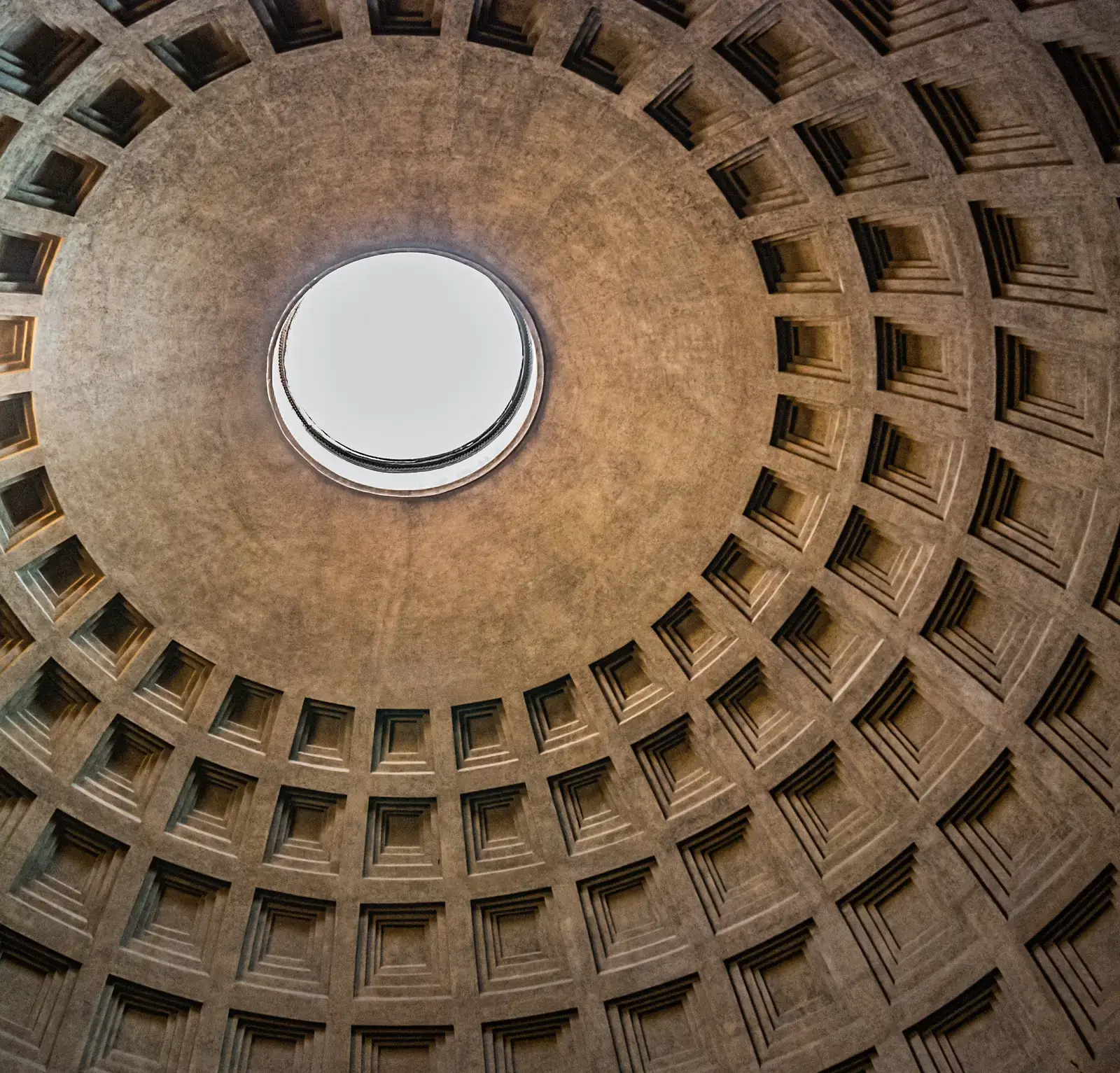
While every other entry on this list is a mystery of labor and logistics, this one is a mystery of chemistry, and it’s arguably the most humbling admission modern engineering has ever made. The Pantheon has been standing for 1,900 years, unreinforced, and Roman harbor concrete built 2,000 years ago is still getting stronger.
A 2023 study from MIT and Harvard found the mechanism behind it: researchers analyzing Roman concrete samples found bright white mineral clasts, chunks of lime long dismissed as evidence of sloppy mixing. They were wrong. The new analysis showed those clasts were intentional, and they’re the source of the material’s self-repair ability. Modern Portland cement, by comparison, starts to crumble in as little as 50 years, while Roman marine concrete actively heals its own cracks through a chemical reaction that modern mixes were never designed to perform. Even the scientists who cracked the code are cautious: replicating Roman concrete exactly as it was is unfeasible, since our construction scale and need for rapid initial strength are different. Engineers aren’t trying to copy it wholesale; they’re trying to steal its trick.
Roman concrete to me is fascinating: It’s still standing after all this time and constantly repairing.
Admir Masic, MIT
The Bottom Line
Here’s the uncomfortable truth: modern engineering isn’t universally superior to ancient engineering, it’s just differently optimized. We build faster, cheaper, and taller, but almost none of it is designed to last 2,000 years, and most of it couldn’t survive the earthquakes that Inca and Byzantine builders planned for centuries ago.
The real mistake is assuming “primitive” meant “inferior.” Ancient and medieval builders were solving different problems with different constraints, and in several cases – Roman concrete chemistry, Inca seismic joints, Baalbek’s sheer scale – they solved them better than we currently can. Which of these feats do you think is the most impossible to explain? Drop your theory in the comments.