Most people assume archaeologists eventually crack every case they dig up – carbon-date it, label it, move on. Case closed, museum plaque printed, everyone goes home satisfied.
But museum archives tell a messier story. Dozens of artifacts once confidently filed under “solved” have quietly slid backward into “unexplained” as new scanning tech, chemical testing, and fresh digs punch holes in decades-old theories. Some were labeled tools. Others, toys or trinkets. Now the paperwork on all of them reads the same way: purpose unknown. Here’s what archaeologists and conservators actually say about the 14 objects nobody can fully explain.
#14 – The Klerksdorp Spheres: South Africa’s Billion-Year-Old Puzzle
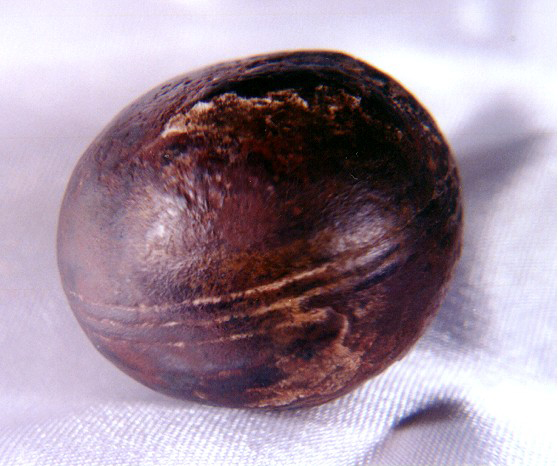
For decades, these palm-sized metallic-looking spheres were sold in gift shops as “proof” of intelligent life on Earth nearly three billion years before the first complex organisms existed.
Miners pulled them from pyrophyllite deposits near Klerksdorp, South Africa, in rock layers dated to roughly 2.8 billion years old. Some specimens carry parallel grooves running around their equator, which fueled decades of “ancient artifact” claims. The rock they came from predates any known life form capable of shaping metal by billions of years. Most geologists now classify the spheres as natural concretions – wollastonite and hematite nodules that formed through mineral precipitation and were later freed by erosion. But a handful of specimens have grooves so symmetrical that a small number of researchers still list the exact formation mechanism as unresolved rather than fully closed.
#13 – The Costa Rica Stone Spheres
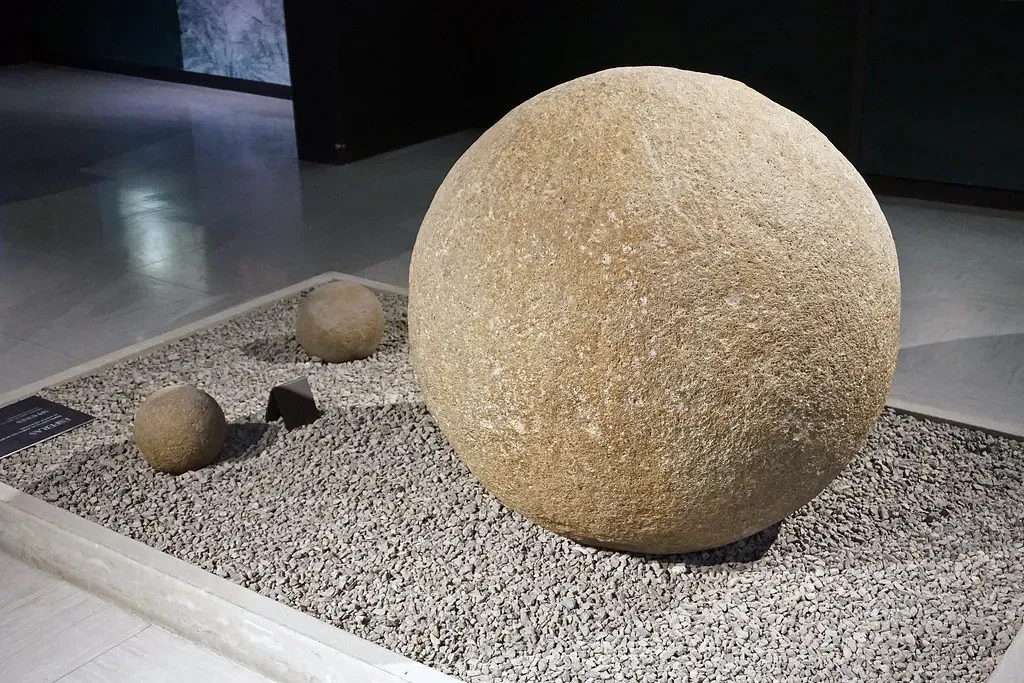
In the jungles of the Diquís Delta sit more than 300 stone balls so precisely round that modern engineers with laser tools still can’t fully explain the process.
The pre-Columbian Diquís culture carved these spheres, some measuring over six feet across and weighing up to 16 tons, with a roundness accuracy that borders on machine-tolerance. No unfinished or “practice” sphere has ever been found, which means archaeologists know who made them but still can’t confirm how. UNESCO added the sites to its World Heritage list, settling the question of authorship. What hasn’t been settled is the purpose – theories range from markers of chiefly status to alignments tracking celestial events, and none has won a consensus.
Fast Facts
- This now extinct culture left behind over 300 enigmatic stone spheres, commonly referred to as the Diquís Spheres.
- These stone spheres are rare in their perfection of large-sized (up to 2.57m diameter) spherical structures.
- The Diquís culture flourished from around 500BC until Spanish conquest in the 16th century.
- The designation covers four sites in the Diquís Delta: Finca 6, Batambal, El Silencio, and Grijalba-2.
#12 – The Quimbaya “Airplane” Figurines
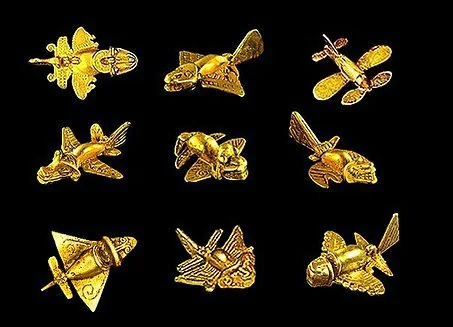
Gold trinkets small enough to fit in your palm have shapes so unusual that two German engineers once built a working scale glider based on their outline.
The pre-Columbian Quimbaya culture of Colombia cast hundreds of tiny gold zoomorphic pendants, and most archaeologists identify them as stylized birds, bats, insects, and fish based on comparisons with regional wildlife and other South American goldwork. A handful of the pieces have delta-wing silhouettes and tailfins that don’t cleanly match any known animal, which is exactly why fringe theorists insist they depict aircraft. Mainstream archaeologists reject that reading outright – stylized, exaggerated animal art was common across the region’s metallurgy, and no comparable “vehicle” imagery shows up anywhere else in the record. Still, the specific species the goldsmiths intended for the odd pieces has never been formally agreed upon.
#11 – The Piri Reis Map’s Missing Source Charts
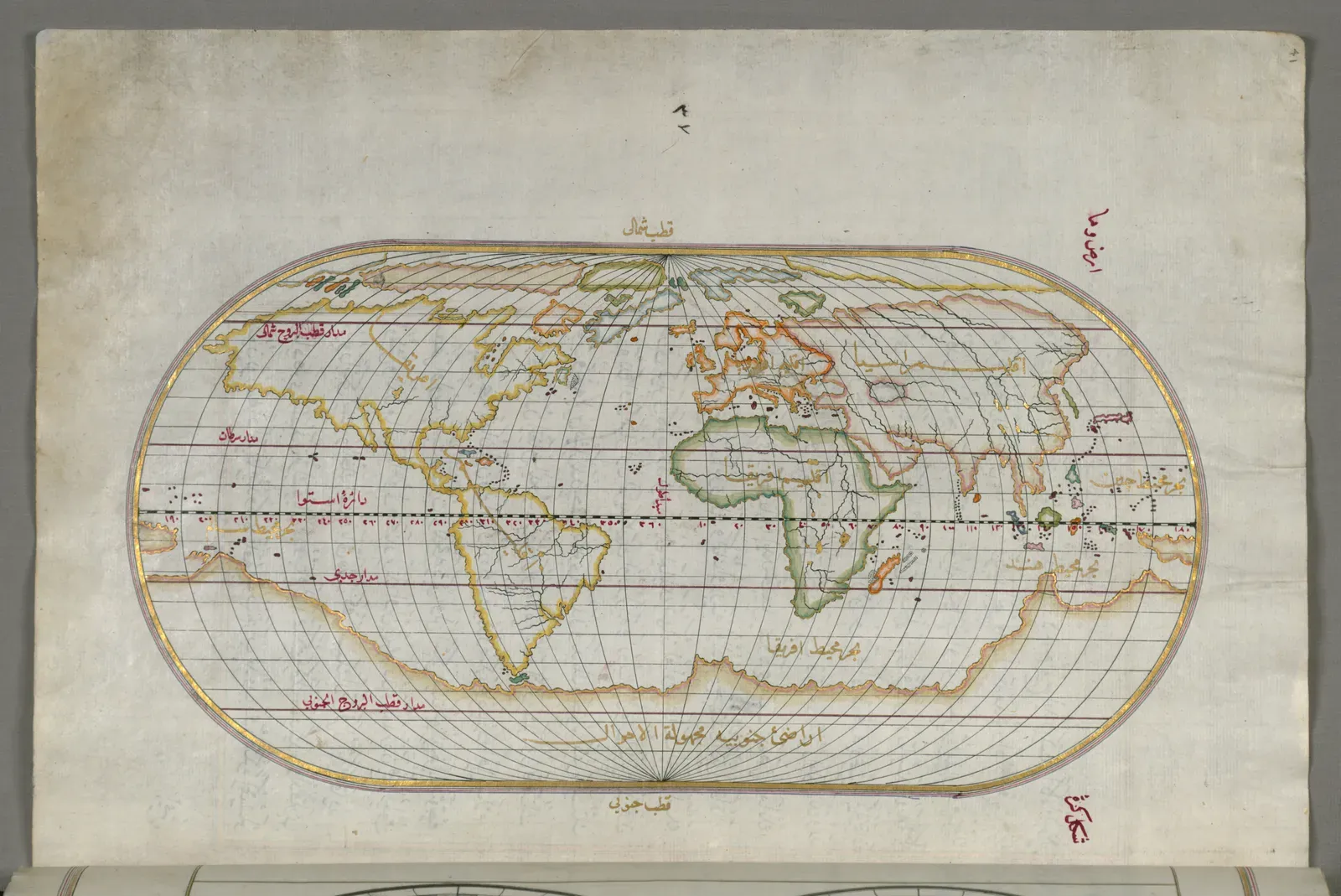
A 1513 map drawn by an Ottoman admiral cites twenty older source charts that have never been recovered – and nobody knows exactly what was drawn on them.
Piri Reis compiled his map partly from earlier navigational charts, reportedly including one once used by Columbus, all now lost to history. The southern portion of the coastline bends sharply, a detail some pseudoscientific writers claim resembles ice-free Antarctica thousands of years before it should have been mapped. Mainstream cartographic historians attribute the bend to ordinary stitching errors from combining separate regional charts without a shared projection, not lost ancient knowledge. What genuinely remains unresolved is which specific source maps supplied that southern coastline, since the originals Piri Reis referenced have never surfaced.
#10 – The Nebra Sky Disc
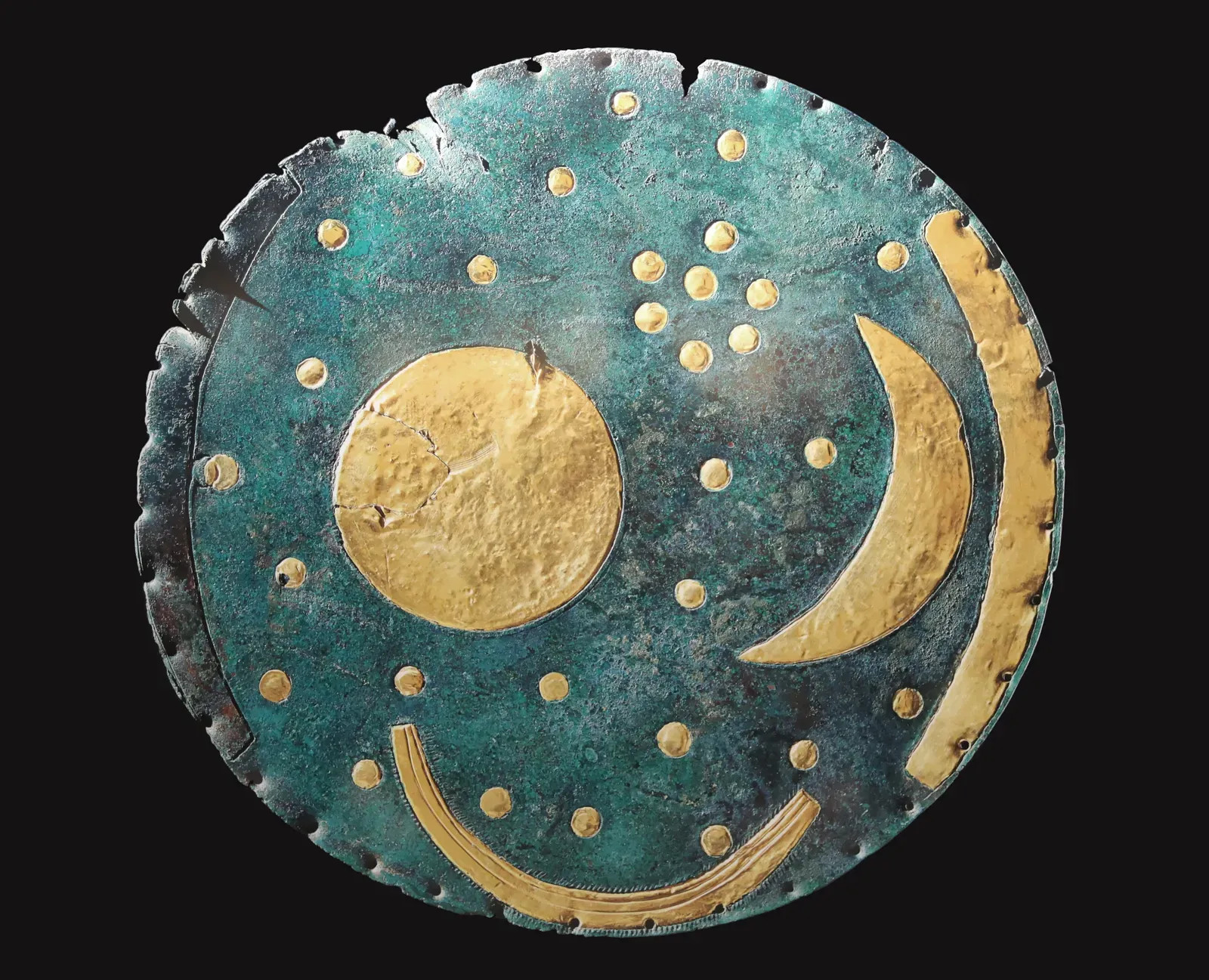
Looters buried it, black-market dealers nearly melted it down for scrap, and even now archaeologists disagree on what the oldest known map of the sky was actually built to do.
This Bronze Age bronze disc, dated to roughly 1600 BCE and unearthed in Germany, features gold appliqués depicting the sun, a crescent moon, and a scatter of stars, with arc-shaped bands added in a later phase of its life. It’s widely considered the earliest concrete depiction of astronomical phenomena ever found. The disc changed hands illegally for years before authorities recovered it in a sting operation. What it was actually for is still split down the middle: some researchers argue it functioned as a calendar tool correcting the drift between lunar and solar years, while others see it as a religious or political emblem of authority. No instructions or inscriptions were buried alongside it to settle the debate.
#9 – Sacsayhuamán’s Impossible Stonework
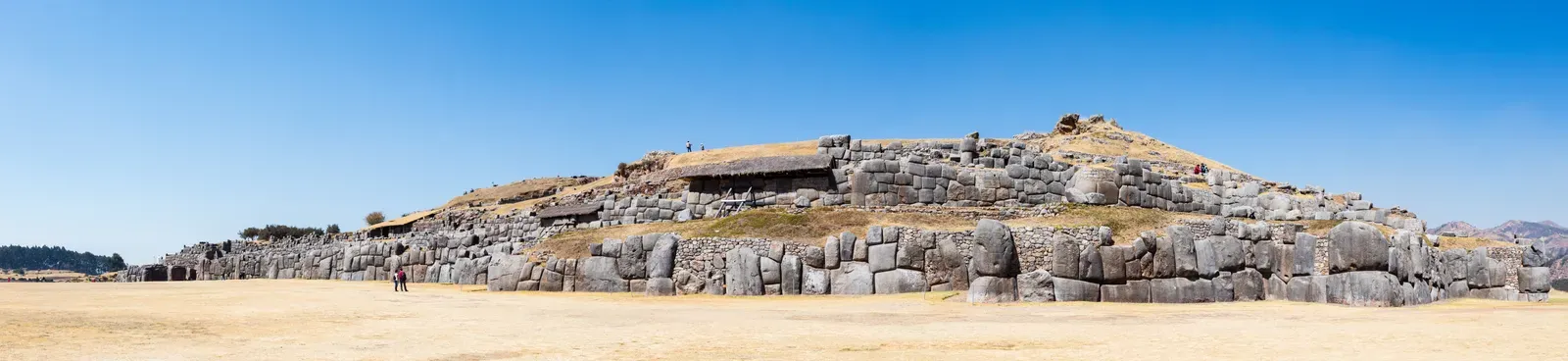
Some of these Inca-era stones weigh more than a loaded cargo truck, yet the seams between them are too tight to slip a piece of paper through.
The massive polygonal limestone and andesite blocks at this site near Cusco, Peru, were fitted without mortar, each stone individually shaped despite wildly irregular angles. Nobody has confirmed exactly how workers achieved that level of precision on blocks this large. Engineers widely admire the achievement, but the specific technique is genuinely contested: theories include trial-and-error grinding, abrasive sand paired with smaller bronze tools, and even claims of plant-based stone-softening that most specialists reject outright. No consensus method has ever been confirmed, so archaeologists still list the exact fitting technique as undetermined rather than solved.
#8 – The Voynich Manuscript’s Unbreakable Code
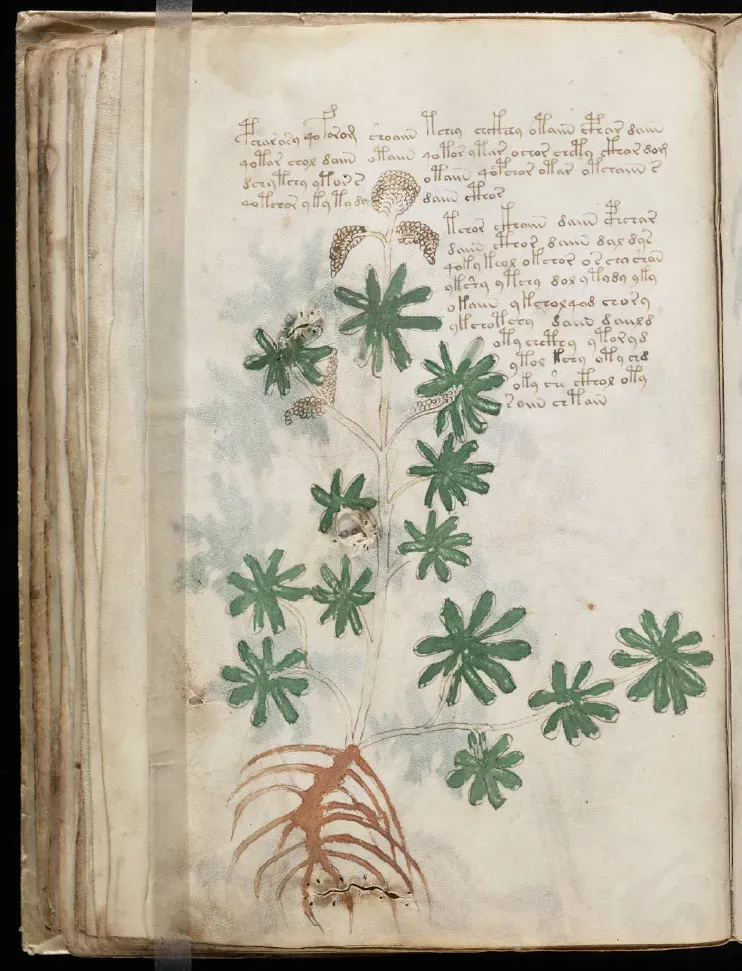
Radiocarbon dating proved the parchment is genuinely from the early 1400s, which only made the code written on it harder to explain, not easier.
This roughly 240-page illustrated codex is filled with an unidentified script researchers now call “Voynichese,” alongside illustrations of unfamiliar plants, astrological diagrams, and figures bathing in strange plumbing. It currently sits in Yale’s Beinecke Rare Book Library. Dozens of researchers have publicly claimed to decode it – and every single claim has been challenged and rejected by linguists. Proposed solutions have included a lost proto-Romance language and elaborate ciphers, but statistical analysis of the text’s patterns doesn’t cleanly match any known language family. The author, the purpose, and the underlying language all remain formally unresolved.
#7 – The Longyou Caves Hiding Under China’s Ponds
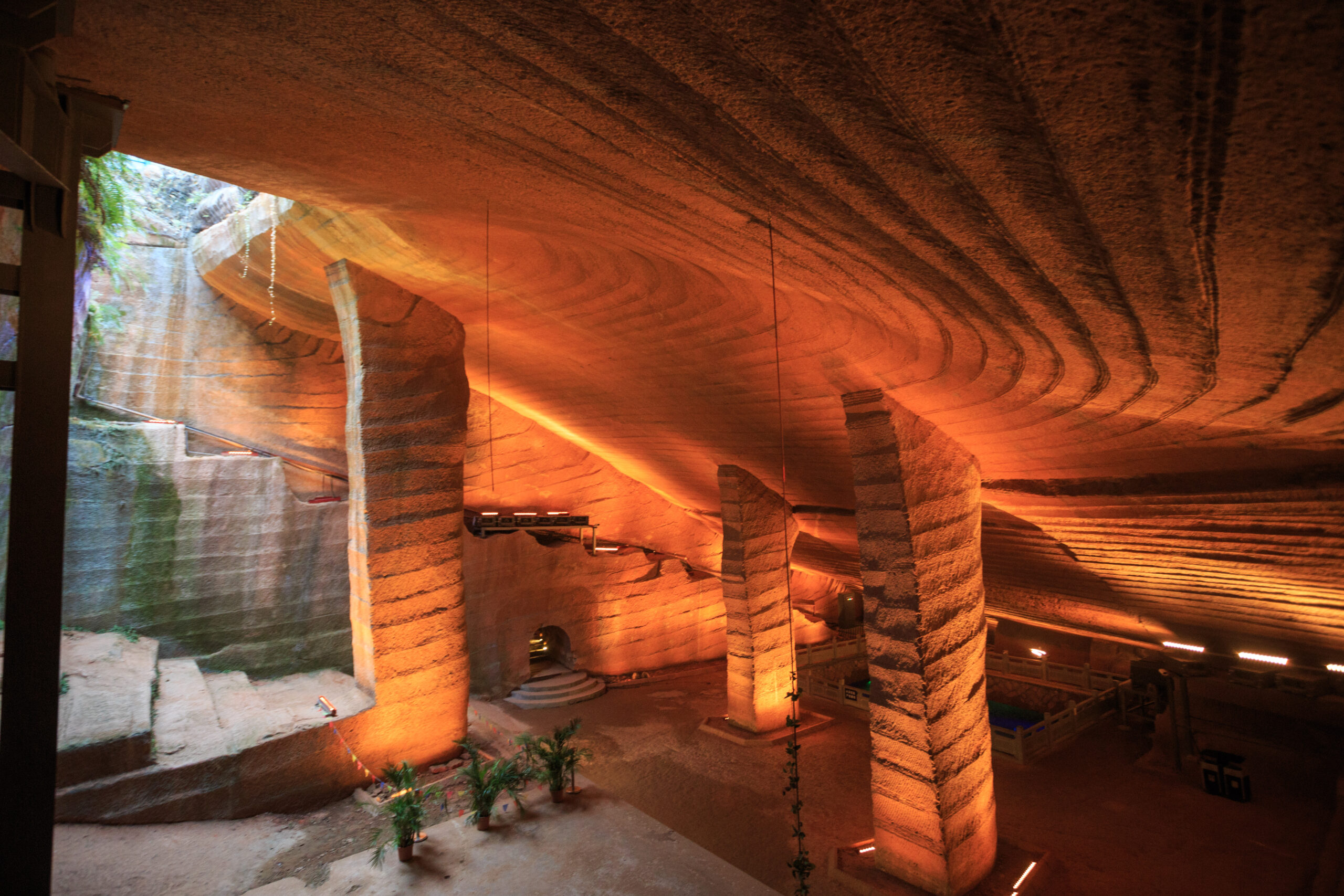
Farmers thought their ponds were bottomless. They were actually flooded entrances to one of the largest hand-carved underground complexes on Earth.
In 1992, farmers from Longyou County in China’s Zhejiang province stumbled across the caves while draining water from their ponds, revealing twenty-four huge, hand-built sandstone caverns. Despite their grandeur and precision, there are no historical records of their construction, origin, or purpose. The structures are estimated to be at least 2,000 years old, and their scale has baffled archaeologists, geologists, architects, and engineers ever since they were found. No tools, no inscriptions, and no local legend has ever explained why an ancient community would carve out this much stone and leave nothing behind saying why.
At a Glance
- In June 1992, four farmers in Longyou discovered the caves by accident when they drained the water of five small ponds in their village.
- To date 24 hand-carved caves have been discovered covering a massive 30,000 square meters.
- An estimated one million cubic metres (over 350,000 tonnes) of rock was excavated to create the caves.
- No tools have been found in the area, and scientists still don’t know how they achieved such symmetry and precision.
#6 – The Saqqara Bird’s Glider Wings
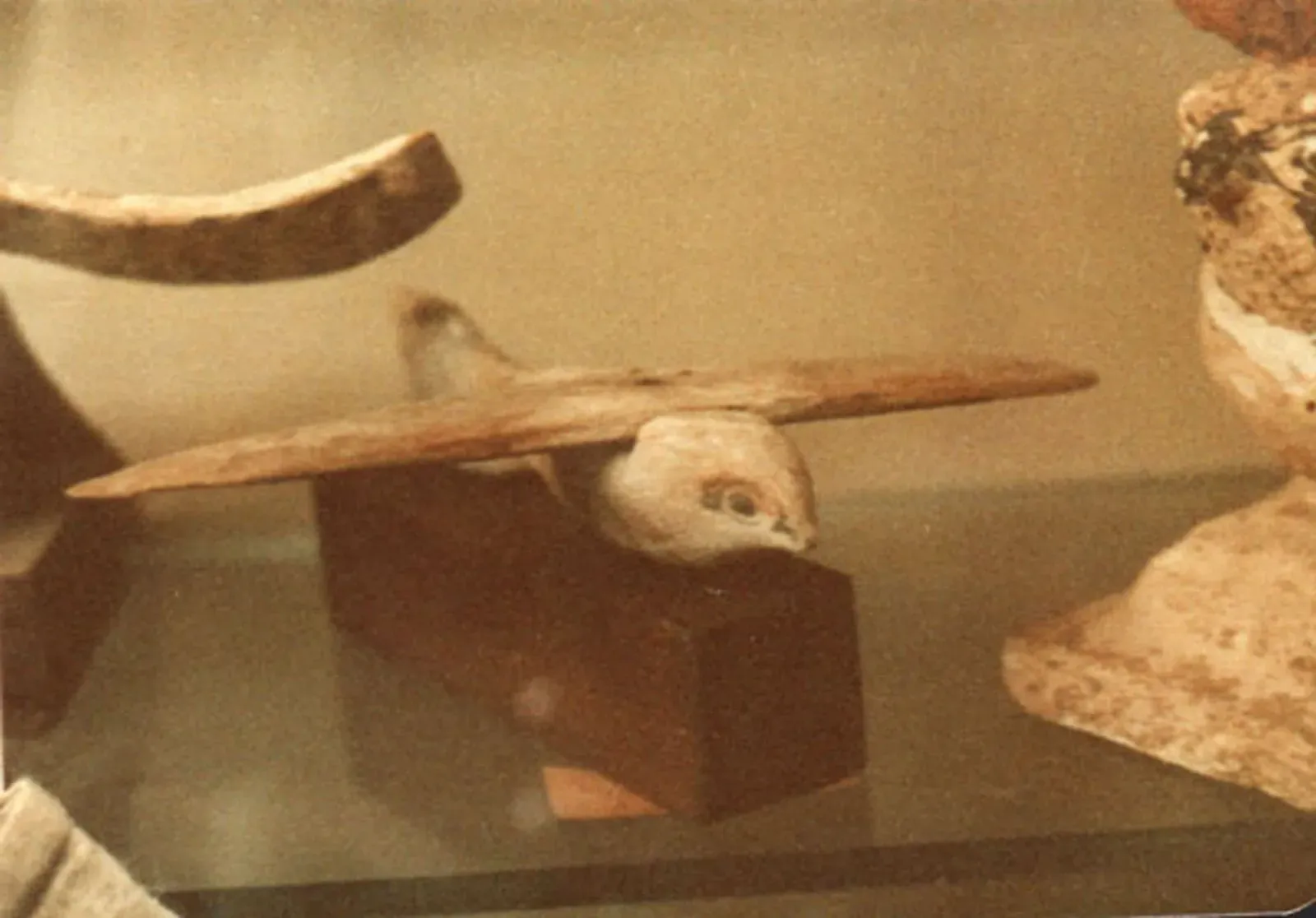
Unearthed in an Egyptian tomb over a century ago, this small carved artifact has features that look uncomfortably similar to a modern glider.
The Saqqara Bird is a 2,000-year-old wooden artifact shaped like a bird, but it has features more in common with a modern glider. Its wings are flat rather than curved like a real bird’s, and its tail is oriented vertically instead of horizontally – a detail that has kept aerodynamics enthusiasts arguing for decades. There are theories that it’s evidence of early aerodynamic knowledge, or perhaps just a stylized bird toy. Most Egyptologists lean toward the toy or religious-symbol explanation, pointing out that ancient Egyptian art frequently simplified animal forms for stylistic or ritual reasons. But no comparable “toy” from the period shares its exact wing geometry, which is precisely why the debate hasn’t closed.
#5 – The Shigir Idol’s Silent Language
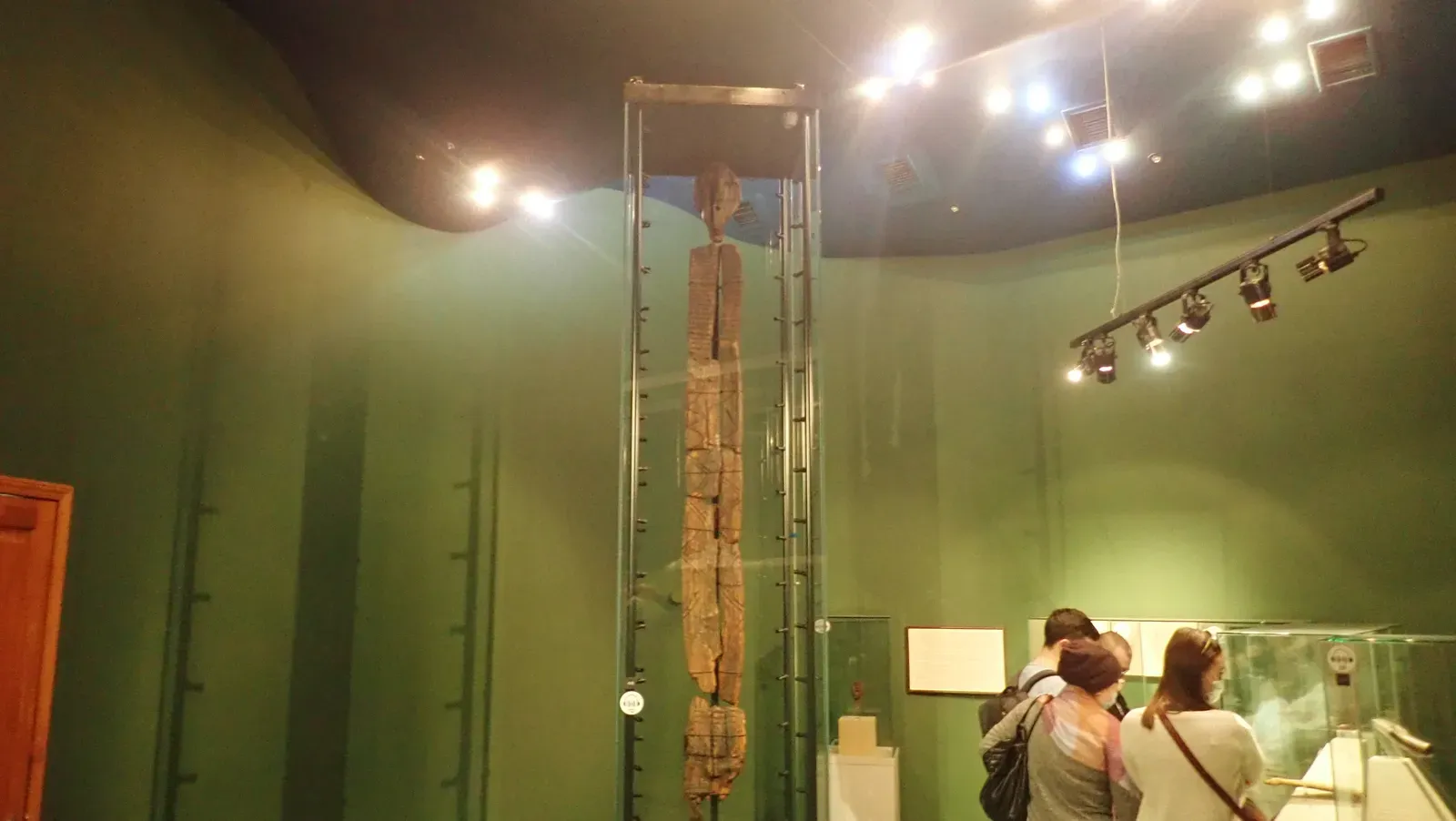
This wooden statue is twice as old as Stonehenge, and its carvings might be the oldest attempt at written communication ever discovered.
Unearthed from a peat bog near Kirovgrad in 1890, the Shigir Idol is the oldest known wooden sculpture on Earth, with recent radiocarbon dating placing its age at approximately 11,600 years. When first reconstructed, it stood an impressive 5.3 meters tall; today, only 2.8 meters survive. The idol is covered in intricate geometric patterns and at least seven carved human faces, and the meaning of its carvings remains completely unknown. Some archaeologists believe the marks could encode mythological information passed between Mesolithic communities, effectively a lost symbolic language, though nothing has been confirmed. The idea that hunter-gatherers were creating this level of symbolic art millennia before farming even existed still unsettles a lot of textbook timelines.
#4 – The Phaistos Disc’s Unbroken Cipher
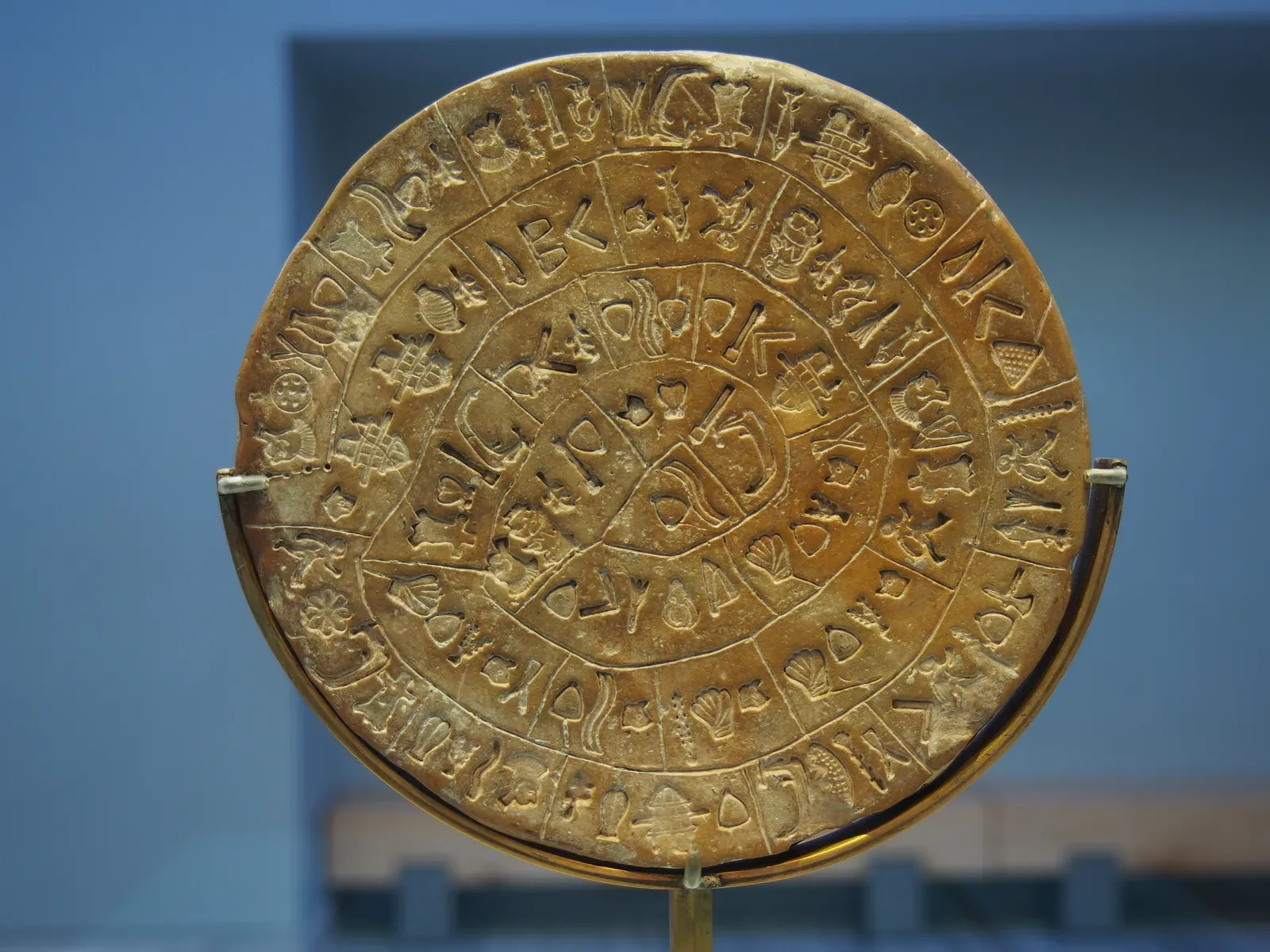
Over a century of attempted decryption, dozens of published “decodings,” and not a single one has survived peer review intact.
Discovered in 1908 in the Minoan palace of Phaistos on Crete, this small clay disc carries a mysterious spiral of stamped symbols, dating to around 1700 BCE, yet its purpose and meaning remain unknown. It features 45 distinct signs pressed into soft clay with stamps, suggesting a form of prehistoric printing unlike anything else discovered from that era. The disc has been “decoded” dozens of times, and none of those readings have held up. In 2014, one researcher claimed to have translated most of it as a prayer to a mother goddess; the claim received considerable press coverage but also considerable skepticism from other Aegean linguists, who noted the readings relied on unverifiable assumptions. The script appears almost nowhere else, apart from a possible fragment on a bronze axe, making the sample size too small for reliable decipherment.
Worth Knowing
- The disc is about 16 cm (6.3 in) in diameter and is covered on each side with a spiral text, consisting of a total of 241 occurrences of 45 distinct signs.
- Italian archaeologist Federico Halbherr, his student Luigi Pernier, and a team were excavating the site of a Minoan palace at Phaistos when they came across an underground deposit.
- It is now on display at the archaeological museum of Heraklion.
- It has been interpreted as an adventure narrative, a poetic verse, a magical curse, a board game, and even musical notes for a stringed instrument.
#3 – The Roman Dodecahedra Nobody Wrote About
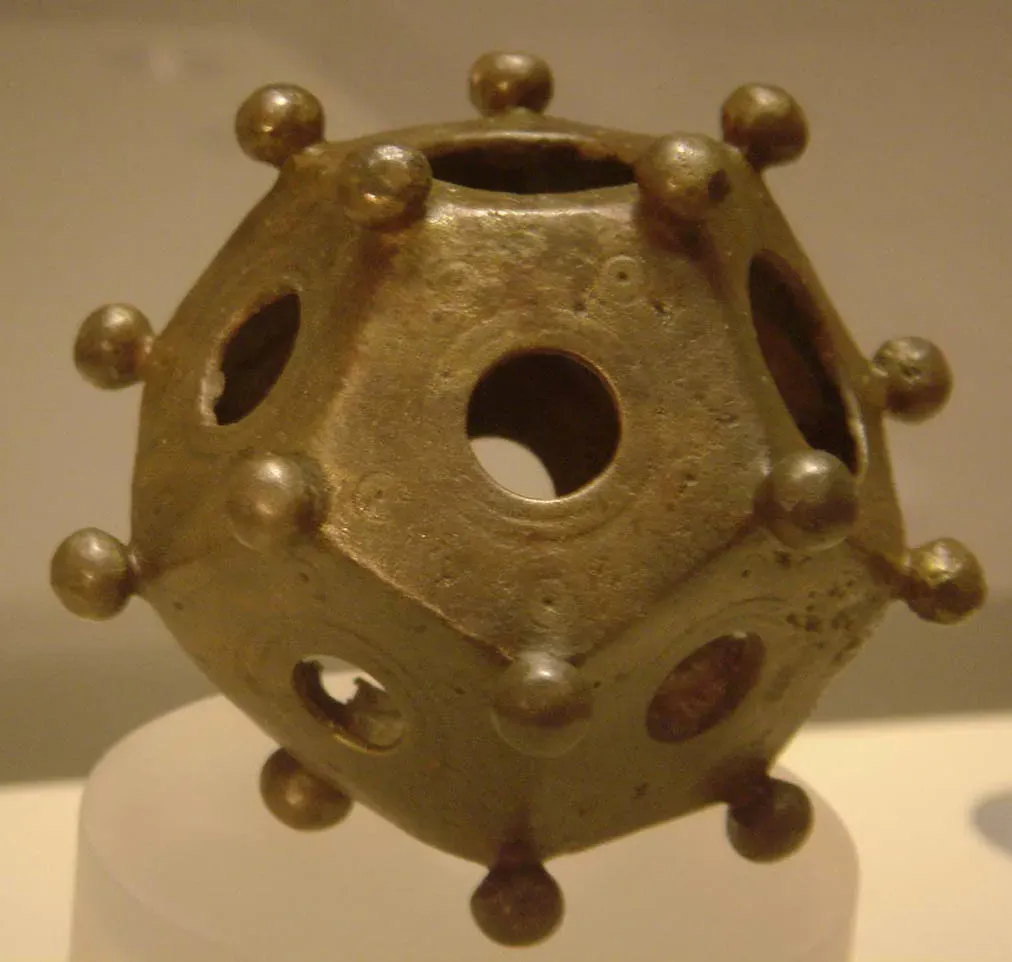
Archaeologists have been baffled by these 12-sided bronze objects since 1739, when the first example was discovered in the English Midlands.
At least 120 examples have been found across the northwestern provinces of the Roman Empire, yet there are no historical records or depictions of them in ancient art anywhere. That means an object popular enough to survive in the triple digits left zero written trace of its own purpose. Researchers have suggested the dodecahedra may have functioned as weapons, decorations, candlestick holders, rangefinders, measurement devices, children’s toys, dice, craftsman’s samples, or spools for knitting gloves. A well-preserved example discovered in 2023 in Norton Disney, Lincolnshire, was found placed carefully in a pit, leading current researchers toward a ritual or spiritual explanation rather than a practical one. Oddly, no Roman dodecahedron has ever been found in Rome, or even in the whole of Italy, which undercuts almost every “official Roman tool” theory.
#2 – The Baghdad Battery’s Impossible Voltage
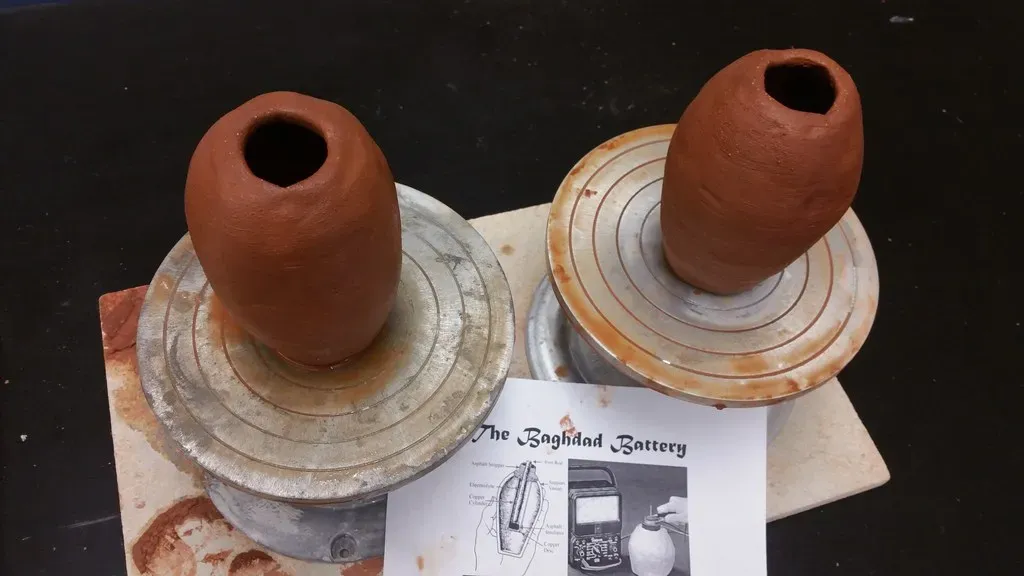
A 2,000-year-old clay pot may have generated electricity nearly two millennia before Alessandro Volta got credit for the invention.
Discovered in 1936 at Khujut Rabu, near Baghdad, the artifact consists of a ceramic pot about 140 mm tall, a copper tube, and an iron rod centrally positioned within it. In 1938, museum director Wilhelm König suggested it functioned as a galvanic cell, possibly used for electroplating or electrotherapy. Reconstructions filled with acidic liquids have produced between 0.5 and 1.5 volts – enough for a noticeable tingle. Here’s the friction point most articles skip: there is no electroplated object known from this period, and the electroplating claims are universally rejected by archaeologists, who lean toward it being a storage vessel for scrolls or a container for ritual objects. The debate is permanently unresolvable, too – the artifact was lost during the 2003 invasion of Iraq and can never be re-examined directly.
#1 – The Antikythera Mechanism’s Unfinished Verdict
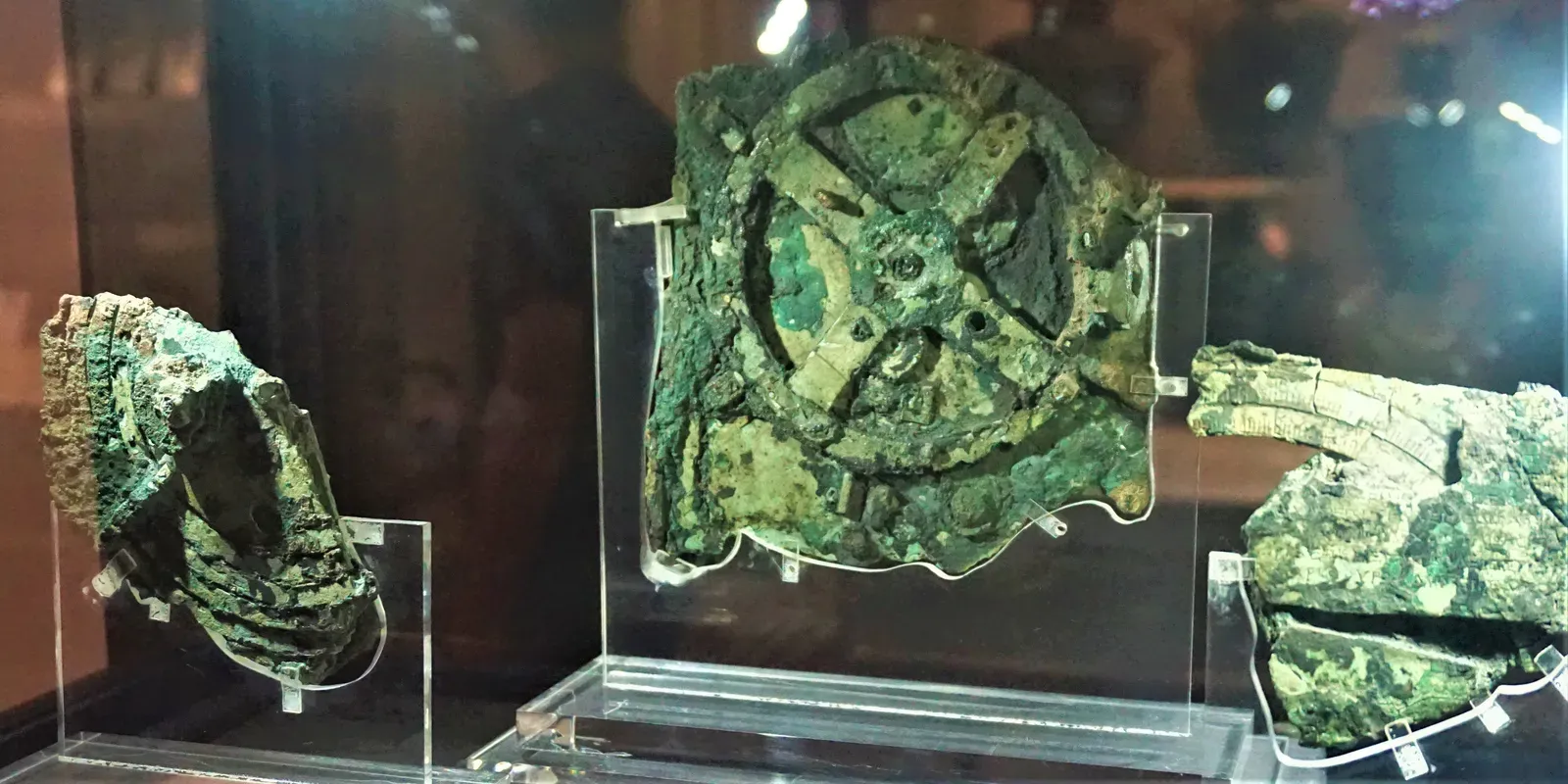
An ancient bronze device pulled from a shipwreck floor has been called the world’s first computer – and even that title might be too small.
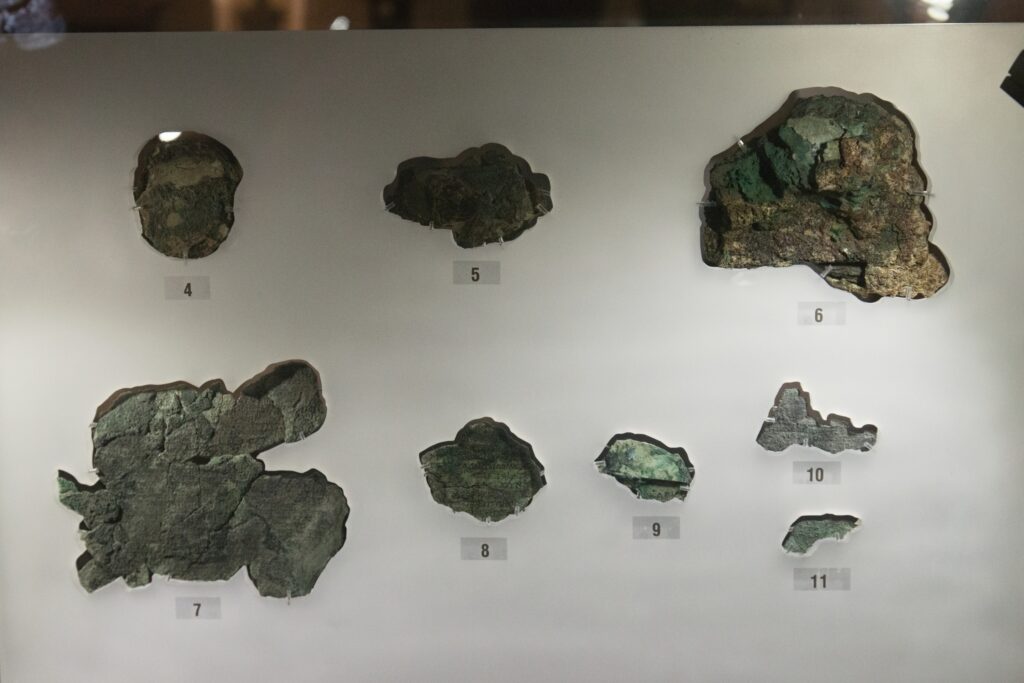
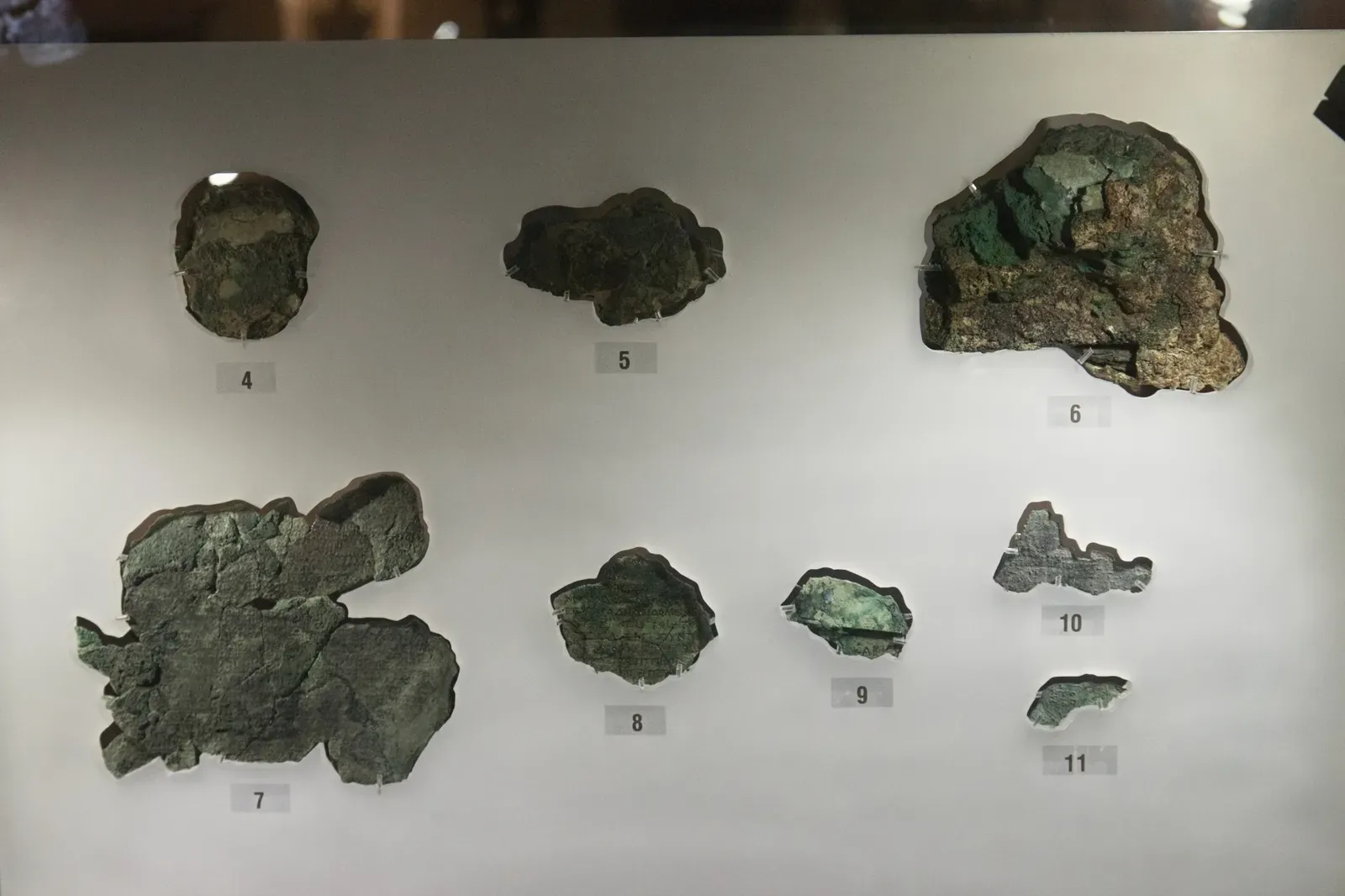
Discovered in 1901 in a shipwreck off the coast of the Greek island of Antikythera, this intricate device has puzzled historians, archaeologists, and scientists for over a century. Only a third of the original device survives: 82 corroded fragments, including 30 gear wheels. Scientists eventually discovered the device was an elaborate construction of some thirty interlocking, spinning gears that controlled dials tracking celestial cycles and even the Olympic Games schedule. That alone reshaped what historians assumed ancient Greek engineers were capable of building. But the case isn’t fully closed: newer research into its triangle-shaped teeth suggests it may not have been a precision instrument at all, but a mechanism prone to constant jamming. Whichever theory wins, 2,000 years underwater turned its bronze into brittle atacamite, a mineral that distorted the device’s original measurements, so researchers no longer have access to its exact original dimensions – which means full certainty may never arrive, no matter how good future scanners get.
Why It Stands Out
- In 1901, a group of sponge divers came across, off the Greek island of Antikythera, the remains of a Roman shipwreck.
- The device incorporated more than 30 hand-operated bronze gears that modelled the cycles of the Moon, the Sun and the known planets, and used an epicyclic gearing system, similar to a modern differential, to compensate for orbital irregularities.
- The ancient Greek astronomical calculating machine predicted eclipses, based on the 223-lunar month Saros cycle.
- The machine also showed the data for the four Panhellenic games – the Isthmia, Olympia, Nemea, and Pythia – as well as two minor games.
The Bottom Line
Here’s the uncomfortable truth: “unexplained” doesn’t mean magical, and it doesn’t mean archaeologists are hiding something. It means the physical evidence ran out before the theories did.
The Antikythera Mechanism, the Baghdad Battery, and the Roman dodecahedra all prove the same point – ancient people were frequently smarter, stranger, and more experimental than textbooks give them credit for, and our confidence in “solved” cases is often shakier than museum placards admit. I’d bet on the Roman dodecahedra getting cracked first, since new finds keep turning up almost every decade, while something like the Voynich Manuscript may simply outlast every scanner we ever build. The real story isn’t aliens or lost super-civilizations. It’s that history is incomplete, and new tech keeps proving it, one reclassified label at a time.