
You live every moment inside consciousness, yet when you look for it in the brain, it seems to vanish into a blur of neurons and chemistry. That mystery has pushed neuroscientists, philosophers, and physicists to propose bold theories that sometimes sound almost sci‑fi, but are slowly being tested with real experiments and brain scans. You’re watching a field where ideas that once felt like late‑night dorm conversations are turning into serious lab work.
In this article, you’ll walk through ten of the most influential and controversial consciousness theories that are reshaping how researchers study your mind. Some of them might change the way you think about free will, personal identity, or even what it means to be “you” for the next ten seconds. Others will show you how surprisingly fragile your everyday sense of reality really is. Let’s dive in where things feel the most familiar: the idea that consciousness rides on patterns of information.
1. Integrated Information Theory: Consciousness as “How Much the System Knows Itself”
Integrated Information Theory (IIT) starts from a wild but simple claim: you’re conscious to the extent that your brain generates a unified, irreducible pattern of information. Instead of asking where in your head consciousness “is,” IIT asks how much your brain states depend on each other in a way that can’t be broken into parts without losing something essential. That “how much” is captured by a measure called phi, which, in principle, you could compute for any system, from your cortex to a microchip.
In practice, you see IIT’s influence every time researchers compare patterns of brain activity in wakefulness, deep sleep, anesthesia, or coma. When your brain is awake, signals across regions tend to be both highly differentiated and highly integrated; during deep unconscious states, activity becomes either too fragmented or too locked into simple, repetitive patterns. The theory is controversial because it implies that any system with enough integrated information, even a network of logic gates, would have some tiny spark of experience – but that same claim is forcing labs to develop better tools to measure how deeply your brain’s activity is knitted together.
2. Global Neuronal Workspace: Consciousness as a Spotlight Broadcast
Global Neuronal Workspace Theory (GNW) treats your brain like a buzzing newsroom where countless unconscious processes compete to get a story on air. Most sensory details and thoughts stay local and automatic, but when some information becomes strong or important enough, it “ignites” a widespread network that broadcasts it across the cortex. At that moment, you don’t just process the information – you become consciously aware of it, able to report it, remember it, and use it to guide flexible decisions.
You can see GNW at work in classic experiments where a stimulus briefly flashes on a screen and sometimes slips into awareness and sometimes doesn’t, even though the physical input is the same. When you report seeing it, brain imaging shows a late, global surge of coordinated activity; when you miss it, the activity stays local and fades quickly. This theory has pushed modern neuroscience to use masking tasks, “no-report” paradigms, and intracranial recordings in humans to track that moment when hidden processing turns into a shared workspace, and it’s even influencing how people think about designing conscious‑like functions in AI systems.
3. Recurrent Processing Theory: Local Feedback Loops Without a Global Stage
Recurrent Processing Theory (RPT) says you’ve been overestimating how much of your brain needs to get involved for you to be conscious of something. Instead of requiring a large-scale broadcast, RPT argues that local feedback loops between early and slightly higher-order sensory areas can already create a basic conscious experience. For example, when you see a red apple, early visual areas send signals forward, but those areas also get rapid feedback from slightly more abstract regions, and this looping is what makes the experience “pop” into awareness.
In this view, the global workspace might still matter, but mainly for tasks like reporting, reasoning, and holding things in working memory, not for raw experience itself. That distinction matters because it forces you to separate what you can verbally describe from what you consciously feel, especially in animals or non-verbal humans. It also changes how labs design experiments: instead of assuming that report equals consciousness, researchers are using clever behavioral and physiological markers to see whether simple local recurrences might already support awareness even when you can’t or don’t report anything.
4. Higher-Order Theories: You’re Conscious When You Know That You Know
Higher-order theories claim that a mental state becomes conscious only when another mental state represents it. In other words, feeling pain is not enough; you also need a kind of internal “meta” representation that says, in effect, that you’re having that pain. You live in higher-order space whenever you notice yourself thinking a thought, realize you’re anxious, or become suddenly self-conscious in a crowded room.
Neuroscientifically, these theories put a lot of weight on prefrontal and parietal regions that support metacognition, self-monitoring, and error awareness. When these regions are disrupted, you might still process stimuli accurately but fail to notice that you saw them or misjudge your own performance. That pattern shows up in certain lesions, in transcranial magnetic stimulation studies, and in tasks where you rate your confidence in your decisions. If higher-order accounts are right, then building conscious machines is not just about perception; it’s about giving systems the ability to form internal models of their own states and treat those models as objects in their own right.
5. Predictive Processing: Your Brain as a Hallucination Engine Tuned by Reality
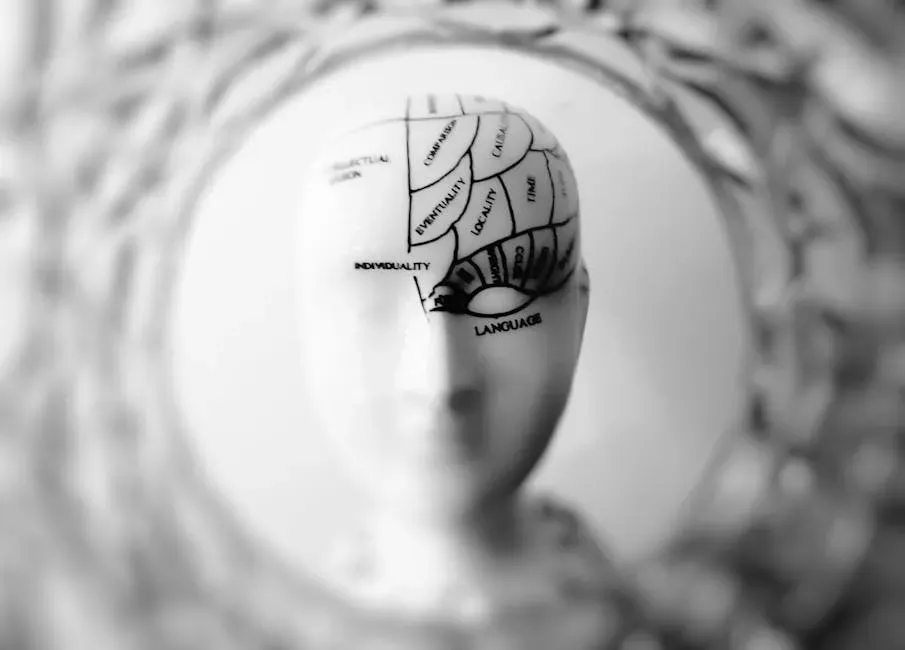
Predictive processing flips the usual image of the brain as a passive receiver of information. Instead, you constantly generate predictions about what you expect to see, hear, and feel, and sensory input mainly serves to correct those expectations. On this view, your conscious experience is more like a controlled hallucination that’s kept in check by incoming data. You’re not just perceiving the world; you’re actively guessing it and updating your internal model when you’re wrong.
This framework is quietly transforming how you understand everything from visual illusions to psychiatric conditions. For example, when predictions are overweighted, you may experience hallucinations or delusions because your brain insists on its internal story despite contradictory input; when sensory error signals dominate, the world can feel raw, overwhelming, and unstable. Consciousness, in this picture, might correspond to the level of your generative model that integrates predictions about your body, environment, and goals into a coherent “best guess” of what’s happening right now.
6. Attention Schema Theory: Awareness as the Brain’s Sketch of Its Own Focus
Attention Schema Theory (AST) starts from a simple analogy: just as your brain builds a model of your body (a body schema) to control movement, it builds a model of its own attention (an attention schema) to control and predict where mental focus goes. You experience consciousness, on this view, when your brain’s internal sketch of “what I am paying attention to” is integrated into perception. You feel like there is a mysterious inner glow attached to some information because your brain’s model describes it that way, not because there’s an extra non-physical substance involved.
This theory helps explain why you often believe you’re aware of more than you actually are, and why your sense of “I am noticing this” can be inaccurate. It also leads to concrete predictions: if you disrupt brain regions involved in this attention schema, you should see specific deficits in awareness and in how you attribute awareness to yourself and others. In a practical sense, AST nudges you to see consciousness not as a magical add-on but as the brain’s convenient, simplified self-description of its own spotlight, which is useful for social cognition, planning, and communication.
7. Embodied and Enactive Theories: You Don’t Just Have a Body – You Are Doing One
Embodied and enactive theories insist that you cannot understand your conscious mind by looking only at the brain in isolation. Your experience is shaped by the constant dance between your brain, your body, and your environment. The way you perceive a coffee cup depends not just on retinal images but on how your hand can reach it, how your posture feels, and what actions are available to you. You’re not a brain in a vat; you’re an organism actively exploring a world.
In this view, consciousness emerges from patterns of sensorimotor activity rather than static internal pictures. That idea has inspired experiments on how changing your body – through virtual reality illusions, exoskeletons, or altered sensory feedback – can reshape what and how you experience. It also reshapes clinical approaches, suggesting that conditions like chronic pain, depersonalization, or some mood disorders might be tackled not just by targeting brain chemistry but by changing how you move, breathe, and interact with your physical surroundings.
8. Panpsychism and Neutral Monism: Consciousness as a Basic Feature of Reality
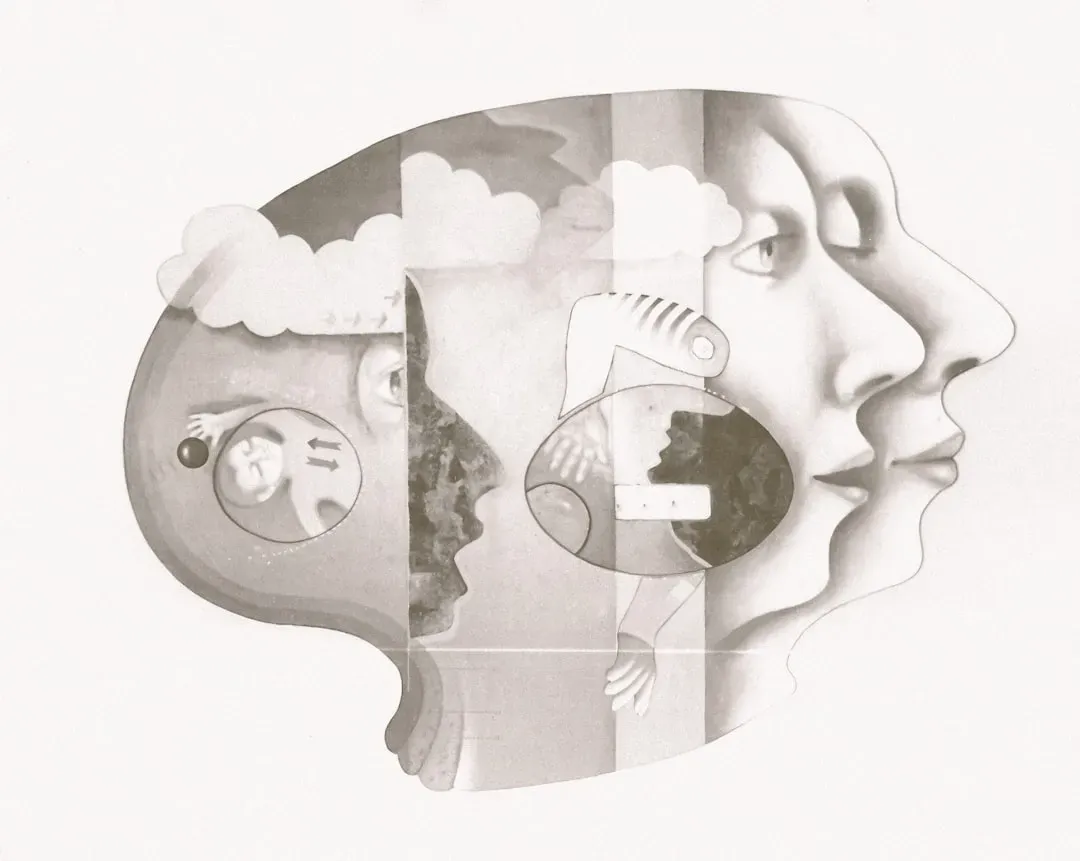
Psychologically, it can be unsettling to consider that your inner life might be built out of the same stuff as rocks and atoms. Panpsychism takes that discomfort seriously and suggests that some form of extremely simple experience is a fundamental property of matter, just like mass or charge. On this view, your brain does not create consciousness out of nothing; it organizes and integrates proto-experiential ingredients that are already present in the physical world.
Neutral monism offers a related twist, claiming that both mind and matter are built from a more basic kind of “stuff” that is neither purely mental nor purely physical. Neuroscience has not turned these philosophical ideas into lab protocols, but they are influencing how researchers talk about the “hard problem” of why physical processes should give rise to experience at all. For you, these theories serve as a reminder that some of the deepest questions about consciousness may require rethinking your assumptions about what the universe is made of, not just where neurons fire.
9. Quantum and Orchestrated Objective Reduction: Consciousness in the Micro-World
Quantum theories of consciousness propose that classical neuroscience is missing something crucial happening at very small scales. The most discussed version, Orchestrated Objective Reduction (Orch OR), suggests that quantum processes in neuronal microtubules somehow give rise to conscious moments when quantum states collapse in orchestrated ways. The lure here is the idea that your mind might tap into subtle, non-classical properties of reality that go beyond ordinary electrical signals.
Most working neuroscientists remain deeply skeptical, pointing out that the brain is warm, wet, and noisy – conditions that usually destroy delicate quantum coherence very quickly. Yet quantum-inspired ideas keep returning because consciousness still resists easy explanation, and because quantum theories force you to ask whether time, causality, and reality might look different at the scale where experience is born. Even if Orch OR turns out to be wrong, its presence in the conversation is nudging new experiments on how far quantum effects can survive in biological systems and whether they matter for information processing at all.
10. Consciousness as a Space of Possible States: From Neural Manifolds to Cognitive Maps
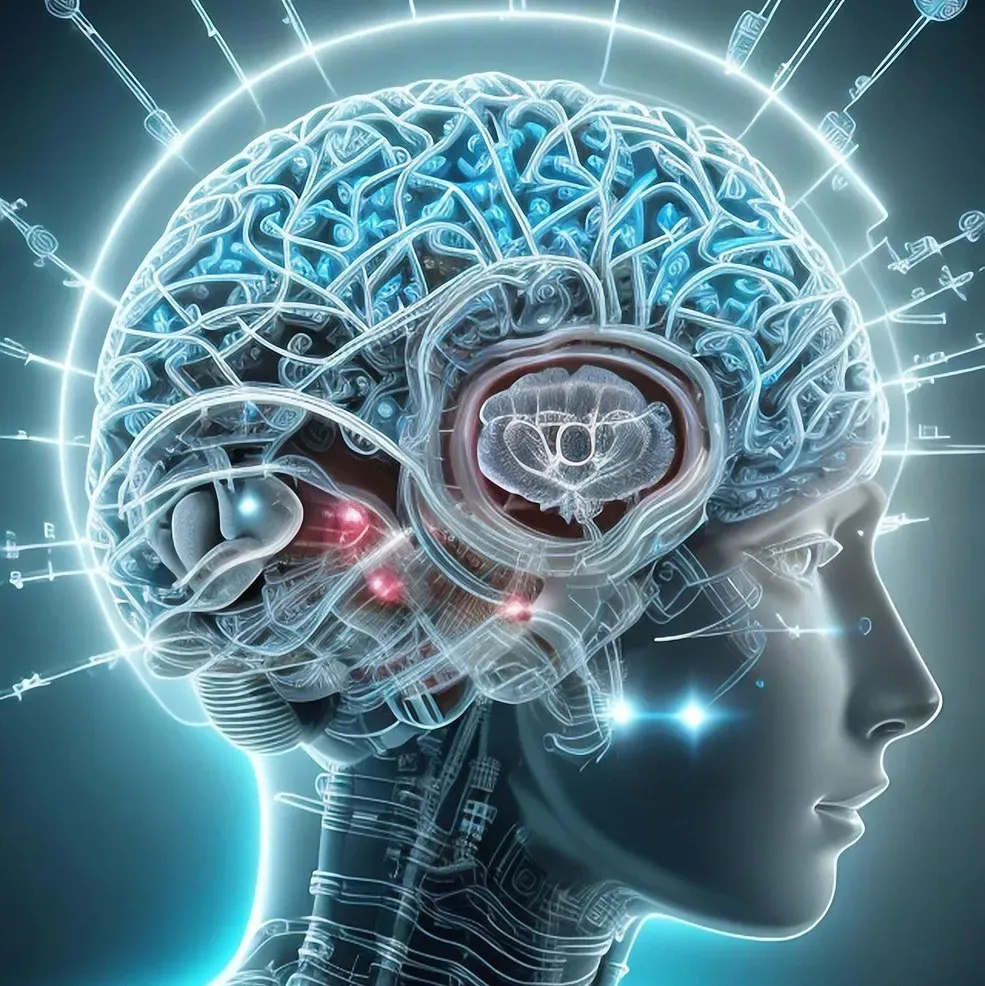
A newer wave of research treats consciousness less like a binary on–off switch and more like movement through a complex landscape of possible brain states. When you’re awake, your neural activity roams a high-dimensional manifold with rich structure; during deep sleep, anesthesia, or certain disorders of consciousness, that activity collapses into simpler, more stereotyped trajectories. In this picture, being conscious means having access to a large, flexible repertoire of states that can be visited and combined in meaningful ways.
Researchers are using tools from network theory and dynamical systems to map these repertoires, asking how diverse, how integrated, and how stable your brain’s activity patterns are in different conditions. This approach complements older theories by giving you concrete metrics: you can quantify how “rich” or “constrained” the brain’s dynamics are and match that to clinical assessments or subjective reports. For you, it offers a helpful metaphor: instead of thinking of consciousness as a lightbulb, imagine it as the range of moves available to a dancer on a stage – the wider and more fluid the possibilities, the more vividly the dance of your experience can unfold.
Conclusion: Living With a Mystery That Won’t Stay Still
When you step back from all these theories, you notice something striking: none of them fully captures what it feels like to be you, yet each one forces you to refine your questions. You’re no longer asking only what part of the brain “lights up,” but how information is integrated, how predictions are made, how attention is modeled, how bodies shape minds, and what kind of universe could contain experience at all. That shift is exactly how a young science grows up – by turning vague wonder into specific, testable ideas.
In your daily life, you might never compute phi, trace a global workspace ignition, or map a neural manifold, but you are constantly living at the crossroads of these ideas every time you notice a color, feel a pain, or catch yourself thinking about your own thoughts. As experiments sharpen and theories compete, some of these frameworks will merge, others will fade, and a few may be radically revised. For now, they give you a richer, more nuanced way to talk about the most intimate thing you have: your own conscious experience. Which of these views feels closest to how your mind actually seems from the inside?