

Picture this: a thought pops into your head out of nowhere – call a friend, quit your job, eat that last slice of cake. You feel like you chose it, like some inner commander flipped a mental switch. But what if that feeling of choosing is just a clever after‑the‑fact story? What if “you” are more like a commentator at a sports game than the player on the field?
That’s the provocative idea some neuroscientists and philosophers are circling around: the self might not be the author of thoughts, but the audience. In this view, consciousness is less a steering wheel and more a front‑row seat. It is shocking, a little unsettling, and also strangely freeing. Let’s unpack what this means, what science actually shows, where it almost certainly does not go, and how it might change the way you live your life.
The Radical Idea: The Self as Audience, Not Author
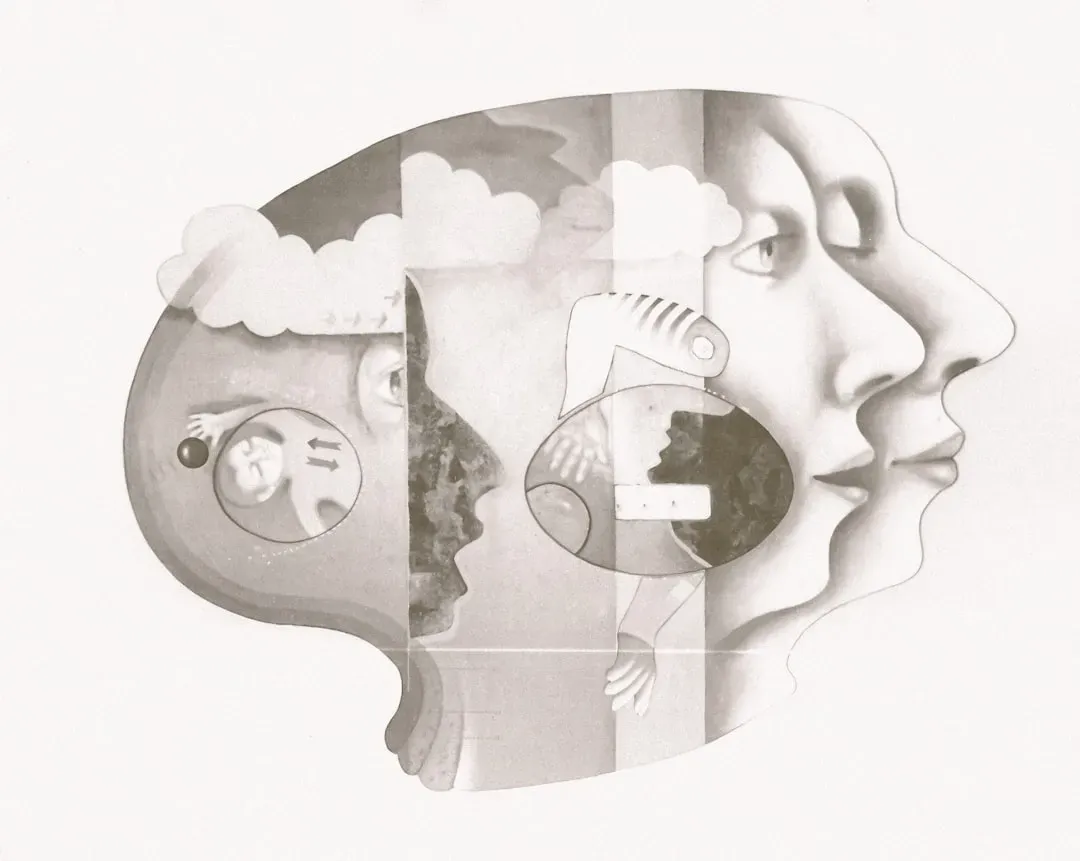
The traditional story goes like this: you, a conscious self, sit inside your head making decisions, directing your thoughts, and moving your body like a puppeteer. The newer, more unsettling proposal flips that script. It suggests that thoughts arise from unconscious brain processes, and the conscious “you” only becomes aware of them once they are already in motion, then claims ownership after the fact.
In this model, the self is less a CEO and more a PR department. Your brain does the heavy lifting behind the scenes – integrating memories, emotions, perceptions, habits – and then consciousness experiences the finished product and narrates it as “my decision.” That does not mean nothing is in control; it means the control does not look like a tiny, central “me” issuing commands from a mental throne.
What Experiments on Free Will Actually Show
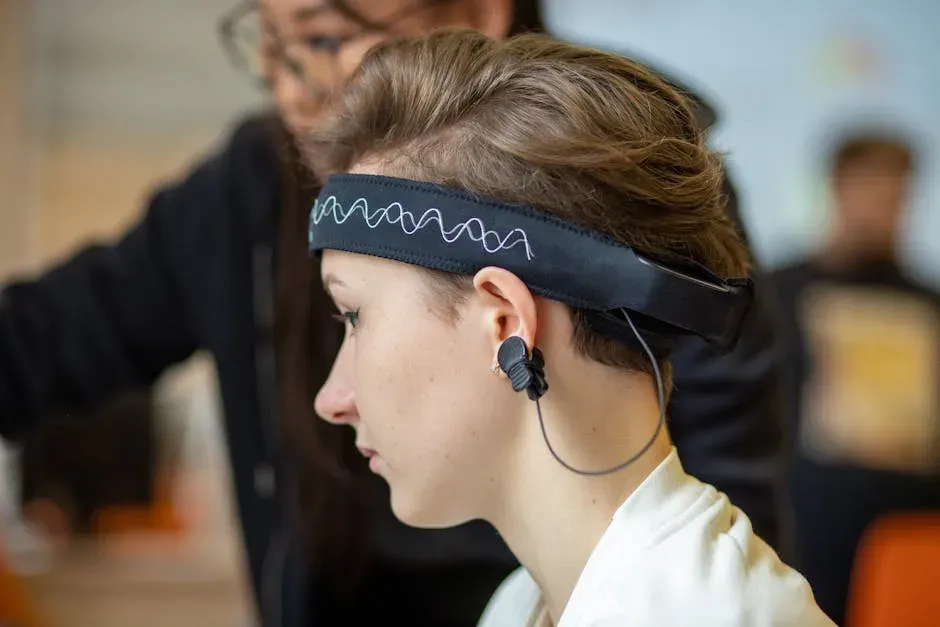
The most famous evidence people point to comes from experiments where scientists measure brain activity before a person reports deciding to act, like flexing a wrist or pressing a button. These studies often find that brain signals predicting the movement appear a fraction of a second before the person becomes aware of choosing. On the surface, that sounds like a smoking gun: the brain “decides” first, consciousness catches up later.
But the real story is more nuanced. The tasks in these experiments are deliberately trivial, and the timing differences are tiny – fractions of a second, not minutes. Many researchers argue that this shows only that some aspects of motor preparation and impulse generation start unconsciously, which is not surprising. It does not cleanly prove that all meaningful decisions in real life are predetermined while consciousness just watches. Still, it’s a strong hint that our sense of being the initial spark is not the whole picture.
Thoughts as Mental Weather: You Don’t Control the Clouds

One way I’ve come to think about this – and honestly it hit me one late night staring at the ceiling – is to treat thoughts like weather. You do not choose each cloud that drifts across the sky; they just appear, shaped by invisible forces. Similarly, you do not pick each random memory, image, or urge that shows up in your mind. You simply notice them, often surprised or even annoyed by what appears.
You can, however, influence the climate over time. Where you live, what you do regularly, the media you consume, the habits you build – all of that shapes the long‑term “weather patterns” of your mind. That means you may not consciously author every single thought, but you can intentionally alter the conditions from which those thoughts arise. You are not the sky painter, but you do have some say over the atmosphere.
Attention as the Real Superpower: You Choose What Gets the Spotlight

If thoughts are not fully under your command, what does the self actually do? One increasingly popular view is that consciousness is best understood as an attention system. You may not create the raw impulses, but you can choose – to a meaningful degree – which ones to feed, which ones to starve, and which ones to simply watch drift by. That act of selective amplification can totally change your behavior over time.
Think of your mind as a crowded room full of people shouting suggestions. You might not choose who shows up or what they yell, but you can decide which voice you walk toward, which one you engage, and which you ignore. That selection process, done again and again, is where a lot of what we call character, discipline, and even morality actually lives. The self may not be the author of every line, but it does have a say in which script gets rehearsed and performed.
The Brain’s Storyteller: How We Confuse Narrative With Control
Another key piece of this puzzle is the brain’s relentless drive to make a coherent story out of whatever happens. When you act, your mind quickly weaves a narrative about why you did it, even if the true causes were a jumble of habit, emotion, and environment. Those stories feel true from the inside, because they knit your life into a neat arc with motives and reasons.
The danger is that you can easily mistake a tidy story for direct authorship. It is like a sports commentator who describes a goal as if the play had to unfold that way, ignoring all the chaos and chance behind it. Neuroscience suggests that the sense of “I did this on purpose because…” often shows up after the fact, a kind of best guess that preserves your feeling of being a stable, in‑charge person. That is useful socially and psychologically, but it is not always accurate scientifically.
Does This Mean You Have No Free Will at All?

This is where people tend to panic: if the self is mostly an audience, does that mean we are just puppets? Daily life strongly suggests otherwise. You can pause before replying to a nasty message, change careers, learn a new language, break a destructive habit. Those are not the actions of a purely helpless observer. The key is to stop thinking of free will as a magical power and instead see it as a capacity emerging from complex, layered systems in the brain.
Your decisions are influenced by genes, upbringing, social pressure, mood, and a thousand hidden factors, yet there is still a space – however constrained – where options are weighed, impulses are inhibited, plans are formed, and patterns are redesigned. That deliberative space might not look like a tiny inner commander, but it is real enough to matter for ethics, law, and personal growth. The self might not write every thought, yet it still participates in editing the larger story.
Mindfulness and Meditation: Training the Audience, Not the Author

What is fascinating is that contemplative traditions have been describing something like this for centuries, long before brain scanners existed. Practices like mindfulness and certain forms of meditation teach you to watch thoughts arise and pass without immediately identifying with them. When you sit and simply observe your mind, it becomes painfully obvious that a lot shows up uninvited: cravings, anxieties, random song lyrics, entire imaginary arguments.
Instead of trying to wrestle every thought into submission, these practices train the “audience” to be calmer, less reactive, and more discerning. You learn to notice the initial spark of anger without immediately lighting the whole house on fire. In my own life, this has felt less like gaining new powers and more like removing static from a radio: the same station is still broadcasting, but it becomes much easier to hear the music clearly and decide how to move with it.
Responsibility and Self‑Compassion in a Less Author‑Centered World

If the self is not the sole author of thoughts, it actually reshapes what responsibility and self‑compassion can look like. On one hand, it can soften harsh self‑judgment. You can recognize that some intrusive thoughts, sudden fears, or dark impulses are not proofs of who you “really” are; they are artifacts of a complex brain under stress, carrying old conditioning and built‑in biases. Blaming yourself for every mental blip starts to look as misguided as blaming yourself for every passing cloud.
On the other hand, responsibility does not disappear; it just shifts focus. Instead of obsessing over whether you freely created each thought, you focus on what you do with them once they appear. You are still accountable for repeated choices, for the environments you seek out, for the habits you nurture or neglect. That balance – less shame over mental noise, more ownership over ongoing action – can be surprisingly empowering and emotionally sane.
How This Perspective Can Quiet Ego and Increase Curiosity

Seeing yourself more as an audience than an absolute author can also puncture some of the ego inflation that makes life harder than it needs to be. When you realize how much of “your” mind is shared human machinery – ancient fear circuits, social instincts, pattern‑seeking – it becomes harder to treat every success as personal genius and every failure as personal doom. You start to see yourself as part of a larger process rather than a lone hero or villain.
At the same time, it can ignite a deep curiosity about your own inner workings. Instead of thinking, “Why am I like this?” in a self‑blaming way, you start asking, “What is going on in here, and how did it get wired like this?” That shift from condemnation to investigation feels subtle but powerful. Life becomes less about proving that you are in total control and more about skillfully relating to a mind that was never fully yours in the first place.
Opinionated Conclusion: A Humbling, Liberating Upgrade to the Self

If I had to take a stance, I would say this audience‑not‑author view of the self is both humbling and liberating, and we should lean into it rather than fear it. It punctures the comforting fantasy of a completely free, omnipotent inner controller, but in exchange it gives us a more honest picture: we are emergent patterns inside a wildly complex biological system, with influence but not absolute command. That feels less glamorous, yet far more aligned with how the world actually behaves.
Instead of clinging to an outdated myth of the self as a tiny god in the brain, we can embrace a more mature role: attentive witness, skilled editor, climate‑shaper of our own mental weather. You may not author every thought that stumbles onto your inner stage, but you do help decide which ones get the spotlight and which quietly exit. And in the end, is that not where the real power has always been – not in creating every impulse, but in how you choose to meet it when it arrives?